Chardin, JohnBiblio.com

1 266 résultats
102124841X.Gpaperback. Good. Access codes and supplements are not guaranteed with used items. May be an ex-library book. paperback
1019481943.Ghardcover. Good. Access codes and supplements are not guaranteed with used items. May be an ex-library book. hardcover
1020002832.Ghardcover. Good. Access codes and supplements are not guaranteed with used items. May be an ex-library book. hardcover
0282229175.Gpaperback. Good. Access codes and supplements are not guaranteed with used items. May be an ex-library book. paperback
0666468354.Ghardcover. Good. Access codes and supplements are not guaranteed with used items. May be an ex-library book. hardcover
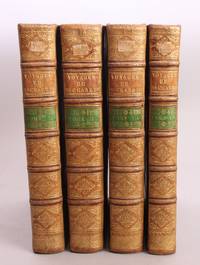
248846Nouvelle edition. Amsterdam Aux Dépens de la Compagnie 1735. 4to. 2 engraved frontispieces. 78 of 79 engraved plates of which many folding. Finely bound in contemporary three calf. Spines richly gilt in compartments. Plate no xlii not present otherwise a fine and well preserved set. . unknown
1023708914.Ghardcover. Good. Access codes and supplements are not guaranteed with used items. May be an ex-library book. hardcover
1023713896.Gpaperback. Good. Access codes and supplements are not guaranteed with used items. May be an ex-library book. paperback
0270378200.Ghardcover. Good. Access codes and supplements are not guaranteed with used items. May be an ex-library book. hardcover
0274257866.Gpaperback. Good. Access codes and supplements are not guaranteed with used items. May be an ex-library book. paperback
1148148086.Gpaperback. Good. Access codes and supplements are not guaranteed with used items. May be an ex-library book. paperback
1148474544.Gpaperback. Good. Access codes and supplements are not guaranteed with used items. May be an ex-library book. paperback
7549A Amsterdam 1735. 4to. 3 cont.full mottled calf. Raised bands richly gilt backs. Extremities with small traces of use slight weakening to parts of hinge top of spine on vol. II with loss of leather ca 1x2 cm. Internally fine on good paper. 2 engr.frontisp. with portraits 3 engr.titlevign. 3 large engr. textvignettes. 1239043594437 pp. and 78 mostly large folded engraved plates mapsplansviews etc. - To this second edition was published a 4th volume which contains the author's previously published work "Couronnement de Soliman III" and extracts from the author's manuscript this supplementary volume is not present here but the 3 volumes contain the whole travel and all the plates belonging to these 3 volumes. <br/><br/><em>Rare second edition of Chardin's travels regarded as being one of the finest works of early Western scholarship on Persia and the Near East in general. "Thought to have been read by writers such as Montesquieu and Rousseau Chardin's account stands apart from those of other travellers to the region Caucasus at this time through its awareness of cultural difference and relativity and in its desire to place accuracy above romanticism." Speake The Literature of Travel and Exploration 1.Chardin set out from Paris for Persia and India. He reached Ispahan 1673 spent four years in Persia visited India and returned by the Good Hope in 1677. The first volume contains the trip from Paris to Isfahan the second contains a particular description of Isfahan and the relation of the author's two voyages from Ispahan to Bander-Abassi the third contains a general description of the Persian empire and the particular descriptions of the sciences and arts which are in use therein of political military and civil government.Born in Paris in a Hugenot Protestant family Jean Chardin 1643-1713 undertook his travels to Persia because of his father's position as a jeweler and shareholder in the French East India Company. The younger Chardin set out in 1664 traveling through Turkey the Black Sea Georgia and Armenia. Soon after his arrival in Persia he received a commission to create jewelry for Shah Abbas II who died in 1666 and was succeeded by Shah Safi. After witnessing the latter's coronation Chardin went on India and finally returned to Paris in 1670. In 1671 he published an account of the coronation and in the same year set off for Persia again arriving in Isfahan in 1673 and remaining there for several years before once more visiting India and returning home in 1677. With the persecution of the Hugenots in France he moved to England in 1680"Travel restarted with 17th-century missionaries whose medical and pedagogical expertise helped counterbalance Orthodox or pagan reservations. Dominican Prefects Dortelli D'Ascoli and Giovanni da Lucca 1630s extended Giorgio Interiano's description of Circassia and Abkhazia. Theatine proselytisers targeted Mingrelia/western Georgia Capuchins the eastern provinces - the Vatican's Fide Press further contributed by printing the first Georgian books Chikobava/Vateishvili. Many including mission-head Don Pietro Avitabile 1626-1638 recounted their experiences. Prefect to Mingrelia Joseph Marie Zampi a 23-year denizen from approximately 1645 contributed a third significant source in his description of Mingrelian religious practice. This he handed to Jean Chardin 1643-1713 in 1672. A French traveller who became English! ambassador in Holland Chardin translated and incorporated it as a substantial part of his own description of a sometimes perilous journey through Transcaucasia 1672-3 which reflects Ottoman and Persian influence in western and eastern parts respectively - a Turkish organized slave-trade flourished from various Mingrelian ports. Linguistically Zampi revealingly observed that the ecclesiastical language Georgian was as difficult for even the Mingrelian priesthood to understand as Latin was for Italian peasants!" Speake The Literature of Travel and Exploration 1 199-202.Brunet 1802Graesse II P. 121 </em> hardcover
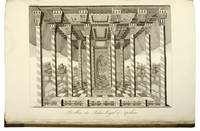
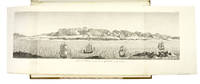
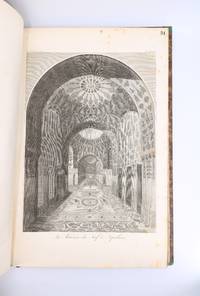
85524Paris Le Normant Imprimeur-Libraire 1811. . Folio. With 85 engravings on 64 sheets 9 folding including 1 map portrait of Chardin 18 sheets with double-illustrations and 1 sheet with 4; light waterstain on lower margin of several leaves. Near contemporary half polished calf over marbled boards; a bit rubbed.<br /> A very good copy of the atlas from the most desirable edition enhanced with new and larger plates.<br /><br />'Chardin was a Huguenot who was forced to emigrate to England. He was knighted by Charles II and on his death was buried in Westminster Abbey. His first visit to the East was made in 1665 at the age of twenty-two when he both gratified a love of travelling and carried on his trade as a dealer in jewels. His more important voyage was made in 1671. His route differed from that usually taken by travellers to the East Indies in that he proceeded by way of the Black Sea and the countries bordering thereon' Cox I p 249-250.<br /><br />'Chardin set out for Persia for a second time in August 1671 but on this occasion diverted through Smyrna and Constantinople and took the Black Sea Route to Caucasia Mingrelia and Georgia finally arriving at Esfahan in June 1673. In Georgia he heard of a race of warlike women the Amazons who had at some time in the recent past invaded a kingdom to the northwest. He remained in Persia for four years as he says 'chiefly following the court in its removals but also making some particular journeys. as well as studying the language.' He apparently knew Esfahan better than Paris and visited nearly every part of the country. His account of the Persian court and his business transactions with the shah are of considerable interest. In 1677 he proceeded to India afterwards returning to France by way of the Cape of Good Hope' Howgego C102; His second and more notable voyage to Persia is important because it is in the account of this voyage that he describes life in late Safavid Persia' Ghani p. 71.<br />Includes among others lovely views of Tbilisi Tiflis Erevan Ispahan Persepolis as well as Georgian and Persian costumes views of lavish palace rooms and the Coronation of Suleyman.<br /> Paris, Le Normant, Imprimeur-Libraire, 1811. hardcover
85525Paris Le Normant 1811. . Folio 54 x 36 cm; with 85 engravings on 64 sheets 9 folding including portrait of Chardin 18 sheets with double-illustrations and 1 sheet with 4 with additional large folding map of Asia with outline coloured by hand by P. Lapie 1810 engraved by Blondeau all protected with original tissue guards. Recent half-calf over marbled boards.<br /> Attractive fresh example of the atlas uncut from the most desirable edition enhanced with new and larger plates. Printed on thick paper and extra-illustrated with a large hand-coloured map of the whole region.<br /><br />'Chardin was a Huguenot who was forced to emigrate to England. He was knighted by Charles II and on his death was buried in Westminster Abbey. His first visit to the East was made in 1665 at the age of twenty-two when he both gratified a love of travelling and carried on his trade as a dealer in jewels. His more important voyage was made in 1671. His route differed from that usually taken by travellers to the East Indies in that he proceeded by way of the Black Sea and the countries bordering thereon' Cox I p 249-250.<br /><br />'Chardin set out for Persia for a second time in August 1671 but on this occasion diverted through Smyrna and Constantinople and took the Black Sea Route to Caucasia Mingrelia and Georgia finally arriving at Esfahan in June 1673. In Georgia he heard of a race of warlike women the Amazons who had at some time in the recent past invaded a kingdom to the northwest. He remained in Persia for four years as he says 'chiefly following the court in its removals but also making some particular journeys. as well as studying the language.' He apparently knew Esfahan better than Paris and visited nearly every part of the country. His account of the Persian court and his business transactions with the shah are of considerable interest. In 1677 he proceeded to India afterwards returning to France by way of the Cape of Good Hope' Howgego C102; His second and more notable voyage to Persia is important because it is in the account of this voyage that he describes life in late Safavid Persia' Ghani p. 71.<br /><br />This edition of Chardin's classic account of Persia includes new plates not found in previous editions among others lovely views of Tbilisi Tiflis Erevan Ispahan Persepolis as well as Georgian and Persian costumes views of lavish palace rooms and the Coronation of Suleyman. <br /> Paris, Le Normant, 1811. hardcover
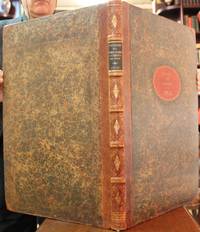
1811B4638Paris: Le Normant c. 1811. A fine example of this work. Plates and text are in very good condition; generally clean and crisp. . Edition: New Edition Binding: Atlas volume rebacked tastefully in half calf saving the original marbled boards. Decorative red and gilt centerpiece on upper board with gilt title. <br><br>Ten 8vo 216x135mm text volumes with full brown cloth boards. With black calf labels with gilt text. Notes: Text is in French. This 1811 edition is based on Chardin’s classic account of life and society in Persia complete with new plates coincided with renewed French imperial ambitions aimed at rivaling the British possessions in India. Chardin a Frenchman was the son of a jeweller. He set out in company with a Lyon merchant named Raisin in 1665 for Persia and India. After a highly successful journey during which he had received the patronage of Shah Abbas II of Persia he returned to France in 1670. He set out again for Persia in August 1671. This second journey was much more adventurous than the first and did not reach Isfahan till June 1673. In Isfahan he was appointed the Shah's personal jeweler by Suleiman I. During this time he was allowed to engage in an extended tour through much of Persia. Through the course of this tour Chardain was able to study the culture government and religion in detail. After four years spent in research throughout Persia he again visited India and returned to Europe. In 1681 he settled in London where he was appointed jeweller to the court of Charles II. Sir John Chardin's narrative has received the highest praise from the most competent authorities for its fullness comprehensiveness and fidelity; and it furnished Montesquieu Rousseau Gibbon and Helvétius with most important material. Size: Folio 338x510mm. Illustration: The atlas volume is illustrated with 65 sheets bearing 86 engravings which include: a frontis portrait of Chardin two maps of which one is a folding map of Persia and the other a map of the Black Sea 9 additional folded sheets 18 double plate sheets 1 quadruple plate sheet plus single plate sheets. Volume: 11 vol.10 text-1 atlas References: Weber 381; Graesse II 13; Wilson 40 Category: Book Plate Books General; Book Asia Middle East Iran; Book Europe France; Le Normant hardcover
181189644Paris: Le Normant 1811. Fine. Le Normant Paris 1811 12.5 x 20.5 cm pour les 10 volumes de texte - 345 x 52 cm pour le volume d'atlas 10 volumes reliés 1 atlas New edition partly original expanded with a survey of Persia from the earliest times to the present day together with annotations by the Orientalist and librarian Louis-Mathieu Langlès cf. Quérard II 133; Schwab p. 18; lacking in Blackmer and Atabey. Contemporary full mottled calf smooth spines gilt with decorative rolls and tools black morocco-style shagreen lettering- and volume-pieces gilt rolls on the caps partly faded gilt dentelle borders on the boards marbled endpapers and pastedowns marbled edges. For the folio atlas: contemporary half calf in fawn smooth spine gilt with rolls and tools brown lettering-piece spine with some rubbing and restorations red morocco title-label on the upper board marbled paper sides marbled edges. In the first text volume pagination skips from pp. 235 to 256 without loss; pp. 213220 are transposed; all the plates in the atlas including portrait and map have been renumbered in blue ink stencil from 1 to 65; some occasional foxing on the plates. Our atlas volume contains 1 portrait 1 folding map and 83 views and figures on 63 plates numbered 1 to 82 including one 81bis with some numbering errors. Most figures are full-page; several plates include two or more subjects; nine plates are large folding plates. A pleasing copy attractively bound at the time with the atlas in a different contemporary binding. This is the finest edition of Chardins account of his travels. It is enriched with notes on Persia by the celebrated Orientalist Louis-Mathieu Langlès. ""Chardin was of French origin the son of a jeweller. He went to the Levant to purchase gem stones in 1665 and after a successful journey set out again in 1671 spending seven years on his travels much of the time in company with Guillaume Grelot whom he met in Constantinople. After his return of his travels he settled in London"" Leonora Navari. Le Normant hardcover
024303511X.Gpaperback. Good. Access codes and supplements are not guaranteed with used items. May be an ex-library book. paperback
0243865724.Gpaperback. Good. Access codes and supplements are not guaranteed with used items. May be an ex-library book. paperback
0332187705.Ghardcover. Good. Access codes and supplements are not guaranteed with used items. May be an ex-library book. hardcover
0366172212.Ghardcover. Good. Access codes and supplements are not guaranteed with used items. May be an ex-library book. hardcover
0366172166.Gpaperback. Good. Access codes and supplements are not guaranteed with used items. May be an ex-library book. paperback
0656434406.Ghardcover. Good. Access codes and supplements are not guaranteed with used items. May be an ex-library book. hardcover
172319664Paris: André Cailleau 1723. 8vo 16.5 cm 6.5". 10 vols. I: Frontis. 10 254 pp.; 1 fold. map. II: 334 pp.; 4 fold. plts. 5 plts. III: 285 1 blank pp.; 4 fold. plts. 3 plts. IV: 280 pp.; 2 fold. plts. 3 plts. V: 312 pp.; 4 fold. tables 5 plts. VI: 328 pp.; 4 plts. VII: 10 15448 i.e. 446 pp. VIII: 255 1 blank pp.; 10 fold. plts. 6 plts. IX: 308 pp.; 1 double-spread fold. plt. 8 fold. plts. 19 plts. X: 22 3220 82 index pp. <br><br>Attractive French edition of Sir John Chardins Persian travelogue originally published in 1686. Brunet calls the account which covers Chardins voyages through India Russia and Persia un des plus intéressants que lon ait publiés in the 18th century; the work was and continues to be a major source of information on contemporary Persian politics government religion and culture.<br>Â Â Â Â The title-pages are printed in red and black and the 10 volumes are illustrated with a total of 79 plates many folding and tables including one map and one frontispiece. <br>Â Â Â Â <br>Â Â Â Â Brunet I 1802. Contemporary speckled calf spines extra gilt; edges joints and extremities rubbed leather in some cases cracked or starting along joints or chipped at spine extremities two spines with compartments chipped. All edges speckled. Front pastedowns each with institutional bookplate front free endpapers rubber-stamped and with inked ownership inscriptions dated 1867 title-pages except for vol. I rubber-stamped reverse of map in vol. I rubber-stamped some vols. with first text page rubber-stamped. Additional plate creased laid in seemingly excised from another work. André Cailleau hardcover books
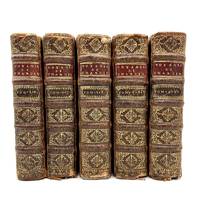
172381601à Paris: Chez Pierre-Michel huart 1723. Fine. Chez Pierre-Michel huart à Paris 1723 9.50 x 17 cm 10 tomes en 5 volumes reliés Second collective edition published by various booksellers including Michel Almaury. It is illustrated with 75 figures including a frontispiece portrait of which 30 are folding a map and 6 folding tables. Title pages in red and black. Contemporary full glazed brown sheep binding. Raised band spine richly decorated. Red morocco title labels brown sheep title label with frame of roll tooling. Head caps of volumes 1 to 8 torn off tail caps torn off except for the second volume 3 and 4. 9 corners very bumped. Rubbing. A lack to the lower joint at head of volume 9 10. Lacks to edges of volume 1. Set relatively worn. In volumes 9 10 worming to margins of 4 folding plates extending a few millimetres onto the engraving and to margins of 8 text leaves up to page 72; one to 2 wormholes afterwards on a few leaves; p.80 the engraving has a tear which has been amateurishly restored with pieces of paper. A tear in volume 7 8 p. 332. Trace of light dampstain on the title page of volume 1. 3 engravings with short margins. Title pages yellowed the first with a light dampstain. Bookplate of Henry Gouin. Considered the best ancient account and description of Persia Les voyages du Chevalier Chardin provides a complete survey of this region for the first time in history. Besides the different voyages volumes 5 6 7 and 8 examine the situation of arts government religion; volume 8 concerns the city of Isfahan. Chez Pierre-Michel huart unknown