2 387 résultats
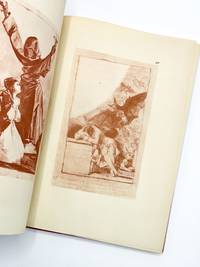
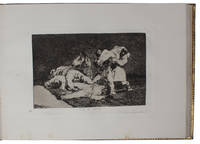
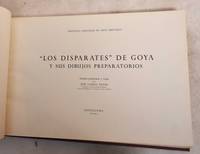
19511390507Barcelona: Instituto Amatller de Arte Hispanico 1951. Limited edition 558/1025. Hardcover. Quarto oblong 92 pages 22 plates on unnumbered leaves. In Good condition with a Good slipcase. Slipcase in brown cloth. Mild blemishes/shelfwear. Spine is brown with gold print. Boards quarter bound with brown leather to spine and brown cloth to boards. Light wear to spine caps. Text block has bookplate on front pastedown. Illustrated: b&w and color. Text in Spanish. <br /> <br /> Oversized books. Additional postage necessary for expedited/international orders. Economy International shipping unavailable due to size/weight restrictions. For international/expedited customers please inquire for rates. <br /> <br /> <p>NOTE: Shelved in the Back Area Oversized Folios. 1390507. FP New Rockville Stock. Instituto Amatller de Arte Hispanico hardcover
1951190522Barcelona 1951. Hardcover. VG- scuffing to boards heavy wear to leather pages are clean and clear. Oblong half leather and red cloth boards marble end pages 92 pp with bw illustrations; 13 leaves; 22 plates most with bw and sepia. Text in Spanish. Preliminary study and notes by Jose Camón Aznar. At head of title: Instituto Amatller de Arte Hispánico. Includes bibliographical references pages 91-92. 16x11x1" hardcover
1954300142-1Madrid, Museo del Prado 1954. 4°. Mit 7 farb. Tafn. u. 466 Abb. Original-Halbleinenband
195447162Madrid: Museo del Prado 1954. Very good plus. First edition thus featuring the drawings of Goya beautifully reproduced in a two-volume set with introduction and notes by Prado Director Francisco Javier Sánchez Cantón. Two volumes 13.75'' x 9.5'' each. Text in Spanish. Original quarter beige cloth with red boards; plates mounted to front covers of both volumes. Vol. I: plates 1-215; vol. II: plates 216-466. Ink owner name. Light wear and scuffing to boards. Museo del Prado unknown
64453Eds Tartessos Barcelona s.d. 1957 In-4 34 cm 16pp. illustr. 82 planches hors-texte reliure cart. de l'editeur Nb-0203 unknown
76543Guillermo Blazquez 2008. Guillermo Blazquez unknown
195528231Barcelona: Ed. Tartessos s.a. ca. 1957.- 180 páginas sin numerar siendo las 16 primeras de texto y las 164 restantes ilustradas con 82 láminas a una sola cara; Folio 335 x 239 cm; Portada a dos tintas con el título en grandes letras en tinta roja; Cartoné Ed. con camisa. Libro en excelente estado a excepción de la camisa que está ligeramente ajada. PINTURA DIBUJO Y GRABADO ESPAÑOLES Libro en español Ed. Tartessos hardcover
$A20202.- Madrid. 2008. Guillermo Blázquez Editor. 37x26 cms. 1 tomos. 480 pgs. Aguafuertes reproducidos por heliograbado. Encuadernación en rústica conservada en un estuche en terciopelo edición en rama. . . ISBN 13: 9788496539181. Arte / Grabados paperback
190660282Madrid 1906. Folio oblong. Bound in a splendid recent full longgrained burgundy morocco binding in pastiche style with four raised bands to beautifully gilt spine. Boards with gilt ornamental borders and gilt centre-piece. Gilt line to edges of boards and inner gilt dentelles. Marbled end-papers. All leaves re-hinged. Occasional light brownspotting but overall very nice. Title-page the version with the second line beginning "Colección de Ochenta. in lower case 2 pp. of text dated 1863 80 engraved plates on fine laid paper measuring 234x32 cm. Plates 17 and 77 have been misbound the numbers 1 and 7 look almost the same - Harris II:201: "In some sets this plate has been bound out of order where the number hs been read as 77"; II:288: "In some sets this plate has been bound out of order where the number has been read as 17. <br/><br/><em>A beautiful copy of the splendid fourth edition of Goya's magnificent "Disasters of War" - one of the most significant anti-war works of art ever produced - consisting in all 80 plates that were issued. "The Disasters of War" constitutes Goya’s political masterpiece directly inspired by and documenting the horrors he witnessed during the Peninsular War of 1808-14 between Spain and France under Napoleon Bonaparte the terrible famine in Madrid in 1811-12 and the disappointment at the restoration of the Bourbon monarchy. As such it is one of the earliest and most important examples of war documentation and remains to this day one of the boldest anti-war statements ever made. This however is also the reason why these groundbreaking etchings were not published during Goya’s life-time. It was both too dangerous and too gruesome. As Alastair Sooke puts it "even today it is difficult to look at the Disasters because Goya catalogues the brutality and fatal consequences of war in such a stark confrontational and unflinching manner." See his article for BBC Culture 2014. In this seminal series of etchings Goya not only uses art to comment on politics and the atrocities connected with war he also pioneers a number of artistic tools. Breaking from painterly traditions he deviates from the heroics of most previous war art to show us how war can bring out the worst in humanity. He abandons colour in order to show us a more direct truth conveyed by the use of shadow and shade. Also the fact that he presents the 80 works of art as a collection together with the harsh realistic nature of the etchings themselves connect the images more closely to the art of photography that we are now so familiar with causing the work as a whole to be viewed as one of the earliest examples of actual first-hand war reportage. The work has been extremely influential perhaps most famously inspiring Pablo Picasso and Ernest Hemingway For Whom the Bells Toll. "There are many contenders for the most powerful example of war art from the past two centuries: Picasso’s Guernica 1937 painted in response to the bombing of a Basque village during the Spanish Civil War would be an obvious choice. For me though nothing quite matches the originality and truth-telling ferocity of the Disasters of War a series of 80 aquatint etchings complete with caustic captions by the Spanish artist Francisco de Goya 1746-1828." Sooke. The execution of the engravings has been dated to a period between 1810 and 1820 but no contemporary edition was made of this spectacular series. "Possibly by the time they were finished the war and famine scenes were not of great appeal and Goya was probably unwilling to risk another financial failure such as he had experienced with the "Caprichos". It was a time of stern repression and the publication of the satirican and violently anti-clerical subjects of some of the "caprichos enfánticos" would certainly have been dangerous. These facts would account for a postponement of publication. Also Goya himself tells us that he fell seriously ill in the winter of 1819. and on his recovery he was planning to leave Spain and settle permanently in France. That Goya did not attempt to make an edition of "Desastres" in Madrid before leaving for France is borne out by the investigations of Catharina Boelcke-Astor who showed that the copperplates were stored away in safes by Goya's son Javier where they remained until the latter's death in 1854. Eventually in November 1862 they were acquired by the Academia de San Fernando from D. Jaimé Machén for 28000 reales." Harris I:141. In 1863 the first edition of Goya's seminal work was issued under the famous title "Los desastres de la guerra". In all 500 copies were issued. A second edition followed in 1892 and a third in 1903. Both of these editions were issued in merely 100 copies. In 1906 the fourth edition appeared in a number of 275 copies. "This edition is excellently printed on very suitable papers" Harris II: 175 and is considered much superior to the third. A further three editions appeared in 1923 1930 and 1937 respectively. "When Goya had engraved all the plates of the "Desastres" he gave his friend Céan Bermúdez an album containing a proof set of eighty-five plates including the eighty plates eventually published as "Los Desastres de la Guerra" two plates numbered 81 and 82 which were prepared for the series but not published with it and the three little engravings of "prisoners" which were never intended by Goya for inclusion in a published edition of the series." Harris I:140. The first plate prepares the spectator for the contents of the series and can be seen as a sort of frontispiece plates 2-47 deal mainly with the horrors of the war plates 48-64 record the terrible famine in Madrid and the final plates 65-80 constitute the "Caprichos enfánticos". " "The impact of the scenes is incredible" says the independent art historian Juliet Wilson-Bareau one of the world’s leading Goya experts. "Each one is a powerful original work of art in its own right yet linked to the others with a common theme including the way their titles - terse comments questions or cries of outrage - connect them and read on from one to another. The grouping of the series into three ‘chapters’ gives the whole a sense of rhythm and purpose." Goya must have hoped that he would live to see the publication of his Disasters but the despotic rule of Ferdinand VII made this impossible. "Under his repressive and reactionary regime" Wilson-Bareau explains "there was no way that Goya could have published his set of prints that so clearly denounced all violence and all abuse of power." Still following their posthumous publication the Disasters proved enormously influential inspiring artists including the German Otto Dix as well as Dalí and Picasso - and more recently the British brothers Jake and Dinos Chapman who bought a complete edition of the prints and ‘defaced’ them by adding grotesque cartoonish faces. Even the war photographer Don McCullin acknowledges a debt: "When I took pictures in war I couldn’t help thinking of Goya" he has said. The genius of the Disasters is that they transcend particularities of the Peninsular War and its aftermath to feel universal - and modern. Perhaps this is because as the British writer Aldous Huxley put it in 1947 "All Goya shows us is war’s disasters and squalors without any of the glory or even picturesqueness." So should we consider the series as the greatest war art ever created Wilson-Bareau certainly thinks so. "For me yes" she tells me. "I have lived with these prints which many people consider too shocking absolutely unbearable and I find in them - besides the heartbreak and outrage at the unspeakable violence and damage - a great well of compassion for all victims of the suffering and abuses they depict which goes to the very heart of our humanity." From Alastair Sooke's BBC-article. Harris II: 175. </em> hardcover
1798161001798. Pasta española. hardcover
1272606279.Gpaperback. Good. Access codes and supplements are not guaranteed with used items. May be an ex-library book. paperback
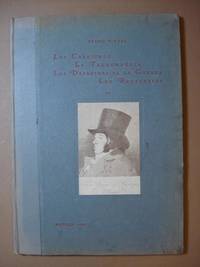
In-8 gr., brossura originale, pp. 14,(2), con 80 ill. in seppia f.t. che riproducono “I Capricci”, celebre opere di Goya. Ben conservato.
cm 17,5x24,5; 80 tavv. In seppia f.t. Tracce di usura alla cop. e in costola
A very scarce monograph on Goya's "Caprichos", published as an exhibition catalogue. 80 items described. 39 pp. 13 full-page plates. Focuses on the meaning of the individual prints: each catalogue entry includes the complete descriptive texts found in the Ayala, Carderera / Prado, and Biblioteca Nacional manuscripts. 4to. Original wraps. FINE AND BRIGHT, LIKE NEW, WITH NO DEFECTS.
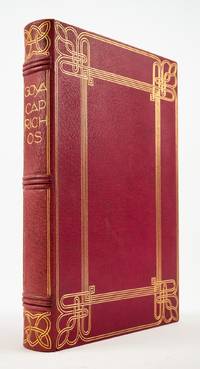
1922ST20816Munich: Hugo Schmidt 1922. No. 423 OF 500 COPIES of the "Engraved Edition. 305 x 205 mm. 12 x 8". 6 leaves followed by plates.With a foreword by Valerian von Loga. <br/> HANDSOME CRIMSON MOROCCO GILT BY OTTO DORFNER stamp-signed on rear turn-in covers with a strapwork frame in an Art Deco design raised bands strapwork ornaments at head and foot of spine gilt lettering in one panel turn-ins with thick and thin gilt rule marbled endpapers top edge gilt other edges untrimmed. WITH 83 COPPERPLATE ENGRAVINGS all with tissue guards. Spine gently faded to a soft rose a scattering of small faint spots to leather but A FINE COPY--entirely clean fresh and bright internally and the binding with almost no signs of wear.<br/> <br/> The sumptuous Hugo Schmidt edition of Goya's striking satirical "Caprices" is presented here in a lovely Dorfner binding. Francisco de Goya y Lucientes 1746-1828 conceived of this series of 80 prints as a critique of the ills he saw plaguing late 18th century Spanish society. The suite focuses on the nobility the Church and the Inquisition but also addresses more general societal concerns such as child abuse superstition and poor education. Its general message is in keeping with the Enlightenment philosophy of the day; philosopher Alexander Nehamas writes that in these artworks Goya advocates for a society in which "freedom in place of custom knowledge instead of ignorance and morality where custom held sway will remove the 'lies and prejudices' that stand in the way of human happiness." However the "Caprices" represent more than just a period critique: art historian Carl O. Schniewind writes that "in a way it may be said that modern art was born in these compositions which break away once and for all from the domination of eighteenth century tradition." Originally executed in etching and aquatint this suite of prints demonstrates Goya's ability in the medium with wonderful depth and subtlety of shading skillfully reproduced in copper engraving in the current edition. Publisher Hugo Schmidt who released high quality art books and facsimiles in the first two decades of the 20th century had published a reproduction of "Los Caprichos" in photogravure in 1918. The publisher's note here dated December 1922 tells us that the present edition with Goya's works expertly reproduced in copperplate by the art printers J. B. Obernetter was prompted by a lively scholarly interest in the 1918 edition. Both Schmidt editions begin with an introduction by art historian Valerian von Loga 1861-1918 who taught at the University of Berlin and is best known for his monograph on Goya. Our copy is distinguished by its binding executed by one of the leading artisans of the period. Otto Dorfner 1885-1955 taught at the School of Applied Arts in Weimar and at the Bauhaus workshop before founding his own school to teach binding. He was awarded a number of international prizes and is particularly noted for his work with the Cranach Press. His bindings tend to be elegantly understated but executed with exemplary craftsmanship and using the best materials. Our binding which falls squarely into the Art Deco mode is almost radically decorative by comparison. Hugo Schmidt unknown
192840.404Madrid: Librería de Pedro Videl 1928. 1ª ed. Holandesa tela editorial. 22.5x32. 31 láminas 2h. Librería de Pedro Videl hardcover
198938184Madrid: Sílex 1989. FIRST EDITION of this meeting of the minds between the greatest Spanish painter of the 18th and 19th centuries and the greatest Spanish novelist of the 20th. The 80 plates of Goya's Caprichos are reproduced on the odd-numbered pages one to a page. Facing each one are the comments of Camilo José Cela Nobel Prize for Literature 1989. This copy includes AN ORIGINAL DRAWING BY CELA ON THE TITLE-PAGE an imitation of Goya's famous self-portrait plate 1 of the Caprichos WITH SOME OF THE FEATURES ALTERED TO RESEMBLE CELA. Signed in full dated October 10 1991 and localized Guadalajara. With a warm presentation inscription to a friend. Large 8vo. Publisher's cloth with dustjacket. FINE AND BRIGHT WITH NO DEFECTS. Unique. <br/><br/> Sílex hardcover
199913368733Museo del Prado 1999. First R. S. Johnson Fine Art. Softcover. Very Good slight wear and yellowing of pages. Museo del Prado paperback
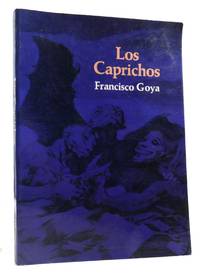
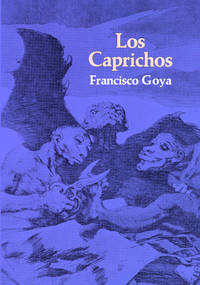
1969324200New York: Dover Publications 1969. First Edition; First Printing. Softcover. Very Good in wraps. Owner name inked on front pastedown.; 192 pages. Dover Publications unknown
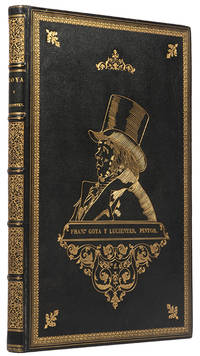
110154Madrid Rafael Esteve for the artist 1799. . First edition one of approximately 300 copies; quarter broadsheets 311 x 205mm; 80 plates on a single uniform stock of unwatermarked laid paper; etchings with burnished aquatint many with drypoint and/or burin fine impressions printed in sepia printing with great contrasts and bright highlights the aquatint just beginning to show a little wear on some plates with the scratch on plate 45 with wide margins some pale spotting mainly on the first few pages otherwise in very good condition; black morocco binding by Lebrun signed on the spine and dated Paris 1844 on the rear cover tooled in gilt with the Self-Portrait of plate 1 and the name of the artist on the front cover the motif and title of plate 32 on the back cover marbled endpapers; within a matching red morocco box with the name of the artist the title and the name of the binder on the spine the inside with a black and gilt morocco inlay showing all the tools used for the binding.<br /> The complete set of eighty etchings with burnished aquatint drypoint and engraving 1797-1798 on laid paper. A very good set from the first edition published by the artist in an edition of approximately three hundred copies. With Los Caprichos Goya for the first time made his vision of the more sinister side of Spanish society and the human soul in general accessible to a wider audience beyond his small group of friends and patrons. Goya was commercially ambitious and set himself an enormous undertaking prepared over several years and based on hundreds of drawings. Harris has estimated that he produced 300 sets i.e. 24000 impressions of the Caprichos making it at the time the largest series of prints ever conceived by a single artist. But the bitter reality was that perhaps only some thirty sets of this first and only lifetime edition were sold. In 1803 the artist gave the plates and the remaining impressions to the King presumably to escape the wrath of the Inquisition.<br /><br />In hindsight Los Caprichos is the pivotal work of Goya's entire oeuvre. In one grandiose dark symphony he unleashes both his unsparing satirical sense and his wild imagination plate after plate tied loosely together by related motifs and laconic often mysterious titles. The only plate without an engraved title is perhaps the most famous of all: the artist overcome by sleep with his head resting on a table is surrounded by creatures of the night: owls bats a cat and a lynx. On the front of the table the following words appear vaguely out of the aquatint surface: El sueño de la razon produce monstruos. The phrase is ultimately untranslatable as sueño can mean both 'sleep' and 'dream'. This ambiguity does Reason dream up monsters or do monsters arise as Reason sleeps is characteristic of the entire series. Having first conceived it as the title page Goya changed his mind and placed it as plate 43 right in the middle of the series dividing the series roughly into two parts. The first part is largely devoted to satires of courtship and prostitution mocking the vanities and pretensions of the young and old. It is in the nightmarish second part that the monsters arise witches and demons fly and goblins awake. Beyond the mere evocation and critique of superstition and witchcraft the precise meaning of these later plates is even more cryptic. Concealed through visual puns word play and allusions to proverbs they often ridicule the idle and ruling classes the clerics and the nobility.<br /><br />Wickedly satirical and subversive as the Caprichos are in their imagery and content they also represent a technical revolution. Having previously created a number of competent yet ultimately conventional etchings after Velazquez Goya in this series suddenly and completely mastered the aquatint method. In particular through his use of blank paper for glowing highlights among dense shades of grey and black he created images of dramatic and disturbing beauty. What makes Los Caprichos one of the greatest unified series of images ever produced is not just his extraordinary draughtsmanship or his technical mastery nor his sharp satirical wit but the intensity of his imagination and the depth of his humanity.<br /> Madrid, Rafael Esteve (?) for the artist, 1799. unknown
175246Madrid: Ediciones de la Mota 1978. Goya's acerbic critique of the decline of society Commemorative limited edition number 147 of 250 copies with a hand-engraved sterling silver replica of the plate used to print the portrait of Goya from a total edition of 280 copies. This copy unusually has a signed and notarized certificate of authenticity from the publisher apparently acquired after publication. Goya created Los Caprichos between 1797 and 1798 shortly after becoming deaf from a prolonged illness. As a result he was increasingly withdrawn and isolated a state reflected in the etchings first published as an album in 1799. They criticize "the innumerable foibles and follies to be found in any civilized society and from the common prejudices and deceitful practices which custom ignorance or self-interest have made usual" Goya quoted by Gussak p. 84. 3 vols folio. Original leather portfolios 525 x 405 mm spines lettered and tooled in gilt floral gilt borders on covers. Vol. I: 2 blank bifolia 5 text bifolia plates 1-20 each within bifolium of printed text etched metal plate 165 x 119 mm window-mounted within brown moire silk-covered board 205 x 385 mm; Vol. II: 2 blank bifolia plates 21-50 each within bifolium of printed text; Vol. III: 2 blank bifolia plates 51-80 each within bifolium of printed text. In original leather-entry cloth slipcases. Plates and contents fine and bright; spines of portfolios and extremities of slipcases rubbed small numbered stickers to slipcases of Vols. I and II small repaired abrasion to spine of Vol. III portfolio minor damp stain at foot not affecting contents edges of slipcase a little worn. A very good set. David Gussak The Frenzied Dance of Art and Violence 2022. hardcover
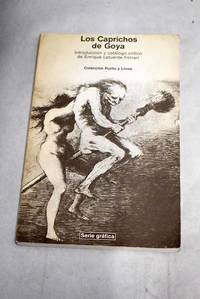
19782822147Barcelona.: Gustavo Gili. 1978. Paperback. Good. 20 cm. 202 p. Encuadernación en tapa blanda de editorial ilustrada. Colección 'Colección Punto y Linea ; Serie Gráfica'. Goya Francisco de 1746-1828. Introducción y catálogo crítico de Enrique Lafuente Ferrari. "Esta edición reproduce las ochenta estampas de la primera edición más cuatro complementarias". Los caprichos. Lafuente Ferrari Enrique. 1898-1985 . ISBN: 8425208971 Artes gráficas. Grabados. Goya y Lucientes Francisco de. Caprichos 76 Goya y Lucientes Francisco de. Caprichos 76 Gustavo Gili. paperback
19491388394Barcelona: Instituto Amatller de Arte Hispanico 1949. Limited edition 817/1025. Hardcover. Quarto 105 pages unnumbered leaves of plates. In Fair plus condition with a Good slipcase. Slipcase in purple cloth. Light shelf wear. Spine is brown with gold print. Boards quarter bound with brown leather to spine and purple cloth to boards. Toning and surface tears to spine. Text block has brown tinted top edge. Bookplate on front pastedown ink notation throughout printed matter. Illustrated: b&w and color. Text in Spanish. <br /> <br /> Oversized books. Additional postage necessary for expedited/international orders. Economy International shipping unavailable due to size/weight restrictions. For international/expedited customers please inquire for rates. <br /> <br /> <p>NOTE: Shelved in Locked Annex Area Netdesk Column QD ND-QD. 1388394. FP New Rockville Stock. Instituto Amatller de Arte Hispanico hardcover
51-6153Paris: Jean de Bonnot 1970. Folio. 46 x 32 cm. Sheets loose as issued in black silk portfolio. 80 plates. Publisher states these were pullled from the original metal plates."Chacune des gravures est garantie par Jean de Bonnot comme étant une épreuve directement tirée de la gravure originale de Goya."."L’éditeur d'art Jean de Bonnot perpétue la tradition des beaux livres reliés plein cuir tranches de têtes dorées faits de bon papier vergé et filigrané.Les collections signées Jean de Bonnot font le bonheur des bibliophiles et des amateurs d’ouvrages parfois épuisés ou très anciens réédités dans les règles de l’art. Chaque volume est unique avec des décors aux fers gravés et ciselés à la main des gravures d’époque des signets tranchefiles culs de lampes originaux."81 ff. dont 80 planches desCaprices finement reproduites d'après les originaux sur vélin pur fil de Lana.Exemplaire en bonne condition en feuilles sous étui-boîte recouvert de soiemoirée noire avec titre doré au dos.OCLC Number / Unique Identifier:1131432438.Expertise by Bernard Portheault 8 rue des Pichots 41500 Mer France. Paris: Jean de Bonnot, 1970. unknown
1969Q-0486223841Dover Publications 1969-06-01. Paperback. New. New. In shrink wrap. Looks like an interesting title! Dover Publications paperback