Jean Christophe DEMARDLivre Rare Book
Sadeler, RaphaelAntiquariat.de
Stirpe ducum clara Belgarum Bavo profectus [...] -
1600900868AG[Um 1600]. Kupferstich, 15,5 x 19,5 cm Bildgröße.

Antiquariat Tautenhahn · DE - Lübeck100,00 €
15 résultats
1552104511552 broché - 15.5x24 - 205pp - 1982 - éditeur Dominique GUENIOT - NB illustrations
1600900868AG[Um 1600]. Kupferstich, 15,5 x 19,5 cm Bildgröße.
15926604D’après Renaldi Mytens 1592 18,5 x 12,5
152816000German:: David Funck c1528-1563. 8.75 x 6.25 inches. Excellent impression original etching plate small clean tear top right corner repaired no affect some remnants of mounting tape at edges on back no affect to front minor soiling at bottom edge no affect overall s beautiful piece rare. Signed in the plate ÔI.H.Õ at center Funck number Ô78Õ at lower left. Allegorical scene copy reverse after Marcantonio Raimondi after Raphael Bartsch XIV.272.356; male figure blowing two trumpets another carrying a slab of stone two figures at right holding a speher and two figures on left looking on impression from the Funck series. See BM description. Hieronymus Hopfer c1500-1550 German etcher son of Daniel Hopfer and brother of Lambert Hopfer worked with his father to recreate prints by etching. Daniel Hopfer is believed to be the first to utilizing etching in printmaking. Little is known of Hieronymus most of his works were published copies after Germans such as Durer and Cranach and Italians as Barberi and Campagnola. Marcantonio Raimondi c1480-1534 Italian engraver began engraving copies of Durer in Venice c1506-08 for which Durer famously brought legal charges against him. After 1506 Raimondi primarily engraed designs of Raphael and his circle. BM: 1845 0809.1460. Hollstein 46.11. Bartsch VIII. 517.41 Bartsch XIV.272.356 [David Funck,] unknown
1587033313<p>London : Holinshed Harrison Jooker et al 1587 A good copy of the Scottish part of Holinshed's Chronicles. First published in 1577 this work was revised and reissued after censorship in 1587. This is the 1587 reissue - said to have been used by Shakespeare in writing Macbeth. This copy is in a recent full calf binding with a panelled design to the boards with gilt titles and date. It has minimal wear. New endpapers and intial and final blanks have been added. Contains: decorative title page dated 1585 with some professioanl repair to the side edge; dedication pp 3-4; Contents list p5; authorship p6; The description of Scotland pp7-23 blank verso; title page - The Historie of Scotland dated 1585; dedication p 27-28; The Historie of Scotland pp 29-464; first table alphabeticall 12 pp; second table alphabeticall 15pp; finis. These two index sections do not cover Scotland - the third and fourth tables are missing together with the Colophon. There are 2 problems with the collation. The leaf with 325/6 is missing and has been replaced with a blank sheet. A fascimile of this leaf is loose in the book. There is considerable mispagination with pp 430-439 - part of the havoc created by censorship of the work at the time. The pagination is: 430-436 tie works 437-432 tie does not work - pp 438/431 should be after 437 and are missing but supplied loose in facsimile - 433-439 tie works. Overall the contents are in very good clean condition with the occasional small stain or mark ink drink at 98/9. However pp 419-424 are in much more fragile condition suggesting that they were added in from another volume. There is a large ink splatter affecting the gutter and some of the text in the lower part on pp 419-424 although all the text is readable. Side edges are browned and fragile in this section and there are some paper repairs on pp 421/2. There is a small burn hole in the text at pp 389/90 and tiny burn holes in the gutter of pp 401/2. Please enquire if you would like to see additional images.</p> Holinshed, Harrison, Jooker et al hardcover
15877230London : Finished in Ianuarie 1587 and the 29 of the Queenes Maiesties reigne with the full continuation of the former yeares at the expenses of Iohn Harison George Bishop Rafe Newberie Henrie Denham and Thomas VVoodcocke. At London printed by Henry Denham in Aldersgate street at the signe of the Starre 1587 1587. 1587 Folio. Two volumes bound in one. Vol. 1: 10 250; 4 202 2 p.; Vol. 2: 61 13 183 1; 421 424-430 436-438 431-433 439-445 450-464 56 p. Vol. ! lacks the first 4 leaves general title Epistle Dedicatorie etc. Period style calf blind ruled on the boards the spine with six raised bands and titled in gilt. Armorial bookplate. Faint old water stain visible on the lower corner at both ends of the volume and evidence of old water to damage to some headlines towards the front of the volume. Generally clean and tight with with adequate at the head to good margins. ESTC S122178. Volume 3 is not present and contains 'The third volume of Chronicles beginning at duke William the Norman .' [London] : Finished in Ianuarie 1587, and the 29 of the Queenes Maiesties reigne, with the full continuation of the former yeare hardcover
1594B6281Venetiis Munich possib. Anvers: : Joann. and Raphael Sadeler c. 1594-1606. . An illustrated work in very good condition with plates clean and mostly wide margined; a few of the plates are reinforced with fine tissue paper; also occasional marginal tears repaired. Edition: First edition anthology of five works. Binding: 18th century full vellum; rebacked expertly saving the original spine; flat spine with gilt lettered and dated title on morocco label; edges marbled; renewed endpapers. Notes: Captions in Latin. The work depicts hermits saints with one of five parts devoted to female believers; this anthology is rarely offered. The members of the Sadeler family were among the most successful Flemish engravers and publishers of their time. Size: Oblong folio 335x263mm. Illustration: 103 copper-engravings; of these 102 illustrated; these include: three titles to the first three works; the paragramma with engraved border. The first work “SYLVA SACRA†being one complete series of hermetic saints with 31 illustrated plates plus a dedication; of the remaining four series of hermetic saints one is dedicated to female hermits: Work II or the “SOLITUDO SIVE VITAE FOEMINARUM†has 14 plates of 25; Work III or the “ORACULVM // ANACHORETICVM. // … MDC†has 22 plates of 26; Work IV or the “Solitudo // sive // vitae patrum // eremicolarum…†has 12 plates of 30; Work V or the “Trophaeum vitae solitariae. // … Venetiis†1598 Martin de Vos figur. has 23 plates of 26. Volume: five works in one volume References: Graesse VI: 211-212. Pages: Ll: bl. ill.102ff. Collation: all of 31 ill. plus 1 dedication; 14 ill.; 22 ill.; 12 ill.; 23 ill. Category: Book Europe Italy; Book Europe Benelux; Book Europe Germany; Book Plate Books General; Book Religious Christianity; Book Early Printed 1500; Joann. and Raphael Sadeler, hardcover
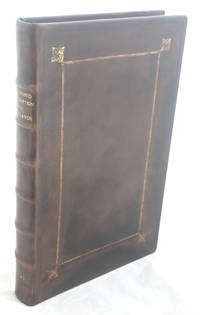
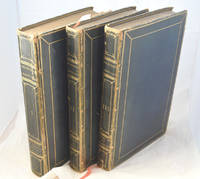
1587033342<p>At London printed in Aldergate Street at the signe of the Starre: John Harrison George Bishop Rafe Newberie Henrie Denham and Thomas Woodcocke 1587 A good copy of the 2nd edition of Holinshed's Chronicles bound in 3 volumes. This edition is particularly known for its association with William Shakespeare who used it for historical background for example in Macbeth. It lacks the extensive woodcuts found in the 1st but has ornate initial capitals and head and tailpieces. This set was rebound in full morocco leather in the 1800's. The bindings have flat spines with gilt titles and volume numbers and gilt lining. The boards have gilt lining around the edges and gilt dentelles on the inner edges. Endpapers are marbled and all volumes have silk bookmarks. The leather is worn on the edges spine joints spine ends and corners but the bindings are currently sound. Vol I has a small closed tear at the top spine end. Vol II has a scuff across the front board. All page edges are gilted. The 2nd edition brings the history up to the date of publication and as such attracted the displeasure of Queen Elizabeth I who had clear views on how her reign and actions should be recorded. The Archbishop of Canterbury was required by the Privy Council in February 1587 to recall the work and reform it. The process of printing large works was very different to that of our digital world and the censorshjp and revision process must have caused chaos at the printers. Sections of the work on Scotland in Vol I and parts of the Chronicles of England are affected and all copies reflect the censorship mess to some extent with odd pagination cancels substitution and gaps in some copies. This set is largely complete lacks title to Chronicles of England and the colophon. Very different thicknesses and colour of the paper suggest where sections have been substituted and there are several instances of mispagination. Contents - Vol I: title and prelims viii; text 250 pp; Historie of England in 8 books; iv; 202 pp; title The Second Volume of Chronicles containing Ireland and Scotland viii; Ireland pp 9-61 blank verso; title Irish Historie xii; 183 pp with blank verso; title - Description of Scotland 2; text pp 3-23 blank verso; title Historie of Scotland blank verso; preface 2pp; text 29-404; Annals of Scotland pp 405-464 ; table alphabeticall First to Fourth 53 pp; Colophon January 1597 1p. Vol II: lacks title - text covers William I to Henry VII- vi; text 1-798. Vol III: text from Henry VIII pp 799 - 1267; Continuation - preface 1268-9 text 1270-1592; third table 58pp; lacks colophon. The contents generally bright clean and sound. There are some minor areas of staining or marking some paper repairs and some mispagination. Please enquire if you would like to see the details on each volume and/or further images.</p> John Harrison, George Bishop, Rafe Newberie, Henrie Denham and Thomas Woodcocke hardcover
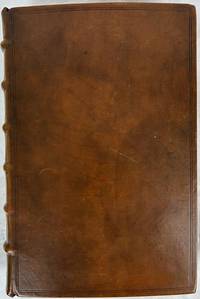
158795438London: John Harrison George Bishop Rafe Newberie Henrie Denham and Thomas Woodcocke 1587. Preferred second edition of the greatest Elizabethan repository of English history which served as an important source for Shakespeare's plays. Folios 3 volumes bound into 2 bound in full calf gilt titles and tooling to the spine raised bands red morocco spine labels gilt ruled woodcut initials and title pages. Separate title pages and pagination for The Description and Historie of England The Description and Historie of Ireland and The Description and Historie of Scotland comprising volume 1. When this expanded second edition of the Chronicles appeared in January 1587 the Privy Council responding to Queen Elizabeth's displeasure at certain passages ordered the Archbishop of Canterbury to recall and censure the work; as a result extensive cancellations 74 pages were made of offending sections in Volumes II and III. The censors removed "all references to English intervention in Scottish politics raised the profile of the Earl of Leicester and distanced England from Elizabeth's one time suitor the Duc d'Alencon. Any accounts of trials and executions were altered to ensure proceedings were unequivocally portrayed as being fair and legal" King's College London. The work of altering the entire edition of the Chronicles was rather haphazardly carried out so that the sections affected vary from copy to copy. In this copy all of the offending sections are cancelled or excised. A nice example scarce and desirable. An immediate success upon publication Holinshed's Chronicles "form a very valuable repertory of historical information. The enormous number of authorities cited attests Holinshed's and his successors' industry. The style is clear although never elevated and the chronicler fully justified his claim 'to have had an especial eye unto the truth of things" DNB. As the foremost British history available at the time the Chronicles did more to shape Elizabethan literature than any English historical work. "The Elizabethan dramatists drew many of their plots from Holinshed's pages" and this second edition is demonstrably the edition employed by Shakespeare as the principal source of his "history" plays. "Both W. G. Boswell-Stone and H. R. D. Anders have shown that it was this second edition which Shakespeare employed as the source sole or part of ten of his plays" Pforzheimer 494 note. "Nearly all of the historical plays as well as Macbeth King Lear and part of Cymbeline are based on Holinshed" DNB. In fact Shakespeare drew not only his plots from Holinshed but occasionally his phrases. The complete story of the rise and fall of Macbeth can be found in the Scottish history Part III pp. 170-76 and the Chronicles' eloquent descriptions intimate at times the very wording of Shakespeare's drama: Macbeth is described as "a valiant gentleman and one that if he had not beene somewhat cruell of nature might have beene thought most worthie the governement of a realme"; the three "weird sisters. women in straunge and wild apparell resembling creatures of elder world" deliver to Macbeth and Banquo the fateful prophecies; and in the final battle Macduffe reveals that "I am even he that thy wizzards have told thee of who was never borne out of my mother but ripped out of her wombe" Whitaker Shakespeare's Use of Learning. John Harrison, George Bishop, Rafe Newberie, Henrie Denham, and Thomas Woodcocke hardcover books
158795438London: John Harrison George Bishop Rafe Newberie Henrie Denham and Thomas Woodcocke 1587. Preferred second edition of the greatest Elizabethan repository of English history which served as an important source for Shakespeare's plays. Folios 3 volumes bound into 2 bound in full calf gilt titles and tooling to the spine raised bands red morocco spine labels gilt ruled woodcut initials and title pages. Separate title pages and pagination for The Description and Historie of England The Description and Historie of Ireland and The Description and Historie of Scotland comprising volume 1. When this expanded second edition of the Chronicles appeared in January 1587 the Privy Council responding to Queen Elizabeth’s displeasure at certain passages ordered the Archbishop of Canterbury to recall and censure the work; as a result extensive cancellations 74 pages were made of offending sections in Volumes II and III. The censors removed “all references to English intervention in Scottish politics raised the profile of the Earl of Leicester and distanced England from Elizabeth’s one time suitor the Duc d’Alençon. Any accounts of trials and executions were altered to ensure proceedings were unequivocally portrayed as being fair and legal†King’s College London. The work of altering the entire edition of the Chronicles was rather haphazardly carried out so that the sections affected vary from copy to copy. In this copy all of the offending sections are cancelled or excised. A nice example scarce and desirable. An immediate success upon publication Holinshed’s Chronicles “form a very valuable repertory of historical information. The enormous number of authorities cited attests Holinshed’s and his successors’ industry. The style is clear although never elevated and the chronicler fully justified his claim ‘to have had an especial eye unto the truth of things†DNB. As the foremost British history available at the time the Chronicles did more to shape Elizabethan literature than any English historical work. “The Elizabethan dramatists drew many of their plots from Holinshed’s pages†and this second edition is demonstrably the edition employed by Shakespeare as the principal source of his “history†plays. “Both W. G. Boswell-Stone and H. R. D. Anders have shown that it was this second edition which Shakespeare employed as the source sole or part of ten of his plays†Pforzheimer 494 note. “Nearly all of the historical plays as well as Macbeth King Lear and part of Cymbeline are based on Holinshed†DNB. In fact Shakespeare drew not only his plots from Holinshed but occasionally his phrases. The complete story of the rise and fall of Macbeth can be found in the Scottish history Part III pp. 170-76 and the Chronicles’ eloquent descriptions intimate at times the very wording of Shakespeare’s drama: Macbeth is described as “a valiant gentleman and one that if he had not beene somewhat cruell of nature might have beene thought most worthie the governement of a realmeâ€; the three “weird sisters… women in straunge and wild apparell resembling creatures of elder world†deliver to Macbeth and Banquo the fateful prophecies; and in the final battle Macduffe reveals that “I am even he that thy wizzards have told thee of who was never borne out of my mother but ripped out of her wombe†Whitaker Shakespeare’s Use of Learning. John Harrison, George Bishop, Rafe Newberie, Henrie Denham, and Thomas Woodcocke hardcover
1587000443<p>London: London: printed by Henry Denham in Aldersgate street at the signe of the Starre 1587. 2nd Edition . Hardcover. Very Good. Second edition; large folio; 3 volumes bound into 2 physical volumes. Vol. 1: 10 250; 4 202 2pp. Vol. 2: 61 13 183 1; 421 424-430 436-438 431-433 439-445 450-464 56pp. Vol. 3: 8 1080 1080-1327 2 1332-1371 1371-1421 1490-1491 1536-1555 1574-1592 62pp. Mismatching set. Volumes 1-2 bound in 17th century reversed calf somewhat worn with a few old repairs hinges cracked corners and spine ends worn with minor loss blind rolls to margins of boards spine with five raised bands gilt-lettered red leather spine label to second compartment and additional hand-written leather spine label to third compartment housed in attractive custom-made clam-shell box in red half leather over marbled boards with five raised spine bands and gilt lettering direct to spine in second compartment. Unobtrusive creasing and wear to opening and closing leaves lower outer quarter of title page missing and sometime laid down lacks preliminary blanks together with divisional titles to History of England Ireland and Scotland title-page to 'Second Volume of Chronicles' and preceding blank "The Epistle Dedicatorie to S. William Brooke" the "Names of the Authors" the "Table of Chapters" and the fold-out plate of the Map of Edinburgh i.e. lacks 10 leaves in all without loss to substantive text with occasional contemporary ink marginalia and early ink inscriptions of Joseph Brooke 1733 to front free endpaper and Edward Gostwyk to top of title page. Volume 3 bound in contemporary full leather somewhat worn with minor loss of leather to board corners expertly respined over six raised spine bands with gilt lettered title direct to spine in second compartment and gilt lettered date/regnal year direct to foot of spine. Lacks title page preliminaries and first 4 pages of text ie. first 6 leaves A-A6 missing but otherwise complete including dated colophon on closing leaf. Very early ink inscriptions on opening blanks a few marginal annotations in an indecipherable early hand very feint marginal dampstaining on a few rear leaves last leaf remargined just touching colophon rearmost two leaves somewhat creased and torn with mostly marginal loss. Two bookplates to front pastedown including 18th century ownership label of Thomas Weld Britwell Oxfordshire. Overall a clean and attractive copy of this celebrated monumental history printed in black gothic typeface and with attractive woodcut capitals and head and tail pieces. Holinshed's Chronicle needs little introduction given its influence on literature and especially on Shakespeare. The present set provides an original example of the 2nd edition text Shakespeare used as the basis for his History plays. STC 2nd edn 13569. ESTC S122178.</p> London: printed [by Henry Denham] in Aldersgate street at the signe of the Starre hardcover
157766536First Edition of Holinshed's Chronicles an Important Shakespeare Source Book HOLINSHED Raphael and others. The First -Laste Volumes of the Chronicles of England Scotlande and Irelande. London: George Bishop and John Hunne 1577. First edition. Two median folio volumes 11 1/2 x 7 3/4 inches; 289 x 197 mm. Titles with woodcut borders McK. 147a numerous woodcut initials and vignettes of various sizes throughout many repeated. Blank b6 lacking in I:2; second leaf of errata lacking from I; several leaves supplied G5-8 I2-3 in I:3; 4S2 in II and probably others from another genuine copy; map of Edinburgh remargined and with other minor repairs; several paper repairs to the titles and text with occasional loss; some printed marginal notes shaved as usual. A made-up copy "as many copies have been made-up by later owners who combined parts having different imprints" Pforzheimer. This copy with the George Bishop title in Vol. I and the remaining titles with the John Hunne imprint. Early nineteenth-century full tan calf over thick boards gilt wide fillet bordering on covers gilt-ruled board edges spines gilt in compartments with six raised bands. Yellow endpapers. All edges gilt. A little rubbed; a few scuffs. Hinges and joints just becoming tender. Overall a very good copy of this important work. Housed in a custom quarter brown morocco clamshell gilt-stamped. While in the employ of London printer/publisher Reyner Wolfe King's Printer in Greek Latin and Hebrew Raphael Holinshed began planning the Chronicles that are known by his name though by several hands. This work formed the first authoritative vernacular and continuous account of the whole of English history. The Historie of Englande was written by Holinshed himself. The Description of Britaine was written by William Harrison. The Historie and Description of Scotlande and the Historie of Irelande were transcriptions or adaptations. The Description of Irelande was written by Richard Stanyhurst and Edmund Campion. Provenance: Borowitz Sotheby Parke Bernet 15 November 1977. STC 13568 most sets seem to have variations in imprint. Grolier Langland to Wither 146. Lowndes 1086. Pforzheimer 494. HBS 66536. $25000 George Bishop [and] John Hunne hardcover books
15872142London: John Harrison George Bishop Rafe Newberie Henrie Denham and Thomas Woodcocke 1587. Second Edition. 18th-century calf rebacked. Very Good. THE SECOND EDITION 1587 OF HOLINSHED'S "CHRONICLES": THE BOOK AND THE EDITION USED BY SHAKESPEARE AS A SOURCE FOR A DOZEN OF HIS PLAYS. "In 1548 the prominent London printer and bookseller Reyner or Reginald Wolfe ambitiously decided to produce a universal history and cosmography. of the world. After Wolfe's death in 1573 his assistant Raphael Holinshed took over the project hired more writers and restrained its scope to the British Isles. The Chronicles was first published in 1577 in a two-volume folio edition illustrated with numerous woodcuts. After Holinshed's death in 1580 Abraham Fleming published the significantly expanded revised second edition of 1587 in a larger folio format this time without illustrations" British Library. By scholarly consensus it is the second 1587 edition offered here that Shakespeare used as the source of many of plays: "Shakespeare used Holinshed as a source for more than a third of his plays including Macbeth King Lear and the English history plays such as Richard III. He used it in a range of ways sometimes following the text of the Chronicles closely even echoing its words and phrases; sometimes using it as an inspiration for plot details; and at other times deviating from its account altogether either preferring other sources or his own imagination. Comparing Shakespeare's plays to Holinshed and other sources can provide rich insight into his creative intentions and processes as well as giving us an idea of some of the context in which Shakespeare's contemporary audiences would have understood his plays" British Library. The major use that Shakespeare made of Holinshed was certainly in the British history plays: "Queen Elizabeth herself said that Shakespeare's history plays existed 'aswell for the recreacion of our loving subjects as for our solace and pleasure.' Both sovereign and subject certainly found much comfort and recreation in Shakespeare's histories because they stage a thematic movement that shapes Holinshed's Chronicles 1377-1485; from the death of a frequently chaotic violently chivalric medieval world to the birth of the 'Peaceable and Prosperous' early modern commonwealth of their day. "An astute reader Shakespeare transformed into the medium of drama four major political themes and messages taught by Holinshed and his successors who enlarged the 1587 text: the ideal and decorum of English kingship the role of France in English public discourse the idea of Englishness and the idea of the commonwealth." Igor Dhjordjevic "Shakespeare and Medieval History" Oxford Handbook. On the bibliography of the 1587 edition: In February 1587 the Archbishop of Canterbury was ordered by the Privy Council to recall and censor "reform" the book on the grounds that the new material in the second edition included "sundry things which we wish had bene better considered; forasmuch as the same booke doth also conteyne reporte of matters of later yeeres i.e. the reign of Elizabeth I that concern the State and that "ther is inserted such mention of matter touching the King of Scottes as may give him cause of offence." As a result some 16 pages in volume II and almost 150 pages in volume III were excised "castrated" and replaced by a much smaller number of pages only seven leaves in volume III to paper over the gaps. The censors however neglected the index which continued to contain references to the excised pages. In the early eighteenth century three separate publishers issued sets of replacement leaves that collectors could use to complete their castrated sets of the 1587 edition. Cyndia Susan Clegg "Censorship" in Oxford Handbook; Keith L. Maslen "Three Eighteenth Century Reprints of the Castrated Sheets in Holinshed's Chronicles" The Library 5th Series. There is wide variation among the surviving sets of the second edition partly because of the presence of three different eighteenth century sets of replacement leaves and partly because the original sixteenth century castrations and replacements were apparently not applied consistently to all of the then-existing sets. Some sets now have one or more of the castrated pages; some have the sixteenth century replacement pages; some have the eighteenth century replacement pages; and some are mixed-and-matched. Thus "no two copies of Holinshed's Chronicles. are likely to have identical text" Randall McLeod "Cronicling Holinshed's Chronicles: Textual Commentary" in "The Peaceable and Prosperous Regiment of Blessed Queene Elisabeth: A Facsimile from Holinshed's Chronicles" 2005. In the copy offered here the replacement leaves in volume III appear to conform to the set issued in 1722/1723 by William Mears Fletcher Gyles and James Woodman "The castrations of the last edition of Holinshed's Chronicle: both in the Scotch and English parts containing forty four sheets; printed with the old types and ligatures and compared literatim by the original". However volume II of the offered copy does not include a complete set of the 18th-centurty replacement leaves and the replacement pages that are present do not conform to the Mears/Gyles/Woodman set. Thus this volume most likely contains the publisher's original sixteenth-century replacement leaves. Castrated pages 421-24 are here replaced by a single leaf with the recto numbered 421 and the verso numbered 424; 432-38 are replaced by a single page 433 and 443-50 are replaced by two leaves numbered 443/444 and 445/450. Provenance: With stamps on titles and privilege leaves from "Bibliotheca Regia" an unidentified Royal library including the de-accession stamps "Double Vendu". London: John Harrison George Bishop Rafe Newberie Henrie Denham and Thomas Woodcocke 1587. Folio 234x363mm eighteenth-century calf rebacked. Some wear to boards. Text extraordinarily clean with wide margins. A beautiful and important set. John Harrison, George Bishop, Rafe Newberie, Henrie Denham, and Thomas Woodcocke unknown books
158768909London: H. Denham 1587. Full description:<br> <br> HOLINSHED Raphael. The First and second volumes of Chronicles comprising 1 The Description of England 2 The Description and Historie of Ireland 3 The Description and Historie of Scotland: First collected and published by Raphael Holinshed William Harrison and others: now newlie augmented and continued with manifold matters of singular note and worthie memorie to the year 1586 by John Hooker alias Vowell Gent and others. London: at the expenses of John Harrison George Bishop Rafe Newberie Henrie Denham and Thomas Woodcocke 1587. Together with: HOLINSHED Raphael. The Third volume of Chronicles beginning at duke William the Norman commonlie called the Conqueror; and descending by degrees of yeares to all the kings and queenes of England in their orderlie successions. London: at the expenses of John Harrison George Bishop Rafe Newberie Henrie Denham and Thomas Woodcocke 1587.<br> <br> Second edition of the true Shakespeare edition. Three volumes bound in four. Four folios 13 7/8 x 9 1/8 inches; 353 x 232 mm. viii 250 iv 202 27 table 1 blank; 8 9-61 1 blank; 121 183 1 blank 10 table; 431 437-438 431-432 438-464 16 table; viii 132 135-798; 799-1080 1080-1189 1191-1192 1192-1371 1371-1592 58 table. Seven title pages within engraved woodcut borders McKerrow and Ferguson 147a148 122 and 138 numerous ornamental intials head- and tailpieces. Black letter double column. Index to Vols I and II divided and bound at end of each section. The History of Scotland is bound after the two parts of the History of Ireland in Volume II as in Lowndes. Complete but with many of the usual excised leaves apparently supplied from 18th-century printings as is commonly found and mostly in the third volume.<br> <br> Full 18th-century tan calf. Boards ruled and stamped in gilt. Spines ruled and lettered in gilt. Board edges ruled in gilt. Gilt dentelles. All edges gilt. Marbled endpapers. Green silk page-markers. Some rubbing and repairs along outer joints. Title-page for History of Ireland with a small marginal tear not affecting engraving. Vol III part I: Title-page is trimmed and mounted. There is some staining to inner margin. Volume III part II with the penultimate leaf with repairs and the final leaf being cut down and mounted to verso. Previous owner's bookplate on front pastedown of each volume. Still overall a very good clean copy.<br> <br> Holinshed's Chronicles was the source for many of Shakespeare's plays including Richard II Richard III the Henry Plays Macbeth and Cymbeline. The first edition of the Chronicles was originally thought to be Shakespeare's source but the work of Boswell-Stone and Anders established this second edition as the true Shakespeare edition.<br> <br> The Chronicles were always politically sensitive. This 'newlie augmented' edition contained several passages which were brought to the attention of Queen Elizabeth I. These were mainly concerned with Anglo-Scottish affairs Mary Queen of Scots the Babington conspiracy and Leicester's campaign in the Low Countries. Elizabeth ordered the Archbishop of Canterbury to recall the book which resulted in the numerous cancels to be found in volumes II and III.<br> <br> "In 1587 a second edition of Holinshed's Chronicles appeared. It was a substantial undertaking. The colophon to this text indicates that it was printed cum privilegio that is under a royal privilege by Henry Denham at the sign of The Star in Aldersgate at the expense of John Harrison George Bishop Ralph Newbury and Thomas Woodcocke. Holinshed's Chronicles of 1587 were castrated and reformed in three stages. The hands of Randolph Killigrew and Hammond clearly dictated the earliest stage of censorship evident in the earliest revised state of the text. Their work removed passages in the continuation of the Scottish history that might jeopardize Anglo-Scottish relations especially those concerned with English intervention in Scottish factional politics. In the continuation of the 'History of England' their reforms enhanced the stature of Leicester distanced England from the duc d'Alençon who had recently offended the Dutch and polished accounts of English legal practice to insist that trials and executions in England were administered fairly and according to due process of law. The censors apparently acted with the speed required by the privy council's order since the first stage of the censorship was probably completed during the first week of February. This can be detected in one cancel in the 'History of Scotland' containing revised text that refers to the 'now imprisoned queene of Scotland' p. 443 sig. A6-7. Since the page with this reference was reset the initial review and reformation including the resetting of the cancel leaves must have taken place within a week of the initial order for censorship and before Mary's execution on 8 February 1587. Then once the text had been reformed to meet Killigrew's Randolph's and Hammond's requirements it was fine-tuned probably by Whitgift since at this stage censorship eliminated much of a long history of the archbishops of Canterbury. All the castrations and cancels appear in the sections of the 1587 Chronicles that extended Holinshed's earlier histories of Scotland and England. Besides the few extant copies of the Chronicles that escaped castration and reformation some copies exist that contain variant cancels together with more original leaves than the state of the text described in the STC. Without a census of extant copies of Holinshed's 1587 Chronicles it is unclear how many copies reflect each successive state of the text. Since the sale was stayed and the subsequent reformations made within a month of the book's completion and initial publication copies with a fully uncensored text appear to be very rare. And although a particular copy may predominantly reflect a given state of the text of 1587 two circumstances may produce yet more variation. It is possible that in any one copy where leaves should have been castrated and replaced with cancels the site none the less may have been overlooked and the castration not made. Thus original leaves in one site or more may coexist in a copy with cancels elsewhere. Conversely a castration may have been made but the cancel not added. As a further complication besides the variations that may have been produced in the sixteenth-century printing house some copies of the Chronicles result from changes produced by antiquarian interests in the eighteenth century. Between 1723 and 1728 three facsimile reprints of the castrated leaves were sold with the clear intention that they should be sophisticated into existing copies of the Chronicles to replace cancels and missing leaves. Consequently many copies of the 1587 edition have eighteenth-century leaves sophisticated at one or more of the castration sites." Oxford DNB.<br> <br> Lowndes p1086; Pforzheimer 1577 9 first edition; STC 13569.<br> <br> HBS 68909.<br> <br> $27500. H. Denham unknown