Raphael (Raffaello) SavonarolaBiblio.com
132 résultats
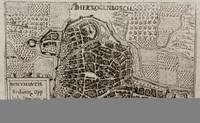
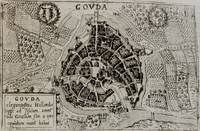
1713M8139Italy c.1713. Very Good. Notes: Holland.<br>Savonarola used the pseudonym Alphonsus Lasor a Varea. Monk of Theatine order who worked in the monastery library in Padua. He was also Professor of Holy Scripture. Universes Terrarum Orbis Scriptorum. Size : 85x132 mm 3.35x5.20 Inches Coloring: Black & White Reference: Mickwitz A.M. Miekkavaara L. and Rantenen T. The A.E. Nordenskiold Collection in the Helsinki University Library Volume 2 1981 pp. 269- 276 Category: Maps Europe Benelux; unknown
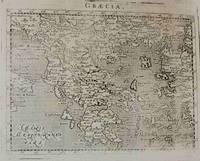
1713M8155Italy c.1713. Very Good. Notes: Savonarola used the pseudonym Alphonsus Lasor a Varea. Monk of Theatine order who worked in the monastery library in Padua. He was also Professor of Holy Scripture. Universes Terrarum Orbis Scriptorum. Size : 123x175 mm 4.84x6.89 Inches Coloring: Black & White Reference: Mickwitz A.M. Miekkavaara L. and Rantenen T. The A.E. Nordenskiold Collection in the Helsinki University Library Volume 2 1981 pp. 269- 276 Category: Maps Europe Greece Macedonia; unknown
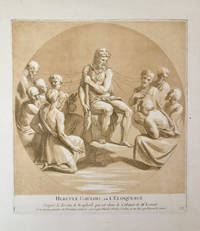
17296061729. Chiaroscuro woodcut printed from two blocks in beige and olive with etching and aquatint on cream laid paper 11 1/8 x 10 inches 281 x 252 mm plate full margins with the text printing clearly below in olive ink. In very good condition with no visible defects other than one pinpoint sized spot of foxing on the verso left sheet center. Charles Nicolas Cochin père did the etching Vincent Le Sueur did the chiaroscuro woodcut. After a Drawing by Raffaello Sanzio. The supposed Raphael drawing on which the print is based is now identified as "school of" but the print remains as beautiful despite the re-attribution. The Cabinet Crozat was a collection of prints after drawings in the collection of Pierre Crozat then known as one of the finest collections in the world. Many of the prints which were by various hands were made in the unusual combination of etching with chiaroscuro woodcut superimposed upon it. In this case Cochin did the etching and Le Sueur the chiaroscuro woodcut. Registration must have been a problem but here at least the plate and the blocks are almost perfectly aligned. unknown
1713M8171Italy c.1713. Very Good. Notes: Holland.<br>Savonarola used the pseudonym Alphonsus Lasor a Varea. Monk of Theatine order who worked in the monastery library in Padua. He was also Professor of Holy Scripture. Universes Terrarum Orbis Scriptorum. Size : 85x132 mm 3.35x5.20 Inches Coloring: Black & White Reference: Mickwitz A.M. Miekkavaara L. and Rantenen T. The A.E. Nordenskiold Collection in the Helsinki University Library Volume 2 1981 pp. 269- 276 Category: Maps Europe Benelux; unknown
175317486PALMA: Antonio Guasp 1753. Primera edición.- 4º.- 1 hoja portada.- 16 páginas.- Rústica.- 1 lámina al cobre representando el escudo nobliario de la familia Damero y firmado en plancha por Fr. Alberto Burguny. Buena impresión con texto dentro de una orla xilogáfica. El ejemplar está falto de la última hoja. No en Bover Antonio Guasp unknown
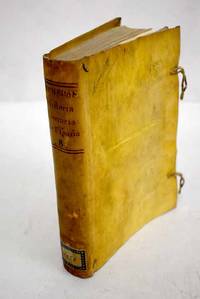
17813069937Madrid.: Joachin Ibarra. 1781. Hardcover. Cubierta deslucida. Good. 21 cm. 1 v. Encuadernación en Pergamino. Literatura española. Historia y crítica. Rodríguez Mohedano Pedro. coaut. Ibarra Joaquín. 1725-1785 . Cubierta deslucida. Literatura.82 82 Joachin Ibarra. hardcover
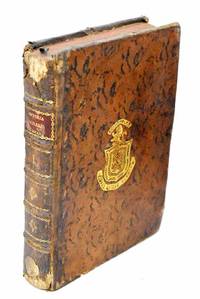
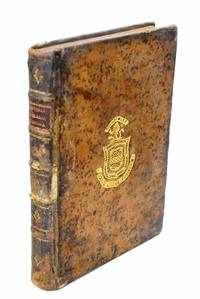
17663306033En Madrid.: en la Imprenta de Antonio Perez de Soto. 1766. Hardcover. Cubierta deslucida. Good. 20 cm. 415 p. Encuadernación en tapa dura artesanal en plena piel con escudo dorado en cubierta. Rodríguez Mohedano Rafael 1725-1783. Tomo I - X. Aguilar Piñal. Bib. S. XVIII. La mención de tomo en el t. I consta en la anteportada . Cubierta deslucida. en la Imprenta de Antonio Perez de Soto. hardcover
17663306034En Madrid.: en la Imprenta de Antonio Perez de Soto. 1766. Hardcover. Cubierta deslucida. Good. 20 cm. 415 p. Encuadernación en tapa dura artesanal en plena piel con escudo dorado en cubierta. Rodríguez Mohedano Rafael 1725-1783. T. II con pie de imprenta de Francisco Xavier Garcia y fechas de 1768 y 1770 . Cubierta deslucida. en la Imprenta de Antonio Perez de Soto. hardcover
1713M8167Italy c.1713. Very Good. Notes: Savonarola used the pseudonym Alphonsus Lasor a Varea. Monk of Theatine order who worked in the monastery library in Padua. He was also Professor of Holy Scripture. Universes Terrarum Orbis Scriptorum. Size : 110x152 mm 4.33x5.98 Inches Coloring: Black & White Reference: Mickwitz A.M. Miekkavaara L. and Rantenen T. The A.E. Nordenskiold Collection in the Helsinki University Library Volume 2 1981 pp. 269- 276<br> Category: Maps Europe Benelux; unknown
1713M8199Italy c.1713. Very Good. Notes: Savonarola used the pseudonym Alphonsus Lasor a Varea. Monk of Theatine order who worked in the monastery library in Padua. He was also Professor of Holy Scripture. Universes Terrarum Orbis Scriptorum. Size : 203x150 mm 7.99x5.91 Inches Coloring: Black & White Reference: Mickwitz A.M. Miekkavaara L. and Rantenen T. The A.E. Nordenskiold Collection in the Helsinki University Library Volume 2 1981 pp. 269- 276 Category: Maps Europe Greece Macedonia; unknown
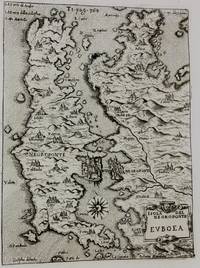
1713M8150Italy c.1713. Very Good. Notes: Eastern Greece<br>Euboea is the second largest Greek island in area and population after Crete.<br><br>Savonarola used the pseudonym Alphonsus Lasor a Varea. Monk of Theatine order who worked in the monastery library in Padua. He was also Professor of Holy Scripture. Universes Terrarum Orbis Scriptorum. Size : 205x152 mm 8.07x5.98 Inches Coloring: Black & White Reference: Mickwitz A.M. Miekkavaara L. and Rantenen T. The A.E. Nordenskiold Collection in the Helsinki University Library Volume 2 1981 pp. 269- 276 Category: Maps Europe Greece Macedonia; unknown
1713M8299Italy c. 1713. Very Good. Notes: Savonarola used the pseudonym Alphonsus Lasor a Varea. Monk of Theatine order who worked in the monastery library in Padua. He was also Professor of Holy Scripture. Universes Terrarum Orbis Scriptorum. Size : 203x150 mm 7.99x5.91 Inches Coloring: Hand Colored Category: Maps Europe Greece Macedonia; unknown
1713M8137Italy c.1713. Very Good. Notes: Southern Greece.<br>Savonarola used the pseudonym Alphonsus Lasor a Varea. Monk of Theatine order who worked in the monastery library in Padua. He was also Professor of Holy Scripture. Universes Terrarum Orbis Scriptorum. Size : 207x155 mm 8.15x6.10 Inches Coloring: Black & White Reference: Mickwitz A.M. Miekkavaara L. and Rantenen T. The A.E. Nordenskiold Collection in the Helsinki University Library Volume 2 1981 pp. 269- 276 Category: Maps Europe Greece Macedonia; unknown
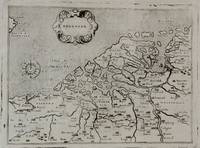
1713M8158Italy c.1713. Very Good. Notes: Southern Holland<br><br>Savonarola used the pseudonym Alphonsus Lasor a Varea. Monk of Theatine order who worked in the monastery library in Padua. He was also Professor of Holy Scripture. Universes Terrarum Orbis Scriptorum. Size : 107x148 mm 4.21x5.83 Inches Coloring: Black & White Reference: Mickwitz A.M. Miekkavaara L. and Rantenen T. The A.E. Nordenskiold Collection in the Helsinki University Library Volume 2 1981 pp. 269- 276 Category: Maps Europe Benelux; unknown
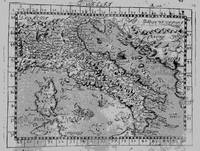
1713M8144Itlay c.1713. Very Good. Notes: Savonarola used the pseudonym Alphonsus Lasor a Varea. Monk of Theatine order who worked in the monastery library in Padua. He was also Professor of Holy Scripture. Universes Terrarum Orbis Scriptorum. Size : 132x176 mm 5.20x6.93 Inches Coloring: Black & White Reference: Mickwitz A.M. Miekkavaara L. and Rantenen T. The A.E. Nordenskiold Collection in the Helsinki University Library Volume 2 1981 pp. 269- 276<br> Category: Maps Europe Italy; unknown
177020166Rome 1770. Copper engraving on two joined sheets by Ottaviani after drawings by Savorelli and Camporesi printed in light brown coloured ink with contemporary hand-colouring. Neat marginal restoration. A stunning plate from "Logge di Rafaele nel Vaticano": with contemporary colouring of the highest quality from the golden age of the hand-coloured print. The main panel shows Jacob at Luza having a vision of the angels ascending and descending by a ladder which reached from earth to heaven.<br/> <br/> A very fine image from the second part of a work titled "Loggie di Rafaele nel Vaticano" depicting the decorative work executed by Raphael and his assistants between 1518-1519 in the Vatican. They were drawn by Gaetano Savorelli a Roman painter and draughtsman best known for his Raphael drawings and Pietro Camporesi a Roman architect who worked for Pope Clemens XIII and Pius VI on rooms for the Vatican Museum. The first to illustrate the famous frescoes these beautiful plates were probably planned as early as 1760 but were not executed until 1772 to 1776. The plate is remarkable not only as the first important visual record of Raphael's work but also for the quality of the hand-colouring - the work on this image is in our opinion some of the greatest to be produced in Europe during the whole of the eighteenth century: the golden age of the hand-coloured print. They were remarkable not just for their size and magnificent colouring but also because of the influence they had on contemporary taste. The decision was made to "borrow" elements from Raphael's Vatican tapestries and insert them where the original frescoes were in too poor a state to be legible. The finished plates therefore represented an amalgam of design elements presented with a crisp freshness of colour that held enormous appeal and did much to stimulate the taste for the "grotesque" in the Neo-classical period. A year after the death of his principal patron Julius II Raphael succeeded Donato Bramante in 1514 as the official Vatican architect. Having previously adorned the "Stanze" or chambers of Julius on the second floor of the papal apartments in the Vatican palace he was commissioned by Leo X in 1517 to decorate the adjacent Logge. He designed an elaborate cycle of ornamental frescoes for the room's ceiling vaults doors and auxiliary pillars which were executed by his assistants Giulio Romano and Giovanni da Udine. Twelve of the quadrilateral ceiling vaults were adorned with murals of familiar Old Testament scenes and one with a scene from the New Testament while the more decorative frescoes painted on the pilasters by Udine were covered with imaginative compositions of 'grotesque' motifs like foliage fruit and chimerical beasts.<br/> <br/> Cf. Brunet IV 1110 & 1111; cf. Berlin Katalog 4068 & 4066; "Raphael Invenit: Stampe da Rafaello" 1985 Ottaviano 22; cf. "Raphael: Reproduktions-graphik aus vier Jahrhunderten" Coburg 1984 104 & no. 245. unknown
177020166Rome 1770. Copper engraving on two joined sheets by Ottaviani after drawings by Savorelli and Camporesi printed in light brown coloured ink with contemporary hand-colouring. Neat marginal restoration. A stunning plate from "Logge di Rafaele nel Vaticano": with contemporary colouring of the highest quality from the golden age of the hand-coloured print. The main panel shows Jacob at Luza having a vision of the angels ascending and descending by a ladder which reached from earth to heaven.<br/> <br/>A very fine image from the second part of a work titled "Loggie di Rafaele nel Vaticano" depicting the decorative work executed by Raphael and his assistants between 1518-1519 in the Vatican. They were drawn by Gaetano Savorelli a Roman painter and draughtsman best known for his Raphael drawings and Pietro Camporesi a Roman architect who worked for Pope Clemens XIII and Pius VI on rooms for the Vatican Museum. The first to illustrate the famous frescoes these beautiful plates were probably planned as early as 1760 but were not executed until 1772 to 1776. The plate is remarkable not only as the first important visual record of Raphael's work but also for the quality of the hand-colouring - the work on this image is in our opinion some of the greatest to be produced in Europe during the whole of the eighteenth century: the golden age of the hand-coloured print. They were remarkable not just for their size and magnificent colouring but also because of the influence they had on contemporary taste. The decision was made to "borrow" elements from Raphael's Vatican tapestries and insert them where the original frescoes were in too poor a state to be legible. The finished plates therefore represented an amalgam of design elements presented with a crisp freshness of colour that held enormous appeal and did much to stimulate the taste for the "grotesque" in the Neo-classical period. A year after the death of his principal patron Julius II Raphael succeeded Donato Bramante in 1514 as the official Vatican architect. Having previously adorned the "Stanze" or chambers of Julius on the second floor of the papal apartments in the Vatican palace he was commissioned by Leo X in 1517 to decorate the adjacent Logge. He designed an elaborate cycle of ornamental frescoes for the room's ceiling vaults doors and auxiliary pillars which were executed by his assistants Giulio Romano and Giovanni da Udine. Twelve of the quadrilateral ceiling vaults were adorned with murals of familiar Old Testament scenes and one with a scene from the New Testament while the more decorative frescoes painted on the pilasters by Udine were covered with imaginative compositions of 'grotesque' motifs like foliage fruit and chimerical beasts.<br/> <br/>Cf. Brunet IV 1110 & 1111; cf. Berlin "Kat". 4068 & 4066; "Raphael Invenit: Stampe da Rafaello" 1985 Ottaviano 22; cf. "Raphael: Reproduktions-graphik aus vier Jahrhunderten" Coburg 1984 104 & no. 245. unknown books
177420167Rome 1774. Copper engraving on two joined sheets by Ottaviani after drawings by Savorelli and Camporesi printed in light brown coloured ink with contemporary hand-colouring. Neat marginal restoration. A stunning plate from "Logge di Rafaele nel Vaticano": with contemporary colouring of the highest quality from the golden age of the hand-coloured print. The main panel shows Joseph telling his brothers of his prophetic dreams "Hear my dream which I dreamed. I thought we were binding sheaves in the field: and my sheaf arose as it were and stood and your sheaves standing about bowed down before my sheaf . I saw in . another dream as it were the sun and the moon and eleven stars worshipping me."<br/> <br/> A very fine image from the second part of a work titled "Loggie di Rafaele nel Vaticano" depicting the decorative work executed by Raphael and his assistants between 1518-1519 in the Vatican. They were drawn by Gaetano Savorelli a Roman painter and draughtsman best known for his Raphael drawings and Pietro Camporesi a Roman architect who worked for Pope Clemens XIII and Pius VI on rooms for the Vatican Museum. The first to illustrate the famous frescoes these beautiful plates were probably planned as early as 1760 but were not executed until 1772 to 1776. The plate is remarkable not only as the first important visual record of Raphael's work but also for the quality of the hand-colouring - the work on this image is in our opinion some of the greatest to be produced in Europe during the whole of the eighteenth century: the golden age of the hand-coloured print. They were remarkable not just for their size and magnificent colouring but also because of the influence they had on contemporary taste. The decision was made to "borrow" elements from Raphael's Vatican tapestries and insert them where the original frescoes were in too poor a state to be legible. The finished plates therefore represented an amalgam of design elements presented with a crisp freshness of colour that held enormous appeal and did much to stimulate the taste for the "grotesque" in the Neo-classical period. A year after the death of his principal patron Julius II Raphael succeeded Donato Bramante in 1514 as the official Vatican architect. Having previously adorned the "Stanze" or chambers of Julius on the second floor of the papal apartments in the Vatican palace he was commissioned by Leo X in 1517 to decorate the adjacent Logge. He designed an elaborate cycle of ornamental frescoes for the room's ceiling vaults doors and auxiliary pillars which were executed by his assistants Giulio Romano and Giovanni da Udine. Twelve of the quadrilateral ceiling vaults were adorned with murals of familiar Old Testament scenes and one with a scene from the New Testament while the more decorative frescoes painted on the pilasters by Udine were covered with imaginative compositions of 'grotesque' motifs like foliage fruit and chimerical beasts.<br/> <br/> Cf. Brunet IV 1110 & 1111; cf. Berlin Katalog 4068 & 4066; "Raphael Invenit: Stampe da Rafaello" 1985 Ottaviano 22; cf. "Raphael: Reproduktions-graphik aus vier Jahrhunderten" Coburg 1984 104 & no. 245. unknown
177420167Rome 1774. Copper engraving on two joined sheets by Ottaviani after drawings by Savorelli and Camporesi printed in light brown coloured ink with contemporary hand-colouring. Neat marginal restoration. A stunning plate from "Logge di Rafaele nel Vaticano": with contemporary colouring of the highest quality from the golden age of the hand-coloured print. The main panel shows Joseph telling his brothers of his prophetic dreams "Hear my dream which I dreamed. I thought we were binding sheaves in the field: and my sheaf arose as it were and stood and your sheaves standing about bowed down before my sheaf . I saw in . another dream as it were the sun and the moon and eleven stars worshipping me."<br/> <br/>A very fine image from the second part of a work titled "Loggie di Rafaele nel Vaticano" depicting the decorative work executed by Raphael and his assistants between 1518-1519 in the Vatican. They were drawn by Gaetano Savorelli a Roman painter and draughtsman best known for his Raphael drawings and Pietro Camporesi a Roman architect who worked for Pope Clemens XIII and Pius VI on rooms for the Vatican Museum. The first to illustrate the famous frescoes these beautiful plates were probably planned as early as 1760 but were not executed until 1772 to 1776. The plate is remarkable not only as the first important visual record of Raphael's work but also for the quality of the hand-colouring - the work on this image is in our opinion some of the greatest to be produced in Europe during the whole of the eighteenth century: the golden age of the hand-coloured print. They were remarkable not just for their size and magnificent colouring but also because of the influence they had on contemporary taste. The decision was made to "borrow" elements from Raphael's Vatican tapestries and insert them where the original frescoes were in too poor a state to be legible. The finished plates therefore represented an amalgam of design elements presented with a crisp freshness of colour that held enormous appeal and did much to stimulate the taste for the "grotesque" in the Neo-classical period. A year after the death of his principal patron Julius II Raphael succeeded Donato Bramante in 1514 as the official Vatican architect. Having previously adorned the "Stanze" or chambers of Julius on the second floor of the papal apartments in the Vatican palace he was commissioned by Leo X in 1517 to decorate the adjacent Logge. He designed an elaborate cycle of ornamental frescoes for the room's ceiling vaults doors and auxiliary pillars which were executed by his assistants Giulio Romano and Giovanni da Udine. Twelve of the quadrilateral ceiling vaults were adorned with murals of familiar Old Testament scenes and one with a scene from the New Testament while the more decorative frescoes painted on the pilasters by Udine were covered with imaginative compositions of 'grotesque' motifs like foliage fruit and chimerical beasts.<br/> <br/>Cf. Brunet IV 1110 & 1111; cf. Berlin "Kat". 4068 & 4066; "Raphael Invenit: Stampe da Rafaello" 1985 Ottaviano 22; cf. "Raphael: Reproduktions-graphik aus vier Jahrhunderten" Coburg 1984 104 & no. 245. unknown books
177420169Rome 1774. Copper engraving on two joined sheets by Ottaviani after drawings by Savorelli and Camporesi printed in light brown coloured ink with contemporary hand-colouring. Neat marginal restoration. A stunning plate from "Logge di Rafaele nel Vaticano": with contemporary colouring of the highest quality from the golden age of the hand-coloured print. The main panel shows King David having subdued Syria returning to Jersusalem with armour made of gold.<br/> <br/> A very fine image from the second part of a work titled "Loggie di Rafaele nel Vaticano" depicting the decorative work executed by Raphael and his assistants between 1518-1519 in the Vatican. They were drawn by Gaetano Savorelli a Roman painter and draughtsman best known for his Raphael drawings and Pietro Camporesi a Roman architect who worked for Pope Clemens XIII and Pius VI on rooms for the Vatican Museum. The first to illustrate the famous frescoes these beautiful plates were probably planned as early as 1760 but were not executed until 1772 to 1776. The plate is remarkable not only as the first important visual record of Raphael's work but also for the quality of the hand-colouring - the work on this image is in our opinion some of the greatest to be produced in Europe during the whole of the eighteenth century: the golden age of the hand-coloured print. They were remarkable not just for their size and magnificent colouring but also because of the influence they had on contemporary taste. The decision was made to "borrow" elements from Raphael's Vatican tapestries and insert them where the original frescoes were in too poor a state to be legible. The finished plates therefore represented an amalgam of design elements presented with a crisp freshness of colour that held enormous appeal and did much to stimulate the taste for the "grotesque" in the Neo-classical period. A year after the death of his principal patron Julius II Raphael succeeded Donato Bramante in 1514 as the official Vatican architect. Having previously adorned the "Stanze" or chambers of Julius on the second floor of the papal apartments in the Vatican palace he was commissioned by Leo X in 1517 to decorate the adjacent Logge. He designed an elaborate cycle of ornamental frescoes for the room's ceiling vaults doors and auxiliary pillars which were executed by his assistants Giulio Romano and Giovanni da Udine. Twelve of the quadrilateral ceiling vaults were adorned with murals of familiar Old Testament scenes and one with a scene from the New Testament while the more decorative frescoes painted on the pilasters by Udine were covered with imaginative compositions of 'grotesque' motifs like foliage fruit and chimerical beasts.<br/> <br/> Cf. Brunet IV 1110 & 1111; cf. Berlin Katalog 4068 & 4066; "Raphael Invenit: Stampe da Rafaello" 1985 Ottaviano 22; cf. "Raphael: Reproduktions-graphik aus vier Jahrhunderten" Coburg 1984 104 & no. 245. unknown
177420169Rome 1774. Copper engraving on two joined sheets by Ottaviani after drawings by Savorelli and Camporesi printed in light brown coloured ink with contemporary hand-colouring. Neat marginal restoration. A stunning plate from "Logge di Rafaele nel Vaticano": with contemporary colouring of the highest quality from the golden age of the hand-coloured print. The main panel shows King David having subdued Syria returning to Jersusalem with armour made of gold.<br/> <br/>A very fine image from the second part of a work titled "Loggie di Rafaele nel Vaticano" depicting the decorative work executed by Raphael and his assistants between 1518-1519 in the Vatican. They were drawn by Gaetano Savorelli a Roman painter and draughtsman best known for his Raphael drawings and Pietro Camporesi a Roman architect who worked for Pope Clemens XIII and Pius VI on rooms for the Vatican Museum. The first to illustrate the famous frescoes these beautiful plates were probably planned as early as 1760 but were not executed until 1772 to 1776. The plate is remarkable not only as the first important visual record of Raphael's work but also for the quality of the hand-colouring - the work on this image is in our opinion some of the greatest to be produced in Europe during the whole of the eighteenth century: the golden age of the hand-coloured print. They were remarkable not just for their size and magnificent colouring but also because of the influence they had on contemporary taste. The decision was made to "borrow" elements from Raphael's Vatican tapestries and insert them where the original frescoes were in too poor a state to be legible. The finished plates therefore represented an amalgam of design elements presented with a crisp freshness of colour that held enormous appeal and did much to stimulate the taste for the "grotesque" in the Neo-classical period. A year after the death of his principal patron Julius II Raphael succeeded Donato Bramante in 1514 as the official Vatican architect. Having previously adorned the "Stanze" or chambers of Julius on the second floor of the papal apartments in the Vatican palace he was commissioned by Leo X in 1517 to decorate the adjacent Logge. He designed an elaborate cycle of ornamental frescoes for the room's ceiling vaults doors and auxiliary pillars which were executed by his assistants Giulio Romano and Giovanni da Udine. Twelve of the quadrilateral ceiling vaults were adorned with murals of familiar Old Testament scenes and one with a scene from the New Testament while the more decorative frescoes painted on the pilasters by Udine were covered with imaginative compositions of 'grotesque' motifs like foliage fruit and chimerical beasts.<br/> <br/>Cf. Brunet IV 1110 & 1111; cf. Berlin "Kat". 4068 & 4066; "Raphael Invenit: Stampe da Rafaello" 1985 Ottaviano 22; cf. "Raphael: Reproduktions-graphik aus vier Jahrhunderten" Coburg 1984 104 & no. 245. unknown books
177420170Rome 1774. Copper engraving on two joined sheets by Ottaviani after drawings by Savorelli and Camporesi printed in light brown coloured ink with contemporary hand-colouring. Neat marginal restoration. A stunning plate from "Logge di Rafaele nel Vaticano": with contemporary colouring of the highest quality from the golden age of the hand-coloured print. The main panel shows the moment during the Last Supper when Jesus announces that one of the twelve disciples will betray him.<br/> <br/> A very fine image from the second part of a work titled "Loggie di Rafaele nel Vaticano" depicting the decorative work executed by Raphael and his assistants between 1518-1519 in the Vatican. They were drawn by Gaetano Savorelli a Roman painter and draughtsman best known for his Raphael drawings and Pietro Camporesi a Roman architect who worked for Pope Clemens XIII and Pius VI on rooms for the Vatican Museum. The first to illustrate the famous frescoes these beautiful plates were probably planned as early as 1760 but were not executed until 1772 to 1776. The plate is remarkable not only as the first important visual record of Raphael's work but also for the quality of the hand-colouring - the work on this image is in our opinion some of the greatest to be produced in Europe during the whole of the eighteenth century: the golden age of the hand-coloured print. They were remarkable not just for their size and magnificent colouring but also because of the influence they had on contemporary taste. The decision was made to "borrow" elements from Raphael's Vatican tapestries and insert them where the original frescoes were in too poor a state to be legible. The finished plates therefore represented an amalgam of design elements presented with a crisp freshness of colour that held enormous appeal and did much to stimulate the taste for the "grotesque" in the Neo-classical period. A year after the death of his principal patron Julius II Raphael succeeded Donato Bramante in 1514 as the official Vatican architect. Having previously adorned the "Stanze" or chambers of Julius on the second floor of the papal apartments in the Vatican palace he was commissioned by Leo X in 1517 to decorate the adjacent Logge. He designed an elaborate cycle of ornamental frescoes for the room's ceiling vaults doors and auxiliary pillars which were executed by his assistants Giulio Romano and Giovanni da Udine. Twelve of the quadrilateral ceiling vaults were adorned with murals of familiar Old Testament scenes and one with a scene from the New Testament while the more decorative frescoes painted on the pilasters by Udine were covered with imaginative compositions of 'grotesque' motifs like foliage fruit and chimerical beasts.<br/> <br/> Cf. Brunet IV 1110 & 1111; cf. Berlin Katalog 4068 & 4066; "Raphael Invenit: Stampe da Rafaello" 1985 Ottaviano 22; cf. "Raphael: Reproduktions-graphik aus vier Jahrhunderten" Coburg 1984 104 & no. 245. unknown
177420170Rome 1774. Copper engraving on two joined sheets by Ottaviani after drawings by Savorelli and Camporesi printed in light brown coloured ink with contemporary hand-colouring. Neat marginal restoration. A stunning plate from "Logge di Rafaele nel Vaticano": with contemporary colouring of the highest quality from the golden age of the hand-coloured print. The main panel shows the moment during the Last Supper when Jesus announces that one of the twelve disciples will betray him.<br/> <br/>A very fine image from the second part of a work titled "Loggie di Rafaele nel Vaticano" depicting the decorative work executed by Raphael and his assistants between 1518-1519 in the Vatican. They were drawn by Gaetano Savorelli a Roman painter and draughtsman best known for his Raphael drawings and Pietro Camporesi a Roman architect who worked for Pope Clemens XIII and Pius VI on rooms for the Vatican Museum. The first to illustrate the famous frescoes these beautiful plates were probably planned as early as 1760 but were not executed until 1772 to 1776. The plate is remarkable not only as the first important visual record of Raphael's work but also for the quality of the hand-colouring - the work on this image is in our opinion some of the greatest to be produced in Europe during the whole of the eighteenth century: the golden age of the hand-coloured print. They were remarkable not just for their size and magnificent colouring but also because of the influence they had on contemporary taste. The decision was made to "borrow" elements from Raphael's Vatican tapestries and insert them where the original frescoes were in too poor a state to be legible. The finished plates therefore represented an amalgam of design elements presented with a crisp freshness of colour that held enormous appeal and did much to stimulate the taste for the "grotesque" in the Neo-classical period. A year after the death of his principal patron Julius II Raphael succeeded Donato Bramante in 1514 as the official Vatican architect. Having previously adorned the "Stanze" or chambers of Julius on the second floor of the papal apartments in the Vatican palace he was commissioned by Leo X in 1517 to decorate the adjacent Logge. He designed an elaborate cycle of ornamental frescoes for the room's ceiling vaults doors and auxiliary pillars which were executed by his assistants Giulio Romano and Giovanni da Udine. Twelve of the quadrilateral ceiling vaults were adorned with murals of familiar Old Testament scenes and one with a scene from the New Testament while the more decorative frescoes painted on the pilasters by Udine were covered with imaginative compositions of 'grotesque' motifs like foliage fruit and chimerical beasts.<br/> <br/>Cf. Brunet IV 1110 & 1111; cf. Berlin "Kat". 4068 & 4066; "Raphael Invenit: Stampe da Rafaello" 1985 Ottaviano 22; cf. "Raphael: Reproduktions-graphik aus vier Jahrhunderten" Coburg 1984 104 & no. 245. unknown books
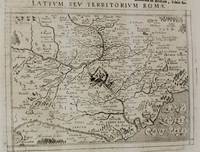
1713M8162Italy c.1713. Very Good. Notes: Savonarola used the pseudonym Alphonsus Lasor a Varea. Monk of Theatine order who worked in the monastery library in Padua. He was also Professor of Holy Scripture. Universes Terrarum Orbis Scriptorum. Size : 125x175 mm 4.92x6.89 Inches Coloring: Black & White Reference: Mickwitz A.M. Miekkavaara L. and Rantenen T. The A.E. Nordenskiold Collection in the Helsinki University Library Volume 2 1981 pp. 269- 276<br> Category: Maps Europe Italy Rome; unknown
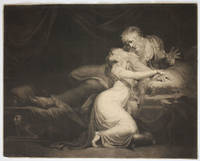
178421751784. Mezzotint. 435mm by 550mm. Scene from Shakespeare's 'King Lear'; Lear reclining on bed beneath curtain awakened to find the spirit of Cordelia kneeling beside his bed holding his hand and looking into his eyes.<br /> Trimmed with loss of margins and title area. Faint creasing at top of the image. A couple of small marginal breaks. unknown