REMBRANDT van RijnBiblio.com
7 428 résultats
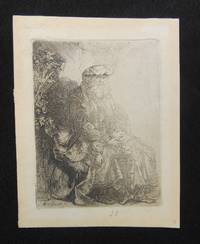
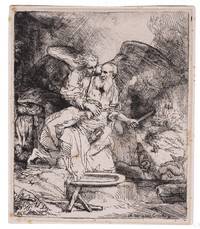
1655L2F9MTNGS4Y7Amsterdam 1655. 4to leaf 16.5 x 14 cm. Rembrandt Mounted with two hinges in a passepartout which is kept in sturdy cardboard folder covered on the outside with beige suede. Etching and drypoint on European laid paper plate size 15.7 x 13.2 cm. A fine impression of one of Rembrandt's most famous prints "Abraham's sacrifice" illustrating Genesis 22: 10-12 where Abraham after god ordered him to sacrifice his only son Isaac raises his knife to do so but is stayed by an angel who reveals that it was only a test of his obedience to god. In the Bible the angel merely speaks to Abraham but Rembrandt made the scene much more intimate with the angel reaching around Abraham from behind almost in an embrace holding his left arm with the knife just above the elbow and his right arm holding Isaac's head near the wrist. The Dutch States Bible of 1637 does place the angel behind Abraham but still only speaking to him. Rembrandt made the etching in 1655 and no variant states are known. It differs greatly from his 1635 painting of the same subject where the figures are not so closely united and neither Abraham nor the angel expresses such tenderness. The present example of the etching retains the finest lines very clearly for example in the background along the edge of the angel's left wing between the highest point of the wing and the top of Abraham's head and shows considerable burr giving the scene a powerful richness and contrast.The etching has two collectors' stamps on the back: those of Count Johann Nepomuk Ernst Harrach 1756-1829 and Senator Johann Karl Brönner 1738-1812. The etching came into the hands of the Dutch Dreesmann family art collectors and founders in 1887 of the Vroom & Dreesmann department stores who gave it to the Van Ravesteijn family before 1982 for services rendered. With minor foxing but otherwise in fine condition. A fine example of one of Rembrandt's most famous etchings.l Hind 283; Laurentius Rembrandts etchings 19; New Hollstein Rembrandt 287; Perlove & Silver Rembrandts faith pp. 86-92; White & Boon B35. ABE CAT Art History ABE CAT Bibles Sermons & Psalmbooks unknown
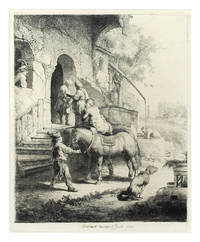
122965Rembrandt inventor et feecit sic: 1633. Large 4to 255 x 207 mm. A fine impression with ample margins outside the plate mark on paper with a foolscap watermark. Archivally framed. § A fine impression of one of only two etchings in which Rembrandt reproduced his own paintings the other is Christ Before Pilate. This etching depicts the final scene in the parable of The Good Samaritan Luke 10:25-37 in which the Samaritan stopped to help a traveler who had been attacked by robbers. Here he has brought the wounded man on horseback to an inn and pays for the man’s care and lodging. The Good Samaritan repeats with a number of variations the composition of his painting in the Wallace Collection London. Among Rembrandt’s additions here to the largely empty foreground that appeared in the painting is the defecating dog that adds a strange note of everyday reality to the biblical scene. Provenance: Albertina Lugt 5d released as a duplicate: Robert Dumesnil Lugt 2200; private collection USA from Paul McCarron c. 1970 p.o.r. 1633. Large 4to unknown books
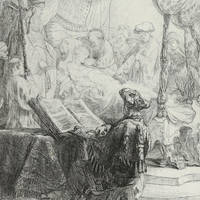
77108Amsterdam Rembrandt van Rijn 1639. Broadsheet. 43.1 x 33.6 print size 39.2 x 31.0 cm = The Death of the Virgin ranks amongst Rembrandt's most impressive and typical etchings especially among his works dealing with scenes from the New Testament. "About 1628 Rembrandt made his first etchings. Unlike drawing etching is not a natural counterpart to painting and his decision to begin etching meant taking a significant new direction in his career. Much of his international fame during his lifetime would be based on the widely disseminated prints he produced from the 300 or so etchings he made over the course of his career. Analysis of Rembrandts early etched oeuvre gives the impression that he was basically self-taught in this field. Whereas Rembrandts contemporaries adopted the regular almost stylized manner of applying lines and hatchings that could be found in the much more common copper engravings Rembrandt almost from the outset used a much freer technique which at first strikes the viewer as uncontrolled even nervous. Thanks to this new technique however he succeeded in developing a method of working that appears partly sketchlike yet which could also be described as painterly. The painterly quality of his etchings is mainly due to the way in which he achieved an extraordinarily suggestive play of light and dark and how he created a convincing sense of atmospheric space using different methods of hatching. The revolutionary change that took place in Rembrandts style between about 1627 and 1629 involved the role of light. By concentrating the light and by exaggerating the diminuendo of the force of light in relation to the distance from the light source Rembrandt arrived at what could crudely be termed 'spotlight' effects. In order to create convincing light effects Rembrandt-like Caravaggio his great Italian precursor in this field-had to compensate by leaving large areas shrouded in shadow." Brittanica. A fine etching being the third and last state with a remarkable wide margin. Very often Rembrandt's etchings are trimmed to the margin but this copy escaped from such barbarism. One hardly noticeable pinpoint hole otherwise fine. In all an excellent clean copy. Provenance: William Sharp of Manchester a friend of Sir Mark Masterman Sykes 1771-1823 one of the great connoisseurs of the period who owned nearly 100000 prints. Sharp's collection was sold at Sotheby's on March 1st 1878 and 11 following days. According to Lugt the collector's identity may also be that of William Sharp 1795-1881 of Enwood Court Handsworth near Birmingham 'a lead and glass merchant originally from Manchester' whom Waagen met during a visit to the midlands in 1854 or perhaps his father; Collection of Sir Lawrence Gowing 1918-1991. Hollstein XIX B99 p. 54. unknown
10850Wien / Baden bei Wien, Gesellschaft für vervielfältigende Kunst / Verlag Rudolf Rohrer, 1889 bis 1938. 39 volumes (36 in-folio et 3 in-4). Les 5 premiers pleine percaline brune, titre et décors dorés et noirs aux dos, premiers plats richement décorés (doré, noir et à froid), plats biseautés, tranches dorées pour le volume 5. Du 6e au 36e, pleine toile grège d'éditeur, titre et décors rouges jusqu'au 23e, vert pour les suivants, tranches marbrées ou teintées. Les 3 volumes in-4 sont reliés pleine percaline bordeaux, titre doré aux dos, têtes dorées (plats un peu tachés). La toile de certains volumes est un peu poussiéreuse. Intérieur très frais, quelques rousseurs extrêmement rares, 1 planche et 1 cahier déboîtés. Les années 1909, 1917 et 1918 non reliées mais sous cartonnage toilé normal, 1917 en 3 numéros / 2 cahiers (sur 4 / 3), 1918 en 3 numéros / 2 cahiers (sur 4 / 3).
1865690601865. 29 inches x 24 inches. 29 inches x 24 inches. A Distinguished Politician and Jurist in Maryland and Pennsylvania Neagle John 1796-1865 Peale Rembrandt 1778-1860 After. Tilghman William 1756-1827. Portrait of William Tilghman. Philadelphia c. 1815. 29" x 24" image size. Oil on canvas in ornate nineteenth-century gilded wood frame small plaque reading "William Tilghman/ Chief Justice of Penna. 1806-1827/ Obiit Aril 30th 1827" to head of frame. Some minor nicks and chips to frame gilding slightly dulled otherwise fine. $6000. William Tilghman was a politician and jurist in Maryland and Pennsylvania. He was a member of the Maryland Assembly from 1788 to 1790 and of the Maryland Senate from 1791 to 1793 Chief Judge of the U.S. Circuit Court for Pennsylvania from 1801 to 1802 President Judge of Court of Common Pleas for Philadelphia District in 1805 and Chief Justice of the Pennsylvania Supreme Court 1806 to 1827. Tilghman ran unsuccessfully for Governor of Pennsylvania as a Federalist in 1811. This portrait belonged to the Philadelphia Bar Association. Founded in 1802 it is the oldest association of lawyers in the United States. Its library where this portrait was last displayed was renamed the Theodore F. Jenkins Memorial Law Library in 1967. unknown books
Das Werkverzeichnis der Gemälde Rembrandts, basierend auf dem entgültigen Stand der Rembrandt-Forschung. Mit dem Katalog der Gemälde, der Zu- u. Abschreibungen, Kopien und verschollenen Werke. Bd. I: 1625-1631. Bd. II: 1631-1634. Bd. III: 1635-1642. Bd. IV: Self-Portraits. Bd. V: Small scale history paintings. Bd. VI: A revised survey of Rembrandt's complete painted oeuvre in 6 volumes.
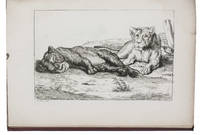
1729K53AKICPY8C5Amsterdam 1729. Oblong 4to 18.5 x 24 cm. Bernard Picart title-print also: Paris François Chereau Late 19th-century pimpled red cloth with the spine at the head of the pages sewn on 3 recessed cords each board with a blind frame of thick-thin rules the spine with gold fillets and lettering. Rebacked in red cloth with a small piece of the original backstrip laid down. With a letterpress title-page in red and black with Picarts engraved Inter omnes device with stars and attributes of bookselling and art 1 title-print and 42 lion prints in 6 series on 37 leaves the title labelled A0 and the lion prints A1-6 B1-6 C1-6 D1-6 E1-6 & F1-12 plate size A-E 12 x 17.5 cm; F 7 x 11.5 cm the F series with 2 prints per page all engraved by Bernard Picart after drawings made by himself 8 all from life Rembrandt 18 Charles le Brun 6 Albrecht Dürer 1 Paulus Potter 1 and unattributed 8. Further with 1 woodcut decorated initial. Set in roman types with incidental italic. 1 1 blank 6 pp. plus 37 engraved plates with title-print & 42 lion prints. First edition of a complete set of six series of lion prints 30 full-page 12 half-page on 36 inserted leaves engraved by Bernard Picart 1673-1733 including at least 8 from his own drawings from life and others after drawings by various masters including 18 after Rembrandt. Series A begins with a print showing 12 detail figures of paws and claws and continues with prints showing 2 lions each except 1 showing 1 lion. Series B shows lion heads 1 to 3 per print all after Le Brun. The rest show one lion each except 1 showing 2 lions. They depict male and female lions standing reclining and eating.Picart a celebrated French artist-engraver studied with his father and worked in Paris together with François Chéreau who sold the present print series there. He came to Holland in 1710 living and working in Amsterdam from 1711 to his death in 1733.One print B3 is sophisticated coming from another early edition. With small stains in the corners at the head of the leaves and with an occasional minor marginal defect but still in good condition. The binding is rebacked as noted but is otherwise good.l Cat. Rijksmuseum I p. 160 title-page: www.rijksmuseum.nl/nl/zoekenq=%22recueil%20de%20lions%22&v=&s=&ii=0&p=1; STCN 7 copies incl. 1 lacking title-page plus 1 set of the engravings alone; for Picart: Thieme & Becker XXVI pp. 572-573. ABE CAT Art History hardcover
200556659Springer-Verlag. New. 2005. Hardcover. 1402032803 . FREE UPGRADE to Courier/Priority Shipping Upon Request IN STOCK AND IMMEDIATELY AVAILABLE FOR SHIPMENT - FLAWLESS COPY BRAND NEW PRISTINE NEVER OPENED -- - 724 pp. With 675 ills. 252 col. and folded insert with 55 reference ills. 35 x 25 cm. -- with a bonus offer-- . Springer-Verlag hardcover
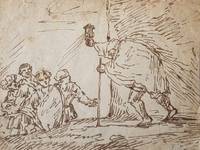
16502105Dutch mid-17th century drawing possibly by Rembrandt pupil Willem Drost. Depicted is Diogenes in robes with his lantern in his left hand and a staff in his right and a group of four figures. Diogenes the Cynic 4th cent. BC renounced material possessions and lived in poverty. He would go out with a lighted lantern in broad daylight to look for an honest man instead he would only find that everyone around him was morally corrupted. He would scare passersby with his lantern causing them to lose their mask and reveal their true intentions.In the present drawing the group of four is clearly scared by the lantern of Diogenes who seems to be towering over them. In fact the artist has placed Diogenes on a higher plane than the passersby an invention that effectively enhances the morality of the scene. This is not found in other contemporary depictions of the same story by artists like Rubens Sandrart Castiglione and Jordaens.The artistdisplays a masterful understanding and application of chiaroscuro. Not only does he use it for the composition he also applies it to benefit the narrative. Light is literally and figuratively at the center of the scene. The artist from the "Rembrandt school" who made most use of stark chiaroscuro in his drawings was Willem Drost 1633-1659. He became a student of Rembrandt around 1650 which corresponds with the dating of the watermark. The style of drawing is also close to drawings attributed to Drost. The facial type of Diogenes in particular the pointy nose corresponds with that found in each of Drost's drawings in the Rijksmuseum. Also the hatchingsmatch those in other works by Drost who made much use of individual lines instead of a continuous zig-zagging stroke and penstrokes of varying thickness to create depth in his compositions Bonny van Sighem 2000.<i>Condition: Number 3 in pencil at the bottom previous attribution to Ferdinand Bol written in pencil on the back. Several small brown spots and a couple minor defects including one on the face of the central figure in the group top edge slightly frayed and creaded. Old repair with tape on the back at the top.Literature: B. van Sighem 'attributed to Willem Drost David Prevents Abishai from Killing Saul Amsterdam c. 1650 - c. 1655' in J. Turner ed. Drawings by Rembrandt and his School in the Rijksmuseum online coll. cat. Amsterdam 2000 Bonny van Sighem 2000; for the watermark cf. Churchill fig. 305; Heawood 305 & 307.</i>
Acquaforte misure: mm 135 x 103 Rembrandt, pittore e incisore olandese, è considerato uno dei più grandi artisti della storia dell'arte europea e il più importante di quella olandese. Le sue opere furono popolari già durante la sua vita e si distinse nei ritratti, nei suoi autoritratti e nei soggetti tratti dalla Bibbia. Fu definito inoltre, proprio per il suo ineguagliabile chiaroscuro, "uno dei più grandi profeti della civiltà”, un maestro per tutti gli artisti che si sono accostati al linguaggio dell’incisione dopo di lui. Rembrandt anche quando lascia paesaggi o figure abbozzate "lo fa in funzione di un equilibrio formale diretto ad un impatto emotivo." Rembrandt realizzò, tra dipinti, acquaforti e disegni più di ottanta autoritratti. Si interrogava sul ruolo di uomo e di pittore e i suoi autoritratti sono un documento delle sue alterne fortune, della consapevolezza di sé e dell'evolversi del suo pensiero. In questo foglio l'artista si mostra all'osservatore guardandolo negli occhi dimostrando consapevolezza e suggerendo l'alta considerazione che la società dell'epoca gli riconosceva. Rembrandt indossa un costume cinquecentesco, berretto di velluto piumato, mantello foderato di pelliccia con alamari ornamentali sul davanti. Scegliendo tale attenzione ai particolari, un abbigliamento all'antica e tale postura Rembrandt vuole essere posto in relazione con i grandi artisti del XVI secolo, quale loro pari o erede artistico. Firma e data Rembrandt 1638, ancora visibili in alto a sinistra. Esemplare nel IV/V stato, con il graffio obliquo sul cappello ma prima di tutti i ritocchi aggiunti da Basan. Impressione nitida e completa benché leggermente scarica, impressa su carta vergellata priva di filigrana. Piccoli margini oltre la battuta del rame. Bibliografia: New Hollstein 170; Hind 1923 156; White & Boon 20
187881884John Murray. As New. 1878. Hardcover. FREE UPGRADE to Courier/Priority Shipping Upon Request - IN STOCK AND IMMEDIATELY AVAILABLE FOR SHIPMENT - AS NEW THE TEXT BLOCK IS PRISTINE CLEAN UNMARKED AND IN EXCELLENT CONDITION - - lx 341 pages 12 plates. -- with a bonus offer-- . John Murray hardcover
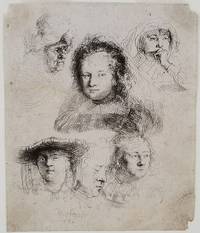
181523646Amsterdam 1815. In this etching Rembrandt has depicted his wife Saskia surrounded by six other subjects of different ages including his mother. The etching is reminiscent of a sketchbook page in which the artist practices different facial expressions and the fall of drapery on his subjects. Saskia receives the most detailed study with very fine lines used to draw her curls and a thin headdress. Each figure looks out in a different direction. <br /> <br /> There are approximately 125-225 known impressions of this work many posthumous. Nowell-Usticke B365. This impression is pre-1815 signed by the french printseller Naudet in 1801. This impression predates the 1815 restrike.<br /> <br /> Signed on the verso by the early Parisian print seller Naudet - "Chez Naudet Md au Louvre 1801". The "Md" is an abbreviation for 'Marchand" merchant. See Maberley Joseph "The Print Collector: An Introduction to the Knowledge Necessary for Forming." 1880 p.84 and Fagan Louis "Collectors' Marks" 1883 p. 73. There are several prints held in the Fitzwilliam Museum Cambridge with Naudet inscriptions one being "Two boys blowing bubbles. Bartsch 365; Hollstein White and Boon 365. 5 x 6 1/16". Usticke's second state of 2 with the horizontal scratches between the head of Saskia and the turbaned head in profile upper left. With slight loss on three corners and a small closed tear. Signed in the plate "Rembrandt f 1636" in the bottom left the "f" somewhat faint. unknown
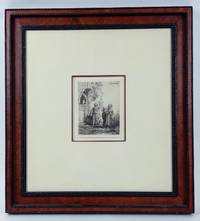
1410629Second and final state. Finely executed antique etching after the celebrated Dutch master Rembrandt van Rijn depicting a richly detailed orientalist figural scene. The composition shows three robed figures in animated conversation beside an architectural archway rendered with the loose expressive linework and atmospheric shading that define Rembrandt's etching style. Particularly notable is the presence of the artist's signature "Rembrandt f." in the upper right appearing reversed-as expected in impressions taken directly from an etched plate.<br /> The print appears to be a later impression after the original 17th-century plate most likely dating to the 18th or 19th century. It is printed on wove paper and presented within an elegant and substantial period frame featuring richly figured wood veneer with ebonized beaded inner molding-an exceptional presentation that complements the refinement of the etching itself. Signed in reverse on plate. Accompanied by COA from Titus Fine Arts. Artwork measures ~4.3in. x 5.6in.; frame measures 19.5in. x 21.5in. Shelved at Dupont. 1410629. Shelved Dupont Bookstore. unknown
1873124321Blanc (Charles),: L'Oeuvre de Rembrandt Decrit et CommentÃ. Catalogue Raisonnà de toutes les estampes du maÃtre et de ses peintures, ornà de bois gravÃs, de quarante eaux-fortes de Flameng, et de trente-cinq hÃliogravures d'Amand Durand. 2 volumes. Paris: A. Levy, 1873. Magnificently bound in full blue morocco, with six raised spines, gilt [by Leighton]. 37.5x29cms. Text in French.
1873124321Blanc (Charles),: L'Oeuvre de Rembrandt Decrit et CommentÃ. Catalogue Raisonnà de toutes les estampes du maÃtre et de ses peintures, ornà de bois gravÃs, de quarante eaux-fortes de Flameng, et de trente-cinq hÃliogravures d'Amand Durand. 2 volumes. Paris: A. Levy, 1873. Magnificently bound in full blue morocco, with six raised spines, gilt [by Leighton]. 37.5x29cms. Text in French.
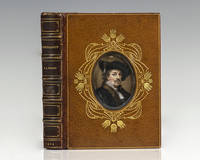
1904199442London: Methuen & Co. 1904. First edition of Sharp's biography of Dutch master painter Rembrandt van Rijn. Octavo elegantly bound by Riviere and Son in full morocco in a Cosway-style binding with a hand painted miniature ivorene portrait of Rembrandt under glass to the front panel within an elaborate gilt botanical vignette gilt titles and tooling to the spine in six compartments within raised gilt bands double gilt ruling to the front and rear panel gilt-ruled turn-ins and inner dentelles all edges gilt illustrated with forty engravings including tissue-guarded frontispiece portrait of Rembrandt. In near fine condition. Dutch master painter Rembrandt van Rijn is generally considered one of the greatest visual artists in the history of art. Unlike most Dutch masters of the 17th century Rembrandt's works depict a wide range of style and subject matter from portraits and self-portraits to landscapes genre scenes allegorical and historical scenes and biblical and mythological themes as well as animal studies. Rembrandt's portraits of his contemporaries self-portraits and illustrations of scenes from the Bible are regarded as his greatest creative triumphs. His self-portraits form a unique and intimate autobiography in which the artist surveyed himself without vanity and with the utmost sincerity. Cosway bindings named for renowned 19th-century English miniaturist Richard Cosway were popularized if not invented in the early 1900s by the renowned London bookselling firm of Henry Sotheran. The earliest Cosway bindings were created by Miss C.B. Currie who faithfully imitated Cosway's detailed watercolor style of portraiture from designs by J.H. Stonehouse Sotheran's manager. These delicate miniature paintings often on ivory were set into the covers or doublures of richly-tooled bindings and protected by a thin pane of glass. Methuen & Co. unknown books
1780180325101780. No binding. Near fine. van Rijn Rembrandt. Single etching printed to recto only plate margins: about 4.5" by 3.5" A late 18th-century restrike likely by Claude-Henri Watelet 1718-1786 of Dutch master Rembrandt van Rijn's 1606-1669 etching "Abraham Caressing Isaac Benjamin". While producing a body of work that continues to be treasured 400 years after his lifetime Rembrandt experienced a great deal of loss in his personal life losing three children in infancy and his beloved wife Saskia after the birth of their fourth child - the only one to survive to adulthood. The look of quiet sadness in this etching on the face of Abraham perhaps echoes some of that loss experienced by Rembrandt while the face of the child shows only joy at being so closely held by his father.<br /> <br /> Rembrandt's work varies greatly an aspect that sets him apart from many of his contemporaries. His work included biblical scenes such as that seen in this work but was not limited in that respect. He worked in portraits including what were considered remarkably sincere self-portraits landscapes nudes animals still-life and mythological scenes in a variety of mediums. He was producing during an important period in the Netherlands a wealthy cultural high-point known as the Dutch Golden Age. The innovations of this period with a strong contribution from Rembrandt himself paved the way for many of the important movements that followed. <br /> <br /> Rembrandt produced etchings for almost his entire career until he was forced for economic reasons to sell his press. His etchings more so than his paintings were responsible for much of his success during his lifetime. During his lifetime Rembrandt made hundreds of impressions from nearly 300 plates and about 80 plates still exist today. As a result the plates were used to make impressions for centuries after Rembrandt's death; what is remarkable about this particular example is that the margins are relatively complete whereas most Rembrandt etchings are found with margins trimmed often right up to the plate mark. Dating and authenticating plates is often a complicated process; this impression has been appraised and dated by a professional with a copy of the appraisal summary available upon request. <br /> <br /> __CONDITION: This is a near fine example bright and clean slight age-toning/soiling to outer margins which can be professionally cleaned small contemporaneous pencil annotation to lower margin the impression is rich and clear; near fine overall. <br /> <br /> ___POSTAGE: International customers please note that additional postage may apply as the standard shipping charge does not always cover costs; please inquire for details.<br /> <br /> ___Swan's Fine Books is pleased to be a member of the ABAA ILAB and IOBA and we stand behind every book we sell. Please contact us with any questions you may have we are here to help. unknown
198791544Les Editions de L'amateur. New. 1987. Hardcover. 2859170685 . FREE UPGRADE to Courier/Priority Shipping Upon Request - IN STOCK AND IMMEDIATELY AVAILABLE FOR SHIPMENT - Flawless copy brand new pristine never opened -- Text in French. 333 pages. Catalogue Raisonne Catalog Raisonné Complete Works La Vie et L'uvre Oeuvre Raisonnee Les Editions de L'amateur hardcover
201093647Editions De L'Amateur. New. 2010. Hardcover. 2859174990 . FREE UPGRADE to Courier/Priority Shipping Upon Request - IN STOCK AND IMMEDIATELY AVAILABLE FOR SHIPMENT - Flawless copy brand new pristine never opened -- Text in French. 348 pages; illustrated. Catalogue Raisonne Catalog Raisonné Complete Works La Vie et L'uvre Oeuvre Raisonnee Editions De L'Amateur hardcover
190687177De Erven F. Bohn. As New. 1906. Paperback. FREE UPGRADE to Courier/Priority Shipping Upon Request - IN STOCK AND IMMEDIATELY AVAILABLE FOR SHIPMENT - AS NEW THE TEXT BLOCK IS PRISTINE CLEAN UNMARKED AND IN EXCELLENT CONDITION - - Text in German. Catalogues 1613 of Rembrandt's drawings; not illustrated. Catalogue Raisonne Catalog Raisonné Complete Works Leben Und Werk Oeuvre-Katalog Kritischem Oeuvrekatalog Raisonnee De Erven F. Bohn paperback
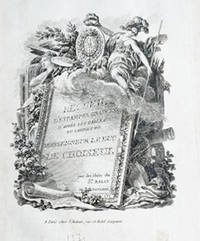
51-6426Paris: chez l'auteur - Pierre-François Basan 1771. 4to 20 x 27.5cm. Blonde calf decorated ribbed spine contemporary binding. Scuffs and rubbing leather losses split joint at top.Engraved title dedication 12 pages of text portrait of the Duke of Choiseul and 127 of 128 finely engraved plates numbered 1-123 excluding unnumbered plate 4 normally located between plates 38 and 39 including figures 44 and 45 engraved on a single plate plate 47 numbered twice 5 bis plates -68 69 76 78 and 101- plate 74 on a double page figures 93 and 94 on a single plate. Plates 38 and 39 have shorter margins. Small loss to plate 33 without affecting the engraving. Fresh pages. Bookplate with the coat of arms of De Clos de Balme. .The Duke of Choiseul's cabinet contained mainly paintings by Flemish and Dutch masters such as Rembrandt including a self-portrait Breughel Teniers Ruysdael Rubens N. Berghem and Van Dyck. It also contained a few canvases by Titian Le Nain Robert and Greuze. .Pierre-François Basan 1723-1797 was one of the leading figures in the 18th-century world of printmaking. He was an engraver publisher expert and iconographer. He also brought Rembrandt to France publishing one of the first engraved collections of his works printed on his original copperplates and Teniers engraving many of his paintings with Le Bas. After a brillant career in the army Etienne-François duc de Choiseul 1719-1785 married the daughter of Crozat. Thanks to the protection he received from Madame de Pompadour Louis XV's mistress Choiseul was made ambassador to the Holy See and before long he was appointed minister of foreign affairs and later to the ministry of war and navy. After the death of his benefactor Madame de Pompadour in 1772 Choiseul was disgraced and exiled. Choiseul was a great collector and asked Basan one of the most eminent experts of the time to organize a catalogue of his collection. Although dated 1771 on the title page the catalogue was finished a year later. Choiseul was unfortunately disgraced the same year and a sale was organized by the expert Boileau on 6-10 April 1772; the remaining part of the collection was sold after Choiseul's death on 18 December 1786. This unique copy has the prices realized at the famous 1772 sale: La collection vendue est celle d'étienne-François duc de Choiseul 1719-1785 ambassadeur à Rome de 1754 à 1757 puis à Vienne de 1757 à 1758 ; créé duc de Choiseul en 1758 il devient premier ministre de fait mais tombe en disgrâce à partir de 1770.Born in 1719 Étienne François de Choiseul-Beaupré Stainville first had a military career rising to the rank of lieutenant general of the king's armies. He was ambassador to the Holy See between 1754 and 1757 and then to Vienna in 1758. That same year he received the title of Duke of Choiseul-Amboise and was appointed Secretary of State for Foreign Affairs and then in 1761 for the Navy and for War.The Duke of Choiseul pursued a policy of revenge against England; to do this he relied on the alliance with Austria and the Bourbons of Spain Parma and Naples through the Pacte de Famille signed in 1761. He also negotiated the marriage of the Duke of Berry future Louis XVI with the archduchess of Austria Marie-Antoinette.Under his government the borders of France widened with the inclusion of Lorraine in 1766 and the acquisition of Corsica in 1768.A friend of the Encyclopaedists and Madame de Pompadour he was interested in the art and philosophy of his time; his Voltairean spirit distanced him from Rousseau whose Social Contract 1762 he rejected.At the beginning of 1770 Choiseul acted more and more without the king's consent often even against his will. Madame Du Barry to whom he had spoken undiplomatically played a role in his eviction from the court at the end of 1770. His exile to his estate of Chanteloup near Amboise was a triumph: everyone flocked to the Duke of Choiseul. He died in 1785 leaving behind him a disastrous personal financial situation.;Pierre-François Basan publisher French 1723 - 1797;The Artists in the Recueil:Pierre-Charles Baquoy artist French 1759 - 1829;Louis Binet artist French 1744 - c. 1800;Robert Daudet artist French 1737 - 1824;Remi-Henri-Joseph Delvaux artist French 1748 or 1750 - 1823;Balthasar Anton Dunker artist German 1746 - 1807;;;Louis Germain artist French 1733 - 1791 or after;Carl Guttenberg artist German 1743 - 1790;Louis-Michel Halbou artist French 1730 - probably 1809;Francois-Robert Ingouf artist French 1747 - 1812;Nicolas Delaunay artist French 1739 - 1792;Jacques Philippe LeBas artist French 1707 - 1783;Pierre Charles Levesque artist French 1736 - 1812;Jean Baptiste Liénard artist French 1750 - after 1807;Charles Louis Lingée artist French 1748 - 1819;Joseph-C. Maillet artist French 1751 - 1811;Pierre Maleuvre artist French 1740 - 1803;Pietro Antonio Martini artist Italian French school 1738/1739 - 1797;Louis-Joseph Masquelier artist French 1741 - 1811;Jean Massard artist French 1740 - 1822;Philippe Louis Parizeau artist French 1740 - 1801;Charles Emmanuel Patas artist French 1744 - 1802;Nicolas Ponce artist French 1746 - 1831;Noël Pruneau artist French born 1751;Antoine Louis Romanet artist French 1742 - 1810 or after;Jean Francois Rousseau artist French born c. 1740;Gabriel de Saint-Aubin artist French 1724 - 1780;Vény artist French active 18th century;Carl Wilhelm Weisbrod artist German 1743 - 1806;B. A. Wieilh artist French active 1770s;Pierre-Philippe Choffard artist French 1730 - 1809;Charles Emmanuel Patas artist French 1744 - 1802;Carl Wilhelm Weisbrod artist German 1743 - 1806;Remi-Henri-Joseph Delvaux artist French 1748 or 1750 - 1823;Jeanne Deny artist French born 1749;Philippe Louis Parizeau artist French 1740 - 1801;Salvator Rosa artist after Neapolitan 1615 - 1673;Paulus Potter artist after Dutch 1625 - 1654;Philips Wouwerman artist after Dutch 1619 - 1668;Joseph-Marie Vien artist after French 1716 - 1809;Bartolomé Esteban Murillo artist after Spanish 1617 - 1682;Jean-Baptiste Greuze artist after French 1725 - 1805;Claude-Joseph Vernet artist after French 1714 - 1789;Bartholomeus Breenbergh artist after Dutch 1598 - 1657;Jan Brueghel the Elder artist after Flemish 1568 - 1625;Peeter Neeffs the Elder artist after Flemish 1578/1590 - 1656/1661;Sir Peter Paul Rubens artist after Flemish 1577 - 1640;Claude Lorrain artist after French 1604/1605 - 1682;Gerrit Dou artist after Dutch 1613 - 1675Nicolaes Pietersz Berchem artist after Dutch 1620 - 1683Hubert Robert artist after French 1733 - 1808Louis Le Nain artist after French c. 1600/1603 - 1648David Teniers the Younger artist after Flemish 1610 - 1690Willem van de Velde the Younger artist after Dutch 1633 - 1707Sir Anthony van Dyck artist after Flemish 1599 - 1641Titian artist after Venetian 1488/1490 - 1576Adriaen van de Velde artist after Dutch 1636 - 1672Karel Dujardin artist after Dutch 1626 - 1678Jan van der Heyden artist after Dutch 1637 - 1712Rembrandt van Rijn artist after Dutch 1606 - 1669Gabriel Metsu artist after Dutch 1629 - 1667Frans van Mieris artist after Dutch 1635 - 1681Jan Miel artist after Flemish c. 1599 - 1663Adriaen van Ostade artist after Dutch 1610 - 1685Paulus Potter artist after Dutch 1625 - 1654Jacob van Ruisdael artist after Dutch c. 1628/1629 - 1682Jan Steen artist after Dutch 1625/1626 - 1679;Adriaen van der Werff artist after Dutch 1659 - 1722;Gerard ter Borch the Younger artist after Dutch 1617 - 1681; .References: OCLC Number / Unique Identifier 7033644; Cohen 115; Bibliothèque nationale de France : Identifier : ark:/12148/bpt6k6429350f.Expertise by Cabinet Poulain5 rue de Saintonge75003 Paris Paris: chez l'auteur - Pierre-François Basan, 1771. hardcover
199094027Yale University Press. New. 1990. Hardcover. 0300045689 . FREE UPGRADE to Courier/Priority Shipping Upon Request - IN STOCK AND IMMEDIATELY AVAILABLE FOR SHIPMENT - FLAWLESS COPY BRAND NEW PRISTINE NEVER OPENED -- 289 pages; illustrated in black and white and in color images. Catalogue Raisonne Catalog Raisonné Complete Works Life and Work Raisonnee Yale University Press hardcover
198691556Clarkson Potter. New. 1986. Hardcover. 051756341X . FREE UPGRADE to Courier/Priority Shipping Upon Request - IN STOCK AND IMMEDIATELY AVAILABLE FOR SHIPMENT - Flawless copy brand new pristine never opened -- 682 pages. Catalogue Raisonne Catalog Raisonné Complete Works Life and Work Raisonnee -- with a bonus offer . Clarkson Potter hardcover
196991026Kunstkreis. As New. 1969. Hardcover. FREE UPGRADE to Courier/Priority Shipping Upon Request - IN STOCK AND IMMEDIATELY AVAILABLE FOR SHIPMENT - AS NEW THE TEXT BLOCK IS PRISTINE CLEAN UNMARKED AND IN EXCELLENT CONDITION - - Text in German. 144 pages -- Catalogue Raisonne Catalog Raisonné Complete Works Leben Und Werk Oeuvre-Katalog Kritischem Oeuvrekatalog Raisonnee Kunstkreis hardcover
195281881Phaidon Press. As New. 1952. Hardcover. FREE UPGRADE to Courier/Priority Shipping Upon Request - IN STOCK AND IMMEDIATELY AVAILABLE FOR SHIPMENT - AS NEW THE TEXT BLOCK IS PRISTINE CLEAN UNMARKED AND IN EXCELLENT CONDITION - - Volume 2 of 2 Volumes. Corresponds to ASIN: B001D4SZFO. 232 pages 48 pages of plates text figures. Phaidon Press hardcover