2 144 résultats
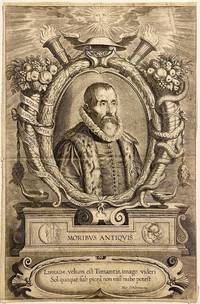
PR121217Portrait of Justus Lipsius 1547-1606 bust directed to the right within an elaborate frame; on the right the serpent winding round the cornucopia symbolises Prudence while the scroll on the other side symbolises Doctrine and is lettered with the titles of Lipsius's major works; above is Mercury's winged hat. Frontispiece to Lipsius's edition of Seneca's works ""L. Annæi Senecæ Opera"" Antwerp: 1615 1st edition. This impression was included in the third edition from 1632.After a drawing by Rubens at the British Museum inv. 18910511.31. The preparatory drawing depicts the Flemish scholar Justus Lipsius and was for inclusion in the volume of Senecas works that was published in 1615 by the Plantin Press in Antwerp. Rubens depiction of Lipisus was produced by working from a painting by Abraham Janssens which explains for the rather static character. The portrait was drawn first and then Rubens drew in the foliate frame which is rich with emblematic meaning and incorporates a wreath cornucopia a winged hat of Mercury the sun and two lamps. Subsequent touches were added to the face of Lipsius in pen and ink. The design was subsequently engraved by Cornelis Galle I.Entry from J. Rowlands 'Rubens: Drawings and Sketches' exhibition catalogue London British Museum 1977:The sitter Justus Lipsius was a famous Flemish scholar and leading exponent of a modern stoic philosophy. He attempted to embrace and reconcile the ever increasing divisions in thought and religion in his day. In his search for a solution his restless moves from one sect to another of Christianity are not without considerable significance. Through his brother Philip who was a pupil of Lipsius Rubens adopted much of the Stoic outlook which in any case harmonised well with his temperament. He was for moderation in all things nothing to excess.This design is for the engraving in reverse by Cornelis Galle included in Lipsius's edition of Seneca's works published by the Plantin press in 1615 see 18910414.1001. Lipsius's edition of the works of the Roman rhetorician dramatist and philosopher was long to remain the standard one. The influence of Seneca's philosophical thought in the post-classical world reached its peak in Lipsius's own writings. As with all his other portraits of Lipsius Rubens based it on that now lost of the philosopher by Abraham Janssens.Lettered on the plinth with Lipsius's motto: MORIBVS ANTIQVIS. Lettered in Latin below in a cartouche with an allusion to Timanthes in two lines: LIPSIADÆ velum est Timantis imago. videri / Sol quoque sub picea non nisi nube potest. / Henr. d'Oultremannus. Lettered with production detail in lower right corner: Corn. Galle sculp.NL Antieke prent. Portret van de auteur en Belgische geleerde Justus Lipsius in een ovale omlijsting met vruchten slangen en fakkels. Aan weerszijden staan twee olielampjes op een sokkel met het opschrift: Moribus antiquis. Onder de voorstelling een cartouche met een Latijns vers van Oultreman. Justus Lipsius eigenlijk Jodocus Lips was een Zuid-Nederlandse humanist filoloog en historiograaf. Lipsius studeerde aan de katholieke Universiteit Leuven en doceerde in het lutherse Jena en in het calvinistische Leiden. Auteursportret voor: L. Annaeus Seneca ed. J. Lipsius. Opera quae extant omnia. Antwerpen ex officina Plantiniana meerdere edities; voor het eerst uitgegeven in 1615 voor het laatst gebruikt in de editie 1652.Het hoofdgebouw van de faculteit Geesteswetenschappen tot dec. 2008 faculteit Letteren van de Universiteit Leiden is vernoemd naar Lipsius net als de studievereniging van de master Encyclopedie en Filosofie van het Recht te Leiden en het gebouw waarin de Raad van de Europese Unie is ondergebracht. Dit "" Justus Lipsiusgebouw"" ligt in het hart van de Europese wijk rond het Brusselse Schumanplein. Engraving on paper text in letterpress on verso pasted down on another sheet of laid paper cut on plate; total: 295 x 193 mm; some rubbing and discolouration traces of folding on the top right corner in the middle and on the bottom corners; otherwise in good condition. Hollstein 177; Schneevoogt 183.255; Muller 3248; van Someren M.3248; Corpus Rubenianum XXI 30. unknown
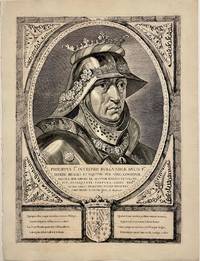
PR121221-5Portrait of Philip the Good 1396-1467 bust in an oval wearing crowned helmet and armour and chain with the Order of the Golden Fleece head turned to right decorated frame arms below. He lived in the Middle Ages.From the set: Graven en gravinnen van Holland Zeeland en West-Friesland. Counts and Countesses of Holland Zeeland and West-Frisia; 30/38.Lettered below portrait in six lines: PHILIPPUS IMUS INTREPIDI BURGUNDIÆ DUCIS . FLANDORUM A.o MCCCCLXVII. With two columns of text each four lines either side of arms. Numbered upper centre XXX.Lettered below left in spandrel: Ian van Eyck pinx.<p class=""item-data"">NL Antieke prent ets en gravure door Visscher II. Filips de Goede hertog van Bourgondië met een harnas een helm en een kroon. Hij leefde in de Middeleeuwen. Om zijn hals een keten met het ordeteken van de orde van het gulden vlies. Helm langs de randen versierd met graveerwerk en bloemen en bovenop voorzien van rol of platte tulband met kroon in harnas rondom hals keten met Orde van het Gulden Vlies. Gekroond gevierendeeld wapenschild met klimmende leeuwen lelies. In de zwikken bladvormen. Proefdruk van de dertigste prent uit de serie 'Graven en gravinnen van Holland Zeeland en West-Friesland' bestaande uit 38 prenten. Filips de Goede ook genaamd Filips III van Bourgondië was hertog van Bourgondië van 1419 tot aan zijn dood. Als landsheer van het graafschap Vlaanderen het hertogdom Brabant het graafschap Namen en het hertogdom Limburg heeft hij een belangrijke rol gespeeld in de geschiedenis van de Nederlanden.</p> Engraving and etching on laid paper with broad margin; total: 465 x 348 mm; state II/3; except some light staining in outstanding condition. Hollstein 107. unknown
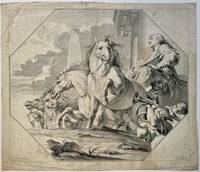
PR121065<span class=""vterm"">Representation of one of the ceiling Paintings from the Jesuits' Church in Antwerp</span> designed by Pieter Paul Rubens and destroyed in a fire in 1718. The iconographies were documented among others by Jacob de Wit then turned into print by Jan Punt around the 1750s. The paintings depict scenes from the Old and the New Testaments. The style adopted by Rubens is reminiscent of the Venetian tradition of the Seicento where the scenes are seen from below. Also rather than painting directly on the surface of the ceiling fresco or other the artist realized the paintings on canvas as his lagoon predecessors did with the 'teleri'.The present impression is nr. 5 the present plate is not numbered possibly a first state from the set showing the Triumph of Joseph in Egypt: Joseph in a chariot pulled by four horses the animal at far left held by a groom by its bridle two trumpeting putti in the lower right a classical temple beyond. Within an octagonal frame.Signed and dated at bottom: P.P. Rubens pinxit in Templo Societ. Jezu Antwerpiae / J de Wit delineavit J. Pun sculpsit 1747.Antwerp - Rubens - Jesuit Church - Jesuit Order - Old TestamentNL In koninklijk gewaad zetelt Jozef in een wagen van Farao. Jozef in de zegewagen door Farao aangesteld over heel Egypte. Serietitel: Les plat-fonds ou les tableaux des galeries / De plafonds of gallerystukken. Etching and engraving on paper trimmed on plate mark; total: 338 x 398 mm; state I/2; central fold some folds and staining along the margins some rubbing; in fair condition. Corpus Rubenianum / The ceiling paintings for the Jesuit Church in Antwerp nr. 13. unknown
60995Outside a stable with the Virgin lifting the Christ Child from his manger and showing him to the three kings who carry gifts at right St Joseph beyond; after Peter Paul Rubens; illustration to the 1618 reprint of 1616 edition of ""Missale Romanum"" Antwerp: 1618. c.1614. Formerly attributed to Cornelis Galle I 1576-1650. Engraving on paper with some margin; plate mark: 309 x 203 mm total: 333 x 219 mm; on the verso text in letterpress black and red ink. Nicely detailed engraving; some soil repaired tear on margin above and small tears on the margin on the left not affecting the plate; mounted on passepartout. Not in Hollstein. unknown
19961249241996 Editions Parkone / Aurora - 1996 - Grand in-4, cartonnage illustrée sous jaquette illustrée - 175 pages - Nombreuses illustrations en couleurs et en N&B, in et hors-texte, dans l'ouvrage
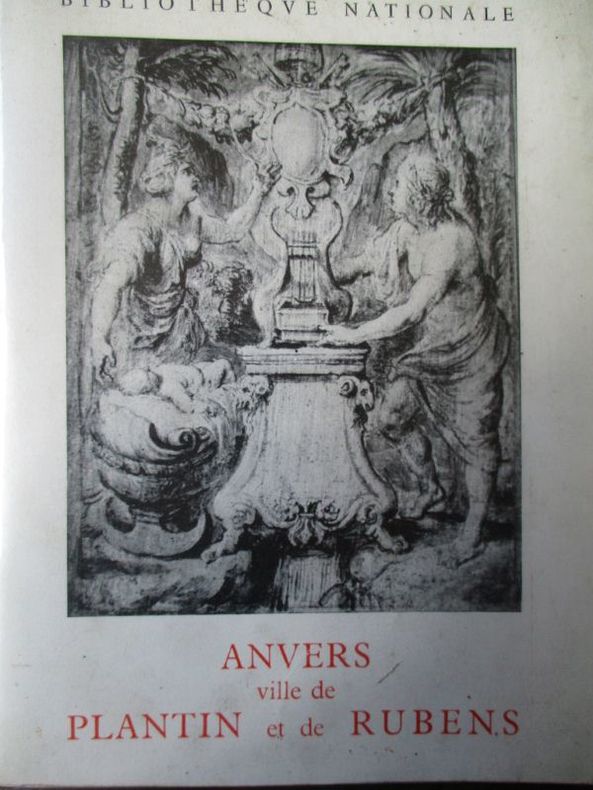
195414611954 catalogue de l exposition organisée à la galerie mazarine (mars-avril 1954) bibliotheque nationale paris 1954 in 8 broché 264 pages
19547342Bibliothèque Nationale 16 x 21 Paris 1954 in-8, broché, 264 pp., 24 planches in-fine, 444 oeuvres décrites, bibliographie. Catalogue de l'exposition à la Galerie Mazarine (mars-avril 1954). Usures d'usage à la couverture, bon intérieur.(C72)
19547342Bibliothèque Nationale 16 x 21 Paris 1954 in-8, broché, 264 pp., 24 planches in-fine, 444 oeuvres décrites, bibliographie. Catalogue de l'exposition à la Galerie Mazarine (mars-avril 1954). Usures d'usage à la couverture, bon intérieur.(C72)
2913, Paris, Bibliotheque Nationale, 1954, Broche, in-8 , 270pp.+ 24 planches.
1977KFZZQ100772DEAGOSTINI 1977. Soft Cover. Fine. KFZZQ100772 DEAGOSTINI paperback
2022123479De Poorter, Nora, Frans Baudouin: Architecture and Sculpture. Rubens's House. Corpus Rubenianum Ludwig Burchard XXII.2. 2 volumes. Turnhout: 2022. Series: Corpus Rubenianum Ludwig Burchard. together 704 pages, 391 colour and black and white illustrations. Hardback. 27 x 18cms. Catalogue of Rubens's Antwerp house, where he lived from his return from Italy to the end of his life. Volume one features eleven chapters discussing the history of the house from its purchase, contemporary written and visual accounts, such as Jacob Harrewijn's prints, and detailed descriptions of the Italian wing, 'Antiquarium', portico and garden. Includes a catalogue of 44 sculptures, murals and architectural elements, presenting four rejected attributions. Each work is discussed in detail and illustrated in volume two, with three appendices featuring archival documents and photographs, 236 illustrations and a bibliography.
2022123479De Poorter, Nora, Frans Baudouin: Architecture and Sculpture. Rubens's House. Corpus Rubenianum Ludwig Burchard XXII.2. 2 volumes. Turnhout: 2022. Series: Corpus Rubenianum Ludwig Burchard. together 704 pages, 391 colour and black and white illustrations. Hardback. 27 x 18cms. Catalogue of Rubens's Antwerp house, where he lived from his return from Italy to the end of his life. Volume one features eleven chapters discussing the history of the house from its purchase, contemporary written and visual accounts, such as Jacob Harrewijn's prints, and detailed descriptions of the Italian wing, 'Antiquarium', portico and garden. Includes a catalogue of 44 sculptures, murals and architectural elements, presenting four rejected attributions. Each work is discussed in detail and illustrated in volume two, with three appendices featuring archival documents and photographs, 236 illustrations and a bibliography.
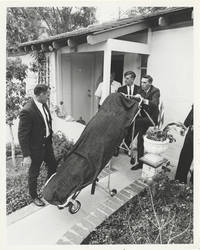
1968161194N.p.: N.p. 1968. Small archive of five vintage photographs belonging to noted avant-garde filmmaker and writer Kenneth Anger relating to his research into homosexuality drugs and murder for his notorious books "Hollywood Babylon" 1959 and "Hollywood Babylon II" 1984. Two photographs with Anger's ownership stamp and label on the verso four with press stamps on the verso and three with printed mimeo snipes affixed to the versos.<br /> <br /> "Hollywood Babylon" and its sequel detailed the various improprieties both real and imagined of the elite of Hollywood's Golden Age. <br /> <br /> Archive includes:<br /> <br /> A photograph of Irish American director and actor William Desmond Taylor released for newspaper usage after his murder on February 1 1922. <br /> <br /> A photograph of actress Virginia Rappe circa 1922 released for newspaper usage after her death at the height of the Fatty Arbuckle scandal. <br /> <br /> A photograph of actress Alma Rubens released for newspaper usage after she was arrested for narcotics possession in 1931. Rubens had been arrested on similar charges in 1929 and as noted on the snipe had "taken the narcotic cure" that year. Rubens would die weeks later from lethal pneumonia and bronchitis on January 21 1931 shortly after her release from jail.<br /> <br /> A Paramount studio photograph of actors Cary Grant and Randolph Scott at a swimming pool circa 1935. The two men lived together sporadically for twelve years throughout the 1930s and early 1940s and were suspected by both Anger and contemporary sources to have been lovers.<br /> <br /> A photograph of the body of Mexican American actor and closeted homosexual Ramón Novarro being removed from his house after its discovery in 1968. Novarro was tortured and murdered by two male escorts who falsely believed a large sum of money was hidden in the actor's house. <br /> <br /> Photographs range in size from 6 x 8 inches to 8 x 10 inches. Generally Very Good plus with moderate edgewear and age toning overall with photograph of Grant and Scott Good only with a bruise on the center top edge of the recto. N.p. unknown
088721Fredlund, BjÃrn: Arkitektur i Rubens maleri : form och funktion. GÃteborgs universitet, 193pp, 46 monochrome illustrations. Wrappers. Presented as the author's dissertation Gothenbourg University 1974. Text in Swedish with English summary.
088721Fredlund, BjÃrn: Arkitektur i Rubens maleri : form och funktion. GÃteborgs universitet, 193pp, 46 monochrome illustrations. Wrappers. Presented as the author's dissertation Gothenbourg University 1974. Text in Swedish with English summary.
Fredlund, Björn: Arkitektur i Rubens maleri : form och funktion. Göteborgs universitet, 193pp, 46 monochrome illustrations. Wrappers. Presented as the author's dissertation Gothenbourg University 1974. Text in Swedish with English summary. Presented as the author's dissertation Gothenbourg University 1974. Text in Swedish with English summary
3562997Contentum Ltd. Loose sheet. New. High-quality art print based on an original work from the Rijksmuseum. Created in the 16th century 1587. Professionally printed on premium fine-art paper Museum Etching museum quality in size A3. The artwork is printed with a white border museum-style presentation. Contentum Ltd. unknown
3562999Contentum Ltd. Loose sheet. New. High-quality art print based on an original work from the Rijksmuseum. Created in the 16th century 1587. Professionally printed on premium fine-art paper Photo Rag 308 premium quality in size A2. The artwork is printed with a white border museum-style presentation. Contentum Ltd. unknown
3562998Contentum Ltd. Loose sheet. New. High-quality art print based on an original work from the Rijksmuseum. Created in the 16th century 1587. Professionally printed on premium fine-art paper Photo Rag Bright White in size A2. The artwork is printed with a white border museum-style presentation. Contentum Ltd. unknown
3563000Contentum Ltd. Loose sheet. New. High-quality art print based on an original work from the Rijksmuseum. Created in the 16th century 1587. Professionally printed on premium fine-art paper Museum Etching museum quality in size A2. The artwork is printed with a white border museum-style presentation. Contentum Ltd. unknown
2559, Antwerpen, Mercatorfonds, 1997., Broche, 23x28cm, 258pp.
12003, Anvers, Fonds Mercator, 1997.**, Relie, toile, dos orne de titre dore, sous jacquette d' editeur illustre en couleur, 23,5x29cm, 270pp, illustre en couleur et n/b, bibliographie.
8571647550.Gpaperback. Good. Access codes and supplements are not guaranteed with used items. May be an ex-library book. paperback
857374751X.Gpaperback. Good. Access codes and supplements are not guaranteed with used items. May be an ex-library book. paperback
In 4°, (16cc), 202 pp, (6cc), prima edizione, legatura in pergamena, frontespizio calcografico disegnato da Pieter Paul Rubens e inciso da Theodor Galle, marca editoriale (compasso tenuto da una mano: Labore et Constantia) in fine. Il Mascardi fu assiduo della corte degli Este a Modena, andò a Roma per laurearsi in legge e, grazie alle raccomandazioni del conte Camillo Molza, che Mascardi ringraziò dedicandogli il Discorso sopra un componimento poetico intorno alla cometa,[3] nel 1618 fu assunto in qualità di segretario dal cardinale Alessandro d'Este (1568-1624). A Roma cominciò a comporre un poemetto fantastico, il Tiburno, per celebrare la fondazione della città di Tivoli, la casata e la sfarzosa villa che gli Este possedevano nella cittadina laziale. Il lavoro venne interrotto per la morte di papa Paolo V, nel 1621.Per celebrare l'apertura del conclave, il Mascardi compose l'Oratio habita ad illustrissimos ac reverendissimos S. R. E. cardinales de subrogando pontifice. Ad esso seguì, dopo l'elezione del cardinale Alessandro Ludovisi - papa con il nome di Gregorio XV - l'anonima Scrittura intorno alla elezione a sommo pontefice del cardinal Ludovisio, forse scritta da Alessandro d'Este o composta dal Mascardi su sua diretta commissione e ispirazione, nella quale erano esposte critiche nei confronti di diversi cardinali, suscitando così la reazione della famiglia Ludovisi, in particolare del cardinale Ludovico, contro il cardinale d'Este. A fare le spese del conflitto tra le due potenti famiglie fu così il Mascardi, che nel giugno del 1621 si ritrovò licenziato e allontanato da Roma. Si rifugiò allora a Genova dove fu favorito dalla conoscenza di personaggi importanti delle famiglie gentilizie quali Marcantonio Doria e Giacomo Lomellini, e da poeti di successo come Ansaldo Cebà e Gabriello Chiabrera. Poté così recitare pubblicamente, il 26 settembre 1621, l'orazione Per la coronazione del serenissimo Giorgio Centurione,[8] e in dicembre divenne membro dell'«Accademia degli Addormentati». Qui pronunciò altri discorsi, tra i quali uno per la monacazione di Margherita Doria, figlia di Marcantonio e di Isabella della Tolfa, e l'orazione Intorno al furor poetico, dedicata al patrizio Tommaso Grimani, tutti raccolti nelle Orazioni, pubblicate nel 1622 dall'editore genovese Giuseppe Pavoni. Una sua commedia, Le metamorfosi d'amore, composta per il carnevale del 1623, è invece rimasta manoscritta. Nella speranza di poter rientrare a Roma e di essere ripreso al servizio degli Este, il Mascardi aveva dedicato al cardinale Alessandro i Silvarum libri IV, pubblicati nel 1622 ad Anversa da Balthasar Moretus, ma senza ottenere risposta. In 4 °, (16cc), 202 pp, (6cc), first edition, vellum binding, title designed by Pieter Paul Rubens and engraved by Theodor Galle, publishing mark (compass held by one hand: Labore et Constantia) in fine. Mascardi was a regular at the Este court in Modena, went to Rome to graduate in law and, thanks to the recommendations of Count Camillo Molza, whom Mascardi thanked for dedicating his Discourse on a poetic composition around the comet, in 1618 he was hired in as secretary to Cardinal Alessandro d'Este (1568-1624). In Rome he began to compose a fantastic poem, the Tiburno, to celebrate the foundation of the city of Tivoli, the house and the sumptuous villa that the Este owned in the Lazio town. The work was interrupted by the death of Pope Paul V in 1621. To celebrate the opening of the conclave, Mascardi composed the Oratio habita ad illustrissimos ac reverendissimos S. R. E. cardinales de subrogando pontifice. Following it, after the election of Cardinal Alessandro Ludovisi - pope with the name of Gregory XV - followed the anonymous Scripture around the election as supreme pontiff of Cardinal Ludovisio, perhaps written by Alessandro d'Este or composed by Mascardi on his direct commission and inspiration, in which criticisms of several cardinals were exposed, thus provoking the reaction of the Ludovisi family, in particular of Cardinal Ludovico, against Cardinal d'Este. To pay for the conflict between the two powerful families was so Mascardi, who in June 1621 found himself fired and removed from Rome. He then took refuge in Genoa where he was favored by the knowledge of important personalities of the noble families such as Marcantonio Doria and Giacomo Lomellini, and by successful poets such as Ansaldo Cebà and Gabriello Chiabrera. He was thus able to publicly recite the prayer On September 26, 1621, for the coronation of the most serene Giorgio Centurione, and in December he became a member of the "Accademia degli Addormentati". Here he gave other speeches, including one for the monk of Margherita Doria, daughter of Marcantonio and Isabella della Tolfa, and the prayer Around the poetic fury, dedicated to the patrician Tommaso Grimani, all collected in the Orations, published in 1622 by the Genoese publisher Giuseppe Pavoni. One of his comedies, The Metamorphoses of Love, composed for the carnival of 1623, has instead remained handwritten. In the hope of being able to return to Rome and be resumed in the service of the Este, Mascardi had dedicated IV books to Cardinal Alessandro the Silvarum, published in Antwerp by Balthasar Moretus in 1622, but without getting an answer.