1 367 résultats
feb41666Used. For more details please contact me unknown
1976151475N.p.: N.p. 1976. Vintage program for a tribute to director Jean Renoir held by the Academy of Motion Picture Arts and Sciences at the Samuel Goldwyn Theatre in Beverly Hills on November 19 1976.<br /> <br /> The program notes a planned premiere screening of Andre Techine's 1976 film "Barocco" after the ceremony but a printed slip laid in with the program indicates the film's replacement by Claude Lelouch's 1976 release "Si c'etait a refaire." <br /> <br /> 10 x 12 inches. Near Fine. N.p. unknown
195556046Paris: Gallimard 1955. Fine. Gallimard Paris 1955 12 x 19 cm broché First edition one of 29 numbered copies on pur fil paper the only large paper copies. A very good copy. Gallimard unknown
feb40178Used. For more details please contact me unknown
feb42886Used. For more details please contact me unknown
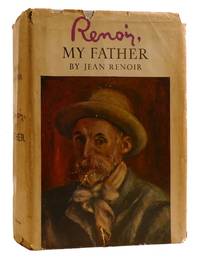
1962215175Boston: Little Brown & Company 1962. First Edition; First Printing. Hardcover. Very Good in a Good price clipped dust jacket. Rubbing along panel edges. Chipping at spine crown/heel. Little, Brown & Company hardcover
1962mon0002871451Little Brown and Company 1962. Hardcover. Good. . Fourth printing stated. SIGNED by author on half-title inscribed to previous owner. Jacket has some chipping at edges general wear. Pages/boards clean NO foxing or markings. Binding sturdy. Little, Brown and Company hardcover
196290222Boston: Little Brown and Company 1962. Third Printing. Hardcover. Near Fine in a Fair dust jacket. Jacket shows scuffing tears and a chip to front panel. Back panellightly scuffed with chip to upper right corner. ; 8vo 8" - 9" tall. Little, Brown and Company hardcover
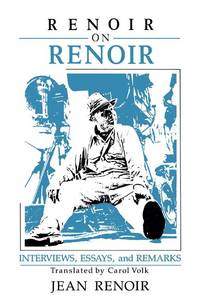
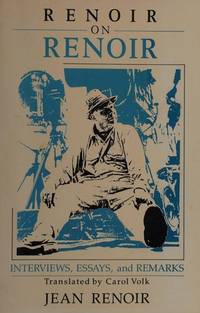
ria9780521385930_inpPaperback. New. New Book; Fast Shipping from UK; Not signed; Not First Edition; N/A paperback
1990G0521351510I3N11Cambridge University Press 1990. Hardcover. Good. Former library book; Missing dust jacket; Pages can have notes/highlighting. Spine may show signs of wear. ~ ThriftBooks: Read More Spend Less.Dust jacket quality is not guaranteed. Cambridge University Press hardcover
feb91897Used. For more details please contact me unknown
1970Q-0671204467Simon and Schuster 1970-01-01. Paperback. New. New. In shrink wrap. Looks like an interesting title! Simon and Schuster paperback
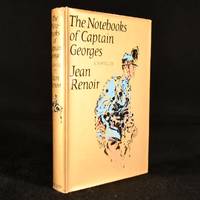
1966782R32London: Collins 1966. First edition. Cloth. Very Good Indeed/Very Good Indeed. 8.5" by 6". None. A first edition of Jean Renoir's nostalgic novel translated from the original French complete with a smart dust wrapper. This novel narrates a young man's sentimental education as well as his adoration for a young peasant girl. These themes are also covered in Renoir's films 'Diary of a Chambermaid' and 'Picnic on the Grass'.Jean Renoir 1894-1979 was a renowned French film director screenwriter and author. He produced more than forty films throughout the silent age until the end of the 1960s. The son of iconic French painter Pierre-Auguste Renoir he also wrote a memoir of his life with his father as well as countless screenplays.Complete with the bright and unclipped dust wrapper.The first British edition translated by Norman Denny. In the publisher's original full cloth binding with an unclipped dust wrapper. Externally very smart with just a touch of minor wear to the head and tail of the spine. Dust wrapper is just slightly worn to the head and tail of the spine. Internally firmly bound. Pages are bright and clean. Very Good Indeed Collins hardcover
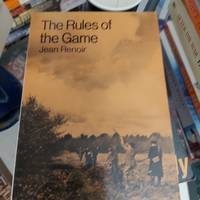
product_a19343ff-7a46-5ea<p><strong>WILL COMBINE BOOKS TO SAVE POSTAGE-MESSAGE FOR A QUOTE</strong>- The Rules of the Game original French title: La règle du jeu is a 1939 French satirical comedy-drama film directed by <strong>Jean Renoir.</strong>. First Edition. Used. translated by John McGrath and Maureen Teitelbaum</p><header id="listing-header">1970</header><p>First edition in English of the script of one of the most-acclaimed films of all time a satyrical dark comedy about the frivolties of the French bourgeoisie on the eve of WWII.</p><p>Classic Film Script</p> Not listed paperback
1961151476N.p.: N.p. 1961. Three typed letters signed from director Jean Renoir to Atlantic Monthly Press publisher Seymour Lawrence planning a meeting and discussing the forthcoming publication of the director's book "Renoir" a biography of Renoir's father. <br /> <br /> Three concise but personable letters in which Renoir discusses his travel plans and the reception of his latest film "Picnic on the Grass" and expresses his hope to send a typed manuscript of his book to literary agent Helen Strauss as soon as possible.<br /> <br /> 8.5 x 11 inches. Near Fine with brief creasing to the edges. N.p. unknown
feb44973Used. For more details please contact me unknown
1968138745Paris: N.p. 1968. Vintage borderless oversize photograph from a 1968 press conference in support of Cinematheque Francaise founder Henri Langloius featuring Jean-Luc Godard Jean Renoir Jean Rouch and Louis Daquin. Photographer's rubber stamp and light black ink holograph annotations on the verso. <br/><br/>This photograph originates from a meeting held in support of Henri Langlois founder and director of the influential Cinematheque Francaise. In 1968 French culture minister Andre Malraux attempted to stop funding for the Cinematheque which would ostensibly have ousted Langlois thus igniting a series of heated protests. Renowned directors and film fans worldwide expressed their support of the institution including Renoir Godard Rouch and Daquin as seen here. Though compromises were made the show of support forced Malraux reinstate Langlois. <br/><br/>9.25 x 11.75 inches. Near Fine. N.p. unknown books
9508Saint Paul, Fondation Maegt In-4°,broché,couverture rempliée blanche illustrée de vignettes sur les deux plats, 124 reproduction en couleurs en grande majorité,272 pages.Bon Etat bel ensemble mais attention pour les puristes le second plat présente quelques taches discètes (de café ?)
Book and jacket in mint condition. 78pp. Very well illustrated life and works of Pierre Auguste Renoir.
500344966EDITIONS DE CREMILLE Sans date. Le roman autobiographique de Jacques Perret raconte sa captivité en Allemagne pendant la Seconde Guerre mondiale et ses différentes tentatives d'évasion. Il a été adapté au cinéma par Jean Renoir dans un film du même nom
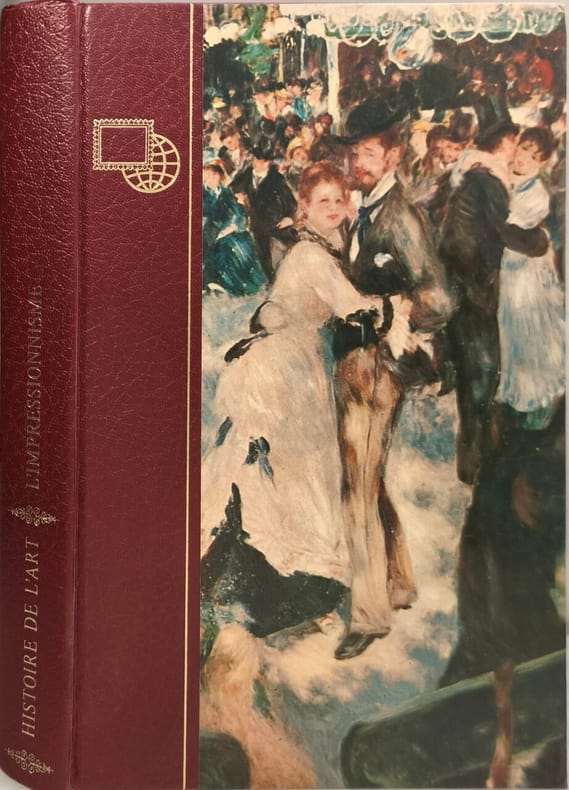
19665748Cercle du Bibliophile 1966 207 pages in8. 1966. reliure editeur. 207 pages. Ouvrage de référence sur le mouvement impressionniste présentant de nombreux artistes et leurs œuvres avec un commentaire sur l'impressionnisme servant de trame à la première partie. Le livre contient également un choix de textes de divers auteurs et une bibliographie
196072448Paris, 1960-61, in-8, , reliure éditeur, en classeur, Très bel exemplaire, Abondamment illustré! L'histoire des Cahiers est en partie liée avec celle du Septième Art, notamment en raison d'une génération de cinéphiles enthousiastes et provocateurs qui donnèrent naissance à la Nouvelle Vague, en instaurant préalablement la politique des auteurs. Créés en 1951 par Joseph-Marie Lo Duca, Jacques Doniol-Valcroze et André Bazin, avec un soutien économique de Léonide Keigel, ils succèdent à La Revue du cinéma de Jean George Auriol qui a cessé de paraître en octobre 1949 et dont Doniol et Bazin étaient les collaborateurs. La couverture comme le contenu restent dans le même esprit. Le titre du magazine est proposé par Doniol, qui a tout d'abord du mal à convaincre Bazin et Keigel. Les jeunes cinéphiles Jean-Luc Godard, François Truffaut, Éric Rohmer, Jacques Rivette, Claude Chabrol et bien d'autres y écrivent leurs premières critiques, avant de devenir cinéastes.
195272437Paris, 1952-53, in-8, , reliure éditeur, en classeur, Très bel exemplaire, Abondamment illustré! L'histoire des Cahiers est en partie liée avec celle du Septième Art, notamment en raison d'une génération de cinéphiles enthousiastes et provocateurs qui donnèrent naissance à la Nouvelle Vague, en instaurant préalablement la politique des auteurs. Créés en 1951 par Joseph-Marie Lo Duca, Jacques Doniol-Valcroze et André Bazin, avec un soutien économique de Léonide Keigel, ils succèdent à La Revue du cinéma de Jean George Auriol qui a cessé de paraître en octobre 1949 et dont Doniol et Bazin étaient les collaborateurs. La couverture comme le contenu restent dans le même esprit. Le titre du magazine est proposé par Doniol, qui a tout d'abord du mal à convaincre Bazin et Keigel. Les jeunes cinéphiles Jean-Luc Godard, François Truffaut, Éric Rohmer, Jacques Rivette, Claude Chabrol et bien d'autres y écrivent leurs premières critiques, avant de devenir cinéastes.
196272449Paris, 1962-63, in-8, , reliure éditeur, en classeur, Très bel exemplaire, Abondamment illustré! L'histoire des Cahiers est en partie liée avec celle du Septième Art, notamment en raison d'une génération de cinéphiles enthousiastes et provocateurs qui donnèrent naissance à la Nouvelle Vague, en instaurant préalablement la politique des auteurs. Créés en 1951 par Joseph-Marie Lo Duca, Jacques Doniol-Valcroze et André Bazin, avec un soutien économique de Léonide Keigel, ils succèdent à La Revue du cinéma de Jean George Auriol qui a cessé de paraître en octobre 1949 et dont Doniol et Bazin étaient les collaborateurs. La couverture comme le contenu restent dans le même esprit. Le titre du magazine est proposé par Doniol, qui a tout d'abord du mal à convaincre Bazin et Keigel. Les jeunes cinéphiles Jean-Luc Godard, François Truffaut, Éric Rohmer, Jacques Rivette, Claude Chabrol et bien d'autres y écrivent leurs premières critiques, avant de devenir cinéastes.
195372439Paris, 1953-54, in-8, , reliure éditeur, en classeur, Très bel exemplaire, Abondamment illustré! L'histoire des Cahiers est en partie liée avec celle du Septième Art, notamment en raison d'une génération de cinéphiles enthousiastes et provocateurs qui donnèrent naissance à la Nouvelle Vague, en instaurant préalablement la politique des auteurs. Créés en 1951 par Joseph-Marie Lo Duca, Jacques Doniol-Valcroze et André Bazin, avec un soutien économique de Léonide Keigel, ils succèdent à La Revue du cinéma de Jean George Auriol qui a cessé de paraître en octobre 1949 et dont Doniol et Bazin étaient les collaborateurs. La couverture comme le contenu restent dans le même esprit. Le titre du magazine est proposé par Doniol, qui a tout d'abord du mal à convaincre Bazin et Keigel. Les jeunes cinéphiles Jean-Luc Godard, François Truffaut, Éric Rohmer, Jacques Rivette, Claude Chabrol et bien d'autres y écrivent leurs premières critiques, avant de devenir cinéastes.