Holbein, HansBiblio.com
679 résultats
1025254414.Ghardcover. Good. Access codes and supplements are not guaranteed with used items. May be an ex-library book. hardcover
1947042128New York New York U. S. A.: Sylvan Press 1947. Limited Edition . Hardcover. Very Good/No Jacket. 4to - over 9¾ - 12" tall. This Copy Is An Unnumbered Probably Used As A Review Copy. The Book Is Bound In Decorative Black Cloth Over Boards With Pale Yellow Lettering On The Spine. The Top Edges Are Dyed Red. The Book Has Minor Wear With A Small Area Of The Top Stain Lightened. <br/> <br/> Sylvan Press hardcover
1164900838.Gpaperback. Good. Access codes and supplements are not guaranteed with used items. May be an ex-library book. paperback
1437101976.Gpaperback. Good. Access codes and supplements are not guaranteed with used items. May be an ex-library book. paperback
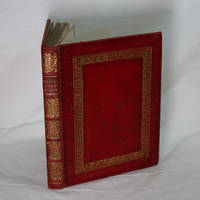
1803FB5537 /4D<p>Red leather binding with raised banding gilt decoration and title on the spine. Gilt 'Cambridge panel' on the boards.</p><p>"Descriptions of each plate in French and English with the Scripture Text from which the designs were taken. Printed by W. Smith and Co. King Street Seven Dials for John Scott No. 447 Strand: & Thomas Ostell No. 3 Ave Maria Lane 1803". Engraved frontispiece engraved title engraved portrait of Holbein. Full leather cover with embossed design and gilt decoration. This is a very hard to find rare book.</p><p>Note: this book is lovingly reset in its original papers by the expert bookbinder Brian Cole. It is again in fantastic condition which ought to see out a further two hundred years.</p><p>The Dance of Death 1493 by Michael Wolgemut from the Nuremberg Chronicle of Hartmann Schedel</p><p>The Danse Macabre also called the Dance of Death is an artistic genre of allegory from the Late Middle Ages on the universality of death.</p><p>The Danse Macabre consists of the dead or a personification of death summoning representatives from all walks of life to dance along to the grave typically with a pope emperor king child and laborer. The effect is both frivolous and terrifying beseeching its audience to react emotionally. It was produced as memento mori to remind people of the fragility of their lives and how vain the glories of earthly life. Its origins are postulated from illustrated sermon texts; the earliest recorded visual scheme apart from 14th century Triumph of Death paintings was a now-lost mural at Holy Innocents' Cemetery in Paris dating from 1424 to 1425.</p><p>Hans Holbein the Younger Hans Holbein der Jüngere; c. 1497 – between 7 October and 29 November 1543 was a German-Swiss painter and printmaker who worked in a Northern Renaissance style and is considered one of the greatest portraitists of the 16th century. He also produced religious art satire and Reformation propaganda and he made a significant contribution to the history of book design. He is called "the Younger" to distinguish him from his father Hans Holbein the Elder an accomplished painter of the Late Gothic school.</p><p>Holbein was born in Augsburg but worked mainly in Basel as a young artist. At first he painted murals and religious works and designed stained glass windows and illustrations for books from the printer Johann Froben. He also painted an occasional portrait making his international mark with portraits of humanist Desiderius Erasmus of Rotterdam. When the Reformation reached Basel Holbein worked for reformist clients while continuing to serve traditional religious patrons. His Late Gothic style was enriched by artistic trends in Italy France and the Netherlands as well as by Renaissance humanism. The result was a combined aesthetic uniquely his own.</p><p>Holbein travelled to England in 1526 in search of work with a recommendation from Erasmus. He was welcomed into the humanist circle of Thomas More where he quickly built a high reputation. He returned to Basel for four years then resumed his career in England in 1532 under the patronage of Anne Boleyn and Thomas Cromwell. By 1535 he was King's Painter to Henry VIII of England. In this role he produced portraits and festive decorations as well as designs for jewellery plate and other precious objects. His portraits of the royal family and nobles are a record of the court in the years when Henry was asserting his supremacy over the Church of England.</p><p>Holbein's art was prized from early in his career. French poet and reformer Nicholas Bourbon the elder dubbed him "the Apelles of our time" a typical accolade at the time. Holbein has also been described as a great "one-off" in art history since he founded no school. Some of his work was lost after his death but much was collected and he was recognized among the great portrait masters by the 19th century. Recent exhibitions have also highlighted his versatility. He created designs ranging from intricate jewellery to monumental frescoes.</p><p>Holbein's art has sometimes been called realist since he drew and painted with a rare precision. His portraits were renowned in their time for their likeness and it is through his eyes that many famous figures of his day are pictured today such as Erasmus and More. He was never content with outward appearance however; he embedded layers of symbolism allusion and paradox in his art to the lasting fascination of scholars. In the view of art historian Ellis Waterhouse his portraiture "remains unsurpassed for sureness and economy of statement penetration into character and a combined richness and purity of style'.</p><p>Renowned for his Dance of Death series the famous designs by Hans Holbein the Younger 1497–1543 were drawn in 1526 while he was in Basel. They were cut in wood by the accomplished Formschneider block cutter Hans Lützelburger.</p><p>William Ivins quoting W. J. Linton writes of Lützelburger's work wrote:</p><p>"'Nothing indeed by knife or by graver is of higher quality than this man's doing.' For by common acclaim the originals are technically the most marvelous woodcuts ever made."</p><p>These woodcuts soon appeared in proofs with titles in German. The first book edition containing forty-one woodcuts was published at Lyons by the Treschsel brothers in 1538. The popularity of the work and the currency of its message are underscored by the fact that there were eleven editions before 1562 and over the sixteenth century perhaps as many as a hundred unauthorized editions and imitations. Ten further designs were added in later editions.</p><p>The Dance of Death 1523–26 refashions the late-medieval allegory of the Danse Macabre as a reformist satire and one can see the beginnings of a gradual shift from traditional to reformed Christianity. That shift had many permutations however and in a study Natalie Zemon Davis has shown that the contemporary reception and afterlife of Holbein's designs lent themselves to neither purely Catholic or Protestant doctrine but could be outfitted with different surrounding prefaces and sermons as printers and writers of different political and religious leanings took them up. Most importantly "The pictures and the Bible quotations above them were the main attractions … Both Catholics and Protestants wished through the pictures to turn men's thoughts to a Christian preparation for death.".</p><p>The 1538 edition which contained Latin quotations from the Bible above Holbein's designs and a French quatrain below composed by Gilles Corrozet 1510–1568 actually did not credit Holbein as the artist. It bore the title: Les simulachres & / HISTORIEES FACES / DE LA MORT AUTANT ELE/gammēt pourtraictes que artifi/ciellement imaginées. / A Lyon. / Soubz l'escu de COLOIGNE. / M.D. XXXVIII. "Images and Illustrated facets of Death as elegantly depicted as they are artfully conceived." These images and workings of death as captured in the phrase "histories faces" of the title "are the particular exemplification of the way death works the individual scenes in which the lessons of mortality are brought home to people of every station."</p> John Scott & Thomas Ostell. hardcover
1968115759The National Gallery Publications Department, London, 1968. 26,5 x 13,5 cm ; kart.
1858294860London: Bohn 1858. hardcover. very good. Illustrated with 90 wood engravings. 474 pages uncut 38 pages of advertisements small 8vo blind stamped olive cloth spine faded and neatly repaired at ends. London: Bohn 1858. Very good.<br/><br/> Bohn unknown books
1867EEzz4102Berlin, Dümmler 1867. 26 S., obrosch., unaufgeschnitten.
191464932Félix Alcan 1914 1 vol. broché in-8, broché, 128 pp., 24 planches en noir. Dos légèrement passé, sinon très bon état.
191464932Félix Alcan 1914 1 vol. broché in-8, broché, 128 pp., 24 planches en noir. Dos légèrement passé, sinon très bon état.
18793ABBln. Dt. Buch-Gem. o.J. kl.4°. 128 Bildtaf. dav. 15 mehrfarb. u. 1 einfarb. Taf i.Text, 31 Texts. OLeder, Kopf Farbschnitt, Goldaufschrift, SS z.Tl. leicht fleckig, Stempel a. Innendeckel, gut erhalten.
2902Paris, Hypérion, 1938 25 x 32, 164 pp., illustrations N/B, planches couleurs, broché, bon état
19108303Berlin, Harmonie (Meisterbilder in Farben), 1910. Mit farbigen Reproduktionen nach den Originalen 96 S. (20,5x16 cm) Pappband mit ill. Titelschild / gebundene Ausgabe
1929300450Berlin, Bard, 1929. M. 135 Abb. 353 S. OLwd.
ill., br. Un dossier dedicato ad Hans Holbein il Giovane (Augusta, Baviera, 1497 Londra 1543). In sommario: Realismo analitico fra natura e idea; Figure dell'animo. Opere dal 1516 al 1533; Inversione del tempo. L'enigma dipinto; Esattezza dello sguardo. Ritratti dell'ultimo periodo (1533-1543). Come tutte le monografie della collana Dossier d'art, una pubblicazione agile, ricca di riproduzioni a colori, completa di un utilissimo quadro cronologico e di una ricca bibliografia.
192976393ABBerlin, Bard, 1929. 4°. 353(3) S. OLn. (minimal berieben, leicht angestaubt, Rücken leicht ausgeblichen)
1988131958New York: Johnson Reprint Corporation - San Diego: Harcourt Brace Jovanovich Publsihers, 1988. 147 S. ; 26 x 19,5 cm ; kart. ;
1912108656Paris 1912. hardcover. Over 252 Illustrated. Small 4to gilt-stamped cloth g.t. Paris 1912.<br/><br/> Les Classiques de l'Art.<br/><br/> unknown books
1960142380Wiesbaden, Steiner, (1960). M. 12 Taf. 22 S. OBr. Unaufgeschn. Ex. (Abh. d. AdW u. d. Lit.; Geistes- u. sozialwiss. Kl. 1960/4)
19-8426Zurich: Stehli Freres S.A. ca. 1950s. Large format color reproduction print poster 15†x 21â€. Very Good. Minor stain on bottom edge. Printed in Switzerland. Copyright Stehli Freres S.A. Zurich: Stehli Freres S.A., [ca. 1950s?]. unknown
35893635-nnew. unknown
35893635like new. unknown
ria9783111091761_inpHardcover. New. New Book; Fast Shipping from UK; Not signed; Not First Edition; N/A hardcover
1897278960Strassburg Trübner 1897. 328 S., zahlr. Abb. + 9 Taf. Lit.verz. Gr 8° Br *gutes Expl.*.
EEZZ7488bKöln u.a. J. M. Heberle H. Lempertz & Comp. 1849. Kl. 8°. 2 Bll. 24 S. 1 Bl. Neuer Pappband mit mont. Orig.-Umschlag mit kleiner mont. Etikette Vortitelbl. alt gestempelt. Erste Ausgabe. Rümann 1521; Oppermann 23. Köln u.a., J. M. Heberle (H. Lempertz & Comp.) 1849. unknown