679 résultats
184913147Köln-Bonn-Brüssel, bei J. M. Heberle (H. Lempertz & Comp.), 1849. Kl.-8°. Mit 24 Holzschn.-Initialen v. H. Lödel nach Holbein und 26 Holzschn.-Bordüren in Braundruck nach Georg Osterwald. 2 Bll., 24 S., 1 Bl., Illustr.-OKart.
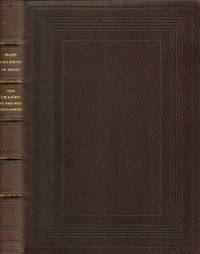
1849013644Koln Bonn Brussels: J.M. Heberle JH. Lempertz and Comp 1849. Marbled boards. Green endpapers. Spine titled in gilt. Top edge gilt. Front joint weak but intact. Text in German. Title translated roughly " Holbein's pictorial alphabet from his "Dance of Death" from the Dresden originals for the first time replicated in 24 woodcuts by H. Lodel in Gottingen with marginal drawings by the painter Georg Osterwald and accompanying sayings from the Scriptures". Quite a clean copy throughout. . First By this Publisher. Quarter Brown Calf. General Cover and Corner Wear/No Jacket. Small Thin Octavo. J.M. Heberle ( JH. Lempertz and Comp) Hardcover books
1918SB-20654Straßburg, J. H. Ed. Heitz, 1918. 15 S., 2 Bl., 150 S. Späterer Halbpergamentband mit roten Vorsätzen, in den die vormalige Broschur kompletrt eingebunden wurde. Vorsätze der Broschur mit zwei zusätzlichen kolorierten Holzschnitten. Mit 150 ganzseitigen Holzschnitt-Illustrationen. Von dem Werk wurden 500 nummerierte Exemplare Gedruckt. Das hier angebotene Exemplar trägt die Ausgabenummer 141. Als kostenlose Beigabe: Kurt Pfister: Die primitiven Holzschnitte, München, Holbein-Verlag, 1922 (brauner Original-Ganzlederband, am Rücken etwas beschädigt).
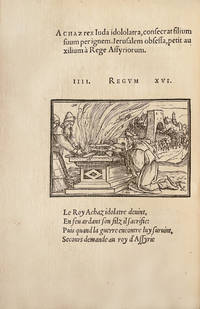
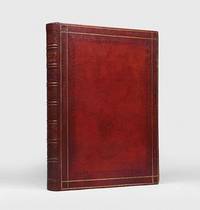
ABAA6<p>Lugduni Apud Ioannem Frellonium1547. </p><p>Small 4to of 52 ll. sign. A-N with 98 woodcuts l. L2 remargined brown Jansenist morocco spine ribbed gilt edges gilt inner border. <em>Chambolle-Duru</em>. </p><p>198 x 135 mm. </p><p>First issue "<em>of this beautiful book</em>" Brunet supplément 647 exceedingly rare with such wide margins height 198 mm; it is taller than the superb copy of <em>James de Rothschild.</em></p><p>Harvard 281; Baudrier vol. 5 p. 209; Rothschild vol. 1 n°16 ; Duplessis op. cit. N°276 p. 60-62 ; Woltmann <em>Holbein</em> vol. 2 p. 172-173 e ; Bouchereaux Corrozet n°127 ; Didot <em>Essai</em> col.73.</p>Each one of the 94 Holbein's engravings occupies a page with Latin <br />text above and French quatrains by <em>Gilles Corrozet</em> below.<p>Didot<em></em> in his <em>Essai sur la gravure sur bois</em> analyzes what he calls a "<em>masterpiece</em>":</p><p><em>"</em><em>The compositions in this masterpiece are of the highest style and as in The Simulacra of Death the expressions of the figures are </em><em>righteous</em><em> and offer a blend of simplicity energy and naivety that characterize Holbein.</em><em>"</em> </p><p>"First edition of 1547. There were two editions of the <em>Icones</em> printed by Frellon in 1547. These are often cited as issues but the text was entirely reset. This edition described by Brunet III 252-253 and others as the earlier may be identified by the fifth line of the title ending in "emenda-" and the first line of the French text on leaf LIr ending in "uices". A distinguishing feature of this edition is the use of v for u at the beginning of words in the Latin text. Brunet initiated a certain amount of controversy by quoting from E. Tross a theory that the second edition of 1547 No. 282 was printed from clichés rather than from the original blocks. Both Hofer op. cit. No. 276 ; p. 166-167 and Davies Murray vol. I no. 244 reject the idea of clichage. On the basis of breaks in the woodblocks Davies reverses Brunet's order of the two editions but evidence is introduced in the Hofer article to indicate that the condition of the blocks is in this case insufficient to prove priority. Aside from the woodcuts the changes in the text support the order of editions given by Brunet. Comparison of the French text of 1539 with that of this 1547 edition shows that out of the ninety-four verses fifty-one have from one to four lines revised. Signatures D and L are the only ones in which the text is unchanged. The text of the other 1547 edition corresponds to this one but has in addition seven of the eight quatrains in signature L revised. "Harvard. <br /></p>Known for their beauty and fine execution these <em>Icones</em> <br />are considered as a significant milestone in the illustrated <br />book of the Renaissance.Superb copy bound in Jansenist morocco by Chambolle-Duru <br />like the copy of James de Rothschild.<br /><br /><p><strong>French</strong></p><p>Lugduni Apud Ioannem Frellonium1547. </p><p>Petit in-4 de 52 ff. non chiffrés sign. A-N avec 98 figures sur bois f. L2 réenmargé maroquin brun janséniste dos à nerfs tranches dorées roulette intérieure dorée. <em>Chambolle-Duru</em>.</p><p>198 x 135 mm.</p><p>Premier tirage "<em>de ce beau livre</em>" Brunet supplément 647 de la plus extrême rareté avec d'aussi grandes marges hauteur 198 mm ; il dépasse le superbe exemplaire <em>James de Rothschild.</em></p><p>Harvard 281 ; Baudrier vol. 5 p. 209 ; Rothschild vol. 1 n°16 ; Duplessis op. cit. N°276 p. 60-62 ; Woltmann <em>Holbein</em> vol. 2 p. 172-173 e ; Bouchereaux Corrozet n°127 ; Didot <em>Essai</em> col.73.</p><p>Chacune des 94 gravures d'Holbein occupe une page avec texte latin au-dessus et quatrains français de <em>Gilles Corrozet</em> au-dessous.</p><p>Didot<em></em> dans son <em>Essai sur la gravure sur bois</em> analyse longuement ce qu'il nomme " <em>chef-d'œuvre</em> " :</p><p>" <em>Les compositions de ce chef-d'œuvre sont du plus haut style et comme dans les Simulachres de la Mort les expressions des figures sont justes et offrent un mélange de simplicité d'énergie et de naïveté qui caractérisent Holbein</em> ".</p><p>"First edition of 1547. There were two editions of the <em>Icones</em> printed by Frellon in 1547. These are often cited as issues but the text was entirely reset. This edition described by Brunet III 252-253 and others as the earlier may be identified by the fifth line of the title ending in "emenda-" and the first line of the French text on leaf LIr ending in "uices". A distinguishing feature of this edition is the use of v for u at the beginning of words in the Latin text. Brunet initiated a certain amount of controversy by quoting from E. Tross a theory that the second edition of 1547 No. 282 was printed from clichés rather than from the original blocks. Both Hofer op. cit. No. 276 ; p. 166-167 and Davies Murray vol. I no. 244 reject the idea of clichage. On the basis of breaks in the woodblocks Davies reverses Brunet's order of the two editions but evidence is introduced in the Hofer article to indicate that the condition of the blocks is in this case insufficient to prove priority. Aside from the woodcuts the changes in the text support the order of editions given by Brunet. Comparison of the French text of 1539 with that of this 1547 edition shows that out of the ninety-four verses fifty-one have from one to four lines revised. Signatures D and L are the only ones in which the text is unchanged. The text of the other 1547 edition corresponds to this one but has in addition seven of the eight quatrains in signature L revised. "Harvard.</p><p>Reconnues pour leur beauté et leur finesse d'exécution ces <em>Icones </em>sont considérés comme un jalon marquant du livre illustré de la Renaissance. </p><p>Superbe exemplaire relié comme l'exemplaire James de Rothschild en maroquin janséniste de Chambolle-Duru.</p> hardcover
183014624London: William Pickering 1830 Contemporary straight-grained brown morocco over marbled boards. . Octavo. Woodcut printer's device on title and colophon. Illustrations engraved by John and Mary Byfield. Extremites a bit rubbed extremities of spine darkened. A very good copy. William Pickering, hardcover
18301260367London: William Pickering 1830. 8vo unpaginated; VG; paneled black spine with gilt tooling and lettering; some wear on edges head and tail of spine; 90 engravings; paneled gilt tooling on border of boards; gilt tooling on board edges and turn-ins; textclear; text block gilt; red ribbon; translations into 5 languages of passages; marbled endpapers; some shelfwear; GP consignment; shelved case 7. 1260367. Shelved Dupont Bookstore. William Pickering unknown books
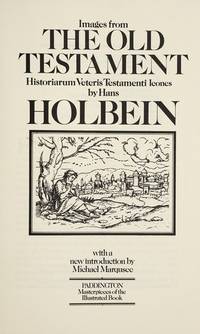
0846701472New. paperback. New. Satisfaction Guaranteed or your money back. paperback
1976Q-0846701472Imprint unknown 1976-09-27. Paperback. New. New. In shrink wrap. Looks like an interesting title! Imprint unknown paperback
1947009782Buenos Aires: Laclaustra Y Compania. Very Good. 1947. First Thus. Full-leather. One of eighty copies. This is a facsimile edition of Hans Holbein Le Jeune's 1549 edition as a set of two volumes in a marbled slipcase. The text volume with illustrations is full leather with five bands. Leather along the bands and edges is rubbed with a small crack at the head of the spine. Front endpapers are marbled and rear endpapers are brown suede. The second volume is a folder with a leather spine with spine ends rubbed off over marbled boards. It contains an etched copperplate with image and text. A unique presentation of the work of Hans Holbein the Younger a famous 16th century artist and supporter of the Reformation. ; 10 3/4" x 7 1/2" . Laclaustra Y Compania hardcover
1947009782Buenos Aires: Laclaustra Y Compania. Very Good. 1947. First Thus. Full-leather. One of eighty copies. This is a facsimile edition of Hans Holbein Le Jeune's 1549 edition as a set of two volumes in a marbled slipcase. The text volume with illustrations is full leather with five bands. Leather along the bands and edges is rubbed with a small crack at the head of the spine. Front endpapers are marbled and rear endpapers are brown suede. The second volume is a folder with a leather spine with spine ends rubbed off over marbled boards. It contains an etched copperplate with image and text. A unique presentation of the work of Hans Holbein the Younger a famous 16th century artist and supporter of the Reformation. ; 10 3/4" x 7 1/2" . Laclaustra Y Compania hardcover books
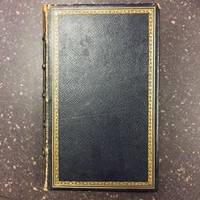
1567127481567 un volume, reliure, reliure plein maroquin noir (19ème) petit in-octavo (full morocco in-octavo), dos long (spine without raised band), décoré or (gilt decoration) - titre frappé or (gilt title) - , plats décorés d'un encadrement à double filets à froid (cover with double line blind-stamping), tête lisse (top edge smooth), toutes tranches lisses (all smooth edges) noires (all edges black), orné de 53 bois de Hans HOLBEIN gravés sur bois en noir (woodcuts) par Antoine Silvius, 1567 Cologne héritiers de Arnold Birckmann Editeurs (Coloniae : Apud haeredes Arnoldi Birckmanni, 1567),
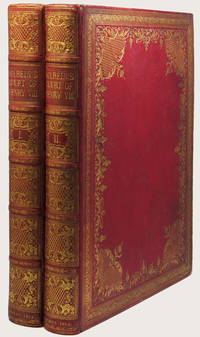
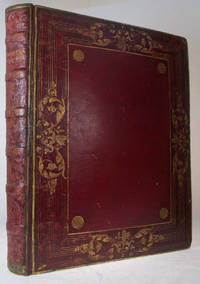
181234168London: Published by John Chamberlaine the Keeper of the King's Drawings and Medals. Printed by William Bulmer and Co. Shakespeare Printing Office 1812. 2 volumes. First Edition of the century First Issue the second edition overall. A RARE EXAMPLE WITH THE PLATES BOTH IN COLOURED AND UNCOLOURED STATE THUS WITH DOUBLE THE NUMBER OF PLATES NORMALLY ENCOUNTERED. With 84 hand-coloured plates and 84 plates uncoloured all separately printed on India paper and tipped onto full-page leaves each facing the other the plates with protective leaf separating the two each image with two variations mezzotint portraits of Holbein and his wife a total of 168 illustrations on full-page plates four plates dated from the first printing in 1792 the other 164 dated 1812 as with the publishing date. The plates are printed on a variety of papers slightly different from one another--grey buff white lavender and pink. Folio 34.5 x 2 beautifully bound in full red morocco gilt extra the spines with gilt tooled raised bands separating the compartments which are elaborately gilt decorated within triple gilt filleted frames gilt stippling to the borders of the frames lettered in gilt in one compartment the covers beautifully gilt decorated in all-over designs the borders with gilt stippled lines enclosing three gilt filleted borders surrounding an elaborate gilt inner border of floral tooling bordered again by a stippled and multi-filleted gilt frame the whole surrounding elaborate and large gilt tooled decorations at the inner corners and along the rules the edges gilt ruled the turnovers gilt rolled marbled endleaves all edges gilt very elaborate and beautifully preserved binding work. unpaginated. Fine copies beautifully preserved very light wear or age evidence to the bindings which remain strong the pages and plates all in good order some very occasional light foxing to the papers as is typical the colours remain vibrant and as printed the giltwork on the bindings is in very pleasing condition a very handsome set indeed. FIRST EDITION AND AN UNUSUALLY SPECIAL COPY BOUND IN FULL RED MOROCCO GILT EXTRA WITH THE PLATES PRINTED ON INDIA PAPER IN BOTH COLOURS AND BLACK AND WHITE A COPY WITH DOUBLE THE NUMBER OF PLATES USUALLY ENCOUNTERED. Hans Holbein the Younger; c. 1497 – between 7 October and 29 November 1543 was a German-Swiss painter and printmaker who worked in a Northern Renaissance style and is considered one of the greatest portraitists of the 16th century. He also produced religious art satire and Reformation propaganda and he made a significant contribution to the history of book design. He is called "the Younger" to distinguish him from his father Hans Holbein the Elder an accomplished painter of the Late Gothic school.<br> Holbein was born in Augsburg but worked mainly in Basel as a young artist. At first he painted murals and religious works and designed stained glass windows and illustrations for books from the printer Johann Froben. He also painted an occasional portrait making his international mark with portraits of humanist Desiderius Erasmus of Rotterdam.<br> Holbein travelled to England in 1526 in search of work with a recommendation from Erasmus. He was welcomed into the humanist circle of Thomas More where he quickly built a high reputation. He returned to Basel for four years then resumed his career in England in 1532 under the patronage of Anne Boleyn and Thomas Cromwell. By 1535 he was King's Painter to Henry VIII. In this role he produced portraits and festive decorations as well as designs for jewellery plate and other precious objects. His portraits of the royal family and nobles are a record of the court in the years when Henry was asserting his supremacy over the Church of England.<br> Holbein's art has sometimes been called realist since he drew and painted with a rare precision. His portraits were renowned in their time for their likeness and it is through his eyes that many famous figures of his day are pictured today such as Erasmus and More. He was never content with outward appearance however; he embedded layers of symbolism allusion and paradox in his art to the lasting fascination of scholars. In the view of art historian Ellis Waterhouse his portraiture "remains unsurpassed for sureness and economy of statement penetration into character and a combined richness and purity of style."<br> For Holbein "everything began with a drawing". A gifted draughtsman he was heir to a German tradition of line drawing and precise preparatory design. Holbein's chalk and ink portraits demonstrate his mastery of outline. He always made preparatory portraits of his sitters though many drawings survive for which no painted version is known suggesting that some were drawn for their own sake.<br> Ellis Waterhouse wrote that "modern" painting in England may be said to have begun with Holbein. That later artists were aware of his work is evident in their own sometimes explicitly. Hans Eworth for example painted two full-length copies in the 1560s of Holbein's Henry VIII derived from the Whitehall pattern and included a Holbein in the background of his Mary Neville Lady Dacre. The influence of Holbein's "monumentality and attention to texture" has been detected in Eworths' work. According to art historian Erna Auerbach: "Holbein's influence on the style of English portraiture was undoubtedly immense. Thanks to his genius a portrait type was created which both served the requirements of the sitter and raised portraiture in England to a European level. It became the prototype of the English Court portrait of the Renaissance period".<br> Holbein worked for Thomas Cromwell as he masterminded Henry VIII's reformation. Cromwell commissioned Holbein to produce reformist and royalist images including anti-clerical woodcuts and the title page to Myles Coverdale's English translation of the Bible. Henry VIII had embarked on a grandiose programme of artistic patronage. His efforts to glorify his new status as Supreme Head of the Church culminated in the building of Nonsuch Palace which started in 1538. By 1536 Holbein was employed as the King's Painter on an annual salary of 30 pounds—though he was never the highest-paid artist on the royal payroll. see C. Müller et al.<br> This striving for perfection is very evident in his portrait drawings where he searches with his brush for just the right line for the sitter's profile. The critical faculty in making this choice and his perception of its potency in communicating decisively the sitter's character is a true measure of Holbein's supreme greatness as a portrait painter. Nobody has ever surpassed the revealing profile and stance in his portraits: through their telling use Holbein still conveys across the centuries the character and likeness of his sitters with unrivalled mastery. see J. Rowlands Hans Holbein the Younger 1985 Published by John Chamberlaine, the Keeper of the King's Drawings and Medals. Printed by William Bulmer and Co., Shakespeare Pri hardcover
114481London Printed by William Bulmer and Co/ Shakespeare Printing-Office 1812. 4to 338x265 mm. 71 ll. 84 engr. colour plates several printed on pink paper. One plate with stain. Contemporary red half calf spine gilt with raised bands embossed red cloth boards spine and corners a bit worn. Abbey Life in England 205 note for this second edition. Second edition complete with all 84 finely colour printed portraits after Holbein including the two full page portraits of Hans Holbein and his wife and the two finely coloured miniatures. It was first published in 1792-1800 in folio. The plates are re-engraved to this new edition in a lesser size and by several new engravers. The biographical notices were provided by Edmund Lodge 1756-1839. â€The original Holbein drawings upon which these prints are based were nearly lost and were hardly seen for centuries until their rediscovery by none other than Queen Caroline of England. Upon being liberated from a bureau of the queen's personal closet at Kensington Palace colour printed 'imitations' of the drawings were subsequently published under the auspices of John Chamberlaine 1745-1812 Keeper of the drawings of George III.†hardcover
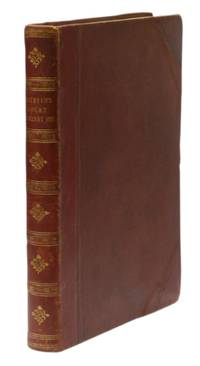
1792160199London: W. Bulmer and Co. Shakespeare Printing-Office 1792-1800. This magnificent work" - Holbein rendered by Bartolozzi First edition of this superlative folio about which the leading authorities are in full agreement: "in every way a splendid book" Abbey and "this magnificent work is surely the finest early example of English colour printing" Ray. This is a most handsome copy in contemporary red morocco. "During his second stay in England 1532-43 Hans Holbein made a series of drawings of sitters connected with the court of Henry VIII that ranks among his finest achievements. Most of these were discovered as a group pasted into an album in a bureau at Kensington Palace by Queen Caroline in 1728 and the majority are now in the Royal Collection Windsor" Oliver et al p. 168. The album had a chequered history passing through several royal and noble hands - Charles I swapped it for a single painting by Raphael - before finding its way into the celebrated collection of Thomas Howard 14th earl of Arundel who "amassed what stands as the first major British art collection" British Library. It then returned to royal ownership a reunion that was recorded in Alexander Browne's Ars Pictoria 1675: "this book has been long a Wanderer but is now most happily fallen into the King's Collection". It then lay undisturbed until Queen Caroline's discovery. Solicitous of artworks in the royal collections she had them removed from their binding individually framed and hung in her country residence of Richmond Lodge. A native of Florence Francesco Bartolozzi 1728-1815 had by the early 1760s established himself as one of the finest engravers in Italy. An invitation to London in 1764 led to his employment to make prints after drawings by Guercino which entered the Royal Collection. He became engraver to the king and was a founder member of the Royal Academy. His imprimatur on an engraving was in high demand and he established "a vogue for dotted prints or 'stipples' and this became his characteristic manner" ODNB. Extensive work for many of the leading London print-sellers followed for which he employed a large studio to cope with commissions. This led to accusations of shoddy workmanship about which Bartolozzi was very sensitive; and yet he continued to attract high-level commissions such as the present work the admirable presswork for which was by the best London printer of the day William Bulmer. It was published under the auspices of the antiquary John Chamberlaine Keeper of George III's drawings with biographical notices provided by Edmund Lodge. Dr Lucy Peltz Head of Collection Displays Tudor to Regency at the National Portrait Gallery notes a contemporary "patriotic fashion for collecting engraved portraits of illustrious figures" ODNB entry for Edmund Lodge. "Published in parts during the years 1792 to 1800. the book evidently had a very considerable success for the plates appear in several states" Abbey. The present copy includes hand-coloured plates on white paper pink paper and trimmed pink paper mounted to white sheets with a double-border in wash. The sitters include Anne Boleyn Edward VI Sir Thomas Eliot Catherine Howard Sir Thomas More Jane Seymour Henry Howard earl of Surrey and Sir Thomas Wyatt. Folio 543 x 400 mm. With 84 colour-printed stipple engravings on 83 sheets all but four by Francesco Bartolozzi after Holbein on white or pink paper some on pink paper mounted on card. Contemporary red straight-grain morocco gilt spine with seven pairs of raised bands gilt lettered direct in second compartment and at foot each compartment filled with decorative blind tooling sides with intersecting gilt frames enclosing blind panels comprising interlocking drawer-handle tools and anthemion rolls 12-point corner rosettes gilt chain-link edge roll gilt rope-twist turn-ins drab bluish green surface-paper endpapers gilt edges. Binding professionally refurbished a few old abrasions to binding front leaves creased one mounted plate with repaired closed tear some foxing to plates on white paper a few captions shaved rear free endpaper sympathetically renewed. A handsome copy. Abbey Life 205 the plates accord with Abbey's states 2 3 and although not examined by him possibly 5; Lowndes I p. 405; Ray The Illustrator and the Book in England from 1790 to 1914 1991 19. Lois Oliver et al "New evidence towards an attribution to Holbein of a drawing in the Victoria and Albert Museum" The Burlington Magazine Vol. 148 No. 1236 March 2006. hardcover
179265216London: W. Bulmer & Co 1792. HOLBEIN Hans; CHAMBERLAINE John. artist. CHAMBERLAINE John. Imitations of Original Drawings by Hans Holbein in the Collection of His Majesty for the Portraits of Illustrious Persons of the Court of Henry VIII. With biographical tracts. Published by John Chamberlaine Keeper of the King's Drawings and Medals and F.S.A. London: W. Bulmer & Co. 1792.<br> <br> First edition of Chamberlaine's magnificent volume of 86 color stipple-engraved plates rarely found complete. Large folio 21 1/4 x 16 1/2 inches; 540 x 415 mm. Complete with the 80 listed plates all of which are mounted frontispiece portraits of Holbein and Holbein's wife and a third frontis of a group portrait two hand-colored miniatures and an additional plate of Henry Howard Earl of Surry engraved by Scriven. An impressive collection of full-page engravings after Holbein's legendary portraits of Jane Seymour Anne Boleyn Sir Thomas More a young Edward VI Anne of Cleves and other court figures with frontispiece portraits of Holbein and his wife. Of the listed plates all but four portraits are engraved by the great Bartolozzi. In total eighty-two plates are in color with four on lavender paper sixty-three on pink thirteen on white/buff inclusive of one sheet with double portrait of Henry and Charles Brandon finished by hand. With one leaf of publisher's advertisements.<br> <br> 19th-century full red morocco rebacked with original spine laid down. Boards elaborately stamped with floral devices and with thirteen gilt rules. Spines elaborately stamped in blind and gilt lettered in gilt. With one-inch gilt dentelles. All edges gilt. Green coated endpapers. Plates exceptionally bright and clean with only very minor instances of foxing. Most foxing is to leaves and not engravings. Title-page with 11/2-inch x 1/2 piece torn from fore-edge and a 2-inch closed tear at fore-edge neither affecting text. Many of the plates are a somewhat wrinkled. The plate of Lord Clinton with a small tear to the pink paper not affecting engraving. Occasional marginal closed tears professionally repaired. Binding a bit rubbed and bumped. Overall a very good copy of a magnificent work.<br> <br> German artist Hans Holbein the Younger ranks "as one of the best portrait-painters in the world. He combined artistic beauty and precision of technical execution with extraordinary truth to nature and power of interpretation of character." Holbein born in 1497 first "arrived in England in the 18th year of the reign of Henry VIII. Sir Thomas More was then Chancellor of the Exchequer and Warham. was Archbishop of Canterbury. Through them Holbein obtained easy access to the leading men of the court" painting portraits of Moore Warham and many others before returning home. He journeyed back to England in 1532 where by 1536 he was in service as "'the king's painter' and in that year he painted the new queen Jane Seymour." In 1539 as a New Year's gift to the king "he gave 'a table of the pictour of the prince's grace' possibly the portrait of the infant Edward VI at Hanover. His portrait of Anne of Cleves perhaps the one now in the Louvre was sufficiently attractive to decide the king in her favour" DNB. The majestic portraiture of Holbein who died in London in 1543 "remains unsurpassed for sureness and economy of statement penetration into character and a combined richness and purity of style" Waterhouse. At the end of the 18th century John Chamberlaine in the court of George III sought to bring together a work to pay tribute to Holbein's magnificent artistry. There had been previous unsuccessful attempts to publish the portraits in engraved reproductions such as a 1792 volume containing 33 plates of poor quality titled The Court of Henry the Eighth. Yet Chamberlain succeeded where others failed for as the king's Keeper of the Drawings he assembled in this Imitations of Original Drawings by Hans Holbein 84 splendid color stipple-engraved full-page portraits of Edward VI Anne Boleyn Thomas More Jane Seymour the Archbishop of Canterbury Anne of Cleves and other major figures of the age.<br> <br> "One of the most magnificent books that we have ever seen and whether we consider the genius of the painter or the talents of the engravers reflects high honor on the age and nation which produced it" London Monthly Review. Sir Walter Scott praised it as "a collection which at once satisfies the imagination and the understanding showing us. how the most distinguished of our ancestors looked moved and dressed and. how they thought acted lived and died" Allibone 1120. Color-inked on the plates these intricate stipple-engraved portraits comprise "inestimable examples of English color printing at its best" Joan Friedman. "This magnificent work is surely the finest early example of English color printing. The reduced reissue of 1812 reprinted in 1828 gives no idea of the book's quality" Ray English 19. "In every way a splendid book" Abbey Life 205.<br> <br> Initially issued serially in 14 parts from 1792-1800. This volume's 86 beautiful portraits were achieved with techniques that admirably succeed in honoring Holbein's portraiture. The plates were etched or engraved in gray or sepia ink with additional colored inks applied a la poupee two hand-colored. Text by Edmund Lodge. Abbey Life 206.<br> <br> Lowndes 1381. Abbey Life 205 206.<br> <br> HBS 65216.<br> <br> $12500. W. Bulmer & Co unknown
17921801220011London: W. Bulmer 1792. First Edition. Hardcover. Very Good. Folio 56 x 44 cm. 1st ed published between 1792-1800. Rebound in moroccan leather over finely marbled boards. 92 stipple-engraved color plates some mounted some on pink paper. The first work is complete with 84 portraits on 83 plates. Additionally includes The Court of Francis II also by Holbein often bound together 8 additional color plates. All edges gilt. Perforated library stamp on title. Portraits of Hans Holbein and his wife trimmed at bottom edge. According to the Ray "This Magnificent Work Is Surely The Finest Early Example Of English Color Printing." "In every way a splendid book the colour printing reproducing with extraordinary fidelity the original designs . No copies were issued to the public until the stock was acquired many years later by Messrs. Bohn who added them as a Supplement to copies of the earlier work." Abbey Life 205 & 206; Ray English 19; Brunet III 259-260 'ouvrage magnifique'; Lewine pp. 243-4; Lowndes p. 405. This is an oversized or heavy book which requires additional postage for international delivery outside the US. London: W. Bulmer hardcover
179265216ìThis Magnificent Work Is Surely The Finest Early Example Of English Color Printing." A Majestic Large Folio Volume Of More than 80 Beautiful Color Stipple-Engraved Portraits Of The Court Of Henry VIII HOLBEIN Hans artist. CHAMBERLAINE John. Imitations of Original Drawings by Hans Holbein in the Collection of His Majesty for the Portraits of Illustrious Persons of the Court of Henry VIII. With biographical tracts. Published by John Chamberlaine Keeper of the King's Drawings and Medals and F.S.A. London: W. Bulmer & Co. 1792. First edition of ChamberlaineÃs magnificent volume of 86 color stipple-engraved plates rarely found complete. Large folio 21 1/4 x 16 1/2 inches; 540 x 415 mm. Complete with the 80 listed plates all of which are mounted frontispiece portraits of Holbein and Holbein's wife and a third frontis of a group portrait two hand-colored miniatures and an additional plate of Henry Howard Earl of Surry engraved by Scriven. An impressive collection of full-page engravings after HolbeinÃs legendary portraits of Jane Seymour Anne Boleyn Sir Thomas More a young Edward VI Anne of Cleves and other court figures with frontispiece portraits of Holbein and his wife. Of the listed plates all but four portraits are engraved by the great Bartolozzi. In total eighty-two plates are in color with four on lavender paper sixty-three on pink thirteen on white/buff inclusive of one sheet with double portrait of Henry and Charles Brandon finished by hand. With one leaf of publisher's advertisements. 19th-century full red morocco rebacked with original spine laid down. Boards elaborately stamped with floral devices and with thirteen gilt rules. Spines elaborately stamped in blind and gilt lettered in gilt. With one-inch gilt dentelles. All edges gilt. Green coated endpapers. Plates exceptionally bright and clean with only very minor instances of foxing. Most foxing is to leaves and not engravings. Title-page with 11/2-inch x 1/2 piece torn from fore-edge and a 2-inch closed tear at fore-edge neither affecting text. Many of the plates are a somewhat wrinkled. The plate of Lord Clinton with a small tear to the pink paper not affecting engraving. Occasional marginal closed tears professionally repaired. Binding a bit rubbed and bumped. Overall a very good copy of a magnificent work. German artist Hans Holbein the Younger ranks ìas one of the best portrait-painters in the world. He combined artistic beauty and precision of technical execution with extraordinary truth to nature and power of interpretation of character.î Holbein born in 1497 first ìarrived in England in the 18th year of the reign of Henry VIII. Sir Thomas More was then Chancellor of the Exchequer and Warham. was Archbishop of Canterbury. Through them Holbein obtained easy access to the leading men of the courtî painting portraits of Moore Warham and many others before returning home. He journeyed back to England in 1532 where by 1536 he was in service as ìëthe kingÃs painterà and in that year he painted the new queen Jane Seymour.î In 1539 as a New YearÃs gift to the king ìhe gave ëa table of the pictour of the princeÃs graceà possibly the portrait of the infant Edward VI at Hanover. His portrait of Anne of Cleves perhaps the one now in the Louvre was sufficiently attractive to decide the king in her favourî DNB. The majestic portraiture of Holbein who died in London in 1543 ìremains unsurpassed for sureness and economy of statement penetration into character and a combined richness and purity of styleî Waterhouse. At the end of the 18th century John Chamberlaine in the court of George III sought to bring together a work to pay tribute to HolbeinÃs magnificent artistry. There had been previous unsuccessful attempts to publish the portraits in engraved reproductions such as a 1792 volume containing 33 plates of poor quality titled The Court of Henry the Eighth. Yet Chamberlain succeeded where others failed for as the kingÃs Keeper of the Drawings he assembled in this Imitations of Original Drawings by Hans Holbein 84 splendid color stipple-engraved full-page portraits of Edward VI Anne Boleyn Thomas More Jane Seymour the Archbishop of Canterbury Anne of Cleves and other major figures of the age. ìOne of the most magnificent books that we have ever seen and whether we consider the genius of the painter or the talents of the engravers reflects high honor on the age and nation which produced itî London Monthly Review. Sir Walter Scott praised it as ìa collection which at once satisfies the imagination and the understanding showing us. how the most distinguished of our ancestors looked moved and dressed and. how they thought acted lived and diedî Allibone 1120. Color-inked on the plates these intricate stipple-engraved portraits comprise ìinestimable examples of English color printing at its bestî Joan Friedman. ìThis magnificent work is surely the finest early example of English color printing. The reduced reissue of 1812 reprinted in 1828 gives no idea of the bookÃs qualityî Ray English 19. ìIn every way a splendid bookî Abbey Life 205. Initially issued serially in 14 parts from 1792-1800.†This volumeÃs 86 beautiful portraits were achieved with techniques that admirably succeed in honoring HolbeinÃs portraiture. The plates were etched or engraved in gray or sepia ink with additional colored inks applied a la poupee two hand-colored. Text by Edmund Lodge. Abbey Life 206. Lowndes 1381. Abbey Life 205 206. HBS 65216. $17500 W. Bulmer & Co. hardcover books
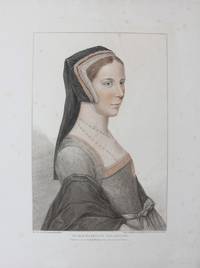
1799P4437London: John Chamberlaine c.1799. Very Good. Notes: A stipple engraving of Anne Cresacre during the late 18th century. <br>Anne Cresacre 1511–77 was the ward of Thomas More who had taken her into his family after the death of her father. In 1527 she was betrothed to More's only son John: the couple married in 1529. This drawing is one of seven fine surviving studies drawn by Holbein for his group portrait of Thomas More's family. Image Size : 383x258 mm 15.08x10.16 Inches Platemark Size : 430x300 mm 16.93x11.81 Inches Paper Size : 543x406 mm 21.38x15.98 Inches Coloring: Printed in Color Medium: Stipple Engraving Categories: Portraits Others; John Chamberlaine unknown
310069-KK16Delhi : Low Price Publications n.d. Hardcover. Good. Original gilt letterd cloth ribbon marker illustrations in colour and b/w reprint of the 1909 edition 4to. Delhi : Low Price Publications hardcover
2023Gyan-9788121283816Gyan Publishing House 2023. Hardcover. New. 22.59 x 28.94 x 3.64. English Gyan Publishing House hardcover
2023Gyan-9788121283809Gyan Publishing House 2023. Paperback. New. 21.59 x 27.94 x 2.548. English Gyan Publishing House paperback
2023Gyan-9788121283816Gyan Publishing House 2023. Hardcover. New. 22.59 x 28.94 x 3.64. English Gyan Publishing House hardcover
2023Gyan-9788121283809Gyan Publishing House 2023. Paperback. New. 21.59 x 27.94 x 2.548. English Gyan Publishing House paperback
2023Raj-97881212838162023. New. English unknown
2023Raj-97881212838092023. New. English unknown