953 résultats
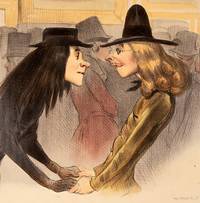
05964Paris: Chez Aubert 1839. With 150 Hand-Colored Lithographs<br /> including Forty-Five by Honoré Daumier and Forty-Two by Gavarni<br /> <br /> DAUMIER Honoré Gavarni and others illustrators. ALHOY Maurice Louis Huart and Charles Philipon editors. Le Musée pour rire. Dessins par tous les caricaturistes de Paris; Texte par MM. Maurice Alhoy Louis Huart et Ch. Philipon. Paris: Chez Aubert Editeur des Cent-et-Un Robert-Macaire 1839-1840.<br /> <br /> Three quarto volumes 10 3/16 x 7 15/16 inches; 259 x 202 mm. 2 half-title 2 title 200 2 "Table" 4 publisher's advertisements; 2 half-title 2 title 200 2 "Table; 2 half-title 2 title 200 2 "Table 4 publisher's advertisements pp. With 150 numbered hand-colored lithographs heightened with gum arabic by Honoré Daumier forty-five Gavarni forty-two Frédéric Bouchot twenty-two Victor Adam ten Platier seven Benjamin i.e. Benjamin Roubaud four Bourdet three Pruche three Platel two Grandville two Edme-Jean Pigal two Alophe Menut two Charles Vernier two Charles-Joseph Traviès one and others.<br /> <br /> Early twentieth-century half red scored calf ruled in gilt over marbled boards by Adolphe Cuzin stamp-signed in gilt at foot of spine. Smooth spines decoratively tooled and lettered in gilt all edges gilt marbled endpapers. Expert and almost invisible minor restoration to corners and spine extremities. Occasional light foxing and/or browning. A wonderful copy.<br /> <br /> "The house of Aubert was ingenious in marketing its products. Its lithographs.were published one by one in periodicals like Le charivari and together in suites by the same artist without letterpress. Still a third form of publication was in albums made up of lithographs by several artists with accompanying texts. These collections most commonly took the form of volumes with the generic title Paris comique which consisted of twenty colored lithographs accompanied by quite unrelated texts. Aubert remarked that the resulting hodgepodge had 'a plan that is easy to follow for it consists in not having any' and in fact this was indeed a frugal procedure for reusing old texts and already published plates. The interest of the various volumes of Paris comique resides entirely in the lithographs they happen to contain. It can be considerable however since Daumier and Gavarni are the predominant artists. Le musée pour rire represents a more considerable effort on the part of Aubert. To accompany 150 lithographs including forty-five by Daumier among them twenty-seven from Croquis d'expressions and eight from La galerie physionomique and forty-two by Gavarni new commentaries were commissioned on each plate all except two by Alhoy and Huart. Daumier's lithographs were trimmed slightly and their captions were relettered. The designs of the other artists were provided with decorative frames. The whole was then published in three handsome volumes and in copies with expert contemporary coloring like this one Le musée pour rire is among the freshest and most attractive of romantic illustrated books" Ray The Art of the French Illustrated Book.<br /> <br /> Le Musée pour Rire "contained 150 lithographs by Daumier Gavarni Bouchot Traviès etc. These are re-impressions some of them in mirror image which had previously already been used for publication in Le Charivari. Most prints of the series 'Croquis d'expressions' are contained in the book. The name of the series is missing and the texts were printed in a different type than in the original Charivari version. We do not consider these prints original lithographies but rather prints 'after Daumier'" The Daumier Register at http://www.daumier-register.org.<br /> <br /> Ray The Art of the French Illustrated Book 164. Paris: Chez Aubert, 1839 unknown
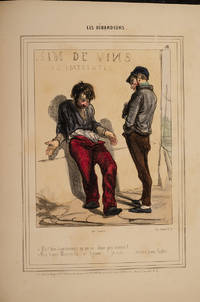
05386Paris: Au Bureau du Charivari 1840. Sixty-Six Magnificent Hand-Colored Lithographed Plates by Gavarni<br /> Depicting "The Stevedores"<br /> <br /> GAVARNI Paul pseudonym of Guillaume Sulpice Chevallier. Les Débardeurs. Paris: Au Bureau du Charivari n.d. 1840-1842.<br /> <br /> Folio 13 7/8 x 10 3/8 inches; 353 x 264 mm. Sixty-six superb numbered hand-colored lithographed plates heightened with gum arabic. Plates printed by Aubert & Cie. Plate numbers 316 29 32 33 39 43 51 & 52 a little shorter on outer margins. Plate number 52 with neat repairs to top and bottom blank margins. A few plates slightly toned still an excellent copy of this extremely rare Gavarni title.<br /> <br /> Modern blue cloth over boards front cover with dark green straight-grain morocco label bordered and lettered in gilt. An excellent example of this exceptionally rare and highly amusing book <br /> <br /> A series of sixty-six lithographs of which nine first appeared in other journals eight in La Caricature plates 21 23 and 24 under the title "Souvenirs du Carnaval" and 32 44 49 54 and 61 under the title "Les Débardeurs" and one plate 58 in La Mode prior to the publication of the entire series in Le Charivari from 19 January 1840 to 5 February 1842.<br /> <br /> Exceptionally Rare with OCLC locating just one complete colored copy in libraries and institutions worldwide: Morgan Library and Museum - the Gordon Ray copy NY US. <br /> <br /> OCLC also locates two other copies neither of which states 'color' plates: Yale University Library CT US and Clark Art Institute MA US.<br /> <br /> "In this work. from a series of sixty-six lithographs published in Le Charivari between 1840 and 1843 Gavarni depicts a variation on the most famous of the costumes he designed for the masquerade balls the débardeur the stevedore. The braided wig loose shirt black velvet trousers fastened with brass buttons and tied with a fringed sash are derived from the working costume of the longshoreman or stevedore who unloaded the barges that traveled up the Seine to Paris. As Nancy Olsen points out in Gavarni: The Carnival Lithographs the majority of Gavarni's carnival lithographs reflect his interest in the small groups that drift away from the crowd as a consequence of the romantic liaisons that preoccupied many of the participants at a masked ball. Intrigue was the name of the gave and the information being conveyed in this scene comes in all probability from an agent provocateur" Beatrice Farwell The Charged Image: French Lithographic Caricature 1816-1848 p. 88.<br /> <br /> Armelhault & Bocher nos. 486-542 307-309 plates 21 23 and 24 259-263 plates 44 49 32 54 and 61 and 1223 plate 58. Ray The Art of the French Illustrated Book 154.<br /> <br /> The Plates:<br /> <br /> 1. Le Débardeur mâle et femelle.vivants!.<br /> 2. Caporal on gele dans votre satanè violon!.<br /> 3. Amanda l'Ecuyer. Rue.<br /> 4. Qui Moi et Zélie Achille et toi.<br /> 5. Un amour de petit ménage; quoi! Ça se retire à la pointe du jour bien paisibles!.<br /> 6. On va pincer son petit cancan mais bien en douceur.<br /> 7. Le Vicomte Aime de Trois Etoiles et Dame Eloa de Tremblement.<br /> 8. Ah! qu'il est beau!.<br /> 9. Malheureuse enfant! Qu'as - tu fait de ton sexe.<br /> 10. Pauvre Elvire emportée aux flots du bal Musard.<br /> 11. C'est comme ça que tu les intrigues.merci!<br /> 12. En voulez-vous de la crevette.pas cher.<br /> 13. Va dire à ta mère qu'a te mouche.<br /> 14. Je vous dis que vous avez dansé d'une façon.<br /> 15. Comment Lili ne reconnait pas son Nini!<br /> 16. Y en-a-ti des femmes y'en a-t-i.<br /> 17. Allons Landerneau mon bonhomme!.<br /> 18. Ça ne te regarde pas de quoi te mèles-tu.<br /> 19. .être fichues au violon comme des rien du tout!.<br /> 20. Six pouces de jambes et le dos tout de suite!.<br /> 21. "L'Intolérance est fille des faux Dieux!".<br /> 22. Voyons Angelina as-tu assez fait poser Mosieu<br /> 23. Va donc!.Singulier masculin!<br /> 24. C'est mon Débardeur!.<br /> 25. C'est d'main matin qu'mon tendre époux va beugler.<br /> 26. Te v'la ici toi! C'est comme ça qu'tas ta migraine.<br /> 27. J'espère que tu vas te tenir Angélique.<br /> 28. Voilà un fénéant qui dort et qui laisse une pauv femme danser toute la nuit!.<br /> 29. .une douzaine d'huitres et mon coeur.<br /> 30. V'la qu'i fait jour: j'suis échigné moi dam! Et toi.<br /> 31. On rit avec vous et tut e faches.en voilà un drôle de pistolet!<br /> 32. Tais-toi moutard faut laisser jaser l'autorité!.<br /> 33. V'là un gueux de petit pékin qui se divertit au bal comme un grain de plomb dans du champagne.<br /> 34. .Et si Cornélie ne trouvait pas de voiture.<br /> 35. Toi je te repigerai!<br /> 36. Qu'est-ee que c'est Tu vous deranges pour ça et t'en voudrais déja p'us.<br /> 37. Le Débardeur - Ne me parlez pas des femmes en Carnaval pour s'amuser!.<br /> 38. Ils vont venir: écoute Hortense! Sur le coup de minuit minuit et demi vois-tu.<br /> 39. V'là qu'elles ont des mots!.Fameux!.<br /> 40. Et ton Epouse.<br /> 41. Est-ce que vous n'en avez pas bientot assez Angélina du Carnaval.<br /> 42. As-tu vu M'ame Alexandre et l'ancienne à Paul qui sont à se peigner en bas pour ce Paltoquet d'Eugène!.<br /> 43. Aurai-je l'honneur de danser un galop ávec Mosieu le Baron.<br /> 44. P'us que ça de bouillon! Merci.<br /> 45. J'te parie mon Alezan doré contre ta Vicomtesse que j'emporte ce soir le petit rat du Baron.<br /> 46. Ton Alfred est un gueux: il est ici avec l'autre.<br /> 47. Qu'est-ce que t'as mon vieux Auguste - Rien!.<br /> 48. Eh! b'en Landerneau ça ne vas donc pas mieux.<br /> 49. Allons! allons Mazuzi! Tiens-toi allons!.<br /> 50. Mon cher le municipal a emporté le petit muf'e avec qui je dansais parcequ'I voulait pincer son Cancan.<br /> 51. Ah! ça décidément Caroline est folle du petit Anglais.<br /> 52. J'i ai dit! J i dit Madame si vous vous permettez de fich.<br /> 53. As tu vu M'ame Chose et le petit Baron qui ne peuvent pas se voir.<br /> 54. Monter à cheval sur le cou d'un homme qu'on ne connait pas t'appelle çà plaisanter toi!<br /> 55. Je f'avertis Milord.sit u dines demain avec cette Andalouse-lá.<br /> 56. Qu'est que t'as la Mômignarde.<br /> 57. Çà! C;est pas la perruque à Jules!.<br /> 58. Un honnête Domino! Des airs décents.<br /> 59. Avec l'agrément de cet agréable muf'e là pourraît-on Madame pincer avec toi le prochain rigodon<br /> 60. Voyez-vous mon petit Larrims j'ai de l'amitié pour vous tout plein tout plein! Mais.<br /> 61. Tu danseras Coquardeau!.<br /> 62. Doux Jésus! Où que je vas me sauver.<br /> 63. Agathe et toi mon vieux Ferdinand ça ne sera pas long.<br /> 64. V'là trois heures Titine; filons! Faut que je sois levé au petit jour.<br /> 65. Voyons sit u te souviens!.Numéro.<br /> 66. Oh! Hé! Viens-tu souper la Gustine! Paris: Au Bureau du Charivari, 1840 unknown
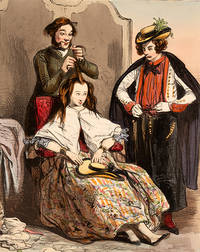
05942Paris: Au Bureau du Journal Amusant & du Petit Journal pour Rire 1840. One Hundred and Twenty-Two Hand Colored Lithographed Plates by Paul Gavarni<br /> Including the "Stevedores" at the Carnival of Paris <br /> Le Carnaval a Paris 1e Série & Le Carnaval a Paris<br /> <br /> GAVARNI pseudonym of Guillaume Sulpice Chevallier. Oeuvres de Garvarni. Les Debardeurs: Le Carnaval: Le Carnaval a Paris. Paris: Chez Aubert 1838-1843. <br /> <br /> Folio. All plates measuring 13 3/8 x 10 1/8 inches; 339 x 257 mm.<br /> <br /> Contents: <br /> <br /> Les Debardeurs. A complete series of sixty-six hand colored lithographs of which nine first appeared in other journals eight in La Caricature plates 21 23 and 24 under the title "Souvenirs du Carnaval" and 32 44 49 54 and 61 under the title "Les Débardeurs" and one plate 58 in La Mode prior to the publication of the entire series in Le Charivari from 19 January 1840 to 5 February 1842. <br /> <br /> and:<br /> <br /> Le Carnaval 1e. Série. Paris: Chez Auberrt 1838-1839.<br /> <br /> First series complete. Twenty-seven superb hand colored lithograph plates all with printed captions. Armelhault & Bocher 375-397. <br /> <br /> and:<br /> <br /> Le Carnaval a Paris. Paris: Chez Aubert 1841-1843.<br /> <br /> 29 0f 40 hand colored lithograph plates missing plate nos. 1 4 5 6 15 21 22 23 24 25 & 32.<br /> <br /> A total of 122 superb hand colored lithographs all heightened with gum arabic.<br /> <br /> Housed together in the original quarter scored calf over mottled blue boards clamshell case with original blue cloth ties.<br /> <br /> "In Les Débardeurs.a series of sixty-six lithographs published in Le Charivari between 1840 and 1843 Gavarni depicts a variation on the most famous of the costumes he designed for the masquerade balls the débardeur stevedore. The braided wig loose shirt black velvet trousers fastened with brass buttons and tied with a fringed sash are derived from the working costume of the longshoreman or stevedore who unloaded the barges that traveled up the Seine to Paris. As Nancy Olsen points out in Gavarni: The Carnival Lithographs the majority of Gavarni's carnival lithographs reflect his interest in the small groups that drift away from the crowd as a consequence of the romantic liaisons that preoccupied many of the participants at a masked ball. Intrigue was the name of the gave and the information being conveyed in this scene comes in all probability from an agent provocateur" Beatrice Farwell The Charged Image: French Lithographic Caricature 1816-1848 p. 88.<br /> <br /> "This is the most considerable of the several series of lithographs devoted by Gavarni to the balls which were a passion with him. He was an organizer and patron of the more elegant and he found the popular balls at the Opera and elsewhere an attractive subject for his designs. Théophile Gautier who believed that at this period Parisian balls had virtually 'effaced the former carnival of Venice' called Gavarni 'their depicter and historian.' As dancers throw themselves into their round of pleasure 'a man stands with his back against a pillar; he watches he listens he observes.' And the following day on stone 'he lends his own wit to all the masks perhaps stupid in themselves; he sums up in a profound word the chit-chat of the foyer; he translates into a pleasant legend the hoarse excitement of the hall.' Quoted by Lemoisne I 120" Ray The Art of the French Illustrated Book.<br /> <br /> Such elements have made Gavarni's carnival lithographs among his finest most famous and desired works of art.<br /> <br /> There was another similar title by Gavarni Le Carnaval. Paris: Chez Aubert 1838-39 which had twenty-seven completely different plates <br /> <br /> This series of plates by Gavarni is quite rare; only three copies are listed in OCLC and it has not sold at auction in the last forty-two years. <br /> <br /> In the nineteenth century the Paris carnival was the most extravagant among the European carnivals. It would last for several days and consist of masked balls both private and public street processions and feasting during which vibrant street scenes costumes and decorated floats would be on display.<br /> <br /> Armelhault & Bocher Les Debardeurs 486-542 307-309 plates 21 23 and 24 259-263 plates 44 49 32 54 and 61 and 1223 plate 58; Le Carnaval 375-397; Le Carnaval a Paris 251-257 398-422 1232 1709-1711.<br /> Ray The Art of the French Illustrated Book 154. Paris: Au Bureau du Journal Amusant & du Petit Journal pour Rire, 1840 unknown