1 861 résultats
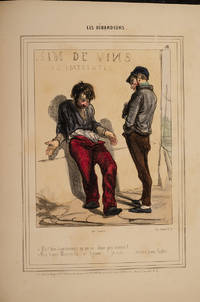
05942Paris: Au Bureau du Journal Amusant & du Petit Journal pour Rire 1840. One Hundred and Twenty-Two Hand Colored Lithographed Plates by Paul Gavarni<br /> Including the "Stevedores" at the Carnival of Paris <br /> Le Carnaval a Paris 1e Série & Le Carnaval a Paris<br /> <br /> GAVARNI pseudonym of Guillaume Sulpice Chevallier. Oeuvres de Garvarni. Les Debardeurs: Le Carnaval: Le Carnaval a Paris. Paris: Chez Aubert 1838-1843. <br /> <br /> Folio. All plates measuring 13 3/8 x 10 1/8 inches; 339 x 257 mm.<br /> <br /> Contents: <br /> <br /> Les Debardeurs. A complete series of sixty-six hand colored lithographs of which nine first appeared in other journals eight in La Caricature plates 21 23 and 24 under the title "Souvenirs du Carnaval" and 32 44 49 54 and 61 under the title "Les Débardeurs" and one plate 58 in La Mode prior to the publication of the entire series in Le Charivari from 19 January 1840 to 5 February 1842. <br /> <br /> and:<br /> <br /> Le Carnaval 1e. Série. Paris: Chez Auberrt 1838-1839.<br /> <br /> First series complete. Twenty-seven superb hand colored lithograph plates all with printed captions. Armelhault & Bocher 375-397. <br /> <br /> and:<br /> <br /> Le Carnaval a Paris. Paris: Chez Aubert 1841-1843.<br /> <br /> 29 0f 40 hand colored lithograph plates missing plate nos. 1 4 5 6 15 21 22 23 24 25 & 32.<br /> <br /> A total of 122 superb hand colored lithographs all heightened with gum arabic.<br /> <br /> Housed together in the original quarter scored calf over mottled blue boards clamshell case with original blue cloth ties.<br /> <br /> "In Les Débardeurs.a series of sixty-six lithographs published in Le Charivari between 1840 and 1843 Gavarni depicts a variation on the most famous of the costumes he designed for the masquerade balls the débardeur stevedore. The braided wig loose shirt black velvet trousers fastened with brass buttons and tied with a fringed sash are derived from the working costume of the longshoreman or stevedore who unloaded the barges that traveled up the Seine to Paris. As Nancy Olsen points out in Gavarni: The Carnival Lithographs the majority of Gavarni's carnival lithographs reflect his interest in the small groups that drift away from the crowd as a consequence of the romantic liaisons that preoccupied many of the participants at a masked ball. Intrigue was the name of the gave and the information being conveyed in this scene comes in all probability from an agent provocateur" Beatrice Farwell The Charged Image: French Lithographic Caricature 1816-1848 p. 88.<br /> <br /> "This is the most considerable of the several series of lithographs devoted by Gavarni to the balls which were a passion with him. He was an organizer and patron of the more elegant and he found the popular balls at the Opera and elsewhere an attractive subject for his designs. Théophile Gautier who believed that at this period Parisian balls had virtually 'effaced the former carnival of Venice' called Gavarni 'their depicter and historian.' As dancers throw themselves into their round of pleasure 'a man stands with his back against a pillar; he watches he listens he observes.' And the following day on stone 'he lends his own wit to all the masks perhaps stupid in themselves; he sums up in a profound word the chit-chat of the foyer; he translates into a pleasant legend the hoarse excitement of the hall.' Quoted by Lemoisne I 120" Ray The Art of the French Illustrated Book.<br /> <br /> Such elements have made Gavarni's carnival lithographs among his finest most famous and desired works of art.<br /> <br /> There was another similar title by Gavarni Le Carnaval. Paris: Chez Aubert 1838-39 which had twenty-seven completely different plates <br /> <br /> This series of plates by Gavarni is quite rare; only three copies are listed in OCLC and it has not sold at auction in the last forty-two years. <br /> <br /> In the nineteenth century the Paris carnival was the most extravagant among the European carnivals. It would last for several days and consist of masked balls both private and public street processions and feasting during which vibrant street scenes costumes and decorated floats would be on display.<br /> <br /> Armelhault & Bocher Les Debardeurs 486-542 307-309 plates 21 23 and 24 259-263 plates 44 49 32 54 and 61 and 1223 plate 58; Le Carnaval 375-397; Le Carnaval a Paris 251-257 398-422 1232 1709-1711.<br /> Ray The Art of the French Illustrated Book 154. Paris: Au Bureau du Journal Amusant & du Petit Journal pour Rire, 1840 unknown
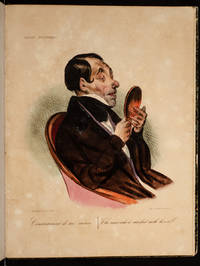
05964Paris: Chez Aubert 1839. With 150 Hand-Colored Lithographs<br /> including Forty-Five by Honoré Daumier and Forty-Two by Gavarni<br /> <br /> DAUMIER Honoré Gavarni and others illustrators. ALHOY Maurice Louis Huart and Charles Philipon editors. Le Musée pour rire. Dessins par tous les caricaturistes de Paris; Texte par MM. Maurice Alhoy Louis Huart et Ch. Philipon. Paris: Chez Aubert Editeur des Cent-et-Un Robert-Macaire 1839-1840.<br /> <br /> Three quarto volumes 10 3/16 x 7 15/16 inches; 259 x 202 mm. 2 half-title 2 title 200 2 "Table" 4 publisher's advertisements; 2 half-title 2 title 200 2 "Table; 2 half-title 2 title 200 2 "Table 4 publisher's advertisements pp. With 150 numbered hand-colored lithographs heightened with gum arabic by Honoré Daumier forty-five Gavarni forty-two Frédéric Bouchot twenty-two Victor Adam ten Platier seven Benjamin i.e. Benjamin Roubaud four Bourdet three Pruche three Platel two Grandville two Edme-Jean Pigal two Alophe Menut two Charles Vernier two Charles-Joseph Traviès one and others.<br /> <br /> Early twentieth-century half red scored calf ruled in gilt over marbled boards by Adolphe Cuzin stamp-signed in gilt at foot of spine. Smooth spines decoratively tooled and lettered in gilt all edges gilt marbled endpapers. Expert and almost invisible minor restoration to corners and spine extremities. Occasional light foxing and/or browning. A wonderful copy.<br /> <br /> "The house of Aubert was ingenious in marketing its products. Its lithographs.were published one by one in periodicals like Le charivari and together in suites by the same artist without letterpress. Still a third form of publication was in albums made up of lithographs by several artists with accompanying texts. These collections most commonly took the form of volumes with the generic title Paris comique which consisted of twenty colored lithographs accompanied by quite unrelated texts. Aubert remarked that the resulting hodgepodge had 'a plan that is easy to follow for it consists in not having any' and in fact this was indeed a frugal procedure for reusing old texts and already published plates. The interest of the various volumes of Paris comique resides entirely in the lithographs they happen to contain. It can be considerable however since Daumier and Gavarni are the predominant artists. Le musée pour rire represents a more considerable effort on the part of Aubert. To accompany 150 lithographs including forty-five by Daumier among them twenty-seven from Croquis d'expressions and eight from La galerie physionomique and forty-two by Gavarni new commentaries were commissioned on each plate all except two by Alhoy and Huart. Daumier's lithographs were trimmed slightly and their captions were relettered. The designs of the other artists were provided with decorative frames. The whole was then published in three handsome volumes and in copies with expert contemporary coloring like this one Le musée pour rire is among the freshest and most attractive of romantic illustrated books" Ray The Art of the French Illustrated Book.<br /> <br /> Le Musée pour Rire "contained 150 lithographs by Daumier Gavarni Bouchot Traviès etc. These are re-impressions some of them in mirror image which had previously already been used for publication in Le Charivari. Most prints of the series 'Croquis d'expressions' are contained in the book. The name of the series is missing and the texts were printed in a different type than in the original Charivari version. We do not consider these prints original lithographies but rather prints 'after Daumier'" The Daumier Register at http://www.daumier-register.org.<br /> <br /> Ray The Art of the French Illustrated Book 164. Paris: Chez Aubert, 1839 unknown
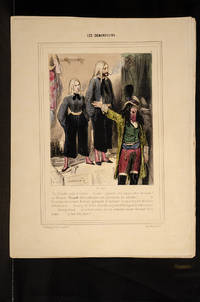
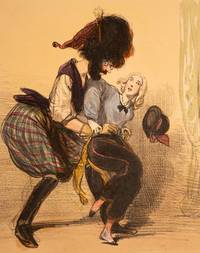
05386Paris: Au Bureau du Charivari 1840. Sixty-Six Magnificent Hand-Colored Lithographed Plates by Gavarni<br /> Depicting "The Stevedores"<br /> <br /> GAVARNI Paul pseudonym of Guillaume Sulpice Chevallier. Les Débardeurs. Paris: Au Bureau du Charivari n.d. 1840-1842.<br /> <br /> Folio 13 7/8 x 10 3/8 inches; 353 x 264 mm. Sixty-six superb numbered hand-colored lithographed plates heightened with gum arabic. Plates printed by Aubert & Cie. Plate numbers 316 29 32 33 39 43 51 & 52 a little shorter on outer margins. Plate number 52 with neat repairs to top and bottom blank margins. A few plates slightly toned still an excellent copy of this extremely rare Gavarni title.<br /> <br /> Modern blue cloth over boards front cover with dark green straight-grain morocco label bordered and lettered in gilt. An excellent example of this exceptionally rare and highly amusing book <br /> <br /> A series of sixty-six lithographs of which nine first appeared in other journals eight in La Caricature plates 21 23 and 24 under the title "Souvenirs du Carnaval" and 32 44 49 54 and 61 under the title "Les Débardeurs" and one plate 58 in La Mode prior to the publication of the entire series in Le Charivari from 19 January 1840 to 5 February 1842.<br /> <br /> Exceptionally Rare with OCLC locating just one complete colored copy in libraries and institutions worldwide: Morgan Library and Museum - the Gordon Ray copy NY US. <br /> <br /> OCLC also locates two other copies neither of which states 'color' plates: Yale University Library CT US and Clark Art Institute MA US.<br /> <br /> "In this work. from a series of sixty-six lithographs published in Le Charivari between 1840 and 1843 Gavarni depicts a variation on the most famous of the costumes he designed for the masquerade balls the débardeur the stevedore. The braided wig loose shirt black velvet trousers fastened with brass buttons and tied with a fringed sash are derived from the working costume of the longshoreman or stevedore who unloaded the barges that traveled up the Seine to Paris. As Nancy Olsen points out in Gavarni: The Carnival Lithographs the majority of Gavarni's carnival lithographs reflect his interest in the small groups that drift away from the crowd as a consequence of the romantic liaisons that preoccupied many of the participants at a masked ball. Intrigue was the name of the gave and the information being conveyed in this scene comes in all probability from an agent provocateur" Beatrice Farwell The Charged Image: French Lithographic Caricature 1816-1848 p. 88.<br /> <br /> Armelhault & Bocher nos. 486-542 307-309 plates 21 23 and 24 259-263 plates 44 49 32 54 and 61 and 1223 plate 58. Ray The Art of the French Illustrated Book 154.<br /> <br /> The Plates:<br /> <br /> 1. Le Débardeur mâle et femelle.vivants!.<br /> 2. Caporal on gele dans votre satanè violon!.<br /> 3. Amanda l'Ecuyer. Rue.<br /> 4. Qui Moi et Zélie Achille et toi.<br /> 5. Un amour de petit ménage; quoi! Ça se retire à la pointe du jour bien paisibles!.<br /> 6. On va pincer son petit cancan mais bien en douceur.<br /> 7. Le Vicomte Aime de Trois Etoiles et Dame Eloa de Tremblement.<br /> 8. Ah! qu'il est beau!.<br /> 9. Malheureuse enfant! Qu'as - tu fait de ton sexe.<br /> 10. Pauvre Elvire emportée aux flots du bal Musard.<br /> 11. C'est comme ça que tu les intrigues.merci!<br /> 12. En voulez-vous de la crevette.pas cher.<br /> 13. Va dire à ta mère qu'a te mouche.<br /> 14. Je vous dis que vous avez dansé d'une façon.<br /> 15. Comment Lili ne reconnait pas son Nini!<br /> 16. Y en-a-ti des femmes y'en a-t-i.<br /> 17. Allons Landerneau mon bonhomme!.<br /> 18. Ça ne te regarde pas de quoi te mèles-tu.<br /> 19. .être fichues au violon comme des rien du tout!.<br /> 20. Six pouces de jambes et le dos tout de suite!.<br /> 21. "L'Intolérance est fille des faux Dieux!".<br /> 22. Voyons Angelina as-tu assez fait poser Mosieu<br /> 23. Va donc!.Singulier masculin!<br /> 24. C'est mon Débardeur!.<br /> 25. C'est d'main matin qu'mon tendre époux va beugler.<br /> 26. Te v'la ici toi! C'est comme ça qu'tas ta migraine.<br /> 27. J'espère que tu vas te tenir Angélique.<br /> 28. Voilà un fénéant qui dort et qui laisse une pauv femme danser toute la nuit!.<br /> 29. .une douzaine d'huitres et mon coeur.<br /> 30. V'la qu'i fait jour: j'suis échigné moi dam! Et toi.<br /> 31. On rit avec vous et tut e faches.en voilà un drôle de pistolet!<br /> 32. Tais-toi moutard faut laisser jaser l'autorité!.<br /> 33. V'là un gueux de petit pékin qui se divertit au bal comme un grain de plomb dans du champagne.<br /> 34. .Et si Cornélie ne trouvait pas de voiture.<br /> 35. Toi je te repigerai!<br /> 36. Qu'est-ee que c'est Tu vous deranges pour ça et t'en voudrais déja p'us.<br /> 37. Le Débardeur - Ne me parlez pas des femmes en Carnaval pour s'amuser!.<br /> 38. Ils vont venir: écoute Hortense! Sur le coup de minuit minuit et demi vois-tu.<br /> 39. V'là qu'elles ont des mots!.Fameux!.<br /> 40. Et ton Epouse.<br /> 41. Est-ce que vous n'en avez pas bientot assez Angélina du Carnaval.<br /> 42. As-tu vu M'ame Alexandre et l'ancienne à Paul qui sont à se peigner en bas pour ce Paltoquet d'Eugène!.<br /> 43. Aurai-je l'honneur de danser un galop ávec Mosieu le Baron.<br /> 44. P'us que ça de bouillon! Merci.<br /> 45. J'te parie mon Alezan doré contre ta Vicomtesse que j'emporte ce soir le petit rat du Baron.<br /> 46. Ton Alfred est un gueux: il est ici avec l'autre.<br /> 47. Qu'est-ce que t'as mon vieux Auguste - Rien!.<br /> 48. Eh! b'en Landerneau ça ne vas donc pas mieux.<br /> 49. Allons! allons Mazuzi! Tiens-toi allons!.<br /> 50. Mon cher le municipal a emporté le petit muf'e avec qui je dansais parcequ'I voulait pincer son Cancan.<br /> 51. Ah! ça décidément Caroline est folle du petit Anglais.<br /> 52. J'i ai dit! J i dit Madame si vous vous permettez de fich.<br /> 53. As tu vu M'ame Chose et le petit Baron qui ne peuvent pas se voir.<br /> 54. Monter à cheval sur le cou d'un homme qu'on ne connait pas t'appelle çà plaisanter toi!<br /> 55. Je f'avertis Milord.sit u dines demain avec cette Andalouse-lá.<br /> 56. Qu'est que t'as la Mômignarde.<br /> 57. Çà! C;est pas la perruque à Jules!.<br /> 58. Un honnête Domino! Des airs décents.<br /> 59. Avec l'agrément de cet agréable muf'e là pourraît-on Madame pincer avec toi le prochain rigodon<br /> 60. Voyez-vous mon petit Larrims j'ai de l'amitié pour vous tout plein tout plein! Mais.<br /> 61. Tu danseras Coquardeau!.<br /> 62. Doux Jésus! Où que je vas me sauver.<br /> 63. Agathe et toi mon vieux Ferdinand ça ne sera pas long.<br /> 64. V'là trois heures Titine; filons! Faut que je sois levé au petit jour.<br /> 65. Voyons sit u te souviens!.Numéro.<br /> 66. Oh! Hé! Viens-tu souper la Gustine! Paris: Au Bureau du Charivari, 1840 unknown
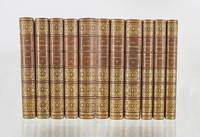
184077055Paris: Léon Curmer 1840. Fine. Léon Curmer Paris 1840-1842 18 x 26.50 cm 11 volumes reliés Les Français peints par eux-mêmes. Encyclopédie morale du dix-neuvième siècle Le Prisme with Les Anglais peints par eux-mêmes The French painted by themselves The English painted by themselves Léon Curmer Paris 1840-1842 18 x 265 cm 11 volumes in half morocco First edition one of the grand papier deluxe copies with two states of the illustrations for the 8 volumes of Les Français peints par eux-mêmes: one in black on tinted paper and one enhanced by hand using the so-called coloris gommé technique with watercolour and varnish on white paper. Les Anglais peints par eux-mêmes includes the engravings in black. No deluxe copies in colour have been made for this rare set of Les Français. Bound in half brown morocco spine in five compartments enhanced with stipple engraving and double gilt panels richly decorated with gilt floral motifs framing a mosaic medallion of green morocco with a gilt rose stamped in the center cartouches at the top decorated with a gilt garland framing the place and publication date some light minor rubbing on some compartments gilt fillets on the marbled paper boards comb-patterned endpapers top edges gilt. Elegant late nineteenth century bindings signed Durvand-Thiret. Complete with all engravings along with added engravings i.e. 930 engravings including 415 in colour. Title pages dated 1841 for all volumes of Les Français except for volume 5 of Les Parisiens and volume 3 of La Province dated 1842. Les Français peints par eux-mêmes has 415 engravings in black including that of Napoleon on horseback instead of the 405 announced and 415 in colour including a double page map of France in volume III of the Province. The English volume illustrated by Kenny Meadous is complete with 100 plates in black. This unique set contains in total almost a thousand black and coloured engravings and more than 1500 in-text illustrations. Famous gallery of woodcut portraits depicting the social classes of the 19th century by the greatest artists of the time: Gavarni Daumier Delacroix Grandville Johannot Bellangé Charlet Daubigny etc. The portraits are all accompanied by original texts from the most famous Romantic authors including: Balzac Nodier Gautier Nerval Gozlan Janin Karr etc. Scarce foxing affecting mainly the Prism and the Anglais. The texts and illustrations of the book paint a lively picture of inhabitants and their trade in metropolitan France and its colonies. It sets the tone for panoramic literature a new genre coined by Walter Benjamin in Charles Baudelaire. A lyric poet at the height of capitalism. In addition to these portraits of the Français the contribution of a whole areopagus of great and small authors and illustrators S. Le Men La 'littérature panoramique' dans la genèse de la Comédie Humaine: Balzac et Les Français peints par eux-mêmes L'Année balzacienne 2002/1 No. 3 CAIRN includes some of the most renowned authors and cartoonists of the time each of whom made an original creation for the project. This protean fresco was directed by editor Léon Curmer already known for the publishing success of Paul et Virginie between 1836 and 1838. Curmer is represented here by an article L'éditeur in volume IV written by Elias Regnault. The latter takes example in Louis-Sebastien Mercier's Tableau de Paris published in 1781 whose vision is even further extended by the representation of French provinces in Les Français. Thanks to Curmer the work finds an even deeper meaning: the editor has widened his frame and instead of letting a few fleeting portraits get lost in the immense daily whirlwind that engulfs all things he has sought to bring together the most salient physiognomies of that time. S. Le Men Ibid. Curmer selected the authors and illustrators closest to the ones they depict: It is therefore a question of calling upon authors and illustrators who are wel Léon Curmer hardcover
184077055Léon Curmer | Paris 1840-1842 | 18 x 26.50 cm | 11 volumes reliés
02253Paris: Chez Aubert 1839. With 150 Hand-Colored Lithographs<br/>including Forty-Five by Honoré Daumier and Forty-Two by Gavarni<br/><br/>DAUMIER Honoré Gavarni and others illustrators. ALHOY Maurice Louis Huart and Charles Philipon editors. Le Musée pour rire. Dessins par tous les caricaturistes de Paris; Texte par MM. Maurice Alhoy Louis Huart et Ch. Philipon. Paris: Chez Aubert Editeur des Cent-et-Un Robert-Macaire 1839-1840.<br/><br/>First edition. Three quarto volumes bound in one 10 x 7 5/8 in; 251 x 193 mm. 1 half-title 2 title 600 pp. With 150 numbered hand-colored lithographs heightened with gum arabic by Honoré Daumier forty-five Gavarni forty-two Frédéric Bouchot twenty-two Victor Adam ten Platier seven Benjamin i.e. Benjamin Roubaud four Bourdet three Pruche three Platel two Grandville two Edme-Jean Pigal two Alophe Menut two Charles Vernier two Charles-Joseph Traviès one and others.<br/><br/>Bound ca. 1886-1890 by James Screeton of Hull with label to rear pastedown half black pebbled morocco over gray-brown cloth. Elaborately gilt tooled compartments gilt-rolled raised bands. All edges gilt. Some foxing and toning throughout but still a very good copy.<br/><br/>"The house of Aubert was ingenious in marketing its products. Its lithographs.were published one by one in periodicals like Le charivari and together in suites by the same artist without letterpress. Still a third form of publication was in albums made up of lithographs by several artists with accompanying texts. These collections most commonly took the form of volumes with the generic title Paris comique which consisted of twenty colored lithographs accompanied by quite unrelated texts. Aubert remarked that the resulting hodgepodge had ‘a plan that is easy to follow for it consists in not having any' and in fact this was indeed a frugal procedure for reusing old texts and already published plates. The interest of the various volumes of Paris comique resides entirely in the lithographs they happen to contain. It can be considerable however since Daumier and Gavarni are the predominant artists. Le musée pour rire represents a more considerable effort on the part of Aubert. To accompany 150 lithographs including forty-five by Daumier among them twenty-seven from Croquis d'expressions and eight from La galerie physionomique and forty-two by Gavarni new commentaries were commissioned on each plate all except two by Alhoy and Huart. Daumier's lithographs were trimmed slightly and their captions were relettered. The designs of the other artists were provided with decorative frames. The whole was then published in three handsome volumes and in copies with expert contemporary coloring like this one Le musée pour rire is among the freshest and most attractive of romantic illustrated books" Ray The Art of the French Illustrated Book.<br/><br/>Le Musée pour Rire "contained 150 lithographs by Daumier Gavarni Bouchot Traviès etc. These are re-impressions some of them in mirror image which had previously already been used for publication in Le Charivari. Most prints of the series ‘Croquis d'expressions' are contained in the book. The name of the series is missing and the texts were printed in a different type than in the original Charivari version. We do not consider these prints original lithographies but rather prints ‘after Daumier'". <br/><br/>James Screeton was the son of bookbinder William Screeton of Hull. It appears that he was partner of binder William Wardell until opened his own shop in 1886. <br/><br/>Ray The Art of the French Illustrated Book 164. Paris: Chez Aubert, 1839 unknown books
02253Paris: Chez Aubert 1839. With 150 Hand-Colored Lithographs<br /> including Forty-Five by Honoré Daumier and Forty-Two by Gavarni<br /> <br /> DAUMIER Honoré Gavarni and others illustrators. ALHOY Maurice Louis Huart and Charles Philipon editors. Le Musée pour rire. Dessins par tous les caricaturistes de Paris; Texte par MM. Maurice Alhoy Louis Huart et Ch. Philipon. Paris: Chez Aubert Editeur des Cent-et-Un Robert-Macaire 1839-1840.<br /> <br /> First edition. Three quarto volumes bound in one 10 x 7 5/8 in; 251 x 193 mm. 1 half-title 2 title 600 pp. With 150 numbered hand-colored lithographs heightened with gum arabic by Honoré Daumier forty-five Gavarni forty-two Frédéric Bouchot twenty-two Victor Adam ten Platier seven Benjamin i.e. Benjamin Roubaud four Bourdet three Pruche three Platel two Grandville two Edme-Jean Pigal two Alophe Menut two Charles Vernier two Charles-Joseph Traviès one and others.<br /> <br /> Bound ca. 1886-1890 by James Screeton of Hull with label to rear pastedown half black pebbled morocco over gray-brown cloth. Elaborately gilt tooled compartments gilt-rolled raised bands. All edges gilt. Some foxing and toning throughout but still a very good copy.<br /> <br /> "The house of Aubert was ingenious in marketing its products. Its lithographs.were published one by one in periodicals like Le charivari and together in suites by the same artist without letterpress. Still a third form of publication was in albums made up of lithographs by several artists with accompanying texts. These collections most commonly took the form of volumes with the generic title Paris comique which consisted of twenty colored lithographs accompanied by quite unrelated texts. Aubert remarked that the resulting hodgepodge had 'a plan that is easy to follow for it consists in not having any' and in fact this was indeed a frugal procedure for reusing old texts and already published plates. The interest of the various volumes of Paris comique resides entirely in the lithographs they happen to contain. It can be considerable however since Daumier and Gavarni are the predominant artists. Le musée pour rire represents a more considerable effort on the part of Aubert. To accompany 150 lithographs including forty-five by Daumier among them twenty-seven from Croquis d'expressions and eight from La galerie physionomique and forty-two by Gavarni new commentaries were commissioned on each plate all except two by Alhoy and Huart. Daumier's lithographs were trimmed slightly and their captions were relettered. The designs of the other artists were provided with decorative frames. The whole was then published in three handsome volumes and in copies with expert contemporary coloring like this one Le musée pour rire is among the freshest and most attractive of romantic illustrated books" Ray The Art of the French Illustrated Book.<br /> <br /> Le Musée pour Rire "contained 150 lithographs by Daumier Gavarni Bouchot Traviès etc. These are re-impressions some of them in mirror image which had previously already been used for publication in Le Charivari. Most prints of the series 'Croquis d'expressions' are contained in the book. The name of the series is missing and the texts were printed in a different type than in the original Charivari version. We do not consider these prints original lithographies but rather prints 'after Daumier'". <br /> <br /> James Screeton was the son of bookbinder William Screeton of Hull. It appears that he was partner of binder William Wardell until opened his own shop in 1886. <br /> <br /> Ray The Art of the French Illustrated Book 164. Paris: Chez Aubert, 1839 unknown
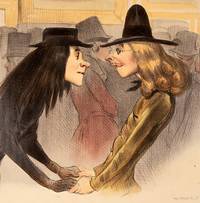
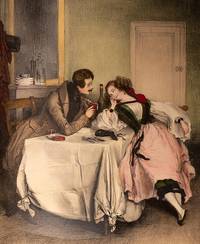
06687Paris: Chez Bauger 1834. Midnight in Paris - Gavarni and the Secret Theater of Carnival<br /> <br /> A Superb Hand-Colored Copy of Le Carnaval à Paris in the Original Publisher's Binding<br /> Together with the Very Rare and Complete Suite of Les Bals Masqués<br /> <br /> GAVARNI Paul pseudonym of Guillaume Sulpice Chevallier. Le Carnaval à Paris. February 1841 - February 1842. and Les Bals Masqués. Paris: Chez Bauger Rue du Croissant 16; variously printed by Aubert & Cie. and Kaeppelin February 1834.<br /> <br /> Folio 13 1/8 x 9 7/8 inches; 333 x 251 mm. A superb carnival album containing twenty-eight magnificent hand-colored lithographs heightened throughout with gum arabic including the complete suite of seven plates from Les Bals Masqués together with an additional related carnival plate "Bal Masqué No. 8" all bound after the first twenty hand-colored lithographs of Le Carnaval à Paris. Eight-page Aubert et Cie. catalog bound in at end.<br /> <br /> Publisher's quarter maroon calf over red patterned boards front cover decoratively lettered in gilt: "Le Carnaval à Paris" smooth spine. A remarkably fresh and well-preserved copy the plates with exceptionally bright contemporary hand-coloring and luminous gum-arabic heightening the binding with only minor wear at extremities. An unusually handsome survival.<br /> <br /> The Les Bals Masqués sequence forms a brilliant miniature drama of Parisian carnival life. <br /> <br /> 1. C'est toi mauvais sujet! "It's you you wicked creature!" A masked reveler in dazzling Oriental costume leans intimately toward a richly dressed young woman whose expression balances amusement and suspicion amid the crowded ballroom. <br /> <br /> 2. T'en souviens tu friponne. "Do you remember you little minx" This plate captures a moment of flirtatious accusation between a masked cavalier dressed in vivid blue and his companion the theatrical gesture and conspiratorial proximity perfectly conveying the coded language of carnival seduction.<br /> <br /> 3. Vois mon mari derrière! "Look - my husband is behind us!" Gavarni brilliantly stages bourgeois panic and comic intrigue as a masked woman urgently warns her companion while curious revelers peer from the theater box above. <br /> <br /> 4. Les apprêts du bal. "Preparations for the Ball" shifts backstage to the private preparations before the festivities two young women dressing in Pierrot-inspired white costumes beneath heavy green drapery the quiet intimacy contrasting sharply with the social theater of the ballroom itself.<br /> <br /> 5. Un cabinet chez Pétron. "A Private Room at Pétron's" - the mood darkens delightfully when an exhausted young woman reclines dreamily in a private dining cabinet while her companion smokes and pours wine after the night's excesses. <br /> <br /> 6. Un souper de carnaval. "A Carnival Supper" - a masked beauty bends toward her seated admirer in a dim attic interior littered with dishes and bottles one of Gavarni's most psychologically suggestive images of post-ball intimacy.<br /> <br /> 7. Le retour du bal masqué. "The Return from the Masked Ball" - this plate is from the series Fantaisies the emotional climax of the suite is undoubtedly portrayed where a pale and utterly exhausted reveler collapses into a chair while attendants remove her costume after the night's pleasures and deceptions have run their course. The theatricality fatigue and melancholy glamour of Carnival Paris are distilled here with extraordinary elegance and humanity.<br /> <br /> 8. The additional hand colored lithograph "Bal Masqué No. 8" C'est vieux et laid mon cher; tu es volè comme dans un bois. "It's old and ugly my dear! You've been robbed as if in a forest" - this plate is from the series Fantaisies and serves almost as an epilogue to the series: a weary bourgeois gentleman trapped between two masked women whose expressions suggest equal measures of intrigue manipulation and amusement. Framed within an elaborate ornamental border it possesses the sharp observational wit characteristic of Gavarni at his finest.<br /> <br /> A visually dazzling and socially revealing document of Parisian carnival life during the July Monarchy Le Carnaval à Paris ranks among the most evocative lithographic productions of the great age of French caricature. Combining theatricality fashion illustration social satire and romantic intrigue the plates capture the masked balls flirtations backstage preparations clandestine suppers exhausted dawn returns and coded erotic freedoms of carnival Paris with extraordinary wit and elegance.<br /> <br /> Paul Gavarni was among the supreme interpreters of nineteenth-century Parisian society standing beside Honoré Daumier and Grandville as one of the defining graphic artists of the period. Yet where Daumier's art often bites with political ferocity Gavarni's genius lay in psychological nuance gesture costume flirtation and the delicate ambiguities of urban social performance. His carnival subjects remain among the most sophisticated visual chronicles of Parisian pleasure culture produced during the nineteenth century.<br /> <br /> The present copy is especially desirable for its rich contemporary hand-coloring lavish gum-arabic enhancement and survival in the original binding. The gum arabic was applied to heighten reflective surfaces and luxurious fabrics producing a shimmering effect intended to imitate satin silk velvet candlelight and theatrical costume textures. Such deluxe issues were considerably more expensive than ordinary tinted or uncolored impressions and survive far less frequently today.<br /> <br /> A splendid and highly decorative survival from the golden age of Parisian lithography - simultaneously theatrical satirical elegant and deeply evocative of the secret life of Carnival Paris.<br /> <br /> Le Carnaval à Paris. February 1841 - February 1842. Plates 1-20.<br /> <br /> 1. Nèfie-loi Coquardeau! si tu ne finis pas de t'amuser comme ca on va te fich'au violon. "Watch it Coquardeau! If you don't stop carrying on like this they'll throw you in jail."<br /> 2. Rue Coquenard au cinquième; une porte jaune. Ton portier fait des chaufferettes et tu joues de la flûte ainsi! "Rue Coquenard fifth floor; a yellow door. Your porter makes foot-warmers and you play the flute - like this!"<br /> 3. -Il n'est pas ici! Madame. -Il y viendra! Madame. "He isn't here Madam. - He'll come Madam."<br /> 4. Qu'est-ce Les gens de Qualité se commettent-ils maintenant avec ceux de votre sorte Pandour! "What's this People of quality mix nowadays with people of your sort Scoundrel!"<br /> 5. -Jai un mal à la tète de chien! -C'est le champagne. -Ah! Dieu je ne bois jamais de vin; c'est le rhum. "I've got a splitting headache! It's the champagne. Oh God I never drink wine; it's the rum."<br /> 6. -Qui diable ca peut-il être -Voyons mon Oncle: ma cosine Claire. . . . a la migraine; Madame; Madame d'Asté est en deuil; ma sœur a horreur des bals masqués d'abord; Madame Debry. . . . Philippe défend à sa femme d'y venir; ma tante Clèmence. . . . - Ta tante est couchée. . . . Mais qui diable ca peut-il être "Who the devil can it be Let's see Uncle: my cousin Claire. has a migraine Madam; Madame d'Asté is in mourning; my sister detests masked balls anyway; Madame Debry. Philippe forbids his wife to come; my Aunt Clémence. Your aunt is in bed. But who the devil can it be"<br /> 7. -Parbleu! si vous deviez les èpouser toutes mauvais sujets! les oncles n'y suffiraient pas. -Ni les neveux non plus mon oncle. "Good heavens! If you had to marry all of them you rogues there wouldn't be enough uncles to go around! Nor nephews either Uncle."<br /> 8. -Tu vois bien la blonde d'henri là! qui parle à ce grand avec une barbe. . . . -Cà! . . . . c'est la femme de Clément. . . . -Éh! bien oui c'est cà. . . . tu vois elle va souper avec le petit Russe. . . . eh! bien mon Nini Chèvrier l'attend au café anglais. . . . un si brave garçon! . . . . -Cà c'est pas gentil. "You see Henri's blonde over there talking to that tall fellow with the beard. That one . that's Clément's wife. Well yes that's her. you see she's going to supper with the little Russian. and meanwhile my dear Nini Chèvrier is waiting for her at the Café Anglais. such a nice fellow too!<br /> That's really not nice."<br /> 9. "On désire cèder Monsieur avec tous les avantages y attachès Sàdresser à Monsieur." "Wanted to transfer Sir together with all attached advantages. Apply to Monsieur."<br /> 10. -Prête-moi vingt frances Guillemain j'ai le Domino rose à dèjeûner. -Je l'ai eu à souper mon pauvre bonhomme et je n'ai plus le sou. "Lend me twenty francs Guillemain; I've got the Pink Domino coming for breakfast.I had her for supper my poor fellow and I haven't a sou left."<br /> 11. -Les rats couchés nous sommes venus. -Et. . . . vos petits voisins de l'entresol. . . . vous ne les avez pas débauchés -Eux des poules comme çà! çà se couche à minuit en carnival et puis çà vient vous dire que le carnival est triste. -Epiciers! "Once the old rats were in bed we came out. And your little neighbors on the mezzanine. you didn't lead them astray Them Chickens like that! They go to bed at midnight during Carnival then come and tell you Carnival is dull. Grocers!"<br /> 12. Oh! hè! Dufrène oh! hè les pistons oh! èh! affûetz vos becs: faut de l'harmonie aux flambards de la chouette harmonie! "Hey! Dufrène! Hey there brass players! Sharpen your beaks - the torchbearers need music splendid owl-like music!"<br /> 13. Voilà la petite avec le brun qui l'amène toujours: le blond qui la remmène toujours va venir. "There's the little brunette with the dark-haired fellow who always brings her; the blond who always takes her home will be here soon."<br /> 14. -C'est donc comme çà que ça mène la joie les houzards de ce règiment là -Turlututu mon ange nous sortons d'en prendre et toi "So this is how the hussars of that regiment enjoy themselves Turlututu my angel we've just come from having a drink - and you"<br /> 15. -C'est un diplomate. . . -C'est un epicier. . . -Non! c'est un mari d'une femme agréable. -Non! Cabocher mon ami vous avez donc bu. . . que vous ne voyez pas que Mosieu est un jeune homme farceur comme tout déguise en un qui sembête à most. . . . le roué masque! "He's a diplomat. He's a grocer. No! He's the husband of an attractive woman. No Cabocher my friend you must be drunk. can't you see that the gentleman is just a practical joker disguised as one of those dreadfully boring fellows. the sly masked rogue!"<br /> 16. -Reflèchissez mon cher ange. . . .: une couchette de noyer toute neuve! et la commode. . . . et quatre belles petites chaises. . . . avec les rideaux jannes et la flèche. . . . cest un aveniur çá! -Je ne dis pas! Mosieu Coquardeau; mais jaime mieux Henri sans rien. "Think about it my dear angel. a brand-new walnut bed! And the chest of drawers. and four lovely little chairs. with yellow curtains and the canopy. that's a future for you! I'm not saying otherwise Monsieur Coquardeau; but I prefer Henri with nothing."<br /> 17. Veux-tu te Sauver Sauvage! "Get lost savage!"<br /> 18. Tenez Clara je suis contrairé comme tout! c'est ma bête de femme qui est partie avec le numéro de mon paletot et ma clef! à prèsent faut que j'attende le jour et que jáille aux Batignolles pour avior ma clef. . . . je suis contraire comme tout. "Look Clara I'm furious! My idiot wife went off with the number tag for my overcoat and my key! Now I have to wait until daylight and go all the way to Batignolles to get my key. I'm absolutely beside myself."<br /> 19. A sept heures ma fille se lève; le temps de faire ses quinze tours il est bien huit heures; faut travailler son piano; on déjeune à neuf; à dix c;est son anglais; ma fille chante sur les midi; et puis sa mère veut qu'elle couse qu'elle fasse un peu de cuisine un peu de tout: bon! la maitresse de paysage arrive à trois hèures; et puis nous avons des serins faut nettoyer çà les fleurs des pots n'importe quoi; les uns et les autres viennent: arrivent cing heures. Et le soir c'est Monsieu Marritou qui lui fait repasser son orthographe. . . . et après çà vous croyez qu'une jeunesse a beaucoup le temps de s'amuser vous! "At seven my daughter gets up; by the time she's done her fifteen turns it's already eight; then she must practice the piano; breakfast is at nine; at ten she has English lessons; around noon she sings; and then her mother wants her to sew do a little cooking a bit of everything; good! the landscape drawing teacher arrives at three; then we have canaries that need cleaning flowers in pots goodness knows what; visitors begin arriving around five. And in the evening Monsieur Marritou makes her review her spelling. and after all that you think young people have much time for amusement!"<br /> 20. . . . . Elle ètait donc censée garder sa tante Grayet qui tenait le lit. . .depuis le Rois pour ses dameuses coliques quand un soir je monte au Grand-Vainqueur pour voir un peu: qu'est-ce'que je vois . . . . mon èspouse en Garde-Française! ! ! !. . . . . ".So she was supposedly staying home to care for her Aunt Grayet who had been bedridden since Twelfth Night with dreadful colic when one evening I went up to the Grand-Vainqueur just to have a look: what do I see . my wife dressed as a French Guardsman!!!".<br /> <br /> Armelhault & Bocher 397-409 Le Carnaval a Paris; 2058 2057 2065 2060 2061 also see pp. 87/88 Les Bals Masques; & 1726 Fantaisies. Paris: Chez Bauger, 1834 unknown
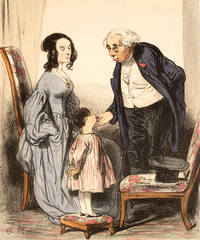
05982Paris: Bauger et Cie. 1838-42. Gavarni's "Terrible Children"<br /> Fifty Superb Hand Colored Lithographs Including the Pictorial Title-Page<br /> <br /> GAVARNI Paul pseudonym of Guillaume Sulpice Chevallier. Les Enfans terribles. Paris: Bauger et Cie. n.d. 1838-1842.<br /> <br /> First edition. Large quarto 13 11/16 x 10 1/2 inches; 345 x 267 mm. Pictorial hand-colored lithograph title-page and forty-nine numbered hand-colored lithographed plates printed by Aubert & Cie. Imprints vary plate 1 has imprint: Edite par le Charivari; plates 2-5 have imprint: Au Bureau du Charivari; plates 6-13 15-24 and 38-43 have imprint: Chez Bauger; plates 14 and 44-49 have imprint: Chez Bauger & Cie.; plates 25-37 have imprint: Se vend chez Bauger & Cie. Editeurs des Dessins de la Caricature du Figaro et du Charivari; plates 11 44 47 and 49 have additional imprint: Chez Aubert; and plate 25 has no imprint. Bound in at the end is a leaf of advertisement Des Modes Parisiennes verso blank and the sixteen page Aubert et Cie. Livres et Albums. <br /> <br /> Mid-twentieth century quarter dark blue cloth over blue imitation leather boards covers decoratively stamped in blind front cover decoratively lettered in gilt. Smooth spine lettered horizontally in gilt. The superb hand-colored lithographs bright and colorful. <br /> <br /> "Gavarni's conception of the enfant terrible has passed into a proverb. For all their apparent ingenuousness his appealing children are preternaturally sharp. They see and hear everything in their little world and they are infallible in announcing their discoveries where they will cause the most embarrassment. So a little boy asks a visitor: 'Sir who is it that invented gunpowder.since Papa says it isn't you' no. 10; or a little girl informs a suitor: 'Aunt Amelia says that you are very nice; but it's a pity that you are too stupid' no. 32" Ray The Art of the French Illustrated Book.<br /> <br /> "The forty-nine prints in Gavarni's series Les enfants terribles are among his most popular and well-known works legendary for their witty and memorable captions. Gavarni's enfants terribles are social landmines "holy terrors" who wittingly or unwittingly reveal the pettiness and duplicity of their parents. An illustrator of children's books Gavarni was the father of two children of his own to whom he was very attached. Gavarni loved the spontaneous poses and gestures of children and admired them for their disarming honesty. The term enfants terribles originally reserved for terrifyingly candid children who embarrass their parents came to be used to describe unconventional or unorthodox artists and writers-like Baudelaire and Flaubert-whose works reveal harsh truths about society that are embarrassing to guardians of the status quo." Allen Memorial Art Museum.<br /> <br /> "As the historical antecedent to Dennis the Menace and Calvin and Hobbes Les Enfans terribles was far more incisive and revealing in its social commentary. In its images Gavarni regularly uses the quasi-innocent questions or remarks of children to put the world of the adults around them in disarray. The subject is more often than not the marital or extra-marital situations of the grown-ups" Beatrice Farwell The Charged Image p. 91.<br /> <br /> According to OCLC there is just one example in libraries & institutions worldwide: The Gordon Ray copy at The Morgan Library & Museum NY USA - also apparently without the pictorial hand colored title-page.<br /> <br /> Paul Gavarni 1804-1866. "A French artist best known for his lithographs Paul Gavarni née Chevalier Suplice Guillaume was born in Paris on January 13 1804. Throughout his lifetime Gavarni produced over 4000 satirical prints for journals and fashion magazines. Both delicately witty and elegantly revealing of human behavior and character Gavarni's genre scenes made him one of the most important and popular nineteenth-century artists. He is often critically paired with Honoré Daumier with whom he and other young printmakers like Jean-Jacques Grandville and Joseph Traviés raised the status and importance of social lithography and printmaking as an art form.<br /> <br /> The Plates:<br /> <br /> 1. J'ai assez vu mon Cousin moi! M'man viens tu t'en<br /> 2. Adieu Madame à bientôt puisque vous permettez que je vienne amsi vous ennuyer quelquefois.<br /> 3. Petit Chérubin j'ai apporté du bonbon pour vous: Je vous le donnerai quand je m'en irai.<br /> 4. Monsieur! N'est - ce pas que ça n'est pas vrai quevous n'avez pas les Cheveux peints<br /> 5. Oh! c'est vrai! T'as les yeux comme les lanternes de ton cabriolet.ah bien!.<br /> 6. Grand Papa sa fiche de petite maman parceque petite Maman s'est fait des tetais avec du coton na!<br /> 7. Mère! Est-ce que c'est le crevè de ce matin que t'as dit que ça serit toujours assez bon pour lui<br /> 8. Petit amour comment s'appelle Madame votre maman.<br /> 9. Maman v avenir pas tout de suite: elle est avec Madame Pelet. Vous ne la connaissez pas Madame Pelet.<br /> 10. Qu'est-ce donc qui l'a inventée la poudres Monsieur.que papa dit que ce n'est pas vous.<br /> 11. Après diner Maman n'est ce pas j'ai été bien sage nous irons chez mon bon ami.<br /> 12. N'est-ce pas ma mère que c'est bien vilain de dire: vous m'embêtez Eh! bien ma bonne a dit tout-a-l'heure à mon Papa.<br /> 13. Quand Maman aime bien petit Papa elle appelle petit Papa "ma niniche".<br /> 14. La rose que vous avez donnée à Maman. Ah! oui oui!. que vous avez manque de vous casser le cou pour l'avoir.<br /> 15. N'est-ce pas Maman que le petit peigne à moustaches que Cornelie a trouvé ce matin dans ta chambre c'est pour moi<br /> 16. Maman! Maman! Ce Monsieur du Luxembourg que tu as dit tu sais bien que c'etait nn grand ami de Papa!.<br /> 17. Est-ce que c'est vrai Monsieur le Marquis que vous êtes toujours toujours oblige de regarder en Bourgogne si la Champagne brûle.<br /> 18. C'est vous qu'ètes le grand sec qui vient toujours pour diner. Monsieur Papa n'y est pas.<br /> 19. Ils t'on dit de jouer tant que tu voudras dans la salle à manger> et ta mère!. t'a donné!.<br /> 20. Voyons! Faites attention: Que doit on faire lorsqu'on a pêché.<br /> 21. Monsieur Albert C'est un monsieur du Jardin-des-Plantes qui vient tous les jours pour faire l'explication des bêtes à Maman.<br /> 22. Houp! Houp! Papa.ah! mais tu ne fais pas si bien le cheval que Janisset dam!.<br /> 23. Mais pourquoi donc Mosieu Bachu que tu viens toujours embêter Papa comme ça pour ta mécanique.<br /> 24. Le spectacle etait-ce bien Et à-t-il été raisonnable Lolo - Lolo! Ne m'en parle pas.je dis en entrant.<br /> 25. Ma bonne bisque va M'man de se lever comme ça de bonne heure depuis que l'es revenue.<br /> 26. Que tu es donc godiche Tomon de venir tous les matins comme ça pour que Papa te mette de l'argent dans ton affaire.<br /> 27. Maman c'est Mosieu.tu sais ce Mosieu qui a ce nez.<br /> 28. Maman dit que vous savez tous les secrets de Polichinelle Mosieu d'Alby: qu'est-ce qui peut donc lui avoir abime le nez comme ça.dites!<br /> 29. Tu mettras plus jamais ton chapeau qui sent la pipe n'est pas m'man<br /> 30. Je le dirai!.que t'as encore pris dans le petit pot du rouge que Maman se met.<br /> 31. Papa empèche donc Françoise de se moquer toujours de moi parceque je lui dis que Monsieur Ward a montré l'Anglais à Maman.<br /> 32. Ma tante mélie dit que t'es bien gentil; mais que c'et dommage!.<br /> 33. Tu ne sais pas Petite Papa.cet animal de Maurice il n'a fait que faire pleurer Maman ce matin.<br /> 34. Ma tante Aurélie qui disait l'autre jour à Maman qu'elle t'en ferait voir des grises sit u deviens son mari.<br /> 35. La canne que Papa a trouvée dans l'armoire de Maman le jour qu'il était si en colère elle était bien plus belle que ça!.<br /> 36. Tu ne sais pas ta leçon ta tante va venir: tu seras grondé!.<br /> 37. Est-ce que c'est vrai Mosieu d'Alby que tu couperais des liards en quatres.<br /> 38. Si tu touches encore à la bouteille du vin muscat tu seras bien attrapée parceque papa a fait une marque au bouchon etune marque au goulot.<br /> 39. Un petit de la pension qui disait que t'étais renégat; j'y ai fichu des giffles.n'est ce pas père que t'es catholique<br /> 40. Est-ce que vous payez des impositions comme papa Mosieu Pastorin pour être usurier<br /> 41. Mosieu on ne peut pas voir papa il es ten train de faire faillite.<br /> 42. Cette madame de Lieusaint est-elle bête! Puisque je suis Charles Dubourg et que tu es mon papa.<br /> 43. Dis-donc Miroux.dis-donc Miroux.dequoi donc que madame Miroux te fait porter<br /> 44. Papa voilà ton homme de paille!<br /> 45. Mosieu Belassis moi j'ai pas des jambes en manches de veste.<br /> 46. Décidément mon cher ami vous n'êtes pas de force au piquet: je vous enfonce.<br /> 47. M'man n'y est pas parceque tu rentres avant cinq heures puisque si t'etais pas revenue avant cinq heures.<br /> 48. N'est-ce pas Mosieu Prud homme qu'il ne faut pas mettre un H à omelette.là! vois-tu M'man!<br /> 49. Maman a écrit à mosieu Prosper et papa a vu la lettre. O il était joliment en colère papa.parceque maman avait fait une faute.<br /> <br /> Armelhault & Bocher 565-613; Bobins V 1538; Ray The Art of the French Illustrated Book 152. Paris: Bauger et Cie., 1838-42 unknown
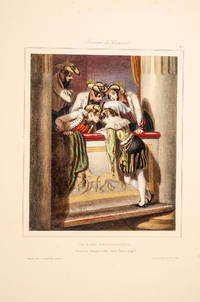
05611Paris: Rittner et Goupil 1837. French Society Enjoying the Foibles and Vices of Carnival as Depicted by Gavarni<br /> Six Exceptionally Rare Hand Colored Lithograph Plates<br /> <br /> GAVARNI Paul Sulpice Guillaume Chevallier. Souvenirs de Carnaval par Gavarni. Paris: Rittner et Goupil 1837.<br /> <br /> First edition first issue. Elephant folio 20 3/4 x 13 1/2 inches; 527 x 343 mm. Original front pink wrapper as title with small lithograph illustration by Gavarni. Six superb hand-colored lithograph plates all heightened with gum-arabic and all with the small oval marginal blind-stamp of the publishers. Some occasional light marginal foxing.<br /> <br /> Contemporary half red scored calf over red cloth boards. Front cover with rectangular red scored calf label bordered and lettered in gilt smooth spine. Some light wear to extremities still a very fine copy of this great rarity. <br /> <br /> Exceedingly rare suite of whimsical prints depicting French society enjoying the foibles and vices of carnival. <br /> <br /> Gavarni the pen name of Sulpice Guillaume Chevalier was a highly successful French illustrator and his work is accredited with capturing the essence of excess that enraptured Paris in the 19th century. Souvenirs de Carnaval is given the date '1837' based on the date inscribed on the stone on plate 5. The majority of Gavarni's later works centered around serious subject matter: they sought to unpack the failings of French familial life and directly and pointedly critiqued Parisian society. However his earlier published prints as seen with the present suite displayed a more whimsical and lighter satirical take on the popular pleasures of the Capital capturing the debauchery and decadence of high society life. <br /> <br /> Most of Gavarni's later works which became more serious were aimed at a different section of the public which had previously granted him so wide a popularity as did his works on Carnival of which this was one of the last.<br /> <br /> RBH only lists one copy at auction in the last 50 years this copy.<br /> <br /> OCLC & KVK locate just one uncolored example in libraries and institutions worldwide: The Gordon N. Ray copy at The Morgan Library & Museum NY US. That copy is uncolored and much smaller with a sheet size of just 13 7/8 x 10 5/8 inches; 352 x 270 mm.<br /> <br /> "Suite of nine lithographs six of which were previously published by Rittner and Goupil under the title: Souvenirs de Carnaval". Armelhault & Bocher p.74.<br /> <br /> The Plates:<br /> <br /> 1. L'ENTRÉE AU BAL. Ne perdez pas la tête mon cher!<br /> ENTRANCE TO THE BALL. Don't lose your head my dear!<br /> <br /> 2. UNE TOMBOLA. Le No. 43 a gagné.une chandelle!<br /> A RAFFLE. No. 43 won.a candle!<br /> <br /> 3. LE PLATEAU DES RAFRAICHISSEMENS. Pour les Dames Messieurs.<br /> THE REFRESHMENT TRAY. For ladies and gentlemen.<br /> <br /> 4. LE CORRIDOR DES LOGES. à Minuit.<br /> THE LODGING CORRIDOR. at midnight.<br /> <br /> 5. LA LOGE D'AVANT-SCÈNE. Veux-tu souper avec nous beau page!<br /> THE STAGE BOX. Do you want to have dinner with us handsome page!<br /> <br /> 6. UN DÉJEUNER. au petit Jour.<br /> A LUNCH. at dawn.<br /> <br /> Armelhault & Bocher 308; Beraldi VII 50; Bobins III 936; Not in Colas. Paris: Rittner et Goupil, 1837 unknown
05940Paris: Chez Aubert 1837. An Amazing Collection of Thirty-Three Superb Hand Colored Lithographs <br /> By the Best French Caricaturists - From Some of their best Series<br /> <br /> GAVARNI Paul. pseudonym of Guillaume Sulpice Chevallier. DAUMIER Honoré. VERNIER Charles. TRAVIES Charles Joseph. <br /> <br /> A fine album of thirty-three superb hand colored lithograph plates heightened with gum arabic. Comprising 15 by Paul Gavarni; 7 by Honoré Daumier; 4 by Bouchot; 3 by Travies; 2 by Charles Vernier; 1 by Provost and 1 by Pruche. Paris: Chez Aubert ca. 1837-1850.<br /> <br /> Oblong quarto 9 5/8 x 12 7/8 inches; 244 x 237 mm. Thirty-three fine hand colored lithographs all heightened with gum arabic. The fifth plate Les Enfans Terribles slightly shorter at outer margin. Some very occasional marginal soiling otherwise a remarkably fine and clean suite.<br /> <br /> Contemporary quarter green scored calf over dark red cloth boards smooth spine elaborately decorated in gilt yellow endpapers.<br /> <br /> A very fine collection of hand colored lithographs by Gavarni Daumier Bouchot Travies Vernier Provost and Pruche.<br /> <br /> These are from the series Les Étudiens de Paris; Les Domestiques; Contributions Indirectes; Scenes Bachiques; Les Enfans Terribles; Les Debardeurs; Fourberries de Femmes; Le Carnaval; Émotions Parisiennes; Les Rues de Paris; Soins Tyranniques; Chasse et Peche; Les Francais Croqués par eux Mèmes; Ce Que Parler Veut Dire; Les Gamins de Paris; Paris le Soir; and Moeurs Conjugales.<br /> <br /> An amazing collection of thirty-three fine hand colored lithographs by the best artists from some of their best series.<br /> <br /> The Plates:<br /> <br /> 1. LES ÉTUDIANS DE PARIS.<br /> - Combien<br /> - Devine.<br /> - Trente francs.<br /> - Quatre francs!<br /> - Cré nom!<br /> Gavarni<br /> <br /> THE STUDENTS OF PARIS.<br /> - How much<br /> - Guess.<br /> - Thirty francs.<br /> - Four francs!<br /> - Create name!<br /> <br /> 2. LES DOMESTIQUES.<br /> Ah! Madame fait elle même son marche!! Eh bien elle aura la bonté de chercher une cuisinière car je ne veux pas me gâter la main dans une baraque!!! Pruche<br /> THE SERVANTS.<br /> Ah! Madam does her own walking!! Well she will be kind enough to look for a cook because I don't want to spoil my hand in a shack!!!<br /> <br /> 3. CONTRIBUTIONS INDIRECTES.<br /> Quand vous allez au bal n'oubliez pas l'impôt du portier si vous ne voulez pas coucher dans la rue. Bouchot<br /> INDIRECT CONTRIBUTIONS.<br /> When you go to the ball don't forget the porter's tax if you don't want to sleep in the street.<br /> <br /> 4. SCENES BACHIQUES.<br /> C'est ce polisson d'pavé qui est gras comme un moine!!!. Travies<br /> BACHIC SCENES.<br /> It's this prankster who is as fat as a monk!!!.<br /> <br /> 5. LES ENFANS TERRIBLES.<br /> - Décidément mon cher ami vous n'êtes pas de force au piquet: je vous enfonce.<br /> - Oui! Mais comme Papa vous a bien enfoncé aussi pas vrai père Dans l'affaire des suifs!<br /> Gavarni<br /> THE TERRIBLE CHILDREN.<br /> - Certainly my dear friend you are no match for the picket: I will push you down.<br /> - Yes! But as Daddy fucked you too right father In the tallow affair!<br /> <br /> 6. LES DEBARDEURS. <br /> Va dire à ta mère qu'a te mouche. Gavarni<br /> STEVEDORES.<br /> Go tell your mother what's wrong with you.<br /> <br /> 7. LES DEBARDEURS.<br /> Comment Lili ne reconnait pas son Nini! Gavarni<br /> STEVEDORES.<br /> How Lili doesn't recognize her Nini!<br /> <br /> 8. LES DEBARDEURS.<br /> - V'là trois heures Titine; filons! Faut que je sois levé au petit jour.<br /> - Moi dormir si peu! J'aimerais mieux pas.<br /> Gavarni<br /> STEVEDORES.<br /> - It's been three hours Titine; let's go! I have to be up at dawn.<br /> - Me sleeping so little! I'd rather not.<br /> <br /> 9. LES DEBARDEURS.<br /> Monter á cheval sur le cou d'un homme qu'on ne connait pas t'appelle çà plaisanter toi! Gavarni<br /> STEVEDORES.<br /> Riding a horse on the neck of a man you don't know that's a joke you!<br /> <br /> 10. Fourberies de Femmes.<br /> EXPLICATIONS.<br /> - Mais écoulez donc ce que vous avez éerit!. mon Gustave je.<br /> - eh! Bien oui Monsieur eh bien oui! Est-ce ma faute si bous ne comprenez pas tout ce qu'il y a d'amour pour vous dans ce billet écrit á un autre!.<br /> Gavarni<br /> Women's tricks.<br /> EXPLANATIONS.<br /> - But let go of what you have written!. my Gustave I.<br /> - hey! Well yes sir well yes! Is it my fault if you don't understand how much love there is for you in this note written to someone else!.<br /> <br /> 11. Fourberies de Femmes.<br /> DES REPROCHES.<br /> Comment C'est avec moi une amue intime Que tu agis amsi!. comment! Tu as ton Gustave Anatole Barbesau le pantalon garance le grand blond. Gavarni<br /> Women's tricks.<br /> CRITICISMS.<br /> How Is this an intimate affair with me That you act amsi!. how! You have your Gustave Anatole Barbesau the madder pants the tall blond.<br /> <br /> 12. Fourberies de Femmes.<br /> UN CABINET PARTICULIER.<br /> Le garçon a dit un chapeau roe un voile un châle noir. Gavarni<br /> Women's Tricks.<br /> A PRIVATE CABINET.<br /> The boy said a roe hat a veil a black shawl.<br /> <br /> 13. FOURBERIES DE FEMMES.<br /> En matière de Sentiment.<br /> 2e. Serie.<br /> - Comment ma petite je viens de rencontere ton mari avec Monsieur Edouard!.<br /> Gavarni<br /> WOMEN'S TRICKS.<br /> In matters of Feeling.<br /> 2nd. Series.<br /> - What my little one I just met your husband with Monsieur Edouard!.<br /> <br /> 14. FOURBERIES DE FEMMES.<br /> En matière de Sentiment.<br /> 2e. Serie.<br /> - Ce Mosieu Ernest est assez bien.<br /> - Ah! Dieu! Tu troves! Tu aimes donc les grandes barbes.<br /> Gavarni<br /> WOMEN'S TRICKS.<br /> In matters of Feeling.<br /> 2nd. Series.<br /> - This Mosieu Ernest is quite good.<br /> - Ah! God! You find it! So you like big beards.<br /> <br /> 15. Le Carnaval.<br /> - Ah! Mon Dieu!. c'est mon mari ma petite mon vrai mari! Le queux!<br /> - Voyons! Ne va pas le reveiller bête! Allons allons ailleurs.<br /> Gavarni<br /> The carnival.<br /> - Ah! My God!. he's my husband my little one my real husband! The one!<br /> - Let's see! Don't go waking him up stupid! Let's go somewhere else.<br /> <br /> 16. Le Carnaval.<br /> J'vous dis que vot femme a insulte la mienn M'sieu! - Jé vous dis qué noir Mosieu!. Gavarni<br /> The carnival.<br /> I tell you that your wife insulted mine Sir! - I tell you that black Mosieu!.<br /> <br /> 17. ÉMOTIONS PARISIENNES.<br /> Comment à Chaillot!. Mais en montant vous m'avez dit Bercy - vous m'avez payé et je vous ai dit merci!. <br /> - Cré nom de nom!. allons reconduisez-moi. - du tout il est minuit nous ne marchons plus. - Cré nom de nom!.<br /> DR 701 Daumier<br /> PARISIAN EMOTIONS.<br /> - What do you mean: to Chaillot! You wanted me to drive you to Bercy you paid me I thanked you. <br /> - Damned. Drive me back! <br /> - I can't we don't drive past midnight. <br /> - Damned damned.<br /> <br /> 18. LES RUES DE PARIS.<br /> - Ah! - Oh! - Pardon! - Excusez! - Eh bien! - Voyons! - Sapristi! - A la fin! Passerez-vous à droite ou à gauche Travies<br /> THE STREETS OF PARIS.<br /> - Ah! - Oh! - Pardon! - Excuse! - Well! - Let's see! - Sapristi! - At the end! Will you pass to the right or to the left<br /> <br /> 19. LES RUES DE PARIS.<br /> Mon Dieu Monsieur je vous demande mille pardons!. il y a erreur. je croyais faire une plaisanterie à mona mi que voilá! Travies<br /> THE STREETS OF PARIS.<br /> My God Sir I ask you a thousand pardons!. there is a mistake. I thought I was making a joke on my friend that there you go!<br /> <br /> 20. SOINS TYRANNIQUES.<br /> Encore un peu!. Allons donc! - Mais non mais non. - Laissez donc faire c'est bon encore un peu! - Vraiment je vous assure que non cela me fait mal. - Ah! Bah! Pas de façons tenez encore ça. Bouchot<br /> TYRANNIC CARE.<br /> A little more!. Come on! - But no but no. - Let it go it's okay just a little longer! - Really I assure you that no it hurts me. - Ah! Well! No way hold on to that again.<br /> <br /> 21. CHASSE ET PÊCHE.<br /> Votre fusil c'est bien mais j'ai encore besoin de votre bourse. DR 303 Daumier<br /> HUNTING AND FISHING.<br /> Your rifle is already something now I still need your purse.<br /> <br /> 22. LES FRANÇAIS CROQUÉS PAR EUX MÊMES.<br /> Mr. Alfred. ce n'est pas ici mesdames mais c'est égal si vous voulez entrer. Vernier<br /> THE FRENCH PICTURED BY THEMSELVES.<br /> Mr. Alfred. it's not here ladies but that's all the same if you want to come in.<br /> <br /> 23. LES FRANÇAIS CROQUÉS PAR EUX MÊMES.<br /> Effet de mirage. Vernier<br /> THE FRENCH PICTURED BY THEMSELVES.<br /> Mirage effect.<br /> <br /> 24. CE QUE PARLER VEUT DIRE.<br /> Je chante mon oncle parcequé je suis contente. Et que c'est notre signal. Bouchot<br /> WHAT TALK MEANS.<br /> I sing uncle because I am happy. And that is our signal.<br /> <br /> 25. LES GAMINS DE PARIS.<br /> C'est pas'ceque t'as des sabots. q'uien Gugusse prète-moi donc tes sou'iers j'vas lui tremper une soupe!. Provost<br /> THE KIDS OF PARIS.<br /> Don't you have clogs. Hey Gugusse lend me your shoes I'm going to dip some soup into him!.<br /> <br /> 26. CE QUE PARLER VEUT DIRE.<br /> Comment donc Madame mai nous réglerons ça quand vous voudrez. Ah! Si j'avais su je t'aurais fait manquer ta soirée. Bouchot<br /> WHAT TALK MEANS.<br /> So Madam we will sort it out whenever you want. Ah! If I had known I would have made you miss your evening.<br /> <br /> 27. PARIS LE SOIR.<br /> Amanda!. prête-mo ton tire-botte. Gavarni<br /> PARIS IN THE EVENING.<br /> Amanda!. lend me your boot jack.<br /> <br /> 28. PARIS LE SOIR.<br /> Angelique! Angelique!. elle n'y est pas. cependant sapristie! Je vois une paire de bottes. Gavarni<br /> PARIS IN THE EVENING.<br /> Angelique! Angelique!. she's not there. however sapristie! I see a pair of boots.<br /> <br /> 29. MŒURS CONJUGALES.<br /> Et les cinq francs de ce matin - Mais je te les dis: trois livres et demie de tranche au petit os deux sous de foie un ognon brûlé ça nous fait 58; une demi-once à priser un quarteron de sucre; six liards de graine de lin voila donc 3 francs 10 sous. - Eh bien! il reste trente sous - Oui mais les carottes! je connais vos carottes Madame Grimblot - je n'en avalerai plus!. DR 626 Daumier<br /> CONJUGAL MORES.<br /> - And the five francs from this morning <br /> - But I tell you 3 1/2 livres for a cut of a little bone. two sous for liver a burnt onion that makes 58 a half ounce of snuff a quarter pound of sugar six pennies for linseed. hence there is three francs 10 sous. <br /> - Eh well there remain 30 sous. <br /> - Eh but the carrots! <br /> - I know your carrots Madame Grimblot I won't swallow any of those any more. <br /> Note: Play on words. "carottes" means carrots and also to play a trick on someone<br /> <br /> 30. MŒURS CONJUGALES.<br /> Le trépas du caniche. <br /> Oh mon Dieu mon Dieu est il possible!. pauvre zozore ma joie ma consolation je ne le verrai plus!. ah! je vois que je n'y survivrai pas. - Malheureuse épouse! comme le tien mon cœur est navré. Viens sur mon sein nous confondrons nos larmes. Hélas! que veux tu: nous sommes tous mortels! DR 651 Daumier<br /> CONJUGAL MORES.<br /> The Demise of the Poodle. <br /> - Oh my God my God is it possible. my poor Zozore my joy my consolation I shall never see him again. ah! I shan't survive. <br /> - Wretched wife! like yours my heart is saddened. Come to my bosom and we shall mingle our tears. Alas what can we do. we are all mortal!<br /> <br /> 31. MŒURS CONJUGALES.<br /> Oui chère amie jaloux tant que tu voudras!. Mais j'ai quitté le Poste de la Mairie pour voir si personne n'est au mien. DR 633 Daumier<br /> CONJUGAL MORES.<br /> Yes love you may call me overly jealous. But I had to leave the post at City Hall in order to see whether anybody had taken mine here!<br /> <br /> 32. MŒURS CONJUGALES.<br /> C'est ma femme!! oh! scélérate pendant qu'on me fait la barbe elle me fait la queue! DR 645 Daumier<br /> CONJUGAL MORES.<br /> There goes my wife!! Oh the wretch while I'm having a shave she's making a cuckold of me!<br /> <br /> 33. MŒURS CONJUGALES.<br /> Le mari Bobonne veux-tu l'étrenne de ma barbe. <br /> La femme à part Dire que je suis unie à une pareille mâchoire!.<br /> DR 644 Daumier<br /> CONJUGAL MORES.<br /> Husband: My dear how about a first kiss on my chin <br /> The wife aside: To think that I am married to this face! Paris: Chez Aubert, 1837 unknown
05232Paris: Au Bureau du Charivari 1840. Sixty-Four of Sixty-Six<br /> Hand-Colored Lithographed Plates by Gavarni<br /> Depicting "The Stevedores"<br /> <br /> GAVARNI Paul pseudonym of Guillaume Sulpice Chevallier. Les Débardeurs. Album par Garvarni. Paris: Au Bureau du Charivari n.d. 1840-1842.<br /> <br /> Large quarto 14 1/2 x 11 1/4 inches; 367 x 285 mm. Sixty-four of sixty-six superb numbered hand-colored lithographed plates heightened with gum arabic loose as issued. Plates printed by Aubert & Cie.<br /> <br /> The two missing plates are numbers 59 & 65.<br /> <br /> A few plates with some light foxing to blank margins only plates 14 29 43 & 51 with small marginal tears not affecting images otherwise a remarkably fine and clean suite of these wonderful plates. <br /> <br /> A series of sixty-six lithographs of which nine first appeared in other journals eight in La Caricature plates 21 23 and 24 under the title "Souvenirs du Carnaval" and 32 44 49 54 and 61 under the title "Les Débardeurs" and one plate 58 in La Mode prior to the publication of the entire series in Le Charivari from 19 January 1840 to 5 February 1842.<br /> <br /> "This is the most considerable of the several series of lithographs devoted by Gavarni to the balls which were a passion with him. He was an organizer and patron of the more elegant and he found the popular balls at the Opera and elsewhere an attractive subject for his designs. Théophile Gautier who believed that at this period Parisian balls had virtually 'effaced the former carnival of Venice' called Gavarni 'their depicter and historian.' As dancers throw themselves into their round of pleasure 'a man stands with his back against a pillar; he watches he listens he observes.' And the following day on stone 'he lends his own wit to all the masks perhaps stupid in themselves; he sums up in a profound word the chit-chat of the foyer; he translates into a pleasant legend the hoarse excitement of the hall.' Quoted by Lemoisne I 120" Ray The Art of the French Illustrated Book.<br /> <br /> "In this work "Ton Alfred est un gueux: il est ici avec l'autre.calme-toi!" from a series of sixty-six lithographs published in Le Charivari between 1840 and 1843 Gavarni depicts a variation on the most famous of the costumes he designed for the masquerade balls the débardeur the stevedore. The braided wig loose shirt black velvet trousers fastened with brass buttons and tied with a fringed sash are derived from the working costume of the longshoreman or stevedore who unloaded the barges that traveled up the Seine to Paris. As Nancy Olsen points out in Gavarni: The Carnival Lithographs the majority of Gavarni's carnival lithographs reflect his interest in the small groups that drift away from the crowd as a consequence of the romantic liaisons that preoccupied many of the participants at a masked ball. Intrigue was the name of the gave and the information being conveyed in this scene comes in all probability from an agent provocateur" Beatrice Farwell The Charged Image: French Lithographic Caricature 1816-1848 p. 88.<br /> <br /> Armelhault & Bocher nos. 486-542 307-309 plates 21 23 and 24 259-263 plates 44 49 32 54 and 61 and 1223 plate 58. Ray The Art of the French Illustrated Book 154.<br /> <br /> The Plates:<br /> <br /> 1. Le Débardeur mâle et femelle.vivants!.<br /> 2. Caporal on gele dans votre satanè violon!.<br /> 3. Amanda l'Ecuyer. Rue.<br /> 4. Qui Moi et Zélie Achille et toi.<br /> 5. Un amour de petit ménage; quoi! Ça se retire à la pointe du jour bien paisibles!.<br /> 6. On va pincer son petit cancan mais bien en douceur.<br /> 7. Le Vicomte Aime de Trois Etoiles et Dame Eloa de Tremblement.<br /> 8. Ah! qu'il est beau!.<br /> 9. Malheureuse enfant! Qu'as - tu fait de ton sexe.<br /> 10. Pauvre Elvire emportée aux flots du bal Musard.<br /> 11. C'est comme ça que tu les intrigues.merci!<br /> 12. En voulez-vous de la crevette.pas cher.<br /> 13. Va dire à ta mère qu'a te mouche.<br /> 14. Je vous dis que vous avez dansé d'une façon.<br /> 15. Comment Lili ne reconnait pas son Nini!<br /> 16. Y en-a-ti des femmes y'en a-t-i.<br /> 17. Allons Landerneau mon bonhomme!.<br /> 18. Ça ne te regarde pas de quoi te mèles-tu.<br /> 19. .être fichues au violon comme des rien du tout!.<br /> 20. Six pouces de jambes et le dos tout de suite!.<br /> 21. "L'Intolérance est fille des faux Dieux!".<br /> 22. Voyons Angelina as-tu assez fait poser Mosieu<br /> 23. Va donc!.Singulier masculin!<br /> 24. C'est mon Débardeur!.<br /> 25. C'est d'main matin qu'mon tendre époux va beugler.<br /> 26. Te v'la ici toi! C'est comme ça qu'tas ta migraine.<br /> 27. J'espère que tu vas te tenir Angélique.<br /> 28. Voilà un fénéant qui dort et qui laisse une pauv femme danser toute la nuit!.<br /> 29. .une douzaine d'huitres et mon coeur.<br /> 30. V'la qu'i fait jour: j'suis échigné moi dam! Et toi.<br /> 31. On rit avec vous et tut e faches.en voilà un drôle de pistolet!<br /> 32. Tais-toi moutard faut laisser jaser l'autorité!.<br /> 33. V'là un gueux de petit pékin qui se divertit au bal comme un grain de plomb dans du champagne.<br /> 34. .Et si Cornélie ne trouvait pas de voiture.<br /> 35. Toi je te repigerai!<br /> 36. Qu'est-ee que c'est Tu vous deranges pour ça et t'en voudrais déja p'us.<br /> 37. Le Débardeur - Ne me parlez pas des femmes en Carnaval pour s'amuser!.<br /> 38. Ils vont venir: écoute Hortense! Sur le coup de minuit minuit et demi vois-tu.<br /> 39. V'là qu'elles ont des mots!.Fameux!.<br /> 40. Et ton Epouse.<br /> 41. Est-ce que vous n'en avez pas bientot assez Angélina du Carnaval.<br /> 42. As-tu vu M'ame Alexandre et l'ancienne à Paul qui sont à se peigner en bas pour ce Paltoquet d'Eugène!.<br /> 43. Aurai-je l'honneur de danser un galop ávec Mosieu le Baron.<br /> 44. P'us que ça de bouillon! Merci.<br /> 45. J'te parie mon Alezan doré contre ta Vicomtesse que j'emporte ce soir le petit rat du Baron.<br /> 46. Ton Alfred est un gueux: il est ici avec l'autre.<br /> 47. Qu'est-ce que t'as mon vieux Auguste - Rien!.<br /> 48. Eh! b'en Landerneau ça ne vas donc pas mieux.<br /> 49. Allons! allons Mazuzi! Tiens-toi allons!.<br /> 50. Mon cher le municipal a emporté le petit muf'e avec qui je dansais parcequ'I voulait pincer son Cancan.<br /> 51. Ah! ça décidément Caroline est folle du petit Anglais.<br /> 52. J'i ai dit! J i dit Madame si vous vous permettez de fich.<br /> 53. As tu vu M'ame Chose et le petit Baron qui ne peuvent pas se voir.<br /> 54. Monter à cheval sur le cou d'un homme qu'on ne connait pas t'appelle çà plaisanter toi!<br /> 55. Je f'avertis Milord.sit u dines demain avec cette Andalouse-lá.<br /> 56. Qu'est que t'as la Mômignarde.<br /> 57. Çà! C;est pas la perruque à Jules!.<br /> 58. Un honnête Domino! Des airs décents.<br /> <br /> 60. Voyez-vous mon petit Larrims j'ai de l'amitié pour vous tout plein tout plein! Mais.<br /> 61. Tu danseras Coquardeau!.<br /> 62. Doux Jésus! Où que je vas me sauver.<br /> 63. Agathe et toi mon vieux Ferdinand ça ne sera pas long.<br /> 64. V'là trois heures Titine; filons! Faut que je sois levé au petit jour.<br /> <br /> 66. Oh! Hé! Viens-tu souper la Gustine! Paris: Au Bureau du Charivari, 1840 unknown
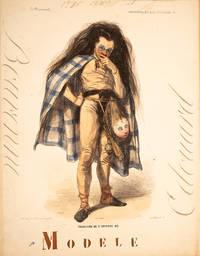
05960Paris: Bauger & Cie. 1839. A Unique Copy of Gavarni's Classic<br /> Featuring The Colorist's Models<br /> <br /> GAVARNI pseudonym of Guillaume Sulpice Chevallier. Souvenirs du Bal Chicard. Paris: Bauger & Cie. n.d. 1839-1843.<br /> <br /> A unique copy comprised of colorist Edouard Bouvenne's models. Large quarto 13 1/2 x 10 1/2 in; 341 x 266 mm. A suite of twenty hand colored lithographs representing the travesties of men and women commissioned for Le Charivari. Printed by Aubertet et Cie. All plates mounted on stubs.<br /> <br /> Fourteen plates have "Modele" stenciled in color at foot; five have "Modele" inked in Bouvenne's hand and Bouvenne has boldly signed and dated thirteen plates; only the first plate is unmarked by Bouvenne in any way. <br /> <br /> The plates are captioned: 1. "Chicard;" 2. "Un Covage Civilizé;" 3. "Balochard;" 4. "Mr. Floumann;" 5. "Pétrin;" 6. "Commissaire de Marine;" 7. "Général Étranger;" 8. "Insulaire de n'importe où;" 9. "Troubadour;" 10. "Titi;" 11. "Agréable;" 12. "Cacique;" 13. "Emir;" 14. "Andalouse;" 15. "Triton;" 16. "Garde Champêtre;" 17. "Bourguemestre;" 18. "Robinson;" 19. "Minon-Minard;" and 20. "Pistolet."<br /> <br /> Imprints vary slightly. Plates 1 2 3 4 5 and 20 have no publisher's imprint; plate 6 has imprint: "Chez Bauger R. du Croissant 16;" plate 8 has imprint: "Chez Bauger & Cie. R. du Croissant 16;" plates 17 18 and 19 have both imprints: "Chez Bauger R. du Croissant 16" and "Chez Aubert Place de la Bourse;" plates 7 and 9-16 have imprint at foot: "Se Vend chez Bauger & Cie. Editeurs des Dessins de la Caricature du Figaro et du Charivari Rue du Croissant 16" plates 9 10 14 15 and 16 have additional imprint: "Chez Aubert gal. Véro-Dodat".<br /> <br /> Early twentieth century green cloth front cover with maroon morocco label bordered and lettered in gilt spine with maroon morocco label lettered in gilt. A few plates with light foxing. Eighteen of twenty plates with Bouvenne's ink and/or color smudges at margins demonstrating their work-plate status.<br /> <br /> Second only to Daumier as the greatest social commentator and satirical artist of nineteenth century France Gavarni produced the work under notice during his first period whence he confined himself to the study of Parisian manners particularly those of the city's youth. Souvenirs du Bal Chicard Memories of the Chicard Ball dates from when he was in charge of the journal Le Charivari and was a regular at Paris's most prestigious balls for which he often designed many costumes. During this time many of his finest lithographic sets drew their subject matter from these costume balls including Souvenirs du Bal Chicard .<br /> <br /> "Costume balls had been a part of carnival celebrations in France since the fifteenth century but their popularity was unprecedented during the period of the July Monarchy. At first private and aristocratic they became increasingly popular among the new bourgeoisie and the aspiring lower classes when they could afford them. One of the more exclusive expensive fifteen francs and licentious of these bal masqués was also one of the most popular. The Bal Chicard was given by a prosperous businessman Alexandre Lévêque who was called by the nickname Chicard. Gavarni was a friend of Chicard's and as a result was one of those regularly in attendance. In this image "Chicard" from Souvenirs du Bal Chicard a series of twenty lithographs published in Le Charivari between 1839 and 1843 we see one of the parodies of the earlier historic costumes of the bal masqué made famous at the Bal Chichard along with some wilder forms of dancing" Beatrice Farwell The Charged Image: French Lithographic Caricature 1816-1848 p. 86.<br /> <br /> " In another image "Troubadour" from the same series.Gavarni depicts an uninhibited dancer whose cap rests temporarily on the bottle of wine on the floor behind him. Gavarni's intention here has obviously been to capture the character of the wild dancing for which the Bal Chicard was noted. In a pentimento he has disguised a previously drawn extended arm by incorporating it into the drapery that flies off at the left but it remains easy to visualize the figure with three arms. Gavarni not only drew the costumes he saw at the balls but also designed costumes for use there. This troubadour's costume purports to be a version of the late medieval doublet and hose with anachronistic modifications frequently seen at the Bal Chicard here emphasized by the pipe in the reveler's mouth" Beatrice Farwell The Charged Image: French Lithographic Caricature 1816-1848 p. 88.<br /> <br /> Armelhaut and Boucher L'Oeuvre de Gavarni pp. 253 524 and nos. 257 "Chicard" and 2280 "Troubadour". Paris: Bauger & Cie., 1839 unknown
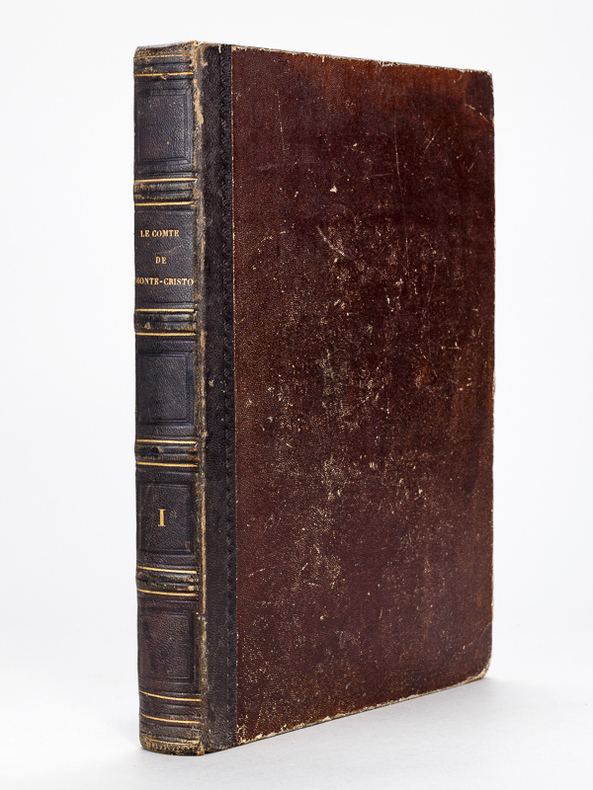
1846554201 vol. in-4 reliure de l'époque demi-chagrin noir, dos à 4 nerfs doubles, Bureaux du Journal Le Siècle, Paris, 28 septembre 1845 puis 1er février 1846 (premières livraison), 1846 en page de titre ), 2 ff. (titre et tables), frontispice (portrait d'Alexandre Dumas), 408 pp. avec 29 planches hors texte
18406182512 vol. grand in-8 (27,2 x 19,5 cm en reliure) reliure uniforme postérieure demi-maroquin à petits coins anthracite à grain long postérieure (les 3 derniers volumes de gravures en couleurs d'un format légèrement plus petit, 17,7 x 25,5 cm en reliure), dos lisse orné en long, couvertures et dos conservés (Curmer, sans date), tête dorée (toutes tranches dorées pour les 3 derniers volumes de gravures en couleurs), mention d'imprimerie Schneider & Langrand sur tous les faux-titres à l'exception du tome premier (Decourchant), date en queue, reliure signée de Yseux successeur de Simier, et Bellevallée (pour les 3 volumes de gravures), L. Curmer, Paris, 1840-1842, Tome I : 3 ff. (dont frontispice et titre de 1840), 1 f. (titre de 1841), XVI-380 pp et 4 ff. n. ch. avec 48 planches hors texte en noir, d'après Gavarni et Monnier (femme à la mode dans les deux types, maître d'étude en un type, par Meissonier) ; Tome II : 3 ff. (dont frontispice et titre de 1840), 1 f. (titre de 1841), 1 f. (dédicace), XVIII-376 pp. et 4 ff. n. ch. avec 48 planches hors texte en noir, d'après Gavarni, Géniole, H. Monnier, Gagniet, Charlet, Lorentz et Daumier ; Tome III : 3 ff. (dont frontispice et titre de 1841), 1 f. (autre titre de 1841), 1 f. (dédicace), XL-352 pp. et 4 ff. n. ch. avec 48 planches hors texte en noir, d'après Gavarni, Eugène Lami, Grandville, Tony Johannot, Daumier, Pauquet, Charlet, Géniole et Traviès ; Tome IV : 3 ff. (dont frontispice et titre de 1841), 1 f. (dédicace), 392 pp. et 5 ff. n. ch. avec 49 planches hors texte en noir, d'après H. Monnier, Gavarni, Pauquet, Eugène Lami, Grandville et Meissonnier ; Tome V : 4 ff. (dont frontispice et titre daté de 1842), CVII-376 pp. et 5 ff. n. ch. avec 63 planches dont portrait de Napoléon à cheval (dont 24 en noir et 39 en couleurs) d'après Pauquet, Penguilly, Eug. Lami, Jacques H. Monnier et Gavarni ; Province Tome I : 3 ff. (dont titre daté de 1841), frontispice, 392 pp et 4 ff. n. ch. avec 49 planches hors texte en noir, d'après Gavarni, Tony Johannot, Henri Monnier, Férogio, Pauquet, Grenier, Charlet, Meissonier, Loubon et Raymond Pelez, avec notice du canut en deuxième état ; Province Tome II : 4 ff. (dont titre de 1841 et frontispice), XVIII-376 pp. et 4 ff. n. ch. avec 48 planches hors texte en noir d'après Gavarni, Charlet, Loubon, Férogio, Raymond Pelez, Emy, Pauquet, etc... ; Province Tome III : 3 ff. (dont titre de 1842 et frontispice), 460 pp. et 5 ff. n. ch. avec une carte repliée en couleurs et 53 planches hors texte en noir d'après Saint-Germain, Penguilly, Géniole, Loubon, Gavarni, Pauquet, etc... ; Le Prisme : 2 ff. (dont titre daté de 1841), 480-57 pp. ; Gravures en couleurs sous serpente jaune : Premier Volume : Titre de 1840, Prospectus (8 pp.) ; I : frontispice et 47 planches en couleurs (femme à la mode dans le premier type, maître d'étude en un type, par Meissonier) ; II : titre de 1840, frontispice et 48 planches en couleurs ; III : titre de 1841, frontispice et 47 planches en couleurs (sans le journaliste de 1660) ; Second Volume : IV : titre de 1841, frontispice et 49 planches en couleurs ; V : titre de 1842, frontispice et 63 planches (Napoléon en noir) ; Troisième Volume : I : titre de 1841, frontispice et 49 planches en couleurs ; II : titre de 1841, frontispice et 48 planches en couleurs ; III : titre de 1842, frontispice et 53 planches en couleurs. Rappel du titre complet : Les Français peints par eux-mêmes (12 Volumes - Complet) [ Contient : ] Les Français peints par eux-mêmes (5 Tomes - Complet) ; Les Français peints par eux-mêmes. Province (3 Tomes - Complet) ; Le Prisme ; Gravures en couleurs (3 Volumes)
05538Paris: Chez Aubert 1837. Characteristic Expressions Love Letters and Law Students<br /> Twenty-Five Fine Hand Colored Lithographs by Daumier Gavarni and Cujas<br /> <br /> DAUMIER Honoré. La Galerie Physionomique The Physiognomic Gallery 5 plates 0f 25 1837; GAVARNI Paul. Au Boit Aux Lettres At the mailbox 11 plates of 34 1838; GAVARNI Paul. Les Coulisses Behind the scenes 1 plate of 31 1857; CUJAS. Cours de Droit Law courses 8 plates of 12 1838.<br /> <br /> Folio 13 1/2 x 10 1/8 inches; 343 x 257 mm. <br /> <br /> A fascinating collection of twenty-five hand colored lithograph plates by Daumier Gavarni & Cujas all heightened with gum arabic.<br /> <br /> Contemporary quarter dark green calf over green marbled boards. Smooth spine decoratively tooled in gilt plain endpapers. Extremities rubbed.<br /> <br /> 1. DAUMIER. La Galerie Physionomique No. 14. La loge grillée - The box grated DR 339<br /> 2. CUJAS. Cours de Droit No. 1. La Chaumière et ton coeur - The Cottage and your heart<br /> 3. CUJAS. Cours de Droit No. 2. Jus Romanum <br /> 4. CUJAS. Cours de Droit No. 4 Homme étonnant!!! Quel chique.<br /> 5. CUJAS. Cours de Droit No. 6. L'Etudiant a besoin de quelques distractions - The Student <br /> 6. CUJAS. Cours de Droit No. 8. Reflexion philosophique en morale de Mlle Fifine<br /> 7. CUJAS. Cours de Droit No. 9. Allons Gustine joue tout droit tu ne manqueras pas de touche.<br /> 8. CUJAS. Cours de Droit No. 10. Je ne me trompe pas d'etait bien mon B.! <br /> 9. GAVARNI. Les Coulisses No. 6. Le soldat romain Quinze sous par jour. A&H 454<br /> 10. CUJAS. Cours de Droit No. 12. Tiens! Ernest!. qu'es tu donc devenu<br /> 11. GAVARNI. La Boite Aux Lettres Sans No. Je prends la plume d'une main tremblante. A&H p. 88<br /> 12. GAVARNI. La Boite Aux Lettres No. 2. Vous avez le secret de ma vie. A&H 1685<br /> 13. GAVARNI. La Boite Aux Lettres No. 3. La lettre qu'on lit. A&H 1686<br /> 14. GAVARNI. La Boite Aux Lettres No. 4. J'ai ta lettre cherie a mon Ernest je la presse. A&H 348<br /> 15. GAVARNI. La Boite Aux Lettres Sans No. Je soussigné Roi des Batinolles. A&H p. 89<br /> 16. GAVARNI. La Boite Aux Lettres Sans No. Chère ange mon amour vous envoie sur l'aile. A&H p. 89<br /> 17. DAUMIER. La Galerie Physionomique No. 5. Le bon morceau - A Tidbit DR 330<br /> 18. GAVARNI. La Boite Aux Lettres No. 8. Sans No. Viens me prendre ce soir je suis sortie. A&H p. 89<br /> 19. GAVARNI. La Boite Aux Lettres No. 9. Sans No. Ma sière epouse je vous. A&H p. 89<br /> 20. DAUMIER. La Galerie Physionomique No. 18. Rien!.rien!. Je ne trouve rien - Nothing! nothing at all. DR 343<br /> 21. GAVARNI. La Boite Aux Lettres No. 11. Congé en partie double. A&H 1693<br /> 22. DAUMIER. La Galerie Physionomique No. 8. La bonne prise - A good pinch of snuff DR 333<br /> 23. GAVARNI. La Boite Aux Lettres No. 13. Monsieur malgré que je sois sans experience je n'ai. A&H 1695<br /> 24. GAVARNI. La Boite Aux Lettres No. 14. Ah! prenez pitié de l'etat cruel où me laisse mon attachement. A&H 349<br /> 25. DAUMIER. La Galerie Physionomique No. 20. Contentement de soi-meme - The man who is satisfied with himself<br /> DR 345<br /> <br /> Daumier Register DR-330 DR-333 DR-339 DR-343 DR-345; Armelhault & Bocher 348 454 1685 1686 1693 1695 & pp. 88 & 89. Paris: Chez Aubert, 1837 unknown
06246Paris: Chez Aubert 1840. Sixty Superb Hand Colored Lithographs from three of Gavarni's Most Celebrated Series<br /> <br /> GAVARNI Paul pseudonym of Guillaume Sulpice Chevallier. Les Étudiants de Paris & Le Carnaval à Paris & Les Débardeurs. Paris: Chez Aubert 1840-1842.<br /> <br /> Folio 13 × 9 in.; 330 × 250 mm. An exceptional compilation of sixty hand-colored lithographs each heightened with gum arabic all by Paul Gavarni. A few plates with minor foxing to blank margins.<br /> <br /> Contemporary quarter black diced calf over patterned black paper-covered boards extremities a little rubbed.<br /> <br /> A striking and well-assembled album - sixty vivid gum-arabic-heightened lithographs by Gavarni drawn from three of his most celebrated series. Together they offer a lively social commentary and a cohesive survey of the artist's sharp eye for character and nuance realized in brilliantly hand-colored lithographs of great visual appeal and presence.<br /> <br /> Contents: <br /> <br /> Les Étudiants de Paris 1839-40: 16 plates of 60 - nos. 2 3 4 6 7 9 10 15 16 18 20 21 22 25 stained at top blank fore-margin just touching image 30 31.<br /> <br /> Le Carnaval à Paris 1841-42: 16 plates of 30 - nos. 1 2 4 5 7 8 11 12 13 14 17 19 20 22 23 27.<br /> <br /> Les Débardeurs 1840-42: 28 plates of 66 - nos. 1 2 3 4 5 6 7 8 9 10 11 12 15 18 19 20 22 27 33 34 43 45 47 slightly worn at fore-margin 53 54 55 56 slightly worn at fore-margin 63.<br /> <br /> <br /> Les Étudiants de Paris captures the comedic sometimes absurd university life of Paris's law and medical students-a defining early Gavarni series.<br /> <br /> Le Carnaval à Paris explores the flamboyant masked festivities of Parisian carnival blending costume satire and street theater-these sixteen plates suggest sequential extraction from the original issue.<br /> <br /> Les Débardeurs offers spirited depictions of carnival dock-working women-humorous lively and deeply grounded in Gavarni's keen observational style.<br /> <br /> <br /> Armelhault & Bocher: "Les Étudiants de Paris" nos. 626-657; "Le Carnaval à Paris" nos. 729-755; "Les Débardeurs" nos. 800-866. Colas: 1292 Étudiants 1295 Carnaval 1298 Débardeurs; Lipperheide: Lc 2312 Étudiants Lc 2315 Carnaval Lc 2317 Débardeurs. Paris: Chez Aubert, 1840 unknown
05959Paris: Caboche Gregoire / Chez Aubert 1838-1839. Two Incredibly Scarce Gavarni Albums Bound Together<br /> A Total of Forty-Three Marvelous Hand-Colored Lithographs<br /> <br /> GAVARNI pseudonym of Guillaume Sulpice Chevallier. Paris le Matin. Paris: Chez Aubert 1838-1839. bound with La Boite aux Lettres. Paris: Caboche Gregoire / Chez Aubert 1839. <br /> <br /> First editions. Folio 13 1/8 x 9 5/8 in; 334 x 245 mm. Paris le Matin with twelve and La Boite aux Lettres with thirty-one of thirty-four hand-colored lithographed plates; a total of forty-three plates most heightened with gum arabic.<br /> <br /> Bound to contemporary French style c. 1920 in quarter black morocco over marbled boards. Smooth spine ruled in blind and lettered in gilt marbled endpapers top edge gilt others uncut. A very fine copy of two extremely scarce Gavarni albums.<br /> <br /> ABPC Index 1923-present records no copies of Paris le Matin at auction within the last eighty-eight years. Only one copy of La Boite ux Lettres has come to auction within the last thirty-six years and it contained only fourteen of the called-for thirty-four plates.<br /> <br /> Only one copy of Paris le Matin is found in institutional collections worldwide at the Getty Research Library. OCLC records only five copies of La Boite aux Lettres in libraries throughout the world.<br /> <br /> Paris le Matin Paris Morning and La Boite aux Lettres Mailbox are typical - if exceedingly scarce - examples of Gavarni turning his satiric eye on the customs and manners of the French petit bourgeoisie. Paris le Matin limns the morning activities of Parisians; La Boite aux Lettres is a charmingly amusing survey of writing sending and receiving letters in Paris of the era.<br /> <br /> La Boite aux Lettres lacks the last three plates XXXI XXXIII and XXXIV. The institutional copies appear to be incomplete as well but it seems that the copy under notice is as complete as has ever been seen within our lifetime and is likely to remain so for many years to come.<br /> <br /> Armelhault & Bocher 902-913 Paris le Matin. Armelhault & Bocher p. 88 11 unnumbered 348-397. Paris: Caboche Gregoire / Chez Aubert, 1838-1839 unknown
1842123046Paris: L. Curmer 1842. First edition of this collection which Carteret considers to be one of the most important illustrated books of the 19th century. Octavo elaborately bound in full red morocco with elaborate gilt titles and tooling to the spine in six compartments within raised gilt bands elaborate gilt ruling and stamping to the front and rear panels gilt turn-ins and inner dentelles elaborately decorated green morocco doublures hand-stitched patterned endpapers all edges gilt with intricate botanical carvings illustrated with eleven frontispiece titles by Trimolet Charles Jacque Penguilly etc. and numerous vignettes throughout the text. In fine condition. Rare and desirable. "This collection of ten short narratives mostly Gothic or exotic from the literatures of several countries is one of the most charming books of the Romantic period" Ray. L. Curmer unknown books
1842123046Paris: L. Curmer 1842. First edition of this collection which Carteret considers to be one of the most important illustrated books of the 19th century. Octavo elaborately bound in full red morocco with elaborate gilt titles and tooling to the spine in six compartments within raised gilt bands elaborate gilt ruling and stamping to the front and rear panels gilt turn-ins and inner dentelles elaborately decorated green morocco doublures hand-stitched patterned endpapers all edges gilt with intricate botanical carvings illustrated with eleven frontispiece titles by Trimolet Charles Jacque Penguilly etc. and numerous vignettes throughout the text. In fine condition. Rare and desirable. This collection of ten short narratives mostly Gothic or exotic from the literatures of several countries is one of the most charming books of the Romantic period" Ray. L. Curmer unknown
51-4180Paris: L'Artiste 1834. 4to. 27 x 20.5 cm. 2 vols. Elaborate contemporary Romantic binding with gilt and blind stamping. 308 308 pp. about 108 of 110 original graphic works. Missing appear to be 1834-1 Clerget and 1834-68 Alophe. Among the other works is the original lithograph by Delacroix: Le jeune Clifford trouvant le corps de son père 1834-104; Delteil no. 99 first state of 3; Young Clifford Finding the Body of his Father image of Shakespeare King Henry VI Part IICatalogued in "Les Estampes de L'Artiste 1831-1904" by Pierre Sanchez and Xavier Seydoux nos. 1834- 2 to 1834-110. Textes des grands écrivains romantique tel que Gérard de Nerval Théophile Gautier qui est rédacteur en chef de 1856 à 1859 Jules Janin Étienne Eggis Théodore de Banville Henri Murger Charles Monselet Champfleury Charles Baudelaire Joseph Méry Eugène Sue Alphonse Esquiros Hector de Callias entre autres.Illustrés de lithographies et de gravures sur bois des plus grands artistes de l'époque puisque le fondateur Hector Brame fut l'associé de Durand-Ruel et que le repreneur de la revue n'est autre qu'Armand Houssaye qui a voulu faire de cette revue un véritable musée de la gravure. Nos volumes comptent des gravures de :Thomas Gavarni Prout Deveria Alophe Préault Dessain Deroy Beaume Noël Johannot Debacq Roqueplan Gsell Livet Champin Perrières Perlet Champmartin Bellange Dreux Charlot Boulanger Guët Delaroche Raffet Brume Scheffer Carrier Newton Peroy Vernet Decamps Leroy Grenier pour le premier volume et Giraud Alophe Noël Roqueplan Debacq Lerac Grenier Decamps Lebreton Pingret Leroy Francis Dauzat Cattemole Gavarni Provost Jaime Frey Gigoux Gintrac Delacroix Leclerc Boulanger Bourge Charlier Wilkie. Le second volume est incomplet d'une gravure page 48. Par contre il contient deux gravures d'Eugène Delacroix. .Fondée en 1831 aux plus beaux jours de la révolution romantique la revueL'Artiste connut une longue vie se transformant et se renouvelant plusieurs fois au cours du XIXe siècle pour ne s'éteindre définitivement que dans les toutes premièresannées du XXe siècle. C'est dire que durant ses soixante-quatorze ans d'existence cetterevue porte un témoignage direct sur l'évolution des mouvements artistiques etlittéraires ayant joué souvent un rôle actif soit dans la légitimation de la modernité et de l'innovation soit au contraire dans la défense des principes proclamés et propagés par les organes officiels de l'Institut et du gouvernement. Paris: L'Artiste, 1834. unknown
04851Paris: Chez Tessari et Cie. 1837. Extremely Scarce <br/>No Auction Records<br/>No Copies in Libraries Worldwide<br/><br/>GAVARNI pseudonym of Guillaume Sulpice Chevallier. Fashionables. Paris: Chez Tessari et Cie. n.d. 1837. <br/><br/>Large quarto 13 1/8 x 10 1/16 inches; 333 x 255 mm. Twelve hand-colored lithographed plates heightened with gum arabic depicting couples during the twelve months of the year. Plates lithographed by Lemercier. <br/><br/>Contemporary half red morocco ruled in gilt over marbled boards by Canapé et Corriez stamp-signed on front flyleaf. Smooth spine decoratively tooled and lettered in gilt top edge gilt marbled endpapers. Some light foxing a few plates slightly browned. Tiny portion of lower corner of the plate "Août" torn away. Two bookplates and remains of a third on front pastedown. An excellent copy of this extremely scarce series of plates. Not in Colas Hiler or Lipperheide.<br/><br/>Each plate Janvier to Decembre depicts the appropriate fashion for each month of the year.<br/><br/>A work of incredible scarcity with no copies at auction since ABPC began indexing in 1923. No records in OCLC and KVK OCLC notes one of the lithographs Avril at Clark Art Institute. <br/><br/>"In 1837 Gavarni began his connection with Le charivari which did not conclude until 1848. In all he drew 1054 lithographs for his journal.Most of these appeared in series some twenty-five of which extend to ten or more plates and were afterwards published by Aubert in albums. Perhaps the best of these collections are Fourberies de femmes en matière de sentiment Les étudiants de Paris Les débardeurs and Les lorettes; but some of the rest are of hardly inferior interest. Still further series contributed to periodicals other than Le charivari were also issued as albums. Baudelaire had this part of Gavarni's work particularly in mind when he wrote.that ‘the true glory and the true mission of Gavarni and Daumier has been to complete Balzac.' Certainly the pictures of Parisian society provided by the two artists perfectly complement each other. Daumier's preoccupation was the working middle class with faces and figures heavily marked by life. Gavarni remained for the most part outside the humdrum bourgeois round. He preferred to show ‘youth at the prow and pleasure at the helm.' His pretty girls and sleek young men are bent on enjoyment. They live lives of graceful dissipation" Ray The Art of the French Illustrated Book p. 217. <br/><br/>Armelhault & Bocher 2331-2342.<br/><br/><br/>The Plates:<br/><br/>1. Janvier<br/>2. Février<br/>3. Mars<br/>4. Avril<br/>5. Mai<br/>6. Juin<br/>7. Juillet<br/>8. Août<br/>9. Septembre<br/>10. Octobre<br/>11. Novembre<br/>12. Décembre. Paris: Chez Tessari et Cie., 1837 unknown books
185047343Paris / Leipzig.: G. de Gonet Editeur . &c; Chez Charles Twietmeyer. 1850. Original publisher's midnight blue percaline with elaborate polychromatic decoration front boards with elaborate gilt decorative oval titles to surround central vignettes matching gilt vignettes to rear covers smooth spines with elaborate decorative tooling and titles in gilt all with additional colour heightening cream glazed endpapers vol. 1 and yellow vol. 2 a.e.g. 2 vols. Large 8vo. 270 x 184 mm. Half-titles with printer's credit verso engraved pictorial titles with additional colour by hand printed titles to each vol. and text illustrated with 31 engraved plates by Gavarni each with additional colour by hand and with the margins cut 'à la dentelle' and backed with pink paper final leaf of each vol. with 'Table des Matières'. The most desirable issue of 'Perles et Parures' with the hand-coloured plates on vélin 'découpés en dentelles' and in the original polychromatic percaline bindings.Published under the collective title 'Perles et Parures' these first editions of 'Les Joyaux Fantaisie' with 'Minéralogie des Dames' and 'Les Parures Fantaisie' with 'Histoire de la Mode' are here in the most desirable form with Gavarni's plates printed on vélin delicately hand- coloured and with the leaves stencil-cut to a lace pattern to form delicate frames and backed with pink paper. The two volumes contain jewel- and fashion-inspired texts with matching illustration as stated by Ray: 'They are studies of beautiful women fashionably attired . which were drawn in London'.' . more appealing than the normal edition is this special edition in which the steel engravings are printed and delicately colored on paper with borders cut to various lace patterns. So presented Gavarni's designs become fashion plates of the first order.' Ray.'La réunion des deux ouvrages avec les gravures à marges de dentelles est assez rare à recontrer.' Carteret.Ray 209A / 210; Carteret III 460 / 461. G. de Gonet, Editeur ... &c; Chez Charles Twietmeyer. hardcover
06082Paris: Aubert & Cie. 1848. A Superb Hand-Colored Anthology of French Romantic Caricature<br /> Twenty Lithographs by Daumier Gavarni Bouchot Pruche & Platier <br /> from Aubert's Celebrated Étrennes Comiques<br /> <br /> BOUCHOT Frédéric. PRUCHE Clément. GAVARNI Paul. PLATIER Jules & DAUMIER Honoré. Étrennes Comiques par les Principaux Dessinateurs du Journal pour Rire du Charivari du Musée Philipon et de la maison Aubert. Paris: Aubert & Cie. ca. 1848.<br /> <br /> Folio 13 1/8 x 9 7/8 inches; 333 x 251 mm. Pictorial lithographic title-page and twenty magnificent hand-colored lithographs all heightened with gum arabic. The plates comprise works by Frédéric Bouchot 6 Clément Pruche 5 Paul Gavarni 4 Jules Platier 3 and Honoré Daumier 2. Title-page neatly strengthened at the inner margin without loss. One Daumier plate with a neatly repaired marginal tear just touching the image; one Pruche plate with repaired and strengthened outer blank margin.<br /> <br /> Early twentieth-century light brown cloth over boards front cover lettered in gilt.<br /> <br /> The album is particularly distinguished by the quality of its hand-coloring. Executed in delicate transparent washes and frequently heightened with gum arabic the coloring preserves the softness of the original lithographic crayon while lending remarkable brilliance to costume interiors landscapes and architectural settings. The impressions themselves are fresh and unusually well preserved and are introduced by an exceptionally handsome engraved title-page - a lively composition crowded with comic figures that serves not merely as a decorative frontispiece but as a visual manifesto for Aubert the publishing house that dominated French satirical lithography during the 1830s and 1840s.<br /> <br /> An exceptionally attractive publisher's anthology bringing together some of the finest comic lithographs produced by the celebrated Aubert publishing house during the great age of French Romantic caricature. Rather than commissioning a single artist Aubert assembled this album as an étrennes - a luxurious New Year's gift volume - selecting hand-colored impressions by the principal contributors to Le Charivari the Journal pour rire and the Musée Philipon. The result is a miniature survey of French comic lithography at its artistic peak juxtaposing the differing temperaments of Daumier Gavarni Bouchot Platier and Pruche within a single volume.<br /> <br /> The diversity of subjects is one of the album's principal charms. Daumier contributes two of his incisive social satires; Gavarni observes bourgeois manners with his customary elegance; Bouchot supplies a sequence of exquisitely staged domestic comedies from Soins Tyranniques and Trop Tôt; Platier offers both fashionable physiognomies and scenes from La Famille Bas-Bleu; while Pruche provides lively political and urban caricatures together with humorous coach-travel scenes. Together they create an unusually rich panorama of Parisian life fashion politics family life travel and social ambition during the final years of the July Monarchy.<br /> <br /> We have handled another example bearing this engraved title-page but containing an entirely different selection of hand-colored lithographs by Daumier Vernier Traviès Gavarni Platier and Bouchot. This strongly suggests that Aubert assembled these luxurious Étrennes Comiques albums from varying stocks of hand-colored impressions rather than issuing them in a fixed configuration. As a result each surviving copy is effectively unique providing not only a delightful anthology of French Romantic caricature but also valuable evidence for the publishing and marketing practices of Aubert the foremost producer of satirical lithography in nineteenth-century Paris. Paris: Aubert & Cie.,, 1848 unknown
05405Paris: En vente Au Bureau du Journal Amusant.et au Bureau du Charivari 1840. Gavarni's Memories of his Time in the Debtors Prison 'Clichy'<br /> Depicted in Twenty-One Lithographed Plates<br /> <br /> GAVARNI pseudonym of Guillaume Sulpice Chevallier. Clichy. Album par Gavarni. Paris: Au Bureau du Charivari n.d. 1840-1841.<br /> <br /> Large quarto 13 3/4 x 10 1/2 inches; 349 x 267 mm. Publisher's yellow front wrapper with printed title. Twenty-one superb numbered lithographed plates. All plates in first printing second state with printed titles and "Chez Bauger" & "Imp. d'Aubert" with the exception of plates 17 & 19 which are in the third state.<br /> <br /> Modern quarter light blue cloth over light blue cockerel boards smooth spine lettered in gilt. Original yellow lithographed front wrapper bound in as title.<br /> <br /> These plates were initially published in Le Charivari with the exception of the nineteenth plate which was produced for La Caricature.<br /> <br /> "In 1835 Gavarni was arrested for debt and sent to Clichy. Far from being overwhelmed he saw this experience as a fresh opportunity for observation. Indeed he made a lithographic series from his memories: Clichy twenty-one lithographs 1840-1841" Ray The Art of the French Illustrated Book p. 217.<br /> <br /> "So assured did Gavarni's position seem at the end of 1833 that he began to publish the weekly Journal des gens du monde for which he also provided much of the text and illustrations. It failed after twenty numbers only eighteen of which were issued leaving him with obligations which were to embarass him for many years. In 1835 he was arrested for debt and sent to Clichy. Far from being overwhelmed he saw this experience as a fresh opportunity for observation. Indeed he made a lithographic series from his memories: Clichy twenty-one lithographs 1840-1841" Armelhault & Bocher p. 1-25<br /> <br /> On the 23rd of July 1867 the French government abolished the ancient law decreeing imprisonment for debt. In Paris the ninety-seven inmates of the Clichy Debtor's Prison were promptly released.<br /> <br /> Exceptionally rare. According to OCLC & KVK there are no copies in libraries and institutions worldwide. <br /> We have been unable to locate any copies at auction over the past 100 years.<br /> <br /> Armelhault & Bocher nos. 429-448.<br /> <br /> The Plates:<br /> <br /> 1. Enfoncé!!!.<br /> Sunk!!!.<br /> <br /> 2. Je viens déjeuner chez toi. Ah! bon! Et diner chez toi. Ah! bah!! Et coucher chez toi! Ah! fichtre!!!<br /> I'm coming to have lunch with you. Ah! Well! And have dinner at home. Ah! bah!! And sleep at home! Ah! damn!!!<br /> <br /> 3. "Au moins un Dieu sourit encore à la jeunesse et lui rend enc e lieu de ces jours qu'on lui prend. Qui n'aurait pas pitiè des beaux ans qu'elle y laisse"<br /> "At least one God still smiles at youth and gives them back in place those days that are taken from them. Who would not pity the beautiful years she leaves there"<br /> <br /> 4. Vous le voyez le chagrin ne m'aigrit pas! Et je donnerai un conseil à mes créanciers dans leur intèrêt: s'ils veulent me tirer d'ici qu'ils se hâtent car on ne pourrait bientôt plus me passer par la porte.<br /> You see grief does not embitter me! And I will give advice to my creditors in their interest: if they want to get me out of here let them hurry because soon they won't be able to get me out the door.<br /> <br /> 5. Petit homme nous t'apportons ta casquette ta pipe d'ecume et ton Montaigne.<br /> Little man we bring you your cap your meerschaum pipe and your Montaigne.<br /> <br /> 6. Enfin à la fin je l'ai tant mijotè je l'ai tant mijotè qu'il a dit: eh! bien qu'il paye seulement les frais et j'accorderai du tems pour le reste. Et encore il a dit voyez-vous Mademoiselle c'est par consideration pour vous. Le vieux gueux!.j'espère bien que quand tu sortiras tu lui ficheras une pile soignée à celui-là!<br /> Finally at the end I simmered him so much I simmered him so much that he said: hey! Well let him just pay the cost and I'll allow time for the rest. And again he said you see Mademoiselle it's out of consideration for you. The old beggar!. I really hope that when you go out you'll give him a neat pile on that one!<br /> <br /> 7. L'amour est parti V'là l'amitiè.<br /> Love is gone That's friendship.<br /> <br /> 8. Dites donc l'ancien c'est aujourd'ui Dimanche. Ou'est-ce que ça te fait Tiens! Le Dimanche on se fiche du Garde-du-commerce: çà me fait que je pourrais aller me promener si je pouvais sortir.<br /> Say the old one is today Sunday. What does it do to you Here! On Sundays we don't care about the Garde-du-commerce: that makes me think I could go for a walk if I could go out.<br /> <br /> 9. Ne donnez pas d'acomptes! Voyez vous le créancier qu'on ne paye pas n'est qu'un créancier; le créancier qu'on paye est un tigre!<br /> Do not give deposits! You see the creditor who is not paid is only a creditor; the creditor one pays is a tiger!<br /> <br /> 10. Dites donc voisin on a peu boissonné chez vous hier! ça allait rondement! ça va bien ce matin Pas mal et vous<br /> Say neighbour we had a little drink at your house yesterday! it was going smoothly! how are you this morning Not bad and you<br /> <br /> 11. Le portrait du créancier.<br /> The portrait of the creditor.<br /> <br /> 12. Voyons! Pour aller à Tivoli ce soir il faudrait d'abord payer au greffe dix-huit-mille-cinq-cents francs pour le capital et onze-cent-vingt-neuf francs cinquante centimes de frais.et encore non je suis bête! Tivoli coûte trois francs d'entrée et je n'ai que quarante deux sous.<br /> Let's see! To go to Tivoli this evening you would first have to pay the clerk's office eighteen thousand five hundred francs for the capital and eleven hundred and twenty-nine francs fifty centimes for costs.and again no I'm silly! Tivoli costs three francs to go and I only have forty-two sous.<br /> <br /> 13. Aux Gardes-du-Commerce: que le bon Dieu les patafiole!<br /> At the Gardes-du-Commerce: may the good Lord spoil them!<br /> <br /> 14. Quand nous voulons danser Tivoli est là mon cher: Entre Tivoli et nous il n'y que deux murs et un coup de fusil.<br /> When we want to dance Tivoli is there my dear: Between Tivoli and us there are only two walls and a gunshot.<br /> <br /> 15. Mon cher Monsieur je vous laisse la guérite comme je l'ai prise et la consigne comme on me l'a donnée: "de l'amour sur la conscience et du champagne dessous".rien de bon comme ça pour les rhumes de chagrin. Courte et bonne! c'est le mot d'ordre ici comme ailleurs.<br /> My dear sir I leave you the sentry box as I took it and the instructions as they gave it to me: "love on your conscience and champagne underneath".nothing good like that for the colds of sorrow. Short and good! this is the watchword here as elsewhere.<br /> <br /> 16. Moi j'ai signé pour cinq cents francs et je n'en ai eu que trois cents et encore en vin de champagne.et on m'a repris le vin pour les frais. Ils auraient mieux fait de t'amener ici tout de suite; au moins nous aurions les fioles.<br /> I signed for five hundred francs and I only got three hundred and again in champagne wine.and they took the wine back from me for the expenses. They would have done better to bring you here straight away. after; at least we would have the vials.<br /> <br /> 17. Mias comment as-tu pu te laisser prendre comme ça Demande aux Canards sauvages comment ils se laissent prendre!. Il a tire sur moi le premier Mars on m'a ramassé le cinq Avril: voilà comme çà se fait.<br /> Mias how could you let yourself be taken like that Ask the Wild Ducks how they let themselves be caught!. He shot me on the first of March they picked me up on the fifth of April: that's how it is done.<br /> <br /> 18. Voilà un Tilbury Pamela qui nous a menés en moins de trois mois de la rue Saint Jacques à Clichy. Hein le bon cheval!<br /> Here is a Tilbury Pamela who took us in less than three months from rue Saint Jacques to Clichy. Hein the good horse!<br /> <br /> 19. Ici on ne peut pas faire de farce à sa Ninie: v'la ce qui vous chiffonne!<br /> Here you can't prank your Ninie: that's what's bugging you!<br /> <br /> 20. Entends tu; à Tivoli. Il y en a deux ici des cavaliers seuls et qui ne demanderaient pas mieux que de faire la chaîne des Dames.<br /> Do you hear; at Tivoli. There are two here single riders who would like nothing better than to make the chain of Ladies.<br /> <br /> 21. Sans le mur cette boule - là irait loin. Et ton camarade aussi.<br /> Without the wall this ball - there would go far. And your friend too. Paris: En vente Au Bureau du Journal Amusant...et au Bureau du Charivari, 1840 unknown