1 881 résultats
06002Paris: Bauger et Cie. 1838-42. Gavarni's "Terrible Children"<br /> Fifty Superb Hand Colored Lithographs Including the Pictorial Title-Page<br /> <br /> GAVARNI Paul pseudonym of Guillaume Sulpice Chevallier. Les Enfans terribles. Paris: Bauger et Cie. n.d. 1838-1842.<br /> <br /> First edition. Large quarto 13 11/16 x 10 1/2 inches; 345 x 267 mm. Pictorial lithograph title-page printed in black & blue and forty-nine numbered lithographed plates printed by Aubert & Cie. Imprints vary plate 1 has imprint: Edite par le Charivari; plates 2-5 have imprint: Au Bureau du Charivari; plates 6-13 15-24 and 38-43 have imprint: Chez Bauger; plates 14 and 44-49 have imprint: Chez Bauger & Cie.; plates 25-37 have imprint: Se vend chez Bauger & Cie. Editeurs des Dessins de la Caricature du Figaro et du Charivari; plates 11 44 47 and 49 have additional imprint: Chez Aubert; and plate 25 has no imprint. Bound in at the end is a leaf of advertisement Des Modes Parisiennes verso blank and the sixteen page Aubert et Cie. Livres et Albums. Some light foxing throughout. <br /> <br /> Late nineteenth century quarter red calf over red pebbled cloth boards. Smooth spine elaborately decorated and titled in gilt. Title-page neatly re-inserted with white archival tape. With the bookplates of Bernard Mamy and André Villet on front paste-down. A very good copy of a rare suite of plates. <br /> <br /> "Gavarni's conception of the enfant terrible has passed into a proverb. For all their apparent ingenuousness his appealing children are preternaturally sharp. They see and hear everything in their little world and they are infallible in announcing their discoveries where they will cause the most embarrassment. So a little boy asks a visitor: 'Sir who is it that invented gunpowder.since Papa says it isn't you' no. 10; or a little girl informs a suitor: 'Aunt Amelia says that you are very nice; but it's a pity that you are too stupid' no. 32" Ray The Art of the French Illustrated Book.<br /> <br /> "The forty-nine prints in Gavarni's series Les enfants terribles are among his most popular and well-known works legendary for their witty and memorable captions. Gavarni's enfants terribles are social landmines "holy terrors" who wittingly or unwittingly reveal the pettiness and duplicity of their parents. An illustrator of children's books Gavarni was the father of two children of his own to whom he was very attached. Gavarni loved the spontaneous poses and gestures of children and admired them for their disarming honesty. The term enfants terribles originally reserved for terrifyingly candid children who embarrass their parents came to be used to describe unconventional or unorthodox artists and writers-like Baudelaire and Flaubert-whose works reveal harsh truths about society that are embarrassing to guardians of the status quo." Allen Memorial Art Museum.<br /> <br /> "As the historical antecedent to Dennis the Menace and Calvin and Hobbes Les Enfans terribles was far more incisive and revealing in its social commentary. In its images Gavarni regularly uses the quasi-innocent questions or remarks of children to put the world of the adults around them in disarray. The subject is more often than not the marital or extra-marital situations of the grown-ups" Beatrice Farwell The Charged Image p. 91.<br /> <br /> According to OCLC there is just one example in libraries & institutions worldwide: The Gordon Ray copy at The Morgan Library & Museum NY USA - also apparently without the pictorial hand colored title-page.<br /> <br /> Paul Gavarni 1804-1866. "A French artist best known for his lithographs Paul Gavarni née Chevalier Suplice Guillaume was born in Paris on January 13 1804. Throughout his lifetime Gavarni produced over 4000 satirical prints for journals and fashion magazines. Both delicately witty and elegantly revealing of human behavior and character Gavarni's genre scenes made him one of the most important and popular nineteenth-century artists. He is often critically paired with Honoré Daumier with whom he and other young printmakers like Jean-Jacques Grandville and Joseph Traviés raised the status and importance of social lithography and printmaking as an art form.<br /> <br /> The Plates:<br /> <br /> 1. J'ai assez vu mon Cousin moi! M'man viens tu t'en<br /> 2. Adieu Madame à bientôt puisque vous permettez que je vienne amsi vous ennuyer quelquefois.<br /> 3. Petit Chérubin j'ai apporté du bonbon pour vous: Je vous le donnerai quand je m'en irai.<br /> 4. Monsieur! N'est - ce pas que ça n'est pas vrai quevous n'avez pas les Cheveux peints<br /> 5. Oh! c'est vrai! T'as les yeux comme les lanternes de ton cabriolet.ah bien!.<br /> 6. Grand Papa sa fiche de petite maman parceque petite Maman s'est fait des tetais avec du coton na!<br /> 7. Mère! Est-ce que c'est le crevè de ce matin que t'as dit que ça serit toujours assez bon pour lui<br /> 8. Petit amour comment s'appelle Madame votre maman.<br /> 9. Maman v avenir pas tout de suite: elle est avec Madame Pelet. Vous ne la connaissez pas Madame Pelet.<br /> 10. Qu'est-ce donc qui l'a inventée la poudres Monsieur.que papa dit que ce n'est pas vous.<br /> 11. Après diner Maman n'est ce pas j'ai été bien sage nous irons chez mon bon ami.<br /> 12. N'est-ce pas ma mère que c'est bien vilain de dire: vous m'embêtez Eh! bien ma bonne a dit tout-a-l'heure à mon Papa.<br /> 13. Quand Maman aime bien petit Papa elle appelle petit Papa "ma niniche".<br /> 14. La rose que vous avez donnée à Maman. Ah! oui oui!. que vous avez manque de vous casser le cou pour l'avoir.<br /> 15. N'est-ce pas Maman que le petit peigne à moustaches que Cornelie a trouvé ce matin dans ta chambre c'est pour moi<br /> 16. Maman! Maman! Ce Monsieur du Luxembourg que tu as dit tu sais bien que c'etait nn grand ami de Papa!.<br /> 17. Est-ce que c'est vrai Monsieur le Marquis que vous êtes toujours toujours oblige de regarder en Bourgogne si la Champagne brûle.<br /> 18. C'est vous qu'ètes le grand sec qui vient toujours pour diner. Monsieur Papa n'y est pas.<br /> 19. Ils t'on dit de jouer tant que tu voudras dans la salle à manger> et ta mère!. t'a donné!.<br /> 20. Voyons! Faites attention: Que doit on faire lorsqu'on a pêché.<br /> 21. Monsieur Albert C'est un monsieur du Jardin-des-Plantes qui vient tous les jours pour faire l'explication des bêtes à Maman.<br /> 22. Houp! Houp! Papa.ah! mais tu ne fais pas si bien le cheval que Janisset dam!.<br /> 23. Mais pourquoi donc Mosieu Bachu que tu viens toujours embêter Papa comme ça pour ta mécanique.<br /> 24. Le spectacle etait-ce bien Et à-t-il été raisonnable Lolo - Lolo! Ne m'en parle pas.je dis en entrant.<br /> 25. Ma bonne bisque va M'man de se lever comme ça de bonne heure depuis que l'es revenue.<br /> 26. Que tu es donc godiche Tomon de venir tous les matins comme ça pour que Papa te mette de l'argent dans ton affaire.<br /> 27. Maman c'est Mosieu.tu sais ce Mosieu qui a ce nez.<br /> 28. Maman dit que vous savez tous les secrets de Polichinelle Mosieu d'Alby: qu'est-ce qui peut donc lui avoir abime le nez comme ça.dites!<br /> 29. Tu mettras plus jamais ton chapeau qui sent la pipe n'est pas m'man<br /> 30. Je le dirai!.que t'as encore pris dans le petit pot du rouge que Maman se met.<br /> 31. Papa empèche donc Françoise de se moquer toujours de moi parceque je lui dis que Monsieur Ward a montré l'Anglais à Maman.<br /> 32. Ma tante mélie dit que t'es bien gentil; mais que c'et dommage!.<br /> 33. Tu ne sais pas Petite Papa.cet animal de Maurice il n'a fait que faire pleurer Maman ce matin.<br /> 34. Ma tante Aurélie qui disait l'autre jour à Maman qu'elle t'en ferait voir des grises sit u deviens son mari.<br /> 35. La canne que Papa a trouvée dans l'armoire de Maman le jour qu'il était si en colère elle était bien plus belle que ça!.<br /> 36. Tu ne sais pas ta leçon ta tante va venir: tu seras grondé!.<br /> 37. Est-ce que c'est vrai Mosieu d'Alby que tu couperais des liards en quatres.<br /> 38. Si tu touches encore à la bouteille du vin muscat tu seras bien attrapée parceque papa a fait une marque au bouchon etune marque au goulot.<br /> 39. Un petit de la pension qui disait que t'étais renégat; j'y ai fichu des giffles.n'est ce pas père que t'es catholique<br /> 40. Est-ce que vous payez des impositions comme papa Mosieu Pastorin pour être usurier<br /> 41. Mosieu on ne peut pas voir papa il es ten train de faire faillite.<br /> 42. Cette madame de Lieusaint est-elle bête! Puisque je suis Charles Dubourg et que tu es mon papa.<br /> 43. Dis-donc Miroux.dis-donc Miroux.dequoi donc que madame Miroux te fait porter<br /> 44. Papa voilà ton homme de paille!<br /> 45. Mosieu Belassis moi j'ai pas des jambes en manches de veste.<br /> 46. Décidément mon cher ami vous n'êtes pas de force au piquet: je vous enfonce.<br /> 47. M'man n'y est pas parceque tu rentres avant cinq heures puisque si t'etais pas revenue avant cinq heures.<br /> 48. N'est-ce pas Mosieu Prud homme qu'il ne faut pas mettre un H à omelette.là! vois-tu M'man!<br /> 49. Maman a écrit à mosieu Prosper et papa a vu la lettre. O il était joliment en colère papa.parceque maman avait fait une faute.<br /> <br /> Armelhault & Bocher 565-613; Bobins V 1538; Ray The Art of the French Illustrated Book 152. Paris: Bauger et Cie., 1838-42 unknown
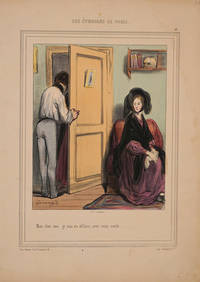
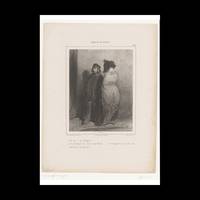
185724520Paris: Imp. d'Aubert 1857. Very good condition. Magnificently hand colored lithograph highlighted with gum arabic by Paul Gavarni 1804 - 1866 French satirical artist noted for his clever observations of contemporary life and elegant genre scenes and imitated by artists such as James McNeill Whistler. <br /> <br /> Depicting a young student with female visitor in his room fibbing to a visitor at his door that he is meeting with his uncle. Signed in the print at the lower left; Printed at the upper right border is the number 15. Paper size approximately 9 1/2 x 12 1/2" Imp. d'Aubert unknown
1024663280.Ghardcover. Good. Access codes and supplements are not guaranteed with used items. May be an ex-library book. hardcover
16-5528Paris: Hetzel circa 1840s. 33 wood-engravings sur blanc. 28 x 18cm. OCLC Number38921095 Paris: Hetzel, circa 1840s. unknown
06349Paris: Chez Aubert 1841. Love is their business and they drive hard bargains<br /> They are as luxurious and idle as they are beautiful<br /> Their lives are a tissue of deception and hypocrisy"<br /> <br /> GAVARNI Paul pseudonym of Guillaume Sulpice Chevallier. Les Lorettes. Paris: Chez Aubert June 1841-December 1843. <br /> <br /> Folio 13 1/2 x 9 3/4 inches; 342 x 248 mm. Seventy-six of seventy-nine lithograph plates. All plates mounted on stubs. The three missing plates nos. 68 69 & 70 are supplied with the illustrations that appeared in Charivari with text on verso. In addition there are duplicates of plate nos. 47 48 63 & 73 on "chine applique".<br /> <br /> Late nineteenth century marbled boards with original maroon morocco label lettered and bordered in gilt expertly rebacked and re-cornered with blue cloth spine with black morocco label lettered and ruled in gilt new endpapers.<br /> <br /> One of the rarest of all the Gavarni albums. Originally published from June 1841-December 1843 by Aubert et Cie. with just twenty lithographs. <br /> <br /> These lithographs represent the complete thematic cycle Gavarni created around the "lorette"-the semi-independent fashionable demimondaine of July Monarchy Paris.<br /> <br /> OCLC locates just one example in libraries & institutions worldwide: Clark Art Institute MA US.<br /> There have been just four complete copies at auction since 1901.<br /> <br /> A second series titled Les Lorettes Vieillies appeared in the 1860's. This second series contained thirty hand colored lithographs. OCLC locates just two copies of this rare work - they do not state that the plates are colored: University of Miami FL US & Northwestern University Library IL US.<br /> <br /> "Les Lorettes. This is the most masterly of Gavarni's earlier series. Ladies of the evening of a certain standing had come to be called lorettes because they often lived in the handsome new buildings of the Rue Notre Dame de Lorette. No subject could have been better suited to Gavarni's talents. Indeed Paul de Saint Victor observed preface to D'Après nature II 2 that "the lorette is for him what the actress of the Italian Comedy was for Watteau." Gavarni shows them without malice and without indulgence exactly as they were. The grisette of Les étudiants de Paris was an ingratiating figure; not so the lorette. Love is their business and they drive hard bargains. They are as luxurious and idle as they are beautiful. Their lives are a tissue of deception and hypocrisy. Among themselves their conversation is cynical to the point of brutality. Their men usually twice their age also cut a poor figure. At best these gentlemen command a wry irony which derives from their awareness of being dupes. Gavarni presents these brittle and glittering creatures with great deftness. The packed and subtle dialogue of the legends would not be amiss in a novel by Stendhal. It is difficult to select from his remarkable compositions but one cannot overlook. no. 27 in which a lorette in her bath indulges in a rare moment of speculative conversation with a friend." Ray The Art of the French Illustrated Book pp. 223-224.<br /> Note. Gordon Ray's copy had 73 of the 79 hand colored lithographs - missing nos. 19-24.<br /> <br /> "Lorette was a colloquialism for a new type of prostitute who was kept in relative luxury in the apartment buildings that had been constructed in the Notre-Dame-de-Lorette church. Gavarni's sharp-eyed observations of Parisian society in works like these demonstrate his value as a documentarian of his times." Bobins V p. 64 #1541.<br /> <br /> "In 1837 Gavarni began his connection with Le charivari which did not conclude until 1848. In all he drew 1054 lithographs for his journal.Most of these appeared in series some twenty-five of which extend to ten or more plates and were afterwards published by Aubert in albums. Perhaps the best of these collections are Fourberies de femmes en matière de sentiment Les étudiants de Paris Les débardeurs and Les lorettes; but some of the rest are of hardly inferior interest. Still further series contributed to periodicals other than Le charivari were also issued as albums. Baudelaire had this part of Gavarni's work particularly in mind when he wrote.that 'the true glory and the true mission of Gavarni and Daumier has been to complete Balzac.' Certainly the pictures of Parisian society provided by the two artists perfectly complement each other. Daumier's preoccupation was the working middle class with faces and figures heavily marked by life. Gavarni remained for the most part outside the humdrum bourgeois round. He preferred to show 'youth at the prow and pleasure at the helm.' His pretty girls and sleek young men are bent on enjoyment. They live lives of graceful dissipation with love intrigues and balls on the one hand and pawnbrokers' shops and debtors' prisons on the other.In 1846 Gavarni returned to Le charivari to which he had hardly contributed since 1843. He wished to call the series that ensued Choses de Paris but was persuaded instead to employ the general title Oeuvres nouvelles. Its major albums were Carnaval; Impressions de ménage deuxième série thirty-nine lithographs 1846-1847; and Baliverneries parisiens twenty-four lithographs 1847" Ray The Art of the French Illustrated Book pp. 217-218.<br /> <br /> Armelhault & Bocher 763-841; Beraldi VII p.51 # 107; Bobins V 1541. Paris: Chez Aubert, 1841 unknown
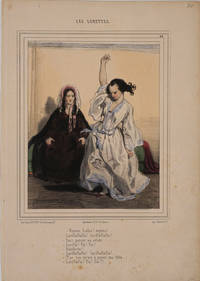
185724516Paris: Chez Aubert & Cie 1857. Very good condition. Handsomely hand colored lithograph highlighted with gum arabic by Paul Gavarni 1804 - 1866 French satirical artist noted for his clever observations of contemporary life and elegant genre scenes and imitated by artists such as James McNeill Whistler. <br /> <br /> Depicting a disapproving mother attempting to convince her singing & dancing daughter to calm down and get dressed. Printed at upper right border is the number 44. Paper size approximately 9 1/2 x 12 1/2" Chez Aubert & Cie unknown
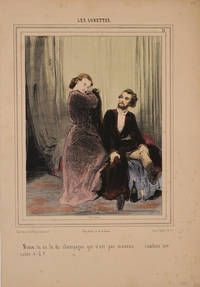
185724515Paris: Chez Aubert & Cie 1857. Very good condition. Handsomely hand colored lithograph highlighted with gum arabic by Paul Gavarni 1804 - 1866 French satirical artist noted for his clever observations of contemporary life and elegant genre scenes and imitated by artists such as James McNeill Whistler. <br /> <br /> Depicting an amorous couple in a bedroom a bottle of champagne and flute at their feet. Printed at upper right border is the number 72. Paper size approximately 9 1/2 x 12 1/2" Chez Aubert & Cie unknown
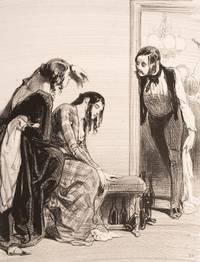
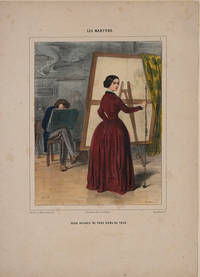
185724522Paris: Imp. d'Aubert 1857. Very good overall. Caricature by Paul Gavarni 1804 - 1866 French satirical artist noted for his clever observations of contemporary life and elegant genre scenes and imitated by artists such as James McNeill Whistler. <br /> <br /> Depicting a young female model in long red dress posing in artist's studio with engaged artist his head down at the left. Magnificently hand colored lithograph highlighted with gum arabic printed upper right border is the number 7. Slight foxing mostly in margins. Paper size approximately 9 1/2 x 12 1/2". Tipped on at right edge to heavier stock. Imp. d'Aubert unknown
1178878007.Gpaperback. Good. Access codes and supplements are not guaranteed with used items. May be an ex-library book. paperback
06246Paris: Chez Aubert 1840. Sixty Superb Hand Colored Lithographs from three of Gavarni's Most Celebrated Series<br /> <br /> GAVARNI Paul pseudonym of Guillaume Sulpice Chevallier. Les Étudiants de Paris & Le Carnaval à Paris & Les Débardeurs. Paris: Chez Aubert 1840-1842.<br /> <br /> Folio 13 × 9 in.; 330 × 250 mm. An exceptional compilation of sixty hand-colored lithographs each heightened with gum arabic all by Paul Gavarni. A few plates with minor foxing to blank margins.<br /> <br /> Contemporary quarter black diced calf over patterned black paper-covered boards extremities a little rubbed.<br /> <br /> A striking and well-assembled album - sixty vivid gum-arabic-heightened lithographs by Gavarni drawn from three of his most celebrated series. Together they offer a lively social commentary and a cohesive survey of the artist's sharp eye for character and nuance realized in brilliantly hand-colored lithographs of great visual appeal and presence.<br /> <br /> Contents: <br /> <br /> Les Étudiants de Paris 1839-40: 16 plates of 60 - nos. 2 3 4 6 7 9 10 15 16 18 20 21 22 25 stained at top blank fore-margin just touching image 30 31.<br /> <br /> Le Carnaval à Paris 1841-42: 16 plates of 30 - nos. 1 2 4 5 7 8 11 12 13 14 17 19 20 22 23 27.<br /> <br /> Les Débardeurs 1840-42: 28 plates of 66 - nos. 1 2 3 4 5 6 7 8 9 10 11 12 15 18 19 20 22 27 33 34 43 45 47 slightly worn at fore-margin 53 54 55 56 slightly worn at fore-margin 63.<br /> <br /> <br /> Les Étudiants de Paris captures the comedic sometimes absurd university life of Paris's law and medical students-a defining early Gavarni series.<br /> <br /> Le Carnaval à Paris explores the flamboyant masked festivities of Parisian carnival blending costume satire and street theater-these sixteen plates suggest sequential extraction from the original issue.<br /> <br /> Les Débardeurs offers spirited depictions of carnival dock-working women-humorous lively and deeply grounded in Gavarni's keen observational style.<br /> <br /> <br /> Armelhault & Bocher: "Les Étudiants de Paris" nos. 626-657; "Le Carnaval à Paris" nos. 729-755; "Les Débardeurs" nos. 800-866. Colas: 1292 Étudiants 1295 Carnaval 1298 Débardeurs; Lipperheide: Lc 2312 Étudiants Lc 2315 Carnaval Lc 2317 Débardeurs. Paris: Chez Aubert, 1840 unknown
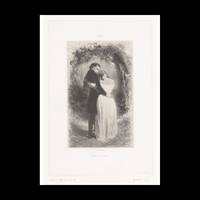
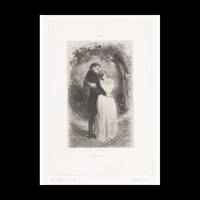
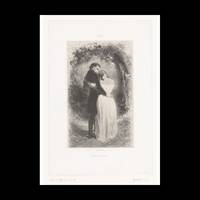
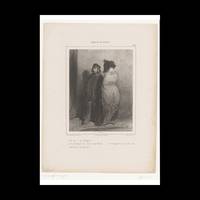
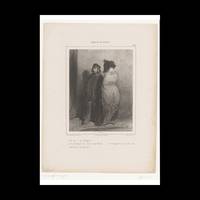
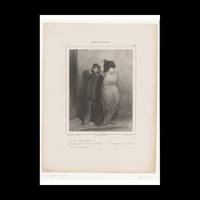
1249343Contentum Ltd. Loose sheet. New. High-quality art print based on an original work from the Rijksmuseum. Created in the 19th century 1843. Professionally printed on premium fine-art paper Photo Rag Bright White premium quality in size A2. The artwork is printed with a white border museum-style presentation. Contentum Ltd. unknown
1249344Contentum Ltd. Loose sheet. New. High-quality art print based on an original work from the Rijksmuseum. Created in the 19th century 1843. Professionally printed on premium fine-art paper Museum Etching museum quality in size A2. The artwork is printed with a white border museum-style presentation. Contentum Ltd. unknown
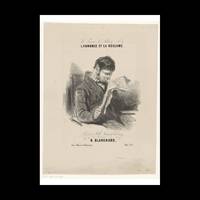
1249341Contentum Ltd. Loose sheet. New. High-quality art print based on an original work from the Rijksmuseum. Created in the 19th century 1843. Professionally printed on premium fine-art paper Museum Etching museum quality in size A3. The artwork is printed with a white border museum-style presentation. Contentum Ltd. unknown
1249342Contentum Ltd. Loose sheet. New. High-quality art print based on an original work from the Rijksmuseum. Created in the 19th century 1843. Professionally printed on premium fine-art paper Photo Matt Fibre in size A2. The artwork is printed with a white border museum-style presentation. Contentum Ltd. unknown
1249408Contentum Ltd. Loose sheet. New. High-quality art print based on an original work from the Rijksmuseum. Created in the 19th century 1840. Professionally printed on premium fine-art paper Photo Rag Bright White premium quality in size A2. The artwork is printed with a white border museum-style presentation. Contentum Ltd. unknown
1249406Contentum Ltd. Loose sheet. New. High-quality art print based on an original work from the Rijksmuseum. Created in the 19th century 1840. Professionally printed on premium fine-art paper Museum Etching museum quality in size A3. The artwork is printed with a white border museum-style presentation. Contentum Ltd. unknown
1249407Contentum Ltd. Loose sheet. New. High-quality art print based on an original work from the Rijksmuseum. Created in the 19th century 1840. Professionally printed on premium fine-art paper Photo Matt Fibre in size A2. The artwork is printed with a white border museum-style presentation. Contentum Ltd. unknown
1249409Contentum Ltd. Loose sheet. New. High-quality art print based on an original work from the Rijksmuseum. Created in the 19th century 1840. Professionally printed on premium fine-art paper Museum Etching museum quality in size A2. The artwork is printed with a white border museum-style presentation. Contentum Ltd. unknown
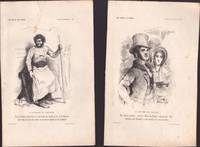
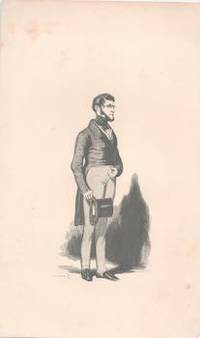
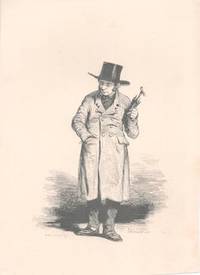
71-3246Paris: French Publisher circa 1841. Book illustration. 225 x 140 mm. sheet. Very Good a few specks of foxing missing lower right sheet corner.Provenance: From the collection of the Late Frederick G. Ruffner Jr. founder of Gale Research Detroit. [Paris: French Publisher, circa 1841]. unknown
71-3244Paris: French Publisher circa 1841. Book illustration. 190 x 138 mm. sheet. Very Good.Provenance: From the collection of the Late Frederick G. Ruffner Jr. founder of Gale Research Detroit. [Paris: French Publisher, circa 1841]. unknown
2175565Contentum Ltd. Loose sheet. New. High-quality art print based on an original work from the Rijksmuseum. Created in the 19th century 1814. Professionally printed on premium fine-art paper Museum Etching museum quality in size A3. The artwork is printed with a white border museum-style presentation. Contentum Ltd. unknown
2171157Contentum Ltd. Loose sheet. New. High-quality art print based on an original work from the Rijksmuseum. Created in the 19th century 1821. Professionally printed on premium fine-art paper Photo Rag Bright White premium quality in size A2. The artwork is printed with a white border museum-style presentation. Contentum Ltd. unknown
2171156Contentum Ltd. Loose sheet. New. High-quality art print based on an original work from the Rijksmuseum. Created in the 19th century 1821. Professionally printed on premium fine-art paper Photo Matt Fibre in size A2. The artwork is printed with a white border museum-style presentation. Contentum Ltd. unknown
2171155Contentum Ltd. Loose sheet. New. High-quality art print based on an original work from the Rijksmuseum. Created in the 19th century 1821. Professionally printed on premium fine-art paper Museum Etching museum quality in size A3. The artwork is printed with a white border museum-style presentation. Contentum Ltd. unknown
2171158Contentum Ltd. Loose sheet. New. High-quality art print based on an original work from the Rijksmuseum. Created in the 19th century 1821. Professionally printed on premium fine-art paper Museum Etching museum quality in size A2. The artwork is printed with a white border museum-style presentation. Contentum Ltd. unknown