1 881 résultats
13563Paris, Beauger, 1841, gr. in-8,reliure epoque demi velin a coins,dos lisse,titre manuscrit,395p.,exemplaire modeste,qques feuillets recollés,traces de mouillures et rousseurs dans les marges non rognées,texte relativement blanc,derniere feuille des matieres decoupée et en partie manquante,rare,dans l’etat
18411308Reliure demi-chagrin rouge. Dos lisse orné de filets dorés, C. H. JAMET en queue. Trois tranches jaspées. Intérieur avec rousseurs. Illustré de 350 vignettes par MM. Grandville, Gavarni, Daumier, Travies, Lecurieur et Henri Monnier.
05964Paris: Chez Aubert 1839. With 150 Hand-Colored Lithographs<br /> including Forty-Five by Honoré Daumier and Forty-Two by Gavarni<br /> <br /> DAUMIER Honoré Gavarni and others illustrators. ALHOY Maurice Louis Huart and Charles Philipon editors. Le Musée pour rire. Dessins par tous les caricaturistes de Paris; Texte par MM. Maurice Alhoy Louis Huart et Ch. Philipon. Paris: Chez Aubert Editeur des Cent-et-Un Robert-Macaire 1839-1840.<br /> <br /> Three quarto volumes 10 3/16 x 7 15/16 inches; 259 x 202 mm. 2 half-title 2 title 200 2 "Table" 4 publisher's advertisements; 2 half-title 2 title 200 2 "Table; 2 half-title 2 title 200 2 "Table 4 publisher's advertisements pp. With 150 numbered hand-colored lithographs heightened with gum arabic by Honoré Daumier forty-five Gavarni forty-two Frédéric Bouchot twenty-two Victor Adam ten Platier seven Benjamin i.e. Benjamin Roubaud four Bourdet three Pruche three Platel two Grandville two Edme-Jean Pigal two Alophe Menut two Charles Vernier two Charles-Joseph Traviès one and others.<br /> <br /> Early twentieth-century half red scored calf ruled in gilt over marbled boards by Adolphe Cuzin stamp-signed in gilt at foot of spine. Smooth spines decoratively tooled and lettered in gilt all edges gilt marbled endpapers. Expert and almost invisible minor restoration to corners and spine extremities. Occasional light foxing and/or browning. A wonderful copy.<br /> <br /> "The house of Aubert was ingenious in marketing its products. Its lithographs.were published one by one in periodicals like Le charivari and together in suites by the same artist without letterpress. Still a third form of publication was in albums made up of lithographs by several artists with accompanying texts. These collections most commonly took the form of volumes with the generic title Paris comique which consisted of twenty colored lithographs accompanied by quite unrelated texts. Aubert remarked that the resulting hodgepodge had 'a plan that is easy to follow for it consists in not having any' and in fact this was indeed a frugal procedure for reusing old texts and already published plates. The interest of the various volumes of Paris comique resides entirely in the lithographs they happen to contain. It can be considerable however since Daumier and Gavarni are the predominant artists. Le musée pour rire represents a more considerable effort on the part of Aubert. To accompany 150 lithographs including forty-five by Daumier among them twenty-seven from Croquis d'expressions and eight from La galerie physionomique and forty-two by Gavarni new commentaries were commissioned on each plate all except two by Alhoy and Huart. Daumier's lithographs were trimmed slightly and their captions were relettered. The designs of the other artists were provided with decorative frames. The whole was then published in three handsome volumes and in copies with expert contemporary coloring like this one Le musée pour rire is among the freshest and most attractive of romantic illustrated books" Ray The Art of the French Illustrated Book.<br /> <br /> Le Musée pour Rire "contained 150 lithographs by Daumier Gavarni Bouchot Traviès etc. These are re-impressions some of them in mirror image which had previously already been used for publication in Le Charivari. Most prints of the series 'Croquis d'expressions' are contained in the book. The name of the series is missing and the texts were printed in a different type than in the original Charivari version. We do not consider these prints original lithographies but rather prints 'after Daumier'" The Daumier Register at http://www.daumier-register.org.<br /> <br /> Ray The Art of the French Illustrated Book 164. Paris: Chez Aubert, 1839 unknown
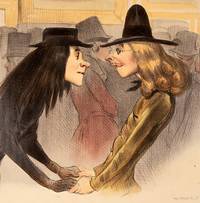
04829Paris: Chez Aubert 1839. With 50 Hand-Colored Lithographs<br /> including Nine by Honoré Daumier and Fifteen by Gavarni<br /> <br /> DAUMIER Honoré Gavarni and others illustrators. ALHOY Maurice Louis Huart and Charles Philipon editors. Le Musée pour rire. Dessins par tous les caricaturistes de Paris; Texte par MM. Maurice Alhoy Louis Huart et Ch. Philipon. Paris: Chez Aubert Editeur des Cent-et-Un Robert-Macaire 1839<br /> <br /> Volume II only of 3. First edition. Quarto 10 3/8 x 8 1/8 inches; 265 x 207 mm. i-ii half-title verso blank iii-iv title verso blank v-vi Table 200 pp. With 50 numbered 51-100 hand-colored lithographs heightened with gum arabic by Honoré Daumier nine Gavarni fifteen Frédéric Bouchot seventeen Benjamin i.e. Benjamin Roubaud four Bourdet three Grandville one and Edme-Jean Pigal one. Heavy spotting in places but mainly to text leaves. Plates generally clean.<br /> <br /> Publisher's silk patterned paper over boards covers decoratively stamped in gilt smooth spine decoratively stamped and titled in gilt. Rebacked with the original spine laid down. With the engraved bookplate of author and collector Jaques Robiquet on front paste-down. <br /> <br /> A reasonably priced album containing fine hand-colored lithographs of Bouchot Daumier & Gavarni etc. etc.<br /> <br /> "The house of Aubert was ingenious in marketing its products. Its lithographs.were published one by one in periodicals like Le charivari and together in suites by the same artist without letterpress. Still a third form of publication was in albums made up of lithographs by several artists with accompanying texts. These collections most commonly took the form of volumes with the generic title Paris comique which consisted of twenty colored lithographs accompanied by quite unrelated texts. Aubert remarked that the resulting hodgepodge had 'a plan that is easy to follow for it consists in not having any' and in fact this was indeed a frugal procedure for reusing old texts and already published plates. The interest of the various volumes of Paris comique resides entirely in the lithographs they happen to contain. It can be considerable however since Daumier and Gavarni are the predominant artists. Le musée pour rire represents a more considerable effort on the part of Aubert. To accompany 150 lithographs including forty-five by Daumier among them twenty-seven from Croquis d'expressions and eight from La galerie physionomique and forty-two by Gavarni new commentaries were commissioned on each plate all except two by Alhoy and Huart. Daumier's lithographs were trimmed slightly and their captions were relettered. The designs of the other artists were provided with decorative frames. The whole was then published in three handsome volumes and in copies with expert contemporary coloring like this one Le musée pour rire is among the freshest and most attractive of romantic illustrated books" Ray The Art of the French Illustrated Book.<br /> <br /> Le Musée pour Rire "contained 150 lithographs by Daumier Gavarni Bouchot Traviès etc. These are re-impressions some of them in mirror image which had previously already been used for publication in Le Charivari. Most prints of the series 'Croquis d'expressions' are contained in the book. The name of the series is missing and the texts were printed in a different type than in the original Charivari version. We do not consider these prints original lithographies but rather prints 'after Daumier'". <br /> <br /> Ray The Art of the French Illustrated Book 164. Paris: Chez Aubert, 1839 unknown
02253Paris: Chez Aubert 1839. With 150 Hand-Colored Lithographs<br /> including Forty-Five by Honoré Daumier and Forty-Two by Gavarni<br /> <br /> DAUMIER Honoré Gavarni and others illustrators. ALHOY Maurice Louis Huart and Charles Philipon editors. Le Musée pour rire. Dessins par tous les caricaturistes de Paris; Texte par MM. Maurice Alhoy Louis Huart et Ch. Philipon. Paris: Chez Aubert Editeur des Cent-et-Un Robert-Macaire 1839-1840.<br /> <br /> First edition. Three quarto volumes bound in one 10 x 7 5/8 in; 251 x 193 mm. 1 half-title 2 title 600 pp. With 150 numbered hand-colored lithographs heightened with gum arabic by Honoré Daumier forty-five Gavarni forty-two Frédéric Bouchot twenty-two Victor Adam ten Platier seven Benjamin i.e. Benjamin Roubaud four Bourdet three Pruche three Platel two Grandville two Edme-Jean Pigal two Alophe Menut two Charles Vernier two Charles-Joseph Traviès one and others.<br /> <br /> Bound ca. 1886-1890 by James Screeton of Hull with label to rear pastedown half black pebbled morocco over gray-brown cloth. Elaborately gilt tooled compartments gilt-rolled raised bands. All edges gilt. Some foxing and toning throughout but still a very good copy.<br /> <br /> "The house of Aubert was ingenious in marketing its products. Its lithographs.were published one by one in periodicals like Le charivari and together in suites by the same artist without letterpress. Still a third form of publication was in albums made up of lithographs by several artists with accompanying texts. These collections most commonly took the form of volumes with the generic title Paris comique which consisted of twenty colored lithographs accompanied by quite unrelated texts. Aubert remarked that the resulting hodgepodge had 'a plan that is easy to follow for it consists in not having any' and in fact this was indeed a frugal procedure for reusing old texts and already published plates. The interest of the various volumes of Paris comique resides entirely in the lithographs they happen to contain. It can be considerable however since Daumier and Gavarni are the predominant artists. Le musée pour rire represents a more considerable effort on the part of Aubert. To accompany 150 lithographs including forty-five by Daumier among them twenty-seven from Croquis d'expressions and eight from La galerie physionomique and forty-two by Gavarni new commentaries were commissioned on each plate all except two by Alhoy and Huart. Daumier's lithographs were trimmed slightly and their captions were relettered. The designs of the other artists were provided with decorative frames. The whole was then published in three handsome volumes and in copies with expert contemporary coloring like this one Le musée pour rire is among the freshest and most attractive of romantic illustrated books" Ray The Art of the French Illustrated Book.<br /> <br /> Le Musée pour Rire "contained 150 lithographs by Daumier Gavarni Bouchot Traviès etc. These are re-impressions some of them in mirror image which had previously already been used for publication in Le Charivari. Most prints of the series 'Croquis d'expressions' are contained in the book. The name of the series is missing and the texts were printed in a different type than in the original Charivari version. We do not consider these prints original lithographies but rather prints 'after Daumier'". <br /> <br /> James Screeton was the son of bookbinder William Screeton of Hull. It appears that he was partner of binder William Wardell until opened his own shop in 1886. <br /> <br /> Ray The Art of the French Illustrated Book 164. Paris: Chez Aubert, 1839 unknown
1842107091Couverture rigide. Reliure toile de l'époque. 192 pages. Quelques rousseurs.
02253Paris: Chez Aubert 1839. With 150 Hand-Colored Lithographs<br/>including Forty-Five by Honoré Daumier and Forty-Two by Gavarni<br/><br/>DAUMIER Honoré Gavarni and others illustrators. ALHOY Maurice Louis Huart and Charles Philipon editors. Le Musée pour rire. Dessins par tous les caricaturistes de Paris; Texte par MM. Maurice Alhoy Louis Huart et Ch. Philipon. Paris: Chez Aubert Editeur des Cent-et-Un Robert-Macaire 1839-1840.<br/><br/>First edition. Three quarto volumes bound in one 10 x 7 5/8 in; 251 x 193 mm. 1 half-title 2 title 600 pp. With 150 numbered hand-colored lithographs heightened with gum arabic by Honoré Daumier forty-five Gavarni forty-two Frédéric Bouchot twenty-two Victor Adam ten Platier seven Benjamin i.e. Benjamin Roubaud four Bourdet three Pruche three Platel two Grandville two Edme-Jean Pigal two Alophe Menut two Charles Vernier two Charles-Joseph Traviès one and others.<br/><br/>Bound ca. 1886-1890 by James Screeton of Hull with label to rear pastedown half black pebbled morocco over gray-brown cloth. Elaborately gilt tooled compartments gilt-rolled raised bands. All edges gilt. Some foxing and toning throughout but still a very good copy.<br/><br/>"The house of Aubert was ingenious in marketing its products. Its lithographs.were published one by one in periodicals like Le charivari and together in suites by the same artist without letterpress. Still a third form of publication was in albums made up of lithographs by several artists with accompanying texts. These collections most commonly took the form of volumes with the generic title Paris comique which consisted of twenty colored lithographs accompanied by quite unrelated texts. Aubert remarked that the resulting hodgepodge had ‘a plan that is easy to follow for it consists in not having any' and in fact this was indeed a frugal procedure for reusing old texts and already published plates. The interest of the various volumes of Paris comique resides entirely in the lithographs they happen to contain. It can be considerable however since Daumier and Gavarni are the predominant artists. Le musée pour rire represents a more considerable effort on the part of Aubert. To accompany 150 lithographs including forty-five by Daumier among them twenty-seven from Croquis d'expressions and eight from La galerie physionomique and forty-two by Gavarni new commentaries were commissioned on each plate all except two by Alhoy and Huart. Daumier's lithographs were trimmed slightly and their captions were relettered. The designs of the other artists were provided with decorative frames. The whole was then published in three handsome volumes and in copies with expert contemporary coloring like this one Le musée pour rire is among the freshest and most attractive of romantic illustrated books" Ray The Art of the French Illustrated Book.<br/><br/>Le Musée pour Rire "contained 150 lithographs by Daumier Gavarni Bouchot Traviès etc. These are re-impressions some of them in mirror image which had previously already been used for publication in Le Charivari. Most prints of the series ‘Croquis d'expressions' are contained in the book. The name of the series is missing and the texts were printed in a different type than in the original Charivari version. We do not consider these prints original lithographies but rather prints ‘after Daumier'". <br/><br/>James Screeton was the son of bookbinder William Screeton of Hull. It appears that he was partner of binder William Wardell until opened his own shop in 1886. <br/><br/>Ray The Art of the French Illustrated Book 164. Paris: Chez Aubert, 1839 unknown books
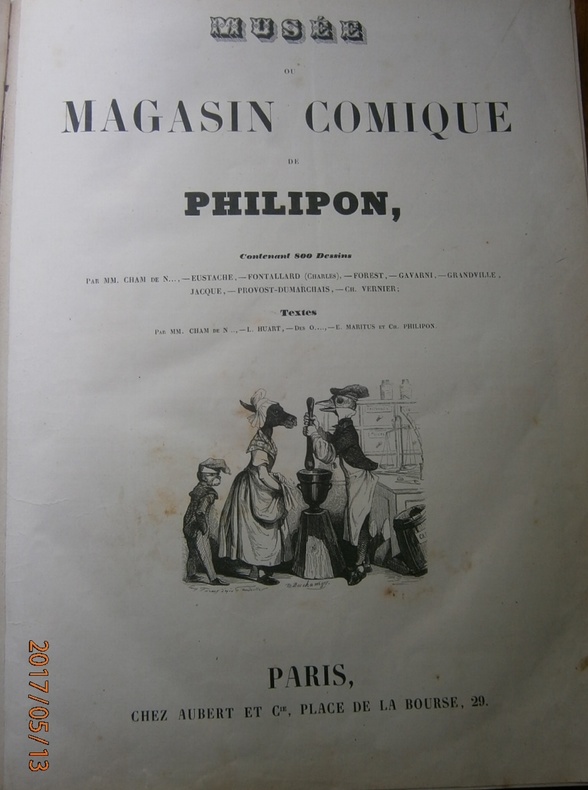
04829Paris: Chez Aubert 1839. With 50 Hand-Colored Lithographs<br/>including Nine by Honoré Daumier and Fifteen by Gavarni<br/><br/>DAUMIER Honoré Gavarni and others illustrators. ALHOY Maurice Louis Huart and Charles Philipon editors. Le Musée pour rire. Dessins par tous les caricaturistes de Paris; Texte par MM. Maurice Alhoy Louis Huart et Ch. Philipon. Paris: Chez Aubert Editeur des Cent-et-Un Robert-Macaire 1839<br/><br/>Volume II only of 3. First edition. Quarto 10 3/8 x 8 1/8 inches; 265 x 207 mm. i-ii half-title verso blank iii-iv title verso blank v-vi Table 200 pp. With 50 numbered 51-100 hand-colored lithographs heightened with gum arabic by Honoré Daumier nine Gavarni fifteen Frédéric Bouchot seventeen Benjamin i.e. Benjamin Roubaud four Bourdet three Grandville one and Edme-Jean Pigal one. Heavy spotting in places but mainly to text leaves. Plates generally clean.<br/><br/>Publisher's silk patterned paper over boards covers decoratively stamped in gilt smooth spine decoratively stamped and titled in gilt. Rebacked with the original spine laid down. With the engraved bookplate of author and collector Jaques Robiquet on front paste-down. <br/><br/>A reasonably priced album containing fine hand-colored lithographs of Bouchot Daumier & Gavarni etc. etc.<br/><br/>"The house of Aubert was ingenious in marketing its products. Its lithographs.were published one by one in periodicals like Le charivari and together in suites by the same artist without letterpress. Still a third form of publication was in albums made up of lithographs by several artists with accompanying texts. These collections most commonly took the form of volumes with the generic title Paris comique which consisted of twenty colored lithographs accompanied by quite unrelated texts. Aubert remarked that the resulting hodgepodge had ‘a plan that is easy to follow for it consists in not having any' and in fact this was indeed a frugal procedure for reusing old texts and already published plates. The interest of the various volumes of Paris comique resides entirely in the lithographs they happen to contain. It can be considerable however since Daumier and Gavarni are the predominant artists. Le musée pour rire represents a more considerable effort on the part of Aubert. To accompany 150 lithographs including forty-five by Daumier among them twenty-seven from Croquis d'expressions and eight from La galerie physionomique and forty-two by Gavarni new commentaries were commissioned on each plate all except two by Alhoy and Huart. Daumier's lithographs were trimmed slightly and their captions were relettered. The designs of the other artists were provided with decorative frames. The whole was then published in three handsome volumes and in copies with expert contemporary coloring like this one Le musée pour rire is among the freshest and most attractive of romantic illustrated books" Ray The Art of the French Illustrated Book.<br/><br/>Le Musée pour Rire "contained 150 lithographs by Daumier Gavarni Bouchot Traviès etc. These are re-impressions some of them in mirror image which had previously already been used for publication in Le Charivari. Most prints of the series ‘Croquis d'expressions' are contained in the book. The name of the series is missing and the texts were printed in a different type than in the original Charivari version. We do not consider these prints original lithographies but rather prints ‘after Daumier'". <br/><br/>Ray The Art of the French Illustrated Book 164. Paris: Chez Aubert, 1839 unknown books
192656751926 broché (paperback) grand in-octavo carré, dos et couverture marrons imprimés (spine and cover printed) cartouche de titre - en pleine page - illustrée sur la première de couverture (cartridge of title on full page illustrated on the front cover), cartouche - en pleine page - illustrée sur la quatrième de couverture (cartridge illustrated on full page on the front cover), tranches non rognées (edges no smoothes), envoi autographe manuscrit de l'Auteur sur la page de faux-titre (author's autograph on the half title page), tirage limité - 1 des 975 exemplaires sur papier pur fil Lafuma (limited edition), illustrations : d'après (from) Achille Devéria - Eugène Lacroix - Regnier et Chapin - Gavarni (Sulpice Guillaume dit Gavarni) - Aubry-Lecomte - Daumier, 188 pages, 1926 à Paris Le Goupy Editeur,
Paris, Chez Aubert et Cie, 1842 - 1843. 2 volumes Grands in-4 relié demi toile rouge pour le tome 1 et demi toile noire pour le tome 2. .Dessins de CHAM, DAUMIER, DOLLET, EUSTACHE, FOREST, GAVARNI, GRANDVILLE, Eugène LAMI, LORENTZ, PLATTER, TRIMOLET, Ch VERNIER et autres. Textes de MM BOURGET, P BOREL, CHAM, L HUART, LORENTZ, Marcoi de SAINT-HILAIRE, et Ch PHILIPON COMPLET DU N° 1 à 48.
184230205Paris, Chez Aubert et Paris, Chez Aubert et Cie, 1842 - 1843. 2 volumes Grands in-4 relié demi toile rouge pour le tome 1 et demi toile noire pour le tome 2. .Dessins de CHAM, DAUMIER, DOLLET, EUSTACHE, FOREST, GAVARNI, GRANDVILLE, Eugène LAMI, LORENTZ, PLATTER, TRIMOLET, Ch VERNIER et autres. Textes de MM BOURGET, P BOREL, CHAM, L HUART, LORENTZ, Marcoi de SAINT-HILAIRE, et Ch PHILIPON
187374301873 2 tomes reliés en un volume, reliure demi chagrin vert in-folio, dos à nerfs décoré or - titre frappé or -avec filets or, entre-nerfs or à motif fleurette, illustrations 24+24 lithographies hors-texte en couleur avec serpente par les plus grands artistes : Albert Adam, Felix Benoist, Cicéri, Gavarni (Sulpice Guillaume dit Gavarni), David, Raffet... et Horace Vernet, 96+96 pages, sans date (1873 environ) Paris Bachelin-Deflorenne Libraire-Editeur,
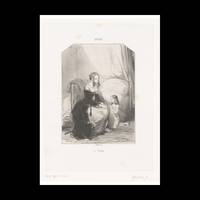
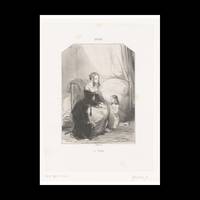
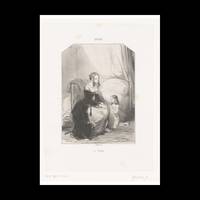
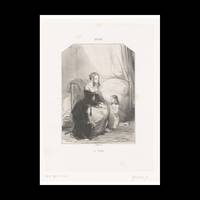
1249225Contentum Ltd. Loose sheet. New. High-quality art print based on an original work from the Rijksmuseum. Created in the 19th century 1843. Professionally printed on premium fine-art paper Photo Matt Fibre in size A2. The artwork is printed with a white border museum-style presentation. Contentum Ltd. unknown
1249227Contentum Ltd. Loose sheet. New. High-quality art print based on an original work from the Rijksmuseum. Created in the 19th century 1843. Professionally printed on premium fine-art paper Museum Etching museum quality in size A2. The artwork is printed with a white border museum-style presentation. Contentum Ltd. unknown
1249224Contentum Ltd. Loose sheet. New. High-quality art print based on an original work from the Rijksmuseum. Created in the 19th century 1843. Professionally printed on premium fine-art paper Museum Etching museum quality in size A3. The artwork is printed with a white border museum-style presentation. Contentum Ltd. unknown
1249226Contentum Ltd. Loose sheet. New. High-quality art print based on an original work from the Rijksmuseum. Created in the 19th century 1843. Professionally printed on premium fine-art paper Photo Rag Bright White premium quality in size A2. The artwork is printed with a white border museum-style presentation. Contentum Ltd. unknown
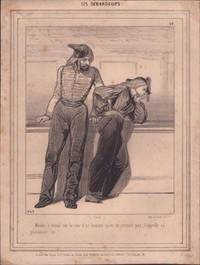
16-5527Paris: La Caricature circa 1841. Lithograph sur blanc. 28 x 21cm. Armelhault and Bocher no. 532 LIV.From the series Les Débardeurs Paris: La Caricature, circa 1841. unknown
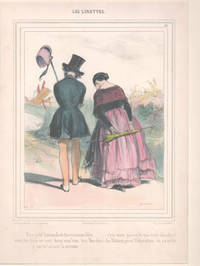
16-6134Paris: Chez Bauger Chez Aubert 1841. Lithograph sur blanc; contemporary handcolored. 33.3 x 23.5 cm. Plate no. XII from the series: "Les Lorettes." Armelhault and Bocher no. 774. Les Lorettes described by scholars:MLA citation: Murphy Libby and Greggor Mattson. A la Recherche des Femmes Perdues. Oberlin College 2016.Prostitution was a common social phenomenon that was practiced by women regardless of class but the type of prostitute varied depending on the status of the men involved. The social standing of prostitutes often shifted throughout their lifetimes but their roles generally remained within four basic levels of prostitution. This exhibit focuses on these four important types of prostitutes imagined and mythologized in various media of the time. The lorette the aspiring courtesan was the prostitute of mystery elusive and secretive often evading the government’s health regulations. The grisette was a prostitute from a working-class background often found inhabiting the apartments of young Parisian students. The fille publique or streetwalker was from the lowest class of prostitute and often attracted the poorest customers. Walking the street alone or in groups la fille publique was most vulnerable to police repression. And finally women in “maisons closes†or brothels catered to men of different social classes. The most luxurious brothels attracted middle class men with their continuous business. These women though varying in status participated in a form of sexual commerce that was common in French society in the 19th century. Paris: Chez Bauger, Chez Aubert, 1841 unknown
23206Ensemble de 10 albums pour chacun de ces dessinateurs humoristes emblématiques de l'humour au XIXe siècle.-Paris, Société d'édition et de publications, Librairie Félix Juven,1907-1909. 3 volumes grand in-8 (24x17 cm) reliés demi-maroquin brun-tabac, dos à nerfs ornés du titre doré sur pièces de titre marron et rouge, fleurons. Chacun des 10 albums d'environ 70 à 80 planches de dessins légendés, soit en tre 700 et 800 planches. Bel ensemble, les pages sont exemptes de rousseurs, les reliures sont homogènes et très décoratives, 3300g.-C. Très bel exemplaire.
184448652Librairie Charles Gosselin 1844 édition illustrée par Tony Johannot, Gavarni et Célestin Nanteuil. Nouvelle édition, revue par l’auteur.. 2 Volumes, in-8 Jésus, reliure de mi basane rouge, plats jaspés rouges, frontispice et 33 compositions hors-texte, 548 pp - 34 compostions hors-texte, 543 pp. Coiffes et coins légèrement frottés, rares rousseurs. Bon exemplaire. Les compositions sont gravées sur bois par Porret ‘après élestin Nanteuil, Gavarni, Johannot, Français et Bertrand.
9026PARIS, Librairie Charlieu Frères et Huillery, Huillery Successeurs [10, rue Git-le-Coeur // Impr. M. Loignon, Paul Dupont et Cie, Clichy] - s.d. (1869) -in4, , demi basane , dos lisse orné de filets dorés, titre doré, reliure de l'époque, (4) et 380 pages [48 livraisons de 8 pages]; titre illustré et 125 illustrations in-texte en noir; texte sur 2 colonnes.
185762481857 S.l.n.d [Paris, Librairie nouvelles, Imp. Lemercier, vers 1857-1860]. In-folio relié: 27.5 x 38 cm, 30 pl. Ensemble de 30 lithographies originales de Gavarni. Reliure en pleine parcaline saumon. Titre frappé doré au centre du plat sup. Quelques rousseurs et piqûres. Bon ensemble.
185762491857 S.l.n.d [Paris, Librairie nouvelles, Imp. Lemercier, vers 1857-1860]. In-folio relié: 27.5 x 38 cm, 30 pl. Ensemble de 30 lithographies originales de Gavarni. Reliure en pleine parcaline saumon. Titre frappé doré au centre du plat sup. Quelques rousseurs et piqûres. Bon ensemble.
ORD-4342Paris. Paulin et Lechevalier. 1857. In-8 (132 x 193mm) cartonnage romantique bordeaux orné sur le dos et les 2 plats dans le style à la cathédrale plaque dorée agrémentée de vert et de rouge (le rouge ayant un peu débordé de son emplacement), tranches dorées, gardes jaunes, 248 pages et 2ff.n.ch. (catalogue de l'éditeur). Frontispice et très nombreuses vignettes de GAVARNI interprétées en réduction par GODEFROY-DURAND. Un catalogue des oeuvres de GAVARNI occupe les pages 219-248. Toutes petites et rares rousseurs essentiellement marginales, dorure du dos un peu passé mais charmant exemplaire dans une reliure typique de l'époque.