Jed Z BuchwaldBiblio.com
854 résultats
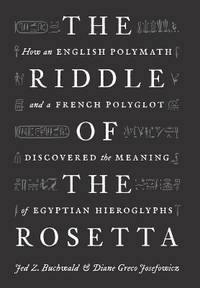
A9780691200903Hardback. New. <p><b>A major new history of the race between two geniuses to decipher ancient Egyptian hieroglyphs set against the backdrop of nineteenth-century Europe</b><br /><br />In 1799 a French Army officer was rebuilding the defenses of a fort on the banks of the Nile when he discovered an ancient stele fragment bearing a decree inscribed in three different scripts. So begins one of the most familiar tales in Egyptology—that of the Rosetta Stone and the decipherment of Egyptian hieroglyphs. This book draws on fresh archival evidence to provide a major new account of how the English polymath Thomas Young and the French philologist Jean-François Champollion vied to be the first to solve the riddle of the Rosetta.<br /><br />Jed Buchwald and Diane Greco Josefowicz bring to life a bygone age of intellectual adventure. Much more than a decoding exercise centered on a single artifact the race to decipher the Rosetta Stone reflected broader disputes about language historical evidence biblical truth and the value of classical learning. Buchwald and Josefowicz paint compelling portraits of Young and Champollion two gifted intellects with altogether different motivations. Young disdained Egyptian culture and saw Egyptian writing as a means to greater knowledge about Greco-Roman antiquity. Champollion swept up in the political chaos of Restoration France and fiercely opposed to the scholars aligned with throne and altar admired ancient Egypt and was prepared to upend conventional wisdom to solve the mystery of the hieroglyphs.<br /><br />Taking readers from the hushed lecture rooms of the Institut de France to the windswept monuments of the Valley of the Kings <i>The Riddle of the Rosetta</i> reveals the untold story behind one of the nineteenth century's most thrilling discoveries.</p> hardcover
63823131University of Chicago Press pp. 498 Indices. Papeback. New. University of Chicago Press unknown
1989SKU1081171University of Chicago Press 1989-01-03. hardcover. Good. 6x1x9. University of Chicago Press 1989. Hard cover first edition. Ex-library copy with the usual markings otherwise Good condition. University of Chicago Press hardcover
642438-nnew. unknown
642438like new. unknown
0226078841.Ghardcover. Good. Access codes and supplements are not guaranteed with used items. May be an ex-library book. hardcover
1989E290526AHmug175473University of Chicago Press 1989-01-04. hardcover. Good. 9x6x0. Ex-library book with typical stickers and stampings. Priority Mail is available on this item. No international shipping. University of Chicago Press hardcover
1989__0226078841Univ of Chicago Pr 1989. Hardcover. New. 9.00x6.00x1.25 inches. Univ of Chicago Pr hardcover
1528313like new. unknown
1528313-nnew. unknown
1989Q-0226078868University of Chicago Press 1989-03-15. Paperback. New. New. In shrink wrap. Looks like an interesting title! University of Chicago Press paperback
0226078868.Gpaperback. Good. Access codes and supplements are not guaranteed with used items. May be an ex-library book. paperback
1989SONG0226078841University of Chicago Press 1989-01-04. 1. hardcover. Used: Good. 6.00x1.30x9.00. Buy with confidence. Excellent Customer Service & Return policy. University of Chicago Press hardcover
1989SONG0226078868University of Chicago Press 1989-03-15. 1. paperback. Used: Good. 6.00x1.20x9.00. Buy with confidence. Excellent Customer Service & Return policy. University of Chicago Press paperback
1989DADAX0226078868University of Chicago Press 1989-03-15. 1. paperback. New. 6.00x1.20x9.00. Buy with confidence. Excellent Customer Service & Return policy. University of Chicago Press paperback
1989DADAX0226078841University of Chicago Press 1989-01-04. 1. hardcover. New. 6.00x1.30x9.00. Buy with confidence. Excellent Customer Service & Return policy. University of Chicago Press hardcover
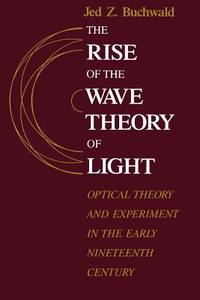
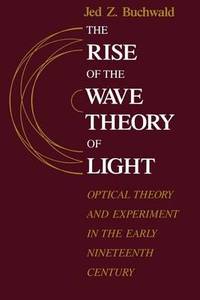
1989HS-54Chicago Illinois: University of Chicago Press 1989. Comprehensive text presents a new history of the fundamental changes in optical theory at the beginning of the nineteenth century. In the physics of that period ether replaced the particle theory; in mathematics waves replaced rays. Buchwald reconstructs the first empirically successful theory of partial reflection originated by Etienne Louis Malus. He refutes the view of Thomas Young as champion of the wave theory arguing that the wave theory became coherent and new only in the work of French physicist Augustin Fresnel. Buchwald further demonstrates that even scientists who disgarded the particle theory retained its mathematical apparatus preventing their proper use of the new techniques. 474 pgs. Illustrated. Minimal shelfwear. First Edition. Original Wraps. Fine. 8vo - over 7¾" - 9¾" tall. University of Chicago Press Paperback
A9780226078861Paperback / softback. New. paperback
1989x-0226078868University Of Chicago Press 1989. Paperback. New. 1st edition. 498 pages. 9.25x6.25x1.25 inches. University Of Chicago Press paperback
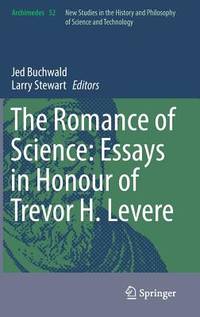
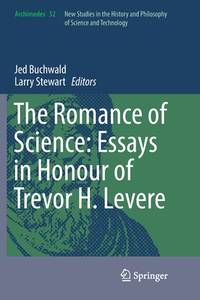
2017x-3319584359Springer Verlag 2017. Hardcover. New. 310 pages. 9.50x6.25x1.00 inches. Springer Verlag hardcover
29324959-nnew. unknown
29324959like new. unknown
2018x-3319864084Springer 2018. Paperback. New. reprint edition. 320 pages. 9.25x6.10x0.73 inches. Springer paperback
6396520like new. unknown
6396520-nnew. unknown