HERMANT, Abel ; (SIMEON, Fernand)Livre Rare Book
422 résultats
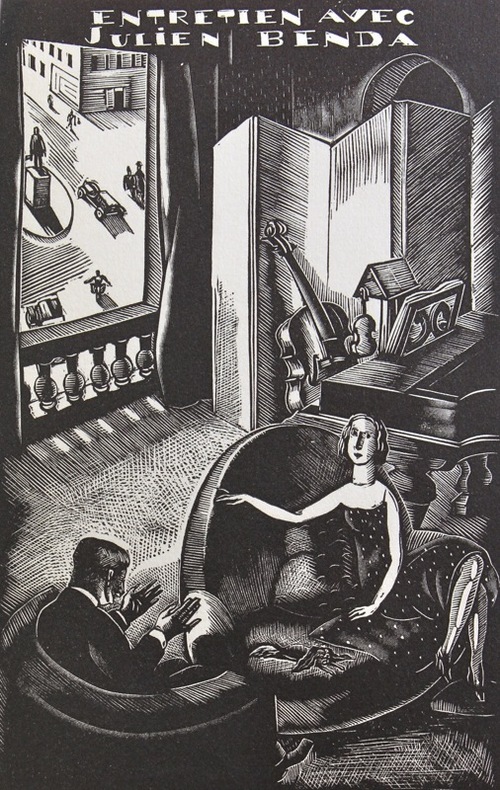
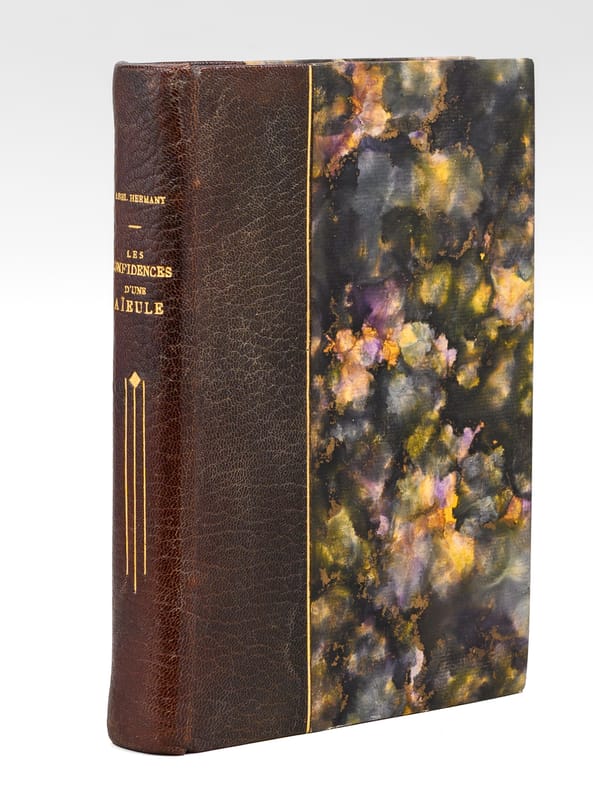
192771132Ornées de trente-trois bois dessinés et gravés par Siméon, un des 1100 exemplaires sur vélin teinté de Rives (n° 955), 1 vol. petit in-8 reliure demi-maroquin brun, dos lisse orné en long, filet doré en mors, tête dorée, couverture conservée, Le Miroir des Mœurs. Les Arts et le Livre, Paris, 1927, 272 pp..
192621841926 1926 A. & G. Mornay, Paris, 1926. In-8 plein veau glacé sous emboitage, tête dorée, dos à nerfs sobre, dentelles intérieures, plats et dos d'origine conservés, 401 pages. Exemplaire sur Papier de Rives. Dos frotté, intérieur frais.
192263687Bois originaux de F. Siméon, un des 500 exemplaires sur vélin à la Forme numérotés (n°443), 1 vol. petit in-8 reliure postérieure demi-basane marron, dos à deux séries de nerfs répétés, couv. conservées, Editions René Kieffer, Paris, 1922, 224 pp.
1979Q-0916694372Central Conference of American Rabbis 1979-06-01. Hardcover. New. In shrink wrap. Looks like an interesting title! Central Conference of American Rabbis hardcover
1914009614New York: Dodd Mead 1914. First printing. Light blue cloth with dark blue lettering. 262 pp. Light shelfwear. Previous owner's name is written on the front pastedown. The leaves are lightly toned. Otherwise fine in a tight square binding. First Edition. Hard Cover. Very Good/No Jacket. 12mo - over 6¾" - 7¾" tall. Dodd, Mead Hardcover
1999Q-0929661516Rebus Inc 1999-01-01. Hardcover. New. In shrink wrap. Looks like an interesting title! Rebus, Inc hardcover
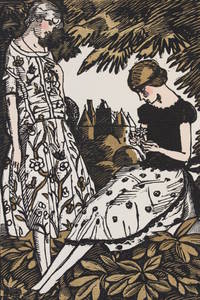
1921cROU-17161921 Paris, Société littéraire de France,1921; grand in-8 broché, couverture rempliée imprimée en noir et sépia; 2ff., 257pp., 1p.nch., 3ff.nch. Illustré d’un frontispice par Siméon et de vignettes en en-têtes par Belmondo. Tirage total à 1200 exemplaires numérotés, celui-ci 1 des 20 sur Japon (1er papier) avant 1180 vélin. 4ème volume de la Collection des Oeuvres de Courteline parue aux Editions littéraires, complet de Boubouroche et des Contes.
1981039077Hauppague New York U.S.A.: J. Marr Pub Co 1981. Slight bow to book otherwise in very nice condition. 2nd. Hard Cover. Near Fine/Near Fine. Illus. by b/w Photos. J. Marr Pub Co Hardcover
19446323Oakland: Biobooks 1944 Limited to 500 copies printed by the Grabhorn Press. Signed by the publisher Joseph A. Sullivan. Foreword by Sullivan. 188pp. Illustrated with plates and a large folding map. Cloth-backed red boards paper spine label. Slight fading to top edge of boards else a very fine copy. Ide was the first to raise the Bear Flag over Sonoma. Reprinted from the rare first edition of 1880. Zamorano Eighty: 45 note. Biobooks hardcover books
2000Q-0929661583Rebus Inc 2000-01-01. Hardcover. New. In shrink wrap. Looks like an interesting title! Rebus, Inc hardcover
19256168Paris, "Le livre" Émile Chamontin, 1925. In-8 broché de [10]-35-[3]p., couverture rempliée. Non coupé.
19233425Paris, Georges Crès et Cie, coll. Les maître du livre, 1923. 1 vol. in-8 de 384-[2] pages. Demi-chagrin bleu à coins, dos à nerfs, couvertures et dos conservés. Bel état.
1995Q-092966132XRandom House Inc 1995-01-01. Hardcover. New. In shrink wrap. Looks like an interesting title! Random House, Inc hardcover
1992005525Wadsworth 1992 my copy is NEW MINT xc for owner's name BookPlate; 300 new pages; I ship anywhere you wish; Wadsworth hardcover
1928342923longmans 1928 first edition . near fine book very good jacket chipped at spine ends longmans unknown
193052625Paris Henry Babou 1930 In-4, en feuilles, couverture imprime.Edition originale de la prface de Jean-Jacques Brousson (dont le texte manuscrit est reproduit en fac-simil) et de l'tude de Luc-Benoist, illustre d'un portrait photographique de l'artiste par Laure Albin Guillot et de 36 compositions de Fernand Simon dont une vignette de titre, 20 in-texte et 15 planches hors texte. Ouvrage publi dans la collection Les Artistes du livre. Tirage limit 750 exemplaires numrots. Un des 650 exemplaires sur vlin de Johannot.
192154861Lucien Vogel éditeur | Paris 1921 | 18 x 24 cm | une feuille
192154901Lucien Vogel éditeur | Paris 1921 | 18 x 24 cm | une feuille
192254971Lucien Vogel éditeur | Paris 1922 | 18 x 24 cm | une feuille
192154939Lucien Vogel éditeur | Paris 1921 | 18 x 24 cm | une feuille
195981711Paris, 1959, in-8, 96 & 87pp + vol. de planches, en feuille sous chemise, emboitage de soie prune, Superbe exemplaire abondamment illustré! 96 & 87pp + vol. de planches
1954008756Paris Galerie Le Soleil dans la tête 1954 En feuilles, couverture illustrée à rabats
1965X116748Moskva, Nauka 1965 323pp. + 1 leaf of errata, text in Russian in Cyrillic script, publisher's hardcover in grey cloth, published in the series "Pamiatniki pis'mennosti Vostoka" vol.9, limited edition of 3000 copies, upper part of some pages with a vague trace of humidity, although still in good condition, X116748
191257636Paris: S. n. 1912. Fine. S. n. Paris 1912 14 x 22.50 cm une feuille original print in color printed on laid paper signed lower left of the board. One of the first French fashion magazines published a few days before the famous Gazette fashionable and bringing together the greatest French artists of the Art Deco movement. The Journal ladies and modes is a trimensuelle illustrated French fashion magazine created in 1797. Its publication was stopped in 1839 before being taken in June 1912 under the leadership of Tommaso Antongini secretary friend and biographer of Gabriele 'Annunzio. It will disappear in August 1914 on the eve of the First World War. The review was drawn to 1279 copies making it for the time a relatively confidential publication. The 186 plates with great finesse are engraved on strong paper and colored stencil. They represent the majority of the time women but also men and children. The models are not unlike those of the Gazette fashionable whose publication will be launched a few months later those renowned couturiers but are the fruit of the imagination of the illustrators themselves. The stencils are mostly executed by George Barbier but other artists collaborating on the magazine: Léon Bakst B. Berty Bernard Boutet de Monvel Roger Broders Jan van Brock Umberto Brunelleschi H. Robert Dammy Etienne Drian Abel Faivre Marie-Madeleine Franc-Nohain Xavier Gosé Paul Iribe Kriegck Victor Lhuer Pierre Legrain Charles Martin Fernand Simeon Ismael Smith Armand Vallee and Gerda Wegener. Many of these illustrators will also be involved in The Gazette fashionable. Their work emblematic of the Art Deco movement emphasize the influence of Orientalism and costumes of the Ballets Russes while registering in the daily activities of affluent French of the time. From the preface of the first issue of 1912 Anatole France said: ""After seventy-five years he is reborn. He is reborn through the efforts of a few ingenious minds and artists. He is reborn for the curious if there is that do not simply modes newspaper fired several thousand and illustrated by photography. And if publishers make us very exactly in its format with its paper printing its processes of etching and coloring the old classic patterns of the past is that they intend to continue the pleasantly and become charming classic fashion of today and tomorrow. "" S. n. unknown
192054773Paris: Lucien Vogel éditeur 1920. Fine. Lucien Vogel éditeur Paris Juin 1920 18 x 24 cm une feuille Original color print printed on vergé paper non signed. An original print used to illustrate the Gazette du bon ton one of the most attractive and influential 20th century fashion magazines featuring the talents of French artists and other contributors from the burgeoning Art Deco movement. A celebrated fashion magazine established in 1912 by Lucien Vogel La Gazette du bon ton appeared until 1925 with a hiatus from 1915 to 1920 due to the war the editor-in-chief having been called up for service. It consisted of 69 issues printed in only 2000 copies each and notably illustrated with 573 color plates and 148 sketches of the models of the great designers. Right from the start this sumptuous publication was aimed at bibliophiles and fashionable society Françoise Tétart-Vittu La Gazette du bon ton in Dictionnaire de la mode 2016 and was printed on fine vergé paper using a type cut specially for the magazine by Georges Peignot known as Cochin later used in 1946 by Christian Dior. The prints were made using stencils heightened in colors some highlighted in gold or palladium. The story began in 1912 when Lucien Vogel a man of the world involved in fashion he had already been part of the fashion magazine Femina decided with his wife Cosette de Brunhoff the sister of Jean creator of Babar to set up the Gazette du bon ton subtitled at the time: Art fashion frivolities. Georges Charensol noted the reasoning of the editor-in-chief: In 1910 he observed there was no really artistic fashion magazine nothing representative of the spirit of the time. My dream was therefore to make a luxury magazine with truly modern artists I was assured of success because when it comes to fashion no country on earth can compete with France. Un grand éditeur dart. Lucien Vogel in Les Nouvelles littéraires no. 133 May 1925. The magazine was immediately successful not only in France but also in the United States and Latin America. At first Vogel put together a team of seven artists: André-Édouard Marty and Pierre Brissaud followed by Georges Lepape and Dammicourt as well as eventually his friends from school and the School of Fine Arts like George Barbier Bernard Boutet de Monvel and Charles Martin. Other talented people soon came flocking to join the team: Guy Arnoux Léon Bakst Benito Boutet de Monvel Umberto Brunelleschi Chas Laborde Jean-Gabriel Domergue Raoul Dufy Édouard Halouze Alexandre Iacovleff Jean Émile Laboureur Charles Loupot Chalres Martin Maggie Salcedo. These artist mostly unknown when Lucien Vogel sought them out later became emblematic and sought-after artistic figures. It was also they who worked on the advertising drawings for the Gazette. The plates put the spotlight on and celebrate dresses by seven designers of the age: Lanvin Doeuillet Paquin Poiret Worth Vionnet and Doucet. The designers provided exclusive models for each issue. Nonetheless some of the illustrations are not based on real models but simply on the illustrators conception of the fashion of the day. The Gazette du bon ton was an important step in the history of fashion. Combining aesthetic demands with the physical whole it brought together for the first time the great talents of the artistic literary and fashion worlds; and imposed through this alchemy a completely new image of women: slender independent and daring which was shared by the new generation of designers including Coco Chanel Jean Patou Marcel Rochas and so on Taken over in 1920 by Condé Montrose Nast the Gazette du bon ton was an important influence on the new layout and aesthetics of that little dying paper that Nast had bought a few years earlier: Vogue. Lucien Vogel éditeur unknown