212 résultats
193901090594Chicago: The Lewis Publishing Co. 1939. Ex-library with usual markings and labels. Minor faults but a solid useful set. A heavy set that cannot be sent internationally. Hard Cover x-library. G-VG/No Jackets as Issued. Small Quartos. Book. The Lewis Publishing Co. Hardcover
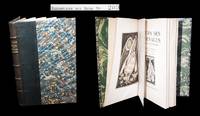
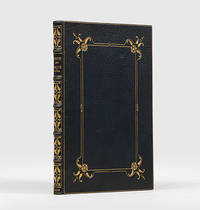
1908122897London: Privately Printed at the Chiswick Press 1908. A proud Jewish father publishes for his children First and only edition. A truly sumptuous piece of private publishing produced as a gift for the author's children and grandchildren handsomely printed at the Chiswick Press and finely bound by an unnamed binder of real quality. Among the varied pieces is "A Dream by One who Dreamt It" a prose fantasy conceived at the time of the Dreyfus case of a Jewish state "a beautiful land of very vast extent" where Jews driven out from the civilized countries of Europe by "hatred and envy of the race" live in paradisal self-government. The volume carries the bookplate of Bernard Alexander Isaac 1871-1938. If he is one of the children for whom the book was printed then "Pater" was Frederick Simeon Isaac c.1829-1915. With his siblings Benjamin and Alexander Frederick was a partner in Isaac & Samuel a City of London firm with worldwide interests. He was also a director of several South American utility and finance companies. In the 1871 Census he was described as a "South American merchant" and in the 1901 Census as a "financial merchant". He left £630000 including a range of legacies to Jewish charities. The book is likely to have been printed in small numbers and is unsurprisingly rare. There are no copies listed on Library Hub and Library Hub lists only the Toronto Public Library copy. We were unable to trace any other copy in libraries or auction records. Tall octavo 247 x 184 mm. Photographic portrait of the author as frontispiece with tissue guard title printed in red and black decorative opening initials headpieces and culs-de-lampe. Finely bound in contemporary dark blue crushed morocco titles in gilt direct to spine gilt-ruled raised bands compartments and turn-ins ruled and richly decorated with foliate and circlet motifs in gilt boards panelled in single gilt rules with floral and repeat foliate motifs to corners green silk endpapers edges gilt unsigned but evidently quality work. Pictorial bookplate of Bernard A. Isaac to front pastedown. A few minor marks to covers else a fine copy printed on thick paper and handsomely bound. Toronto Public Library call number 828 P1283. hardcover
1988MA-179San Diego CA.: Academic Press 1988. Comprehensive scholarly text presents a detailed monograph emphasizing the numerical treatment of specialdifferential equations: stiff stiff oscillatory singular and discontinuous initial value problems which are often characterized by large Lipschitz constants. Topics covered include numerical integration algorithms; theory of one-step methods; Runge-Kutta processes; linear multi-step processes; extrapolation processes and singularities; stiff algorithms; stiff initial value problems; second order differential equations; etc. 295 pgs. Illustrated. Gilt spine and front cover. Top spine corner slightly bumped. First Edition. Hard Cover. As New. 8vo - over 7¾" - 9¾" tall. Academic Press Hardcover
19291404347Berlin: Aldus Druck 1929. Limited edition 800 copies. Hardcover. Octavo unpaged. In Good minus condition. Spine is cream with black print. Boards quarter bound with cream vellum to spine and grey paper; light wear to spine caps and corners bump to spine head warping. Text block consists of folded leaves with illustration and text on facing pages. Illustrated: nine woodblock prints. Pamphlet laid in: Mitteilungen der Soncino Gesellschaft Nr. 4 Februar 1929 15 pages. Text in German fraktur/gothic font and Hebrew. Signed in pencil by the artist on the colophon page. <br /> <br /> NOTE: Shelved in Locked Annex Area ND-HV Section. 1404347. FP New Rockville Stock. Aldus Druck hardcover
199113.2032aMadrid: Galería Fucares 1991. 1ª ed. Rústica con sobrecubierta. 16x23. Profusamente ilustrado. Galería Fucares paperback
1996Q-0801090164Baker Pub Group 1996-01-01. Paperback. New. In shrink wrap. Looks like an interesting title! Baker Pub Group paperback
1996DADAX0801090164Brand: Baker Pub Group 1996-01-01. paperback. New. 6.25x1.25x9.00. Buy with confidence. Excellent Customer Service & Return policy. Brand: Baker Pub Group paperback
1929322431929. S.l. L'Intelligence 1926. Un vol. au format in-8 223 x 144 mm de 234 pp. Reliure de l'ÂŽpoque de demi-chagrin maroquinÂŽ sapin filet vertical ˆ froid portÂŽ sur chacun des plats dos ˆ nerfs ornÂŽ de filets gras en noir titre dorÂŽ date dorÂŽe en queue couvertures conservÂŽes. Un des exemplaires numÂŽrotÂŽs du tirage surr vÂŽlin de Rives ; ici revÂtu d'une agrÂŽable reliure du temps. L'ouvrage s'ouvre sur un frontispice en deux tons de Fernand SimÂŽon et recÂle en outre une planche dÂŽpliante fac-simile du priÂre d'insÂŽrer manuscrit rÂŽdigÂŽ par Schwob. Belle typographie en deux tons. L'ouvrage constitue un vÂŽhÂŽment pamphlet dirigÂŽ contre les journalistes ˆ ''l'art dÂŽcrire'' ici dÂŽnoncÂŽ pour l'absence de style dont il tÂŽmoigne. Dos lÂŽgÂrement passÂŽ prÂŽsentant en outre une petite abrasion sur un nerf. Quelques rousseurs concentrÂŽes sur chacun des plats de la couverture papier originelle. Nonobstant trÂs belle condition. b42961 unknown
19691190116.10Little Brown & Company Boston 1969. Hardcover. Good. 8vo hardcover. No dj quarter leather over mustard yellow cloth. First edition specially bound by the publisher and presented to the editor. Correspondence from the publisher laid in. Top edge gilt and sharp gilt titling to the spine. Covers and contents clean unworn no marking or writing. Binding sturdy and tight; leather still supple. 626 pp. A lovely copy Little Brown & Company, Boston hardcover
1994272498PN. New. 1994. Soft Cover. Date is original print. This is a reprint edition . PN paperback
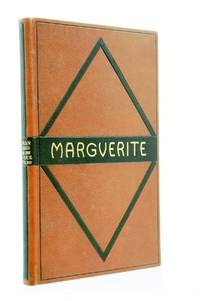
192074956Paris: Plon 1920. Fine. Plon Paris 1920 16 x 26 cm relié sous étui First edition one of 450 numbered copies on Holland paper. Work illustrated with 35 original woodcuts by Fernand Siméon. Full brown morocco binding smooth spine decorated with a vertical band of black mosaic morocco black roulettes on the headcaps slight rubbing to the upper headcap gilt title struck to the center of the first cover covers decorated with a large diamond and a wide horizontal band of black mosaic morocco endpapers and pastedowns of paper with gilt floral motifs and moiré effect frame of vertical and horizontal bands of black mosaic morocco on the pastedowns covers and spine preserved top edge gilt double black fillets on the leading edges slipcase with brown morocco entry covers of paper with gilt floral motifs and moiré effect perfect Art Deco binding signed A. Pinard-Lefort. Handsome copy perfectly executed in a beautiful Art Deco binding. Plon unknown
1920LD5788Paris: Chez Andre Coq 1920. Limited Edition. Paperback. Near Fine. Original wraps in glassine dust jacket; 4to; with woodcut illustrations in text and illuminated initials. Number 3 from a limited edition of 5 copies on Japon Imperial paper total limitation of 550 copies signed by "A. Coq" on the limitation page and with two additional suites of plates. One set of plates printed in black on China paper the other set of plates printed in sepia on Japanese vellum. Plus an original ink drawing a botanical motif and an original pencil and ink drawing heightened in white a street scene. Covers a bit dusty wrinkled along the edges. Glassine chipped along the edges. Plates and contents bright and clean. <br/><br/> Chez Andre Coq paperback
1918030815New York: Henry Holt and Company 1918. Fourth Anniversary Edition 1918. Hardcover with dust jacket. 12mo with 84 pages. The book is in very good condition. The dust jacket is in poor condition with shelf wear rubbing to edges one 1/2" piece missing from top of spine and two pieces missing from top of back panel. Interior is clean and tight. Beige spine/black text. Fourth Anniversary Edition . Hardcover. Very Good/Poor. 12mo. Travel Guide. Henry Holt and Company Hardcover
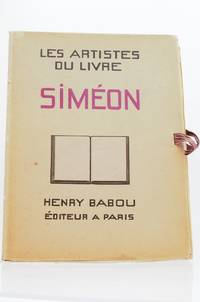
193075475Paris: Henri Babou 1930. Fine. Henri Babou Paris 1930 20.50 x 26.50 cm en feuilles sous chemise à lacets First edition one of 50 numbered copies on Japon ours unjustified deluxe copy. Fine copy spine and boards of the chemise marginally sunned and spotted. Letter-preface by Jean-Jacques Brousson. Photographic portrait of Fernand Siméon by Laure Albin Guillot. Work illustrated with a frontispiece black illustrations in the text as well as 15 hors-texte plates in black and colors extracted from works illustrated by the artist. Our copy lacks the original drawing by Fernand Siméon which should appear in the deluxe copies. Henri Babou hardcover
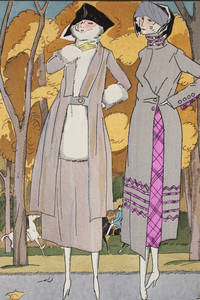
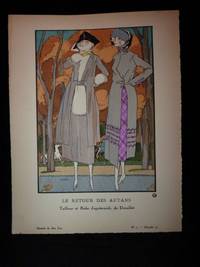
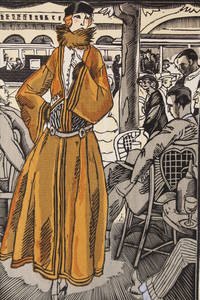
192054798Paris: Lucien Vogel éditeur 1920. Fine. Lucien Vogel éditeur Paris Septembre 1920 18 x 24 cm une feuille Original color print printed on vergé paper non signed. An original print used to illustrate the Gazette du bon ton one of the most attractive and influential 20th century fashion magazines featuring the talents of French artists and other contributors from the burgeoning Art Deco movement. A celebrated fashion magazine established in 1912 by Lucien Vogel La Gazette du bon ton appeared until 1925 with a hiatus from 1915 to 1920 due to the war the editor-in-chief having been called up for service. It consisted of 69 issues printed in only 2000 copies each and notably illustrated with 573 color plates and 148 sketches of the models of the great designers. Right from the start this sumptuous publication was aimed at bibliophiles and fashionable society Françoise Tétart-Vittu La Gazette du bon ton in Dictionnaire de la mode 2016 and was printed on fine vergé paper using a type cut specially for the magazine by Georges Peignot known as Cochin later used in 1946 by Christian Dior. The prints were made using stencils heightened in colors some highlighted in gold or palladium. The story began in 1912 when Lucien Vogel a man of the world involved in fashion he had already been part of the fashion magazine Femina decided with his wife Cosette de Brunhoff the sister of Jean creator of Babar to set up the Gazette du bon ton subtitled at the time: Art fashion frivolities. Georges Charensol noted the reasoning of the editor-in-chief: In 1910 he observed there was no really artistic fashion magazine nothing representative of the spirit of the time. My dream was therefore to make a luxury magazine with truly modern artists I was assured of success because when it comes to fashion no country on earth can compete with France. Un grand éditeur dart. Lucien Vogel in Les Nouvelles littéraires no. 133 May 1925. The magazine was immediately successful not only in France but also in the United States and Latin America. At first Vogel put together a team of seven artists: André-Édouard Marty and Pierre Brissaud followed by Georges Lepape and Dammicourt as well as eventually his friends from school and the School of Fine Arts like George Barbier Bernard Boutet de Monvel and Charles Martin. Other talented people soon came flocking to join the team: Guy Arnoux Léon Bakst Benito Boutet de Monvel Umberto Brunelleschi Chas Laborde Jean-Gabriel Domergue Raoul Dufy Édouard Halouze Alexandre Iacovleff Jean Émile Laboureur Charles Loupot Chalres Martin Maggie Salcedo. These artist mostly unknown when Lucien Vogel sought them out later became emblematic and sought-after artistic figures. It was also they who worked on the advertising drawings for the Gazette. The plates put the spotlight on and celebrate dresses by seven designers of the age: Lanvin Doeuillet Paquin Poiret Worth Vionnet and Doucet. The designers provided exclusive models for each issue. Nonetheless some of the illustrations are not based on real models but simply on the illustrators conception of the fashion of the day. The Gazette du bon ton was an important step in the history of fashion. Combining aesthetic demands with the physical whole it brought together for the first time the great talents of the artistic literary and fashion worlds; and imposed through this alchemy a completely new image of women: slender independent and daring which was shared by the new generation of designers including Coco Chanel Jean Patou Marcel Rochas and so on Taken over in 1920 by Condé Montrose Nast the Gazette du bon ton was an important influence on the new layout and aesthetics of that little dying paper that Nast had bought a few years earlier: Vogue. Lucien Vogel éditeur unknown
192043226Paris: Lucien Vogel éditeur 1920. Fine. Lucien Vogel éditeur Paris circa 1920 19.50 x 25 cm une feuille Original color print printed on vergé paper non signed. An original print used to illustrate the Gazette du bon ton one of the most attractive and influential 20th century fashion magazines featuring the talents of French artists and other contributors from the burgeoning Art Deco movement. A celebrated fashion magazine established in 1912 by Lucien Vogel La Gazette du bon ton appeared until 1925 with a hiatus from 1915 to 1920 due to the war the editor-in-chief having been called up for service. It consisted of 69 issues printed in only 2000 copies each and notably illustrated with 573 color plates and 148 sketches of the models of the great designers. Right from the start this sumptuous publication was aimed at bibliophiles and fashionable society Françoise Tétart-Vittu La Gazette du bon ton in Dictionnaire de la mode 2016 and was printed on fine vergé paper using a type cut specially for the magazine by Georges Peignot known as Cochin later used in 1946 by Christian Dior. The prints were made using stencils heightened in colors some highlighted in gold or palladium. The story began in 1912 when Lucien Vogel a man of the world involved in fashion he had already been part of the fashion magazine Femina decided with his wife Cosette de Brunhoff the sister of Jean creator of Babar to set up the Gazette du bon ton subtitled at the time: Art fashion frivolities. Georges Charensol noted the reasoning of the editor-in-chief: In 1910 he observed there was no really artistic fashion magazine nothing representative of the spirit of the time. My dream was therefore to make a luxury magazine with truly modern artists I was assured of success because when it comes to fashion no country on earth can compete with France. Un grand éditeur dart. Lucien Vogel in Les Nouvelles littéraires no. 133 May 1925. The magazine was immediately successful not only in France but also in the United States and Latin America. At first Vogel put together a team of seven artists: André-Édouard Marty and Pierre Brissaud followed by Georges Lepape and Dammicourt as well as eventually his friends from school and the School of Fine Arts like George Barbier Bernard Boutet de Monvel and Charles Martin. Other talented people soon came flocking to join the team: Guy Arnoux Léon Bakst Benito Boutet de Monvel Umberto Brunelleschi Chas Laborde Jean-Gabriel Domergue Raoul Dufy Édouard Halouze Alexandre Iacovleff Jean Émile Laboureur Charles Loupot Chalres Martin Maggie Salcedo. These artist mostly unknown when Lucien Vogel sought them out later became emblematic and sought-after artistic figures. It was also they who worked on the advertising drawings for the Gazette. The plates put the spotlight on and celebrate dresses by seven designers of the age: Lanvin Doeuillet Paquin Poiret Worth Vionnet and Doucet. The designers provided exclusive models for each issue. Nonetheless some of the illustrations are not based on real models but simply on the illustrators conception of the fashion of the day. The Gazette du bon ton was an important step in the history of fashion. Combining aesthetic demands with the physical whole it brought together for the first time the great talents of the artistic literary and fashion worlds; and imposed through this alchemy a completely new image of women: slender independent and daring which was shared by the new generation of designers including Coco Chanel Jean Patou Marcel Rochas and so on Taken over in 1920 by Condé Montrose Nast the Gazette du bon ton was an important influence on the new layout and aesthetics of that little dying paper that Nast had bought a few years earlier: Vogue. Lucien Vogel éditeur unknown
192154839Paris: Lucien Vogel éditeur 1921. Fine. Lucien Vogel éditeur Paris 1921 18 x 24 cm une feuille Original color print heightened with gold printed on vergé paper signed in plate. An original print used to illustrate the Gazette du bon ton one of the most attractive and influential 20th century fashion magazines featuring the talents of French artists and other contributors from the burgeoning Art Deco movement. A celebrated fashion magazine established in 1912 by Lucien Vogel La Gazette du bon ton appeared until 1925 with a hiatus from 1915 to 1920 due to the war the editor-in-chief having been called up for service. It consisted of 69 issues printed in only 2000 copies each and notably illustrated with 573 color plates and 148 sketches of the models of the great designers. Right from the start this sumptuous publication was aimed at bibliophiles and fashionable society Françoise Tétart-Vittu La Gazette du bon ton in Dictionnaire de la mode 2016 and was printed on fine vergé paper using a type cut specially for the magazine by Georges Peignot known as Cochin later used in 1946 by Christian Dior. The prints were made using stencils heightened in colors some highlighted in gold or palladium. The story began in 1912 when Lucien Vogel a man of the world involved in fashion he had already been part of the fashion magazine Femina decided with his wife Cosette de Brunhoff the sister of Jean creator of Babar to set up the Gazette du bon ton subtitled at the time: Art fashion frivolities. Georges Charensol noted the reasoning of the editor-in-chief: In 1910 he observed there was no really artistic fashion magazine nothing representative of the spirit of the time. My dream was therefore to make a luxury magazine with truly modern artists I was assured of success because when it comes to fashion no country on earth can compete with France. Un grand éditeur dart. Lucien Vogel in Les Nouvelles littéraires no. 133 May 1925. The magazine was immediately successful not only in France but also in the United States and Latin America. At first Vogel put together a team of seven artists: André-Édouard Marty and Pierre Brissaud followed by Georges Lepape and Dammicourt as well as eventually his friends from school and the School of Fine Arts like George Barbier Bernard Boutet de Monvel and Charles Martin. Other talented people soon came flocking to join the team: Guy Arnoux Léon Bakst Benito Boutet de Monvel Umberto Brunelleschi Chas Laborde Jean-Gabriel Domergue Raoul Dufy Édouard Halouze Alexandre Iacovleff Jean Émile Laboureur Charles Loupot Chalres Martin Maggie Salcedo. These artist mostly unknown when Lucien Vogel sought them out later became emblematic and sought-after artistic figures. It was also they who worked on the advertising drawings for the Gazette. The plates put the spotlight on and celebrate dresses by seven designers of the age: Lanvin Doeuillet Paquin Poiret Worth Vionnet and Doucet. The designers provided exclusive models for each issue. Nonetheless some of the illustrations are not based on real models but simply on the illustrators conception of the fashion of the day. The Gazette du bon ton was an important step in the history of fashion. Combining aesthetic demands with the physical whole it brought together for the first time the great talents of the artistic literary and fashion worlds; and imposed through this alchemy a completely new image of women: slender independent and daring which was shared by the new generation of designers including Coco Chanel Jean Patou Marcel Rochas and so on Taken over in 1920 by Condé Montrose Nast the Gazette du bon ton was an important influence on the new layout and aesthetics of that little dying paper that Nast had bought a few years earlier: Vogue. Lucien Vogel éditeur unknown
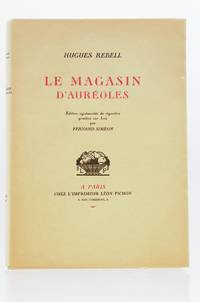
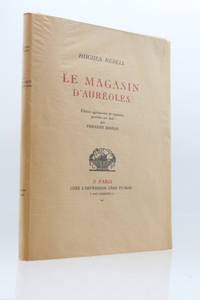
192775476Paris: Léon Pichon 1927. Fine. Léon Pichon Paris 1927 16.50 x 23 cm en feuilles Illustrated edition with 17 wood-engraved vignettes by Fernand Siméon one of 25 numbered copies on Japon Shidzuoka ours unnumbered but justified ""copy printed for Léon Pichon"" deluxe copy after 15 Japon à la forme. Handsome complete copy including as mentioned in the justification the suite on Chine of the wood engravings. Léon Pichon unknown
192775233Paris: Léon Pichon 1927. Fine. Léon Pichon Paris 1927 16.50 x 23 cm en feuilles Edition illustrated with 17 wood-engraved vignettes by Fernand Siméon one of 25 numbered copies on Japon Shidzuoka deluxe copies after 15 Japon à la forme. Handsome complete copy as mentioned in the justification page with the suite on China of the wood engravings. Léon Pichon unknown
192154939Paris: Lucien Vogel éditeur 1921. Fine. Lucien Vogel éditeur Paris 1921 18 x 24 cm une feuille Original color print printed on vergé paper signed in the plate. An original print used to illustrate the Gazette du bon ton one of the most attractive and influential 20th century fashion magazines featuring the talents of French artists and other contributors from the burgeoning Art Deco movement. A celebrated fashion magazine established in 1912 by Lucien Vogel La Gazette du bon ton appeared until 1925 with a hiatus from 1915 to 1920 due to the war the editor-in-chief having been called up for service. It consisted of 69 issues printed in only 2000 copies each and notably illustrated with 573 color plates and 148 sketches of the models of the great designers. Right from the start this sumptuous publication was aimed at bibliophiles and fashionable society Françoise Tétart-Vittu La Gazette du bon ton in Dictionnaire de la mode 2016 and was printed on fine vergé paper using a type cut specially for the magazine by Georges Peignot known as Cochin later used in 1946 by Christian Dior. The prints were made using stencils heightened in colors some highlighted in gold or palladium. The story began in 1912 when Lucien Vogel a man of the world involved in fashion he had already been part of the fashion magazine Femina decided with his wife Cosette de Brunhoff the sister of Jean creator of Babar to set up the Gazette du bon ton subtitled at the time: Art fashion frivolities. Georges Charensol noted the reasoning of the editor-in-chief: 'In 1910' he observed there was no really artistic fashion magazine nothing representative of the spirit of the time. My dream was therefore to make a luxury magazine with truly modern artists I was assured of success because when it comes to fashion no country on earth can compete with France.' Un grand éditeur d'art. Lucien Vogel in Les Nouvelles littéraires no. 133 May 1925. The magazine was immediately successful not only in France but also in the United States and Latin America. At first Vogel put together a team of seven artists: André-Édouard Marty and Pierre Brissaud followed by Georges Lepape and Dammicourt as well as eventually his friends from school and the School of Fine Arts like George Barbier Bernard Boutet de Monvel and Charles Martin. Other talented people soon came flocking to join the team: Guy Arnoux Léon Bakst Benito Boutet de Monvel Umberto Brunelleschi Chas Laborde Jean-Gabriel Domergue Raoul Dufy Édouard Halouze Alexandre Iacovleff Jean Émile Laboureur Charles Loupot Chalres Martin Maggie Salcedo. These artist mostly unknown when Lucien Vogel sought them out later became emblematic and sought-after artistic figures. It was also they who worked on the advertising drawings for the Gazette. The plates put the spotlight on and celebrate dresses by seven designers of the age: Lanvin Doeuillet Paquin Poiret Worth Vionnet and Doucet. The designers provided exclusive models for each issue. Nonetheless some of the illustrations are not based on real models but simply on the illustrator's conception of the fashion of the day. The Gazette du bon ton was an important step in the history of fashion. Combining aesthetic demands with the physical whole it brought together for the first time the great talents of the artistic literary and fashion worlds; and imposed through this alchemy a completely new image of women: slender independent and daring which was shared by the new generation of designers including Coco Chanel Jean Patou Marcel Rochas and so on Taken over in 1920 by Condé Montrose Nast the Gazette du bon ton was an important influence on the new layout and aesthetics of that little dying paper that Nast had bought a few years earlier: Vogue. Lucien Vogel éditeur unknown
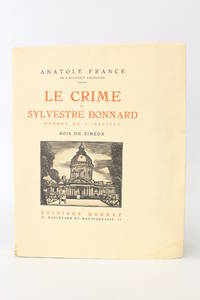
192365018Paris: Editions Mornay 1923. Fine. Editions Mornay Paris 1923 17.50 x 22 cm broché Edition illustrated with original etchings and woodcuts by Fernand Siméon one of 35 numbered copies on Holland paper ours being one of 24 hors commerce copies the most limited deluxe paper printing after a unique copy on old Japan paper. Handsome copy despite a small light dampstain at foot of front cover and on its rear flap verso. Our copy is complete as stipulated in the justification page with its suite of woodcuts on Japan paper and the proof before letters of the etchings. Editions Mornay unknown