39 résultats
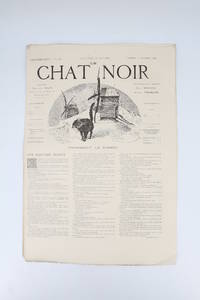
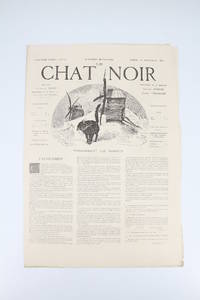
188888811Paris: Au cabaret Le Chat noir 1888. Fine. Au cabaret Le Chat noir Paris 27 octobre 1888 31 x 45 cm en feuillets First edition one of the rare copies printed on laid paper. This issue comprises 4 pages and features a comic strip by Steinlen ""Du dernier bien avec le général"" as well as drawings by Henry Somm on the facing page. Literary contributions by Alphonse Allais ""La forêt enchantée"" dedicated to George Auriol Raoul Gineste ""Les vieux chats"" and José Rolla ""A l'église"". A well-preserved copy despite a few faint marginal stains. Le Chat noir was a weekly review founded by Rodolphe Salis and Emile Goudeau published from 1882 to 1897 to promote the famous cabaret of the same name of which it served as a record. It featured texts performed during the shows and stands as a major literary and artistic testimony to the late 19th century capturing the bohemian spirit and vibrant Parisian scene of the time. Au cabaret Le Chat noir unknown
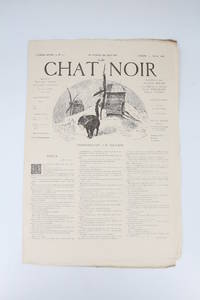
188683164Paris: Au cabaret Le Chat noir 1886. Fine. Au cabaret Le Chat noir Paris 1886 31 x 45 cm en feuillets First edition one of the rare copies printed on laid paper. The issue consists of 4 pages and is illustrated with a comic strip by Théophile Alexandre Steinlen: ""La rose"". Literary contributions by Charles Cros ""Un drame interastral"" Caran d'Ache ""Carnet de la semaine"" Albert Tinchant Rodolphe Salis ""Comment fut parachevée l'église saint-Pierre de Poictiers"" dedicated to Guy de Maupassant. Handsome copy despite minor worming. Le Chat noir is a weekly magazine created by Rodolphe Salis and Emile Goudeau published from 1882 to 1897 with the aim of promoting the famous cabaret of the same name of which it serves as the memory. It publishes the texts recited during the performances. It is furthermore an important literary and artistic testimony of the late 19th century around bohemian life and the Parisian effervescence that characterizes it. Au cabaret Le Chat noir unknown
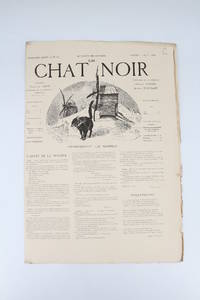
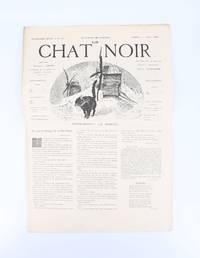
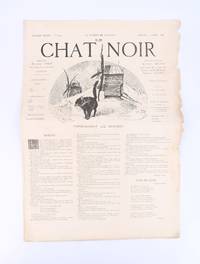
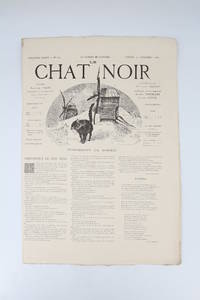
188588583Paris: Au cabaret Le Chat noir 1885. Fine. Au cabaret Le Chat noir Paris 1er août 1885 31 x 45 cm en feuillets First edition one of the rare copies printed on laid paper. This issue comprises 4 pages and features an illustration by Steinlen: ""Coqs et poule"". Literary contributions by Alphonse Allais with ""Le pauvre bougre et le bon génie"" dedicated to Henry Somm François Villon with the poem ""Rondel"" George Auriol with ""Au diable vert"" dedicated to Steinlen Rodolphe Salis. A handsome copy. Le Chat noir was a weekly review founded by Rodolphe Salis and Emile Goudeau published from 1882 to 1897 created to promote the famous cabaret of the same name and to serve as its memory. It published the texts performed during the shows. More broadly it constitutes a major literary and artistic record of the late 19th century centered on bohemian life and the unique creative fervor of Paris at the time. Au cabaret Le Chat noir unknown
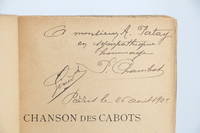
189584795Paris: Librairie Gueteville 1895. Fine. Librairie Gueteville Paris 1895 12.50 x 19.50 cm broché First edition illustrated with a cover and drawings by Théophile Alexandre Steinlen. Spine cracked at head and foot. Autograph inscription dated and signed by Paul Chambot with the additional signature of Ambroise Girier to A. Patay. Librairie Gueteville unknown
188788808Paris: Au cabaret Le Chat noir 1887. Fine. Au cabaret Le Chat noir Paris 9 avril 1887 31 x 45 cm en feuillets First edition one of the rare copies printed on laid paper. This four-page issue features a large double-page illustration by Steinlen. Literary contributions by Alphonse Allais Bébert Pimpinelli Pose de lapin dedicated to Albert Tinchant and Narcisse Lebeau Paravent. Some marginal tears and stains. Le Chat noir was a weekly magazine founded by Rodolphe Salis and Emile Goudeau published from 1882 to 1897 intended to promote the famous cabaret of the same name which it sought to commemorate. It published the texts recited during the performances and stands as a major literary and artistic document of late 19th-century bohemian life and the distinctive Parisian vitality of the era. Au cabaret Le Chat noir unknown
188683280Paris: Au cabaret Le Chat noir 1886. Fine. Au cabaret Le Chat noir Paris 1886 31 x 45 cm en feuillets First edition one of the rare copies printed on laid paper. The issue consists of 4 pages and is illustrated with a comic strip by Henry Somm: ""Dévouement et repentir"". Literary contributions by Rodolphe Salis ""La dévotion de Jacques de Pissardière illustré de 2 dessins de Théophile Alexandre Steinlen"" text dedicated to Jules Barbey d'Aurevilly Alphonse Allais ""Une mauvaise blague"" George Auriol. Handsome copy. Le Chat noir is a weekly magazine created by Rodolphe Salis and Emile Goudeau published from 1882 to 1897 with the aim of promoting the famous cabaret of the same name serving as its chronicle. It published texts recited during performances. It also forms an important literary and artistic testimony of the late nineteenth century centered around bohemian life and the Parisian effervescence that characterized it. Au cabaret Le Chat noir unknown
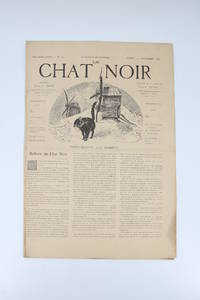
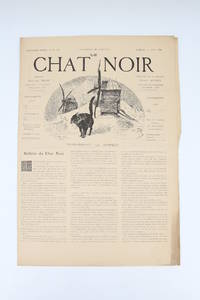
188481915Paris: Au cabaret Le Chat noir 1884. Fine. Au cabaret Le Chat noir Paris 1884 31 x 45 cm en feuillets First edition. This issue consists of 4 pages and is illustrated with a full-page comic strip by Théophile Alexandre Steinlen ""Le chat et la grenouille"" ""The cat and the frog"". Literary contributions by Georges Auriol ""Fleur d'orange"" ""Orange blossom"" Rodolphe Salis Léo Niversac ""Bulletin du Chat Noir"" ""Chat Noir bulletin"" Jules Jouy. A few minor marginal tears of no consequence. Le Chat noir was a weekly magazine created by Rodolphe Salis and Emile Goudeau published from 1882 to 1897 with the aim of promoting the famous cabaret of the same name of which it served as the memory. It published texts recited during the shows. It is moreover an important literary and artistic testimony of the end of the 19th century centered around the bohemian lifestyle and the Parisian effervescence that characterized it. Au cabaret Le Chat noir unknown
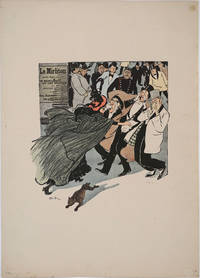
189924502Paris 1899. First edition. Fine. Printed color lithographic cover art with block color for the Parisian journal 'Le Mirliton' by the noted Paris Art Nouveau printmaker. <br /> <br /> Dramatic poster depicting a Parisian dancer armed with bottle of wine accosting a group of upper class men in top hats as they recoil in shock. With the price of the journal Le Mirliton incorporated into the scene at the left.<br /> <br /> Aristide Bruant 1851-1925 established his cabaret Le Mirliton in Paris in 1885; Steinlen was commissioned by Bruant to create poster art for the cabaret as well as advertisement for its journal. <br /> <br /> With period pencil notation on the verso "Tirage a part du Mirliton". Image size varies on paper 13 x 18" unknown
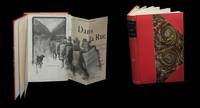
1889314591889. Paris Aristide Bruant s.d. 1889. Un vol. au format in-12 188 x 118 mm de 207 pp. Reliure signÂŽe de l'ÂŽpoque de demi-percaline satinÂŽe cerise ˆ coins dos lisse ornÂŽ de doubles filets dorÂŽs fleuron central dorÂŽ piÂce de titre de maroquin ÂŽbÂne titre dorÂŽ couvertures et dos conservÂŽs faÂon ''leporello''. Carayon. ''PremiÂre ÂŽdition illustrÂŽe recherchÂŽe et cotÂŽe''. in Carteret. Elle est ici dÂŽpourvue de toute mention de ''mille''. Elle s'agrÂŽmente de nombreuses compositions in et hors-texte d'Alexandre Steinlen. L'exemplaire - revÂtu d'une reliure signÂŽe de Carayon - a conservÂŽ son dos et ses couvertures agrÂŽablement illustrÂŽs ; se dÂŽployant ici faÂon ''leporello''. ''Sorti des Beaux-Arts ˆ Lausanne Steinlen dÂŽbuta dans le dessin industriel pour le textile ˆ Mulhouse. ArrivÂŽ ˆ Paris en 1882 il frÂŽquenta aussit™t le cabaret du Chat noir et commenÂa alors ˆ dessiner pour de nombreuses revues ainsi que plusieurs ÂŽditeurs. A partir de 1898 il grava ˆ l'eau-forte et produisit des affiches qui le rendirent cÂŽlÂbre. Anatole France ÂŽcrivit de lui : ''DouÂŽ d'une sensibilitÂŽ subtile vive attentive d'une infaillible mÂŽmoire de l'oeil et de moyens rapides d'expression en somme tout destinait Steinlen ˆ devenir le dessinateur et le peintre de la vie qui passe le ma”tre de la rue. Le flot clair et matinal et le flot sombre et nocturne des ouvriers et ouvriÂres les groupes attablÂŽs sur le trottoir les r™deurs des noirs boulevards la rue enfin la place publique les lointains faubourgs aux arbres maigres les terrains vagues tout cela est ˆ lui. De ces choses il sait tout. Leur vie est sa vie leur joie est sa joie leur tristesse sa tristesse. Il a ri et souffert avec les passants. L'‰me des foules irritÂŽs ou joyeuses a passÂŽ en lui. Il en a senti la simplicitÂŽ terrible et la grandeur. C'est pourquoi l'oeuvre de Steinlen est ÂŽpique''. in Osterwalder. Premier ouvrage de l'auteur il ne manqua - dÂs parution - de faire sensation les critiques sont enthousiastes. Chacun salue le ÇÊpoÂte sincÂre et vibrant d'une rare originalitŽÊÈ louant ''sa verve ˆ exprimer le pathÂŽtique de la crapule''. FranÂois CoppÂŽe le fait recevoir ˆ la SociÂŽtÂŽ des gens de lettres en 1891 et il ne mÂŽnage pas ses ÂŽloges au comitÂŽ des gens de lettresÊ: ÇÊJe fais grand cas de Dans la rue et je le tiens pour un descendant en ligne directe lÂŽgitime de notre Villon.ÊÈ. Immense rÂŽussiteÊpour Bruant : ses chansons sont mises aux rÂŽpertoires d'artistes cÂŽlÂbresÊ: EugÂŽnie Buffet dÂŽguisÂŽe en fille de barriÂre fait applaudir Ë la Cigale Ë la Villette et Ë la GlaciÂre et lance Ë Saint-Lazare ; Yvette Guilbert vedette du caf'conc' interprÂte Ë Belleville et Au Bois de Boulogne. Bruant connait alors une gloire internationale et en 1895 abandonne son cabaret et part en tournÂŽe ˆ l'ÂŽtranger.Bruant se revendique comme un travailleur sÂŽrieux. Dans sa poÂŽsie apparemment simple la puissance du raccourci et la prÂŽcision du terme dissimulent de longues recherchesÊ: ÇÊsept mois pour une chansonÊ!ÊÈ a-t-il dÂŽclarÂŽ ˆ propos de Ë Biribi. FlÂŽty Dictionnaire des relieurs fran!ais p. 38 - Carteret IV Le TrÂŽsor du bibliophile / Livres illustrÂŽs modernes p. 83 - Vicaire I Manuel de l'amateur de livres du XIXÂme siÂcle col. 938. Quelques lacunes en marge de la page de titre. Dos de la couverture papier originelle doublÂŽ prÂŽsentant en outre un manque en tÂte. Du reste trÂs belle condition. b42961 unknown
188681973Paris: Au cabaret Le Chat noir 1886. Fine. Au cabaret Le Chat noir Paris 1886 31 x 45 cm en feuillets First edition one of the rare copies printed on laid paper. The issue consists of 4 pages and is illustrated with a comic strip by Théophile Alexandre Steinlen: ""Les mésaventures d'Auguste"". Literary contributions by Alphonse Allais ""L'avancement"" Maurice Mac Nab ""La vue de Naples"" Eugène Godin ""Ronds de cuir"". Fine copy. Le Chat noir is a weekly magazine created by Rodolphe Salis and Emile Goudeau published from 1882 to 1897 with the aim of promoting the famous cabaret of the same name of which it intended to be the record. It published texts declaimed during the performances. It is moreover an important literary and artistic testimony of the late nineteenth century around the bohemia and the Parisian effervescence that was its own. Au cabaret Le Chat noir unknown
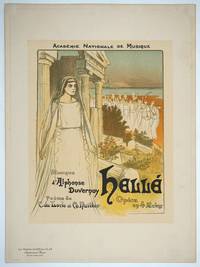
189628558Paris: Imprimerie Chaix 1896. First edition. Print. Very good condition. Steinlen 1859-1923 the famed Swiss born printmaker who settled and worked in Montmartre Paris is noted for his impressive posters of cafes and night life. He was a socialist whose images display his lifelong support and focus on the working class.<br /> <br /> Art nouveau style poster for this opera set in Greece. Color lithograph image size varies on paper 11 1/4 x 15 1/2" with the blind stamp in the lower right corner. <br /> <br /> Maitres de l'Affiche Masters of the Poster was an outstanding publication publishing in a small format the best of poster art from the Belle Epoque. They are lithographs printed by Imprimerie Chaix in Paris between 1895-1900. Imprimerie Chaix unknown
188783169Paris: Au cabaret Le Chat noir 1887. Fine. Au cabaret Le Chat noir Paris 1887 31 x 45 cm en feuillets First edition one of the rare copies printed on laid paper. The issue consists of 4 pages and is illustrated with a comic strip by Théophile Alexandre Steinlen dedicated to Alphonse Allais. Literary contributions by Alphonse Allais ""Idylle"" Rodolphe Salis Georges Auriol Pierre Mille . Handsome copy. Le Chat noir is a weekly magazine created by Rodolphe Salis and Emile Goudeau published from 1882 to 1897 with the aim of promoting the famous cabaret of the same name serving as its memory. It published texts recited during the shows. It is moreover an important literary and artistic testimony of the end of the 19th century around bohemian life and the Parisian effervescence that characterized it. Au cabaret Le Chat noir unknown
188683276Paris: Au cabaret Le Chat noir 1886. Fine. Au cabaret Le Chat noir Paris 1886 31 x 45 cm en feuillets First edition one of the rare copies printed on laid paper. This issue consists of 4 pages and is illustrated with a comic strip by Théophile Alexandre Steinlen ""Actualité brûlante"". Literary contributions by Francisque Sarcey ""Chronique du bon sens"" Jean Richepin ""Le chat noir"" Abel Hamel ""Qui a bu ne peut plus boire"" Georges Courteline ""Madame Dieu-nous-voit"". Le Chat noir is a weekly review created by Rodolphe Salis and Emile Goudeau published from 1882 to 1897 with the aim of promoting the famous cabaret of the same name serving as its memory. It published texts recited during the performances. It constitutes moreover an important literary and artistic testimony of the end of the 19th century centered around bohemian life and the Parisian effervescence that characterized it. Au cabaret Le Chat noir unknown
188481999Paris: Au cabaret Le Chat noir 1884. Fine. Au cabaret Le Chat noir Paris 1884 31 x 45 cm en feuillets First edition. The issue is illustrated with a drawing by Théophile Alexandre Steinlen ""Au clair de la lune drame sombre"". Other contributions by Jules Jouy J. Chevalier Léopold Stapleaux ""Hugo ne mourra pas"". One fold to right margin of the third and final pages. Le Chat noir is a weekly magazine created by Rodolphe Salis and Emile Goudeau published from 1882 to 1897 with the aim of promoting the famous cabaret of the same name serving as its memory. It published texts recited during performances. It constitutes moreover an important literary and artistic testimony of the late nineteenth century centered around bohemian life and the Parisian effervescence that characterized it. Au cabaret Le Chat noir unknown