4 641 résultats
194739069Fanara Egypt: Der Tribüne 1947. First edition. Softcover. g to g. Folio. Unpaginated. 11 leaves. Original illustrated wrappers. This rare issue of "Schlemil" a German POW Camp Newspaper provides a first-hand account of the feelings and emotions of the men as well as their day-to-day activities during their internment in Fanara Egypt. This issue the fourth was the first published in 1947 issues 1-3 were published in 1946. The last issue No. 8 was also also published in 1947 shortly before the prisoners were shipped home 1947 through 1948. Of all the German POW camps camp 307 had the highest rate of German mortality. The reason can primarily be found in the harsh climatic conditions. Indeed unlike to the soldiers of the Africa corps who were fit for the tropics the soldiers who were taken prisoners in Italy Greece and its islands had many difficulties with the climate in Egypt. Hot wind and sandstorms in spring great heat in summer and severe cold in the winter impaired life in the strange climate. This led to the well known "Declaration of the captured Lutheran Pastors in Egypt". The front cover of this copy of "Schlemihl" features a drawing depicting a German POW painting a newlywed couple with the year 1947 at the upper left corner. The illustrator must have expressed to see his wish come true being freed and shipped home and marry his sweetheart. The newspaper contains poetry and short stories with a strong anti-Nazi stance. There are 5 other illustrations throughout the whole issue. Each leaf is printed on recto only. Some age-toning and creasing to wrappers with tiny chipping and closed tear at upper front and back cover. Upper corner slightly creased throughout. Text in German. Wrappers in overall good interior in good condition. Declaration of the captured Lutheran Pastors in Egypt:<br /> <br /> The captured Lutheran Pastors in Egypt moved by the emotional situation of their fellow prisoners in the Middle East which has become extraordinarily critical and in obedience to their sworn duties of office would like to make the following declaration before the British authorities before the German public before their fellow prisoners and also before the Christians of the world.<br /> <br /> For at least the last two and a half years and for the most part substantially longer periods German Prisoners of War have been held in the Middle East whose number at this time amounts to more than 60 000. They have been put to work in a climate which for half the year is positively unbearable for a European. Through the long duration of imprisonment through the separation from their relatives through the bad news from home through the impossibility of effectively helping them their relatives and for many the “C†people through the completely immeasurable continuance of their imprisonment the emotional burden of these prisoners has reached a degree which gives grounds for the gravest fears for the future.<br /> <br /> The symptoms which are already manifesting themselves are shocking enough: the incidences where prisoners break down emotionally so completely that they become mentally ill are increasing. Alone in one Work Company 2719 of 5000 men no fewer than six prisoners have been admitted to the appropriate department of the British military hospital because of mental illness. Above all the cases are increasing where prisoners are ending their own lives which appear unbearable to them. In the last month in just one of the three British Military Districts in Egypt five cases of suicide are known to us.<br /> <br /> This is because the majority of Prisoners of War in the Middle East have come to a total collapse of trust in the promises and declarations of the British custodial powers. The emotional strain which has arisen from this among the Prisoners of War is extreme. The most important reasons to name only these few which have led to this crisis are the following:<br /> <br /> 1. At the end of last year more than eighteen months after the capitulation the Prisoners of War were advised of the Repatriation Plan as it was to be binding for the year 1947. This Repatriation Plan gave the individual the opportunity to envisage within an admittedly broad framework according to his score and his political classification his return home. This plan has not been carried out.<br /> <br /> On 30 September 1947 the British Government announced that it would be necessary for it to reduce the repatriation to a fraction of the planned quota because of shortages of ships. Can one think ill of Prisoners of War that they held the following declaration which had been printed in the papers for some time against the British Prime Minister Attlee: that the work of the Prisoners of War at this time was the only available reparation from Germany and could not be done without Or that they received the impression from the speech to the Lower House on March 27 of the Member of Parliament for Ipswich Mr. R.R. Stokes that the reason for the sluggish pace of the repatriation from the Middle East is that the local British authorities held the manpower of the Prisoners of War to be so indispensable that they would simply have to wait for repatriation Can one think ill of the German Prisoners of War who due to previous experience are already full of mistrust today take into consideration that the almost complete halt to repatriation will not just last until the end of the year but that probably the closing date for repatriation the end of 1948 won’t be adhered to<br /> <br /> With great and honest thankfulness the Prisoners of War of the Middle East have experienced the intervention for the easing of the lot of the captured and their speedier return home by men of the British public above all from a great number of Bishops the Member of Parliament Stokes a man such as Viktor Gollancz and finally a group of more than sixty Lower House members. In the Middle East hardly any of this has come about and the result is growing bitterness and hopelessness instability and despair amongst the Prisoners of War. <br /> <br /> 2. A further and exceedingly grave burden for the morale and emotional bearing of the Prisoners of War lies in the recently released regulation that in future Prisoners of War will only be allowed to take in the vicinity of ten pounds of approved luggage to Germany. Germany faces another winter of starvation. Thousands of Prisoners of War have saved their hard earned tiny wages for months and years and have allowed themselves nothing in order to be able to bring a few tins of fat which is lacking most and other foodstuffs to their relatives. Many came to terms with the repeated deferment of their repatriation and found themselves a new mainstay by telling themselves: I can help my relatives to at least a small extent by sending along foodstuffs especially fat with returning comrades.<br /> <br /> Because of the new announcement all this is brought to nought. It has aroused bitterness particularly because it is so completely incomprehensible. The foodstuffs in question are in the markets in Egypt and can be obtained in the camp canteens in great quantities to be used by the Prisoners of War at will. Why should they not be able to save these and take them home No one is hurt by this and the money which is spent stays in the country. <br /> <br /> Finally particularly destructive and embittering is the thought that contrary to the natural development of things where the treatment of Prisoners of war should be gentler and better with the growing interval since the end of the war it is only becoming sharper and more severe. The Prisoners of War can absolutely not understand that they who have actually already have been discriminated against through their late return home are further discriminated against in the hardest and most burdensome way by the aforementioned announcement while the comrades who were lucky enough to return home earlier could take such foodstuffs so vitally necessary for a starving Germany freely and without limits.<br /> <br /> 3. A further hardship and exceedingly heavy emotional burden is the treatment of the Prisoners of War who have placed under “Automatical Arrest†A.A. namely those whose identity is suspected to be that of a wanted war criminal or those who are needed as witnesses in such a case. They are held in custody here indefinitely often being unable to discover why and without sentence. Despite the fact that the British authorities have had at least two years and often considerably longer at their disposal to prove identities and make investigations in countless cases the affected Prisoners of War are put under “A.A.†only hours before their repatriation. In two cases men were even fetched down from the repatriation ship a procedure which it is hardly too harsh to characterise with the expression “emotional abuseâ€. <br /> <br /> Apart from all rules about humanity this kind of procedure also contradicts all accepted laws in the Allied countries in that Prisoners of War are punished for being war criminals when they haven’t been convicted. Indefinite imprisonment for a Prisoner of War who has waited for repatriation according to a classification and score is nothing other than punishment.<br /> <br /> An example: A Prisoner of War rank Oberfeldwebel Staff Sergeant was placed under “A.A.†in December 1945 without being given any notice because he was mistaken for his brother a Leutnant Second Lieutenant who had died in the war. His assertions were not believed. He pointed out that a comrade of his dead brother could be found in the same camp and could be interrogated about this. This was refused. Only after the intervention of a Lower House member Mr. Stokes who was approached about it was the case taken up. The interrogation of the commandant was carried out and the affected person released although subject to the agreement of a superior central office. He has still not been repatriated to this day despite being scheduled for repatriation by British doctors since April because of severe asthma. That is one of several dozen cases.<br /> <br /> It is understandable that the feeling of complete absence of rights emotionally oppresses particularly these Prisoners of War and brings them to despair. <br /> <br /> 4. The Prisoners of War gratefully acknowledge that the vast majority of commandants of camps and of work companies honestly strive to lighten their burden through good food through the improvement of canteens and recreation rooms through sporting events radio cinema theatre and musical performances and also through opportunities for further education. They have complete understanding for the fact that because of their special situation in Egypt their freedom of movement cannot be as extensive as in England itself.<br /> <br /> What they do not understand however is the severity of punishment with which often only a trifling offence is often only punished by mistake. In many cases the admissible maximum penalty – twenty-eight days’ detention - is lengthened. In most of the cases the severity of the punishment bears no relationship to the severity of the misdemeanour. An example: In recent times a Prisoner of War was punished with fourteen days’ detention and loss of Work Points ie the extension of his captivity by many months because he had accidentally and not on purpose had the command post flag of a passing British military car. Examples of this sort could be continued for a long time. The severity of such penalties have a particularly hard emotional effect on the Prisoners of War who are in the third to fifth year of their captivity none of them any longer in complete possession of their emotional resilience. They therefore experience these punishments as more severe than another person would. <br /> <br /> We captured Lutheran Pastors in Egypt have hitherto purposely kept silent before the public about the completely unnecessary cases of severity and the partly open injustice for example physical mistreatment of Prisoners of War in the Detention Centres. We have tried through personal calls at the responsible British departments to do away with these things in the belief that this was about the unauthorised actions of a subordinate authority such as they appear in every human community.<br /> <br /> We asked ourselves earnestly whether we could continue to keep silence in the present situation. In thinking this we considered that one had - and rightly so - reproached our Nation and our Lutheran Church with silence when we should have spoken out. In the Stuttgart Declaration of October 1945 the Lutheran Church did penitence for this failure before the whole world.<br /> <br /> From this in earnest self-examination we came to the opinion that in further silence toward the injustice that has happened and still does happen to the Prisoners of War in the Middle East we would be guilty before the office of spiritual care which is our command before our consciences before our Lutheran Church in Germany and our German People and not least before God the Lord in front of whose Judgment Seat we will all one day need to answer for ourselves. We would have to be silent if our opponents in the past war had told us that they wanted to fall upon us in the name of revenge and retaliation. Then we would only have been able to say to our fellow captives: See where unlawfulness and Godlessness lead; see how the dreadful law of retaliation makes itself felt! In that case we could only have bowed dumbly before the deserved justice of God.<br /> <br /> But our former opponents did not say this. Rather they ceremoniously proclaimed that in the names of justice and humanity and in the spirit of Christendom with their unchanging qualities they had gone into the war and brought it to an end. In this spirit they would lead our people in a new way.<br /> <br /> That however gives us the courage and the right; today it lays the holy duty upon us as spiritual carers for our fellow captive brothers with all the earnestness of our duty of care to beg their leading personages and their responsible authorities to no longer passively watch the injustice that has been and is still being done to the Prisoners of War in the Middle East but rather to remedy the great spiritual need and despair which daily continue to gain ground through practical effective and quick measures.<br /> <br /> We have the bitter and serious concern that otherwise our fellow captives in the Middle East will lose the ultimate and best thing that we in the spirit of Christ so dearly wanted to show them how many have already lost it!: the belief and trust that in this world not power not the spirit of vengeance and retribution not the justice of the strong have the last word; rather that co-existence in the spirit of right justice humanity reconciliation and brotherly helpfulness within nations and between nations is possible.<br /> <br /> In the name and by order of the captured Lutheran Pastors in Egypt.<br /> <br /> Signed Norbert Rückert<br /> <br /> Dean of Pastors for the Middle East<br /> <br /> P.W. Camp 380<br /> <br /> 11 October 1947. Der Tribüne unknown
19632678London: Chapman & Hall Ltd 1963. FIRST EDITION INSCRIBED BY AUTHOR. 8vo. Original rust cloth spine lettered in gilt. Spine cocked top and leading edges foxed. Inscribed by Sinclair in blue biro to ffep reflecting wittily on her novel's remaindering: "pleasant because it really makes you feel you have a book behind you" and signed off "The author— remaindered but not yet pulped" gently handled. In Mozely's knowing & sharply observed dust jacket: chipping and wear to extremities joints rubbed. Still a nice copy of Sinclair's first novel whose theme is "the paradox of innocence" and "that only remembered experience counts". Very good/ very good Marianne Sinclair née Alexandre; b. 1940 "is French" a translator of Diderot and Marcel Aymé and a cultural critic back flap. Her husband was the British novelist historian and filmmaker Andrew Sinclair. Paradox Lost was published in paperback as The Corruption of Innocence by Panther in 1965. Chapman & Hall Ltd paperback

199817033New York: Harper Collins. Fine with no dust jacket. 1998. First Edition; First Printing. Softcover. 0060280530 . First edition. Fine in tall white stapled wrappers. Un-paginated Somewhat uncommon. ; 8 1/2" x 11" . Harper Collins. paperback
1995276678PN. New. 1995. Soft Cover. Date is original print. This is a reprint edition . PN paperback
0736700048.Gpaperback. Good. Access codes and supplements are not guaranteed with used items. May be an ex-library book. paperback
1991008753Fort Washington Pa. : Copernicus Society of America ; New York : Hippocrene Books distributor c1991. 1991. 1st Edition 3rd Printing. Hardcover. Good/Very Good. 1st Hippocrene edition 3rd printing ; xvi 1135 pages ; 24 cm ; ISBN 9780870529740 0870529749 ; OCLC23014830 ; Map on lining papers ; Translation of: Ogniem i mieczem ; brown cloth in color pictorial dustjacket ; Despite some deviations the book's historical framework is genuine and the fictional story is woven into real events. Many characters are historical figures including Jeremi Wisniowiecki and Bohdan Khmelnytsky Polish: Bohdan Chmielnicki. Sienkiewicz researched memoirs and chronicles of the Polish nobility or szlachta for details on life in 17th-century Poland. The book was written according to the author "to lift up the heart" of the Polish nation in the unhappy period following the failed January Uprising during the era of the partitions of Poland. Thus it often favors epic plots and heroic scenes over historical accuracy. Nonetheless Sienkiewicz's vivid language made it one of the most popular books about that particular place and era ; By Fire and Sword is a historical novel by the Polish author Henryk Sienkiewicz published in 1884. It is the first volume of a series known to Poles as The Trilogy followed by The Deluge and Fire in the Steppe. The novel has been adapted as a film several times most recently in 1999. ; Far more celebrated than any of his positivist contemporaries Henryk Sienkiewicz began as a journalist and achieved considerable renown with his account of a two-year journey to the United States. Between 1882 and 1888 he wrote three historical novels dealing with political and military events in seventeenth-century Poland: With Fire and Sword The Deluge 1886 and Fire in the Steppe 1888 also translated as Pan Michael. Although superficial in its analysis of historical events the trilogy gained enormous popularity both in Poland and in other Slavic countries thanks to Sienkiewicz's masterful use of epic techniques and of the seventeenth-century colloquial idiom. Even more popular if artistically far weaker was his Quo Vadis 1896 a novel about Rome in the age of Nero Sienkiewicz's fame in the West is chiefly based on this work. Another historical novel The Teutonic Knights 1900 deals with the fifteenth-century struggle between Poland-Lithuania and the Teutonic Order. Henryk Sienkiewicz was awarded The Nobel prize in Literature for 1905 "because of his outstanding merits as an epic writer". ; slight knock else G/VG <br/> <br/> Fort Washington, Pa. : Copernicus Society of America ; New York : Hippocrene Books [distributor], c1991. hardcover
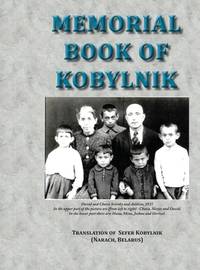
2019x-1939561841JewishGen Inc. 2019. Hardcover. New. 396 pages. 8.50x0.88x11.00 inches. JewishGen, Inc. hardcover
2008AME_9781592534036Rockport 2008. N/A. Hardcover. New/New. Rockport hardcover
2009Q-1592535755Rockport Publishers 2009-10-01. Paperback. New. New. In shrink wrap. Looks like an interesting title! Rockport Publishers paperback
20072090202118108518Chikuma Shobo Chikuma Bunko 2007. Soft Cover. Fine. The book is in fine condition. Chikuma Shobo Chikuma Bunko paperback
19962081502112500459B6 1st printing with cover band Kashoin 1996. Soft Cover. Fine. Number of books: 1 B6 1st printing with cover band Kashoin paperback
19812090202118100346Shinnihon Publishing Co. Ltd. Shinnihon Shinsho 1981. Soft Cover. Fine. The book is in fine condition. Shinnihon Publishing Co., Ltd. Shinnihon Shinsho paperback
20122090202118105942Kawade Shobo Shinsha Kawade Bunko 2012. Soft Cover. Fine. The book is in fine condition. Kawade Shobo Shinsha Kawade Bunko paperback
20082090202118101290Shobunsha 2008. Soft Cover. Fine. The book is in fine condition. Shobunsha paperback
20082090202118106839Bungeishunju 2008. Soft Cover. Fine. The book is in fine condition. Bungeishunju paperback
2090502113715647Not Available N.A. Soft Cover. Fine. The book is in fine condition. Not Available paperback
2020x-1939561833JewishGen Inc. 2020. Hardcover. New. 784 pages. 11.42x8.90x1.85 inches. JewishGen, Inc. hardcover
19492091202133207904Aozono so 1949. Soft Cover. Fine. Volume: 1 Aozono so paperback
20022081502112501595A5 1st edition 1st printing with cover band Sekai Bunkasha 2002. Soft Cover. Fine. Number of books: 1 A5 1st edition 1st printing with cover band Sekai Bunkasha paperback
19632110502150406849Dainishobo 1963. Soft Cover. Fine. Volume: 1 Dainishobo paperback
19922090202118107506Gakushu Kenkyusha GAKKEN MOOK 1992. Soft Cover. Fine. The book is in fine condition. Gakushu Kenkyusha GAKKEN MOOK paperback
19962090202118106254Kodansha 1996. Soft Cover. Fine. The book is in fine condition. Kodansha paperback
201125033New York/Milan : The Isamu Noguchi Foundation and Garden Museum/5 Continents Editions 2011. hardcover illustrated boards. minor crease to two board corner-tips with no internal impact. no other flaws or wear. clean. no markings. no tears. strong binding.; english text.; 255pp. illustrated throughout in b/w. . First Edition. Hardcover. Near Fine/No Jacket as Issued. 4to - over 9¾" - 12" tall. The Isamu Noguchi Foundation and Garden Museum/5 Continents Editions Hardcover
19432083002116409472Ten'nen-sha 1943. Soft Cover. Fine. The book is in fine condition. Ten'nen-sha paperback
19872091502133501151Madorashuppan 1987. Soft Cover. Fine. Number of books: 1 Madorashuppan paperback