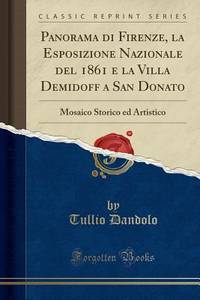
Mosaico Storico ed ArtisticoBiblio.com
34 résultats
0365750646.Gpaperback. Good. Access codes and supplements are not guaranteed with used items. May be an ex-library book. paperback
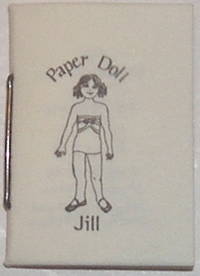
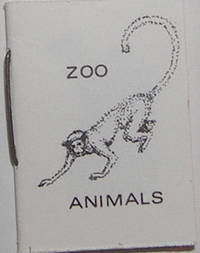
63-9305Cincinnati OH: Mosaic Press 1979. 25x17 mm. 16 pp. illustrated wrappers bound by a single staple. Illustrated. Near Fine. Cincinnati, OH: Mosaic Press, 1979. unknown
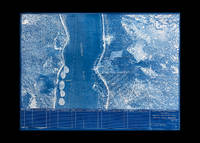
19603729British Columbia: B.C. Hydro 1960. Sheet Map. At Least Very Good. Sheet No. 7 - with "Hunting Survey Corporation Limited / West Coast Division" printed at lower left margin - in B.C. Hydro's Columbia River Developments : Arrow Lakes series having "Date of Photography June-July 1960" stated at bottom right hand corner. Large photo map has a scale of 1 inch to 200 feet so offers an excellent view of the properties about to be flooded near Robson B.C. Note that the "Columbia River" is now designated as Lower Arrow Lake on most maps. A circa 1960 Aerial Photo-Map of Robson B.C. measuring overall 26 inches tall x 35-3/8 inches wide the printed area within the single border/neat line measures 25 inches tall x 24-1/4 inches wide. Map with light edge wear and a few short closed tears else clean and unmarked. Previously rolled. This aerial photo was produced by BC Hydro prior to the construction of the Hugh Keenleyside Dam originally named the High Arrow Dam the photos were then made into maps showing predicted flood elevations propertry lines and where the flood levels would rise to after closing the gates. A large historic aerial photo that allows many family properties to be seen prior to being submerged. "Originally two lakes 14 miles apart the Arrow Lakes became one 230 km long lake due to the reservoir created by the 1960s construction of the Keenleyside Dam; at low water the two lakes remain distinct connected by a fast-moving section known as the Narrows. Damming the Lower Arrow Lake resulted in water rising 12 metres above natural levels. As a result of higher water the valley lost 2/3 of its arable land. Thousands of people relocated." wiki accessed 04/21. B.C. Hydro unknown
2090502113702571Not Available N.A. Soft Cover. Fine. The book is in fine condition. Not Available paperback
1901101718London: Printed by Edward Arnold for the Essex House Press under the care of C. R. Ashbee 1901. No. 229 of 250 copies. 12mo 6 x 4-1/2 inches. Title-page woodblock by T. Sturge Moore engraved initials. xiv 257 1 pp. text in black and red. Fine mosaic binding covers and four spine panels filled by a complex pattern of curved morocco inlays in four colors t.e.g. doublures with gilt-ruled inlaid borders silk endleaves by Curtis Walters signed on rear turn-in; fine in a custom half morocco chemise and morocco-tipped slipcase some old tape-strengthening to slipcase. A stunning perfectly preserved mosaic binding by the American binder Curtis Walters who specialized in such intricate and colorful mosaic bindings executed with an astonishing level of precision. This is one of a group of such bindings consigned by Walters to Parke Bernet and sold there 10 December 1957 lots 13-35 this lot 27.From the Park Bernet catalogue: "Mr. Walters was influenced to take up bookbinding around 1900 by the late George D. Smith eminent bookseller. Later he studied with Matthews the Club Bindery and Stikeman. He conceived his ideas about mosaic bindings as early as 1904 but between 1907 and 1928 he remained inactive. He has invented and brought to perfection a new technique whereby the most intricate inlaid designs can be achieved by a few simple tools without the use of dies or punches; gilt dots circlets and fillets are generally applied with restraint. Mr. Walters work has received wide recognition. Some of his early bindings are included in the Henry W. Poor collection and almost all of those offered for sale here have been exhibited in Paris 1930 New York Columbia University 1935 Hamburg Kunstgewerbeschule 1933-36 and Berlin 1936." Lawrence Thompson heaps further praise on Walters from "Hand Bookbinding in the United States Since the Civil War": "The infinite variety of design permitted by mosaic work is combined with Walters' marvelous delicacy in color schemes finely conceived geometric patterns and tasteful use of gold leaf to produce books that no Americans save perhaps the artists of the Club Bindery could have matched. The utter simplicity of Walters' methods he used but four tools belies his perseverance and devotion to his art. Only infinite patience and consummate skill could have produced Walters' bindings."Walter's bindings appear infrequently on the market this is a choice example of his artistry. Printed by Edward Arnold for the Essex House Press, under the care of C. R. Ashbee unknown
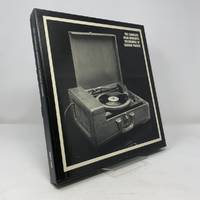
1990360366Mosaic Records 1990. FIRST EDITION. Paperback. Very Good/No Jacket. First Edition First Printing. Published by Mosaic Records 1990. Folio. Three CDs in box. Book is very good with brochure catalog #18 and booklet left inside. Great copy of this CD and catalog set on music. 100% positive feedback. 30 day money back guarantee. NEXT DAY SHIPPING! Excellent customer service. Please email with any questions. All books packed carefully and ship with free delivery confirmation/tracking. All books come with free bookmarks. Ships from Sag Harbor New York. Mosaic Records paperback
48198504like new. unknown
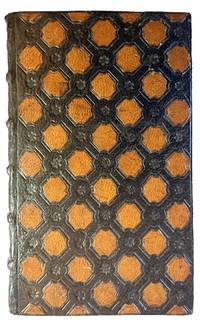
17083219Paris: Jacques Vincent for Jacques Estienne 1708. 2 parts in one 12mo binding 137 x 85 mm. 16 284 4 252 12 pages. Woodcut head- and tail-pieces and initial. Ruled in red throughout. At the end is a 4-page catalogue of books sold by Jacques Estienne. Bifolium g6-7 in part 2 bound in reverse order. Mosaic binding of black morocco probably ca. 1725-1735 covers with an all-over design of repeated concave-cornered lozenges of onlaid light brown morocco within a blind-tooled lattice design of double fillets and tiny six-petalled blossoms spine in six compartments five similarly decorated each with one onlaid lozenge second compartment with onlaid silver-tooled brown morocco lettering-piece doublures of dark brown morocco with silver-tooled arabesque roll border edges gilt over marbling rehinged upper joint chipping; modern suede-lined morocco folding box. Provenance: Paul-Louis Weiller 1893-1993 bookplate his sale Paris 30 Nov 1998 lot 32; modern booklabel “non nove sed nova" initials CL.<br /> <br /> A mosaic “tile†or tessellated binding attributable to Antoine-Michel Padeloup on a popular Jansenist devotional text. This unusual binding reverses the usual color scheme of the small corpus of similar known bindings providing a sober yet striking cover for the book.<br /> <br /> “Around 1707 mosaic work . began to be used in binding as it did in furniture and became the leading element in the design. These designs were now provided by onlay as opposed to the sixteenth-century use of paint and wax. Such mosaic work was either in a new form of the all-over semis now incorporating a framed structure so that it often resembled a tessellated pavement and was sometimes termed à répétition or with free-hand floral or other asymmetric realistic work†Barber Rothschild Waddesdon Manor catalogue p. 201. <br /> <br /> Tile-patterned mosaic bindings were usually used on small format books. Their invention is credited to the binder Antoine-Michel Padeloup or Padeloup le jeune 1685-1758 who bound for the entourage of the Regent Philippe II d’Orléans d. 1723. The height of the fashion for this style was probably the late 1720s and 1730s Barber p. 226. This style of decoration had the advantage of requiring little materiel. While “very labour-intensive the tile pattern style requires only a few tools all being common lines and curves `gouges’ and hardly any `figure’ that is expensive engraved tools. It would as such have suited under-capitalised younger binders. But such designs “clearly required careful planning and doubtless the preparation of a scaled plan based on both the exact size of the book and on the tools to be used†loc. cit. The present binding contains only one tool on the outer covers the small fleuron Waddesdon catalogue p. 384 fig. 11 and one roll which was also apparently used only on doublures Waddesdon catalogue I p. 436 RBT 8. <br /> <br /> Other tessellated mosaic bindings in this style all attributed to Padeloup are known: five of which three using the same tools are described and illustrated in the Waddesdon catalogue; another was reproduced by Michon and in the Esmérian catalogue. Those bindings use black or dark mororcco lozenges gold-tooled on a citron or light brown morocco ground with gold-tooled lattice-work creating a luminous effect. In contrast to those bindings here Padeloup reversed the color scheme: a black ground with restrained silver and blind tooling serves as background for the tile design of unadorned brown morocco lozenges. While visually striking the effect enhanced by the silver-bordered doublures is one of restraint no doubt intentional to reflect the book’s Jansenist content. <br /> <br /> Barbier Anonymes IV: 814. Giles Barber The James A. de Rothschild Bequest at Waddesdon Manor The National Trust: Printed Books and Bookbindings 2 vols. 2013; see nos. 90 91 92 93 and 572. Cf. Louis Michon Les reliures mosaïquées du XVIIIe siècle no. 89 = Bibliothèque Raphaël Esmérian II no. 89.<br /> <br /> <br /> (Jacques Vincent for) Jacques Estienne unknown
63-9307Cincinnati OH: Mosaic Press 1978. 25x17 mm. 16 pp. illustrated wrappers bound by a single staple. Illustrated. Near Fine. Cincinnati, OH: Mosaic Press, 1978. unknown