Biblio.com
10 867 résultats
17964Very Good. Print. Print is toned in the margins but clean bright and in very good condition. Overall size: 16" x 12.25". . unknown
17946Very Good. Print. Print is toned in the margins but clean bright and in very good condition. Overall size: 16" x 12.25". . unknown
190138254Genève Geneva: Cercle des Arts & des Lettres 1901. A stunning suite of TWENTY LARGE FOLIO WOOD ENGRAVINGS by Maurice Baud after paintings executed by Auguste Baud-Bovy between 1886 and 1898 depicting 19th-century Alpine life and landscapes in all of their picturesque austerity. 28 pages plus 20 full-page hors-texte wood-engravings. Complete with detailed letterpress descriptions. Edition limited to 171 copies of which this is number 41 one of 150 on fine wove paper printed for M.C. François and SIGNED BY BAUD. Absolutely complete with ALL PRINTED TISSUE-GUARDS PRESENT. Large folio 51.9 x 39.7 cm. Loose as issued in publisher's attractive cloth portfolio. Half-title spotted last leaf wood engraving no. 20 with some small marginal tears else FINE AND BRIGHT. A rare and important collection of Alpine prints. <br/><br/> Cercle des Arts & des Lettres hardcover
26837Paris Editions des Bibliothèques Nationales de France 1932 in folio (43,5x33) 1 volume broché en faux-feuillets sous chemise à rabats de l'éditeur, plat supérieur titré (imprimé en rouge et noir), 22 pages [1] (Textes de Paul Valéry et Jean Laran), et un faux-feuillet de table et de justication du tirage, avec 20 planches hors-texte montées sous caches, reproduisant en fac-similé les originaux de la Bibliothèque Nationale. Tirage limité à 601 exemplaires, celui-ci un des 20 exemplaires numérotés sur Madagascar (numérotés de 32 à 51). Bel exemplaire ( Photographies sur demande / We can send pictures of this book on simple request )
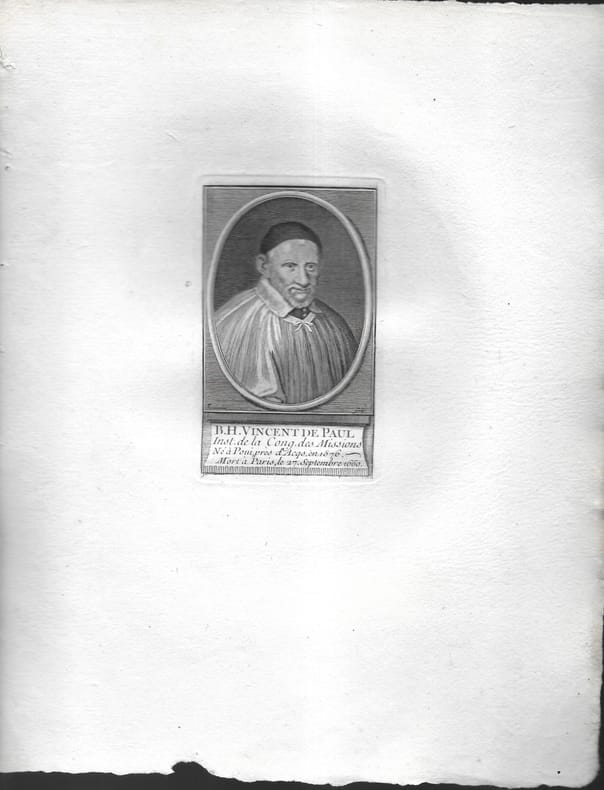
15213Épreuve sur beau papier filigrané. en feuille Très bon Paris 10,5 x 6,5 cm
241510 Planche N°59, format 29 x 40 cm (toutes marges). Chromolithographie d'époque avec le timbre à sec de l'Imprimerie Chaix (Lugt 1777c). Notre exemplaire est une des très rares épreuves imprimées sur papier Japon, toutes petites traces de punaisage sur chaque extrémité de la marge (Our plate is one of the few copies printed on Japanese paper. Original plate in good condition). LES MAITRES DE L'AFFICHE, prestigieuse publication d'art, éditée par l'atelier de lithographie Chaix, dont la parution s'étala de décembre 1895 à novembre 1900. Chaque livraison comportait 4 planches de reproduction en chromolithographie d'une remarquable qualité d'impression des plus belles affiches illustrées des grands artistes français et étrangers (auxquelles il faut ajouter 16 planches de lithographies originales données en prime aux abonnés). Lors de l'Exposition universelle de 1889, fut organisée la première exposition rétrospective dévolue à l'affiche, celle-ci devait valider la reconnaissance officielle d'appartenance de l'affiche au monde de l'art. Jules Chéret (1836-1932) y sera sacré '' Maître de l'affiche '', c'est aussi à cette date que Seurat commencera à collectionner les affiches de Chéret. Bel exemplaire ( Photographies sur demande / We can send pictures of this book on simple request )
1700A121S.l., s.e., s.d. (vers 1700) ; 190/250 mm, 1 pp., une feuille. Gravure italienne ancienne. Bon état.
S.l., s.e., s.d. (vers 1700); 190/250 mm, 1 pp., une feuille. Gravure italienne ancienne. Bon état.
Acquaforte Firma, titolo e numerazione a matita. Esemplare 1/99. Cm 27,5x25 (Foglio 60x45). . . Ottimo (Fine). . Tiratura 99. .
11973BOSTON UNIV PRINTS 1920. VIEWS OF ARCH MOMUMENTS GOOD-VERY GOOD. BOSTON, UNIV PRINTS, 1920 unknown books
11973BOSTON UNIV PRINTS 1920. VIEWS OF ARCH MOMUMENTS GOOD-VERY GOOD. BOSTON, UNIV PRINTS, 1920 unknown
223p. Highly illustrated. Oblong 4to. Original gold stamped cloth binding. 210 examples of images depicting people, places and events from the 1700's to the present day. Includes works of Paul Revere, Degas, Kollwitz, Daumier, Gordon Parks, Ben Shahn, Disney, and many others. REF 6
52,1 x 39 cm. Copperprint engraving on paper (two conjoined sheets). Beautiful copy of the famous south-west view of the Strasbourg Cathedral by Daniel Specklin from 1566. Some minor changes to the original print concern small architectural changes to the building itself, such as the helmet of the ridge turret, the staffage figures, and the monumental cartouche with the text, marking the transition from late Renaissance to early Baroque ornaments. The German text offers a partly legendary building history of the famous north tower. An additional text directly underneath the seam of the two sheets is a dedication to the dignitaries of the city: “Nobilissimis, amplissimis, prudentissimis Dominis, D. D. Praetoribus, Consulibus, Reliquisq[ue] inclusae Argentinae Senatoribus, Patribus Patriae, Patriam hanc turrim humiliter offert, consecrat, dedicat Isaac Brunn Argentine(n)sis chalkiographos A(nn)o 1615”. - Born in Strasbourg, Isaac Brun (1596-1669) worked primarily as a portraitist and book illustrator. - Upper margin somewhat brittle and with several tears, one larger tear showing traces of unprofessional restoration. Right border of the cartouche chafed. With a pinch fold affecting the dedication and a restored tear affecting the image in the lower right margin. Trimmed on the upper and lower margins, some browning. Thieme/Becker V, 121 (biography). Drugulin I, 291.
17945960CBZürich, bey Ziegler und Ulrich, 1794. (4) Bl., 318 (recte 118) S., (1) Bl. Register. Späterer marmorierter Pappband. + Wichtig: Für unsere Kunden in der EU erfolgt der Versand alle 14 Tage verzollt ab Deutschland / Postbank-Konto in Deutschland vorhanden +, Einband und Titelblatt
17945960CBZürich, bey Ziegler und Ulrich, 1794. (4) Bl., 318 (recte 118) S., (1) Bl. Register. Späterer marmorierter Pappband.
Jeweils ca. 215 x 336 mm. Aquarell bzw. Gouache mit Goldhöhung auf Papier. Auf Fälzen unter Passepartout montiert. Vier wohl noch dem 16. Jahrhundert angehörende Idealbildnisse aus einer Porträtserie der frühen Grafen von Zollern, wie sie um 1560 Basilius Herold im Auftrag von Karl I. von Hohenzollern prägte und die Frühneuzeit hindurch weitgehend akzeptiert blieb. "Da die Grafen von Zollern erst 1061 mit Burchard ins Licht treten und erst [... Friedrich III.] die Würde eines Burggrafen von Nürnberg erwarb, handelt es sich um ein Produkt späthumanistischer Geschichtsklitterung. Der Zollerschen Hauschronik zufolge war die entsprechende historische Forschung ein Gemeinschaftswerk Graf Karls I. aus der schwäbischen Linie (1516-76) und des Historikers Johann Basilius Herold. Damals müssen auch die Idealbildnisse der ersten Grafen geschaffen worden sein, die sich formal mit rekonstruierten Ahnenreihen, etwa der Wittelsbacher, aus dieser Zeit vergleichen lassen" (Haus der bayerischen Geschichte, online). - Es liegen vor: Danko (840), der angebliche Sohn des fingierten Stammherrn Tassilo, Rudolf (892), Friedrich I. (980) und Eitel Friedrich II. (1273). Die Grafen werden jeweils in Prachtrüstung unter einem Säulenbogen dargestellt; an den Säulen prangen in hübscher Gouache das Hauswappen der Zollern sowie das der jeweiligen Ehegemahlin (von Cilli, von Rieneck, von Hohenberg und von Schlüsselberg). In einer Kartusche unter dem Portrait jeweils eine mehrzeilige handschriftliche Beschreibung des Abgebildeten nebst Nennung der Ehegemahlin. - Hübsche, wohlerhaltene Folge.
HD-219o.J. DIE INDISKRETEN FAUNE. Komm Chloe, komm meine Schwester, näher doch: Die Jungfrau erhört meine Gebete noch. Die Lichtung befreit von Taschereaux und Faunenliess Nisa lächelnd ihr Hüften bestaunen. Lithographie, auf chamoisfarbenem Velin, mit den Adressen: Chez Aubert & Cie Pl. de la Bourse,29., sowie: Imp. de Me.Ve.Aubert r.de l'Abbaye 5,Paris. Darstellungsgröße 21:28,6 cm, Blattgröße 26,6:34,7 cm. Literatur: Daumier-Register 2058 I (von 1); Delteil 2058 I (von 1), Blatt Nr. 9 der Serie ?IDYLLES PARLEMENTAIRES.?, erschienen 30.10.1850 in ?LE CHARIVARI?. ? Sur blanc!
47933Paris Yves Rivière - Arts et Métiers Graphiques 1977 in 4 (27,5x21,5) 1 volume broché, couverture illustrée, 120 pages. 149 estampes décrites et reproduites. Maria Elena (Marie-Hélène) Vieira da Silva. Bel exemplaire ( Photographies sur demande / We can send pictures of this book on simple request )
29572Metz, Le Républicain Lorrain, 1932 - grand in-4 broché, couv. ornée des armes de la Lorraine, non paginé, texte de 14 pages suivi de 24 superbes estampes légendées sous serpente représentant de vieux villages lorrains - très bel ouvrage, excellent état
19921721DBLausanne, Éditions du Grand-Pont, 1992. 4°. 199 (1) S. Mit 112 Abb. (dv. 24 farbig). Farbig illustr. Orig.-Broschur + Wichtig: Für unsere Kunden in der EU erfolgt der Versand alle 14 Tage verzollt ab Deutschland / Postbank-Konto in Deutschland vorhanden + (minim berieben und bestossen).
18404635Album de lithographies par Charlet : 52 planches.Très rare. 1/2 veau bleu nuit, titre doré sur le plat supérieur. Très bon Paris Gihaut 1840 1 volume in-4° oblong
19701321109London, Sidgwick and Jackson, (1970). 4to. 11, (1), 240 S. m. 76 Illustr. OLwd (etwas berieben u. innen gering gebräunt).
ria9781859283189_inpHardback. New. New Book; Fast Shipping from UK; Not signed; Not First Edition; The years 1855-80 generally referred to as 'The Sixties' saw some of the finest and most significant contributions to wood-engraved book and magazine illustration in Britain. In this major survey now available in a revised paperback hardcover
- Lucien Vogel éditeur, Paris 1915, 37,6x24,2cm, une feuille. - Original color print, printed on vergé paper, signed in the plate. An original print used to illustrate the Gazette du bon ton, one of the most attractive and influential 20th century fashion magazines, featuring the talents of French artists and other contributors from the burgeoning Art Deco movement. A celebrated fashion magazine established in 1912 by Lucien Vogel, La Gazette du bon ton appeared until 1925, with a hiatus from 1915 to 1920 due to the war (the editor-in-chief having been called up for service). It consisted of 69 issues printed in only 2,000 copies each and notably illustrated with 573 color plates and 148 sketches of the models of the great designers. Right from the start, this sumptuous publication "was aimed at bibliophiles and fashionable society," (Françoise Tétart-Vittu, "La Gazette du bon ton", in Dictionnaire de la mode, 2016) and was printed on fine vergé paper using a type cut specially for the magazine by Georges Peignot, known as Cochin, later used (in 1946) by Christian Dior. The prints were made using stencils, heightened in colors, some highlighted in gold or palladium. The story began in 1912, when Lucien Vogel, a man of the world involved in fashion (he had already been part of the fashion magazine Femina) decided, with his wife Cosette de Brunhoff - the sister of Jean, creator of Babar - to set up the Gazette du bon ton, subtitled at the time: "Art, fashion, frivolities." Georges Charensol noted the reasoning of the editor-in-chief: "'In 1910,' he observed, 'there was no really artistic fashion magazine, nothing representative of the spirit of the time. My dream was therefore to make a luxury magazine with truly modern artists...I was assured of success, because when it comes to fashion, no country on earth can compete with France.'" ("Un grand éditeur d'art. Lucien Vogel" in Les Nouvelles littéraires, no. 133, May 1925). The magazine was immediately successful, not only in France but also in the United States and Latin America. At first, Vogel put together a team of seven artists: André-Édouard Marty and Pierre Brissaud, followed by Georges Lepape and Dammicourt, as well as eventually his friends from school and the School of Fine Arts, like George Barbier, Bernard Boutet de Monvel and Charles Martin. Other talented people soon came flocking to join the team: Guy Arnoux, Léon Bakst, Benito, Boutet de Monvel, Umberto Brunelleschi, Chas Laborde, Jean-Gabriel Domergue, Raoul Dufy, Édouard Halouze, Alexandre Iacovleff, Jean Émile Laboureur, Charles Loupot, Chalres Martin, Maggie Salcedo. These artist, mostly unknown when Lucien Vogel sought them out, later became emblematic and sought-after artistic figures. It was also they who worked on the advertising drawings for the Gazette. The plates put the spotlight on, and celebrate, dresses by seven designers of the age: Lanvin, Doeuillet, Paquin, Poiret, Worth, Vionnet and Doucet. The designers provided exclusive models for each issue. Nonetheless, some of the illustrations are not based on real models, but simply on the illustrator's conception of the fashion of the day. The Gazette du bon ton was an important step in the history of fashion. Combining aesthetic demands with the physical whole, it brought together - for the first time - the great talents of the artistic, literary, and fashion worlds; and imposed, through this alchemy, a completely new image of women: slender, independent and daring, which was shared by the new generation of designers, including Coco Chanel, Jean Patou, Marcel Rochas, and so on... Taken over in 1920 by Condé Montrose Nast, the Gazette du bon ton was an important influence on the new layout and aesthetics of that "little dying paper" that Nast had bought a few years earlier: Vogue. [FRENCH VERSION FOLLOWS] Estampe originale en couleur tirée sur papier vergé, signée en bas à droite dans la planche. Robes de Callot, Jenny, Paquin, Martia
- Lucien Vogel éditeur, Paris Eté 1915, 36,5x24cm, une feuille. - Double original color print heightened with gold, printed on vergé paper, signed in the plate. An original print used to illustrate the Gazette du bon ton, one of the most attractive and influential 20th century fashion magazines, featuring the talents of French artists and other contributors from the burgeoning Art Deco movement. A celebrated fashion magazine established in 1912 by Lucien Vogel, La Gazette du bon ton appeared until 1925, with a hiatus from 1915 to 1920 due to the war (the editor-in-chief having been called up for service). It consisted of 69 issues printed in only 2,000 copies each and notably illustrated with 573 color plates and 148 sketches of the models of the great designers. Right from the start, this sumptuous publication "was aimed at bibliophiles and fashionable society," (Françoise Tétart-Vittu, "La Gazette du bon ton", in Dictionnaire de la mode, 2016) and was printed on fine vergé paper using a type cut specially for the magazine by Georges Peignot, known as Cochin, later used (in 1946) by Christian Dior. The prints were made using stencils, heightened in colors, some highlighted in gold or palladium. The story began in 1912, when Lucien Vogel, a man of the world involved in fashion (he had already been part of the fashion magazine Femina) decided, with his wife Cosette de Brunhoff - the sister of Jean, creator of Babar - to set up the Gazette du bon ton, subtitled at the time: "Art, fashion, frivolities." Georges Charensol noted the reasoning of the editor-in-chief: "'In 1910,' he observed, 'there was no really artistic fashion magazine, nothing representative of the spirit of the time. My dream was therefore to make a luxury magazine with truly modern artists...I was assured of success, because when it comes to fashion, no country on earth can compete with France.'" ("Un grand éditeur d'art. Lucien Vogel" in Les Nouvelles littéraires, no. 133, May 1925). The magazine was immediately successful, not only in France but also in the United States and Latin America. At first, Vogel put together a team of seven artists: André-Édouard Marty and Pierre Brissaud, followed by Georges Lepape and Dammicourt, as well as eventually his friends from school and the School of Fine Arts, like George Barbier, Bernard Boutet de Monvel and Charles Martin. Other talented people soon came flocking to join the team: Guy Arnoux, Léon Bakst, Benito, Boutet de Monvel, Umberto Brunelleschi, Chas Laborde, Jean-Gabriel Domergue, Raoul Dufy, Édouard Halouze, Alexandre Iacovleff, Jean Émile Laboureur, Charles Loupot, Chalres Martin, Maggie Salcedo. These artist, mostly unknown when Lucien Vogel sought them out, later became emblematic and sought-after artistic figures. It was also they who worked on the advertising drawings for the Gazette. The plates put the spotlight on, and celebrate, dresses by seven designers of the age: Lanvin, Doeuillet, Paquin, Poiret, Worth, Vionnet and Doucet. The designers provided exclusive models for each issue. Nonetheless, some of the illustrations are not based on real models, but simply on the illustrator's conception of the fashion of the day. The Gazette du bon ton was an important step in the history of fashion. Combining aesthetic demands with the physical whole, it brought together - for the first time - the great talents of the artistic, literary, and fashion worlds; and imposed, through this alchemy, a completely new image of women: slender, independent and daring, which was shared by the new generation of designers, including Coco Chanel, Jean Patou, Marcel Rochas, and so on... Taken over in 1920 by Condé Montrose Nast, the Gazette du bon ton was an important influence on the new layout and aesthetics of that "little dying paper" that Nast had bought a few years earlier: Vogue. [FRENCH VERSION FOLLOWS] Estampe double originale en couleur rehaussée à l'or, tirée sur papier vergé, signée en bas à droite