Antiquariat.de

11 208 résultats
1957143337Stuttgart. Verlag Gert Hatje. 1957. 206 Seiten. Mit sehr zahlreichen teils ganzseitigen fotografischen Abbildungen auf Kunstdrucktafeln u. zahlreichen Fabrikmarkenabbildungen. Zweifarbige, illustrierte Originalbroschur. (Geringe Gebrauchsspuren). 23x15,5 cm
182975517New York: Albert Grosfield Inc. 1829. First edition of this Early Grosfeld catalog. The wholesale price list is 4 pp. and printed on rectos only. The printed paper wrapperstwo brads split to upper spine tell us that Albert Grosfeld's main showroom was on Third Avenuce in New York City but he also had showrooms in Chicago and Los Angele. Is is accompanied by 100 placards showing the furniture on offer. Each card measures 7 5/8 by 9 1/2 inches and bears a photographic illustration of the piece along with a printed description stock number and dimensions As follows: 1111/20150 Adam Satinwood Writing Desk hand-decorated leather top. MADE IN ENGLAND. H. 38". W. 42". D. 23". Very good condition.The company seems to have specilaized in high end reproductions of antique furniture. They survives the Gfreat Depression and mwere quite active in the Mi-Century Modern Movement. Albert Grosfield Inc. hardcover
0331660776.Ghardcover. Good. Access codes and supplements are not guaranteed with used items. May be an ex-library book. hardcover
197087027Krefeld. (Um 1970). 159, (1) Seiten. Mit zahlreichen Abbildungen. Titelvergoldeter Original-Leinwand-Einband. Gutes Exemplar ! 30x26 cm
199661086Abbeville Press 1996 In-4 relié 27,7 cm sur 22,6. 232 pages. Très bon état d’occasion.
Broschiert, 145 x 170mm., 206 S. mit uber 400 Abbildungen, koloriert. Einen Namen machte sich Peter Maly bei der Zeitschrift Schoner Wohnen. Dort brachte der Wahl-Hamburger als Einrichtungsberater und als einer der fruhen Artdirektoren den Bundesdeutschen monatlich die Moderne ins Haus. Spater pragte er das Erscheinungsbild beruhmter Firmen und wurde schliesslich einer der erfolgreichsten Mobeldesigner. Doch obwohl der Schopfer zahlreicher Klassiker unser aller Lebensstil beeinflusst hat und langst zu den ganz Grossen der Branche gezahlt wird, ist sein Gesamtwerk bislang nur Insidern bekannt. Hier wird es erstmals systematisch dargestellt. Einer kompakten Biografie, die auch die Bruche jungster Geschichte spiegelt, folgen 34 Meilensteine des Mobeldesigns sowie die Darstellung wichtiger Marken. Die steile Karriere des geburtigen Bohmen zeigt konkret, was bei einem Designprofi dazugehort, und ist zudem ein Intensivkurs in Stilfragen. Die Reihe ???Werkbiografie Design??? wird fortgesetzt. Neue.
196076833Frankfurt a. M. September 1960. 97, (1) Seiten u. zahlr. teils farbige Abbildungen auf Tafeln. Farbig ill. Originalbroschur. (Gebrauchsspuren). 22x21 cm
IN 4. BR [BE]. ENV 120 PP. ENV 140 ILL EN NOIR ET COULEURS [TBE].
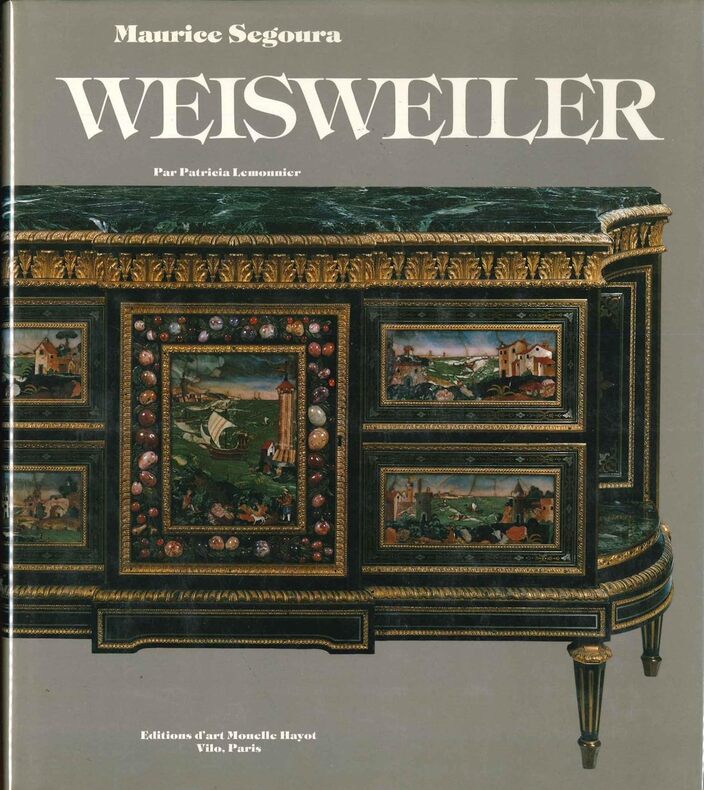
19833090Paris, 1983, 1983 in-4 pleine toile, jaq. (200 pp.). Entièrement illustré.
Hardback, , 280p, English edition, Fine copy. Including an index. Illustrated. ISBN 9783775738095. The name Hans J. Wegner (1914 2007) is inseparable from his unrivalled chairs, which helped Danish design to achieve its international breakthrough. Every design fan has his or her favorite from among Wegner s approximately five hundred creations. Today, there is a hardly a glossy interior design magazine that does not include an illustration of the elegant China Chair (1943) or the Y Chair (1950), and even John F. Kennedy sat on his Round Chair, which is now simply called The Chair (1949). Trained as a furniture maker, Wegner usually made his prototypes himself by hand, using traditional joinery techniques such as tongue-and-groove or finger joints. In the process he pushed the limitations of wood, giving his designs an unmatched elegance. His sense of humor did not fall by the wayside, either, as evidenced by his splendid Peacock Chair (1947) or the masculine Ox Chair (1960), that latter of which is available with or without horns.
With 4 colour and 96 b / w plates. Sunning to spine; previous owner's name and notes on FEP Clean Copy
Museum catalog in excellent condition in every respect. New. Binding is solid and square, covers have sharp corners, exterior shows no blemishes, text/interior is clean and free of marking of any kind. 102 pages heavily illustrated with photos, prints and shots from the museum's exhibits, including sections on Furniture, Clothing, Interior Design, Textiles and Clothes, Metalwork, Jewelry, Toys, Machines and Industrial Appliances. Text is in English and Polish, includes museum brochure and two tickets.
Paperback. Several marks and scores on covers. Abrasion on spine. Leading corners, edges and spine ends are worn. Pen on page block foot. Binding is intact, contents are clean and clear. AM Used
Hardcover, 256 pages, English, book in perfect condition, with pictures in b/w, . ISBN 9781421411620. The bold lines and decorative details of Art Deco have stood the test of time since one of its first appearances in the International Exhibition of Modern Decorative and Industrial Arts in Paris in 1925. Reflecting the confidence of modern mentality-streamlined, chrome, and glossy black-along with simple elegance, sharp lines, and cosmopolitan aspirations, Art Deco carried surprises, juxtaposing designs growing out of speed (racecars and airplanes) with ancient Egyptian and Mexican details, visual references to Russian ballet, and allusions to Asian art. While most often associated with such masterworks as New York's Chrysler Building, Art Deco is evident in the architecture of many U.S. cities, including Washington and Baltimore. By updating the findings of two regional studies from the 1980s with new research, Richard Striner and Melissa Blair explore the most significant Art Deco buildings still standing and mourn those that have been lost. This comparative study illuminates contrasts between the white-collar New Deal capital and the blue-collar industrial port city, while noting such striking commonalities as the regional patterns of Baltimore's John Jacob Zinc, who designed Art Deco cinemas in both cities. Uneven preservation efforts have allowed significant losses, but surviving examples of Art Deco architecture include the Bank of America building in Baltimore (now better known as 10 Light Street) and the Uptown Theater on Connecticut Avenue NW in Washington. Although possibly less glamorous or flamboyant than exemplars in New York or Miami, the authors find these structures-along with apartment houses and government buildings-typical of the Deco architecture found throughout the United States and well worth preserving. Demonstrating how an international design movement found its way into ordinary places, this study will appeal to architectural historians, as well as regional residents interested in developing a greater appreciation of Art Deco architecture in the mid-Atlantic region.
Hardcover, 352 pages Illustrated. 32 x 25 cm . ENGLISH ISBN 9783961711796. A vivid company biography of leading furniture manufacturer Walter Knoll based on its formative figures Wilhelm, Hans, and Walter Knoll and, for more than 25 years to date, Markus Benz. Walter Knoll, the book, charts the more than one-and-a-half-century-old history of this remarkable furniture dynasty, tracing the evolution of its designs in relation to key cultural and historical developments. When the Thomas Mann House in Los Angeles was recently bought by the Federal Republic of Germany and transformed into a representative transatlantic meeting place, it was Walter Knoll furnishings that defined its interior design and showcased German creativity and economic-cultural performance. Based in Herrenberg, near Stuttgart, the more than 150-year-old furniture business is one of the most successful furniture companies of the modern era and a global leader in the high-end furnishings segment. Walter Knoll's impressively long history dates back to Wilhelm Knoll, the founding father of the Knoll dynasty, who first set up a leather shop in Stuttgart in 1865. Knoll rose from being a tanner and merchant to the court purveyor to the House of Wurttemberg. When his sons, Willy and Walter, took over the company in 1907, they began producing seating-introducing the first club armchair to Germany and becoming the industry's first exporter. Their advances marked a revolution in upholstered furniture. After founding his own company in the 1920s, Walter Knoll was a breakout sensation in the avant-garde interior design world with a landmark exhibition at the Weissenhof Estate in Stuttgart, under the direction of Mies van der Rohe, in 1927. His son, Hans Knoll, went to the U.S. in the 1930s and himself founded his own company, Knoll Inc., and with it, re-wrote design history. In 1993, Markus Benz, the son of Rolf Benz, joined the Knoll ranks, continuing the successful cooperation with internationally-renowned architects and designers.
IN 8. BR [MOY]. 238 PP. ENV 50 ILL EN NOIR. [BE]
195611613London: William Clowes and Sons 1956. 1st. Hardcover. Fine. 10.0x6.5x1.3in. not issued with a dust jacket. <br>With 120 black and white plates. <br>360pp 2.30lb 10.0x6.5x1.3in William Clowes and Sons hardcover
19562521William Clowes and sons ltd 1956 360 pages in8. 1956. broché. 360 pages.
Hardcover in-8°, 240 pages, illustrations, index, cartonnage illustre en couleurs Tres bel exemplaire [LA-4]
IN 4. BR [MOY]. 48 PP. ENV 80 ILL EN NOIR ET EN COULEURS. [MOY]