11 208 résultats
Axel Steensberg and GrithNot in perfect condition. unknown
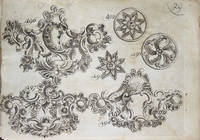
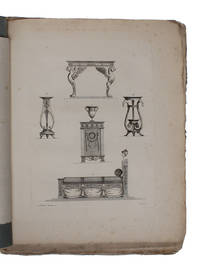
18903212Paris 1890. Oblong folio 395 x 260 mm. 135 drawings of ornate furniture in lead and watercolor highlighted in gum arabic on 104 leaves of heavy paper later pencil foliation including four mounted drawings on tinted paper and two smaller loose drawings one of the latter signed A. Archambaut del. both with notes of measurements and pattern or stock numbers the second with specifications of colors and material. No. 93 a bed apparently unfinished. Foxing and soiling to first and last leaves occasional light foxing elsewhere marginal soiling especially to first few leaves fol. 104 detached two drawings on fols. 15 and 25 with small abraded areas 5 other drawings with tiny abrasions or white flecks the rest of the drawings in fine condition. The drawings on guards bound in half shagreen and pebble-grained cloth rubbed spine gilt lettered “Album Meubles Fantaisies.â€<br /> <br /> A spectacular manuscript album of watercolor designs of colorfully decorated painted and inlaid furniture in Louis XV Louis XVI and Second Empire styles by a female artist and furniture designer.<br /> <br /> Depicted are commodes large and small tables desks cabinets wardrobes sideboards dressers armchairs mirrored stands stands holding manicure sets multi-drawered sécrétaires beds clocks and even bellows and brooms for the chimney. Most are highly ornate and include colorful painted or inlaid decoration meticulously rendered often in minute detail by the artist-designer. With their cabriole legs serpentine curves and lavish inlay and marquetry these delightful creations express to a sometimes impractical degree the late 19th-century vogue for Louis XV and Louis XVI-style furniture. <br /> <br /> The artist can be identified as Aline Anne Archambault née Carrausse 1847-1908 thanks to the one signed drawing  loosely inserted which matches stylistically those of the album. The only child of the Paris furniture designer Jean Marie Carrausse Archambault moved in artistic and artisanal circles: in 1877 she married Arthur Eugène Archambaut a graveur ciseleur or engraver of luxury metalwork; the four witnesses at their marriage were his uncle a sculptor; his cousin a printer; and two friends identified respectively as a printer and a furniture maker this information from Geneanet.org. The Victoria and Albert Museum holds six furniture drawings by her also signed with her first initial and last name and a few lithographs after her one of the drawings V&A accession number E.284-1952 has an additional printed signature “P. Levant Carrausse del.†clearly a member of her family. Since Aline was married and died in the 4th arrondissement in Paris it is likely that this album was created there. <br /> <br /> The title on the binding “Album of Furniture Fantasies†implies that at least some of the pieces were not intended to be built: they abound in bright colors and witty details such as the tree-branches wrapping around two basket stands fol. 17 or the wildly ornate bed with which the album ends. While the element of fantasy in these accomplished paintings is thus clear many probably did function as specimens of furniture that could be ordered from members of the artist’s entourage of furniture makers. This is evident from the two inserted drawings both of chests of drawers which have measurement notes and stock numbers. One has the inkstamped name “G. Cauvet†on the verso.<br /> <br /> The archival records indicate that Aline lost a daughter in infancy in 1877 when she was 30. She had no other children. The ebullient drawings in this album betray no hint of tragedy and it is tempting to view them as a work of youth before shadows arrived to dim the joy of creation.<br /> <br /> “The best known of the nineteenth-century revivals was that for Louis XV and Louis XVI furniture. The Louis XV revival intensified during the Second Empire when it departed so much from the 18th-c. prototype that it is best called `Rococo’.†H. Osborne ed. The Oxford Companion to the Decorative Arts 1988 p. 359 unknown
1940WRCAM49639New York 1940. Forty-two original works from approximately 9 x 7 1/4 inches to 14 1/2 x 11 1/2 inches. Most on paper and mounted to cardboard backing some executed on art board some matted. Minor dust-soiling to some several examples have pencil drawings of room layouts or floor plans on the verso Hofstatter stamps on verso of two a few examples detached from mount. Overall clean and in excellent condition retaining vibrant coloring. A stellar group of thirty-nine original watercolors and three original pencil drawings depicting early 20th-century furniture designs largely in the French Provincial style. The artwork was executed by New York furniture designer and interior decorator Theodore Hofstatter or artists working for his firm. The group includes wonderful depictions of mirrors beds window drapes chairs desks bureaus tables and stands. Additionally there are eleven works showing the interior design of various room settings. <br> <br> Theodore Hofstatter succeeded his father in their New York City business of furniture design and construction naming the firm Hofstatter's Sons when his brother Adolph joined him in the concern in the early 1870s. The Hofstatter family concentrated their efforts on building quality furniture at wholesale prices. In 1885 Theodore Hofstatter founded a branch of the business to focus on interior decorating opening a separate location on Broadway near Twelfth Street. Eventually the business would move to at least two different addresses on Fifth Avenue evidenced by Hofstatter labels affixed to the verso of several of the watercolors here a few of these labels are also marked "Special Design" by Hofstatter. According to THE NATIONAL CYCLOPEDIA OF AMERICAN BIOGRAPHY 1894 Theodore's design business "kept abreast ever since its opening with the current of fashionable taste in illustrating in the styles reproduced all those characteristics with which the names inseparably connected with the history of the three Louis are essentially a part. Berain Lebrun Watteau Andre Charles Boule have now a historical significance; Cailleri Gouthiere Reisener Fragonard Greuze Boucher Martin and the rest awaken a whole train of associations. It is through their influence and such as theirs that Theodore Hofstatter's designs possess the material to produce only those effects that can be truthfully termed good style." Hofstatter restricted his decorating contracts largely to commercial interests furnishing the City Club the Downtown Club the Arkwright Club and nine floors of the Hotel Savoy. He also cultivated a small group of private clients one of whom was Cornelius Dresselhuys Dutch consul to Great Britain. Two of Dresselhuys's rooms the Entrance Hall and Vestibule at 9 Kensington Palace Gardens in London are featured here in lovely full watercolors. <br> <br> A fascinating group of artwork featuring furniture and interiors from a prominent New York City furniture maker and interior designer. Such original illustrations of furniture and interior decoration are in our experience quite scarce. unknown books
17402420Augsburg: Johann Jacob Haid & son 1740. Six tall narrow folio-sized engravings with etching platemarks 400 x 207 mm. sheets 435 x 277 mm. deckle edges unsigned but by Jacop Wangner after Watteau numbered 1-6 in the plate at lower right imprint at lower right I. Haid et filius excudit A. V. Augustae Vindelicorum. Upper edges archivally tipped to mats. Fine.<br/> <br/> A perfectly preserved suite of six large rococo engravings reproducing Watteau's paintings for a folding screen intended to be cut out by ladies for use in furniture decoration. <br /> <br /> Watteau's influence on 18th-century decorative arts throughout Europe by way of the many engravings after his work published by Gersaint has long been recognized but the use of the engravings as actual sheets to be cut up and applied to household objects has garnered little attention until recently. The vogue for decoupage probably first appeared in the late seventeenth century and by the 1720s the hobby of cutting out colored prints for application to various household objects and pieces of furniture was all the rage in France Germany and beyond. The process which remained a favorite pastime throughout the eighteenth century was known as la découpure in French as Ausschneidekunst in German and as lacca contrafatta or lacca povera in Italian although "the latter term appears to be a true misnomer considering the amount of minute work involved" Kisluk-Grosheide p. 83. It consisted of neatly cutting out hand-colored engraved or woodcut motifs or figures applying them to a textile or sometimes cardboard ground and varnishing them. These creations were applied to furniture as well as to "screens folding screens wall hangings ceilings the tops of coaches and sedan chairs" loc. cit. affording a passable imitation of Asian lacquer. The craze which created a goldmine for certain print publishers reached the point that bibliophiles and collectors were warned to keep a vigilant eye on their most precious books prints and paintings lest eager young ladies attack them with scissors. <br /> <br /> In 1728 six engravings after Watteau's paintings for a folding screen were commissioned by the art collector Jean de Julienne as part of a vast program of reproductions of Watteau's painted oeuvre. They were engraved by Louis Crépy fils and published by the Paris marchand-mercier art dealer and print publisher Edmé-François Gersaint. An announcement of their upcoming publication in the November 1727 Mercure de France explicitly described them and two other Crépy-Watteau engravings as "marvelously appropriate for decoupages with which ladies these days make such pretty furniture" Crépy grave actuellement six morceaux en hauteur . d'après un Paravant peint par Watau dont les compositions sont très-galantes. De pareils sujets peints sur des fonds blancs conviennent à merveille aux découpures dont les Dames font aujourd'hui de si jolis meubles Mercure de France 1 Novembre 1727 p. 2492 digitized on Gallica. Indeed the publisher himself highlighted this usage in his own note in a later issue of the Mercure cited by Glorieux p. 212: pointing out that all of the decorative motifs in the Watteau engravings were "most useful for painters fan-makers sculptors goldsmiths tapestry-weavers embroiderers etc." he added that "all these ornaments can be perfectly used in decoupage" tous ces ornements réussissent parfaitement en découpure. <br /> <br /> These and other rococo engravings were quickly taken up by German publishers especially in Augsburg Metken p. 102. This paravent folding screen suite was one of the first of the Watteau engravings to be copied in Germany. The present very close reverse copies of Crépy's six plates appeared in Augsburg only a few months after their publication in June 1728 in Paris: engraved by Jacob Wangner or Wagner ca. 1703-1781 they were published by the heirs of Jeremias Wolff in 1729. This set is an otherwise unrecorded reissue of the Wangner copperplates. A lavishly decoupage-decorated secretary in the collections of the Metropolitan Museum of Art includes cutouts that were almost certainly from these Augsburg plates as they are from "reverse copies of the prints by Crépy" Kisluk-Grosheide p. 88 noting other examples of Augsburg copies of Watteau prints used on the same secretary. Her assertion that "it has not been shown that these engravings were actually used for this purpose" p. 84 is only applicable to the French plates. Indeed other examples of lacca povera objects described in her article point to the German production of copies of French rococo prints as the main source for decoupage at this time on pieces produced throughout Europe including in Italy and in France itself. <br /> <br /> The general title appears at the foot of the first plate. Each engraving presents a central figure or scene set within a frame of delicate rococo arabesques and ornaments. Three show the Comédie italienne figures of Pierrot Harlequin and Colombine a woman playing the lute on a rug-bedecked stage a pair of allegorical figures flanking an awning above and at bottom the smiling visage of a Commedia dell'Arte character of the opposite sex. The remaining pastoral scenes of courtship or douceur de vie are set within naturalistic elements two with streams flowing over a dripping shell-shaped basin or ledge under which a ghostly face can be dimly discerned. Watteau's designs were based on earlier designs by Claude III Audran decorative painter for Louis XIV at Versailles and Fontainebleau to whom Watteau had apprenticed. "After joining forces with ornamentalist Claude III Audran about 1708 he Watteau began inserting figures in Comédie-Italienne costumes into Audran's trademark arabesques" Judy Sund "Watteau's Pierrots Why so Sad" The Art Bulletin vol. 98 no. 3 2016 p. 325 reproducing the Pierrot panel from the present series. <br /> <br /> OCLC locates a single copy of the Wolff issue at the Bibliothèque nationale de France reproduced in Gallica. In the present issue of which I locate no other copies the engraver's signatures were removed. <br /> <br /> On the Wolff issue cf. W. Augustyn "Augsburger Buchillustration im 18. Jahrhundert" in Augsburger Buchdruck und Verlagswesen von den Anfangen bis zur Gegegenwart 1997 p. 820 citing E. Isphording Gottfried Bernhard Göz 1708-1774 1997 pp. 35 ff.; Thieme Becker 35:150. On the Crépy engravings cf. Guilmard Maitres ornemanistes p.145; Dacier & Vauflart Jean de Julienne et les graveurs de Watteau au XVIII. siècle 159-163; E. de Goncourt Catalogue Raisonné de l'Oeuvre . d'Antoine Watteau 1875 p. 224 nos. 309-314; G. Glorieux À l'enseigne de Gersaint: Edme-François Gersaint marchand d'art sur le Pont Notre Dame Paris 2002 pp. 189-192; Mark Millard Collection: French Books no. 170.35 5 of the 6 plates. On the use of these engravings for decoupage see: D. O. Kisluk-Grosheide "'Cutting up Berchems Watteaus and Audrans': A Lacca Povera Secretary at The Metropolitan Museum of Art" Metropolitan Museum Journal 31 1996 pp. 81-97; and S. Metken Geschnittenes Papier Munich 1978 pp. 101-2 & 113. Johann Jacob Haid & son unknown
1775315877Birmingham 1775. 92 copper plates of which four are folding on laid paper with crown and "GR" i.e. George Rex watermark some numbered in the plate with breaks from 2 to 145 prices in ink in manuscript. 1 vols. 4to. Some edge wear chipping. Housed n a quarter brown morocco clamshell box and chemise. 92 copper plates of which four are folding on laid paper with crown and "GR" i.e. George Rex watermark some numbered in the plate with breaks from 2 to 145 prices in ink in manuscript. 1 vols. 4to. A rare collection of copper plates of brass hardware for furniture likely manufactured in Brimingham in the last quarter of the 18th century. Includes doorknobs drawer-pulls hinges keyholes etc. in the rococo style. unknown
1830315876Birmingham 1830. 163 engraved plates irregularly numbered 1 to 278. 1 vols. Oblong 4to 13 x 9 inches. Quarter brown leather and boards with the same printed index B-W on front and back pastedowns. worn. 163 engraved plates irregularly numbered 1 to 278. 1 vols. Oblong 4to 13 x 9 inches. Rare engraved early nineteenth century brassfounder's trade catalogue with the manufacturer's name given usually not noted in such a work. While the actual catalogue appears to be ca. 1820-1830 some of the actual copper plates would appear to have been engraved somewhat earlier ca. 1800-1810<br /> <br /> Plates present :<br /> 111 17 19 26 29 31 33 37. 39 41 47 59 65 66 74 75 7980 84 86 90 9899 101 102 105111 112 116 117 118 125 128 129 130 131 132 134 136 137 138 140 141 142 143 145 147 149 152 163-190 192-196 199-203 205-222 224 226 227 230 230A 231 232 234 235 240 241 242 242A 243-248 248A 249 250 253 254-265 267-278. unknown
1830315876Birmingham 1830. 163 engraved plates irregularly numbered 1 to 278. 1 vols. Oblong 4to 13 x 9 inches. Quarter brown leather and boards with the same printed index B-W on front and back pastedowns. worn. 163 engraved plates irregularly numbered 1 to 278. 1 vols. Oblong 4to 13 x 9 inches. Rare engraved early nineteenth century brassfounder's trade catalogue with the manufacturer's name given usually not noted in such a work. While the actual catalogue appears to be ca. 1820-1830 some of the actual copper plates would appear to have been engraved somewhat earlier ca. 1800-1810<br/><br/>Plates present :<br/>111 17 19 26 29 31 33 37. 39 41 47 59 65 66 74 75 7980 84 86 90 9899 101 102 105111 112 116 117 118 125 128 129 130 131 132 134 136 137 138 140 141 142 143 145 147 149 152 163-190 192-196 199-203 205-222 224 226 227 230 230A 231 232 234 235 240 241 242 242A 243-248 248A 249 250 253 254-265 267-278. unknown books
1825WRCAM56380Greenfield Ma 1825. 108pp. Publisher's advertisements on rear board. 16mo. Original printed paper-covered boards. Moderate staining to boards minor chipping to spine ends minor edge wear. Moderate scattered foxing. Very good and wholly unsophisticated. Untrimmed. The first American printing of the first American furniture finisher's manual reprinted from the original British edition by G.A. Siddons. "A new edition with considerable additions. Including an appendix containing several valuable tables." Clear and concise instructions are given for dying and staining woods making glue making and applying varnish polishing japanning cleaning woods and metals and much more. For example to make furniture oil "Take linseed oil put it in a glazed pipkin with as much alkanet root as it will cover; let it boil gently and you will find it become of a strong red color: let it cool and it will be fit for use." Six tables in the appendix provide assistance for figuring lengths and weights and an index follows. <br> <br> Western Massachusetts was obviously a place of great architectural and design innovation during the American Federal period as both the present title and Asher Benjamin's landmark architecture book THE COUNTRY BUILDER'S ASSISTANT. were printed in Greenfield. Not in AMERICAN IMPRINTS. Highly desirable and a landmark in American crafts. RINK 1793. hardcover books
19106112Serrurerie et cuivrerie artistiques. Spécialité pour Bâtiment. Aperçu des principaux modèles. 2 Teile in 1 Band. Mit 266 doppelblattgr. lithogr. Tafeln auf leicht rötlichem Papier, gedruckt von Edm. Genet, Paris. Paris, [ca. 1900-1910]. Folio (44,0 x 33,0 cm). Titel, 2 Bl. Inhalt u. Zwischentitel. Blindgepräger Orig.-Halblederband mit Rückenvergoldung.
1519FURNITUR011798Eget F�rlag G�teborg. 1915-1916. First edition. Small quarto. Four volumes: 196 23 adverts; 198 23 adverts; 192 27 adverts; 192 31 adverts. Almost all the pages are devoted to photographs of the hugely prolific Otto Schultz's distinctive furniture designs which seem to take elements from the Arts and Crafts movement and blend them with the latest Art Deco ideas. Each volume has a short introduction by Schultz. Text in Swedish. Original hessian bindings stamped with titles in art deco type. Laid into the third and fourth volumes are eight-page pamphlets giving the dimensions of the various items. Otto Schultz went on to found the Boet interior design store in Gothenburg and ran the influential magazine of the same name.Ownership signatures on front endpapers of first volume. Titles on covers slightly flaking. A very good set indeed. Very scarce. Eget F�rlag, G�teborg. unknown
1911(LCPCART-0001)(Un très rare recueil à tirage limité des modèles et des décors des tapis et des tapisseries des résidences impériales et royales de France. Superbe exemplaire avec un envoi autographe de l'auteur à M. Dervillé, l'un des hommes les plus éminents de France au début du XX siècle) DUMONTHIER Henri. "RECUEIL DE DESSINS DE TAPIS ET DE TAPISSERIES D'AMEUBLEMENT DU MOBILIER DE LA COURONNE". s.d. (1911), Paris, C.H. Massin. 1 volume In-Plano (647x460 mm) (dimensions planches 635x454 mm) 1 faux-titre en rouge, 1 titre en rouge et noir, (4) pp. (notice et index des planches), 48 planches en héliotypie. Chemise de l'éditeur de carton toilé à rabats de couleur vert émeraude sur les plats et lie de vin sur le dos et les coins. Plat supérieur avec titre en grandes lettres dorées. Edition Originale, rare. Superbe exemplaire. Petit frottement à l'angle supérieur du premier plat, quelques infimes brunissures marginales sur les planches et plus prononcées au verso de deux ou trois planches, sans trace sur le recto; sinon recueil très frais, avec le lacet en tissu vert de l'étui conservé. Ce recueil est une précieuse documentation sur le décor et les modèles des tapis et des tapisseries des résidences impériales du Premier Empire et de celles royales sous la Restauration. "Les documents renfermés dans le présent album sont la reproduction encore inédite de dessins et d'aquarelles de tapis et de tapisseries d'ameublement composés sous le Premier Empire et la Restauration, pour servir de modèles aux manufactures des Gobelins, de Beauvais, et notamment à celle de la Savonnerie. Les perturbations apportées dans le fonctionnement des Manufactures Nationales au cours de la période révolutionnaire, leur détresse financière, les contestations qui s'élevaient souvent sur leur utilité même, enfin le manque d'ouvriers et d'artistes en avaient, pour ainsi dire, arrêté complétement la production. Aussi, en 1800, lorsque Bonaparte, maître du pouvoir, eut décidé de s'installer aux Tuileries et à Saint-Cloud, Lecomte, architecte des Consuls, puis Percier et Fontaine ne purent trouver que bien difficilement, dans les réserves des Manufactures, les ressources indispensables à l'amenagement même sommaire de ces deux Palais. A la Savonnerie, il ne restait plus dans le magasins que trois tapis, deux petits et un grand. Bien plus, les modèles, les dessins, indispensables pour remettre en mouvement les métiers, avaient pour la plupart disparu : les uns ayant été vendus ou volés, les autres détériorés ou mutilés comme présentant des emblèmes de la féodalité. Quant à ceux qui s'y trouvaient encore, ils ne répondaient plus au goût du moment... peu en harmonie avec les meubles et les bronzes fabriqués sur les données de David, par les Jacob, les Thomire et les Ravrio". Les planches en héliotypie sont l'oeuvre des Frères Berthaud et 35 ont été finement rehaussées par J. Saudé. Edition tirée à 500 exemplaires. Celui-ci non numéroté, avec la mention "OFFERT". Provenance : Exceptionnel exemplaire avec envoi autographe de l'auteur "à Monsieur le Président S. Dervillé Respectueux hommage de son toujours bien dévoué. 29 oct. 1911" sur la page du faux-titre. Stéphane Adolphe Dervillé (1848-1925), capitaine au 110e bataillon de la Garde Nationale, fut mobilisé pour le siège de Paris le 6 octobre 1870. Proprietaire d'importantes carrières de marbre, comme celles de Carrare, à Massa-Carrara en Italie, en France, sur les Alpes (marbre vert de Maurin) et sur les Pyrénées, il reçut la Médaille d'Or à l'Exposition Universelle de Paris en 1878 et le Diplôme d'Honneur à l'Exposition Universelle d'Amsterdam de 1883. Président du Tribunal de Commerce de la Seine de 1893 à 1897, à partir de 1899 jusqu'à sa mort, il fut Président du Conseil d'Administration de la Compagnie des Chemins de fer de Paris à Lyon et à la Méditerranée. Directeur de l'Exposition Universelle de 1900, Régent de la Banque de France (1900-1925), il fut, en outre, Président du Conseil d'Administration de la Banque Française et Italienne pour l'Amérique du Sud et vice-président de la Compagnie Universelle du Canal maritime de Suez. (LCPCART-0001) (3.000,00 €)
1788315882London: Sold at the White Swan Shoe Lane and the Black Boy St. Martin's Lane 1788. First edition. Additional engraved allegorical title and 20 copper-engraved plates sixteen after Thomas Shearer. xvi 143 1 4 Price of Doors Extra Prices of Doors pp. 1 vols. 4to. Recent quarter calf red morocco spine label marbled boards. Dust-soiling to plates some marginal dust-soiling and spotting and small losses to a few blank corners of letterpress leaves bookplate. First edition. Additional engraved allegorical title and 20 copper-engraved plates sixteen after Thomas Shearer. xvi 143 1 4 Price of Doors Extra Prices of Doors pp. 1 vols. 4to. First edition of this work by the journeymen cabinet-makers of London which lists prices and provides designs for common furniture forms of the period. Subsequent editions followed. This edition is scarce on the market with no copies appearing at auction since 1981. Sold at the White Swan, Shoe Lane, and the Black Boy, St. Martin's Lane unknown books
192046296Newton Highlands Massachusetts approx. 1920-1923. original three-ring binder. Some photographs detached from their mounts etc; some minor edgewear; binder dusty. 8-1/2 x 11 inches. Riley worked for the Heywood-Wakefield Company from approximately 1920-1923. He invented the "Riley Fibre Loom" and after selling the use of the loom for paper and reed fabric based applications to Heywood-Wakefield left in 1923 to form his own venture pursuing the technology with stranded metal applications. Included in the archive are copies of contracts agreements and licenses; numerous samples of various types of wicker weave and reinforced fabric for furniture; photographs of the inventor machinery looms and factories; and related drawings and other materials. unknown
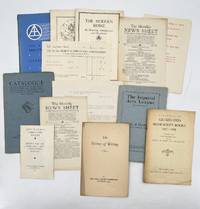
19008941<p>London: Various 1900. 50 books and pamphlets from the personal library of the furniture designer and high-end London shop-keeper Sir Ambrose Heal which reflect his love for the Arts and Crafts movement and his passion as a pioneer and champion of design. The collection reveals Heal's connections with many of the leading figures of the time with inscribed copies from his fellow furniture designer Hamilton Smith review copies of works by William Lethaby and his own copies of early publications by the Designs and Industries Committee which he had helped found. There are polemics by Clough Williams Ellis as well as obscure exhibition catalogues and reports several unrecorded from organisations that he supported and helped to run. Altogether a fascinating insight into the life of an influential taste-maker and businessman in England in the first half of the century who ran Heal and Son on Tottenham Court Road for 40 years and played an active role in cultural life in London and further afield. The collection includes: BOOKS 1 'The Caliph's Design Architects ! Where is Your Vortex' by Wyndham Lewis. First edition. First Impression. Scarce one of only 1000 copies produced. A printed label to the front cover. Original blue marbled wrappers over card worn away to spine panel. Internally in very good condition. Published by The Egoist Ltd. 2019. Laid in is a printed invitation from the Royal Society of British Artists requesting the company of Mr A Heal dated March 29th 1930. 2 GIFT TO HEAL FROM A FURNITURE DESIGNER 'The People's Album of London Statues'. Described by Osbert Sitwell. Drawn by Nina Hammett. Published by Duckworth London 1928. Ambrose Heal book plate to front paste down. Hand written pencil note to front free end paper reads 'Given to me by Hamilton Smith Christmas 1928' - Hamilton Temple Smith was a fellow furniture designer with whom Heal shared a patent. Brown cloth boards with decorative embossing to front in good condition. Contains black and white illustrations throughout. Clean pages and illustrations with light tanning and mild foxing. 3 'England and the Octopus' by Clough Williams Ellis. 1928. Boards and internally in good condition. All that remains of dust jacket is front cover which has been excised neatly and laid in. An influential polemic against urban sprawl. 'Heal' inscribed in pencil to front paste down. 4 'Britain Must Rebuild A Policy for Regional Planning' by Frank Pick. Published by Kegan Paul. In good condition. 'Ambrose Heal' written in pencil across front board. Front free end paper inscribed 'Ambrose Heal Nov '41'. 5 GIFT TO HEAL 'Henry Irving'. The Vellum Parchment Shilling Series. No III. Published by Field & Tuer. By William Archer. In good condition. Annotated 'HH from C.C.B. '92'. 6 'Guinevere' by Alfred Lord Tennyson. Illustrated by Byam Shaw. Published by TC & EC Jack. Pocket book. Inlaid decorative gift card reads 'From Philip Carr To Mr Ambrose Heal'. 7 'Cosmic Vision' by TJ Cobden Sanderson. First Edition 1922. Blue cloth covered boards a little worn to edges end papers and text clean. b/w frontispiece protected by dust sheet in very good condition overall throughout. 8 'Lettering in Ornament' by Lewis F Day. First Edition 1902. Good copy in the original title-blocked cloth. 218 pp. 9 'William Richard Lethaby 1857-1931'. Published by Central School of Arts and Crafts 1957. First Edition. Hardcover. Boards a little discoloured. Text block sound overall in good condition. 86 pp. Laid in is a compliments slip from the Principal of London County Council. 10 REVIEW COPY 'Art and Handicraft' by John D Sedding. First Edition 1893. Green cloth covered boards with gold titles. Edges and spine sunned /darkened but in very sound condition. End papers clean some foxing text clean throughout. Inlaid is a printed note from Kegan Paul Trench Trubner & Co. To the reverse is a faint pencil drawn sketch of a building with tree in foreground. 11 'Handicrafts and Reconstruction. Notes by Members of the Arts & Crafts Exhibition Society'. Published for John Hogg. 1919. 139 pp. Original green cloth boards frayed to edges. Internally in good condition leaves age toned throughout. 12 'The Attribute Proper to Art: Pure Art Value' by Thomas Henry Lyon M.A. Brown card wrappers in good condition. Front free end paper inscribed 'Ambrose Heal from J H Lyons. April 20th 1932' presumably a family member related to the Cambridge architect and designer Thomas henry Lyon. PAMPHLETS AND BOOKLETS DESIGN & INDUSTRIES JOURNAL: Heal co-founded the Design and Industries Association which aimed to encourage greater design values within industrial production. 15x DIA journals news sheets and lecture booklets dated variously between 1919 1927. Includes Booklet Number One 'The Future Of Industrial Design' by Herbert Read with other contributions by Anthony Bertram and John Grey and William Lethaby's Art and Workmanship - all very scarce. Laid in is an overdue subscription reminder payable to The Design & Industries Association dated July 1925 made out in hand to Mr Ambrose Heal who in 1915 had helped to found the Association DIA 2 'A Note Regarding Script Types' by Douglas C McMurtie. Published by Press of Ars Typographica New York 1925.32 pp. In very good condition throughout. Ambrose Heal book plate to inner front wrapper. 3 Annual Reports of the Committee of the Art-Workers' Guild dated 1926 1929 & 1935. In very good condition. 4 3x pamphlets published by The Civic Arts Association dated 1927. Titled 'On Medals On Inscriptions Lest We Forget'. In good condition. 5 'The Future of the Past by John Leighton'. Programme for a production dated AWG Revels 1924. Card wrappers darkened and bumped to edges Text clean and unmarked. Catalogue for a production of 'The Statue of Artemis' signed 'with compliments from John Leighton'. Card wrappers. In fair condition. 6 2x pamphlets titled 'The History of Writing' from The Ideal Home Exhibition Olympia 1934. In good condition. 7 Oxford Copy Books x2 unused. 8 Mermaid Society 1903 programme for a production of 'Comus'. Card wrappers bound by orange string to spine. Age worn leaves foxed overall in good condition. Unrecorded programme for a performance in Regent's Park which included Mrs Beerbohm Tree in the cast. 9 Der Zwiebelfisch x2 dated 1909. In good conditiom. 1 x Kultur des handwerks Dec 1926. 10 'Undescribed Copy Books in the Ekstrom Collection Svenska Skolmuseet Stockholm' by Carl Bjorkbom. Inscribed to front ' With compliments from the author'. Inlaid is a signed letter to Mr Heal from Carl Bjorkbom. 11 The Statue of Artemis Shrovetide Revels Art Workers' Guild 1919 inscribed 'With Compliments John Leighton' - Master of the Art Workers' Guild. 12 Catalogue of a Book Exhibition at the Central School LCC 1912 elaborately annotated by Heal to the rear. A further collection of pamphlets which include exhibitions members lists Imperial Arts League 1915 listing Heal's membership annual reports and catalogue lists for various societies and arts organisations. Please contact Christian White Rare Books Ltd for more information or images of this item 1900</p> Various hardcover
1930D4924Alfafar Valencia c. 1930s. Near Fine. Album containing unmounted watercolor and gouache pencil and color printed studies of individual pieces of furniture and interior design ensembles probably created as maquettes for advertising purposes. Includes 17 in pencil ranging in size from 5.5-by-9 inches to 11-by-17 inches; and 32 in color most about 11-by-15 inches with 3 large pieces 18-by-24 inches folded once down the middle. Total of 48 pieces some a little rubbed or chipped along the edges; a few of the pencil sketches foxed; but the whole is overall nice and bright suitable for display. Remarkably detailed the polished wood shines! and accomplished artwork shows lavish nigh on palatial bedrooms and dining rooms -- with ornate beds bookcases chairs tables bureaus dressers and more prominently on display. 13 images in pencil or in color focus on specific pieces of furniture sometimes many per page taking them out of their context rooms and allowing a detailed look at the piece itself. The designs seem primarily focused on classical and neoclassical styles but Muebles Rodriguez is known for carrying modern colonial Provencal and avant garde pieces as well -- some of that influence is apparent here. A lovely and rich presentation. <br/><br/> unknown books
1868WRCAM32817Philadelphia: Henry Carey Baird 1868. 4pp. plus forty-eight engraved plates. Oblong octavo. Original green cloth gilt- stamped cover. Front hinge starting. Internally bright and clean. Very good. The third furniture pattern book published in America issued simultaneously with another Baird title GOTHIC ALBUM FOR FURNITURE MAKERS. It was preceded by books called THE CABINET-MAKER'S ASSISTANT published in 1840 and 1842. Depicted are a variety of bed stands bureaus wardrobes tables bookcases and more in a Renaissance Revival style. They are patterned after mid-19th- century French designs. All early American furniture books are rare. Henry Carey Baird hardcover books
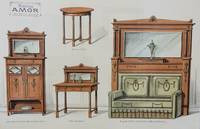
19123220206<p><em>Oblong folio 318 x 472 mm 88 chromolithograph illustrated pages; only occasional light spotting; original cloth-backed flexible boards imitating cloth front cover printed in bronze colour; spine worn a few marks.</em></p><p>The furniture house Grocholesky situated in a small town near Hildesheim in Lower Saxony offered entire suites for living- dining- and bedrooms mainly in art nouveau style however still including the odd piece of historicist design for the more conservative buyer.</p><p>The large and beautiful illustrations show suites of furniture with the measurements on each page; the furniture suitably decorated with modernist vases and mantelpiece decorations on display on dressers shelves and cupboards to give customers an idea of design potential.</p><p>gProvenanceg: Inscribed on the rear inside cover by a citizen of Bockenem at a later date and with stamp and release stamp by a local museum.</p> Bockenem: Grocholesky, Printed by H. W. & C., Berlin.
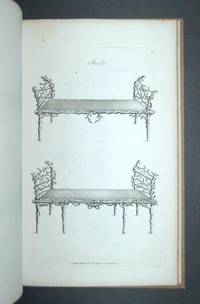
39829London: Printed for I. & J. Taylor at the Architectural Library 1793. 8vo 227 x 140 mm etched throughout 25 plates including pictorial title which is slightly spotted 7 of the plates have some minor purple crayon over colouring or lettering modern boards endpapers renewed. Often credited to William Wrighte due to his earlier publication of 1767 entitled Grotesque Architecture although there is no evidence for his authorship. The vogue for this style of garden furniture designed to resemble tree roots or entwined branches began in the 1750's but it was first made truly practical at the time of this issue with the introduction of decorative cast iron. This rare pattern-book being the only one wholly devoted to the rustic styles depicting chairs benches tables mirrors and chimney-pieces. RIBA 3932; ESTC locates copies at BL RIBA National Trust V&A and Massachusetts Institute of Technology. London: Printed for I. & J. Taylor, at the Architectural Library, [1793?] hardcover
189356869Salem OR: Buren & Hamilton 1893-1904. 4to. 90 mylar sleeve leaves unnumbered. containing 403 invoices shipping & waybills TLS ALS TL copy letters and more many of which appear on steel-engraved letterhead many printed on colour-tinted paper often shipping and weight bills still retaining original stamps a few mailing envelopes a number of check receipts many w/ manuscript and stamped autographs others w/ corrections and/or annotations in ink or pencil; also included are actual samples of velvet fabrics wallpapers and textured colour sample papers printing sample for perforated business card. All preserved in recent 3-ring cloth binder stamping on front cover. An exceptional archive of original letters invoices waybills business cards and receipts all documenting the thriving business of Buren & Hamilton at the end of the Gilded Age and beginning of the Progressive Era in Salem Oregon in the aftermath of the 1893 economic crash. Drawing from suppliers in California just a few years before the San Francisco Earthquake & Fire the company also sourced from Seattle WA New York and Chicago. Portland was the manufacturing and industrial hub of Oregon as can be seen in these invoices and receipts: such companies as The Columbia Chair Company Dealers who sold chairs office chairs and rockers from 309-311 Front St. shipped rocking chairs and office chairs to Salem in 1903; Henry Jenning & Sons located at 172-174 First St. shipped a load of leather oak chairs in 1903; J.G. Mack & Co. located at 86 & 88 Third St. in Portland supplied velvet rugs oil cloths and lamp shades in 1903; while the A. Merle Co. and McCord & Work located on Water St. supplied brass and iron bed frames the same year. Buren & Hamilton also sourced mattresses and sacks of recycled denim cotton “Shoddy†from Peters & Roberts Furniture Co. for mattresses; and purchased often from the Portland Mattress & Upholstery Co. at 18-20 Front St. which supplied wool-combed coverings mattresses mattress tops from 1900-1904 -- their factory would be gutted by fire in 1907. Many of the items were shipped down the Willamette River on the Oregon City Transportation Co. ships with a note from 1904 indicating the company had completed a sale of odd sized mattresses to them; numerous Southern Pacific Oregon Division freight bills; as well as a shipment on the SS Oregonian via the American-Hawaiian Steamship Co. of five crates of chair seats from Marshall Field & Co.In addition it appears that Oregonians in and around Salem purchased heavily from the store luxury goods such as beveled mirrors framed artwork sleek wallpapers velvet fabrics tapestries oriental rugs and more. Many of the invoices letters waybills and documents record many items supplied by the storied W.P. Fuller & Co. of San Francisco & Sacramento CA as well as their subsidiary in Portland OR. They were main suppliers of beveled and mirrored glass on the Pacific Coast which often had to be imported from England into the U.S. and several of the orders in 1899-1901 note that the company was having issues supplying such pieces to Buren & Hamilton due to labor difficulties finally sourcing mirrors from Pilkington Bros. English Picture Glass. They occasionally canceled orders and the Fuller Co. writes in 1901 over a canceled order of “deadening felt.†The W.P. Fuller Co. explain that “your reasons for wishing to cancel your order are not considered sufficient to justify us in doing so . . . †and that they were aware that “some of our competitors are circulating unjust and untrue reports concerning us all the time.†Included amongst these letters are samples of cotton backing for carpets and even three original samples of wallpaper. There are also present a number of letters and invoices from the firm of Tozer & Son which took over the W.P. Fuller Wallpaper division about 1901 with letters present making that announcement. Of additional interest are the many invoices letters and waybills back and forth with the storied Schussler Bros. on 119-121 Geary St. Star King Building in San Francisco detailing many of the popular framed and matted photographs and images for Salem shoppers. These encompassed the “Lone Indian†which were often reproductions of the iconic End of the Trail sculpture by James Earle Fraser; Athletes Dutch Windmills Shakespeare prints of assorted types and sizes Lone Arab a Chinese print a boxing series of matted “Deal of a Fellow†Madonna Artotypes -- typically reproductions of Raphael’s Madonna and Taber art photos. Many of the letters bill heads and invoices sport steel engraved architectural vignettes documenting buildings which would be destroyed in the 1906 San Francisco Earthquake & Fire as well as many of the business records for those companies. One of the freight bills bears the photographic letterhead of the Chicago & North-Western Railway Co. dated 1904. Another significant supplier was the D.N. & E. Walter & Co. of San Francisco which supplied linoleum flooring fabrics and more for Buren & Hamilton from 1899-1904 and even includes in one of the letters a piece of the red velvet fabric they no longer carried.Buren & Hamilton was originally founded in the late 1880’s by A.T. Yeaton as a furniture/undertaker business later sold to A.B. Buren and finally sold to Max O. Buren and Clarence Hamilton who operated at three locations along Commercial St. including Greenbaum’s Building at 298 Commercial the building at 136 Commercial 340 Court St. now Sid’s Furniture. Clarence bought out Max Buren’s shares in 1916 becoming the C.S. Hamilton Furniture Co. and operating until it was sold to Rubenstein’s in the 1960’s. See: Norma Hamilton Cochran Historic Businesses -- Hamilton Furniture Salem History Matters March 17 2017; New Stationery Department of Schussler Brothers San Francisco The American Stationer Vol. LIV 1903 pp. 4-5; John Caldbick Panic of 1893 and its Aftermath HistoryLink Essay 20874 Oct. 1 2019. Buren & Hamilton, hardcover
18363503Mit 44 (statt 48) kolorierten lithogr. Tafeln von Caron, gedruckt bei Lemercier, Bernard & Cie. [Paris, 1836]. 4to. (ca. 30,0 x 22,5 cm). Lose in neuer Pappkassette.
190551711. Serie [alles Erschienene]. 48 künstlerische Facsimile Aquarelle. 48 auf kräftigen hellgrünen Karton montierte farbige Faksimiles. Wien u. Leipzig, Fr. Wolfrum, [1905]. Gr.-Folio (46,7 x 37,0 cm). 1 Titelblatt auf kräftigem Karton. Lose in Orig.-Halbleinwandmappe.
60314Leipzig Industrie-Comptoir 1810. 4to 330 x 265 mm. Two hefts both uncut in the original printed wrappers with publisher's titel-label pasted on to front wrapper. Wear to extremities and Heft 11 missing spine and front wrappers detached and back wrapper partly detached. Internally with light brownspotting throughout. Heft 10: 1 pp. 10 plates; Heft 11: 1 pp. 9 plates. <br/><br/><em>First edition Heft 10 and 11 being the last two in the series of this exceedingly rare work with illustrations on furniture of all kinds. Only one complete copy is known In the Victoria and Albert Musem </em> unknown
60314Leipzig, Industrie-Comptoir, 1810. 4to (330 x 265 mm). Two hefts both uncut in the original printed wrappers with publisher's titel-label pasted on to front wrapper. Wear to extremities and Heft 11 missing spine and front wrappers detached and back wrapper partly detached. Internally with light brownspotting throughout. [Heft 10:] 1 pp. + 10 plates [Heft 11:] 1 pp. 9 plates.
1920H16553Kiel & Milwaukee WI: Kiel Furniture Co 1920. Near Fine. 5 catalogs oblong quarto wraps each about 13 x 10 inches very good plus to near fine condition 64 to 96 pp. each illustrated throughout some in subtle browntone occasional plates in color with occasional price lists and inserts. Products include dining room suites tables library tables desks stools tabourettes pedestals and "novelties." The Kiel Furniture company was founded in 1882 and employed German-American immigrants in the small town of Kiel and has been in business ever since now under the name A. A. Laun Furniture Company named for the younger brother of J. B. Laun one of the original presidents of the company who took over as vice president and general manager in 1916. The types of products featured in these catalogs reflects both the tastes of their clientele mainly middle-income Midwestern households but also reflects the Stickleyesque influence of Arts & Crafts and Mission style furniture. Searching the OCLC database we could find NO copies of any of these particular Kiel Furniture catalogs in institutions; the earliest Kiel catalog we could find institutionally is a 1925 catalog of furniture a single example of which is in the Wisconsin state historical archives. Lightest wear and soil. Kiel Furniture Co unknown
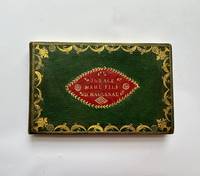
18074044<p>A charming book toy where an early user has converted a book into a book box housing a secret compartment for notes and correspondence. The compartment houses eight blank sheets which have been cut to size and then had their edges gilded. Any sent letters are by definition no longer present but nor alas are any billet doux received. The binding itself itself is dated 1807 and the supralibris gives the ownership of the book as 'Ignace Mehl fils d'Haguenau'.</p>