Warhol AndyMareMagnum

52 942 résultats
En contrepoint à la rétrospective d’environ deux cents œuvres d’Andy Warhol qui se tient au Musée, treize de ses films, pour la plupart inédits et restaurés grâce au concours du Museum of Modern Art et du Whitney Museum de New York, sont présentés quotidiennement au Studio 5 du Centre Georges Pompidou. Bien que sa filmographie soit très importante (100 films réalisés entre 1962 et 1968), ses films demeurent méconnus et peu diffusés en Europe. C'est en 1962, alors qu'il est déjà un artiste célèbre, qu'Andy Warhol commence à s'intéresser au cinéma. Fréquentant le milieu du "New American Cinéma" regroupé à New York autour de Jonas Mekas et de la Filmmakers Cooperative, Andy Warhol découvre la production dite "Underground" des Stan Brakhage, Gregory Markopoulos ou Jack Smith. Andy Warhol va en quelque sorte faire l'expérience du cinéma, pour ne pas dire en réécrire l'histoire. Ses premiers films rappellent beaucoup le cinéma primitif : une caméra fixe, ou presque, enregistre une tranche de vie, un évènement "banal", sans son, sans couleur : un homme qui dort (Sleep), un baiser (Kiss), l'Empire State Building, Henry G. fumant son cigare. "J'aime que les choses soient toujours exactement les mêmes" (Andy Warhol). Fin 1964, sa production évolue vers un cinéma parlant, "scénarisé", (rencontre avec Ronald Tavel). Même si le non interventionnisme de l'artiste demeure la règle, les films deviennent plus complexes : bande sonore, montage, direction d'acteurs. On ne peut parler de mise en scène, mais simplement de mise en situation d'individus devant un appareil de prise de vues. Andy Warhol aux différentes étapes de sa carrière a toujours manifesté une attitude de distance par rapport au sujet filmé). Intensité, et sentiments sont exclus, seul demeure un art de surface. "If you want to know ail about Andy Warhol, just look at the surface of my paintings and films and me, and there 1 am. There's nothing behind it" (Andy Warhol) La facture des films demeure toujours aussi brute. "Pas d'histoire, pas d'intrigue, simplement des incidents" répond Andy Warhol à son scénariste. La facture des films demeure toujours aussi brute. Seul demeure un art de surface. Ce qu’il affirme d’ailleurs lui-même : "If you want to know all about Andy Warhol, just look at the surface of my paintings and films and me, and there I am. There’s nothing behind it." Les films présentés : - Kiss (1963, 54’) - Sleep (extrait) (1963, 42’) - Blow Job (1963, 41’) - Eat (1963, 31’) - Empire (extrait) (1964, 48’) - Henry Geldzahler (1964, 99’) - My Hustler (1965, 67’) - Beauty n°2 (1965, 66’) - Vinyl (1965, 66’) - The Life of Juanita Castro (1965, 66’) - The Chelsea Girls (1966, 195’) - Lonesome Cowboys (1967, 109’) - Nude Restaurant (1967, 109’) — Testi: Blistène Bernard, McKane Miles et al. F.to: 21x25,5; pagg. 272; BN; rileg. brossura fustellata. Editore: Centre Georges Pompidou, Paris, 1990.
In 1961 a fashionable commercial artist named Andy Warhol created an artistic furor in New York with his deadpan versions of the Campbell’s Soup can. Since then he has become the most talked about but least understood artist of the late 20th century. Warhol made acceptable the use of industrial techniques in the creation of paintings obsessed with modern clichés—car crashes, Coke bottles, sex symbols such as Marilyn Monroe and Liz Taylor. At the same time, his films—<I>Blowjob, Sleep, Chelsea Girls, Lonesome Cowboys</I>—forced us to look at the object/subject, transformed the bizarre into the banal, and remade the form and content of cinematic experiment and production.Originally published in 1971, Peter Gidal’s <I>Andy Warhol</I> was the first book written on Warhol’s films and paintings, a concise and astute analysis of an artistic revolution. ”Idol of the jet set,” ”trend-maker,” superstar, Warhol was taken at more than face value in Gidal’s unconventional and insightful exploration. Twenty years later, <I>Andy Warhol </I>remains a seminal text, essential for a serious understanding of the artist and the work.</Div> <em>--This text refers to an out of print or unavailable edition of this title.</em> — Testi: Gidal Peter. F.to: 12,5x18,5; pagg. 160; BN; rileg. brossura. Editore: Studio Vista, London, 1971.
L8960Münich. Série complète des douze affichettes (30 x 23,5 cm.) en couleurs (avec le prospectus de présentation et le synopsis) pour le film Trash. Rare ensemble édité pour la promotion de la version allemande réalisée par Constantin Films en 1971. Le film Trash réalisé par P. Maurissey, produit par A. Warhol, avec Jo Dallesandro, H. Woodlawn, J. Forth, etc. fait partie de la trilogie qui comprend également Flesh (1968) et Heat (1972).
57938Paris, Bordas, 1995, gd. In-4 oblong, br. À rabats, couv. photos coul. éd., 160 pp., papier glacé, très nb. Photos coul., Très beau carnet de ce superbe film français avec Emmanuelle Beart, Daniel Auteuil, Jean-Claude Brialy. RARE Très bon état
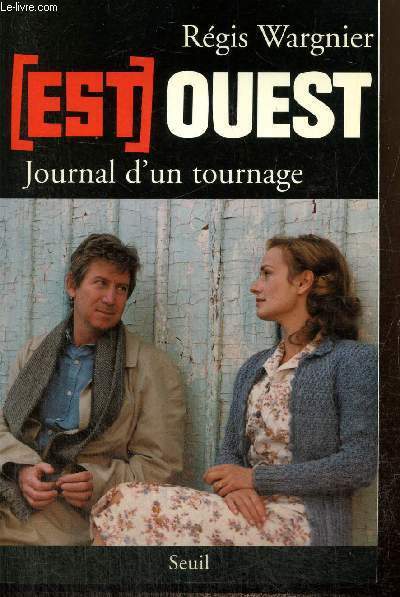
1999RO80257119Seuil. 1999. In-8. Broché. Etat d'usage, Couv. convenable, Dos plié, Intérieur frais. 220 pages. Nombreuses photos en couleurs hors texte.. . . . Classification Dewey : 791.43-Cinéma
19901028077Chatto and Windus; London, 1990. 376 S.; Abb. Fadengehefteter Originalpappband mit Schutzumschlag.
<br/> STATO: NUOVO.<br/> TITOLO: Cary Grant. Le charme et l'ironie d'un parfait gentilhomme. <br/> AUTORE: Wansell,Geoffrey.<br/> CURATORE: Traduzione di B. Bauchau.<br/> EDITORE: Gremese<br/> DATA ED.: 1998,<br/> EAN: 9788873012184
(56) SS. Mit Holzschnitt-Initialen zu Beginn der Gesänge bzw. Gesangsabschnitte. Neuer Halbpergamentband unter Verwendung einer alten Notenhandschrift mit gedr. Titelschild am Vorderdeckel. Verblasster dreiseitiger Rotschnitt. Qu.-8vo. Typendruck zu 24 Kompositionen: Diskantstimme einer von drei Motettensammlungen, die Wannings noch nachweisbares Schaffen repräsentieren (es gehören dazu noch außerdem die Tenor-, Alt- und Bass-Stimmen sowie die für die Quinta und Sexta vox). Der aus dem niederländischen Kampen gebürtige Komponist Johann Wanning (1537-1603), 1560 an der Universität Königsberg immatrikuliert, wirkte bis 1567 als Altist in der Kapelle des Herzogs; 1569 wurde er Kapellmeister an der Marienkirche in Danzig. "Die rund einhundert Stücke enthaltenden Drucke zeigen [Wanning] als beachtenswerten Komponisten lateinischer Evangelienmotetten, die er in vollständigen Jahrgängen veröffentlichte. Dabei hängen die drei Sammlungen eng miteinander zusammen: die 'Sententiae' enthalten de tempore-Stücke für sämtliche 52 Sonntage, die beiden anderen Sammlungen solche für alle anderen kirchlichen Feiertage, die 'Sacrae Cantiones' von 1580 überdies, zum Teil besonders vielstimmig, Motetten für Festgottesdienste bei Ratswahlen und ähnlichen Anlässen. Wannings Motetten, größtenteils ein- und zweiteilig, sind von gediegener polyphoner Satzarbeit, oftmals farbig im Klang und reich in Ausdruck und Wortausdeutung; sie stellen beste liturgische Gebrauchsmusik ihrer Zeit dar und zeugen zugleich vom hohen Leistungsstand der Danziger Marienkapelle" (MGG XIV, 238). "Der Name Wanning’s erklang bis nach Italien und Angelo Gardano in Venedig druckte beide Sammlungen 1590 in Stimmbüchern nach" (ADB). - Stellenweise wasserrandig und fleckig. VD 16, ZV 18797. RISM W 203. Eitner X, 179. BUC, S. 1056. ADB XLI, 159. OCLC 497745167.
1963RO3034846920th Century-Fox. 1963. In-4. Broché. Etat d'usage, Couv. défraîchie, Agrafes rouillées, Papier jauni. Environ 30 pages. Nombreuses illustrations en couleurs et en noir et blanc, dans et hors texte. Texte sur plusieurs colonnes. Une trace d'encre sur le 1er plat.. . . . Classification Dewey : 791.43-Cinéma
In-4° (cm. 33,2), pp. 8 in tutto con grande fotogramma in cop. e 3 fotogrammi virati in viola, testo e testata in viola. Strappetto marg., piega, ma feresco es. Il nome d'arte dell'attrice canadese francofona, adottato a Hollywood, era Mademoiselle Fifi D'ORSAY (= Marie-Rose Yvonne Lussier (Montreal 1904 - Woodland Hills 1983); fu in auge in ruoli di spigliata francesina fino alla fine degli anni '30. J. Harold MURRAY, nato Harry Rulten (South Berwick 1891 - Killingworth 1940), baritono e attore statunitense, per oltre un decennio, dai ruggenti anni venti agli anni della Depressione, ha contribuito allo sviluppo del teatro musicale collegando il vaudeville, l'operetta e il musical. ll film "Il bel contrabbandiere" (Women Everywhere), regia di Alexander Korda era uscito nel 1930.
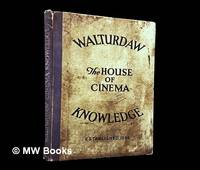
1912461522London : Walterdaw Cinema Supply Company Ltd 1912. First Edition. Hardcover. Good copy in the original paper-covered boards backed with title-blocked cloth. Boards heavily dust-dulled with some rubbing to the edges; joints slightly torn the front at the head and the rear at the tail. Front hinge slightly weak. Preliminary and final leaves dust-dulled with scattered faint smudges to the core text block. Remains a well-preserved copy overall. Physical description; 180 pages : illustrations ; 28 cm. Notes; No colophon; date referenced on p. 4 of text. Includes index. Subjects; Walterdaw Cinema Supply Company Catalogs. Motion picture theaters Equipment and supplies Catalogs. Ballrooms. Cinematography Equipment. Projectors. Stage lighting. London : Walterdaw Cinema Supply Company Ltd hardcover
brossura in buone condizioni. cod. ib12
Brossura, copertina con alette, custodia cartonata, con allegato DVD della durata di 25 minuti, formato 15x23, pagine 118, illustrazioni in nero fuori testo, ottime condizioni - 38101
Due volumi, prefazione di Carlo Colombo, primo volume : Le storie milanesi; volume secondo : Le musiche milanesi, rilegati, cartonati, custodia cartonata morbida, formato 24x28, pagine 189-75, primo volume illustrato con figure in nero e colori, volume secondo di spartiti musicali, ottime condizioni - 42221
Traduzione di Fumagalli G. Prefazione di Francis Ford Coppola. Torino, 2018; br., pp. 159, ill. b/n, cm 14x21. (Il Grande Cinema).
Rilegato, tela, sovracoperta, formato 13x21, pagine 218, con illustrazioni in nero fuori testo, ex libris in frontespizio, ottime condizioni - 22428
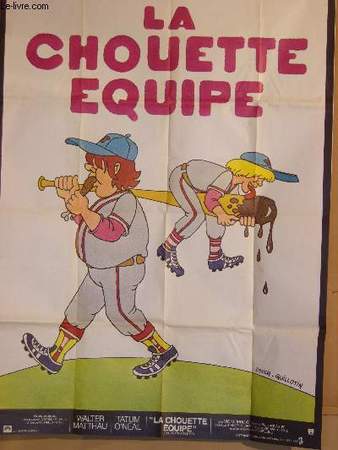
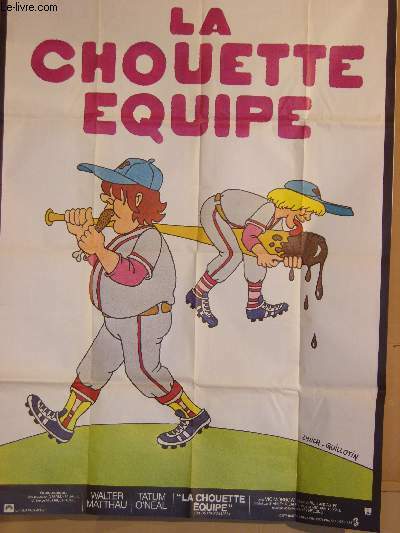
R100000120MICHAEL RITCHIE. Non daté. In-12. Broché. Bon état, Couv. convenable, Dos satisfaisant, Intérieur frais. Affiche de cinéma 40 cm x 54 cm. Présenté par Paramount.. . . . Classification : 0-Affiches Cinéma
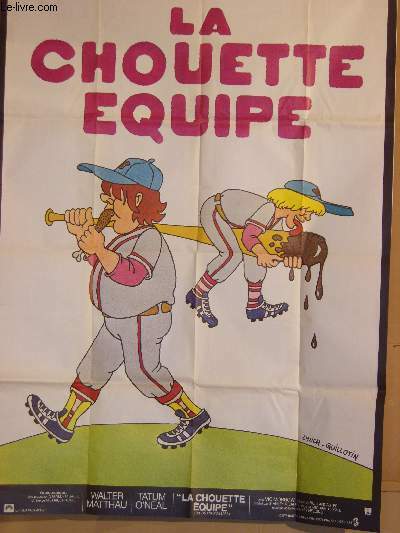
R100000121MICHAEL RITCHIE. Non daté. In-12. Broché. Bon état, Couv. convenable, Dos satisfaisant, Intérieur frais. Affiche de cinéma 120 cm x160 cm. Présenté par Paramount.. . . . Classification : 0-Affiches Cinéma
R100000122MICHAEL RITCHIE. Non daté. In-12. Broché. Bon état, Couv. convenable, Dos satisfaisant, Intérieur frais. Affiche de cinéma 120 cm x160 cm + 12 photos de présentation de 27 x 21 cm.. Présenté par Paramount.. . . . Classification : 0-Affiches Cinéma
R100000073HERBERT ROSS. Non daté. In-12. Broché. Bon état, Couv. convenable, Dos satisfaisant, Intérieur frais. Affiche de cinéma 120 cm x160 cm.. . . . Classification : 0-Affiches Cinéma
DISPONIBILITÀ GARANTITA AL 99%; SPEDIZIONE ENTRO 12 ORE DALL'ORDINE. RIMANENZA DI MAGAZZINO PARI AL NUOVO. LIEVISSIMI SEGNI DEL TEMPO. Riannodando quel filo rosso che unisce l’eclettica produzione del gruppo di Teatri Uniti con la visionaria produzione cinematografica di Paolo Sorrentino, questo studio descrive e analizza le più importanti e innovative tendenze del Nuovo Cinema Italiano. Teatri Uniti e Indigo film, i padri, Angelo Curti e Toni Servillo, ed i giovani, Nicola Giuliano e Paolo Sorrentino che in quel laboratorio all'ombra del Vesuvio si sono formati, facendo proprio quel mondo di esperienze e competenze, ma soprattutto quell'insieme di attori, tecnici, artisti che d’ora in avanti confluiranno nelle loro produzioni cinematografiche. Una produzione lunga oltre un ventennio ed equamente divisa a cavallo di questi ultimi due secoli. Una galleria di personaggi, storie, atmosfere che il Nuovo Cinema Italiano del terzo millennio assorbe e fa proprio, assieme ovviamente a quegli stessi attori, tecnici e artisti che hanno plasmato volti, suoni e colori nei film di Paolo Sorrentino. Descrizione bibliografica Titolo: Da Teatri Uniti ai film di Paolo Sorrentino: nuove tendenze del cinema italiano Autore: Walter Liguori Editore: Napoli: Liguori, Marzo 2017 Lunghezza: 322 pagine; 24 cm; illustrato ISBN: 8820766949, 9788820766948 Collana: Volume 24 di Biblioteca: Cinema e storia Soggetti: Critica cinematografica, Teatro, Film, Registi italiani, Tendenze, Stile, Spettacolo, Cinema contemporaneo italiano, Televisione, Radio, Storia, Attori, Divi, Toni Servillo, Nicola Giuliano, Sistema romano-centrico, Festival, Premi, Anni Novanta, Scuola napoletana, Napoli, Teatri Uniti, Vesuvio, Impresari teatrali, Angelo Curti, Mario Martone, Falso Movimento, Eduardo De Filippo, Televisione, Serie TV, Pappi Corsicato, Antonio Capuano, Antonietta De Lillo, Giorgio Magliulo, Stefano Incerti, Arti, Performance, Miccichè, Trilogia, Vite a credito, Voci di dentro, Oscar, Filmografia, L'uomo in più, La grande bellezza, Le conseguenze dell'amore, Il divo, This must be the place, L'amico di famiglia, Bibliografia, Iconografia, Renaissance, Jep Gambardella, Sean Penn, Anni Duemila, Musica, David Byrne, Scenografie, Sceneggiatura, Cheyenne, Biopic, Giulio Andreotti, Carlo Buccirosso, Flavio Bucci, Laura Chiatti, Geremia, Andrea Renzi, Antonio Pisapia, Titta Di Girolamo, Lino Fiorito, Anna Bonaiuto, Libri Vintage, Fuori catalogo, Libri illustrati, Film criticism, Theater, Film, Neapolitan directors, Trends, Style, Show, Italian contemporary cinema, History, Actors, Roman-centric system, Awards, Nineties, Neapolitan school, Naples, United theaters, Vesuvius, Theater impresarios, False Movement, Arts, Trilogy, Filmography, The great beauty, The consequences of love, The star, Bibliography, Iconography, 2000s, Music, Scenographies, Screenplay, Books out of print, Illustrated books Walter Liguori ha conseguito con il massimo dei voti la laurea in Lettere Moderne, presso l’università Federico II di Napoli, discutendo una tesi in Storia del Cinema. Ha organizzato attività di cineforum ed ha adattato e diretto numerosi spettacoli teatrali presso il Laboratorio Bardefè, uno storico teatro-cantina sulla collina di San Martino a Napoli. Nell'ottobre del 1997 ha debuttato al teatro Galleria Toledo con la messinscena dello spettacolo Trappola mortale. Dal 2001 al 2015 ha lavorato come redattore presso la casa editrice Liguori. Introduzione Capitolo primo L'alba del nuovo millennio. Il cinema regionale degli anni Novanta e l'affermazione della scuola napoletana Capitolo secondo La factory all'ombra del Vesuvio. Il teatro ed il cinema indipendente di Teatri Uniti Capitolo terzo Il cinema di Paolo Sorrentino Conclusioni Venezia 2001 Appendice Intervista al produttore premio Oscar per La grande bellezza, Nicola Giuliano Bibliografia
Traducción de Alvaro Soriano Trenor.
197465895Octopus Bks. 1974 In-4 relié 28,2 cm sur 20,8. 160 pages. Bon état d’occasion.
Traduzione di Zippel N. Castel Gandolfo, 2020; br., pp. 96, cm 15,5x21,5. (Cahiers).