4 025 résultats
1936144161Culver City CA: RKO Radio Pictures 1936. Treatment script for the 1937 film. Almost certainly the earliest draft associated with the film a typescript prose synopsis. <br/><br/>A ballet star Astaire falls in love with a young tap dancer Rogers on a trans-Atlantic voyage but rumors of their relationship precede them to their destination. The seventh of ten films Fred Astaire and Ginger Rodgers would make together and the fourth of five directed by Mark Sandrich. <br/><br/>Green titled wrappers noted as Treatment on the front wrapper rubber-stamped PLEASE RETURN TO RKO STORY FILES and production No. 808 dated October 16 1936 and with a credit for screenwriter Mark Sandrich. Title page integral with the first page of text. 26 leaves with last page of text numbered 26. Typescript. Pages Near Fine wrapper Very Good plus with a few tiny chips at the extremities bound with two gold brads with washers.<br/><br/>Hirschhorn The Hollywood Musical. RKO Radio Pictures unknown books
1950141467Tokyo: Shintoho Film 1950. Two Draft scripts for the 1950 film. Text in Japanese. <br/><br/>Based on a novel by Selichi Funabashi . A young servant girl Hamako has recently begun working for her hero Madame Yuki who quickly disillusioned her to her dream when she is presented with a list of the Madame's personal problems. <br/><br/>First draft:<br/><br/>White illustrated titled perfect bound wrappers. Title page present. 116 leaves with last page of text numbered 36. Mechanical duplication. Pages Very Good plus wrapper Very Good plus. <br/><br/>Second draft:<br/><br/>White titled perfect bound wrappers. Title page present. 15 leaves with last page of text numbered 15. Mechanical duplication. Pages Very Good plus wrapper Very Good plus. Shintoho Film unknown books
1956141466Kanagawa Japan: Daiei Studios 1956. Draft script for the 1956 film. Text in Japanese. With annotations on a few pages in holograph ink. <br/><br/>Based on the novel "Susaki No Onna" by Yoshiko Shibaki. The last film of Mizoguchi this film is a vivid portrayal of prostitution in 1950s Japan shot before the Japanese government's anti-prostitution bill told through the perspective of several different women who work in the business for various reasons. <br/> <br/>Set in Tokyo and shot on location there. <br/><br/>White titled perfect bound wrappers. Title page present. 142 leaves with last page of text numbered 13. Mechanical duplication. Pages Near Fine wrapper Near Fine bound with two staples. <br/><br/>Criterion Collection Eclipse 13. Eureka Masters of Cinema. Daiei Studios unknown books
1929150433Beverly Hills CA: Metro-Goldwyn-Mayer MGM 1929. Two vintage reference photographs on the set of the 1929 film. Mimeo snipes on verso of both one with annotations in holograph pencil and Culver Picture stamp on verso and one with "Menningen" and graphic stamps on verso. <br/><br/>The first Black musical and one of the first all-Black films by a major Hollywood studio with arguably more depth than its predecessor Paul Sloane's "Hearts in Dixie" the first all-black Hollywood film released earlier the same year. <br/><br/>King Vidor's first talkie written by screenwriter Wanda Tuchock who started in the silent era and went on to become one of the first women to be credited as a director on a Hollywood film. <br/><br/>Although King Vidor had expressed his intent of an honest depiction of rural southern African American life the film still clearly advanced racial stereotypes of the era. "Hallelujah" had however authentically represented African American spiritual music from the period which no other film achieved.<br/><br/>Shot on location in Tennessee and Arkansas.<br/><br/>8 x 10 inches. Very Good plus with some creasing and waviness one with a chip in the bottom left margin one with faint tape shadows on recto and paper tape on verso. <br/><br/>Complete collation details available on request.<br/><br/>National Film Registry. Rosenbaum 1000. Metro-Goldwyn-Mayer [MGM] unknown books
1915136474Neuilly-sur-Seine France: Gaumont 1915. Vintage double weight matte finish still photograph from the legendary 1915 silent film serial. With the Gaumont logo at the lower right corner. Shown here is Musidora as Irma Vep conferring with another member of The Vampires an anarchist criminal gang at the center of the story. <br/><br/>The director's magnum opus "Les vampires" is one of the great crime epics nearly 7 hours in length acknowledged as a strong influence on the surrealists and by directors Alfred Hitchcock and Fritz Lang in the development of the thriller as well as the earliest masters of avant-garden cinema. The second of Feuillade's three film serial masterpieces preceded by "Fantomas" 1913 and followed by "Judex" 1915 combining elements of both. <br/><br/>11 x 9 inches. Near Fine. <br/><br/>Hardy The BFI Companion to Crime. Gaumont unknown books
1978145780Beverly Hills CA: Metro-Goldwyn-Mayer MGM 1978. Draft script for the 1979 film. Illustrated front wrapper based on Saul Bass' poster design for the film. Copy belonging to uncredited crew member David Hitchcock with his name in holograph ink on the front wrapper. Holograph annotations throughout primarily indicating deleted scenes. <br/><br/>Also included is a carbon typed letter signed by Otto Preminger dated 19th October 1979 to dubbing editor Peter Pennell terminating his employment at the conclusion of production. <br/><br/>The final film directed by director Otto Preminger based on the 1978 novel by Graham Greene with screenplay written by Tom Stoppard about a low-level bureaucrat in the British Secret Service M16 who finds himself unknowingly used by the Soviets as he struggles with his love for his family and the ambiguity of his ethical responsibilities.<br/><br/>Set and shot on location in UK and Kenya. <br/><br/>White illustrated titled wrappers. Title page present dated 1978 with credits for screenwriter Tom Stoppard and novelist Graham Greene rubber stamped copy No. 146. 146 leaves with last page of text numbered 146. Xerographic duplication rectos only. Pages Fine wrapper Very Good plus bound internally with a silver prong binding. Metro-Goldwyn-Mayer [MGM] unknown books
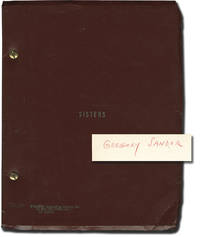
1970146086New York: Pressman Williams 1970. Draft script for the 1973 film. Copy belonging to cinematographer Gregory Sandor with his name in holograph pencil on the verso of the title page and holograph pencil annotations throughout.<br/><br/>Danielle is a beautiful model separated from her conjoined twin Dominique. When her neighbor an aspiring journalist suspects Danielle of a brutal murder the horror of Danielle's disturbing past begins to surface. Director Brian De Palma based his original story on a Life magazine article about conjoined twins in the Soviet Republic who had been successfully separated but were experiencing psychological problems as a result of the operation. <br/><br/>With its use of visually dense point-of-view and split-screen camera techniques "Sisters" is one of De Palma's earliest forays into erotic voyeurism as a conduit for psychological horror paving the way for a string of idiosyncratic psychosexual projects in the ensuing years such as "Obsession" 1976 "Dressed to Kill" 1980 "Blow Out" 1981 and "Body Double" 1984 among others. Given its focus on the anxiety of the gaze "Sisters" can also be read as an homage to Alfred Hitchcock-openly referencing "Rope" 1948 "Rear Window" 1954 and "Psycho" 1960-and indeed the film was even scored by Bernard Hermann a frequent musical collaborator for Hitchcock's films.<br/><br/>Set and shot on location in New York. <br/><br/>Maroon titled wrappers. Title page present dated 1970 with credits for screenwriters Brian De Palma and Louisa Rose. 138 leaves with last page of text numbered 138. Xerographic duplication rectos only. Pages Near Fine wrapper Very Good plus bound with two gold brads.<br/><br/>Arrow 1578. Criterion Collection 89. Grant US. Spicer US Neo-Noir. Pressman Williams unknown books
1970143238Tokyo/Kyoto: Daiei Studios 1970. Final script for the 1970 Japanese film seen here under the alternate title "Zatochi: The Killer's Song." Single folded leaf with a xerographically duplicated character list laid in with single holograph ink notation. Text in Japanese. <br/><br/>The longest-running action series in Japanese history and one of the screen's great heroes the character of Zatoichi a blind masseur and swordmaster was created by novelist Kan Shimozawa first appearing on film in 1962. A total of 26 films were made from 1962 to 1989. "Zatoichi Goes to the Fire Festival" is the 21st film of the series where Zatoichi is mentored by the blind leader of a secret organization as he contends with both the Yakuza and a jealous husband. <br/><br/>Set in the Japanese Edo period. <br/><br/>Blue titled wrappers. Title page present. 69 leaves with last page of text numbered c-50. Mechanical duplication. Pages Near Fine with mild foxing on papers edge wrapper Very Good plus title on spine. <br/><br/>Criterion Collection 679. Daiei Studios unknown books
1966148795N.p.: N.p. 1966. Collection of 20 vintage borderless photographs from the 1966 film 18 reference photographs and 2 fashion photographs of Rosaleen Murray and Ann Norman. Mimeo snipes on the verso of three of the photographs. <br/><br/>Inspired by the 1959 short story "Las Babas del Diablo" by Julio Cortazar.<br/><br/>Michelangelo Antonioni's first English-language film marking the beginning of the final phase of his work co-produced by companies in Italy the United States and the United Kingdom and featuring an international cast. The director's brash use of color set design non-standard editing techniques and typical emphasis of atmosphere over plot would carry over into the two major films that followed "Zabriskie Point" 1970 and "The Passenger" 1975. <br/><br/>In his 2009 essay on the film Danny Lyon notes "It is apt that through his established style Antonioni made a movie that is perhaps closest to communicating the myth of the swinging Sixties scene but also the confusion of the time. . Britain's new and very chaotic cultural revolution was perhaps most effectively captured by an Italian."<br/><br/>Winner of the Palme d'Or. Nominated for two Academy Awards for Best Director and Best Screenplay.<br/><br/>8 x 10 inches. Lightest edgewear else Near Fine. <br/><br/>Complete collation details available on request.<br/><br/>Criterion Collection 865. Ebert I. Grant UK/Italy. N.p. unknown books
1969136883N.p.: N.p. 1969. Original ribbon copy typescript for Tay Garnett's screenplay adaptation of Mickey Spillane's 1967 novel. Profusely annotated by Garnett in blue and red ink on every page and with a annotations by him at the top right corner of the first leaf: "First Draft Work Copy" "Screenplay by Tay Garnett" and "From Mickey Spillane's novel."<br/><br/>Raoul Walsh eventually worked with Garnett on the script but this draft precedes his involvement. The film was released on May 15 1970 and starred Yvette Mimieux Christopher George and Yvonne De Carlo. <br/><br/>182 leaves rectos only. Leaves supple Very Good plus overall. N.p. unknown books
1977143728N.p.: Objektiv Film 1977. Studio Dialogue script for the 1979 Hungarian film seen here under the Hungarian title "Magyar rapszodia." Text in Hungarian. <br/><br/>The first of Jancso's two-part dramatized history of Hungary from the turn of the century to World War II as told by the conflicted son of a wealthy landowner. Nominated for the 1979 Palme d'Or at Cannes. <br/><br/>Shot on location in Hungary. <br/><br/>Gray titled wrappers dated 1977. Title page not present presumably as issued. 112 leaves with last page of text numbered 112. Mimeograph duplication. Pages Fine wrapper Very Good plus side stapled. Objektiv Film unknown books
1963146288N.p.: The Landau Company 1963. Draft script for the 1968 film. <br/><br/>As early as 1950 there was talk of adapting Carson McCullers' 1940 debut novel "The Heart is a Lonely Hunter" for the screen. In 1963 producer David Susskind took over Jose Quintero's attempt at adapting the novel which began two years earlier with a script from British screenwriter Gavin Lambert. Susskind passed on Lambert's script opting for a script from Thomas C. Ryan.<br/><br/>Susskind planned to shoot the film in New York City with director Sidney Lumet but the project ended up being held up indefinitely. Four years later Marc Merson's Brownstone Productions had taken over the film rights with Thomas C. Ryan's original 1963 script and with Ryan co-producing. During filming Ryan and director Robert Ellis Miller would make extensive re-writes as they went.<br/><br/>One of the great film adaptations of any American novel starring Sondra Locke in her debut film opposite Alan Arkin. Although much of the political aspect of McCullers' novel was removed from the film the themes present in the author's work are readily apparent: race loneliness impoverishment and anger. Arkin and Locke were nominated for Best Actor and Best Supporting Actress Oscars. <br/><br/>Set in in a small Southern town shot on location in Selma Alabama.<br/><br/>Red titled vinyl Hart Stenographic Bureau wrappers. Title page present dated 8/26/63 with credits for novelist Carson McCullers and screenwriter Thomas C. Ryan. 130 leaves with last page of text numbered 127. Mimeographed rectos only with pink revision pages throughout dated 8/26/63. Pages Very Good plus wrapper Very Good plus bound with two metal screw brads. The Landau Company unknown books
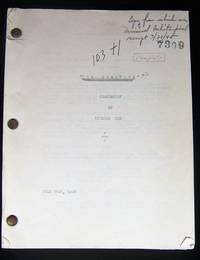
1945003033Los Angeles: Universal Studios 1945. Doyle A. Conan Leonard Lee screenwriter. PURSUIT TO ALGIERS here bearing the initial title "The Fugitive." Los Angeles: Universal Studios 1945. Dated July 26th 1945 Leonard Lee's complete brad-bound studio mimeographed draft script production number #7309 stamped on the cover consists of 113pp of typescript bearing numerous penciled revisions emendations and additions - along with another 20pp of massively hand-corrected typescript which clearly had contained so many penciled changes that the pages had to be retyped. These remarkably annotated pages have been appended to the rear of the screenplay creating a 133pp comprehensive look at the evolution of the script. Given the fragile nature of WW2-era scripts this example is in excellent original condition very good indeed the pages are a little soft with some very light edge-wear and tears. As fully marked up as any script in our nearly complete Universal Studio archive. PURSUIT TO ALGIERS set almost entirely on a passenger ship required elaborate sets and thus became the series's most expensive production; it premiered at the Rialto Theatre in New York on October 26th 1945. The twelve Sherlock Holmes films produced by Universal Pictures during the years 1942-1946 are legend; they are surely the best known screen-adapted adventures of English Literature's most iconic character and Basil Rathbone and Nigel Bruce are still cherished despite our current superb 21st century film and TV adaptations as the definitive Holmes and Watson. A treasure for the fan of the Universal Sherlock Series. Please see our other scripts from the same archive. Signed. Original Wraps. Very Good. Script. Universal Studios Paperback books
1955152818Los Angeles: Twentieth Century-Fox 1955. Final Shooting script for the 1956 film. <br/><br/>Based on the 1945 musical by Richard Rodgers and Oscar Hammerstein II in turn based on the 1909 play "Liliom" by Ferenc Molnar. A former carousel barker dies in the process of committing a robbery but is granted the opportunity to return to Earth for one day to make amends to his wife and daughter 15 years after his death.<br/><br/>Set and shot on location in Augusta Newcastle Camden and Boothbay Harbor Maine.<br/><br/>Beige titled wrappers noted as SHOOTING FINAL on the front wrapper rubber-stamped copy No. 646 and production No. 7 dated July 14 1955. Title page present dated July 14 1955 noted as Shooting Final Script with credits for screenwriters Phoebe and Henry Ephron. 126 leaves with last page of text numbered 117. Mimeograph duplication on eye-rest green stock rectos only with blue and pink revision pages throughout dated variously between 8/1/55 and 11/22/55. Pages Near Fine wrapper Near Fine bound internally with three gold brads. Twentieth Century-Fox unknown books
1976136497Beverly Hills CA: Faces Music 1976. Original poster for the 1976 film this being the Ben Gazzara style with Gazzara in a "puffy shirt." <br/><br/>One of eight known one sheet styles no priority issued by Faces Distribution for the film. Faces was a company as radical as the director himself and made small runs of posters in a wide variety of non-standard sizes and using an artful immediately recognizable style that represented a complete departure from standard film advertisement. <br/><br/>27 x 41 inches. Rolled on archival linen. Near Fine. <br/><br/>Criterion Collection 254. Silver Classic Noir. Spicer US. Faces Music unknown books
1989148351Rome: Reteitalia 1989. Draft script for the 1989 television film which originally aired on Video 80 on May 12. Copy belonging to script supervisor Franca Invernizzi with her extensive holograph annotations on nearly every page and many page versos regarding camera shots takes timing and dialogue. Bound in after the script is an annotated list of scenes and several handwritten pages of Invernizzi's notes. Laid in with the script are three carbon typescript revision pages and several documents relating to production. Text in Italian.<br/><br/>Based on Giovanni Guareschi's 1982 short story. After moving to Bologna to start a new life an impoverished widow decides to hide the existence of her nine children from her landlady in order to avoid higher rent prices. <br/><br/>Set and shot on location in Bologna.<br/><br/>Script:<br/><br/>Brown quarter leather spring binder housing the script. Script in yellow untitled wrappers. Title page present dated Ottobre 1987 with credits for director Lina Wertmuller and novelist Giovanni Guareschi. 134 leaves with last page of text numbered 132. Xerographic duplication rectos only. Pages Very Good plus wrapper Very Good with light wear overall and tape reinforcements to the spine bound with two gold brads.<br/><br/>List of scenes:<br/><br/>Seven leaves with last page numbered 7. Xerographic duplication rectos only. Pages Very Good plus with light edgewear. Reteitalia unknown books
1977143729N.p.: Mafilm 1977. Dialogue script for the 1979 Hungarian film "Allegro Barbaro." <br/><br/>The second of Jancso's two-part dramatized history of Hungary from the turn of the century to World War II as told by the conflicted son of a wealthy landowner. <br/><br/>Shot on location in Hungary. <br/><br/>Gray titled wrappers dated 1977. Title page not present presumably as issued. 122 leaves with last page of text numbered 122. Mimeograph duplication. Pages Fine wrapper Near Fine side stapled. Mafilm unknown books
1963141456Tokyo: Nikkatsu 1963. Draft script for the 1963 film. Text in Japanese. <br/><br/>Based on the novel by Haruhiko Oyabu. A police detective tracking down stolen weapons stumbles upon an underworld feud and turns the tide of the conflict into a full scale massacre. <br/><br/>White titled perfect bound wrappers. Title page present. 37 leaves with last page of text numbered 36. Mechanical duplication. Pages Near Fine wrapper Very Good plus. Nikkatsu unknown books
1947122575Universal City CA: Universal Pictures 1947. First Draft script for the 1948 film noir. The carbon typescript from which the mimeograph copies issued by the studio were made so noted in holograph pencil on the front wrapper in the hand of studio secretary Marion Pecht "Copy from which we mimeod 1st draft". Holograph pencil and ink corrections throughout mostly to formal names on the preliminary pages and page numbers which are re-numbered for the mimeo. <br/><br/>One of the most successful adaptations of a Broadway drama to film during the 1940s based on the 1947 play by Arthur Miller. Edward G. Robinson stars as a business owner who knowingly sold defective parts to the military during World War II resulting in the deaths of many pilots. A young Lancaster plays his son who discovers the truth and makes the painful decision to bring it to light. <br/><br/>Green titled wrappers stamped FIRST DRAFT CONTINUITY on the front wrapper rubber-stamped project No. 7534 and dated July 24 1947 corrected in holograph pencil from July 1 1947. Title page present with credits for playwright Miller and screenwriter Erskine. 152 leaves carbon typescript. Pages and wrapper Near Fine bound with three gold brads. <br/><br/>Selby US. Spicer US. Universal Pictures unknown books
1971127416Beverly Hills CA: Three Michaels Film Productions / United Artists 1971. Revised Draft script for the 1972 film. Cameraman Dusty Miller's working copy with his annotations throughout. Variously INSCRIBED in round-robin fashion on the title page by director Mike Hodges "Thank you for coming to my funeral" cast members Lizabeth Scott Amerigo Tot Patrick Browning Downing Mickey Rooney and others. Included is a call sheet and a set of 5 color Polaroid photographs showing the setups for a funeral sequence in the film. <br/><br/>A film every bit the equal of its counterpart "Get Carter" made by Hodges and Caine the year before but different in almost every way. Caine effortlessly switches gears from the vigilante killer in "Carter" to a pulp novelist who travels abroad and wanders into a complex murder scenario unwittingly becoming a part of the puzzle. Grim funny and not for the dim. <br/><br/>Red titled wrappers. Title page present with credits for screenwriter/director Hodges and producer Michael Klinger dated November 17 1971. 113 leaves mimeograph duplication. Pages Very Good plus with silverfish damage to a few leaves wrapper Very Good plus with faint dampstaining to the rear wrapper and a few light creases bound with two silver brads. Three Michaels Film Productions / United Artists unknown books
1961143580Beverly Hills CA: United Artists / Caralan Productions 1961. Draft script for the 1961 British horror film here under the working title "The Lady is a Snake" with the release title in holograph pencil on the front wrapper. Though made in the UK the film was a US co-production and this is a US draft of the script noting the US production company Playstar Productions on the front wrapper. <br/><br/>A doctor injects his pregnant wife with snake venom causing her to give birth to a snake woman who grows up to terrorize the local town. <br/><br/>Set in Victorian England. <br/><br/>Tan titled wrappers with credits for screenwriter Orville H. Hampton. Distribution page present with receipt intact. 114 leaves with last page of text numbered 111. Mimeograph Pages Fine. Front wrapper detached. Now encapsulated in mylar else Very Good plus bound with three gold brads. United Artists / Caralan Productions unknown books
1952136688N.p.: N.p. 1952. Vintage oversize double weight matte finish photograph from the set of the 1952 film. <br/><br/>A sobering and striking image of the film's destitute loner and his dog Flike standing in the streets of Rome late in the evening. Shot by the film's still photographer Angelo Pennoni using a striking example of designer Virgilio Marchi's meticulously designed and lit set. <br/><br/>Generally considered the masterpiece of the post-WWII Italian neorealist movement. Winner of the New York Film Critics Circle Award for Best Foreign Film and director De Sica was nominated for the Grand Prix at the 1952 Cannes Film Festival. <br/><br/>16 x 11.75 inches. Very Good with some scuffing at the extremities. <br/><br/>Criterion Collection 201. N.p. unknown books
1962151288Beverly Hills CA: Chrislaw Productions 1962. Archive of two Draft scripts one unbound a partial "last half of script" an 83-page "Scene Breakdown" four collections of revision pages two of which have annotations and a contact sheet of eleven images from the 1963 film. <br/><br/>The bound script is undated and without revisions likely a first draft. The unbound script largely yellow and blue revision pages dated 7/16 through 8/3 1962 is predominantly a carbon typescript with several ribbon typescript pages both on onionskin and 27 mimeograph duplication pages with a single dialogue annotation on page 26-A and page and scene number annotations on all mimeograph pages in holograph ink. The partial script dated 8/7 through 8/14 is a carbon typescript on on pink onionskin with a typed note "Last Half of Script sent to uncredited producer or crewmember Joe Wiseman" attached to the first page by a clip.<br/><br/>The "Scene Breakdown" is an undated 83 page carbon typescript on onionskin with a single dialogue annotation in holograph pencil likely screenwriter Joseph Landon's initial but extensive treatment. <br/><br/>The collections of revision pages include an eight page carbon typescript "Giordano Mountain Meeting" scene dated 7-18-62 on yellow onionskin. Three copies of a four page carbon typescript on pink onionskin "Notes on Five Victims" dated 8/7 with a handwritten note on purple paper attached by paper clip of "8/7 - Notes on Five Victims Third Rewrite." 46 pages of revisions ranging from page 3 through page 47-A dated 8/17 all on pink paper except for one mimeographed white page 28 of which are on pink onionskin with 36 pages carbon typescript nine ribbon typescript with annotations regarding dialogue motivation plot and strikes in holograph pencil and ink on 17 of the pages. The last collection of revision pages are 29 pink pages all but one are mimeograph duplication dated 10/10/62 five of which are page 124-A including the first page which is carbon typescript on onionskin noted as "Added Scene" by director "Bill Asher" with annotations in holograph pencil and ink the remainder are eight copies of pages 124 125 and 125A. <br/><br/>Lastly is a contact sheet of eleven images with top left image removed five of director William Asher on set three with Henry Silva with the remaining six of a bearded and heavily made-up Silva on the set.<br/><br/>Based on the 1959 Gold Medal paperback crime novel "The Kingdom of Johnny Cool" by John McPartland about an exiled American mobster who sends an Italian outlaw to the US to assassinate his enemies. <br/><br/>Set in Italy New York City and Hollywood shot on location in Southern California. <br/><br/>Bound Script:<br/><br/>Blue titled wrappers. Title page present with credits for screenwriter Joseph Landon. 140 leaves with last page of text numbered 139. Mimeograph duplication rectos only. Pages Near Fine wrapper Near Fine bound with three gold brads.<br/><br/>8/3/62 Script:<br/><br/>Self-wrappers untitled with latest revisions dated 8/3/62 178 leaves with last page of text numbered 162. Largely carbon typescript duplication with several ribbon typescript pages and several mimeograph duplication pages rectos only with blue and yellow revision pages throughout dated variously between 7-16-62 and 8/3/62. Pages Near Fine overall with first page Very Good with chipping creasing and closed tears to right edge unbound<br/><br/>8/14/62 Partial Script:<br/><br/>Self-wrappers untitled with latest revisions dated 8/14/62. 139 leaves with last page of text numbered 187. Carbon typescript duplication rectos only with pink revision pages throughout dated variously between 8/7 and 8/14. Pages Near Fine overall with first page Very Good plus with chipping creasing and closed tears to right edge bound with metal clip to top left corner.<br/><br/>Revision Pages Very Good plus to Near Fine with some light edgewear.<br/><br/>Contact Sheet 8 x 10 inches. Near Fine.<br/><br/>Selby Master List US. Silver and Ward US. Spicer US. Chrislaw Productions unknown books
1945147118Los Angeles: Loma Vista Vilma 1945. Final Draft script for the 1946 film. <br/><br/>An escaped Nazi war criminal in hiding seeks to reclaim the stolen valuables he has stashed in a Casablanca hotel and has steadily murdered the hotel's managers to maintain control of the property. The newest manager however is Groucho Marx as Ronald Kornblow a blissfully unaware womanizer who continually escapes the Nazi's grasp with the help of his self-appointed bodyguards Harpo and Chico Marx. The fourteenth Marx Brothers film and the seventh Marx Brothers film after the departure of Zeppo Marx.<br/><br/>Set in Casablanca Morocco. <br/><br/>Blue titled wrappers noted as FINAL rubber-stamped copy No. 93 dated July 23 1945. Title page present dated July 23 1945 noted as FINAL. 134 leaves with last page of text numbered 148. Mimeographed rectos only with blue pink and yellow revision pages throughout dated variously between 9/15/45 and 10-24-45. Pages Near Fine wrapper Very Good plus bound with three gold brads. Loma Vista Vilma unknown books
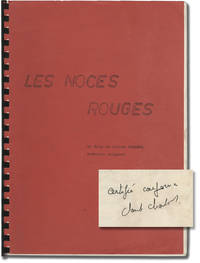
1973146375Paris: Les Films la Boetie 1973. Draft script for the 1973 film noir. SIGNED by director Claude Chabrol on the title page. Text in French. <br/><br/>A torrid bourgeois crime drama set in a small French village where desire and death convene as tension escalates behind closed doors. When the town's boorish Gaullist mayor discovers his wife and his deputy are having an affair he seizes the opportunity to blackmail the deputy in order to pull off a real estate scam. <br/><br/>Shot on location in Indre France. <br/><br/>Red titled wrappers noted as Scénario original on the front wrapper with credits for director Claude CHABROL. Title page present noted as Scénario original with credits for director Claude CHABROL. 94 leaves with last page of text numbered 93. Xerographic duplication rectos only. Pages Very Good with light soil throughout wrapper Very Good plus with black comb binding.<br/><br/>Grant France. Spicer France. Les Films la Boetie unknown books