4 025 résultats
1985139365London: Commies From Mars / Initial Pictures 1985. Third Draft script for the 1986 film "Sid and Nancy" here under the working title "Love Kills." INSCRIBED by Kate Simon in holograph ink on the verso of the last page of text. <br/><br/>Simon was "a friend of Alex Cox's and she helped him vis a vis the fine details of the 'time of the Sex Pistols' in London in 1976 / To that end she showed him in London the pub where we hung out took sulphate the Roebuck and she also tried to set up a meeting with him and Johnny Thunders / Finally she is thanked at the end of 'Sid and Nancy' and she photographed him as he was writing the script there at the room in the Chelsea Hotel where Sid and Nancy lived / Kate Simon / 4-8-09." <br/><br/>Brilliant but gritty biographical look at Sid Vicious Oldman bassist for the British punk band Sex Pistols and his girlfriend Nancy Webb. Their relationship is sprinkled with guilt sympathy and copious drug use implying Nancy introduced Sid to heroin when she traveled to London to have sex with the Sex Pistols. The two fall in love commit to a suicide pact and try to start a new solo career in New York after the breakup of the band. One night in a drug-induced stupor Sid announces his intention to quit heroin and move back to London prompting a suicidal Nancy to beg him to kill her. Perhaps unintentionally perhaps not Sid stabs Nancy and she dies in the bathroom. <br/><br/>Set in London and New York shot there on location and in New Jersey California and France. The soundtrack boasts songs by Dan Wool The Pogues John Cale KC & The Sunshine Band and several Sex Pistols songs with the title track "Love Kills" by Joe Strummer. <br/><br/>Illustrated titled self wrappers noted as 3RD DRAFT on the front wrapper dated 1985 with credits for screenwriters Cox and Wool. Title page integral with front wrapper. 113 leaves with last page of text numbered 107. Mechanical duplication. Very Good plus bound with three green twist ties in true punk fashion. <br/><br/>Criterion Collection 20. Commies From Mars / Initial Pictures unknown books
1931134294Beverly Hills CA: Metro-Goldwyn-Mayer MGM 1931. Draft script for the 1932 film based loosely on Edgar Rice Burroughs' novel "Tarzan of the Apes." Two black and white reference photographs for the film also laid in. <br/><br/>The first of Weissmuller's twelve Tarzan films and the first appearance of Cheeta Tarzan's chimpanzee friend. In this variation of the much-adapted Burroughs tale Tarzan and Jane fall in love and although Jane desires to take him back to England when Jane's father James Parker dies on the expedition Jane remains behind in the jungle instead. <br/><br/>Set in Africa shot on location in California and Florida. <br/><br/>Pale yellow titled wrappers rubber-stamped VAULT COPY and FILE COPY on the front wrapper and rubber-stamped copy No. 1871 and production No. 4608 dated Dec. 11/31 with credits for screenwriter Novello. Title page not present as issued. 116 leaves mimeograph duplication with white revision pages throughout dated variously between 11-20-31 and 12-16-31. Pages Near Fine. Front wrapper detached else wrappers Very Good bound with two gold brads. Photos both 8.25 x 10 inches Fine condition. Metro-Goldwyn-Mayer [MGM] unknown books
1967149869New York: Andy Warhol Film 1967. Vintage poster for the 1967 film. Two versions of the film were shot - one with an all nude all male cast that was never released publicly and one with both male and female actors wearing G-strings which was originally screened at the Hudson Theater in New York. <br/><br/>A stylistic breakthrough in that the film entirely jettisons any pretense to plot dramatic action or sex found in Andy Warhol's previous sexploitation experiments instead featuring extended monologues by superstar Viva and conversations with others that touch on a variety of controversial topics. One of Warhol's most overtly political films also starring draft resister Andrew Duggan and the first pairing of Viva with Taylor Mead who would appear together in several more Warhol films. <br/><br/>19 x 25 inches rolled on archival linen with a small amount of professional restoration and repair. Near Fine with minor soil. <br/><br/>Murphy The Black Hole of the Camera. Warholstars. Andy Warhol Film unknown books
1931151422Beverly Hills CA: Metro-Goldwyn-Mayer MGM 1931. Draft script for the 1931 film with annotations in holograph pencil primarily in later half of script largely regarding dialogue but also setting and shots. <br/><br/>A largely fictionalized account of the life of Mata Hari exotic dancer and courtesan who was executed by France for espionage during World War I. A sensation in the US and Europe it was Greta Garbo's most commercially successful film. The pre-Code Hollywood film was censored upon its reissue in 1936 which was the only version believed to exist until 2005 when an uncut French and Dutch subtitled version was screened at the Cinematheque Royale de Belgique in Brussels.<br/><br/>Set in 1917 Paris shot on location in Agoura California. <br/><br/>Tan titled wrappers with credits for screenwriters Benjamin Glazer and Leo Birinski and M-G-M label dated "Copied May 4 1931." Title page present with credits for screenwriters Benjamin Glazer and Leo Birinski. 172 leaves with last page of text numbered 169. Mimeograph duplication rectos only with six white revision pages dated June 5 1931. Pages Very Good plus with foxing and edgewear and stain to upper right of title page Wrapper Very Good with light soiling and chipping and closed tears to extremities and spine and upper right section cut from rear wrapper bound with two gold brads. Metro-Goldwyn-Mayer [MGM] unknown books
1967149909New York: Andy Warhol Film 1967. Vintage poster for the 1967 film. The film originally screened at the Hudson Theater in a 95 minute version although this cut is considered lost. A 109 minute version would screen in 1968 as the first film shown at the New Andy Warhol Garrick Theater renamed as such after Warhol recovered from being shot by Valerie Solanas. <br/><br/>One of several sexploitation influenced films made by Warhol an episodic story of a biker who has no bike and is both eroticized by the camera and emasculated by various Warhol superstars throughout. <br/><br/>19 x 25 inches rolled. Near Fine with some light soil and an almost imperceptible professional repair to a tear at the top edge. <br/><br/>Murphy The Black Hole of Cinema. Warholstars. Andy Warhol Film unknown books
1961122148Universal City CA: Republic Pictures / Pax Films / Universal Pictures 1961. Forrest J. Ackerman's copy of scripts from two key science fiction films bound together including original front wrappers in red buckram with Ackerman's name in gilt at the bottom right corner of the front board. <br/><br/>"The Lady and the Monster": Shooting script for the 1944 film. The first of three adaptations of Curt Siodmak's classic 1942 novel in which an honest hard-working scientist preserves a dead man's brain only to be remote-controlled by it. Shot by the legendary John Alton at the very peak of his work in the mid-1940s. Yellow front studio wrapper noted as SHOOTING SCRIPT at the top right dated October 13 1943 a penciled notation of the working title "The Lady and the Monster" just below the printed title noted as production No. 1194 and with credits for associate producer George Sherman and Republic Studios at the bottom. Two-page cast of characters with the actors' names added in ribbon copy type just below the character names. Title page present with credits for director Sherman and novelist Siodmak. <br/><br/>94 leaves mimeograph duplication with blue yellow green and pink revision pages leaves dated variously between 10/18/43 and 11/8/43. Pages and wrapper about Near Fine. <br/><br/>"The Day the Earth Caught Fire": An early and apparently abandoned draft by director Val Guest to film his screen story for Pax Films as a five-part British serial. Guest ultimately directed the story as a feature-length movie for Pax one of the most understated and intelligent science fiction films ever made. Light green wrappers both front and rear wrappers present. The front wrapper reads: "A Five Part Serialisation of / THE DAY THE EARTH CAUGHT FIRE / A Val Guest Production." Just below in holograph ink and in what we would assume is Guest's hand is written "Dedicated to Brian Aldiss." We think it likely that the script was gifted to the very connected Ackerman by Guest though the provenance beyond Ackerman's ownership is unknown. <br/><br/>41 pages divided into five parts each beginning with a two-color memo on PAX stationery describing what will happen in the following section. Pages and wrapper about Near Fine. <br/><br/>Buckram binding containing the two scripts is Very Good with some light scuffing and soil. <br/><br/>Martin 413. Republic Pictures / Pax Films / Universal Pictures unknown books
1969145809London: N.p. 1969. Draft script for the 1969 film. An early version of the screenplay with the provisional title "A Kestrel for a Knave." "6x" in black holograph marker on top right of title page.<br/><br/>The second film and breakthrough by esteemed British social realist filmmaker Ken Loach. Based upon the 1968 novel by Barry Hines "A Kestrel for a Knave" a heart-wrenching story of a working underclass youth who finds temporary respite from his oppressive life and even grace in the training and caring of a found fledgling kestrel whom he calls Kes.<br/><br/>Set in Yorkshire England shot on location in Yorkshire England. <br/><br/>Burgundy wrapper with a die-cut window in the British style. Title page present with credits for author Barry Hines. 91 leaves with last page of text numbered 90. Mechanical duplication rectos only. Pages Very Good Plus wrapper Very Good bound internally with two flat metal brads.<br/><br/>Eureka Masters of Cinema 151. Criterion Collection 561. N.p. unknown books
1952121979Mexico City: Ultramar Films 1952. Draft script for the 1954 Mexican film. Included is a typed letter signed from the film's producer Edward L. Alperson on his custom rough-edged stationery discussing the possibility of distribution within the US. Distribution was eventually taken on by United Artists and Daniel O'Herlihy received a Best Actor nomination for his performance. Also included are seven film still photographs from the film. <br/><br/>A rare pre-production script from Luis Bunuel's first color film one of the key productions from his Mexican period written with Hugo Butler who was at the time living in self-imposed exile in Mexico with Dalton Trumbo both blacklisted by the HUAC and writing under various pseudonyms. Single substantive holograph pencil correction toward the end of the text. <br/><br/>One of Bunuel's more straightforward narratives quite faithful to the source material but with a whopping dream sequence as bizarre as anything one might find in the director's later work. <br/><br/>Tall side-stapled self-wrappers dated "Mexico / 1952" with credits for director-screenwriter Bunuel screenwriter Butler under the Roll pseudonym and producers Oscar Dancigers and Henry F. Ehrlich. 95 leaves mimeograph duplication. Very Good condition toned at the edges some offsetting to the front wrapper and a 1-inch tear at the left margin. Ultramar Films unknown books
1937149222N.p.: N.p. 1937. Treatment script here called a "Suggested Screen Treatment" for the 1939 film by British playwright and screenwriter Mordaunt Shairp. Annotation in holograph pencil on upper left of front wrapper partially lost because of chipping. <br/><br/>Shairp during his brief three year run as a screenwriter worked previously with producer Samuel Goldwyn in 1935 on "The Dark Angel" directed by Sidney Franklin and starring Fredric March and Merle Oberon.<br/><br/>Based on the 1847 novel by Emily Bronte.<br/><br/>While "Wuthering Heights" proved to be a difficult production following a difficult casting Goldwyn insisted for years that it was the best film he ever created-and it is certainly one of his finest. After a prolonged dispute with director William Wyler about the film's grim tone Goldwyn went over Wyler's head to shoot a final scene suggesting that Heathcliffe Laurence Olivier and Cathy Merle Oberon were together in the afterlife strongly departing from the source work and creating a rift between Goldwyn and Wyler that would never heal even as the film went on to be both critically and publicly lauded. <br/><br/>Olivier would later attribute much of his film acting technique to Wyler who was known for forcing actors to repeat scenes ad nauseum in this instance forcing Olivier to tone down sequences of overacting that were better suited for the stage. <br/><br/>Winner of an Academy Award and nominated for seven others including Best Picture. <br/><br/>Gray titled wrappers noted as Suggested Screen Treatment on the front wrapper with credits for author Emily Bronte and screenwriter Mordaunt Shairp. Title page integral with first page with credits for author Emily Bronte and screenwriter Mordaunt Shairp. 44 leaves with last page of text numbered 44. Mimeograph duplication rectos only. Pages Near Fine wrappers Fair with the very dry and brittle front wrapper separated closed tears and chipping at extremities of front and rear wrapper. bound with three gold brads. N.p. unknown books
1969137209Burbank CA: American Broadcasting Company ABC 1969. Collection of 217 individually numbered contact sheets amounting to 2650 images from the 1969 film. Housed in two original three-ring binders from the film's publicity department. The occasional frame is circled or crossed through in red marker. A robust collection that documents nearly every facet of the film's production including numerous candid images of the cast and crew at work. <br/><br/>Woody Allen's first film as a director one of the great American comedies the film that set the template for Allen's 1970s work. A massive archive documenting the birth of an utterly new and unique voice in cinema one that would become something even bigger in 1979. <br/><br/>Set and shot in San Francisco and inside the walls of San Quentin State Prison. <br/><br/>Sheets 8 x 10 inches most in three-hole mylar sleeves some with holes punched directly in left margin others laid in. Very Good overall few frames excised general modest edgewear. Binders with signs of use as expected one spine label missing other partially lacking but with titles intact. American Broadcasting Company [ABC] unknown books
19621487061962. Draft script for the 1963 film. Text and titles in Japanese.<br/><br/>A legendary Japanese noir based on American author Ed McBain's 1959 novel "King's Ransom." A wealthy industrialist is contacted by a gang of crooks who inform him that they have kidnapped his son and are holding him hostage in exchange for an enormous ransom. The industrialist soon realizes however that the boy they have taken is in fact the son of his chauffeur-and must decide whether he will bankrupt himself and his family in order to save a child that is not his own. A nuanced portrait of a man facing the potential destruction of his future further elevated by morally ambiguous characters and the gritty realism of its world. The fifteenth and penultimate film that leading actor Toshiro Mifune would make with director Akira Kurosawa and one of the highest grossing Japanese films of 1963 breaking Kurosawa's box office record for the third time.<br/><br/>Shot on location in Kanagawa Japan. <br/><br/>White perfect bound wrappers dated 1962 with a protective titled dust jacket. 189 leaves with last page of text numbered e-37. Mimeograph duplication printed on rectos and versos. Book Very Good plus with light foxing to the page edges and light offsetting to the front and rear wrapper. Jacket Very Good plus with light foxing to the extremities and two small nicks to the spine ends.<br/><br/>Criterion Collection 24. Grant Japan. Selby Japan. Spicer Japan. unknown books
1963148710Tokyo: Kurosawa Production Co 1963. Draft script for the 1965 Japanese film preceding the release by nearly two years. Text and titles in Japanese. <br/><br/>Based on Shugoro Yamamoto's short story collection "Akahige Shinryotan." Toshiro Mifune's final film with director Akira Kurosawa considered one of the director's masterpieces following a small-town doctor and his new intern a highly educated arrogant young man. <br/><br/>Set in the Edo district of Koishikawa.<br/><br/>White titled wrappers with a blue titled dust jacket. Title page present dated 1963. 65 leaves with last page of text numbered g-17. Mimeograph duplication rectos only. Pages Very Good plus wrapper Very Good plus with light foxing to the rear wrapper with perfect binding. Jacket is Very Good plus with light foxing to the fore-edges and rear panel. Kurosawa Production Co unknown books
1944147297Los Angeles: Vanguard Films 1944. Temporary Shooting script for the 1945 film here under the working title "The House of Dr. Edwards." <br/><br/>Based on the 1927 novel "The House of Dr. Edwardes" by Hilary Saint George Saunders and John Palmer. Producer David O. Selznick wanted to make a "psychiatric" story for the screen and Alfred Hitchcock persuaded Selznick to buy the rights to the novel which Hitchcock and his wife were adapting. Nominated for six Academy Awards including Best Picture Best Director and Best Supporting Actor for Michael Chekhov winning one. <br/><br/>Blue titled wrappers noted as TEMPORARY SHOOTING SCRIPT on the front wrapper dated June 14 1944 with a credit for screenwriter Hecht. Distribution page present rubber-stamped copy No. 1620 with receipt removed. 176 leaves with last page of text numbered 176. Mimeograph duplication rectos only. Pages Near Fine wrapper Near Fine bound with three gold brads. <br/><br/>In a custom cloth covered clamshell box with black leather spine label and titles and decoration in gilt.<br/><br/>Grant US. Hardy The BFI Companion to Crime. Selby Canon. Silver Classic Noir. Spicer US. Vanguard Films unknown books
1929121976Hollywood: Paramount Pictures 1929. Early Treatment script for the 1929 film the first Sherlock Holmes film to have been produced with sound and the first to include the Holmes utterance "Elementary my dear Watson" a phrase never used by Doyle though that statement regrettably does not appear in this draft. <br/><br/>The first known treatment was written by Oliver P. Garrett followed by this one scripted by F. Hugh Herbert and the final writing credits went to Garrett Fort and director Basil Dean. This treatment differs substantially from the finished film and is more faithful to Doyle's source material. A rare surviving artifact from the great detective's earliest days on the screen. <br/><br/>Tall side-stapled self wrappers noted as an "Outline Treatment" on the front wrapper rubber-stamped project No. 1491 and MASTER FILE dated May 21 1929 with a credit for screenwriter Herbert. 52 leaves mixed original and carbon typescript on yellow stock with a few holograph pencil annotations on the first leaf including "1st Rough Draft." Very Good condition with some wear to the first leaf at the bottom stitch. Paramount Pictures unknown books
1957152173London: Attica Film Company 1957. Archive of material from the 1957 British film including a Draft production script a post-production Release script and a reference photograph inscribed by director Charlie Chaplin to production manager Mickey Delamar: "To Mickey / Thanks for a wonderful job / Charlie Chaplin / July 30th." <br/><br/>Also included are a presumably complete set of nine soundtrack LPs made for use with film projection all in their original mailing box and sealed with the label of the Master Sound System Company in the UK. <br/><br/>Lastly included are approximately 100 vintage photographs all with the stamp of Eric Gray the film's still photographer on the verso. Photographs all have a significant horizontal curl but are all separate and otherwise supple and clean. This segment of the archive is offered as is.<br/><br/>Chaplin's final starring role about a dethroned and penniless king from a fictional European nation living in New York where he inadvertently becomes the target of a HUAC investigation after meeting a politically minded youngster played by Chaplin's son Michael whose parents have been jailed as communist sympathizers. A pointed satire of McCarthyism American consumerism and celebrity culture the film was produced in Europe due to Chaplin's own exile from the United States as a result of his leftist political beliefs and did not receive an US release until 1973. <br/><br/>Mickey Delamar worked as a producer production manager and assistant director on over 30 films and was active in the film industry for four decades. His credits include Julien Duvivier's "Anna Karenina" 1948 Francois Truffaut's "Fahrenheit 451" 1966 and Terence Young's "Mayerling" 1968.<br/><br/>Set in New York shot on location in London. <br/><br/>Draft script:<br/><br/>Tall red untitled wrappers. Title page present undated with credits for screenwriter Charles Chaplin. 163 leaves with last page of text numbered 163. Mimeograph duplication rectos only. Pages Very Good plus wrapper Very Good plus bound with a silver prong.<br/><br/>Post-Production Release script:<br/><br/>Tall self wrappers. Title page present dated 7th March 1957 noted as RELEASE SCRIPT. Approximately 135 leaves. Mimeograph duplication rectos only. Pages Very Good plus bound with two silver brads.<br/><br/>Presentation photograph:<br/><br/>7.5 x 9.5 inches. Very Good plus lightly toned. <br/><br/>Soundtrack LP set:<br/><br/>LPs well used and scratched but not cracked untested. Outer mailing box Very Good.<br/><br/>Reference photograph set:<br/><br/>All photographs extensively curled and though not examined carefully apparently not stuck together in any way. Very Good. Attica Film Company unknown books
1924143516Beverly Hills CA: Metro-Goldwyn-Mayer MGM 1924. Vintage herald or broadside for the 1924 film. A clever and excessively rare bit of advertisement designed as a "Wanted" poster pulling together the main character from Frank Norris' novel John "Doc" McTeague a photo of "McTeague" Gibson Gowland and mention of a specific screening at San Francisco's Imperial Theatre on Market Street today the Market Street Cinema. <br/><br/>The first cut of Stroheim's "Greed" was a mammoth 9.5-hour presentation. All that survives today is a restored slightly choppy but coherent 240-minute version supplanted with still photographs that conveys to the viewer the unimaginable grandeur of the original. Very little paper advertisement has survived. The only poster that has ever surfaced is a disappointing window card showing none of the characters and this remarkable broadside the only example we have ever encountered. <br/><br/>13 x 6 inches. Near Fine with a couple of tiny internal tears overall extremely clean and with no paper loss. Metro-Goldwyn-Mayer [MGM] unknown books
1959139477Paris: Les Films du Carrosse 1959. Original French Grande poster for the 1959 film. Poster design by Boris Grinsson. <br/><br/>Truffaut's auspicious debut winner of Best Director at Cannes nominated for the Palme d'Or and also nominated for a Best Original Screenplay Oscar the following year. <br/><br/>47 x 62 inches27 x 41. Linen backed and rolled. Bright and Fine. <br/><br/>Capitaine 207. Warren Vol. 1 p. 159. Les Films du Carrosse unknown books
1991139828Manhattan Beach CA: Lightstorm Entertainment 1991. Revised Draft script for the 1991 film dated February 19 1991. Script pages watermarked "T20029" and bearing the ownership watermarks of director Cameron's production company Lightstorm Entertainment as called for. With an alternate ending to the film which was shot but ultimately cut before release. <br/><br/>Included is a set of pencil sketches featuring concept art as well as shooting schedules props lists and other production documents. <br/><br/>The second film in what has become an ongoing multi-media franchise incorporating six feature films a television series video games comic books novels toys and even an amusement park ride. Winner of four Academy Awards and nominated for two more including Best Cinematography.<br/><br/>While the first film is arguably the most profitable low budget film ever made the sequel was the first with a production budget of over 100 million dollars featuring groundbreaking CGI and visual effects and jaw dropping action sequences becoming one of the highest grossing R rated films of all time. <br/><br/>Set in Los Angeles shot on location throughout California and in Santa Fe New Mexico. <br/><br/>Black untitled wrappers. Title page noted as Revised script dated February 19 1991 with credits for screenwriters Cameron and Wisher. 127 leaves with last page of text numbered 124. Xerographically duplicated with white blue green pink goldenrod and yellow revision pages throughout dated variously between 9/10/90 and 2/19/91. Near Fine overall bound internally with two gold brads. <br/><br/>Lentz US. Newman US. Lightstorm Entertainment unknown books
1969144659New York: Jerome Hellman Productions 1969. Draft script for the 1969 film. Copy belonging to the film's still photographer Ron Munkasci with this name in red holograph ink at the top right corner of the title page.<br/><br/>Based on the 1965 novel by James Leo Herlihy about an unlikely friendship between a would-be gigolo and an ailing con artist. Cornerstone film of the New Hollywood cinema nominated for seven Academy Awards winning Best Adapted Screenplay Best Director and Best Picture. <br/><br/>Set in New York City shot on location in Miami Manhattan and Big Spring Texas. <br/><br/>Dark blue titled wrappers noted as DRAFT SCREENPLAY at the bottom right and with the logo for JEROME HELLMAN PRODUCTIONS at bottom center. Title page present with credits for screenwriter Waldo Salt novelist James Leo Herlihy producer Jerome Hellman and director John Schlesinger noted as "A JEROME HELLMAN-JOHN SCHLESINGER PRODUCTION." 122 leaves with last page of text numbered 113. Mimeograph duplication. Pages Near Fine with some offsetting to the title page due to a newspaper clipping still present laid in wrapper Very Good plus.<br/><br/>National Film Registry. Jerome Hellman Productions unknown books
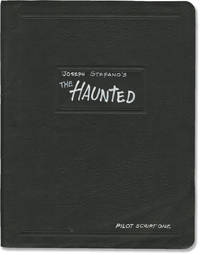
1964147167Los Angeles: Villa di Stefano Productions 1964. First Draft script for the 1964 television film which originally aired on CBS. With actor Martin Landau's copied annotations throughout. Included are a set of synopses for proposed episodes a shooting schedule a distributor's announcement booklet and various other documents related to production. <br/><br/>Also included is an original celluloid print of the film on a single reel in its original mailing case with cloth straps dated 2/18/65 addressed from director Joseph Stefano to Landau on the mailing label in holograph black ink and INSCRIBED by Stefano to Landau at the top left corner of the case in the same ink: "To Martin / Whose splendid brilliance and warmth put the special spark in this bright fire / Your grateful and admiring friend / Joe Stefano."<br/><br/>Fearful of being buried alive a woman installs a phone in the crypt in which she plans to be in case of emergencies. Months after her death the phone begins to ring presenting a new ghostly case for Landau's paranormal investigator. <br/><br/>The film was intended to be the pilot for a new paranormal thriller series tentatively titled "The Haunted" as titled on the front wrapper but the series wasn't picked up and the pilot was released as a television movie after additional footage was shot. <br/><br/>Black titled wrappers with credits for director-screenwriter Joseph Stefano noted as PILOT SCRIPT ONE. Title page present dated July 27 1964 noted as PILOT SCRIPT ONE with credits for director-screenwriter Joseph Stefano. 77 leaves with last page of text numbered 76. Early Xerox rectos only. Pages Near Fine wrapper Near Fine bound internally with three silver brads. <br/><br/>Film reel and film stock are unexamined. Villa di Stefano Productions unknown books
1961145470Culver City CA: Columbia Pictures 1961. Early Draft script for the 1970 film "Cromwell" seen here under the title "Oliver Cromwell." Copy belonging to director/screenwriter Ken Hughes with his annotations throughout. With 11 pages of reproductions from "The Commonweal" newspaper from August and September 1885 laid into the front of the script along with a drawing of how to add pages to the spring binder. <br/><br/>A biographical account of the 17th century political and religious struggles taking place in England under the reign of King Charles Alec Guinness. Likely one of the earliest screenplay drafts shelved for almost ten years due to an inability to find funding. Director Ken Hughes' favorite of his own films. Winner of an Academy Award for Best Costume Design and nominated for one other. <br/><br/>Shot on location in Spain and England. <br/><br/>Red leatherette spring binder with holograph felt ink titles on tape. Title page present dated 26th July 1961 noted as 2nd Screenplay with credits for screenwriter Ken Hughes. 279 leaves with last page of text numbered 279. Mimeograph duplication rectos only with pink revision pages throughout dated 26th July 1961 and 29th September 1961. Pages Near Fine spring binder Very Good plus. Columbia Pictures unknown books
1941149562Culver City CA: RKO Radio Pictures 1941. Early Draft script for the 1948 film dated June 13 1941 preceding its release by seven years.<br/><br/>Based on Edward Anderson's 1937 novel "Thieves Like Us" about an escaped convict who falls in love with a woman who nurses him back to health after he is injured in a robbery. <br/><br/>In December 1936 RKO's considered Anderson's novel but rejected it prior to any adaptation being written. Writer-director Rowland Brown who by 1941 controlled the rights to the novel wrote the first attempted draft of a screenplay. This time around RKO accepted it and Brown sold the rights to them for $10000. When Brown's script was first submitted to the Breen Office in April 1941 director Joseph I. Breen deemed it "unacceptable" claiming that it contained too much criminal activity and "loose sex." Brown revised the first draft on June 13 1941 but it was again rejected by the Breen Office. <br/><br/>A revised script written by Robert D. Andrews was submitted in October 1941 and was rejected for the same reasons as Brown's drafts. RKO did not submit the script again until September 1944 when it was rejected for a fourth time. From Aug 1946 to May 1947 when Ray was working on the script the PCA rejected three more versions of the story stating each time that the adaptation dwelt too much on the characters' crimes and not enough on morality.<br/><br/>Script approval finally came in June 1947 after RKO executives met directly with Breen an incorporated his suggestions into the story. <br/><br/>Set in the American West shot on location throughout California including Canoga Park Newhall Arcadia Griffith Park Benedict Canyon the San Fernando Valley San Bernardino Mountains and the RKO Encino Ranch. <br/><br/>Gray titled wrappers noted as production No. 1243 dated June 13 1941 with a credit for Rowland Brown. Title page integral with first page of text with a credit for Rowland Brown. 153 leaves with last page of text numbered 152. Carbon typescript rectos only. Pages Near Fine wrapper Very Good plus bound with three gold brads with washers. RKO Radio Pictures unknown books
1966152454Los Angeles: The Mirisch Corporation 1966. Revised First Draft script for the 1967 film. Laid in is a Call Sheet from the production dated Tuesday November 29 1966. <br/><br/>Based on John Ball's 1965 novel. An African American police detective from Philadelphia is recruited to help solve a murder in a small bigoted Mississippi town. Winner of five Academy Awards including Best Picture and Best Actor for Rod Steiger nominated for two others. After the success of the film version the characters were developed further for a police procedural television series in 1988 developed by James Lee Barrett and starring Carroll O'Connor and Howard Rollins which aired on NBC then CBS from 1988 to 1995.<br/> <br/>Set in the fictional town of Sparta Mississippi and shot largely on location in Illinois. Poitier insisted the movie be filmed in the North because of a 1964 incident in Mississippi in which he and Harry Belafonte had been run off the road and almost killed by Klansmen while in the state to support the SNCC Student Non-Violent Coordinating Committee.<br/><br/>Goldenrod titled wrappers noted as REVISED FIRST DRAFT on the front wrapper rubber-stamped copy No. 84 dated July 1 1966. Title page present dated July 1 1966 noted as REVISED FIRST DRAFT with credits for screenwriter Stirliing Silliphant. 134 leaves with last page of text numbered 140. Mimeograph duplication rectos only with blue pink and white revision pages throughout dated variously between 7/27/66 and 8/10/66. Pages with damp stain on top right of last several pages else Near Fine wrapper Very Good plus bound with two gold brads.<br/><br/>Call Sheet 8.5 x 14 inches folded horizontally. Near Fine<br/><br/>National Film Registry. Criterion Collection 959. Penzler 101 Greatest Films of Mystery and Suspense. The Mirisch Corporation unknown books
1943133635Hollywood: Paramount Pictures 1943. Revised Draft script for the 1943 film. Co-written for the screen by Raymond Chandler and Frank Partos. Chandler's contribution to the script had mostly to do with Alan Ladd's character and his tough dialogue elements sneered at by the media upon the film's release. Laid in is an 8-page shooting schedule on blue stock a 6-page revision to sequence "A" on yellow onionskin stock and 14 pages of "inter-office communication" on yellow studio stationery comments on scenes sequences and pages of the script. <br/><br/>Based on Rachel Field's 1942 novel about Emily Blair Loretta Young a wealthy deaf girl whose hometown is named for her family. Doctor Vance Ladd who grew up on the other side of town resents the Blair family but is working on a serum to cure deafness which he tries on Emily and she is eventually cured. <br/><br/>One of only five screenplays written by Chandler this being the second following his script for the classic "Double Indemnity" 1944 based on James M. Cain's novel. <br/><br/>Chandler had a tumultuous career in Hollywood including a suspension in late 1945 from Paramount for "refusing to perform under a contract which is not a proper expression of my standing in the motion picture business" but his influence on film adaptation is nearly unmatched with scripts and stories that pushed the limits of the Production Code Administration. <br/><br/>Script:<br/><br/>White self wrappers production No. SF 8577 dated December 3 1943 with credits for screenwriters Partos and Chandler. Title page integral with front wrapper in the Paramount style. 137 leaves mimeograph duplication with blue and light blue revision pages throughout dated variously between 1/11/43 possibly a typo and 3/30/44 other leaves dated variously between 12/3/43 and 12/5/44 possibly a typo. Pages Near Fine wrapper now encapsulated in mylar with cello tape and spine label remnants bound with two gold brads. <br/><br/>Shooting Schedule:<br/><br/>Corner-stapled blue stock noted as 4TH TENTATIVE BLUE / BASED ON A-B-C-D-E PART SEQUENCES dated 12/13/43 start and 2/9/44 close with credits for director Pichel assistant director O. Oscar Rudolph and businessmanager B. Bernard McEveety. 8 pages folded horizontally rust to the staple else Near Fine. <br/><br/>Revision:<br/><br/>Yellow onionskin stock loose but bound with a paperclip. Holograph annotations in pencil to the last leaf recto and verso detailing a few scene changes. 6 pages folded horizontally paperclip indentation and rust to the clip else Near Fine. <br/><br/>Inter-Office Communication:<br/><br/>Corner-stapled yellow studio stationery dated variously between 2/15/43 and 1/3/44. The earliest dated page contains notes on the script noting Talbot Jennings as the screenwriter. 14 pages hole punches at the top edges rust to the staples else Near Fine. <br/><br/>Luhr Raymond Chandler and Film US. MacShane US. Paramount Pictures unknown books
1954146173Burbank CA: Walt Disney Productions 1954. Final Shooting Script for the 1954 film with blue yellow and green revisions throughout. <br/><br/>Based on the 1870 novel "Twenty Thousand Leagues Under the Sea" by Jules Verne. Walt Disney's "20000 Leagues Under the Sea" was one of the most expensive and ambitious productions of its time. A 200 foot submarine a 225 pound diving suit a specially built soundstage with a 90 x 165 foot tank and a giant squid which weighed two tons and required a crew of 28 to operate were just some of the monumental challenges of the production. Disney's first CinemaScope motion picture "20000 Leagues Under the Sea" was a resounding success and went on to be considered one of greatest live-action adventure movies ever made.<br/><br/>In 1868 off the coast of San Francisco Professor Aronnax Paul Lukas his assistant Conseil Peter Lorre and master harpooner Ned Land Kirk Douglas set sail upon a armed frigate to investigate a spate of sinkings rumored to be caused by a sea monster. After months of searching the "monster" is spotted sinking a merchant vessel and the frigate attacks only to be sunk themselves. Adrift in the ocean the three come upon a strange metal vessel and realize the "monster" is a "submerging boat." The trio are captured by Captain Nemo James Mason and taken aboard the submarine the Nautilus and journey on a voyage of adventure and discovery under the sea.<br/><br/>Nominated for three Academy Awards winning two for Art Direction and Special Effects.<br/><br/>Shot on location in California Jamaica and the Bahamas. <br/><br/>Blue titled wrappers with affixed Walt Disney Productions label as called for with Disney scripts from this era noted as FINAL SHOOTING SCRIPT on the front wrapper with credits for screenwriter Earl Felton. Title page present with credits for screenwriter Earl Felton. 146 leaves with last page of text numbered 141. Mimeographed rectos only with blue yellow and green revision pages throughout dated variously between 1/30/54 and 3/1/54. Pages Near Fine plus wrapper Near Fine bound internally with three gold brads. Walt Disney Productions unknown books