Warner, Chas DudleyBiblio.com

417 résultats
189938647n.p.: n.p. 1899. First edition. Stapled paper wrappers. A very good copy with toned edges. 14 pp. 8vo. American essayist and novelist Charles Dudley Warner Twain's coauthor on The Gilded Age was a lawyer by training and wrote this article against the backdrop of criminal reform in Connecticut. In it he gives attention to the rules and regulations of parole and parole violations in particular defense of the Indeterminate Sentence which Warner describes as a scientific a disciplinary a really humanitarian method. <br /> <br /> "We have tried all other means of protecting society of lessening the criminal class of reforming the criminal. The proposed Indeterminate Sentence with reformatory discipline is the only one that promises to relieve society of the insolent domination and the terrorism of the criminal class; is the only one that can deter men from making a career of crime; is the only one that offers a fair prospect for the reformation of the criminal offender. Why not try it Why not put the whole system of criminal jurisprudence and procedure for the suppression of crime upon a sensible and scientific basis"<br /> <br /> Quite uncommon. It would be quoted in full in The Connecticut Magazine Vol. 5 in support of a bill on prison reform and later be republished in his "Fashions in Literature" 1902. OCLC locates three copies: Columbia Law Trinity College and Yale Law. n.p. unknown
189938647n.p.: n.p. 1899. First edition. Stapled paper wrappers. A very good copy with toned edges. 14 pp. 8vo. American essayist and novelist Charles Dudley Warner Twain's coauthor on The Gilded Age was a lawyer by training and wrote this article against the backdrop of criminal reform in Connecticut. In it he gives attention to the rules and regulations of parole and parole violations in particular defense of the Indeterminate Sentence which Warner describes as a scientific a disciplinary a really humanitarian method. "We have tried all other means of protecting society of lessening the criminal class of reforming the criminal. The proposed Indeterminate Sentence with reformatory discipline is the only one that promises to relieve society of the insolent domination and the terrorism of the criminal class; is the only one that can deter men from making a career of crime; is the only one that offers a fair prospect for the reformation of the criminal offender. Why not try it Why not put the whole system of criminal jurisprudence and procedure for the suppression of crime upon a sensible and scientific basis" Quite uncommon. It would be quoted in full in The Connecticut Magazine Vol. 5 in support of a bill on prison reform and later be republished in his "Fashions in Literature" 1902. OCLC locates three copies: Columbia Law Trinity College and Yale Law. n.p. unknown books
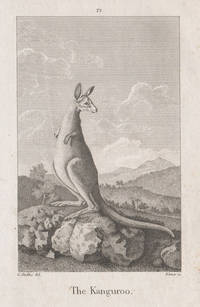
180514411805. Copper-line engraving. 205mm by 115mm sheet. Scattered foxing in the margins. unknown
1859P-10620Providence: George H. Whitney 1859. First Edition. Hardcover. Very Good. Duodecimo. Out of print and extremely scarce. An unusually fine copy George H. Whitney hardcover
184217262Legislative Assembly of Iowa Territory. No place. 1842 Single sheet of paper about 6 1/2 by 10 inches printed on both sides. A Resolution of The Legislative Assembly Of Iowa Territory relating to a Resurvey Of Sac And Fox Reservation. A Resolution of the 27th Congress 2nd Session January 25 1842. Very early governance document printed several years before Iowa became a State. Very scarce. Paper age toned; light edge chipping and tiny tears. VERY GOOD. 1st Edition. Soft cover. Very Good/No Jacket. Legislative Assembly of Iowa Territory. No place. paperback
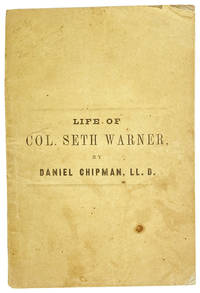
185828735Burlington VT: C. Goodrich & Company 1858. Very Good. Burlington VT: C. Goodrich & Company 1858. Reissue of the 1848 L.W. Clark Edition. 16mo. Printed wraps. General wear and spotting; a few chips to edges; curling to corners; else unmarked and Very Good. Issued in 1848 under the title Memoir of Colonel Seth Warner with Jared Sparks' The Life of Col. Ethan Allen. Either edition scarce. <br /> <br /> Sabin 12819. C. Goodrich & Company unknown
186216330New York: Hunt and Eaton 1862. First Edition. Hard Cover. Good/No Jacket. Hunt and Eaton 1862. First Edition. 114 pgs. Author and illustrator not stated. This fairy tale was re-published by George Routledge & Sons1866 in a compilation titled 'Two School Girls and Other Tales'. Two lovely engravings. Hard Cover red cloth with black decoration gilt title on spine. Cover has moderate shelfwear faded spine light areas on back. Pages are clean and unmarked slightly toned occasional light foxing. Binding is tight. Very nice copy. Very scarce. Other bibliographic entries list Elizabeth Wetherell and Amy Lothrop as authors. Hunt and Eaton hardcover
186437770New York Robert Carter & Brothers 1864. Hardcover. BAL 21275 but with some points of Printing 1 and some points of Printing 2. Library accession numbers in each volume but no other library markings. Original embossed purple cloth faded. Top 1/4-inch of backstrips lacking and small spot worn in cloth at rear edge of each volume; extremities slightly worn; small stain on a few pages in vol. 1; signatures slightly pulled; bookplate inside each front cover; previous owner's name on front endpaper and title page of each volume; otherwise very good condition. . Two volumes separately paged. New York, Robert Carter & Brothers hardcover
186428477New York: Robert Carter and Brothers 1864. 1st edition BAL 21275; Wright II 2648. Original publisher's brown cloth with gilt spine lettering professionally recased with new eps. Old pos to preliminary blank dated December 1864. General binding wear. Some staining & browing to paper especially lower corner/margin of Vol I's last 18 leaves. Withal a VG set. 2 volumes 328; 363 1 pp. 12mo. 7-5/8" x 4-7/8" <br/><br/> Robert Carter and Brothers hardcover books
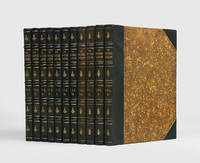
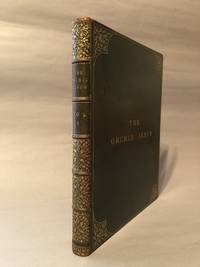
1882182650London: B. S. Williams at the Victoria and Paradise Nurseries 1882-97. Orchidelirium First edition of this magnificent work one of the great orchid books of the 19th century. The Orchid Album was published at the height of the "orchidelirium" that had been building in Britain for some decades until it seized the imaginations of late Victorian horticulturists in the same way that the tulip craze inflamed the minds of collectors in Golden Age Holland. The British horticultural writer Anna Pavord notes: "some of the grander Victorian growers such as the Duke of Devonshire at Chatsworth in Derbyshire and the Duke of Northumberland at Syon House in Middlesex employed their own collectors but orchid fanciers like John Day acquired their best treasures at auction. Nurserymen such as James Veitch Conrad Loddiges and Benjamin Samuel Williams of the Victoria and Paradise Nurseries in Upper Holloway regularly sent consignments of orchids to be auctioned by Messrs Stevens of King St Covent Garden. It was in their sale room that after an epic battle with a fellow enthusiast Sir Trevor Lawrence a contemporary of Day's acquired the one single plant of Aerides lawrenciae imported by Frederick Sander from the Philippines". The stunning plates are the work of John Nugent Fitch 1840-1927 the nephew of Walter Hood Fitch. His "work was more flamboyant than that of such predecessors as Ehret Redouté or the Bauer brothers combining botanical accuracy with a flair for page design. In Britain and Europe he had little competition being rivalled only by the Frenchman Alfred Riocreux" ODNB. Bibliographies call for 528 plates but overlook the fact that the only folding plate which appears in Volume I is double-numbered as 9-10. This is a complete set and includes the four-page obituary for Benjamin Samuel Williams in Volume IX. 11 vols 315 x 240 mm. With 527 fine hand-coloured lithograph or chromolithograph plates by John Nugent Fitch one double-numbered folding plate in Vol. I some with tinted backgrounds. Contemporary half dark green morocco spines with raised bands gilt-lettered direct in two compartments gilt floral device in others boards ruled in gilt marbled boards and endpapers marbled endpaper vols. I-IV grey; V-VI dark green VII-IX light blue top edges gilt. Bookplates and shelf marks of Reeves Library Westminster College Missouri gifted by Carl F. Setz. Bindings refurbished small nick to fore edge of vol. V endpapers of vol. VII with minor abrasions with free endpaper detaching but holding and a few minor text repairs starting before title of vol. XI occasional foxing or faint marginal damp staining: a very good copy. Nissen 2107; not in Plesch or Pritzel. Anna Pavord review of "A Very Victorian Passion: The Orchid Paintings of John Day" in The Independent 29 May 2004. hardcover
1882005151London: B. S. Williams 1882. First Edition . Leather. Very Good. Folio. John Nugent Fitch. Volume one. Original full green morocco leather raised bands gilt titles and decorative compartments and boards inner dentelles marbled endpapers all edges gilt 12.5 x 10 inches. First Edition. Unpaginated; illustrated with 47 chromolithographed plates including 1 folding by John Nugent Fitch 1836-1895. One of the great orchid books of the nineteenth century published at the height of the 'Orchidelirium' mania. Exterior showing some light wear and rubbing heaviest at extremities light typical foxing to text pages all plates clean and bright. Provenance: Bookplate from the Royal Horticultural Society Lindley Library deaccessioned with "Cancelled" stamp on bookplate no other library markings in book. The Lindley Library in London is the largest horticultural library in the world. <br/> <br/> B. S. Williams hardcover
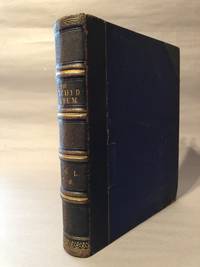
1886005152London: B. S. Williams 1886. First Edition . Leather. Very Good. Folio. John Nugent Fitch. Volumes 5 and 6 bound as one. Original half dark blue morocco leather over blue pebbled cloth boards four double raised bands gilt titles marbled endpapers and edges 12.5 x 10.75 inches. First Editions: vol. 5- 1886 vol.6- 1887. Unpaginated; each volume illustrated with 48 96 total plates tissue-protected chromolithographs by John Nugent Fitch 1836-1895. One of the great orchid books of the nineteenth century published at the height of the 'Orchidelirium' mania. Exterior showing some wear and rubbing heaviest at extremities spine sunned to brown as expected light typical foxing and toning to text pages all plates clean and bright. Provenance: Bookplate from the Royal Horticultural Society Lindley Library deaccessioned with "Cancelled" stamp on bookplate no other library markings in book. The Lindley Library in London is the largest horticultural library in the world. <br/> <br/> B. S. Williams hardcover
1897164656New York: Harper & Brothers 1897. First Edition; First Printing. Hardcover. Very Good in boards. Owner bookplate on rear pastedown personalization on title page. Harper & Brothers hardcover
18976853New York: Harper & Brothers 1897. First edition. Hardcover. Very Good. 4 3/4 x 7 in. 187 pgs plus adverts. Green cloth with gilt patern and lettering on cover same on spine. B&W frontis and illus. Signed with charming inscription in ink on 2nd ffep. Condition is VERY GOOD ; corners bumped as are ends of spine. Some foxing to covers spine sunned. Very mild foxing to endpapers with a very faint inscription on ffep dated 1932. Binding tight text very clean. Shakespeare. RGR. Harper & Brothers hardcover
1880616447New Haven: Henry Howe 1880. Fine. First edition. Tall octavo. 511 3pp Illustrated. Decorative green cloth beveled boards stamped in gilt and black. A fine and especially bright example of this American decorated publisher's binding. Henry Howe unknown
18532305230036Fowlers and Wells 1853. First Edition. Hardcover. Acceptable. Early American Dentistry Bound in publisher's cloth. Edge wear rubbing to cover. Hardcover. Binding shaken 2 vi 1 8-175 5 pages. Early signature of Ph. S. Fischer MD. Crowley 1886; Weinberger p. 141. Fowlers and Wells hardcover
189739653New York: Harper & Brothers 1897. Hardcover. Fine. First edition. Top edge gilt. Fine with a bookstore label on the rear pastedown and very mild wear. Inscribed by the author. Harper & Brothers hardcover
1801mon0000131905Charles Knight & Co. Ltd 1918-01-01. Unknown Binding. Acceptable. in x in x in. Red Hardback/Hardcover. Well read copy with some spine wear but still useable colouring of page edges due to age. Charles Knight & Co. Ltd unknown
186845123New York / Cincinnati: Robert H. Johnston & Co. / Robert Clarke & Co 1868. 1st Edition. Original publishers green pebbled cloth card stock boards with gilt stamped lettering to front cover. Later black cloth spine duplicating the original. Minor wear offset to eps VG. IV 5 - 30 2 blank pp. 8vo. <br/><br/>A parody of Longfellow's SONG Of HIAWATHA though asserts the author "the idea of ridiculing or caricaturing Mr. Longellow is too inconsequent and unjust an inference to require formal refutation. That gentleman is far above the reach of such ill-natured assaults." Robert H. Johnston & Co. / Robert Clarke & Co hardcover books
189767069New York London MacMillan 1897. 1899 Edition. Hardback. A fine copy in the original gilt-blocked cloth. Remains particularly well-preserved overall; tight bright clean and strong. ; 264 pages; Description: xix 264 p. Illus. 29 cm. Subjects: Child development -- Education. New York, London, MacMillan hardcover
1868H2092London: James Nisbet 1868. First printing. Hardcover. Very Good. First UK edition 1868. 8vo beveled lavender cloth gilt 240 pp ads. 6 color plates including frontispiece of an old black man giving a little girl a watering can. Very good some fading to spine light rubbing contents very good old inscription from 1867. The American edition did not have color plates. A book on children learning to garden authored by a Long Island resident best known for her hymns and her collaborations with sister Susan Warner. James Nisbet hardcover
1865500052349Routledge 1865. 2nd Edition . Hardcover. Good. no frontpiece <br/> <br/> Routledge hardcover
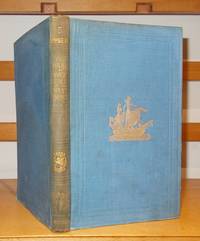
1899015390London: Hakluyt Society 1899. Book measures 23x15.cm. lxvi104pp 20pp list frontis and 2 folding plates. Bound in original publishers embossed gilt cloth. Cloth lightly rubbed some light staining darkened on spine institutional library stamp. Binding in good solid condition. Internally occasional library stamp light staining to back endpaper and a few pages of list. Pages in good clean condition. A good solid copy. . Cloth. Good Plus. 8vo. Hakluyt Society Hardcover
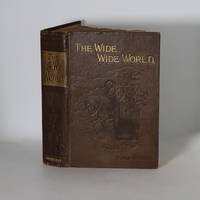
1851FB3823 /11<p>Brown cloth binding with gilt title plate on the spine.</p><p>A very prized edition which was once mistaken as a first edition of £2500 value</p><p><strong><em>The Wide Wide World</em></strong> is an 1850 novel by Susan Warner published under the pseudonym Elizabeth Wetherell. It is often acclaimed as America's first bestseller. "Published at the end of 1850 <em>The Wide Wide World</em> by Susan Warner went through fourteen editions in two years and may ultimately have been as popular as <em>Uncle Tom's Cabin</em> with 19th-century American readers". Although it was first rejected by many publishers Warner's first novel became an instant sensation among its readers. The novel paints an excellent picture of the Victorian era of the United States and so the readers of the time appreciated its relevancy to their own lives. Jo March reads the book in <em>Little Women</em>. Pushing Christian values and themes <em>The Wide Wide World</em> was a guide to young ladies of the time who were encouraged to have submissive and humble attitudes towards their elders especially men. The novel also portrayed a part of the author's own life: While Ellen's mother died when Ellen was young Warner's mother had died when Warner was nine years old. Warner then went to live with her aunt who was much kinder than Ellen's Aunt Fortune. In 1987 the Feminist Press published a new edition including the concluding chapter which had been left out by the previous publishers. <em>The Wide Wide World</em> is a work of sentimentalism about the life of young Ellen Montgomery. The story begins with Ellen's happy life being disrupted by the fact that her mother is very ill and her father must take her to Europe requiring Ellen to leave home to live with an almost-unknown aunt. Though Ellen tries to act strong for her mother's sake she is devastated and can find solace in nothing. Eventually the day comes when Ellen must say goodbye to her mother and travel in the company of strangers to her aunt's home. Unfortunately these strangers are unkind to Ellen and she tries to leave the boat on which they are traveling. An old man sees Ellen crying and tells her to trust in God. He teaches her about being a Christian as her mother had done and asks her if she is ready to give her heart to Jesus. After talking with the man Ellen becomes determined to become a true Christian which gives her strength for the rest of the journey to her aunt's place in Thirwall. On Ellen's first night in Thirwall she learns that her father forgot to inform her aunt that she was coming so a "Mr. Van Brunt" escorts her to her aunt's home. This aunt Fortune Emerson proves to be quite different from Ellen's loving mother: she treats Ellen unkindly and refuses to let her attend school. Ellen hates living with Fortune and comes to find comfort in the society of Mr. Van Brunt and other neighbors as she becomes more familiar with her new surroundings. One day discovering that her aunt withheld a letter from Mrs. Montgomery Ellen runs crying into the woods. There she meets Alice Humphreys the daughter of a local minister. Alice is kind to Ellen and invites her to tea the next day to give Ellen a chance to tell her troubles; maybe Alice would be able to help. The girls become fast friends and Alice adopts Ellen as a sister offering to educate her and guide her spiritually teaching her to forgive others and trust in the Lord. Alice and her brother John who is away at school much of the time treat Ellen like family even inviting her to spend Christmas in the nearby town of Ventnor with them and their friends the Marshmans. While there Ellen meets another Ellen Ellen Chauncey. She also gets better acquainted with John Humphreys who comforts her many times after the other children tease her. Ellen comes to realize that if she hadn't needed to be separated from her mother she might never have met Alice and John. About a year later one day when Ellen visits town she overhears from some ladies' conversation that her mother has died. Devastated she turns to Alice and her Bible for comfort. She stays with Alice and John until Aunt Fortune becomes ill and Ellen must look after her. Eventually Aunt Fortune recovers and Ellen returns to Alice and her other friends. After Mr. Van Brunt's mother dies he decides to marry Aunt Fortune; soon after Alice tells Ellen that she is very ill and will soon be "going home" to Heaven; Ellen is not to grieve for her but to trust in God. She also invites Ellen to take her place in the Humphreys household. Ellen immediately moves in and begins by nursing Alice through her final weeks. After Alice dies Ellen turns to John for guidance. He takes over as her tutor spiritual advisor and guiding light. By the time a Humphreys relative dies in England and John must travel overseas to handle the family's business Ellen though sad to see him go is a stronger person. One day Nancy visits Ellen bringing letters she has found while cleaning Fortune's house. They are for Ellen from her mother and express the wish that Ellen goes to live with relatives in Scotland; after sharing the letters with Mr. Humphreys Ellen decides she must honor her parents' wishes so the Humphreys send her to Scotland to live with the Lindsays: her grandmother and uncle Lindsay and Lady Keith. They welcome her into their home and find her delightful but they become very possessive of her and force her to denounce her identity as an American and as a Montgomery. Mr. Lindsay even makes Ellen call him "father" and refers to her as his "own little daughter." The Lindsays also discourage Ellen's faith as they don't see religion as being important to someone Ellen's age. Ellen finds it hard to live without her daily hours set aside for studying religion but still tries hard to live by her faith and everything that John and Alice taught her. Ellen misses John more than anything and during a New Year's Eve party at the Lindsays' he shows up asking for her. The Lindsays try to keep them apart but they are unsuccessful. During their emotional reunion John reminds Ellen to keep her faith; in a few years when she will be able to choose where she lives she can return to America and live with him. When Ellen introduces John to the Lindsays they actually become fond of him. John must soon return to America but not without promising Ellen that they will be together forever soon. In an unpublished chapter at the end of the book Ellen returns to America as Mrs. John Humphreys.</p><p><strong>Susan Bogert Warner</strong> pen name <strong>Elizabeth Wetherell</strong>; July 11 1819 – March 17 1885 was an American Presbyterian writer of religious fiction children's fiction and theological works. She is best remembered for <em>The Wide Wide World</em>. Her other works include <em>Queechy</em> <em>The Hills of Shatemuck</em> <em>Melbourne House</em> <em>Daisy</em> <em>Walks from Eden</em> <em>House of Israel</em> <em>What She Could</em> <em>Opportunities</em> and <em>House in Town</em>. Warner and her sister Anna wrote a series of semi-religious novels which had extraordinary sale including <em>Say and Seal</em> <em>Christmas Stocking</em> <em>Books of Blessing</em> 8 vols. <em>The Law and the Testimony</em>.</p> James Nisbet & Co. hardcover
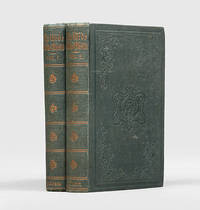
1851139641New York: George P. Putnam 1851. Only "surpassed by Uncle Tom's Cabin in sales and popularity" First edition of Susan Bogert Warner's first novel written under the pseudonym of Elizabeth Wetherell in bright condition. Warner 1819-1885 began writing The Wide Wide World in 1848. It was to become one of the most popular American novels of its time however initially had difficulty finding a publisher. "Even when George P. Putnam accepted the novel for publication in 1850 largely because his mother was enthusiastic about the manuscript he initially printed only 750 copies; two years later the novel was reprinted for the fourteenth time and for decades to come only Harriet Beecher Stowe's Uncle Tom's Cabin surpassed Warner's first novel in sales and popularity" ANB. Henry James wrote admiringly of the work in the Nation in 1860 praising Warner's realistic depiction of rural life. This copy is in the third state listed in BAL without the printer's imprint on the copyright page and the final signature of vol. II being 154; the order of priority given as "probable". Blanck notes in his juvenilia bibliography Peter Parley to Penrod that as in the present copy "in first printed copies the folio at p. 157 vol. I and the folio at p. 34 vol. II are misplaced and appear at the inner portion of the page rather than at the fore-edge" Blanck p. 4. 2 vols octavo. Original green morocco-grain cloth titles and decorative motifs to spine in bronze covers stamped in blind within double-rule frames yellow coated endpapers BAL binding b no priority. Spines gently cocked and a little sunned faint spotting to joints touch of wear to tips occasional foxing; a very good copy indeed. BAL 21253; Jacob Blanck Peter Parley to Penrod: a bibliographical description of the best-loved American juvenile books 1938. hardcover