229 résultats
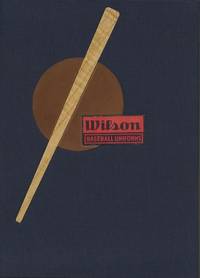
193050786New York Chicago San Francisco: Wilson-Western Sporting Goods Company 1930. First edition. 2 volumes. 8vo. The wrappers are illustrated with Rogers Hornsby in batting stance on the front cover. There are some marginal tears and general wear and soiling especially to the Made -To -Measure catalogue; else in very good condition. Housed in a custom-made clamshell box of cloth with inlays of wood and leather. These two companion catalogues illustrate off-the-rack and tailor-made uniforms in a variety of price ranges. They contain original wool flannel samples a drawing of the complete uniform full description and price. The READY-TO-WEAR catalogue is sixteen pages plus covers fully illustrated and contains thirty-two uniform samples in a variety of colors and pinstripes. The MADE-TO-MEASURE catalogue is thirteen pages plus covers contains illustrations and sixty uniform samples in a variety of colors and pinstripes. Additionally there are endorsements for mitts with photo portraits by Bill Terry and Ray Schalk. We have been unable to locate any other copies of these or other Wilson swatch book catalogues in OCLC or any other database. The library of The Baseball Hall of Fame in Cooperstown New York had heard that such catalogues were produced but had never seen one. Rare. <br/><br/> Wilson-Western Sporting Goods Company hardcover books
199720916Roanoke Virginia: Art Museum of Western Virginia 1997. Softcover. VG. Color wraps. 64 pp. 23 color plates. To accompany exhibition Oct. 10 1997 to Jan. 4 1998. Essays by Ann Gibson and Mark Scala. Art Museum of Western Virginia unknown books
19522242Norman Oklahoma: University of Oklahoma Press 1952. First Edition. Rust cloth covered boards faux leather spine. Near fine in very good dust wrapper. Eggenhofer Nick. 170 pages. 22.5 x 16.5 cm. "Mr. Adams has done a superlative job and his illustrator Nick Eggenhofer has captured the real spirit of the round-up camp. This book is more than grand reading. It perpetuates the memory of the vanished craftsman and fills a long existent deficiency in the literature of the West." - New York Times Book Review. Interior crisp and clean dust wrapper lightly foxed. <br/><br/> University of Oklahoma Press hardcover books
16753Women's Education Movement. Western Female Seminary Catalog 1868-1869. Oxford OH. Western Female Seminary was founded in 1853 as a daughter school of Mount Holyoke College in South Hadley Massachusetts. Its first principal Helen Peabody and most of the early faculty had been students and teachers at Mount Holyoke. Mary Lyon Residence Hall on the Western campus is named for Mount Holyok's founder Mary Lyon. It later received a charter and became Western College an all-female institution. Women's colleges proliferated in the mid- to late- 19th century to fill the void created by their exclusion from most institutions of higher education. The prevailing notion that women were too delicate for a rigorous academic education was openly challenged when Elizabeth Cady Stanton spoke at the Seneca Falls Convention of 1848 "Man's intellectual superiority cannot be a question until woman has had a fair trial.When we shall have had our colleges our professions our trades for a century a comparison then may be justly instituted." Young women were quick to step up to the challenge; as quickly as female colleges opened they filled up. No copy could be found among Institutional or library Collections according to OCLC Worldcat. <br/><br/>Women's Academy and Seminary Archive recording the first important movement of women into higher education in the United States seminary was synonymous with "academy" and did not have the religious connotation of today. In the 1800's the Female Academy and Seminary Movement transformed American educational norms allowing women the opportunity to receive secular non-religious college-level education. Women's colleges proliferated in the mid- to late- 19th century to fill the void created by their exclusion from most institutions of higher education. The prevailing notion that women were too delicate for a rigorous academic education was openly challenged when Elizabeth Cady Stanton spoke at the Seneca Falls Convention of 1848 "Man's intellectual superiority cannot be a question until woman has had a fair trial.When we shall have had our colleges our professions our trades for a century a comparison then may be justly instituted." Young women were quick to step up to the challenge; as quickly as female colleges opened they filled up. Not in OCLC Worldcat. unknown books


