Eisenstein, Louis/ Rosenberg, ElliotBiblio.com

576 résultats
2013x-0801478847Fall Creek Books 2013. Paperback. New. reprint edition. 300 pages. 8.75x6.00x0.75 inches. Fall Creek Books paperback
0700001093.Ghardcover. Good. Access codes and supplements are not guaranteed with used items. May be an ex-library book. hardcover
2393113-nnew. unknown
2393113like new. unknown
2004Q-184277395XZed Books 2004-08-01. Paperback. New. In shrink wrap. Looks like an interesting title! Zed Books paperback
2004x-184277395XZed Books 2004. Paperback. New. 236 pages. 8.50x5.25x0.25 inches. Zed Books paperback
2004DADAX1842773941Zed Books 2004-08-01. hardcover. New. 5.18x0.78x9.10. Buy with confidence. Excellent Customer Service & Return policy. Zed Books hardcover
2004DADAX184277395XBloomsbury 2004-08-01. paperback. New. 5.50x0.55x8.50. Buy with confidence. Excellent Customer Service & Return policy. Bloomsbury paperback
ria9781842773956_inpPaperback. New. New Book; Fast Shipping from UK; Not signed; Not First Edition; N/A paperback
B9781842773956Paperback / softback. New. Zillah Eisenstein presents a wide-ranging critique of neoliberal globalization and of American foreign policy. Insisting that 'the' West is as much fiction as reality she explores plural understandings of feminisms in other cultures and looks to the global anti-war movement to counter US power. paperback
198542387HEYNE WILHELM 1985. 1. softcover. PHANTASIA - MÄRCHENWELT DER FANTASY HEYNE, WILHELM paperback
19862092902139203888contemporary planning room 1986. Soft Cover. Fine. The book is in fine condition. contemporary planning room paperback
19862111902160801801contemporary planning room 1986. Soft Cover. Fine. Number of books: 1 contemporary planning room paperback
19862090202120405617contemporary planning room 1986. Soft Cover. Fine. Number of books: 1 contemporary planning room paperback
184445141Berlin G. Reimer 1844. 4to. As extracted from "Journal für die reine und angewandte Mathematik 28 Band 4. Heft 1844". Without wrappers and backstrip. Fine and clean. Eisenstein: Pp. 289-374. Entire issue: 289-380 2 folded plates. <br/><br/><em>First printing of German mathematics prodigy Eisenstein's paper on third degree equations with basis in a devided circle. Even though he died prematurely at the age of 29 he managed to prove biquadratic reciprocity Quartic reciprocity Cubic reciprocity to be imprisoned by the Prussian army for revolutionary activities in Berlin and making Gauss state that: "There have been only three epoch-making mathematicians: Archimedes Newton and Eisenstein". Alexander von Humboldt then 83 accompanied Eisenstein's remains to the cemetery. The papers presented in the present issue is among his most prominent and made him famous throughout the mathematical world. James Driven to innovate P. 88. "The twenty-seventh and twenty-eighth volumes of Crelle's Journal published in 1844 contained twenty-five contributions by Eisenstein. These testimonials to his almost unbelievable explosively dynamic productivity rocketed him to fame throughout the mathematical world. They dealt primarily with quadratic and cubic forms the reciprocity theorem for cubic residues fundamental theorems for quadratic and biquadratic residues cyclotomy and forms of the third degree plus some notes on elliptic and Abelian transcendentals. Gauss to whom he had sent some of his writings praised them very highly and looked forward with pleasure to an announced visit. In June 1844 carrying a glowing letter of recommendation from Humboldt Eisenstein went off to see Gauss. He stayed in Göttingen fourteen days. In the course of the visit he won the high respect of the "prince of mathematicians" whom he had revered all his life. The sojourn in Göttingen was important to Eisenstein for another reason: he became friends with Moritz A. Stern-the only lasting friendship he ever made. While the two were in continual correspondence on scientific matters even Stern proved unable to dispel the melancholy that increasingly held Eisenstein in its grip. Even the sensational recognition that came to him while he was still only a third-semester student failed to brighten Eisenstein's spirits more than fleetingly. In February 1845 at the instance of Ernst E. Kummer who was acting on a suggestion from Jacobi possibly inspired by Humboldt Eisenstein was awarded an honorary doctorate in philosophy by the School of Philosophy of the University of Breslau.Eisenstein soon became the subject of legend and the early literature about him is full of errors. His treatises were written at a time when only Gauss Cauchy and Dirichlet had any conception of what a completely rigorous mathematical proof was. Even a man like Jacobi often admitted that his own work sometimes lacked the necessary rigor and self-evidence of methods and proofs." DSB </em> unknown
194516426JMoscow: Goskinoisdat 1945. First Edition. Text and inscription in Russian. Signed presentation copy from film director Sergei Eisenstein to film sound engineer Boris Alexeivich Volsky inscribed in Russian which translated reads: “I am asking my friend Volsky to take this modest gift as a token of admiration With Love Sergei Eisenstein 2nd part of Ivan the Terrible 1/46â€. Very good in decorated stamped cloth. A very rare book printed while the Russians were fiercely battling the Nazis this book was printed in very small quantities. Volsky recorded the sound for Eisenstein’s Ivan the Terrible Part One which was being filmed at this time. Original stamped decorative cloth. Very good. Boris Volsky recorded the sound for Eisenstein’s Alexander Nevsky 1938 Ivan the Terrible Part One 1948 and Ivan the Terrible Part Two 1958. Eisenstein’s autograph is a legendary rarity. Goskinoisdat hardcover
194416424JMoscow: Goskinoisdat 1944. First Edition. Text and inscription in Russian. Signed presentation copy from film director Sergei Eisenstein to film sound engineer Boris Alexeivich Volsky inscribed in Russian which translated reads: “To dear Boris Alexeivich on a day of joy which I hope will change the misery. With love Sergei Eisenstein December 44â€. Very good in decorated stamped cloth. A very rare book printed while the Russians were fiercely battling the Nazis this book was printed in very small quantities. Volsky recorded the sound for Eisenstein’s Ivan the Terrible Part One which was being filmed at this time. Original stamped decorative cloth. Very good. Boris Volsky recorded the sound for Eisenstein’s Alexander Nevsky 1938 Ivan the Terrible Part One 1948 and Ivan the Terrible Part Two 1958. Eisenstein’s autograph is a legendary rarity. Goskinoisdat hardcover
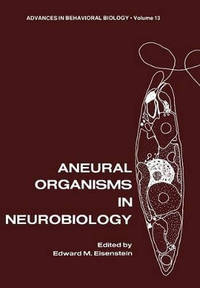
B9781461344759Paperback / softback. New. Eisenstein v Contents Aneural Systems and Neurobiology: A Point of View . Wood Genetic Dissection - An Approach to Neurobiology 25 Ching Kung Cybernetics and the Behavior of Microorganisms 41 Bodo Diehn Control of Ciliary Activity in Aneural Organisms 59 Miles Epstein Membrane Potential and Behavior: Proposal of a Model System . paperback
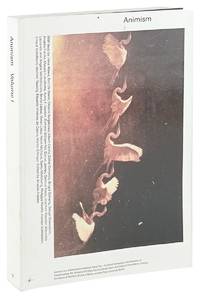
201045945Berlin: Sternberg Press 2010. Very Good -. Berlin: Sternberg Press 2010. First Edition. Octavo; publisher's white pictorial card wrappers; 253pp.; illus. throughout. Moderate wear and waviness to wrappers light soil else About Very Good and sound. <br /> <br /> Collaboration between the Kunsthal Antwerpen; the Museum of Contemporary Art Antwerp; the Kunsthalle Bern; the Generalie Foundation Vienna; and the House of World Culture Berlin. Contents include essays on Disney by two different filmmakers Sergei Eisenstein and Oksana Bulgakowa sometimes spelled Bulgakova. Sternberg Press unknown
19622080502106602050Japan Art Theater Guild 1962. Soft Cover. Fine. Volume: 1 Japan Art Theater Guild paperback
19622090202120412694ATG No.8 1962. Soft Cover. Fine. Number of books: 1 ATG No.8 paperback
2005C218030Milan: Mudina/ 5 Continents 2005. Hardcover Hardcover. Very Good. Signed presentation copy from the author. Large octavo. 215pp. Original illustrated hardback. Light bump to foot of spine and slight mark to fore-edge otherwise near fine. No jacket. English and Italian text. Mudina/ 5 Continents, hardcover
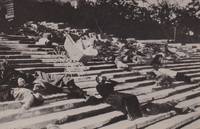
1925168469N.p.: N.p. 1925. Nine reference photographs from the 1925 Soviet silent film seven borderless and two bordered struck and issued by Cinémathèque Française circa 1936. <br /> <br /> All seven borderless photographs with the stamp of Archives Cinémathèque Française on the verso.<br /> <br /> A dramatization of a real-life mutiny which occurred on the Russian battleship Potemkin in 1905. The film's violence led to it being banned in West Germany and the UK until 1954 and even after that given an X rating until 1978. It was shown in a much-edited form in East Germany though the US premiere in December 1926 was shown unedited. A written introduction by Leon Trotsky at the beginning of the film was cut from later Soviet prints due to Trotsky running afoul of Stalin. <br /> <br /> The film's famous sequence showing a massacre by Tsarist soldiers of civilians on the Odessa Steps is considered the first example of a montage sequence in cinema. <br /> <br /> All photogaphs 5 x 3.5 inches. Generally Near Fine.<br /> <br /> BFI 1494. Godard Histoires du cinema. Rosenbaum 1000. N.p. unknown
1453569308.Ghardcover. Good. Access codes and supplements are not guaranteed with used items. May be an ex-library book. hardcover
184645142Berlin G. Reimer 1846. 4to. In "Journal für die reine und angewandte Mathematik 33 Band 1. Heft 1846". In the original printed wrappers without backstrip. Fine and clean. Last leaf with repair. Eisenstein: Pp. 59-70; Pp. 71-88. Entire issue: IV 92 2 2 plates. <br/><br/><em>First printing of two papers by Eisenstein one of them Beiträge zur Theorie. being the first of his 1846-47-period where he mainly occupied himself with the theory of elliptic functions.Even though the German mathematics prodigy Eisenstein's died prematurely at the age of 29 he managed to prove biquadratic reciprocity Quartic reciprocity Cubic reciprocity to be imprisoned by the Prussian army for revolutionary activities in Berlin and making Gauss state that: "There have been only three epoch-making mathematicians: Archimedes Newton and Eisenstein". Alexander von Humboldt then 83 accompanied Eisenstein's remains to the cemetery. The papers presented in the present issue is among his most prominent and made him famous throughout the mathematical world. James Driven to innovate P. 88. The issue also contain papers by famous contemporary mathematicians such as: C. G J. Jacobi A. Cayley Dirichlet and J. Steiner."Eisenstein soon became the subject of legend and the early literature about him is full of errors. His treatises were written at a time when only Gauss Cauchy and Dirichlet had any conception of what a completely rigorous mathematical proof was. Even a man like Jacobi often admitted that his own work sometimes lacked the necessary rigor and self-evidence of methods and proofs." DSB </em> unknown