328 résultats
194910999299376Présence de quelques rousseurs ; PM-DX2-305, Editions Albin Michel ; Collection "Les Saints de Mars" 1949
194910999301610Quelques rousseurs ; PM-DX2-C305, Editions Albin Michel ; Collection "Les Saints de Mars" 1949
194910999301710Présence de quelques rousseurs ; PM-DX2-C305, Editions Albin Michel ; Collection "Pages catholiques" 1949
195010999301902Présence de quelques rousseurs ; PM-DX2-C305, Editions Albin Michel ; Collection "Pages catholiques" 1950
195010999302759Présence de quelques rousseurs ; PM-DX2-C305, Editions Albin Michel ; Collection "Pages catholiques" 1950
1931024915Librairie Valois broché Couverture Illustrée Paris 1931 "258 pages en format petit -12 - collection "" les belges "" - exemplaire sur papier bouffant des usines godin à Huy" Livre personnalisé
19491678549901673Couverture défraîchie, GLN-816, Editions Albin Michel, Paris, 1949
1936RO20122823PLON. 1936. In-12. Broché. Etat d'usage, Couv. défraîchie, Dos abîmé, Intérieur acceptable. 338 pages. Quelques planches de photos en noir et blanc.. . . . Classification Dewey : 840.091-XX ème siècle
1940R260137147GALLIMARD / COLLECTION CATHOLIQUE. 1940. In-12. Broché. Etat d'usage, Couv. légèrement passée, Dos satisfaisant, Intérieur frais. 63 pages. Premier plat illustré en noir et blanc.. . . . Classification Dewey : 922-Religieux
1947R260142336ALBIN MICHEL. 1947. In-8. Relié. Bon état, Couv. convenable, Dos satisfaisant, Intérieur frais. 460 pages. Dos de toile verte, titres et filets dorés, papier tons verts sur les plats. Etiquette de code au dos, tampon d'institution.. . . . Classification Dewey : 922-Religieux
18820Broché - 13,5 x 21,5 - 453 pp - année 1947 - Editions Albin Michel - illustrations -
8838Albin Michel 1956
194710080ÉDITIONS ALBIN MICHEL 1947 460 pages in8. 1947. broché. première édition. 460 pages. Cette biographie de saint François d'Assise par l'abbé Omer Englebert prêtre franciscain présente le saint comme une figure spirituelle universelle et intemporelle bien plus que le simple fondateur d'un ordre religieux. L'ouvrage documenté et précis souligne l'actualité permanente de son message et son rôle de pont entre les religions illustré par la rencontre interreligieuse d'Assise en 1986
1020552379.Ghardcover. Good. Access codes and supplements are not guaranteed with used items. May be an ex-library book. hardcover
1960R240003355CASTERMAN. 1960. In-8. Broché. Etat d'usage, Couv. légèrement passée, Dos abîmé, Intérieur acceptable. 19 pages. Nombreuses illustrations en couleur, dans le texte et hors texte. Coiffes en tête et en pied abîmée.. . . . Classification Dewey : 843.0692-Livres d'enfants
1422Montréal, Beauchemin, (1913). Petit in-8 (19.5 cm) 114p. Broché. Couverture illustrée par Albert Ferland. Légèrement débroché. Exemplaire avec un envoi: « À Monsieur J. M. Alfred Mousseau, homme de lettres ... » signé Lionel E. Léveillé. Englebert Gallèze. DOLQ II, 241-242.
0267968051.Ghardcover. Good. Access codes and supplements are not guaranteed with used items. May be an ex-library book. hardcover
1527604225.Gpaperback. Good. Access codes and supplements are not guaranteed with used items. May be an ex-library book. paperback
A clean, unmarked book with a tight binding. Liquid stain on spine of edge worn dust jacket. Age-toned pages. 7 1/4"w x 9 1/2"h. 40 pages.
1985RO30372758Crédit communal de Belgique. 1985. In-4. Broché. Etat passable, Coins frottés, Dos frotté, Papier jauni. 304 pages. Quelques rousseurs. Couverture contrepliée. Deux colonnes de texte. Nombreuses cartes en noir et blanc.. . . . Classification Dewey : 70.49-Presse illustrée, magazines, revues
2010Q-0764144294B.E.S. Publishing 2010-04-01. Paperback. New. New. In shrink wrap. Looks like an interesting title! B.E.S. Publishing paperback
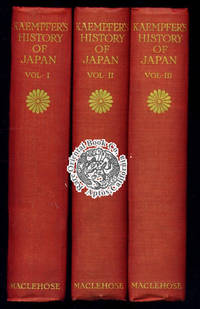
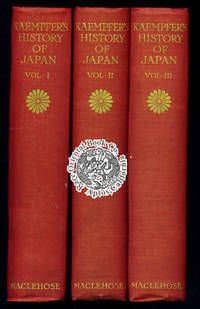
22003508Glasgow 1906 MacLehose. Red cloth 336398386p. 3 volume set 162 fold out plates maps text illustrations index s reprint copy of London 1727 edition tops gilt 15 x 23 cm. excellent copy untrimmed. !UNCUT! IN COLLECTOR'S CONDITION! A reduced size but exact and complete reprint of the First edition published 1727 by J.G. Scheuchzer. . The 2nd. edition in 1778 was improved containing a second index & a 75-page appendix on the Natural History of the Japanese tea with accurate description of that plant its culture growth preparation and uses. Also of the paper manufacture of the Japanese. Of the Cure of the Cholick sic by the acupuncture or needle-pricking as it is used by the Japanese. An account of Moxa an excellent caustic of the Chinese and Japanese showing how & where to insert the needles & where to burn. In all the original had 45 finely engraved copper plates and maps with early illustrations on Japanese tea plants herb logy & acupuncture adorn this work. SUBTITLE: Giving an Account of the Ancient and Present State of government of that Empire of its Temples Palaces.of the chronology & Succession of the Emperors.Together with a Description of the Kingdom of Siam.Kaempfer 1651-1716 was a German doctor with a passion for traveling. He went to Nagasaki in 1690-91. His work covers Japanese history & a very reliable & lucid description of the political social & physical state of the country in the 17th century. For upwards of 100 years this work remained the chief source of reliable and primary information for the rest of the world. Kaempfer was essentially stationed in Nagasaki harbor on the prison-like island of Dejima the entrance of which was controlled by the Japanese. There he performed his medical duties as Dutch East India Company physician. Once a year a representative of the Company was allowed to go to Edo under very strict military guard to be observed by the Shogun. The entourage went by way of Nagasaki to Kokura Osaka Miaco Kyoto Fammamatz Hamamatsu to Edo basically up the Tokaido highway. Kaempfer was sent to the Shogun's palace in Edo he was ordered to dance sing & eat while being scrutinized by the Shogun who shielded himself behind a Sudare or bamboo curtain. The Shogun secretly watched the Oranda-jin a Dutchman. Kaempfer was a very open & free-thinking educated man who was also an intellectual. The Shogun took to him & granted the favor of free travel throughout Japan unheard of during this period of Japan's & fear of Westerners and isolation to the rest of the world. The Dutch were allowed just so many vessels to visit annually & trade with their "window to the world" at Dejima. Nagasaki became a gathering place for curious Japanese as well as would-be Ran-gaku-sha Japanese Scholars of Dutch Learning who studied science medicine astronomy geography cartography and the Western art of copper plate printing. From this very tiny island "window" Japan's curious intellectuals made a school & began to teach Western style knowledge to an elite Japanese intelligentsia. WHO WAS DR. ENGELBERT KAEMPFER: Kaempfer was one of the scant few who gave favor to the rise of such Japanese and taught them what he could. This most famous primary resource has been celebrated since its publication as THE single most important book on Japan in the 18th century. Over the past two centuries & a half this work has maintained its position as one of the three most important books on Japan done in English in the West. Highly collectable and coveted by connoisseurs historians & librarians renders this a magnificent primary resource with fabulous etchings. The addition of the appendices in 1728 on the Tea Camellia is the first appearance of this in English. Also the first discussion of acupuncture & the use of Moxa Mogusa as a medical remedy. The West is still learning about effectiveness of these two medical treatments to this day. Kaempfer's influence on the Japanese is difficult to assess except that some of Japan's most intellectual scientists physicians reformers and scholars got their Rangaku from Deshima after Kaempfer arrived. Shiba Kokan the "Da Vinci of Japan" Matsukawa Hanzan and a host of others led Japan through the halls of innovation for the next two hundred and fifty years. Even today medicine is still considered as "Rangaku" in Japan. The roots of Japan becoming a modern well educated nation emanates from its first introduction of European learning via Deshima. This book documents the beginning of that era. In just two years' stay in Japan Dr. Kaempfer began Japan's long voyage of equality with the West. RARE in either edition. Kaempfer 1740-1812 was the director of the Deshima factory in 1779-1780 and 1781-1784 in Nagasaki. BIBLIOGRAPHY: . E. Cox: A REFERENCE GULIDE TO THE LITERATURE OF TRAVEL p.332 M. Takahashi: CATALOGUE OF SPECIAL BOOKS ON CHRISTIAN MISSIONS Tenri 1932 vol.1 p.198 no. 4-8; H. Cordier: JAPONICA 414-15. Wellcome III 376. Veith I.: HUANG TI NEI CHING SU WEN: THE YELLOW EMPEROR'S CLASSIC OF INTERNAL MEDICINE illustrates the famous plate on accupuncture found in Kaempfer. VEITH Ilza. THE BEGINNINGS OF JAPANESE OBSTETRICS R A R E. A complete reprint of the original London 1727 edition with all illustrations. . unknown
22003503Glasgow 1906 MacLehose. Red cloth 336398386p. 3 volume set many fold out plates index superbly bright fine copy a reprint copy of London 1727 edition tops gilt15 x 23 cm. FINE COPY IN COLLECTOR'S FINE CONDITION A reduced size but exact and complete reprint of the First edition published 1727 by J.G. Scheuchzer. . The 2nd. edition in 1778 was improved containing a second index & a 75-page appendix on the Natural History of the Japanese tea with accurate description of that plant its culture growth preparation and uses. Also of the paper manufacture of the Japanese. Of the Cure of the Cholick sic by the acupuncture or needle-pricking as it is used by the Japanese. An account of Moxa an excellent caustic of the Chinese and Japanese showing how & where to insert the needles & where to burn. In all the original had 45 finely engraved copper plates and maps with early illustrations on Japanese tea plants herb logy & acupuncture adorn this work. SUBTITLE: Giving an Account of the Ancient and Present State of government of that Empire of its Temples Palaces.of the chronology & Succession of the Emperors.Together with a Description of the Kingdom of Siam.Kaempfer 1651-1716 was a German doctor with a passion for traveling. He went to Nagasaki in 1690-91. His work covers Japanese history & a very reliable & lucid description of the political social & physical state of the country in the 17th century. For upwards of 100 years this work remained the chief source of reliable and primary information for the rest of the world. Kaempfer was essentially stationed in Nagasaki harbor on the prison-like island of Dejima the entrance of which was controlled by the Japanese. There he performed his medical duties as Dutch East India Company physician. Once a year a representative of the Company was allowed to go to Edo under very strict military guard to be observed by the Shogun. The entourage went by way of Nagasaki to Kokura Osaka Miaco Kyoto Fammamatz Hamamatsu to Edo basically up the Tokaido highway. Kaempfer was sent to the Shogun's palace in Edo he was ordered to dance sing & eat while being scrutinized by the Shogun who shielded himself behind a Sudare or bamboo curtain. The Shogun secretly watched the Oranda-jin a Dutchman. Kaempfer was a very open & free-thinking educated man who was also an intellectual. The Shogun took to him & granted the favor of free travel throughout Japan unheard of during this period of Japan's & fear of Westerners and isolation to the rest of the world. The Dutch were allowed just so many vessels to visit annually & trade with their "window to the world" at Dejima. Nagasaki became a gathering place for curious Japanese as well as would-be Ran-gaku-sha Japanese Scholars of Dutch Learning who studied science medicine astronomy geography cartography and the Western art of copper plate printing. From this very tiny island "window" Japan's curious intellectuals made a school & began to teach Western style knowledge to an elite Japanese intelligentsia. WHO WAS DR. ENGELBERT KAEMPFER: Kaempfer was one of the scant few who gave favor to the rise of such Japanese and taught them what he could. This most famous primary resource has been celebrated since its publication as THE single most important book on Japan in the 18th century. Over the past two centuries & a half this work has maintained its position as one of the three most important books on Japan done in English in the West. Highly collectable and coveted by connoisseurs historians & librarians renders this a magnificent primary resource with fabulous etchings. The addition of the appendices in 1728 on the Tea Camellia is the first appearance of this in English. Also the first discussion of acupuncture & the use of Moxa Mogusa as a medical remedy. The West is still learning about effectiveness of these two medical treatments to this day. Kaempfer's influence on the Japanese is difficult to assess except that some of Japan's most intellectual scientists physicians reformers and scholars got their Rangaku from Deshima after Kaempfer arrived. Shiba Kokan the "Da Vinci of Japan" Matsukawa Hanzan and a host of others led Japan through the halls of innovation for the next two hundred and fifty years. Even today medicine is still considered as "Rangaku" in Japan. The roots of Japan becoming a modern well educated nation emanates from its first introduction of European learning via Deshima. This book documents the beginning of that era. In just two years' stay in Japan Dr. Kaempfer began Japan's long voyage of equality with the West. RARE in either edition. Kaempfer 1740-1812 was the director of the Deshima factory in 1779-1780 and 1781-1784 in Nagasaki. BIBLIOGRAPHY: . E. Cox: A REFERENCE GULIDE TO THE LITERATURE OF TRAVEL p.332 M. Takahashi: CATALOGUE OF SPECIAL BOOKS ON CHRISTIAN MISSIONS Tenri 1932 vol.1 p.198 no. 4-8; H. Cordier: JAPONICA 414-15. Wellcome III 376. Veith I.: HUANG TI NEI CHING SU WEN: THE YELLOW EMPEROR'S CLASSIC OF INTERNAL MEDICINE illustrates the famous plate on accupuncture found in Kaempfer. VEITH Ilza. THE BEGINNINGS OF JAPANESE OBSTETRICS R A R E. A complete reprint of the original London 1727 edition with all illustrations. . unknown
22003507Glasgow 1906 MacLehose. Red decorated cloth very good copy 3 vol. 336396385p. 162 maps illustrations many folding small margin stain last few page edgestext cleansolid copy untrimmed reprint of London 1727 15 x 22 cm. tops gilt. A reduced size but exact and complete reprint of the First edition published 1727 by J.G. Scheuchzer. . The 2nd. edition in 1778 was improved containing a second index & a 75-page appendix on the Natural History of the Japanese tea with accurate description of that plant its culture growth preparation and uses. Also of the paper manufacture of the Japanese. Of the Cure of the Cholick sic by the acupuncture or needle-pricking as it is used by the Japanese. An account of Moxa an excellent caustic of the Chinese and Japanese showing how & where to insert the needles & where to burn. In all the original had 45 finely engraved copper plates and maps with early illustrations on Japanese tea plants herb logy & acupuncture adorn this work. SUBTITLE: Giving an Account of the Ancient and Present State of government of that Empire of its Temples Palaces.of the chronology & Succession of the Emperors.Together with a Description of the Kingdom of Siam.Kaempfer 1651-1716 was a German doctor with a passion for traveling. He went to Nagasaki in 1690-91. His work covers Japanese history & a very reliable & lucid description of the political social & physical state of the country in the 17th century. For upwards of 100 years this work remained the chief source of reliable and primary information for the rest of the world. Kaempfer was essentially stationed in Nagasaki harbor on the prison-like island of Dejima the entrance of which was controlled by the Japanese. There he performed his medical duties as Dutch East India Company physician. Once a year a representative of the Company was allowed to go to Edo under very strict military guard to be observed by the Shogun. The entourage went by way of Nagasaki to Kokura Osaka Miaco Kyoto Fammamatz Hamamatsu to Edo basically up the Tokaido highway. Kaempfer was sent to the Shogun's palace in Edo he was ordered to dance sing & eat while being scrutinized by the Shogun who shielded himself behind a Sudare or bamboo curtain. The Shogun secretly watched the Oranda-jin a Dutchman. Kaempfer was a very open & free-thinking educated man who was also an intellectual. The Shogun took to him & granted the favor of free travel throughout Japan unheard of during this period of Japan's & fear of Westerners and isolation to the rest of the world. The Dutch were allowed just so many vessels to visit annually & trade with their "window to the world" at Dejima. Nagasaki became a gathering place for curious Japanese as well as would-be Ran-gaku-sha Japanese Scholars of Dutch Learning who studied science medicine astronomy geography cartography and the Western art of copper plate printing. From this very tiny island "window" Japan's curious intellectuals made a school & began to teach Western style knowledge to an elite Japanese intelligentsia. WHO WAS DR. ENGELBERT KAEMPFER: Kaempfer was one of the scant few who gave favor to the rise of such Japanese and taught them what he could. This most famous primary resource has been celebrated since its publication as THE single most important book on Japan in the 18th century. Over the past two centuries & a half this work has maintained its position as one of the three most important books on Japan done in English in the West. Highly collectable and coveted by connoisseurs historians & librarians renders this a magnificent primary resource with fabulous etchings. The addition of the appendices in 1728 on the Tea Camellia is the first appearance of this in English. Also the first discussion of acupuncture & the use of Moxa Mogusa as a medical remedy. The West is still learning about effectiveness of these two medical treatments to this day. Kaempfer's influence on the Japanese is difficult to assess except that some of Japan's most intellectual scientists physicians reformers and scholars got their Rangaku from Deshima after Kaempfer arrived. Shiba Kokan the "Da Vinci of Japan" Matsukawa Hanzan and a host of others led Japan through the halls of innovation for the next two hundred and fifty years. Even today medicine is still considered as "Rangaku" in Japan. The roots of Japan becoming a modern well educated nation emanates from its first introduction of European learning via Deshima. This book documents the beginning of that era. In just two years' stay in Japan Dr. Kaempfer began Japan's long voyage of equality with the West. RARE in either edition. Kaempfer 1740-1812 was the director of the Deshima factory in 1779-1780 and 1781-1784 in Nagasaki. BIBLIOGRAPHY: . E. Cox: A REFERENCE GULIDE TO THE LITERATURE OF TRAVEL p.332 M. Takahashi: CATALOGUE OF SPECIAL BOOKS ON CHRISTIAN MISSIONS Tenri 1932 vol.1 p.198 no. 4-8; H. Cordier: JAPONICA 414-15. Wellcome III 376. Veith I.: HUANG TI NEI CHING SU WEN: THE YELLOW EMPEROR'S CLASSIC OF INTERNAL MEDICINE illustrates the famous plate on accupuncture found in Kaempfer. VEITH Ilza. THE BEGINNINGS OF JAPANESE OBSTETRICS R A R E. A complete reprint of the original London 1727 edition with all illustrations. . unknown