452 résultats
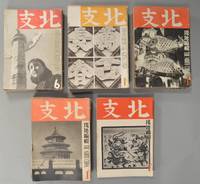
1939879721939. MAGAZINE KATÔ SHINKICHI editor. HOKUSHI THE NORTH CHINA Genchi Henshû Peiping Tokyo Osaka. Showa 14 - 18. 1939-1943. All 51 issues of this important record of the Japanese occupation of North China during the Pacific war in wrappers as they originaly appeared. As the subtitle indicates it was edited "onsite" in Peiping and then printed in Japan. At first intended for an international audience to illustrate the normality of life in North China under the Japanese by the early months of 1942 after war with the West was truly joined the English subtitle and occasional English captions were dropped. From beginning to end a remarkably well-crafted magazine from a graphic point of view with many wonderful photos printed on relatively good quality paper. By the final issues which appeared in 1943 the subjects became more and more military but until then one could scarcely have realized there was still a war on in China. the scenes of daily life were sunny and optimistic the faces smiling and content as people undertook the "reconstruction" of the North. An interesting example of wartime propaganda done with artistic flair and psychological skill. Quite unusual. Not present in the National Diet Library in Japan though Tokyo University seems to have a copy. There are a few institutions in the US that have incomplete runs LOC Harvard Cornell & Stanford plus it would appear that Yale has a full set. Good condition and complete. unknown books
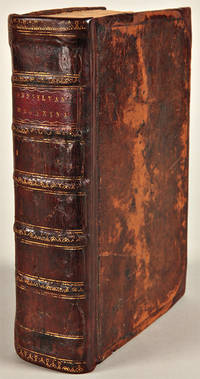
1775WRCAM46863Philadelphia: Robert Aitken 1775. Twelve issues and one supplement a complete run of the first year. 6255pp. including title signature and the supplement plus fifteen plates plate of Charlestown lacking half. Without a leaf numbered 285-286 but the text uninterrupted and evidently complete apparently a mis-pagination at the time of printing. Contemporary calf; rebacked preserving part of the original spine. Boards rubbed neatly repaired at corners "F. Bailey's" stamped in blind on each board. With the inscription in a neat contemporary hand "Ready money for clean Linen Rags By the Printer hereof" on the front flyleaf. Bookplate of the Library Company of Philadelphia with early discard stamp on front pastedown. Light foxing soiling and tanning to text. Half of the plan of Charlestown lacking. Overall almost very good. A run of the first twelve issues and the 1775 supplement of THE PENNSYLVANIA MAGAZINE. the only magazine issued in the American colonies for most of the crucial year of 1775. This copy belonged to Revolutionary- era printer Francis Bailey of Philadelphia and Lancaster Pennsylvania. In the latter location Bailey was the printer of the first edition of the Articles of Confederation. THE PENNSYLVANIA MAGAZINE is among the most important American Revolutionary-era publications for two primary reasons. First it was edited from February to July 1775 by the famous radical Thomas Paine and his regular occupation as he was developing COMMON SENSE was as its editor. Secondly it contains some of the most significant maps produced in America during the Revolution including battle plans that became prototypes for oft-reproduced illustrations. Only a small handful of similar maps were produced in America during the Revolution. Ristow describes three of the maps and plans numbers 8 9 and 10 below as "the earliest revolutionary war maps printed in America." The present collection contains the first twelve of the total nineteen issues of THE PENNSYLVANIA MAGAZINE a complete run for the year 1775. <br> <br> THE PENNSYLVANIA MAGAZINE was conceived and founded by the Revolutionary printer Robert Aitken best known for his work as a printer for the Continental Congress. Aitken launched the periodical himself but soon found it too much work and hired Paine as editor at £50 a year. Paine had only arrived in America a few months before in December 1774. He quickly became the major contributor as well as editor sometimes writing under the initials "A.B." and sometimes with no by-line. "These initials he affixed to descriptions of mechanical devices anecdotes Addisonian essays argumentative papers and poems in some variety.the most imaginative and literary of the pieces have never been reprinted. <br> <br> "Published on the eve of the American Revolution and edited by one of the leading Revolutionary publicists THE PENNSYLVANIA MAGAZINE is of course of paramount political interest.in December the magazine published 'Reflections on the Duty of Princes' in which sovereigns are sharply warned against the exercise of arbitrary power. This is signed 'A.' and is followed by an oratorical passage 'On Liberty' signed 'Philo-Libertas.' Both are in the accents of Paine." - Mott. Mott also particularly mentions Paine's famous "Liberty Tree" article in July 1775 Phillis Wheatley's verses to Washington of April 1776 and Paine's article on the abuse of texts in the supplementary number for 1775. Paine also contributed much that was not political and there are many articles on current events in that fast-moving period which may or may not come from his pen; however writing for this magazine often it was said under the influence of drink was Paine's primary work during this period and all told a substantial part of each issue sprang from his genius until his break with Aitken in July 1775. The magazine chronicles month by month Paine's sentiments before writing COMMON SENSE which was published in mid- January 1776. <br> <br> Many of the important maps and illustrations in THE PENNSYLVANIA MAGAZINE were engraved by the publisher Robert Aitken. The plates in the present volume are as follows: <br> <br> 1 "A New Electrical Machine" in the January 1775 issue. A detailed illustration of a European-invented device for studying electricity. <br> <br> 2 "Doctor Goldsmith" in the January 1775 issue. A portrait of Oliver Goldsmith. <br> <br> 3 "A New Threshing Instrument" in the February 1775 issue. <br> <br> 4 "General Wolfe. A new Song Engraved for the Pennsylvania Magazine" in the March 1775 issue. A folding plate of sheet music with lyrics on the death of Gen. Wolfe in the French and Indian War. <br> <br> 5 "A New Invented Machine for Spinning of Wool or Cotton" in the April 1775 issue. A quite detailed illustration drawn and engraved by C. Tully the inventor of the machine. The plate is torn in the lower margin with a small bit of loss. <br> <br> 6 "Front View of a Frame House resembling Brick" in the April 1775 issue. A fine early American architectural illustration. <br> <br> 7 "Description of a new invented Machine for deepning sic and cleansing Docks &c." in the May 1775 issue. This folding plate itself has no caption but is thus described in the text. An early Philadelphia invention of a dredger. The plate is torn in the upper right corner with loss of about one-sixth of the image supplied in expert facsimile. <br> <br> 8 "A New Plan of Boston Harbour from an Actual Survey" in the June 1775 issue. A fine detailed folding map of Boston harbor showing Boston Dorchester Charlestown Roxbury and other towns fortifications and the several islands that dotted the harbor. WHEAT & BRUN 239. PHILLIPS MAPS p.166. JOLLY MAPS OF AMERICA IN PERIODICALS BEFORE 1800 266. <br> <br> 9 "A New and Correct Plan of the Town of Boston and Provincial Camp" in the July 1775 issue. A fine and important folding plan showing the British battery on Boston Common and the fortification of Boston neck. Many streets are named and wharves identified. NEBENZAHL 2. WHEAT & BRUN 238. PHILLIPS MAPS p.149. JOLLY MAPS OF AMERICA IN PERIODICALS BEFORE 1800 267. RISTOW p.41. <br> <br> 10 "Exact Plan of General Gage's Lines on Boston Neck in America" in the August 1775 issue. This folding map is another important American-engraved battle plan. The accompanying text states that by using the map "it will be easy to form a perfect idea of the manner in which the General hath blockaded the entrances into Boston." Guardhouses fortifications batteries and more are shown. NEBENZAHL 5. WHEAT & BRUN 237. RISTOW p.41. PHILLIPS MAPS p.149. JOLLY MAPS OF AMERICA IN PERIODICALS BEFORE 1800 268. <br> <br> 11 "A Correct View of the Late Battle at Charlestown June 17th 1775" in the September 1775 issue. A view of the Battle of Bunker's Hill showing action on land and at sea and part of Boston in flames. Only the right half of the plate is present in this copy. RISTOW p.41. DEÃÂK PICTURING AMERICA 143. <br> <br> 12 "A Map of the Present Seat of War on the Borders of Canada" in the October 1775 issue. Folding map showing the area from the St. Lawrence River and Montreal in the north down the length of Lake Champlain to Crown Point in the south. WHEAT & BRUN 89. PHILLIPS MAPS p.193. JOLLY MAPS OF AMERICA IN PERIODICALS BEFORE 1800 269. <br> <br> 13 "Plan of the Town & Fortifications of Montreal or Ville Marie in Canada" in the November 1775 issue. A very detailed map of Montreal showing buildings streets squares gardens etc. This folding plan has a fine inset: "View of the Town &c. of Montreal." WHEAT & BRUN 91. PHILLIPS MAPS p.451.JOLLY MAPS OF AMERICA IN PERIODICALS BEFORE 1800 270. <br> <br> 14 "Description of a New Machine for enabling Persons to escape from the Windows of Houses on Fire" in the December 1775 issue. The plate has no caption and the description is taken from the text. An ingenious device involving a large basket and pulley system designed to help people escape from tall burning buildings. <br> <br> 15 "A Plan of Quebec Metropolis of Canada in North America" in the December 1775 issue. This detailed map is keyed to a table identifying seventeen important buildings citadels and batteries in the town. WHEAT & BRUN 90. PHILLIPS MAPS p.735. JOLLY MAPS OF AMERICA IN PERIODICALS BEFORE 1800 271. <br> <br> The provenance of this copy is of particular interest. The volume is blindstamped on the front and rear boards: "F. Bailey's." This is Francis Bailey who operated as a printer in Philadelphia until 1777 and then moved to Lancaster Pennsylvania. In the chaos that ensued after the English seized Philadelphia in the fall of 1777 and the Continental Congress retreated to York Pennsylvania Bailey became for a time the official printer to both the Congress and the government of Pennsylvania. As such he printed the first edition of the Articles of Confederation in Lancaster in November 1777 and a number of important Revolutionary decrees. <br> <br> Lengthy runs of THE PENNSYLVANIA MAGAZINE especially with the scarce illustrations and plans are virtually unknown in the marketplace. A major Thomas Paine piece and of great importance for his work and the American situation on the eve of the Revolution as well as for the graphics and maps bound in. MOTT AMERICAN MAGAZINES I pp.87-91. EVANS 14380. DEÃÂK PICTURING AMERICA 143. FOWBLE PRINTS AT WINTERTHUR 108. Robert Aitken hardcover books