Antiquariat.de

120 résultats
175364977CBLeipzig, Gleditschens Handlung, 1753. 8°. 22 x 13,5 cm. Titelblatt, [5] Blätter Vorrede, Seite 33-356. Neuerer Ganzpergamentband mit goldgeprägtem Rückentitel. [4 Warenabbildungen]
175235155DBBand I-X in 10 (von 37) Bänden. Leipzig, Johann Friedrich Gleditsch 1752-1762. 8°. Jeder Haupttitel mit einer wiederholten gestochenen Titelvignette. Kalbslederbände der Zeit mit roten goldgeprägten Rückenschildern und reicher Rückenvergoldung.
175235155DBLeipzig, Johann Friedrich Gleditsch, 1752-1762. 8°. Jeder Haupttitel mit einer wiederholten gestochenen Titelvignette. Kalbslederbände der Zeit mit roten goldgeprägten Rückenschildern und reicher Rückenvergoldung. + Wichtig: Für unsere Kunden in der EU erfolgt der Versand alle 14 Tage verzollt ab Deutschland / Postbank-Konto in Deutschland vorhanden + Band I-X in 10 (von 37) Bänden.
175062171750 W.Owen 1750 In8 demi reliure (XIXe siècle) dos à 6 nerfs sans pièce de titre paginé 82 à 175 et 2 pages publicitaires petit manque à la derniere, 2 belles planches dépliantes
1798001593Philadelphia Pa: William McCulloch 1798. Paperback. Good . 1 6-48 4 p.; 21 cm. Caption title. Disbound from a nonce volume. Signatures: B-G4 8vo. Lacking first 4 leaves title page and front matter. Publisher's advertisement on 4 unpaginated pages following text for "W. M'Culloch printer bookseller and stationer No. 306 Market near Ninth-Street Philadelphia." Although lacking title page this first and perhaps only issue of this religious periodical was definitely published by W. M'Culloch William McCulloch as p. 19 contains a letter addressed to "Mr. M'Culloch" regarding the insertion of a letter in "your first number" of his "Christian Magazine." Not in Early American Imprints 1st series Shaw & Shoemaker. No other copies of this publication have been located. It is not known whether there is any connection to the publication of same name begun in Edinburgh 1797. Although his work as a printer is not well-documented in Early American Imprints Evans or Shaw & Shoemaker this is the William McCulloch of "William McCulloch's Additions to Thomas's History of Printing." Contents: On the Gospel by Eubulus; The Extent of a Minister's Work in Preaching the Gospel by Beart; Observations on the Manner of Travelling in the Holy Land from Harmer; On Christian Hope by Benevolus; Extract from a letter from the Rev. Booth of London with a plan for the establishmend of a Baptist Society in London for the encouragement and support of Itinerant Preaching; The Death of the Saints Illustrated by C.R.; An Essay introductory to the Study of the Controversy Between Christians and Deists by Y.; The Life of the Rev. Mr. John Flavel; "A Treatise on the Truth of the Christian Religion" by James Vernet; 4 poems; publisher's advertisements. No other copies of this 18th-century religious periodical published in Philadelphia have been located. In Good Condition: disbound; lacking first 4 leaves including title page; light foxing throughout; old damp stain on last few leaves. William McCulloch paperback
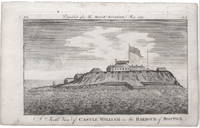
17893563Castle William's heritage as a military installation dates to 1634 when cannons first were deployed in an earthen fort to defend Boston Harbor. British officials used the fort as a refuge in the tumultuous times leading up to the American Revolution; on their way out of Boston in March 1776 the British destroyed the Fort. It was quickly rebuilt by Bostonians. <br /><br />The present view shows the rebuilt Fort with an oversized American flag waving above. The Fort served as an active military installation during the American Revolution the War of 1812 the Spanish-American War and World Wars I and II. Known as Fort Independence since 1797 the Fort today is a state park. <br /><br />Stauffer attributes the engraving to Samuel Hill who did many of the plates for the <i>Massachusetts Magazine</i>. Uncommon. <br /><br />References: Lewis: <i>A Guide to Engravings in American Magazines 1741-1810</i>: p. 10. Stauffer <i>American Engravers Upon Copper and Steel</i>: 1397. <i>John Carter Brown Archive of Early American Images</i>: Record no.5437-4. Cresswell T<i>he American Revolution in Drawings and Prints</i>: 491. From the May, 1789 issue of The Massachusetts Magazine.
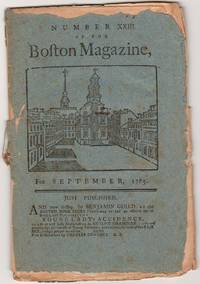
17853784<b><i>Founding of Harvard Medical School</i></b><br /><br /><i>The Boston Magazine</i> was published from October 1783 to December 1786 and was the first magazine to be published in Boston in the aftermath of the American Revolution. A major attraction of this issue is the presence of the front and rear printed wrappers although they are frayed and detached. The front wrapper features a large woodcut of the State House and surrounding buildings in Boston.The first 3 1/2 pages of the<i> Magazine</i> are Harvard's announcement from September 1783 of the creation of "the Medical Institution" now known as Harvard Medical School. This is followed by about two pages of an address "to the students in physic" i.e. the medical students reflecting upon the first two years of the medical school and outlining the requirements for a medical degree. About two pages are devoted to the sailing directions into and out of Plymouth Harbour. A brief news item in the "Monthly Chronology" reports a meeting to be held in October in Falmouth in the District of Maine on creating a "separate government" for the eastern counties -- a very early report on a separation that would not happen for another 35 years. Issues of <i>The Boston Magazine</i> in the original wrappers are extremely uncommon.<b>References</b>: Mott<i> A History of American Magazines 1741-1850</i>: Vol. I p. 28. Richardson <i>A History of Early American Magazines 1741-1789</i>: pp. 212-227. Lomazow <i>American Periodicals</i>: 15. <br /><br /><br /><b>Condition:</b> Signatures loose. Front and back wrappers present but frayed and detached; top 1/2" or so of front wrapper lacking. Occasional spotting. Interior pages very good. ICN 2933. Printed and published by Edmund Freeman
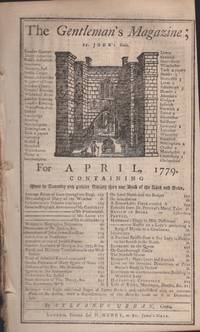
177932435London: Gentleman's Magazine 1779. Wraps. Incomplete. Disbound wraps. Approx. 8.5" x 5". Incomplete. No illustrations. Pages 625-650 14 page index. Missing the front cover and preceeding pages. This issue contains extracts from Major-General Prevost's "Journal of the Siege of Savannah" pages 633-638. Contents clean. Gentleman's Magazine unknown
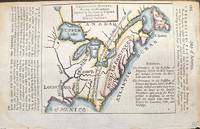
1755M11354London: Gentleman's Magazine 1755. Very Good. Notes: Extremely rare small map of North America published in mid 18th century. Lake Superior is named Upper Lake. The Eastern part of the United States is shown as English Provinces and the rest of the United States is shown as French Provinces. The Ohio River and Mississipi River are also depicted. Size : 108x131 mm 4.25x5.16 Inches Coloring: Hand Colored Category: Maps North America Great Lakes; Gentleman's Magazine unknown
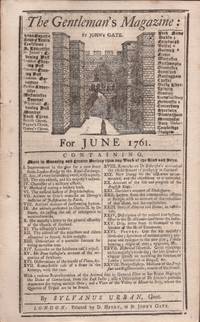
176132437London: Printed by D. Henry at St. John's Gate 1761. First Edition. Wraps. Good. Disbound wraps. Pages 241-288. Illustrated with one plate: Portable Smelting Furnace and The Valley of Menat. Contents contain a brief mention of America in back. Printed by D. Henry, at St. John's Gate unknown
177932434London: Printed for D. Henry at St. John's Gate 1779. Wraps. Good. Disbound wraps. Approx. 8.5" x 5." Pages 161-216. Illustrated with approx. 10" x 8.5" folding "Plan of St. Lucia in the West Indies: Shewing the Positions of the English & French Forces With the Attacks made at its Reduction in Dec. 1778." Paper offset and trimmed closely. <br /> <br /> This issue contains more information on the capture of Savannah during the American Revolution pages 177-181 from letters by Sir Archibald Campbell and General Prevost. An article titled "Having in our Magazine for February p.100 given a short extract only of the proceedings of Lieut. Col. Campbell in Georgia the following well written account by the Lieut. Colonel himself to Lord George Germaine has been judged indispensably necessary to shew the merits of that able officer in a true light." Map and contents in good condition. Printed for D. Henry, at St. John's Gate unknown
17883752This engraving of the lighthouse at Cape Henlopen is the first image of a lighthouse to appear in an American magazine. Indeed we believe this is one of the earliest American images of a lighthouse one can hope to obtain. The Cape Henlopen light was completed in 1767 and first lit in 1769. This view according to the caption was drawn in 1780. It was published in the February 1788 issue of <i>The Columbian Magazine</i>. Although the engraving plate is not signed the engraver was likely James Trenchard one of the proprietors of the <i>Magazine</i>. <br /><br />This wonderful early American image has survived longer than its subject -- the lighthouse depicted collapsed in 1926 due to erosion. <br /><b>References:</b> Lewis: <i>A Guide to Engravings in American Magazines 1741-1810</i>: p. 4. Stauffer <i>American Engravers Upon Copper and Steel</i>: 3293. <br /><br /><br /><b>Condition</b><b>:</b> Occasional mostly very light foxing and a small stain at lower left in the margin; otherwise very good. From the February, 1788 issue of The Columbian Magazine.
175535632London: Scots Magazine 1755. First Edition. Leather bound. Defective. Octavo. 12 monthly issues bound in one volume. 648 pages 16 pages partial index. No illustrations in this volume. Brown calf leather binding with red leather title labels on the spine. Defective. Missing all the preliminary pages. Missing index pages and rear end papers after the name "Stuart". Leather covers are rubbed and edge worn. Outer joints and inner hinges are cracked. Covers are loose but attached. Title page has light damp stains and a small scuff. Pages 159 160 have an edge tear resulting in minor loss of print. The first page is present in the January issue. Defective.<br /> <br /> A sampling of subjects covered in this volume include East India Company Mutiny Bill; Sir Isaac Newton on the ancient year; Affairs in Spain Barbary and France; An Account of Mr. Johnson's English Dictionary; Improvements of the musket and of church-music; 'Pensylvania' German Protestants; Importance of British Plantations; Gov. Dinwiddies Speech to the assembly of Virginia; Gov. Dobb's message to the assembly of N. Carolina; Affairs in the United Provinces and the Plantations; General Braddock's defeat with the lists; Further accounts of the fatal action in America; Affairs in France and the Plantations; Different accounts of General Braddock's defeat; An Examination of the Edinburgh Review; A New History of 'Pensylvania'; Of the French 'incroachments' in America; Gov. Glen's interview with the Cherokee Indians; Speeches of Indian Chiefs and several more articles. Contents also include European history public affairs parliament acts births deaths marriages poetry book reviews and more. Interior contents are mostly in good condition. Volume published during the French Indian War era in America. Scots Magazine unknown
17883741<p><strong>Harvard College -- "the earliest engraving of the College</strong><strong> which one may reasonably hope to obtain"</strong></p><p>This engraving entitled "View of the ancient Buildings belonging to Harvard College Cambridge New-England" appeared in the December 1788 issue of <em>The Columbian Magazine.</em> Bail notes that the view is based on the Burgis-Price print of 1743 which in turn was a slight modification of the Burgis view of 1726. The view taken from a point in front of the present Johnston Gate shows three College buildings in 1726 from left to right: the second Harvard College the first Stoughton Hall and the still-standing Massachusetts Hall. Although unsigned the engraving is undoubtedly the work of James Trenchard a co-owner of <em>The Columbian</em> <em>Magazine </em>and the engraver of nearly all the plates which appeared in it. <br /><br />Of the<em> Columbian</em> <em>Magazine</em> view Bail states: "In spite of the fact that the print is solely an adaptation it is important because of its early appearance and relative scarcity. This is the earliest engraving of the College which one may reasonably hope to obtain."</p><p>The engraving is accompanied by a disbound example of the December 1788 <em>Columbian Magazine</em> in which it appeared. It includes a 5-page "An Account of the ancient Colleges of Cambridge in New-England." Most of this is a republication of material from "a very scarce and valuable pamphlet" printed in London in 1642. In addition to a description of the College "The edifice is very fair and comely within and without." the rules and curriculum of the College are provided.</p><p>A very desirable engraving of Harvard with an example of the magazine in which it originally appeared.</p><p><strong>References:</strong> For the engraving: Bail <em>Views of Harvard</em>: 13; Plate XVII illustrated. Fielding <em>American Engravers upon Copper and Steel</em>: 1819. <br /><br /><strong>Condition: </strong>Image is age-toned with some generally light foxing. Darkening to margins outside of platemark where previously matted; remnant of strip of masking tape at upper margin on verso. The <em>Magazine</em> is complete and quite bright and clean although several pages are detached from the balance of the text.<br /><br />ICN 3431. <br /><br /><br /><br /></p> Printed for the Proprietors by W. Spotswood.
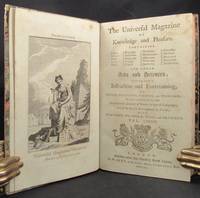
179031351London: W. Bent 1790. First Edition of the volume for January through June of 1790 including the supplements. Containing the stated FIRST PRINTING of the Addresses of the Mayor of Alexandria VA. to George Washington on his leaving his home in Mount Vernon to become President of the United States and of Washington's address to the people in reply. Most probably the first printing in book form of either of the addresses. No earlier printings in book form seem to exist and the Library of Congress shows only the manuscript copy in their holdings. Also containing one of the earliest reports of the mutiny onboard the H.M.S. 'Bounty' and an extensive essay on William Harvey as well as an essay by Mrs. Piozzi on the present King of Naples. Illustrated throughout. 8vo contemporary tan calf over marbled paper covered boards the spine with raised bands and a single red morocco label gilt tooled and lettered. 379 5 index pp. A very fresh and well preserved copy the text still quite clean and crisp only a hint of occasional spotting a few old marks by an early reader including the marking of one small section as "Not Fact". The binding has some rubbing at the tips and edges two joints starting but still a firm and solid binding in original state with no evidence of repair or restoration. THE UNIVERSAL MAGAZINE FOR THE FIRST HALF OF 1790; which with the stated first printing of the address to George Washington and his address to the Citizens of Alexandria also contains "Letters Debates Essays Tales Poetry History Biography Antiquities Voyages Travels Astronomy Geography Mathematics Mechanics Architecture Philosophy Medicine Chemistry Husbandry Gardening and other Arts and Sciences."<br> At 10:00am on the morning of April 16 1789 General George Washington left Mount Vernon for the journey north to New York where he would be inaugurated as the first President of the new United States. His first stop was in Alexandria with his former aide-de-camp Col. David Humphries and the Secretary of Congress Charles Thomson. At noon he arrived in Alexandria where he took an early dinner at Wise's Tavern with citizens of the town. The address by the Mayor celebrating Washington's service to and love of country was followed by Washington's own address concerning his considerations for his having accepted the honour to be bestowed upon him in New York. Washington had wanted to retire from public life but agreed to continue to serve the new nation upon the call of its citizenry.<br> Both addresses are moving tributes one to the man one to the new nation and its people. Humble in origin brilliant in effect they are. In the later afternoon hours General Washington was escorted by admirers up the Potomac to Georgetown where he was greeted by a large contingent of the citizenry of that town who escorted him up the Post Road towards Baltimore where he spent the night at Spurrier's Tavern. <br><br>George Washington's Address:<br> <br>To THE MAYOR CORPORATION AND CITIZENS OF ALEXANDRIA<br><br>Alexandria April 16 1789.<br><br>"Gentlemen: Although I ought not to conceal yet I cannot describe the painful emotions which I felt in being called upon to determine whether I would accept or refuse the Presidency of the United States.<br><br>The unanimity of the choice the opinion of my friends communicated from different parts of Europe as well as of America the apparent wish of those who were not altogether satisfied with the Constitution in its present form and an ardent desire on my own part to be instrumental in conciliating the good will of my countrymen towards each other have induced an acceptance.<br><br>Those who have known me best and you my fellow citizens are from your situation in that number know better than any others that my love of retirement is so great that no earthly consideration short of a conviction of duty could have prevailed upon me to depart from my resolution “ never more to take any share in transactions of a public nature .†For at my age and in my circumstances what possible advantages could I propose to myself from embarking again on the tempestuous and uncertain ocean of public-life<br><br>I do not feel myself under the necessity of making public declarations in order to convince you Gentlemen of my attachment to yourselves and regard for your interests. The whole tenor of my life has been open to your inspection; and my past actions rather than my present declarations must be the pledge of my future conduct.<br><br>In the mean time I thank you most sincerely for the expressions of kindness contained in your valedictory address. It is true just after having bade adieu to my domestic connexions this tender proof of your friendship is but too well calculated still farther to awaken my sensibility and encrease my regret at parting from the enjoyments of private life.<br><br>All that now remains for me is to commit myself and you to the protection of that beneficent Being who on a former occasion has happly brought us together after a long and distressing separation. Perhaps the same gracious Providence will again indulge us with the same heartfelt felicity. But words my fellow-citizens fail me: Unutterable sensations must then be left to more expressive silence: while from an aching heart I bid you all my affectionate friends and kind neighbours farewell! "<br><br> This volume also contains a series of Picturesque Scenes from Homer's Iliad with handsome engravings; Memoirs of the life and writings of the celebrated physician Dr. William Harvey; and a virtually countless array of stories and reports of "all things instructive and entertaining." W. Bent hardcover
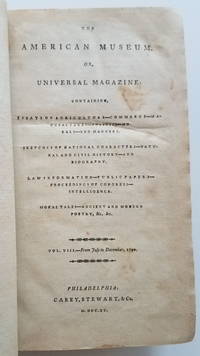
17903753<b>Washington's First State of the Union Address & Jefferson's Report on Currency Weights and Measures</b><p>Mathew Carey's <i>American Museum</i> was published from January 1787 to December 1792. According to Mott it shared with <i>The</i><i>Columbian Magazine</i> the honor of being America's first successful magazine. This is volume eight of twelve volumes with six issues each with the issues from July through December 1790. <br /></p><p>The volume contains two signature pieces from the early Federal period -- Washington's first State of the Union address Appendix II pp. 47-48 and Jefferson's report on currency weights and measures Appendix II pp. 35-46. Among the other noteworthy content is Ferdinando Fairfax's "Plan for liberating the negroes within the United States" essentially a gradual voluntary government-assisted emancipation with relocation of the freed slaves to a new colony in Africa.<br /></p><p><b>Reference:</b> Mott <i>A History of American Magazines 1741-1850</i>: pp. 100-103.</p><b>Condition:</b> Original calf binding with red title label and embossed volume number "8". Ex-library with ornate early "Erasmus Hall Library" bookplate inside front board. Lacking ffep. Head and tail of spine eroded. Front board rejointed; rear hinge cracked. Contents age-toned with scattered light foxing and spotting with very infrequent heavier foxing. <br /><br />ICN 2387. Carey, Stewart, & Co. hardcover
1799WRCAM19979Philadelphia 1799. 161-416pp. lacks pp.163-166. Apparently also lacking titlepages with complete publication title. Contemporary half calf and plain boards. Spine worn front hinge cracked. First two leaves lightly dampstained. Lacks two leaves. Otherwise good untrimmed. A volume of ten complete issues of this early American magazine. This run includes various excerpts on natural history from Hearne's arctic voyage. THE WEEKLY. contains an eclectic selection of poems biographies political and natural historical articles as well as brief notices and excerpts from other publications. The magazine's young and ambitious editor James Watters died during the yellow fever epidemic and consequently THE WEEKLY. ceased publication between August 1798 and February 1799 at which point Ezekiel Forman dragged publication on through June. The present volume contains numbers 20 Vol. II and 31-39 Vol. III as well as an incomplete copy of number 19 Vol. II. A nice run of this short-lived early American periodical. "Another very interesting hebdomadal was the WEEKLY MAGAZINE OF ORIGINAL ESSAYS FUGITIVE PIECES AND INTERESTING INTELLIGENCE printed in Philadelphia from Feb. 3 1798 to June 1 1799" - Mott. EVANS 34992 34993 Vols. II & III. MOTT AMERICAN MAGAZINES I p.122. hardcover books
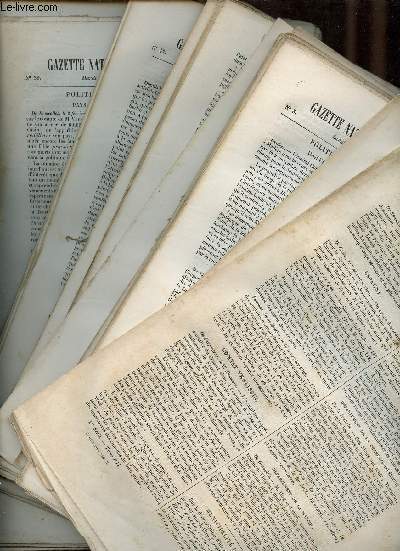
1794R320129825Henri Plon. 1791-1794. In-4. Broché. Etat passable, Livré sans Couverture, Dos satisfaisant, Quelques rousseurs. Lot de numéros de La Gazette Nationale ou le Moniteur Universelle n°1 au n°66 560 pages + n°183 au n°207 Paginé de 17 à 224 - textes sur deux colonnes - manque sur la première page du n°183 altérant la lecture.. . . . Classification Dewey : 70.49-Presse illustrée, magazines, revues
1779R110056675PARIS. 25 JANVIER 1779. In-12. Broché. Bon état, 1er plat abîmé, Dos satisfaisant, Intérieur frais. Paginé de 245 à 288.. . . . Classification Dewey : 70.49-Presse illustrée, magazines, revues
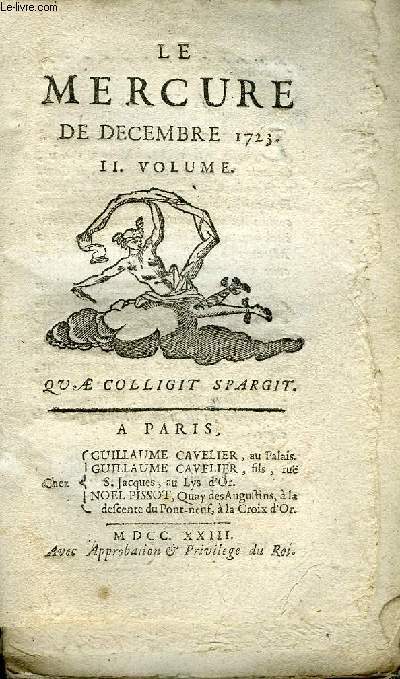
1723R110056012PARIS. DECEMBRE 1723. In-12. Broché. Bon état, Couv. convenable, Dos satisfaisant, Intérieur frais. Paginé de 1251 à 1442. Dos abimé, couverture muette.. . . . Classification Dewey : 70.49-Presse illustrée, magazines, revues
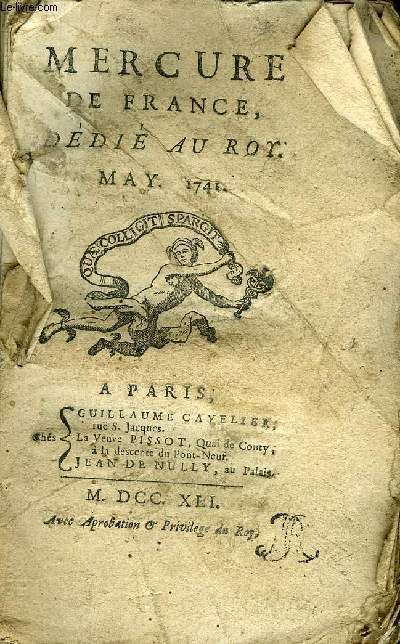
1741R110056221PARIS. MAY 1741. In-12. Broché. Bon état, Couv. convenable, Dos satisfaisant, Intérieur frais. Paginé de 843 à 1054. Dos abimé.. . . . Classification Dewey : 70.49-Presse illustrée, magazines, revues
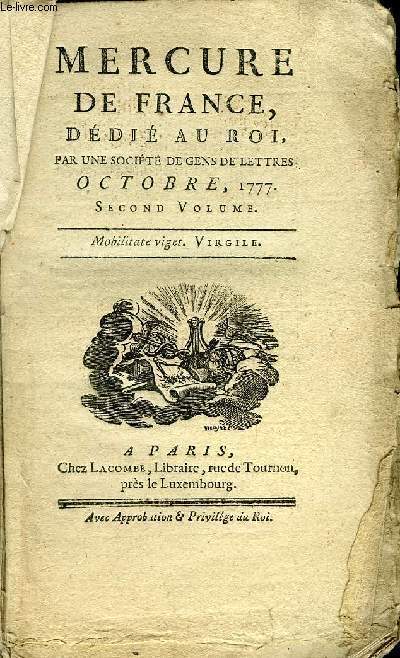
1777R110056658PARIS. OCTOBRE 1777. In-12. Broché. Bon état, Couv. convenable, Dos satisfaisant, Intérieur frais. Paginé de 1 à 216.. . . . Classification Dewey : 70.49-Presse illustrée, magazines, revues
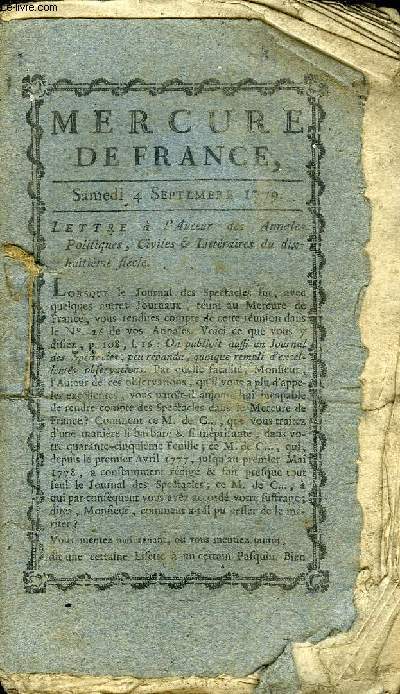
1779R110056697PARIS. 4 SEPTEMBRE 1779. In-12. Broché. Bon état, Couv. convenable, Dos satisfaisant, Intérieur frais. Paginé de 1 à 240. Piqures de verres sur quelques pages.. . . . Classification Dewey : 70.49-Presse illustrée, magazines, revues
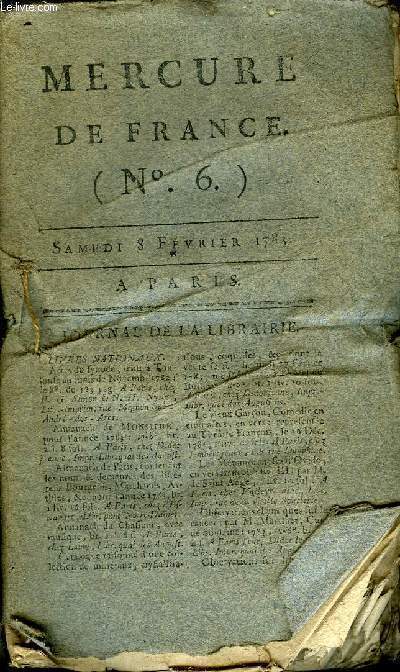
1783R110056861PARIS. 8 FEVRIER 1783. In-12. Broché. Bon état, Couv. convenable, Dos satisfaisant, Intérieur frais. Paginé de 49 à 96. Quelques piqures de vers sur les pages.. . . . Classification Dewey : 70.49-Presse illustrée, magazines, revues
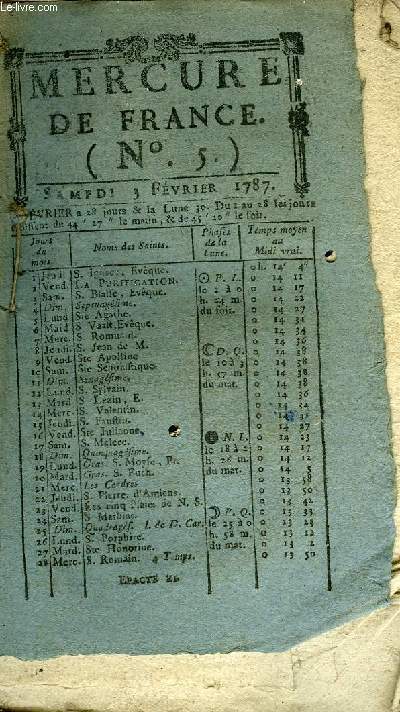
1787R110057056PARIS. 3 FEVRIER 1787. In-12. Broché. Bon état, Couv. convenable, Dos satisfaisant, Intérieur frais. Paginé de 1 à 48.. . . . Classification Dewey : 70.49-Presse illustrée, magazines, revues