WALSH, Reverend Robert and Thomas ALLOMBiblio.com
378 résultats
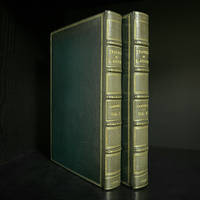
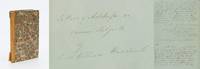
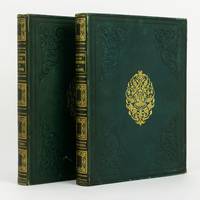
183987631London: Fisher Son & Co 1839. First Edition. Hardcover. Fair. London Fisher Son & Co. 1839 and 1840. Quarto two volumes iv xxxvi 84 pages plus a map 46 full-page plates including an unlisted plate facing page 54 'Ancient Archway of Cavern in the Balkan Mountains' and an engraved vignette title page; and iv 100 pages including the cumulative index plus a double-page map 48 full-page plates and an engraved vignette title page. Most plates have the original tissue-guards. Matching full dark green morocco the spines lettered and decorated in gilt in compartments all sides decorated in gilt and blind; all edges gilt; covers a little bumped and lightly worn at the corners; leather a little scuffed and marked; scattered foxing and minor signs of handling more so in the first volume which is inexpertly reinserted in its binding with a rear endpaper that would be greatly improved by removing and replacing it and a front free endpaper that appears to be original but salvaged from the rear and amateurishly lined with tissue; overall a decent set which certainly presents well on the shelf. Provenance: John Michael Skipper 1815-1883 artist solicitor and South Australian pioneer with his ownership initials on the engraved title page of the first volume and his signature and most interesting inscription of the front free endpaper of the second volume: 'J M. Skipper from Mrs. Thomas March 14th. 1841' his mother-in-law. <p>Skipper was born in Norwich the son of a solicitor; 'he was intended for the law but was more interested in art in which he was encouraged by his uncle. In 1833 he abandoned his studies to become a midshipman in the East India Co.'s "Sherbourne" bound for Calcutta. On his return deciding to migrate he arranged to be articled to Charles Mann the new South Australian advocate-general and sailed in the "Africaine" arriving at Holdfast Bay on 6 November 1836. He sketched scenes on the voyage and met Frances Amelia eldest daughter of Robert Thomas; he married her on 28 December 1839' 'Australian Dictionary of Biography'. <p>Accordingly these volumes not only date from the foundation years of British settlement in the colony they also come from two of the first settlers. They are offered together with a copy of 'The Diary and Letters of Mary Thomas 1836-1866. Being a Record of the Early Days of South Australia. Edited by Evan Kyffin Thomas' Adelaide 1925 revised and enlarged third edition/ 1915. It is an account of the Thomas family's journey to South Australia on the 'Africaine' in 1836 and the fascinating early years of colonization as described in Mary's letters to her brother in England. Her husband Robert was the first newspaper publisher in South Australia and important details of the practical difficulties involved in the printing business are included. <p>This is one of 300 unbound copies of the original 1925 edition discovered in the family attic in 1985; the entire cache has now been attractively bound in full reconstituted morocco. It comes in a slipcase with a fine copy of the first edition of a companion family volume 'Maisie. Her Life in her Letters from 1898 to 1902' edited by Joan Kyffin Willington Adelaide 1992. Each book in this 'collectors' duo' contains a numbered certificate of authenticity signed by Joan Kyffin Willington Maisie's granddaughter and Mary's great-great-granddaughter. 4 items. Fisher, Son & Co hardcover
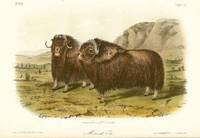
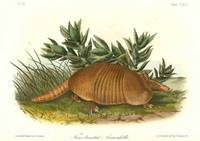
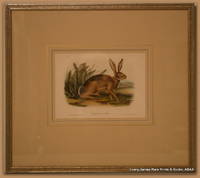
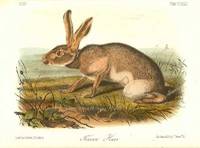
18494369New York:: V.G. Audubon 1849-54. First Royal Octavo Edition. Fine with original hand-coloring. A fine original hand-colored lithograph on paper. Royal Octavo 10.5 x 7 inches. Drawn from nature by John Audubon drawn on stone by William E. Hitchcock and lithographed printed and colored by JT Bowen Philadelphia. Accompanied by the original text written by the Reverend John Bachman DD. The Quadrupeds of North America; portrayals of 155 four-legged mammals native to North America depicted in their natural environment was a collaborative effort between the premier nineteenth century American Ornithologist Naturalist Artist and Frontiersman John James Audubon 1785-1851 his sons John Woodhouse Audubon and Victor Gifford Audubon and the naturalist Reverend John Bachman. The four men were unified in their desire to document and portray what they recognized as a dwindling resource; America's native animals amidst the natural beauty of the untouched American landscape. Their collective wisdom predicted the impending effects of Manifest Destiny- man's encroachment on the wilderness and natural landscape of North America- and as such was the impetus for the journey. To document and then portray America's native animals in the splendor and majesty of the uninhabited North American landscape the team traveled westward from Audubon's home in Mill Grove Pennsylvania up the Missouri River and through territory just previously explored by Lewis and Clark; from the Canadian border of the Northern Russian Territories- now Alaska- then southward to Mexico. Arduous and monumental the journey is recognized in the pathos of the compositions. However the true legacy of the work rests on John James Audubon's prolific vision and mastery of his subject and medium. Heretofore unseen The Quadrupeds of North American is a wildlife classic: an essential and timeless contribution to both Early American culture and the Art of American Wildlife Painting. The American Review a Whig journal heralded the national origin of the Quadrupeds: "We have at last have a Great National Work; originated and completed among us- authors artists and artisans of which are our own citizens the Bible of Nature!" John James Audubon in the West. New York: Henry H. Abrams 2000. Sabin 2368. Wood 208. Matted in Ivory Rag Board 12 x 16 inches. V.G. Audubon, unknown
18494396New York:: V.G. Audubon 1849-54. First Royal Octavo Edition. Fine with original hand-coloring. A fine original hand-colored lithograph on paper. Royal Octavo 10.5 x 7 inches. Drawn from nature by John Audubon drawn on stone by William E. Hitchcock and lithographed printed and colored by JT Bowen Philadelphia. Accompanied by the original text written by the Reverend John Bachman DD. The Quadrupeds of North America; portrayals of 155 four-legged mammals native to North America depicted in their natural environment was a collaborative effort between the premier nineteenth century American Ornithologist Naturalist Artist and Frontiersman John James Audubon 1785-1851 his sons John Woodhouse Audubon and Victor Gifford Audubon and the naturalist Reverend John Bachman. The four men were unified in their desire to document and portray what they recognized as a dwindling resource; America's native animals amidst the natural beauty of the untouched American landscape. Their collective wisdom predicted the impending effects of Manifest Destiny- man's encroachment on the wilderness and natural landscape of North America- and as such was the impetus for the journey. To document and then portray America's native animals in the splendor and majesty of the uninhabited North American landscape the team traveled westward from Audubon's home in Mill Grove Pennsylvania up the Missouri River and through territory just previously explored by Lewis and Clark; from the Canadian border of the Northern Russian Territories- now Alaska- then southward to Mexico. Arduous and monumental the journey is recognized in the pathos of the compositions. However the true legacy of the work rests on John James Audubon's prolific vision and mastery of his subject and medium. Heretofore unseen The Quadrupeds of North American is a wildlife classic: an essential and timeless contribution to both Early American culture and the Art of American Wildlife Painting. The American Review a Whig journal heralded the national origin of the Quadrupeds: "We have at last have a Great National Work; originated and completed among us- authors artists and artisans of which are our own citizens the Bible of Nature!" John James Audubon in the West. New York: Henry H. Abrams 2000. Sabin 2368. Wood 208. Matted in Ivory Rag Board 12 x 16 inches. V.G. Audubon, unknown
1824262161London: Printed for Harding Triphook and Lepard Finsbury-Square and J. Major Fleet Street 1824. Large paper copy of the first edition. li i 400; 512 pp. 1 vols. 8vo 9-3/4 x 6 inches. Full tree calf a.e. g. by Riviere. Labels reads "Dibdin's Work." Bookplates of Henry William Poor Marinus Willet Dominick Francis J. Gagliandi and Stuart B. Schimmel. Large paper copy of the first edition. li i 400; 512 pp. 1 vols. 8vo 9-3/4 x 6 inches. Pagination not as called for in Pippin and Windle who call for continuous pagination. Printed for Harding, Triphook, and Lepard, Finsbury-Square and J. Major, Fleet Street unknown
1857010266Bowmanville Ontario Canada 1857. Book. Very Good. Flexible Leather. 12mo - over 6¾ - 7¾" tall. Bound in contemporary embossed flexible leather approx. 256 pages 8 blank 25 lines per page approx. 225 words per page manuscript writing each page mostly unpaginated. Sermons begin with a phrase of Biblical Scripture each sermon dated with place given as Bowmanville. Signed by Slater at front end page with Bowmanville 1857-58 in ink. James C. Slater b. England 1824- was a Wesleyan Methodist Minister whose ministry began in 1847 and was active as late as 1874. He was Chairman of the Bowmanville Circuit in 1860. Very Good loss of leather at base of spine hinges starting. An historically important and RARE contribution to an understanding of Methodist Church teachings and thought in mid-nineteenth century Canada. . Hardcover
184018262Prato: Giachetti 1840-1845. In-8 mm. 236x146 18 volumi mz. pelle coeva verde piccolo spacco al dorso del volume XI fregi e titolo oro ornati da testate e finali xilografati molto ben illustrati fuori testo da complessive 152 su 156 tavole 2 non segnalate in Indice inc. in acciaio da vari artisti alcune a colori: sono vedute carte geografiche raffiguraz. delle popolazioni locali nei loro usi e costumi ritratti dei vari navigatori fatti storici monumenti ecc. Alcune tavole sono precedute da velina con didascalia nel ns. esemplare per lo più brunite. La raccolta comprende le relazioni dei più importanti esploratori e viaggiatori arricchite da documenti e note critiche di viaggi effettuati nel Nuovo Continente - in Oriente - in Asia e in Africa. Cfr. BrunetIII1439 che la cita solo in 15 volumiNel ns. esemplare alcune tavole presentano aloni al margine inferiore; circa 30 pp. del volume X con brutti restauri qualche fioritura. Complessivamente un buon esemplare. Giachetti, unknown
1822631<p>2-volume set 1822 first editions</p><p>John Campbell 1766-1840 was a Scottish missionary and traveler. He was passionate about Christian philanthropy which led to his founding of the Magdalene Society in 1793 and the Missionary Magazine Edinburgh in 1796. He travelled to preach in neglected villages promoting the establishment of Sunday schools. The Magdalen Asylum to help prostitutes in England and Glasgow founded by Campbell was one of several societies he created to help those in need. He opposed the slave trade and became involved in the Society for the Education of Africans. Through collaboration with James Alexander Haldane he brought 30-40 African children to England to be educated. In 1812 he was sent by the London Missionary Society to inspect mission stations at the Cape. His account of the trip was published in 1815 on his return titled "Travels in South Africa undertaken at the request of the Missionary Society". Campbell returned to the Cape in 1819 this time to improve those mission stations that had fallen into neglect. In 1820 he travelled north from Cape to Mosega in Barotseland and the Kaditshwene settlement near the Limpopo River. He left Cape for England in 1821 and published two further volumes covering his journey.</p> Francis Westley hardcover
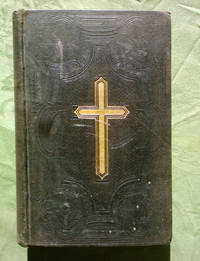
1844biblio1769<p>New York: P. J. KENEDY EXCELSIOR CATHOLIC PUBLISHING HOUSE 1844 5 BARCLAY STREET. The HOLY BIBLE translated from the Latin Vulgate: Diligently Compared with the Hebrew Greek and other Editions in Divers Languages; The OLD TESTAMENT First published by the English College in Douay A.D. 1609; and The NEW TESTAMENT First published by the English College at Rheims a.d. 1582. With Annotations References and An Historical and Chronological Index. From the Last London and Dublin Editions. The whole revised and diligently compared with the Latin Vulgate. Published with approbation of the Most Reverend John Hughes Archbishop of New York Given at the Episcopal residence this 27th of January 1844. Hardly discernable hints of wear to the corners. No more imperfections or wear detected. DimGray cloth with Gilt Gross in front and title on the spine. Also elaborate embossed decoration all over boards and spine. Frontispiece with ST. PATRICK'S CATHEDRAL in NEW YORK and Facsimile of Approbation by Most Rev. JOHN HUGHES got 1.0"x3.0" pale stain in the right margin area. Voume iclean unmarked throughout Family Pages still unused. Strong unshaken binding excellent hinges. 968 pages. 9.6"x6.4"x1.6". ab44272. For International and/or Expedited shipping contact seller.</p> P. J. KENEDY, EXCELSIOR CATHOLIC PUBLISHING HOUSE hardcover
188018888London and New York: George Virtue 1880. Hardcover. vg. Two volumes folio. IV 4 942pp 943-1260pp 230pp 10 1261-1622pp 4 44pp. Original blind-tooled leather over beveled boards with gold lettering and decorations on spines and covers. Raised bands. All edges gilt. Dentelles. Decorative endpapers. Frontispiece in each volume protected with a tissue-guard. 2 additional engraved title-pages. Ribbon markers. Both volumes have the London imprint of George Virtue upon the pictorial and text title pages. Stunning Bible profusely illustrated with over a hundred steel engravings after drawings or paintings by de Loutherbourgh Amiconi J. S. Hart Hamilton Schopin Horace Vernet W. H. Bartlett Rubens Northcote Guercino F. Bol W. Artaud Murillo M. A. Colin H. Singleton J. Opie Gros Raffaello d'Urbino Raphaël and many more. Each plate is protected with a tissue-guard. Text in 2 columns with centre references and reflections at foot of page. This work is complete with the Books of Apocrypha and an alphabetical list of proper names of the Old Testament persons and places. Slight rubbing along joints and raised bands. Minor damp-staining on upper inner margin of very first pages of first volume not affecting text or illustrations. Sporadic foxing affecting tissue-guards and margins of some plates not affecting illustrations. Frontispiece of second volume detached but present. Binding and interior in overall very good condition. George Virtue hardcover
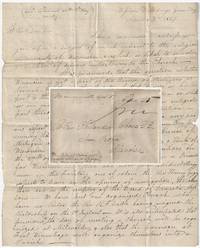
1837010705Menomoneville Wiconsin Territory 1837. Envelope or Cover. Very good. This two-page stampless letter sent from the Reverend Daniel E. Brown at Menomoneville to the Reverend Philander Chase "near Peoria / Illinoise" measures 16" x 9.75" unfolded. It is datelined "Mission Buildings Green Bay / April 3rd 1837" and bears an especially scarce manuscript postmark "Menomoneville Apr 5" of which only one other example is recorded by the Wisconsin Postal History Society. In nice shape</p> <br /> <br /> <p>In this letter Brown requests clarification as to whether the few churches that had been established in Wisconsin would remain part of the newly formed Diocese of Michigan or form into a separated organization. It reads in part</p> <br /> <br /> <p style="margin-left:5%; margin-right:10%;">"I have presumed to address you upon a subject of much interest to the religious community of Wisconsin which . . . is of serious importance to the Church. It is presumed that the question whether Wisconsin is yet a part of the Diocese of Michigan as claimed by the worthy Prelate of that Diocese . . . or are we separated & no longer for and integral part thereof. . . This question is now assuming a very serious aspect for the Vestry of Christ's Church Green Bay. . . There are now four resident Clergymen in this Territory . . . three in the employ of the Board of Domestic Missions. We have but one organized Church who has no Rector the Rev R. F. Cadle having resigned. . . It is also anticipated that . . . a church will be organized at Milwaukee & also that the Garrison at Fort Winnebago will organize themselves into a Parish. I have felt . . . as if it was unwise to agitate the question in our present situation & particularly as it regards questions of jurisdictions with Michigan but I would wish your advice. For if we are fully separated from Michigan & have the right to form a new Diocese . . . it would be prudent to do so. . . Will you be kind enough my Dear Father to give me your views upon the claim set forth by the Rt Rev Prelate of Michigan & whether . . . it is right now expedient to organize at this time. . ."</p> . When Wisconsin was part of the Michigan Territory from 1818 until 1836 Episcopalian fell under the purview of Missionary Bishop of the Northwest. Its first mission the Oneida Duck Creek Mission originally under the Diocese of New York at Green Bay was the beginning of Church work in the MIdwest. After the Diocese of Michigan was formed in 1834 Wisconsin activities were place under the temporary supervision of the Bishop of Ohio and did not come under the oversight of the Bishop of Michigan until 1836 after which he maintained that the establishment of the Wisconsin Territory had should not divide his diocese successfully thwarting the establishment of a Diocese of Wisconsin until 1847.</p> <br /> <br /> <p>For more information see Ford's A Brief History of the Diocese of Michigan and "Oneida History" at the Milwaukee Public Museum website.</p> <br /> <br /> <p>A first-hand document attesting to the religious competition that sprang into being with the establishment of the Wisconsin Territory. At the time of listing nothing similar is for sale in the trade nor has appeared at auction per the Rare Book Hub. OCLC shows no similar items held in institutional collections. We have another lot for sale regarding the Oneida Duck Creek Mission.</p> . unknown
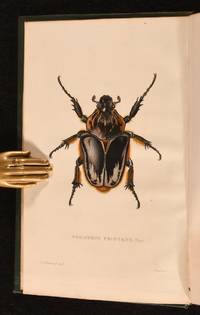
1837978K15London: Henry G. Bohn 1837-1838. First edition. Cloth. Very Good. 9" by 6". Reverend F. W. Hope. The first and second series of this scarce entomological work signed by the author and with lovely hand coloured plates. The first edition of both works. With a hand coloured frontispiece and three partially hand coloured plates to both works. Collated complete.With presentation inscriptions from the author to the front endpapers of both volumes presenting the work to the Natural History Society of Shrewsbury. Institutional copies with stamps and bookplates to preliminaries of both works. The Coleopterist's Manual is considered a foundational text on the study of beetles and details exotic and British beetle species with descriptions classifications and notes on habitat. Aimed at naturalists and collectors Hope"s work significantly advanced entomological studies and taxonomy reflecting the Victorian era"s growing interest in biodiversity and scientific discovery.A third volume was also published in 1840.A scarce signed pair of these important texts. In publisher's green cloth. Externally smart with library annotations to tail of both volumes. Slight bumping to extremities and loss to spine labels. Institutional labels and stamps to endpapers of both volumes. Internally firmly bound. Pages bright and clean with just marginal age toning and the odd spot and handling mark. Institutional stamp to reverse of volume one frontispiece. Very Good Henry G. Bohn hardcover
18430001770Baltimore Maryland MD - at Sea Aboard the Charles 1843. On offer are two 2 super original manuscript relics of Christian outreach and missionary work handwritten by Reverend Walter Gunn one of the first missionaries to India addressed to Frederick Schott of Waterloo New York. Bio notes follow. The first is a one 1 page letter written by Gunn dated 1843 while in Baltimore. The second letter is written by Rev. Gunn while on the boat "The Charles" heading to India in 1844. He has been at sea for 138 days. This is a 3¼ page letter. Here are snippets: 1 "Baltimore May 24 1843 Dear Brother in the Lord I should like to write a long letter to you and enter into many particulars but I have but only a few moments to spare as Bro Selmser is soon to leave B. and I have a press of business on hand. Well how do you do. How is your family and how do your souls prosper. Is Christ precious are you actively engaged in his service. O my brother watch your heart your words and your actions and strive to live so that the flame of love may burn brightly in your heart to God. How pleasant it would be for me to enjoy the hospitalities of your table again to bow with you again around the family altar to walk to the house of God in company but instead of walking the street of Waterloo I shall soon be walking the deck of the vessel that bears me to the heathen land. But shall I ever forget you and the beloved brethren of W. No. Even now while going from house to house among the brethren in imagination the tears fall upon the paper and bedew these lines I write .Your brother in Christ Walter Gunn." 2 "Ship Charles Indian Ocean March 25th 1844 Dear Brother Shutt While penning these lines I am sailing up the Indian Ocean towards the shores of Hindustan. I have crossed the equator twice doubled the Cape of Good Hope and shall in a few weeks I trust reach my field of labor. But though I am separated from you by a distance of so many thousand miles I have not forgotten you no in imagination I often walk the streets of Waterloo visit the houses of the brethren and join in your acts of worship in the congregation. The different articles of apparel that I wear at this moment remind me of you and many others in W. While contemplating the interesting scenes that transpire in your place one year ago my eyes often fill with tears. Were not those precious and heavenly seasons when you and so many of your associates and friends took a stand on the Lord's side. Though I am now denied the privilege of witnessing such glorious displays of the power and grace of God in the conviction and conversion of sinners I do not on that account conclude that I am out of the path of duty. True it would be a pleasing task for the minister of Christ to be engaged daily in the work of directing the inquiring to the Savior and strengthening those who had just commenced running the Christian course. But that privilege at present is denied me. From no one for the last few months have I heard the inquiry "What must I do to be saved." Except the missionaries who are going with me to the heathen. I am surrounded by those who seem to think but little of their undying souls .You will undoubtedly wish to know how I feel now that I am so far away from kindred friends and natives land with but little prospect of ever seeing them again. To answer for the most part I feel cheerful contented and happy. Often have I seen the ocean all lashed into commotion the vessel at one moment raised upon the top of a mighty billow and the next plunged into the fearful chasm below; at such a moment it seemed as though we must all be engulfed beneath the troubled ocean but even then my mind has been calm and unruffled .Tell your sister Mrs. Bean that the pantaloons she made me became very spotted by the damp weather around the Cape of Good Hope but that the spots did not make them any the less comfortable. Tell Jackson that I hope and pray that he may become a minister. Tell Mrs. Mayer that my wife often speaks of her and the pleasant time that they spent together in Johnstown and Whitesboro. Tomorrow or next day we expect that our vessel will anchor in the harbor of Amherst in Burmah. One hundred and thirty eight days I have been tossed upon the billows of the ocean without setting my feet on land and many more anxious days will pass before I reach Guntur the field of my labor. Pray for me and my companion that we may be preserved from the temptations to which we are exposed and that we may be the faithful servants of Christ among the heathen. Yours in the bonds of Christian love Walter Gunn. Near the shores of Burmah April 3rd 1844." BIO NOTES: "The Rev. W. Gunn. The Missionary was a graduate of Union College N.Y. in 1841; studied theology at Gettysburg; was ordained by the Hartwick Synod in 1843 at Johnstown; appointed missionary to India in the same year; arrived at Guntur on June 18th 1844 and was a faithful and an indefatigable colleague of the Rev. Mr. Heyer until 1851 when after a period of seven years service in the cause of Jesus he departed this life at Guntur esteemed and loved by all who knew him. He is spoken of as a good man full of zeal for the Lord so much so that on one occasion in the Guntur bazaar he became so indignant at some idolatrous performances of the heathen that he lifted up his voice in great earnest against the idolaters who became exasperated at him and consequently proceeded to pelt him with stones. But he prudently withdrew from the enraged rabble only to return on subsequent occasions to continue publishing the message of salvation to them. His remains rest in the Guntur Cemetery until the day of the resurrection. He died while in Guntur in 1851 from Tuberculosis." "Reverend Adam Long went to India almost immediately after being ordained. The Lutheran mission to India was still in its early phases when Long arrived it have been started in the Andhra region by Rev. John Christian Frederick Heyer in 1842 who at 48 and widowed was an anomaly compared to other missionaries. He was joined by the Rev. and Mrs. Water Gunn another Gettysburg College and Seminary graduate in 1844 and by Rev. George Martz in 1849. There these men and Gunn's wife Lorena began the task of educating and converting Indians. In a country that is dominated by the polytheistic Hinduism and Mohammedanism this was not an easy task. Traveling from village to village these men and women counted their accomplishments by the individuals that they could convert and the schools and churches that they built. . Good. 8vo - over 7¾" - 9¾" tall. Manuscript. unknown
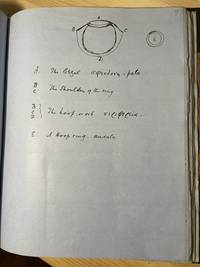
187231740AB1872. Suffolk c.1872. 69 11 pages. Hardcover / Half Morocco with gilt lettering to spine. Very good condition. This unpublished Manuscript of an unfinished Work on the History of Finger - Rings by Reverend James Beck includes for example the following chapters: - History of Finger Rings Eqyptians as true inventors of the Finger Ring "according to Pliny the Greeks could not have known of them at the time of the Trojan Wars as no mention of them is made by Homer" - Beck dissects the meaning of Rings on certain fingers and explains why the "Ring Finger" was chosen as such: "By some this finger is called the digitus medicus or medicinalis but its more correct name is annularis Digitus anularis today known as Ring Finger" ".it was selected as annular finger because it was less employed than any of the others & it was protected by the middle & little finger hence as Atteus Capito says it was better suited for preserving a Ring. Aulus Gellius mentions that the anatomists had discovered a vein which extended from the Heart to the fourth finger of the left hand & that on this account it was selected as the ring finger." The Manuscript makes further cases for Rings worn on the other fingers on the hand. Includes sections on: - Signet Rings / Signet Rings with Crystals and Enamels / Rebus / Letters and Coronets / Signet Heraldic - Rings with angraved Cameos - Sergeant at Law - Rings The manuscript includes a larger section on Rings for Serjeants at Law - Rings of Investiture / Rings for Poet Laureates - Xtian Rings Christian Rings / Iconographic Rings - Rings for Prelates - Doctors of Divinity - Canons & Priests - Rings for Consegrated Virgins / Rings used as Reliquaries "The custom of putting Relics with Rings" - Rings as Gifts at Marriage of Servants / Ring Money - Ad Memoriam Ring etc. etc. - Finger Rings as Charms against Diseases "annali virtuosi" Beck lists here a story of a Charm - Ring against Epilepsy which was found at Kemp Weston in Somerset - Finger Rings as Talisman "Crapaudine - Talismanie" - Rings with merchant Marks Attractive quarto bound in half deep red morocco over cloth covered boards with gilt lettering. Blue endpapers and paper stock throughout; circular stamp of Assay Office Library Birmingham on flyleaf. A sequence of pasted letters about 10 pages in all precede the manuscript starting with a letter to Beck from Thomas Clifford Allbutt inventor of the Clinical Thermometer and co-founder with Sir William Osler of the History of Medicine Society from the Royal Archaeological Institute about works held in their library on finger rings; a book order form from W H Smith; and a brief note from the former Bishop of Glasgow Walter Trower. Becks manuscript has a typed title page and is dated circa 1872. His history of rings runs to 69 pages with an additional 11 pages of notes laid down on the blue paper stock. Beck proceeds from the ancient Egyptians through the classical world occasionally adding illustrations dealing with signet rings and rings of office such as the Serjeant of Law as well as the ring of the poets laureate. The final notes become increasingly fragmentary at the end. James Beck 1819/20-1886 was educated at Corpus Christi College Cambridge serving as Rector of Parham Sussex and subsequently of Bildeston Suffolk; in 1867 he married Caroline Jeannette Bignell Walter. This volumes has the feeling of a family memento probably bound up after Becks death to preserve his hard work on this fascinating subject. Source of Description: Dr.Christian White. hardcover
184131857AB1841. Maynooth / Radanstown Meath / Cole Hill Longford etc. 1841-1854. Octavo. 181 pages Diary of William Handcock / 140 pages plus 4 pages of Index Diary of Robert Ball Handcock. Hardcover / Original 19th century half-leather with paper-covered boards. Very good condition with only minor signs of wear. Letters and Petitions and Addresses transcribed in this Manuscript - Diary of William Handcock include many Letters he wrote himself to authorities or Newspapers at the Time Letters he received as Rector of Clontarf Rector of Radanstown Meath and Rector of Kilnagross Diocese of Ross Friends Colleagues etc. but William Handcock also included transcriptions of Letters of contemporaries colleagues and people who had written to Newspapers or the Crown which he found interesting. Letters and Addresses include for example: 1. Address from the Roman Catholic Inhabitants of Clontarf to the Revd. William Handcock page 117 - 119 2. Letter to the Maynooth Grand Diocese of Meath - To the Reverend Samuel Magee - Rector of Rathmolyon Glebe Maynooth June 1848 / Page 107 - 110 3. Letter "To the Rent Charge - To the Landed Proprietors of Ireland - Maynooth Dec.15 / 1848" page 102 - 106 4. Letter from a Lady to Revd. W. Handcock on.the Right of Private Judgment in Matters of Religion - Clifton Vale April 12 - 1841 Page 73 - 77 and followed by the long answer of the Reverend William Hancock on Pages 77 - 86 And many more !!! Biographical Information on Reverend William Handcock 1795-1873 Rev. William Handcock was born on 22 December 1795 in Dublin Ireland. He was the son of Rev Robert Handcock D D and Jane Bryanton. William matriculated at Trinity College Dublin on 1 July 1811. William Handcock pensioner Mr Fea aged 15 son of Robert clericus born Dublin. William late Rector of Kilgariffe Diocese of Ross co. Cork; Leslie states: priest 1820 Dromore Vicar choral St Patrick's Cathedral 1819-21; Curate Ardee Armagh 1820 Prebend and Vicar Ballisodare Achonry 1821-9 exchanged with Charles Mulloy for Rector of Clontarf 1829-40; Rector Radanstown Meath 1840-52; Rector Kilnagross Ross 1852-8; resigned. Succeeded to his father's estate at Cole Hill co. Longford between 1820 and 1858. Rev William Handcock married Sarah Coddington on 6 January 1821. He owned an estate of just over 500 acres in the parish of Aughrim barony and county of Roscommon in the 1850s. In the 1870s Mrs Sarah Handcock of Ballyknockan House Ballypatrick county Tipperary owned 515 acres in county Roscommon. William died on 3 January 1873 aged 77. Source: Linley & Jim Hooper's family history: "The genealogy of George A A Hooper his wife Linley Maree McKenzie & her half sister Jennifer Anne Dunbar Daniels of Melbourne Australia" hardcover
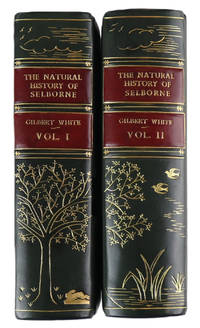
190023925<p>London: S.T. Freemantle 1900. leather. Very Good. 2 volumes 8vo. b&w illustrations ""The Natural History & Antiquities of Selborne & A Garden Kalendar by The Reverend Gilbert White M.A. edited by R. Bowdler Sharpe LL.D. with an Introduction to the Garden Kalendar by The Very Reverend S. Reynolds Hole Dean of Rochester & numerous illustrations by J.G. Keulemans Herbert Railton & Edmund J. Sullivan in two volumes""; Gilbert White's classic work detailing the natural history of the area around his family home at the Vicarage of Selborne composed in the form of a series of letters to Thomas Pennant and Daines Barrington; here in a new custom binding by fine art binder Karen McGuire - full green leather with four compartments to each spine being two red labels with gilt titling bird and cloud motifs to top compartments the lower compartments with gilt illustrations: vol 1 showing a tree in bloom with a mobile hare vol 2 with tree lake and foliage and birds overhead; gilt borders to boards front and rear; new marbled endpapers new prelims; both volumes with frontispiece plates and copiously illustrated throughout with full-page engravings text drawings and fold-out facsimile letters; a superb art binding enhancing Gilbert White's enduring natural history; title pages and text blocks foxed occasional light foxing in text o.w. both volumes Very Good; PLEASE NOTE: VERY HEAVY TWO VOLUME SET MAY INCUR EXTRA SHIPPING DEPENDING ON DESTINATION.</p> S.T. Freemantle hardcover
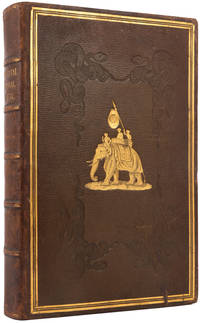
183421190881834. London: Edward Bull. 1834. 8vo. Original pictorial full olive morocco gilt edges; pp. viii 254 2 advertisements 25 steel-engraved plates on mounted India after William Daniell; a little wear to extremities front cover with old repair to scratch light marginal browning to plates; otherwise very good. First edition extremely rare large paper copy of the first annual in this series which was to be continued up to 1840. The fashionable preacher and writer William Caunter was fascinated by India and wrote this mix of information and entertainment probably for the family members who had remained in Britain and where not over in India. Daniell's contributions make this a very handsome publication on India under the Raj. The normal format measures just over 20 by 14 cm wereas this issue measures over 24 by 16 cm. This issue is on better velin paper and the engravings - not foxed as often - are on mounted India paper with tissue guards. This annual appeared between 1834 and 1840 8 volumes with two volumes dated 1839 as a gift book for British people who had members of their family serving in India. unknown
18496425New York:: V.G. Audubon 1849-54. First Royal Octavo Edition. Fine with original hand-coloring. A fine original hand-colored lithograph on paper. Royal Octavo 10.5 x 7 inches. Drawn from nature by John Audubon drawn on stone by William E. Hitchcock and lithographed printed and colored by JT Bowen Philadelphia. Accompanied by the original text written by the Reverend John Bachman DD. The Quadrupeds of North America; portrayals of 155 four-legged mammals native to North America depicted in their natural environment was a collaborative effort between the premier nineteenth century American Ornithologist Naturalist Artist and Frontiersman John James Audubon 1785-1851 his sons John Woodhouse Audubon and Victor Gifford Audubon and the naturalist Reverend John Bachman. The four men were unified in their desire to document and portray what they recognized as a dwindling resource; America's native animals amidst the natural beauty of the untouched American landscape. Their collective wisdom predicted the impending effects of Manifest Destiny- man's encroachment on the wilderness and natural landscape of North America- and as such was the impetus for the journey. To document and then portray America's native animals in the splendor and majesty of the uninhabited North American landscape the team traveled westward from Audubon's home in Mill Grove Pennsylvania up the Missouri River and through territory just previously explored by Lewis and Clark; from the Canadian border of the Northern Russian Territories- now Alaska- then southward to Mexico. Arduous and monumental the journey is recognized in the pathos of the compositions. However the true legacy of the work rests on John James Audubon's prolific vision and mastery of his subject and medium. Heretofore unseen The Quadrupeds of North American is a wildlife classic: an essential and timeless contribution to both Early American culture and the Art of American Wildlife Painting. The American Review a Whig journal heralded the national origin of the Quadrupeds: "We have at last have a Great National Work; originated and completed among us- authors artists and artisans of which are our own citizens the Bible of Nature!" John James Audubon in the West. New York: Henry H. Abrams 2000. Sabin 2368. Wood 208. Archivally matted & framed V.G. Audubon, unknown
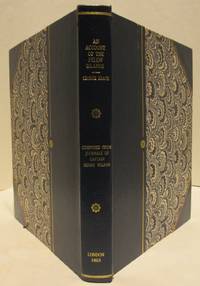
18033374London: Captain Henry Wilson. Very Good. 1803. Fifth Edition. Later binding of half gilt ruled faux blue morocco over marbled boards. Gilt particulars and decoration to spine. Top and bottom of front hinge cracked top of rear hinge beginning. Blue endpapers. Enlarged edition with supplement by Reverend John Pearce Hockin. "William Taylor 1813" delicately inked to top right of title page. Foldout "Chart of the Pelew Islands and Adjacent Seas" to front of book suffers foxing and some creasing as well as a small closed tear to the bottom margin of a fold line not affecting text. Contains eighteen steel plates with two additional plates included in supplement along with vocabulary of Pelew language. A nice clean copy without further markings. ; 4to 11" - 13" tall; xvii i 244; ii 72 pages; All shipments through USPS insured Priority Mail. . Captain Henry Wilson hardcover
1877124005Montreal: Eusebe Senecal Imprimeur-Editeur 1877. Hardcover. ex library-very good. 13 plates with pasted-in b&w composite photographs of churchmen with 20 p. of text. 98 portraits of Rimouski clergymen photo of Pope Pius IX. Pages opposite plates have brief biographies. 29.5 cm. Rebound in burgundy cloth with new endpapers. Library ink deaccession stamp at top of title page. Repairs throughout. Plate V has one empty frame plate VI has two empty and plate X has one empty. <br/><br/>The inspiration for this album would appear to be a work entitled: "Album Photo-Biographique du Clerge Catholique du Diocese de St. Hyacinthe" by Alphonse Denis published around 1873. Charles Guay 1845-1922 may be best remembered as the author of the Chronique de Rimouski the first history of the city and its region published in two volumes in 1873 and 1874. He was vicar at the cathedral of Rimouski. Eusebe Senecal, Imprimeur-Editeur hardcover
187481902Adelaide: J.T. Shawyer Printer 1874. First Edition. Hardcover. Very Good. Adelaide J.T. Shawyer Printer 1874. Octavo iv ii 107 pages plus an original albumen paper photographic frontispiece 184 × 113 mm. Flush-cut black cloth marked and a little rubbed at the extremities with slight loss at the head and foot of the spine; cloth on the front joint split but the joint is firm with minor conservation to one early opening; large printed paper title-label on the front cover has some loss to the bottom half mainly marginal but with the loss of one word and some letters of a few others in the bottom right-hand corner; minimal foxing; a very good copy internally excellent. The frontispiece a Townsend Duryea photograph is a composite of five numbered oval portraits; the identification key is printed on the verso of the title page. Ferguson 16706 not identifying the photographer and not indicating that the five photographic portraits are in fact one composite photograph. The revised second edition of this work Ferguson 16707 does not retain the photograph; it contains six tinted lithographs as does the version published in the 1879 collection of reprints 'The Native Tribes of South Australia' Ferguson 13095. <p>Loosely inserted is a lengthy cutting from the South Australian 'Register' of 24 April 1889: 'An Australian Native Fifty Years Ago' By the Late Mr F.W. Taplin' introduced thus: 'Subjoined is the lecture which was delivered by Mr Taplin before the Australian Natives' Association three nights before the author's tragic death in the Coffee Palace fire'. Frederick William Taplin 1853-1889 a son of George Taplin had succeeded him as superintendent of the mission 'Australian Dictionary of Biography'. J.T. Shawyer, Printer hardcover
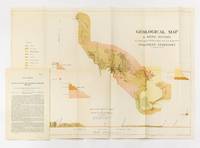
1886142541Adelaide: E. Spiller Government Printer 1886. Very Good. Adelaide E. Spiller Government Printer 1886. Foolscap folio 16 pages plus a large folding chromolithographic geological map printed surface 560 × 840 mm - and very attractive at that. Drop-title; a few pinholes and notches in the left-hand margin where sewn when bound now disbound; tiny closed tear to the map near the stub; in excellent condition. South Australian Parliamentary Paper Number 122 of 1886; one of 800 copies. Not in McLaren but see 15901 an octavo edition without the map published in the Northern Territory undated by McLaren but dated 1886 in Ferguson 18823. <p>Setting out from Burrundie Tenison-Woods 'examined all the places where mining has been or was actually being carried out. In the course of these journeys most of the intervening country was prospected and the geology was noted'. He then undertook 'an exploration in the less known portions of the interior. Our course was from Mount Wells to Mount Douglas and thence south-eastward across the ranges to the Eveleen mine. From thence we traced the River Mary to its sources and then having crossed a small patch of tableland reached the upper waters of the Katherine which we followed down to the telegraph station; from thence we proceeded along the line to Pine Creek. I returned to Palmerston by the overland route from Southport'. E. Spiller, Government Printer unknown
1870030898LONDON: George Bell & Sons 1870 A nice set of the second edition of Morris's History of British Birds. In 6 volumes with original decorative cloth bindings and 365 hand coloured plates as called for. The bindings are all clean with bright gilt pictures of birds to each front board and gilt titles and decoration to spine. There is some wear: volume I has some cloth splitting at the hinges and splitting at the rear endpaper with rubbing to corners; volumes II III and IV have very slight pulling to top and bottom of spine and a little rubbing at corners; volume V has very small splits at the top and bottom of the spine; and volume VI has a 1 inch tear at the top of the spine with no loss and scuffing at the corners. Internally all have the original endpapers; the first section including the frontispiece is becoming loose on volumes I II and III; volume IV is sound but the stitching is looser than on the others. There is a little spotting to some plates and text pages but in general the contents are very clean looking unread and the plates are bright and well coloured. A few plates in volume III lack tissue guards and the plate of the Whitethroat is present but detached. Volume 5 has 4 plates present but detached: the Little Stint Schinz's Sandpiper Pochard and Polish Swan - and pages 131-134 the same. A few pages have been roughly opened and a few have darkening to edges. Overall the set is complete with bright bindings and well coloured plates. George Bell & Sons hardcover
18494387New York:: V.G. Audubon 1849-54. First Royal Octavo Edition. Fine with original hand-coloring. A fine original hand-colored lithograph on paper. Royal Octavo 10.5 x 7 inches. Drawn from nature by John Audubon drawn on stone by William E. Hitchcock and lithographed printed and colored by JT Bowen Philadelphia. Accompanied by the original text written by the Reverend John Bachman DD. The Quadrupeds of North America; portrayals of 155 four-legged mammals native to North America depicted in their natural environment was a collaborative effort between the premier nineteenth century American Ornithologist Naturalist Artist and Frontiersman John James Audubon 1785-1851 his sons John Woodhouse Audubon and Victor Gifford Audubon and the naturalist Reverend John Bachman. The four men were unified in their desire to document and portray what they recognized as a dwindling resource; America's native animals amidst the natural beauty of the untouched American landscape. Their collective wisdom predicted the impending effects of Manifest Destiny- man's encroachment on the wilderness and natural landscape of North America- and as such was the impetus for the journey. To document and then portray America's native animals in the splendor and majesty of the uninhabited North American landscape the team traveled westward from Audubon's home in Mill Grove Pennsylvania up the Missouri River and through territory just previously explored by Lewis and Clark; from the Canadian border of the Northern Russian Territories- now Alaska- then southward to Mexico. Arduous and monumental the journey is recognized in the pathos of the compositions. However the true legacy of the work rests on John James Audubon's prolific vision and mastery of his subject and medium. Heretofore unseen The Quadrupeds of North American is a wildlife classic: an essential and timeless contribution to both Early American culture and the Art of American Wildlife Painting. The American Review a Whig journal heralded the national origin of the Quadrupeds: "We have at last have a Great National Work; originated and completed among us- authors artists and artisans of which are our own citizens the Bible of Nature!" John James Audubon in the West. New York: Henry H. Abrams 2000. Sabin 2368. Wood 208. Matted in Ivory Rag Board 12 x 16 inches. V.G. Audubon, unknown
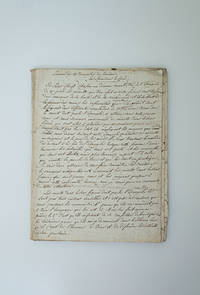
18500010080France. Good with no dust jacket. 1850. Ephemera. On offer is an outstanding example of the Catholic Churchs teachings at a grass-roots level in 19th century France. This beautiful handwritten sermon is titled Sermon de III Dimanche de Careme Sermon for the 3rd Sunday of Lent and notes that it is given by Monsieur le Cure the Parish Priest. The handwriting is small and clear and an excellent example of the penmanship of the time. The source of the sermon is unknown. There is no specific reference to a parish community or author. We do know from its title that it was written to be given at a mass on the 3rd Sunday of Lent. The Easter Season of Lent and Easter Sunday is the most important in the Catholic church more so than Christmas. An excerpt from the sermon: Les miracles que Dieu fait en notre faveire sont toujours des marques de la bonte et de la misericordie et les infirmites que JC aurit sont la figures des differentes maladies de notre ame .Translation: The miracles that God does in our favor are always marks of goodness and mercy and the infirmities that JC would have are the images of the different diseases of our soul.Throughout his text you can see where he has crossed out words and edited expressions. This was very much a living manuscript in his hands. For a social historian this is an excellent look into the world of the average French person and into the thought processes of the clergy who so dominated life in the small towns and villages of France in the 19th century. This manuscript measures 6.0 inches by 6.25 inches and contains 34 carefully handwritten pages. It is 100% complete. The manuscript is simply folded along a centre line. There is no cover but the pages are in fine condition. ; 16mo 6" - 7" tall; 34 pages . unknown