78 résultats
179658648Milano: presso Giuseppe Marelli 1796. In-8 mm. 241x174 similpelle moderna filetti e titolo oro al dorso pp. 43248 con 7 tavole fuori testo incise in rame ciasc. con più figure "Tomo XIX" di questo importante periodico scientifico milanese che raccoglie saggi e memorie dei più grandi scienziati dell'epoca edito dal 1778 al 1803. In Appendice Libri nuovi in Italia e all'estero.Questo volume raccoglie 46 saggi tra i quali segnaliamo: 13 di Agricoltura ed Arti Sul metodo d'estinguere il fuoco e prevenire gli incendi in Svezia di G. Knoz - Metodo di conciare i cuoi in breve tempo coll'acqua distillata della Torba e del carbon fossile di Pfeiffer - Sul Trappo trovato presso Intra in riva al Verbano dell'Ab. C. Amoretti ecc.4 di Storia Naturale Osservazioni e esperienze intorno ad un prodigioso animaluccio delle infusioni di L. Guanzati ecc.18 di Fisica e Chimica Sulla differenza fra il gas idrogeno naturale il metallico e quello delle paludi del Prof. L. Spallanzani - Sull'ago magnetico del Prof. A.-M. Vassalli - Su vari individui che hanno la facoltà di sentire le sorgenti e le miniere sotterranee dell'Ab. C. Amoretti - Su un punto luminoso veduto nella parte non illuminata della luna di Maskelyne ecc.7 di Medicina e Notomia Dimostrazione d'alcune preternaturali configurazioni de' denti umani di G.M. Rusca - Sull'utilità dell'ossigeno per le ulceri del Dr. E. Valli - Sulla rottura dello stomaco del Dr. G. Barzellotti ecc.4 di Belle Lettere.Con aloni margin. ma certamente un buon esemplare. presso Giuseppe Marelli, unknown
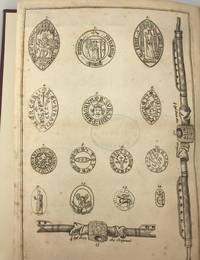
17402929London: William Mount and Thomas Page 1740. Scarce first edition. In hard back neat burgundy coloured library cloth. Ex-library copy. With one full-page engraved plate showing seals plus other engravings in text. Lovely deep impressions. 2311pp. 255 x 195 mm 10 x 7¾ inches. Has expected library stamps new endpapers. Tipped-in handwritten note to back of plate reads: This Tract is written by John Lewis author of the History of the Abbey of Faversham etc. Another small insert tipped-in to title page states: Purchased out of a donation of £250 given by George William Palmer Esq. to the Reading Free Public Library. One or two pages have been reinforced towards the spine edge. Light foxing but overall in very good shape. William Mount and Thomas Page hardcover
17754402888London: F. Newberry 1775. Twelve duodecimo volumes with 117 engraved plates of 118 lacking plate XXVII 'Black tiger male panther and lynx'; preliminaries thumbed title of one volume perforated and another significantly browned one leaf of text ink-stained general foxing and offsetting; original sheep leather binding scuffed with split hinges; worn as is often the case with juvenile literature of this period but a charming set. <p><p>A comprehensive natural history encyclopaedia for young people based on Pennant's system of classification. Animals are arranged according to quadrupeds fish birds and insects and each of these classifications is separately indexed. Besides the more usual natural history descriptions of animals vegetables and minerals this work is the first to describe for children Australia's most famous marsupial -- the kangaroo. The entry under the Jerboa vol. III p. 172 reads "Mr. Banks brought home the skin of an animal which he calls the kanguroo sic which from its general outline and the most striking peculiarity of its figure greatly remembers the jerboa yet it entirely differs in size and in many of those minute distinctions which point out the general ranks of nature. The kanguroo is often known to weigh above fifty pounds."</p> <p>The kangaroo was first seen by both Banks and Cook on 24 June 1770 and the first description of it appeared in Hawkesworth's Account of the Voyages published in 1773: "I should have taken it for a wild dog if instead of running it had not leapt like a hare or a deer. Mr. Banks also had an imperfect view of this animal and was of opinion that its species was hitherto unknown." During the remainder of the exploration of the east coast of Australia Cook records that both he and Banks shot and ate kangaroo on several occasions. He records two in particular that weighed eighty pounds and fifty-four pounds the skins of which Joseph Banks took back to England with him.</p> <p>Illustrations of over four hundred animals finely engraved in copper complete this charming eighteenth-century work intended solely to be used by children.</p> </p> . F. Newberry unknown