[JESUITS - JAPAN].Biblio.com
2 540 résultats
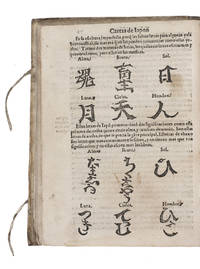
15755741Alcalá der Henares Spain: Juan Iniguez de Lequerica 1575. Contemporary limp vellum with ties. 4to in 8s. With woodcut of the Crucifixion on verso of the colophon 2R4v woodcut Japanese characters in the text I8v and woodcut decorated initials throughout. First Spanish edition of 87 Portuguese letters by Jesuit missionaries in Japan very valuable for the history of the Jesuits in Japan India and other parts of Southeast Asia. The work was first published in Portuguese in Coimbra in 1570 and contains 10 additional important Jesuit letters which had never published before. Noteworthy are the woodcut Chinese and Japanese characters included in the text on leaf I8v. Cordier gives a list of these additional letters dating from 1567 to 1571. Other newly added were: the life of Francis Xavier Relacion de las cosas de la India by Manuel Acosta with remarks on in order of appearance Goa Cochin Daman Ceylon Comorin Bassein Ormuz Ethiopia Inambay and Manomotapa Malaca the Moluccas Ambonia Solor Macassar etc. and Breve relacion de la Isla y Reynos del Iapon.Lacking 2 leaves ¶7 and ¶8 from the preliminaries containing the "Indulgencias que nuestro Sancto Padre el Papa Pio. 4 ". With 18th-century manuscript annotations in brown ink on the recto of the first free flyleaf the title-page at the start of the text on fol. 1r the recto of the final leaf and in the margins throughout; the margins show only marks to highlight certain passages the other annotations are variations of the same owner's inscription most elaborate on the front flyleaf: "Ex icDn. Francesco et Paula Caveda Costo 15 . Mad. a 4 . Octobre 1786". The vellum of the binding is somewhat creased and stained water stained throughout the first and last few leaves are frayed and slightly damaged in the margins without affecting the text somewhat browned throughout. Otherwise in good condition.l Alt-Japan-Katalog 298; Cordier Japonica cols. 67-68; Iberian Books 54608; Laures 140; Palau 46311; Porbase 363133 1 copy; Salva 3282; Streit IV 1519 with a full list of all letters; USTC 337147. Juan Iniguez de Lequerica, hardcover
15854676Venice: I Gioliti 1585. Hardcover. Very Good. 8vo - over 7¾ - 9¾" tall. 8vo. 103 pp. Bound in old vellum. Discrete former ownership stamp on title. Gutter margin of title reinforced; inconsequential toning otherwise excellent. Rare early edition of this Jesuit letter containing news of missions and activity in Japan from the year 1582 the only edition of 5 printed that year to contain a title-page advertising the famous Japanese embassy of 1584-86. Significantly the work also discusses the embassy the participants and their noble lineage and expresses the hope that the embassy will prove a convincing sign of the Jesuit's spectacular success in Japan p. 7. The present imprint of this edition comprises the first entry in Boscaro's bibliography of printed works related to the embassy. It thus stands at the head of nearly 50 works printed in 1585 alone to record and commemmorate an event that-in addition to providing a public relations coup for the Jesuits-became a watershed moment in cross-cultural exchange between the Orient and the West: "no Japanese emissaries to Europe either before or since aroused comparable interest or enthusiasm" Lach. In the annals of international relations between Europe and Japan in the 16th C it is particularly noteworthy "how the physical presence of the Japanese in Europe stimulated an unexpected number of typographical presentations" Boscaro of which this particular Gioliti edition with the titlepage advertising the embassy-Portata de Novo Dal Giapone Dai Signori Ambasciatori-is the very first. Boscaro notes that there were four other editions of Coehho's letter published in Italy in 1585 around the time the embassy arrived in Venice on June 25 including another by Gioliti but none of these uses the embassy as a way to market itself.The report itself is also a significant document of the embassy's genesis: Coelho composed it in February 1582 the month that the embassy of four Japanese Christian converts departed from Nagasaki. In it he describes the ongoing missionary activity across the country: e.g. in Hirado Amasuka Bungo and especially Funai Oita City the home of a thriving Jesuit college. Presumably the contents of this letter as the title suggests were "brought from Japan by the eminent ambassadors" as the latest news on the Jesuits current success in that faraway land.Though the embassy did not reach Lisbon until August 1584 it eventually was as Coelho had hoped a resounding success: from 1584-86 the four young Japanese nobles were the object of intense curiosity wherever they traveled and they were treated to lavish receptions in Lisbon Madrid Florence Rome Venice and other cities throughout Catholic Europe.OCLC: Cornell NYPL HU and Newberry. Boscaro 1; Alt-Japan 812; Sommervogel II.1267; Cordier 78; Laures 169; Pagès 22; Lach I.2.690. I Gioliti hardcover books
"Opera divisa in quattro volumi, rarissima a trovarsi completa: Libro primo, detto la Qualità delle comedie. Per dichiarare, quale sia la lecita a' buoni christiani, e quale la illecita; e per distinguere la modesta dalla oscena, secondo la dottrina di s. Tomaso, e d'altri theologi per sicurezza della coscienza. In-4°, XV, (6cc), 172pp (i.e. 272), legatura in pelle coeva, nervature e titolo al dorso in oro, Firenze, Bonardi 1655; Libro secondo, detto La solutione de' nodi. Per isciogliere molte difficoltà, e per risoluere molti casi di coscienza intorno alle comedie poco modeste; e per mostrare, che non è mai lecita la loro permissione ... Opera di un theologo religioso, stampata ad instanza del sig. Odomenigico Lelonotti da Fanano. Si aggiunge al fine vna Censura d'autori antichi, e moderni intorno a' compositori, compositioni, lettione, e recitamento di poca honestà. Et di più il Giuditio, che si può fare di quelle comedie, che si rappresentano tal'hora con titolo di honesta ricreatione da persone ascritte in vna osseruante congregatione. In-4°, (20cc), 158pp (i.e.258); 135pp+1, legatura in pelle coeva, nervature e titolo in oro al dorso, Firenze, Bonardi, 1649; Libro terzo, detto L’instanza, per supplicare a' signori superiori, che si moderi christianamente il theatro dall'oscenità, e da ogni altro eccesso nel recitare, secondo la dottrina di S. Tomaso, e d'altri theologi antichi e moderni. Opera d'vn religioso theologo, stampata per soddisfattione del sig. Odomenigico Lelonotti da Fanano. ... Vi sono due indici, vno de' capi, e punti, l'altro delle materie. In-4°, (16cc), 377pp, (16cc), legatura in pelle coeva, nervature e titolo in oro al dorso, Firenze Bonardi, 1652; Libro detto L'ammonitioni a' recitanti, per auuisare ogni christiano à moderarsi da gli eccessi nel recitare. Sono diuise in tre breui trattati, cioè il primo intorno à recitanti. Il secondo intorno al comico Beltrame, & al suo libro. Il terzo intorno à ciarlatani. Opera d'vn theologo religioso da Fanano, stampata ad istanza del sig. Odomenigico Lelonotti. Con aggiunta all'vltimo d'vn'Hipomnistico, ouero Discorso ammonitorio, diretto in forma di preghiera a' musici comedianti mercenarij, & ad ogn'altro musico aiutante al theatrale, e poco modesto recitamento. Con due indici, vno dell'ammonitioni, e l'altro delle cose notabili. In-4°, (16cc), 566pp, (2cc), legatura in pergamena con titolo manoscritto al dorso, Firenze, Bonardi 1652. Il gesuita Ottonelli (Odomenigico Lelonotti da Fanano) fu, insieme a Giovanni Paolo Oliva e Paolo Segneri, uno dei critici del teatro più celebri nelle fila della Compagnia di Gesù e in particolare la sua critica è importante per tracciare l’evoluzione del rapporto fra teatro professionale e religione (Zampelli, 2006). Sicuramente sono i libri di teatro, soprattutto Della Christiana moderatione del theatro, a raccontarci molto di Ottonelli. Dagli aneddoti autobiografici sepolti in queste pagine dense possiamo ricostruire l'attività di Ottonelli per i cinque anni cruciali che precedettero il suo arrivo a Firenze nel 1640. Dipingono un quadro sorprendente. Ottonelli si presenta non come un teologo o uno scrittore, ma come un uomo d'azione, un guerrigliero impegnato nella lotta contro il teatro e soprattutto contro il ruolo delle donne in esso. Ottonelli sapeva che in Inghilterra le attrici erano proibite (anche se occasionalmente sul palco apparivano donne di compagnie continentali e la regina e le sue dame si esibivano in maschere di corte). Ottonelli conosceva la pratica inglese e la raccomandava per l'Italia, anche se sapeva che gli attori italiani erano assolutamente contrari. Le donne erano essenziali per l'economia del teatro popolare, e Ottonelli spiega perché. Vendevano i biglietti e permettevano di dare un'occhiata al viso o al petto per qualche soldo. Durante le rappresentazioni vendevano merce: ""mercantie, profumeria, saponetti, moschardini, o simili coserelle"". Cantavano, eseguivano acrobazie e si scambiavano mance, una pratica redditizia. Le brave attrici portavano clienti sia alle commedie che ai giochi d'azzardo. I regali poi venivano inviati dietro le quinte. E’ l’opera di Ottonelli la più attenta cronaca della nascita del teatro italiano, una miniera di notizie e fatti che, anche se narrati con vis polemica, sono l’unico documento di prima mano del periodo d’oro delle compagnie teatrali italiane; addirittura egli si sofferma sulle figure minori dell’intrattenimento, come ciarlatani, musici ambulanti, venditori e imbonitori, vagabondi scaltri e giocolieri. A work which extremely rare to find complete. Jesuit Ottonelli (Odomenigico Lelonotti da Fanano) was, together with Giovanni Paolo Oliva and Paolo Segneri, one of the most famous theater critics in the ranks of the Society of Jesus and in particular his criticism is important for tracing the evolution of the relationship between theater professional and religion (Zampelli, 2006). In fact it is the books on theater, especially Della Christiana moderatione del theatro, that tell us much about Ottonelli. From the autobiographical anecdotes buried in these dense pages we can reconstruct Ottonelli’s activities for the five crucial years preceding his arrival in Florence in 1640. They paint a surprising picture. Ottonelli comes across not as a theologian or writer, but as a man of action, a guerrilla engaged in combat against the theater and especially against the role of women in it. Ottonelli knew that in England actresses were prohibited (though women from continental troupes occasionally appeared on stage and the Queen and her ladies performed in court masques). Ottonelli knew of the English practice and recommended it for Italy, though he knew that Italian actors were dead set against it. Women were essential to the economics of the popular theater, and Ottonelli explains why. They sold the tickets and threw in a glimpse of face or bosom for good measure. They peddled merchandise during performances: “mercantie, profumeria, saponetti, moschardini, o simili coserelle.” They sang, performed acrobatics, and passed a cup for tips, a lucrative practice. Good actresses brought in clients both to the plays and to games of chance. Gifts were sent backstage. Ottonelli's work is the most careful chronicle of the birth of the Italian theater, a mine of news and facts which, even if narrated with a polemic face, are the only first-hand document of the golden period of the Italian theater companies; he even dwells on the minor figures of entertainment, such as charlatans, traveling musicians, vendors and barkers, crafty vagrants and jugglers."
15854676<p>ENTRY NO. 1 IN BOSCARO<br />THE FIRST REFERENCE TO THE JAPANESE EMBASSY OF 1585 PRINTED ON THE TITLE-PAGE</p><p>Venice I Gioliti 1585.</p><p>Small 8vo 15.3 x 10 cm 103 pp. Bound in old vellum. Discrete former ownership stamp on title. Gutter margin of title reinforced; inconsequential toning otherwise excellent.</p><p>Rare early edition of this Jesuit letter containing news of missions and activity in Japan from the year 1582 the only edition of 5 printed that year to contain a title-page advertising the famous Japanese embassy of 1584-86. Significantly the work also discusses the embassy the participants and their noble lineage and expresses the hope that the embassy will prove a convincing sign of the Jesuit's spectacular success in Japan p. 7. The present imprint of this edition comprises the first entry in Boscaro's bibliography of printed works related to the embassy. It thus stands at the head of nearly 50 works printed in 1585 alone to record and commemmorate an event that-in addition to providing a public relations coup for the Jesuits-became a watershed moment in cross-cultural exchange between the Orient and the West: "no Japanese emissaries to Europe either before or since aroused comparable interest or enthusiasm" Lach.</p><p>In the annals of international relations between Europe and Japan in the 16th C it is particularly noteworthy "how the physical presence of the Japanese in Europe stimulated an unexpected number of typographical presentations" Boscaro of which this particular Gioliti edition with the titlepage advertising the embassy-Portata de Novo Dal Giapone Dai Signori Ambasciatori-is the very first. Boscaro notes that there were four other editions of Coehho's letter published in Italy in 1585 around the time the embassy arrived in Venice on June 25 including another by Gioliti but none of these uses the embassy as a way to market itself.</p><p>The report itself is also a significant document of the embassy's genesis: Coelho composed it in February 1582 the month that the embassy of four Japanese Christian converts departed from Nagasaki. In it he describes the ongoing missionary activity across the country: e.g. in Hirado Amasuka Bungo and especially Funai Oita City the home of a thriving Jesuit college. Presumably the contents of this letter as the title suggests were "brought from Japan by the eminent ambassadors" as the latest news on the Jesuits current success in that faraway land.</p><p>Though the embassy did not reach Lisbon until August 1584 it eventually was as Coelho had hoped a resounding success: from 1584-86 the four young Japanese nobles were the object of intense curiosity wherever they traveled and they were treated to lavish receptions in Lisbon Madrid Florence Rome Venice and other cities throughout Catholic Europe.</p><p>Provenance: Alfred Hamy 1838-1904 French Jesuit historian and prolific author of books relating to the history of the members of the Company of Jesus.</p><p>OCLC: Cornell NYPL HU and Newberry. Boscaro 1; Alt-Japan 812; Sommervogel II.1267; Cordier 78; Laures 169; Pagès 22; Lach I.2.690.</p><p> Boscaro 1; Alt-Japan 812; Sommervogel II.1267; Cordier 78; Laures 169; Pagès 22; Lach I.2.690.</p> I Gioliti
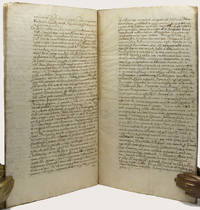
162134518Lisbon and Hangzhou China: Manuscripts ca.1623 and 1621. Very Rare A Similar Manuscript Exists in Brussels. We know of no others. The Latin text of both letters is written in a neat uniform cursive hand in brown. Folio leaves 33 x 20.5 cm The transcripts bound in 18th Century stiff blue wrappers the blank paste-downs and endpapers are late 18th century most likely the third quarter between 1745/1753 and 1776 since they contain a clear "lion/vryheit/pro patria" watermark with a crowned GR countermark which resembles Heawood 3148 3149 and 3154. The paper used for the manuscript contains a faint double-headed eagle watermark and it has been reinforced in the gutters. A very pleasing survival very well preserved edges slightly mellowed the wrappers show some signs of wear. VERY RARE MANUSCRIPT TRANSCRIPTS. Chrysostomus Johann Gall 1586-1643 was a German Jesuit and scholar. He left Ingolstadt Germany to teach astronomy mathematics and navigation in Lisbon fro 1620to 1627 before leaving to work in the Jesuit missions in India. The Colégio de Santo Antŕo benefitted from the arrival of many foreign mathematicians and other scholars as Lisbon serves as a gateway for all missionaries departing for Asia. The original letter by Gall was written in Lisbon September 1623 and concerns a newspaper style description of various events including details of the perseution of Christians in Japan particularly the execution of large numbers of the Christian community in Nagasaki in 1622.<br> The second letter in the present work is especially interesting as the original was written by Johannes Terentius also known as Johannes Schreck an Deng Yuhan Hanpo 1576-1630. Terentius was a prominent Jesuit scholar specialized in natural science and mathematics. Before joining the Jesuits as a novice1611 he already enjoyed a grea reputation in Germany as a scholar. In 1621 Terentius left for China to join the Jesuit mission. The original letter by Terentius was written in Hangzhou China on 30 August 1621 to the rector of teh Jesuit College in Munich Jakob Keller 1568-1631. He discusses his journey to China which he started in 1618 his intentions to participate in the planned calendar reform in China and his impressions of the city of Hangzhou which he reached in 1621 Terentius wrote several works on european medicine mathematics and technology in Chinese and together with Johann Adam Schall von Bell and G. Roho introduced European tigonometry and European astronomical instruments to China. In 1629 he began to reform the calendar which J.A. Schall von Bell ocmpleted after Terentius' early death a year later.<br><br>Backer & Sommervogel VII col. 1929-F<br> Manuscripts unknown
In -4°, pp. 1 cb., (14), 646 (ma 648, la numerazione di 111-112 è ripetuta), (10), 2 ccb. Pergamena coeva con titolo manoscritto al dorso. Include il frontespizio inciso da Wolfgang Kilian, con i ritratti in piedi dei due autori ai lati di una riproduzione della mappa della Cina, e la pianta, ripiegata, del palazzo pechinese convertito a chiesa, con la tomba di Ricci. Presente anche l’ultima carta bianca, qui con appunti e un piccolo indice analitico, manoscritti. Prima edizione di uno dei primi resoconti di un occidentale sulla Cina, il libro di Ricci ebbe un impatto culturale enorme sul mondo europeo del XVII secolo, e fu abbondantemente ristampato e tradotto fin dall’anno successivo. Matteo Ricci, missionario in Cina fino all’anno della sua morte, nel 1610, lasciò un importante manoscritto che sarebbe stato redatto e pubblicato da Trigault, anche lui membro della spedizione. Frontespizio restaurato nella parte bassa. The first edition of the earliest modern description of China, made by an Occidental traveller: Ricci’s book had a big impact all over the Century and it was republished and translated many times since a year later his publication. Matteo Ricci, a jesuit missionary to China until his death, in 1610, left an important manuscript edited and published by Trigault, another member of the expedition. Title restored in his lower part.
Folio (320 x 215mm). (16) ll, including frontispiece, 618 pp, (14) ll. Engraved frontispiece, title in red and black with large engraved vignette, numerous engraved illustrations including large-format ones, and numerous woodcut illustrations, headpieces and initials, with final blank. Contemporary vellum, manuscript title on spine. Somewhat browned and with a small defect in the engraved title-page, but still in good condition, binding slightly bowed.
15852438<p>Venice: Appreso I Gioliti 1585. </p><p>Price: $8500.00 </p><p>Octavo: 16 x 10.5 cm. 188 11 pp. Collation: A-M8 N4</p><p>One of several 1585 editions first ed. 1584</p><p>Bound in modern cartoncino. A very good copy with some minor repairs lightly washed. With a fine woodcut headpiece and Jesuit emblem on the title page and numerous decorative head- and tailpieces and initials including one of a dragon throughout.</p><p>This collection contains the following letters from the Jesuit missions in Japan and Goa: Francesco Carreón writing from Kuchinotsu 1 Dec. 1579; Gregorio de Céspedes 1579; Lorenço Mexia at Bungo 20 Oct. 1580; three letters by LuÃs Fróis Miyako 14 April 1581; 19 May 1581; and 29 May 1581; Francesco Cabral 15 Sept. 1581; and Alessandro Valignano Goa 28 Dec. 1583.<br /><br />The Salsette Martyrs:<br /><br />This collection concludes with Valignano's important letter from Goa –one of only five Jesuit letters from India published between 1570 and 1585- detailing the deaths of the Jesuit Martyrs of Cuncolim who were killed on Monday 25 July 1583 in the village of Cuncolim in the district of Salsette territory of Goa India. The "martyrs" were the Italian Rudolph Acquaviva the Spaniard Alphonso Pacheco the Swiss Peter Berno the Portuguese Anthony Francis and Brother Francis Aranha also a Portuguese. In addition the Portuguese layman Gonçalo Rodrigues and some Indian youths Dominic Alphonso Francis Rodrigues Paul da Costa and ten others were also killed.<br /><br />While prosecuting their mission of Conversion in Cuncolim the Jesuits and their companions desecrated a Hindu temple by urinating in it a relatively mild if repugnant form of desecration; on an earlier excursion Father Berno had set fire to another temple and destroyed a sacred anthill. In addition they killed a cow that was also an object of worship and hurled its entrails into a sacred well thereby defiling it. The understandably outraged citizenry set upon the Jesuits and their companions killing them with scimitars lances and arrows. They then threw their bodies into a well. The five Jesuits quickly achieved great fame as martyrs and at last in the 19th century were elevated to sainthood while the lay Indians who were slaughtered with them were ignored. <br /><br />It should be remembered that three of the five Jesuit martyrs were in Cuncolim as chaplains to a force of Portuguese soldiers sent to exact harsh reprisals for indigenous resistance to Portuguese rule and the Jesuit campaign of forced conversion. In this context the killing of the Jesuits is remembered by the people of modern day Cuncolim as one of the first acts of revolutionary resistance to European rule in India.<br /><br />Of course the letter written in December of 1583 by the Jesuit Provincial of India Alessandro Valignano glorifies the "martyrs" and in true martyrological style vividly describes the deaths of Acquaviva and his companions.<br /><br />"The Pagans then fell upon them; Father Rudolph received five cuts from a scimitar and a spear and died praying God to forgive them and pronouncing the Holy Name. Father Berno was next horribly mutilated and Father Pacheco wounded with a spear fell on his knees extending his<br />arms in the form of a cross and praying God to forgive his murderers and send other missionaries to them.</p><p>Streit Bibliotheca Missionum IV. 1639; Sommervogel II col 492; Cordier Sinica 75; Laures 170</p> Appreso I Gioliti, books
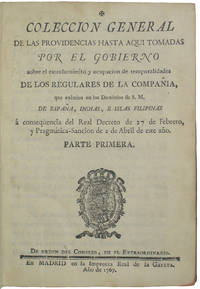
178444155Madrid: En la Imprenta Real de la Gazeta 1784. First edition. Contemporary mottled calf compartments decorated in gilt red morocco spine label titled in gilt sewn in green silk ribbon marbled endpapers. A very good copy head band worn with a small chip and a tiny split at the joint owner's bookplate and booksellers engraved plate on front pastedown contents quite bright and clean. 104 91 135 144 4 74 pp. 4to. Five volumes bound in one. Parts 1 2 3 set in condensed type; parts 4 and 5 in expanded type. <br /> <br /> Royal decrees from Charles III and instructions decisions and regulations issued by the Consejo en el Extraordinario and its president the Conde de Aranda and others--concerning the expulsion of the Jesuits. "These collections contain the documents relative to the expulsion of the Jesuits from the Spanish dominions and the confiscation of their property including the names of the colleges and houses of the order the application of the confiscated property &c. A complete series consists of five parts which are rarely found together. Our collation is of parts I. to III. only" Sabin 14304. Part 4 p. 75-127 contains the papal brief "Dominus ac Redemptor" by Clement XIV in Latin and Spanish. <br /> <br /> Earlier versions containing parts or all of the first three sections are not all that uncommon but those containing all five parts remain relatively rare. Other than this copy only two others have appeared in the auction records of ABPC and RBH since 1953 the first at the John B. Stetson sale at Parke Bernet and the second at Bonhams in a modern binding and dampstained. Palau 56516. See Sabin 14304. Medina BHA: IV 4228. En la Imprenta Real de la Gazeta unknown
178444155Madrid: En la Imprenta Real de la Gazeta 1784. First edition. Contemporary mottled calf compartments decorated in gilt red morocco spine label titled in gilt sewn in green silk ribbon marbled endpapers. A very good copy head band worn with a small chip and a tiny split at the joint owner's bookplate and booksellers engraved plate on front pastedown contents quite bright and clean. 104 91 135 144 4 74 pp. 4to. Five volumes bound in one. Parts 1 2 3 set in condensed type; parts 4 and 5 in expanded type. Royal decrees from Charles III and instructions decisions and regulations issued by the Consejo en el Extraordinario and its president the Conde de Aranda and others--concerning the expulsion of the Jesuits. "These collections contain the documents relative to the expulsion of the Jesuits from the Spanish dominions and the confiscation of their property including the names of the colleges and houses of the order the application of the confiscated property &c. A complete series consists of five parts which are rarely found together. Our collation is of parts I. to III. only" Sabin 14304. Part 4 p. 75-127 contains the papal brief "Dominus ac Redemptor" by Clement XIV in Latin and Spanish. Earlier versions containing parts or all of the first three sections are not all that uncommon but those containing all five parts remain relatively rare. Other than this copy only two others have appeared in the auction records of ABPC and RBH since 1953 the first at the John B. Stetson sale at Parke Bernet and the second at Bonhams in a modern binding and dampstained. Palau 56516. See Sabin 14304. Medina BHA: IV 4228. En la Imprenta Real de la Gazeta unknown books
In -8°, pp. 109, (b), cartonato, tagli rossi. Prima edizione. Francesco Pasio (1551-1612) fu il primo provinciale gesuita in Giappone, residente a Nagasaki; il libro comprende anche una lettera del vice-provinciale Pedro Gomez (1533-1600), autore del “Compendium”, ovvero un trattato di cosmologia e teologia che sarebbe diventata la prima opera a introdurre la cultura occidentale in Giappone; segue un testo di Nicolò Longobardi (1559-1654), gesuita siciliano che in Cina fu il successore di Matteo Ricci (nominato varie volte in questo testo); la quarta e ultima lettera è un resoconto di una missione presso i territori islamici del Mogol (India, Pakistan, Afghanistan). Marca dei gesuiti al frontespizio e capilettera figurati. First edition. Pasio (1551-1612) was the first Jesuit Provincial in Japan: he resided in Nagasaki; the book includes also a letter of his deputy Pedro Gomez (1533-1600), author of the “Compendium”, a cosmology and theology treaty that had to become the first work to introduce western knowledge in Japan; then a text by Nicolò Longoboardi (1559-1654), a sicilian jesuit who replace, in China, Matteo Ricci (mentioned many times in this text); the fourth and last letter is the chronicle of a mission in Islamic areas of Mughal (India, Pakistan, Afghanistan). A Jesuit mark on title page and figurative initials. Pasio (1551-1612) was the first Jesuit Provincial in Japan: he resided in Nagasaki; the book includes also a letter of his deputy Pedro Gomez (1533-1600), author of the “Compendium”, a cosmology and theology treaty that had to become the first work to introduce western knowledge in Japan; then a text by Nicolò Longoboardi (1559-1654), a sicilian jesuit who replace, in China, Matteo Ricci (mentioned many times in this text); the fourth and last letter is the chronicle of a mission in Islamic areas of Mughal (India, Pakistan, Afghanistan). A Jesuit mark on title page and figurative initials.
176215661Amsterdam, chez Ray, libraire, Iver, graveur, sur le Dam, 1762. Suite de 22 figures dont 1 titre gravé.Événemens mémorables, Déclaration du Roi. Arrêts du Parlement contre le Schisme. Les Sacremens administrés. Au Législateur Pacifique, 1755. Suite de 12 figures dont 1 titre gravé.Les deux suites reliées en 1 vol. in-4 (25 x 19 cm), demi-vélin souple, dos lisse, pièce de titre en maroquin rouge, tranches rouges (reliure de l'époque).
In-8°, 16 cc, pp. 327, più errata, c. di tav. ripiegata (Situs provinciarum imperii Sinici), occhietto, vignetta calcografica sul frontespizio, illustrazioni calcografiche. Rilegatura in pergamena con nervi e titolo al dorso. ROUGEMONT (Franciscus de), b. a Maastricht il 2 aprile 1624, d. a Chang-chu (Cina) il 4 novembre 1676. Nelle scuole dei gesuiti a Bruxelles e Anversa fece i suoi studi inferiori con risultati brillanti e nel1641entrò nella Compagnia di Gesù. All'assedio di Kortrijk nel 1646 si distinse, sebbene non fosse ancora un sacerdote, per il suo zelo nella cura dei soldati feriti. Nel 1654 ricevette la consacrazione del sacerdote e, quando padre Martino Martini, procuratore della missione cinese in Europa, venne a cercare missionari per questo lavoro, riuscì a convincere i suoi genitori a richiedere quella missione a favore del figlio dal Generale dell'Ordine. L'anno seguente partì da Amsterdam per Lisbona con il gesuita di Amsterdam Ignazio Hartoghvelt. Dopo un ritardo a Coimbra, lasciarono Lisbona il 30 marzo 1656 e arrivarono il 6 novembre a Coa. A piedi, continuò il suo viaggio lungo la costa di Malabar, Visschersen Transvancore, e poi attraversò il Siam, dove il suo compagno Hartoghvelt morì a Yoethia nel 1658. Nello stesso anno, de Rougemont raggiunse Macao, e nel 1659, raggiunse la corte imperiale, in Cina. I cristiani da lui formati sono stati riconosciuti per il loro zelo e conoscenza della religione. In seguito a una violenta persecuzione dei cristiani durante la minore età dell'imperatore Kang-hi i missionari furono portati prigionieri a Pechino, poi esiliati nel Canton e imprigionati nella chiesa per 6 anni. R. capì che questa persecuzione aveva la sua ragione principale nella nazionalità straniera dei missionari. Per togliere quest'arma dalle mani degli avversari, pensò di addestrare un clero nativo e pensò che consentire una liturgia della chiesa in lingua cinese avrebbe promosso questo piano. Nel 1667 inviò un dettagliato memorandum al generale dell'ordine Oliva (stampato in Analecta Bollandiana XXXIII (1914), 279-93). Solo nel 1671, quando l'imperatore Kang-hi fu convinto dell'innocenza dei missionari, questi tornarono alle loro congregazioni cristiane. Il Rougemont ha continuò il lavoro interrotto per altri 5 anni. Durante un viaggio verso l'isola di Tsong-ming, si ammalò a Tsang-chu e morì tra le braccia di Padre Couplet. I suoi fedeli cristiani vennero per raccogliere il corpo del loro padre spirituale e dopo due giorni di cammino lo seppellirono solennemente sul Monte Voxan fuori dalla città di Changsho. Egli aveva usato il tempo della sua disoccupazione forzata per compilare la sua Historia Tartaro-Sinica nova (Lovanii 1673), in cui racconta ampiamente la persecuzione subita. Il Rougemont ha dato un ottimo contributo alla conoscenza della letteratura cinese. Con i padri Intorcetta, Herdrich e Couplet, intraprese l'importante lavoro: Confucius Sinarum philosophus, messo in stampa nel 1687 per ordine di Luigi XIV a Parigi. In-8 °, 16 cc, pp. 327, plus errata, folded table (Situs provinciarum imperii Sinici), half-title, woodcut on the title page. ROUGEMONT (Franciscus de), b. in Maastricht on April 2, 1624, d. in Changchu (China) on November 4, 1676. In Jesuit schools in Brussels and Antwerp he made his lower studies with brilliant results and in 1641 he entered the Society of Jesus. At the siege of Kortrijk in 1646 he distinguished himself, even if he was not yet a priest, for his zeal in caring for wounded soldiers. In 1654 he received the priest's consecration and, when Father Martino Martini, procurator of the Chinese mission in Europe, came to look for missionaries for this job, he managed to convince his parents to carry out that mission in favor of his son by the General of the Order. The following year he left Amsterdam for Lisbon with the Jesuit of Amsterdam Ignazio Hartoghvelt. After a delay in Coimbra, they left Lisbon on 30 March 1656 and arrived on 6 November in Coa. On foot, he continued his journey along the coast of Malabar, Visschersen Transvancore, and then he crossed Siam, where his companion Hartoghvelt died in Yoethia in 1658. In the same year, Rougemont reached Macau, and in 1659, he reached the imperial court , in China. The Christians he trained were listed for their zeal and knowledge of religion. Following a violent persecution of Christians during the minor age of Emperor Kang-hi, the missionaries were taken prisoner to Beijing, then exiled to the Canton and imprisoned in the church for 6 years. R. understood that this persecution had its main reason in the foreign nationality of the missionaries. To remove this weapon from the hands of opponents, he thought of training a native clergy and thought that allowing a Chinese-language church liturgy would promote this plan. In 1667 he sent a detailed memorandum to the general of the order Oliva (printed in Analecta Bollandiana XXXIII (1914), 279-93). Only in 1671, when Emperor Kang-hi was convinced of the innocence of the missionaries, did they return to their Christian congregations. Rougemont continued the interrupted work for another 5 years. During a trip to Tsong-ming Island, a Tsang-chu fell ill and died in the arms of Father Couplet. His faithful Christians came to collect the body of their spiritual father and after two days of walking they saw him solemnly on Mount Voxan outside the city of Changsho. He had used the time of his forced unemployment to compile his Historia Tartaro-Sinica nova (Lovanii 1673), in which he widely recounts the persecution he endured. Rougemont made an excellent contribution to the knowledge of Chinese literature. With his fathers Intorcetta, Herdrich and Couplet, he undertook the important work: Confucius Sinarum philosophus, printed in 1687 by order of Louis XIV in Paris.
In -8°, pp. 100; cartonato, tagli rossi; marca dei Gesuiti al frontespizio, iniziale xilografica. Nicolas Pimenta (1546-1614) fu mandato a Goa nel 1596, in ruolo di sovrintendente delle Indie Orientali. Questo è il suo secondo resoconto, in cui dopo aver riferito sullo stato delle sue missioni, descrive un viaggio verso Nord - a tratti avventuroso - intrapreso inizialmente con 11 compagni: nel volume si dà conto di una delle prime missioni cristiane in Bengala. Nicolas Pimenta (1546-1614) was sent to Goa in 1596, as Eastern India supervisor. This is his second report, in which he tells about his travel to North (sometimes adventurous) giving also account of one of the first Christian missions to Bengal.
In -8°, pp. 188, (12); pergamena. Questa rara miscellanea comprende una serie di lettere scritte dai Gesuiti dal Giappone e da Goa: scrivono de Cespedes, Mexia, Fròis, Cabral, e Valignano. La lettera di quest’ultimo include il resoconto della morte di Rodolfo Acquaviva, che fu ucciso a Goa, dagli indigeni, nel 1583. La lettera di Valignano è una delle pochissime, in tutto cinque, lettere dei Gesuiti dall’India pubblicate fra il 1570 e il 1585. This rare collection includes letters written by Jesuits from India and Japan: the authors are de Cespedes, Mexia, Fròis, Cabral, e Valignano. The Valignano letter reports about the assassination, in Goa, of Rodolfo Acquaviva, killed by natives in 1583: it’s one of the five letter of Jesuits from India published between 1570 and 1585.
17726489Lima: Oficina de la calle de San Jacinto 1772. First Edition — Primera edición. Hardcover — Tapa dura. 190x135mm. 7½x5¼". Lima Oficina de la calle de San Jacinto 1772-1773. 2 volúmenes. En 4º menor 190 x 135mm. -I: 54 2 207 i.e. 133 5 pp. 14 hojas de portadillas. -II: 158 306 i.e. 318 4 pp. 5 hojas de portadillas. Encuadernación en pergamino de época. Primera edición de los cuadernos de desamortización de los bienes de la CompañÃa de Jesús en Perú con motivo de su expulsión según las reglas que prescribe la Real Cédula dada en Madrid a 9 de julio de 1769. Los Jesuitas fueron expulsados de Perú asà como de otras posesiones de España en América por orden de Carlos III en 1767. El libro también incluye las Constituciones de diferentes colegios peruanos que estaban bajo la supervisión de los jesuitas. Obra extraordinariamente rara de encontrar completa de sus dos volúmenes especialmente un ejemplar hermoso como el nuestro. Tiene en total 19 portadillas fuera de la paginación. En España sólo he encontrado completos 2 ejemplares institucionales Ministerio de Justicia y Biblioteca Nacional. Oficina de la calle de San Jacinto hardcover
In -8°, pp, 88, cartonato, tagli rossi. Sul verso del frontespizio altro titolo: “Lettera del padre Diego di Pantogia della Compagnia di Giesù al Padre Luigi di Guzman Provinciale nella Provincia di Toledo. Scritta in Pachino corte del Rè della Chiana a di 9 di Marzo, dell’anno 1602. Pubblicata originariamente in spagnolo nel 1605 questa lunga lettera, qui nella sua prima versione italiana, si distingue per la chiarezza argomentativa del testo, quasi giornalistica nel riportare dettagli della vita politica, economica, sociale e religiosa cinese. Il libro è valutato nodale anche come testimonianza circa i rapporti fra religione cattolica e Islam: “This is a very early source written by Christian on Muslims in China proper. The almost non-judgmental treatment of Islam is particularly interesting, although it must be noted that the text was written befor the Jesuit-Muslim conflicts fo the later part of the 16th century, so it must be possible to assume that relations at this time were fairly amicable. [...] The descriptions of Muslim life in China are fairly extensive in comparison with other texts of the early 17th century although, like its counterparts, the text focuses more on other religions such as Buddhism, Taoism, Confucianism and Judaism”. (Thomas Davies, John Chesworth, “Christian-Muslim Relations. A Bibliographical History”, 2012, vol. 11, p. 294. Diego de Pantoja o Diego Pantoja (Valdemoro 1571 – Macao 1618) era un gesuita e missionario portoghese in Cina, noto per aver accompagnato Matteo Ricci a Pechino, dove Diego avrebbe lavorato come astronomo, geografo e musicista. Nel 1617 fu processato come nemico degli astronomi cinesi (aveva apportato alcune correzioni al calendario) ed espulso dalla Cina. Published before in Spanish, this long letter, here in its first Italian edition, is valued as remarkable not only about early contacts between Christian Europe and China, but also about the relationship between Catholic religion and Muslim one: “This is a very early source written by Christian on Muslims in China proper. The almost non-judgmental treatment of Islam is particularly interesting, although it must be noted that the text was written befor the Jesuit-Muslim conflicts fo the later part of the 16th century, so it must be possible to assume that relations at this time were fairly amicable. [...] The descriptions of Muslim life in China are fairly extensive in comparison with other texts of the early 17th century although, like its counterparts, the text focuses more on other religions such as Buddhism, Taoism, Confucianism and Judaism”. (Thomas Davies, John Chesworth, “Christian-Muslim Relations. A Bibliographical History”, 2012, vol. 11, p. 294. Diego De Pantoja (1571-1618) was a portuguese jesuit and missionary in China, known for getting along Matteo Ricci to Beijing, where Diego was an astronomer, a geographer and a musician. He purpoused some changes to Chinese calendar, and in 1617 was prosecuted and banished from China.
95636aaf31x25 cm, 1) kl. ovales Reliquienmedaillon aus Silber mit Glasfenster und Beschriftung „Ex Oss: S. Franc: Bor:“, mit Zeugnis auf Papier, vorgedrucktes Formular mit gestochenem Bischofswappen, handschriftlich ausgefüllt u. unterschrieben, Medaillon und Zeugnis unter Glas mit ornamentaler Textilrahmung mit Stütze zum Aufstellen auf Rückseite, dazu zwei Klosterarbeiten in ähnlicher Textilrahmung: 2) Gouache-Miniatur von Johannes d. Täufer mit Stickerei, Goldborten sowie polychromen Glasperlen, Stoffblumen, Draht und Pailletten. 3) ovales Stoffmedaillon mit Glasperlen u. goldfarbenem Draht u. Pailletten auf Purpurgrund mit Goldbrokatverzierungen, guter Zustand, an den Ecken Textilrahmen teilw. etwas ausgefranst, es liegt auch ein Dossier mit einer kurzen Dokumentation zum Heiligen u. den Jesuiten bei (Ausdrucke u. Fotokopien),
In-8°, 59pp, (1cb), prima edizione. Legatura in marocchino rosso alle armi di don Felipe Ramirez Nuñez de Guzmán Duca di Medina sui piatti in oro, entro cornice in oro. Titolo in oro al dorso (PRO. PONT; VAR.), nervature, tagli in oro. L’opera del teologo bresciano Lodovico Oriano è una risposta alle questioni e dubbi sollevati da Martin Lutero sulla liceità della potestà del romano pontefice, sul libero arbitrio, sulla giustificazione per fede e opere, cioè sui cardini su cui poggiava l’intero impianto teologico della Chiesa cattolica. Rilegato con Discussio decreti magni Concilii Lateranensis, et quarundam rationum annexarum, de potestate ecclesiæ in temporalibus; & incommoda diuersæ sententiæ, authore Guilhelmo Singletono, 135pp, stemma dei Gesuiti sul frontespizio, fregi, iniziali e finalino xilografici. L’opera di Leonardo Lessio (alias William Singleton) è stata spesso oggetto di contestazione per apparire come non ortodossa alla lezione biblica. In-8°, 59pp, (1cb), first edition. Binding in red morocco, gilt coat of arms of Don Felipe Ramirez Nuñez de Guzmán Duke of Medina on plates, within a gilt frame. Gilt title on spine (PRO. PONT; VAR.), bands, gilt edges. The work of the Brescian theologian Lodovico Oriano is a response to the questions and doubts raised by Martin Luther on the legitimacy of the power of the Roman pontiff, on free will, on justification by faith and works, that is the cornerstones on which was placed the entire theological structure of Catholic church. Bound with Discussio decreti magni Concilii Lateranensis, et quarundam rationum annexarum, de potestate ecclesiæ in temporalibus; & incommoda diuersæ sententiæ, authore Guilhelmo Singletono, 135pp, Jesuit coat of arms on the title page, wood engraved friezes, initials and tail. The work of Leonardo Lessio (alias William Singleton) has often been the subject of dispute for appearing as unorthodox to the biblical lesson.
1860PHO-2406Paris, Librairie de L. Hachette et Cie, 1860-65. 2 volumes de texte in-8 (235 x 148 mm) de : I/ lxiv pp., 486 pp., (1) f. d’errata ; II/ (2) ff., 480 pp., iv pp. de table ; et 1 Atlas in-folio (57x40cm). Texte : relié demi veau, dos lisse avec titre et tomaison, dos frotté, coiffes arasés, charnières faibles au tome 2, cachets aux titres. Atlas : sous portefeuille demi toile, titre et tomaison au plat, 2 chemises de livraison comportant 13 planches (16) et 2 planches en double (Fragment de carte et Ruine de l’église Saint Michel), portefeuille frotté, chemises de livraison ébarbées, rousseurs, petites mouillures marginales, une planche plus petite en marge.
1884R121123s.l. [Milano or Roma], s.n. [1884] [6] + 110 + [4bl.] pp., Manuscript of the contributions made on the occasion of the commemoration in Rome in 1884 of the 300th anniversary of the death of Carolus Borromeus S.J. (1538-1584), organised by the occasional Accademia di Poesia e di Musica. This Academy of Poetry and Music was composed of students from Roman seminaries and church colleges. For this event a leaflet of 18pp. was published : S. Carlo Borromeo modello proposto agli ecclesiastici nel terzo centenario dalla beata sua morte. Accademia di poesia e di music ache offrono al pubblico gli alunni de seminari e collegi di Roma il giorno 25 Novembre 1884 containing the program and some excerpts of the contributions. The manuscript here on offer is most probably the only existing copy containing the complete poems and songs, handwritten by the different contributors in different languages (Italian, French, Hebrew, Armenian, Polish, German, Portuguese, etc.) and making it an important document for Jesuite and Italian church history, very neat handwriting throughout, text and interior are clean and bright, bound in contemporary red cloth binding with gilt ornamentations, some stains on lower end of both covers, all edges gilt, marbled endpapers, ownership stamp on first page, [Content: PARTE I, Il Sacerdote di Dio : S. Carlo e I Seminari Prolusione Latina (pp.1-6, text in Latin), AGRESTI Michele, Cantata S. Carlo e la musica sacra (pp.7-8, text in Italian), I: MASIGI Paolo (Colleg. Urbano de Prop. Fide), LEletto del Signore Poesia Ebraica (pp.11-14, text in Hebrew), HAELTERMANN Benedetto (alunno del collegio belga), Fiammingo: Leletto del Signore (parafrasi della Poesia ebraica, pp.15-18, text in Dutch), II: HELLO Enrico (Alunno del Seminario Francese), Il Divoto di Maria Poesia Francese (pp.19-22, text in French), III: GASPAROLO Francesco (alunno del Sem. De SS. Ambrogio e Carlo), Il Pellegrino ai Santuari Canzone (pp.23-26, text in Italian), IV: CHAPMAN Giovanni (alunno del Collegio Inglese), LAmico dei Santi Poesia Inglese (pp.27-30, text in English), V: RYCHLAK Giuseppe (Alunno del Collegio Polacco), S. Carlo Campione della Fede Poesia Polacca (pp.31-34, text in Polish), VI: OFLYNN Cornelio (alunno del Collegio Irlandese), San Carlo Zelatore della casa di Dio Poesia Irlandese (pp.35-38, text in Irish), VII: PAPI Ettore (alunno dellAlmo Collegio Capranica), S. Carlo Mecenate delle lettere Ode Italiana (pp.39-41, text in Italian), VIII: BERGAMASCHI Pietro (alunno del Sem. de SS. Ambrogio e Carlo), S. Carolo Iuventutis Patri (pp.43-48), // PARTE II: Il Cardinale Arcivescovo : Cantata S. Carlo e la peste di Milano (pp.51-53, text in Italian), LANZONI Francesco (Alunno del Pont. Sem. Pio), Prolusione Italiana: S. Carlo e I Romani Pontefici (pp.57-62, text in Italian), I: TERSIBASCIAN Giorgio (Alunno del Collegio Armeno), LUmile esaltato Poesia Armena (pp.63-66, text in Armenian) & MACKENZIE Colino Cameron, LUmile esaltato parafrasi in versi asclepiadei (pp.67-70, text in Latin), II: TEDESCA Antonio (Alunno del Collegio Germanico-Ungarico), Carlo Borromeo Procuratore del Concilio di Trento Poesia Tedesca (pp.71-74, text in German), III: DE PAUL MORAES Evaristo (Alunno del Collegio Pio-Latino-Americano), Il Preside dei Sinodi Milanesi Poesia Portoghese (pp.75-78, text in Portuguese), IV: DRUMOFF Giovanni (alunno del Collegio Greco), Il Pastor Buono Poesia Greca (pp.79-81, text in Greek) & KANNA Eduardus (e collegio Stat. Foederatorum Americas Borealis), Bonus Pastor parafrasi ex graeca Esametri (pp.83-86, text in Latin), V: PTACEK Giuseppe (alunno del Collegio Boemo), S. Carlu Burrum Elemosiniere Poema Boema (pp.87-89, text in Czech?), VI: OSES Aurelio (alunno del Collegio Spagnuolo), Fondador de pias Instituciones Poesia Spagnuola (pp.91-94, text in Spanish), VII: RAVAGLIA Giovanni (alunno del Pontif. Sem. Pio), LEroe della Carita Terzine (pp.95-98, text in Italian), VIII: GIAMMARIA Oreste (alunno del Sem. Vaticano), Carolus Borromeus ecclesiasticae libertatis vindex (pp.99-102, text in Latin), IX: VALLI Adolfo (alunno del Pont. Sem. Romano), Il comprensore celeste Ottave (pp.103-105, text in Italian), // Cantata S. Carlo e Leone XIII (p.107), Indice (pp.109-110)], R121123
In -8°, pp. 77, (B); cartonato, tagli rossi. Prima edizione. Pasio (1551-1612) fu il primo provinciale gesuita in Giappone, residente a Nagasaki. La lettera compendia le attività dei Gesuiti in Giappone a cavallo dei due secoli, descrive le condizioni di vita in diverse città e si impegna nel racconto delle condizioni culturali del Giappone a quel tempo. First edition. Pasio (1551-1612) was the first Jesuit Provincial in Japan: he resided in Nagasaki. This letter outlines the Jesuits’ activities in Japan, between XVI and XVII century, also giving descriptions of the various life conditions in many cities, and more widely of the Japan culture at that time.
In-4°; 2 parti in 2 volumi rilegati in mezza pelle coeva con tassello e titolo in oro al dorso (del primo vol. lievemente difettosa); tagli spruzzati. Pp. 321, (1), 3 tavole f.t. a piena pagina incise su rame (una raffigura il vulcano Pambamarca nella zona di Quito in Ecuador), 2 grandi tavole ripiegate con tabelle; Pp. 400, 4 tavole a piena pagina incise su rame di cui una raffigura il, vulcano di Pichincha vicino Quito, e l’altra il vulcano Chimborazo sempre in Ecuador; 2 grandi tavole ripiegate con tabelle. Al verso dei frontespizi piccoli timbri di possesso. Interessante e poco nota opera di fisica sperimentale e sienze naturali del gesuita spagnolo Francesco Perez (1720-1807 Bologna), matematico e missionario in Ecuador, Quito, fino alla espulsione dei gesuiti dai domini spagnoli (1767); in Italia si dedicò alla scrittura di opere scientifiche che vennero pubblicate dopo la soppressione della Compagnia nel 1773. Il suo nome è legato anche all’invenzione di strumenti scientifici, tra cui uno per misurare gli angoli. Oggetto del trattato il Barometro, “istrumento in grado eminente per condurre l’intelletto alla cognizione dell’elemento dell’aria”, e il Termometro, strumenti dei quali si ricordano gli inventori, i metodi costruttivi, le evoluzioni tecniche; si esaminano le differenze tra aria e atmosfera, “l’elasticità” della materia eterea, l’atmosfera equinoziale dell’America, specialmente delle montagne e vulcani dell’Ecuador (Caraburo, Oyambaro, Pichincha Pambamarca ecc.) dove l’atmosfera fu misurata con l’aerometro, come ampiamente si descrive nella seconda parte. Un capitolo, in fine, è dedicato all’atmosfera europea.
Ensemble de 15 volumes de format in 4° carré; reliure uniforme de l'époque en demi veau fauve richement orné; illustré de 179 planches gravées et numérotées (sur 193). Le volume XII est entièrement consacré à la vie de Confucius avec de superbes planches. Célèbre et monumentale histoire de la Chine dans tous ses aspects, militaires, agricoles, religieux, géographiques, généalogiques... Une encyclopédie sur la Chine à l'usage des Européens. Notre exemplaire ne comprend pas les planches hors texte des T. I et II; sauf le portrait frontispice du Tome I et présente donc 152 planches hors texte sur 166; ou 179 planches numérotées sur 193. Les tomes III à XV sont bien complets . Quelques petits défauts de reliure et travaux de vers intérieurs principalement en marge. Deux volumes de suppléments parurent en 1814. Curieuse signature manuscrite "Montgolfier" sur chaque page de titre. Voir les photos.
188030328<p>HARDBACK NODJ ISSUED 1880 ON COPYRITE PG 1ST Edition THICK Embossed boards with gilt lettering and decoration. Spine cover ends and corners show very little wear. Spine cover is faded SLITELY.Text block is clean and unmarked. All OUTER edges are red stained with lettered Gold Gilt Titles Interior VG/ VG AS-IS WITH RED THIN STAIN TO OUTER EDGE FEW PGS NOJACKET THICK BROWN PURPLE embossed Cover with Bright Gold Gilt DECORATIONS CVR LITE rub wear Scuffing 517 pgs Interior nice condition light Wear FOX Interior nice tight Clean light Fox OUTER PGS EDGES LITE RED</p><p>.</p><p>& Tragic Death of Philosopher Pythagoras. Roman Catholic Church has relentlessly persecuted Tortured & Burnt them at the Stake. Recent remarkable discovery of Masonic emblems on an ancient obelisk in Egypt."</p> Redding & Co. Publ, NY, Masonic publishers hardcover