2 541 résultats
ORD-5400Qui décrete de prise de corps Me Le Roux, ci-devant de la Société des soi-disants Jésuites, & Professeur de Théologie au Collège de la Société à Caen, pour avoir dicté en 1760 à ses Ecoliers des Propositions contraires à la Loi du Silence, & à la Déclaration du Clergé de France de 1682, au préjudice de ses déclarations & soumissions envoyées à la Cour, d'enseigner les 4 Articles de la même Déclaration; & décrete M.Mauduit, Recteur dudit Collège lors des dites dictées, d'ajournement personnel. Du 6 mars 1762. 4pp.in-4 sans couverture, hauts de ff. mal coupés sans atteinte au texte.
ORD-5401Par l'Abbé...11°édition (la 1°est de 1863). Librairie Internationale. 1865. 3 tomes en 1 volume dos toile chagrinée (reliure postérieure), 382, 446 et 422pp. Qq. petites traces d'humidité sinon bon état.
ORD-54021622. Sans mention de lieu ni d'éditeur. Petit in-8 sans couverture, tiré d'un recueil, 8pp. Ex.un peu court de marges en bas de ff. et lgt abîmé, papier affaibli.
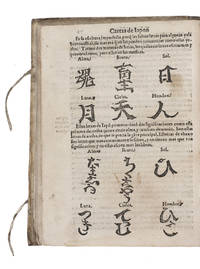
15755741Alcalá der Henares Spain: Juan Iniguez de Lequerica 1575. Contemporary limp vellum with ties. 4to in 8s. With woodcut of the Crucifixion on verso of the colophon 2R4v woodcut Japanese characters in the text I8v and woodcut decorated initials throughout. First Spanish edition of 87 Portuguese letters by Jesuit missionaries in Japan very valuable for the history of the Jesuits in Japan India and other parts of Southeast Asia. The work was first published in Portuguese in Coimbra in 1570 and contains 10 additional important Jesuit letters which had never published before. Noteworthy are the woodcut Chinese and Japanese characters included in the text on leaf I8v. Cordier gives a list of these additional letters dating from 1567 to 1571. Other newly added were: the life of Francis Xavier Relacion de las cosas de la India by Manuel Acosta with remarks on in order of appearance Goa Cochin Daman Ceylon Comorin Bassein Ormuz Ethiopia Inambay and Manomotapa Malaca the Moluccas Ambonia Solor Macassar etc. and Breve relacion de la Isla y Reynos del Iapon.Lacking 2 leaves ¶7 and ¶8 from the preliminaries containing the "Indulgencias que nuestro Sancto Padre el Papa Pio. 4 ". With 18th-century manuscript annotations in brown ink on the recto of the first free flyleaf the title-page at the start of the text on fol. 1r the recto of the final leaf and in the margins throughout; the margins show only marks to highlight certain passages the other annotations are variations of the same owner's inscription most elaborate on the front flyleaf: "Ex icDn. Francesco et Paula Caveda Costo 15 . Mad. a 4 . Octobre 1786". The vellum of the binding is somewhat creased and stained water stained throughout the first and last few leaves are frayed and slightly damaged in the margins without affecting the text somewhat browned throughout. Otherwise in good condition.l Alt-Japan-Katalog 298; Cordier Japonica cols. 67-68; Iberian Books 54608; Laures 140; Palau 46311; Porbase 363133 1 copy; Salva 3282; Streit IV 1519 with a full list of all letters; USTC 337147. Juan Iniguez de Lequerica, hardcover
164021706Antwerp 1640. Folio. Ex Officina Plantiniana Balthasar Moretus Contemporary calf over wooden boards gold-tooled spine blind-tooled boards; rebacked with the original backstrip laid down remnants of clasps 4 small brass corner pieces. With an engraved title page and 126 engraved emblems including the Leo Belgicus map. 8 952 22 pp. First and only edition of the Jubilee masterpiece of the renowned Provincia Flandro-Belgica administrative region of the Society of Jesus and one of the finest books of the Officina Plantiniana under Balthasar Moretus. The Imago primi saeculi was the celebration of the celebration the triumphal arch erected by the Jesuits of the Flemish-Belgian province for the victories of Ignatius of Loyola 1491-1556 and also for the greater glory of God. All the emblems depict scenes of life but also the world map a compass the Leo Belgicus and the printer printing Jesuit propaganda are depicted. The first emblem in this work is the sun shining on the world.With a partially erased manuscript shelfmark label mounted on the front pastedown only "131 A 12" remains legible a manuscript inscriptions at the head of the half-title "Collegii Soc. Jesu Gandaui = Ghent" and "LL. Susanna de Hont" and "T 21". The binding shows signs of wear mainly around the spine and the edges and corners of the boards lacking the clasps some foxing and slight staining throughout. Otherwise in good condition.l De Backer-Sommervogel I col. 1625-6 i.v. Bollandus no. 5; Landwehr Emblem and fable books p. 378; Praz pp. 185-227; STCV 6609299; USTC 1003318. hardcover
176419180France: n.p. 1764. FIRST EDITION. Stabbed and uncut in contemporary wrappers. First edition of this response to anti-Jesuit literature published anonymously. The Compte rendu has been attributed to the Jesuits Henri-Michel Sauvage 1704-1791 and Jean Nicolas Grou 1731-1803; it takes aim at the 1762 publication of Extraits des assertions dangereuses by Claude-Pierre Roussel de la Tour 1710-1798 in which he chronicles the faith violations of the Jesuits in their publications including their writings against doctrine sin blasphemy magic astrology fornication perjury the occult parricide and homicide suicide and regicide among other topics. Here the authors systematically list the inaccuracies omissions and misinterpretations in both the Latin and French editions of Roussel de la Tour’s book with page numbers for reference. <br /> <br /> OCLC records only 3 copies in America Boston College Penn Texas A&M; Carayon Bib. Hist. de la compagnie de Jesus 3673; Sommervogel-de Backer 1871. n.p. unknown
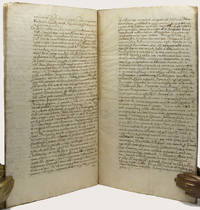
162134518Lisbon and Hangzhou China: Manuscripts ca.1623 and 1621. Very Rare A Similar Manuscript Exists in Brussels. We know of no others. The Latin text of both letters is written in a neat uniform cursive hand in brown. Folio leaves 33 x 20.5 cm The transcripts bound in 18th Century stiff blue wrappers the blank paste-downs and endpapers are late 18th century most likely the third quarter between 1745/1753 and 1776 since they contain a clear "lion/vryheit/pro patria" watermark with a crowned GR countermark which resembles Heawood 3148 3149 and 3154. The paper used for the manuscript contains a faint double-headed eagle watermark and it has been reinforced in the gutters. A very pleasing survival very well preserved edges slightly mellowed the wrappers show some signs of wear. VERY RARE MANUSCRIPT TRANSCRIPTS. Chrysostomus Johann Gall 1586-1643 was a German Jesuit and scholar. He left Ingolstadt Germany to teach astronomy mathematics and navigation in Lisbon fro 1620to 1627 before leaving to work in the Jesuit missions in India. The Colégio de Santo Antŕo benefitted from the arrival of many foreign mathematicians and other scholars as Lisbon serves as a gateway for all missionaries departing for Asia. The original letter by Gall was written in Lisbon September 1623 and concerns a newspaper style description of various events including details of the perseution of Christians in Japan particularly the execution of large numbers of the Christian community in Nagasaki in 1622.<br> The second letter in the present work is especially interesting as the original was written by Johannes Terentius also known as Johannes Schreck an Deng Yuhan Hanpo 1576-1630. Terentius was a prominent Jesuit scholar specialized in natural science and mathematics. Before joining the Jesuits as a novice1611 he already enjoyed a grea reputation in Germany as a scholar. In 1621 Terentius left for China to join the Jesuit mission. The original letter by Terentius was written in Hangzhou China on 30 August 1621 to the rector of teh Jesuit College in Munich Jakob Keller 1568-1631. He discusses his journey to China which he started in 1618 his intentions to participate in the planned calendar reform in China and his impressions of the city of Hangzhou which he reached in 1621 Terentius wrote several works on european medicine mathematics and technology in Chinese and together with Johann Adam Schall von Bell and G. Roho introduced European tigonometry and European astronomical instruments to China. In 1629 he began to reform the calendar which J.A. Schall von Bell ocmpleted after Terentius' early death a year later.<br><br>Backer & Sommervogel VII col. 1929-F<br> Manuscripts unknown
18578162Paris: Julien Lanier Cosnard et Ce Éditeurs. Good with no dust jacket. 1857. Hardcover. Library stamps/marks/labels spine fade light rub 2" map fold tear tape repaired on reverse spine label residue otherwise light wear. Solid hardcover.; French language. Folding map present. Errata page present. History of Jesuit missionaries in French Guiana. Contents: Introduction; Relation des Missions des Pères de la Compagnie de Jésus dans les iles et dans la terre ferme de L'Amérique Méridionale par le P. Pierre Pelleprat. 1665 -- Lettre du P. Jean Grillet Missionaire de la Compagnie de Jésus et Premier Supérieur de la Mission de Cayenne . 1668 -- Voyage des PP. Jean Grillet et François Béchamel dans l'intérieur de la Guyane en 1674 -- Lettre du P. Lombard sur la Mission de Kourou . 1723-1790 -- Lettres écrites de la Guyane française . 1852-1857 -- Pièces Justificatives. ; Voyages et Travaux des Missionnaires de la Compagnie de Jésus; Ex-Library; xx 507 pages . Julien, Lanier, Cosnard et Ce, Éditeurs hardcover
1762AQ12045s.l.: s.n. 1762. 310pp 2 315pp 1. Original publisher's paper boards contrasting red paper lettering-piece. Extremities lightly rubbed and soiled with some loss to corners. Internally clean and crisp. A condemnation of the constitution of the Society of Jesus by the French Attorney General and Jansenist Jean-Pierre-Francois de Ripert-Monclar 1711-1773 alleging the espousing of every sort of immorality and error. . 8vo. [s.n.] hardcover
17184988Turin ie Paris: Jacques Daniel 1718. Soft cover. Very Good. Small 8vo. 2 ff 66 pp 1 ff. Title page printed in red and black. Bound in contemporary marbled wrappers. Slightly dog-eared otherwise a very good copy. Rare compilation of anti-Jesuit apocrypha: the famous 'Monita secreta' is found here alongside a purported condemnation of the Jesuits by the Faculty of Theology in Paris in 1554 as well as a translation of a prophecy of Saint Hildegaarde commonly seen as fortelling the fall of the Order. The present work bears a transparently false imprint "chez Jacques Daniel a good subject of the Prince at the Sign of Truth"; we have been unable to trace any other record of the publisher Daniel in Turin. While the place of printing was almost certainly Paris the foreign imprint corroborates the polemicist's allegation that France had become such a Jesuit stronghold that the work could not be published there. The Monita Secreta was a guide allegedly written by the Jesuits explaining how to gain riches and make influential friends; bibliographers often attribute it to a Pole Jerome Zaorowsky exiled from the Society in 1611. The work was first printed in 1614 and enjoyed numerous printing couched under various suggestive titles - 'Jesuit intrigues' 'the cabinet of the Jesuits secrets opened' etc. As a forged work of slander for both its widespread dissemination and influence it may be compared to the anti-Semitic Protocols of the Elders of Zion. The editor of the present edition again introduces the work as a clandestine publication - "I do not know by what means it fell into the hands of Printers". The work is written in a straightforward and factual way and instructs members of the Order to court wealthy widows gain promotions and discredit members of other orders. Alexandre Brou for example attributes the printings of the late 17th century to the Jansenists in their ongoing political struggle against the Order; whether the present 'Turin' printing falls into that category remains to be determined. 1708 saw the forced dissolution of the Jansenist stronghold Port-Royal; in the years which followed many Jansenists were excommunicated by Papal bulls for their beliefs. The remarkable rise of the Jesuit Order from its founding in 1540 provoked both suspicion and envy in the religious world: as the editor of the present edition states "the rise of the Jesuits is the object of admiration of the entire world. One cannot understand precisely how in less than two centuries these clerics have managed to become so powerful making themselves formidable to all other Orders and wielding influence in both the Old and New Worlds. It is a mystery for many people." OCLC shows no US copies of this title which appeared again in 1729 without an imprint. OCLC 459214162. Cf De Backer-Sommervogel V: 491-5 p 493 for this edition on the Monita secreta. Cf also Brou Les Jesuites de la Legende I: 290 1906. Jacques Daniel paperback
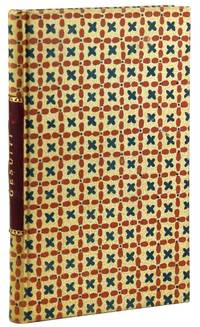
176031129Lugano CH: A Spese di Giuseppe Bettinelli di Venezia / Nella Stamperia Privilegiata della Suprema Superiorita' Elvetica nelle Prefetture Italiane 1760. Near Fine. Lugano CH: A Spese di Giuseppe Bettinelli di Venezia / Nella Stamperia Privilegiata della Suprema Superiorita' Elvetica nelle Prefetture Italiane 1760. First Edition. Two octavo volumes bound together. 44; 94pp. 20th-century binding with patterned paper-covered boards and red leather spine label; top edge stained red; new endpapers. Touch of edgewear with toning to spine. Binding sound and interior unmarked. A Near fine copy of two uncommon Swiss Jesuit-related tracts the former appearing more densely theological and the latter discussing the work and thoughts of Plato Seneca and Lucretius among other ancients. A Spese di Giuseppe Bettinelli di Venezia / Nella Stamperia Privilegiata della Suprema Superiorita' Elvetica nelle Prefetture It unknown
163598471Antwerp. 1635. John Mevrius. Antwerp 1635. 14 cm x 8.5 cm. Small 8vo. Bound in full brown calf professionally rebacked with new spine with title and date in gilt. Original endpapers retained. 118 pages. "Ex-Libris Stonyhurst College 1814" label to front paste-down and bookplate of "Catalogue of the Holy Sepulchre New York" facing on front free endpaper. Extremities sl. rubbed pages browned and some lightly water stained to lower margins. Very sound. unknown
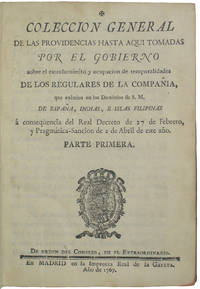
178444155Madrid: En la Imprenta Real de la Gazeta 1784. First edition. Contemporary mottled calf compartments decorated in gilt red morocco spine label titled in gilt sewn in green silk ribbon marbled endpapers. A very good copy head band worn with a small chip and a tiny split at the joint owner's bookplate and booksellers engraved plate on front pastedown contents quite bright and clean. 104 91 135 144 4 74 pp. 4to. Five volumes bound in one. Parts 1 2 3 set in condensed type; parts 4 and 5 in expanded type. <br /> <br /> Royal decrees from Charles III and instructions decisions and regulations issued by the Consejo en el Extraordinario and its president the Conde de Aranda and others--concerning the expulsion of the Jesuits. "These collections contain the documents relative to the expulsion of the Jesuits from the Spanish dominions and the confiscation of their property including the names of the colleges and houses of the order the application of the confiscated property &c. A complete series consists of five parts which are rarely found together. Our collation is of parts I. to III. only" Sabin 14304. Part 4 p. 75-127 contains the papal brief "Dominus ac Redemptor" by Clement XIV in Latin and Spanish. <br /> <br /> Earlier versions containing parts or all of the first three sections are not all that uncommon but those containing all five parts remain relatively rare. Other than this copy only two others have appeared in the auction records of ABPC and RBH since 1953 the first at the John B. Stetson sale at Parke Bernet and the second at Bonhams in a modern binding and dampstained. Palau 56516. See Sabin 14304. Medina BHA: IV 4228. En la Imprenta Real de la Gazeta unknown
185639Brest, s.n., s.d. in-12, XVI pp., puis pp. chiffrées 77-208 pp., en feuilles, cousu.
205421S.l. [Paris], s.d. (1748) in-12, 76 pp., demi-percaline Bradel bleue, dos orné de filets dorés, tranches mouchetées (rel. du XIXe s.). Bon exemplaire.
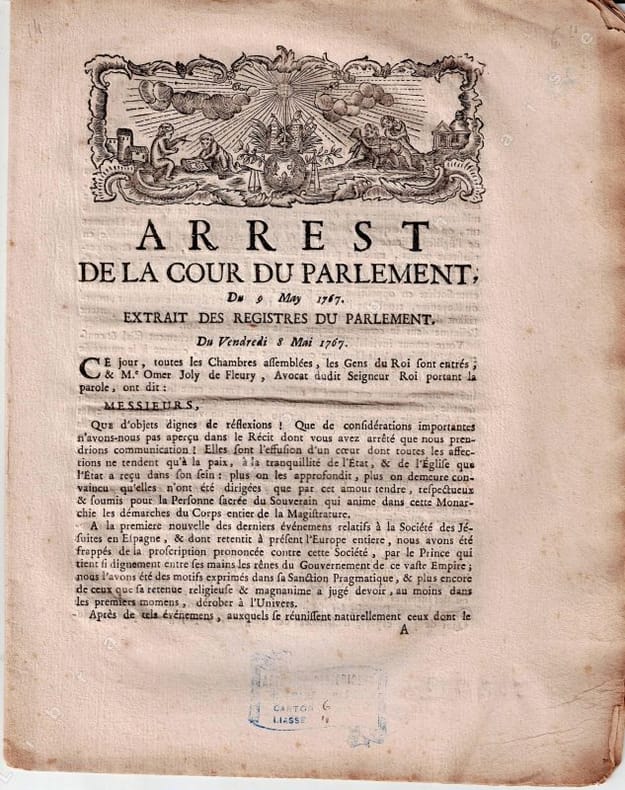
14199Moulins, Veuve Vernoy, 1767 ; in-4 en feuilles, 8 pages. Bel entête gravé sur bois. Cachet humide de la collection de l'historien moulinois Francis Pérot.
176346402215S. l. [Toulouse ?], , 1763 ; in-12, veau fauve marbré, dos lisse orné, tranches marbrées. (Reliure de l’époque) 3 ff. n. ch., 378 pp.Ouvrage anonyme qui semble rare. Inconnu de Barbier, Carayon. Cité dans le tome XI de Sommervoegel n°1232 - Conlon 63275.Ces lettres sont datées de Toulouse du 1 au 31 juillet 1763. Elles renvoient au livre de Roussel de la Tour paru en 1762 sous le titre Extraits des assertions dangereuses et pernicieuses en tout genre que les soi-disans jésuites ont, dans tous les temps... soutenues, enseignées et publiées dans leurs livres.Elles sont ici réfutées : impostures dans les extraits latins, dans la traduction française des extraits, dans les titres, la chronologie, etc.L’exemplaire provient de la bibliothèque du Marquis d’Aligre (ex-libris.) Né à Paris en 1726 dans une famille qui compta deux chanceliers, d’Aligre fut nommé Président du Parlement en 1768. Il fit plusieurs fois des remontrances au roi contre les impôts et contre les opérations ministérielles subversives. En 1788, en présence de Necker, il lut un mémoire au roi dans lequel il pronostiquait les malheurs qui, selon lui, découleraient de la convocation des États-Généraux. N’ayant pas été écouté par le roi, d’Aligre démissionna du Parlement. Le jour de la prise de la Bastille il fut arrêté mais put s’échapper grâce à un de ses anciens domestiques. Il émigra à Londres où l’attendait une fortune placée dans une banque anglaise. Il mourut en 1798 à Brunswick, laissant une fortune colossale à ses deux enfants.
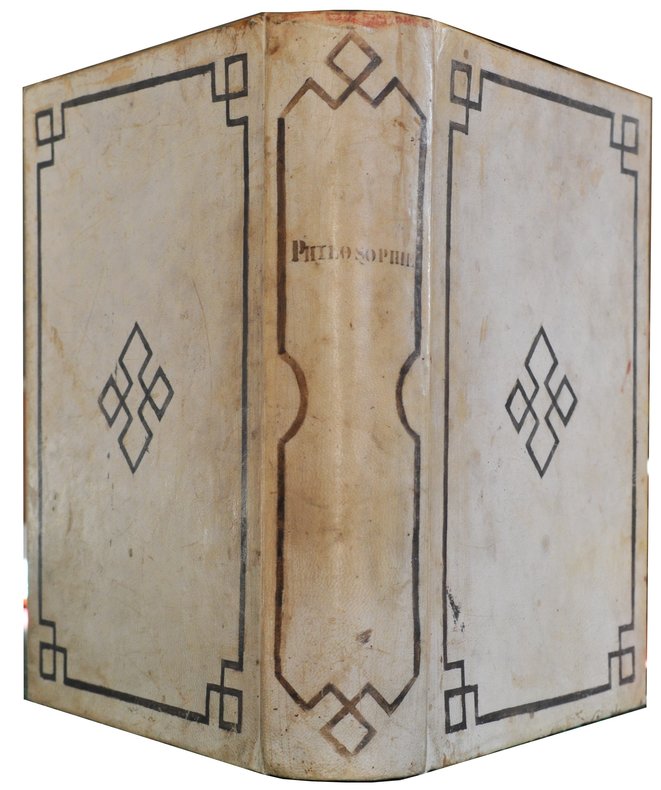
188046405259s. l. n. d., (vers 1880) ; in-4, plein vélin, encadrement et décor central géométrique à l’encre noire, dos orné du même motif, tranches rouges. (Reliure de l’époque) faux-titre, titre et 812 pp. (mal chiffrées.)Manuscrit soigneusement calligraphié, chaque page dans un encadrement réglé à la plume. 3 illustrations montrant sous la forme d’arbres les dépendances entre les différents domaines de la philosophie. Le texte semble inédit.PROLÉGOMÈNESPHILOSOPHIE EN GÉNÉRAL : De l’origine de la philosophie - Du sujet ou de la division de la philosophie - De l’objet de la philos.PHILOSOPHIE EN SES PARTIES : Logique : - Entendement - Jugement - Raisonnement - MéthodeETHIQUE, MétaphisiqueMORALEHISTOIRE DE LA PHILOSOPHIEPremière époque, philosophie orientale - Deuxième époque, philosophie grecque - Troisième époque, philosophie des cinq premiers siècles de l’ère chrétienne - Quatrième époque, philosophie du Moyen Âge - Cinquième époque, philosophie moderneLe titre de l’ouvrage “Philosophie” porte le monogramme A. M. D. G. indiquant que l’auteur du cours est probablement un jésuite. La signature Balincourt figure sur le premier feuillet de texte et un feuillet à l’intérieur du volume. L’ouvrage provient de la bibliothèque de la famille Testu de Balincourt.
182625478Paris Brière et Ponthieu 1826 in-32 broché un volume, broché bleu in-32 editeur (11 x 7,3 cm), dos et 1ère de couverture imprimés en noir, long papier, toutes tranches non-rognées, signature Ex-Libris à l'encre brune en haut de la page de garde : BELLIOTTE ( A. BELLIOTTE DE LA VILLE ALLAIN avocat à la cour, Sénéchal de la Vicomté de Donges demeurant à Guérande Paroisse de St Aubin), sans illustrations (no illustration), (62 + 1 p. de tables) pages, 1826 Paris : Brière et Ponthieu Editeurs,
1846110823Paris, R. Prin 1846 2 volumes. In-4 27 x 16,5 cm. Reliures demi-basane fauve, dos lisses ornés de roulettes et de filets dorés, pièces de titre et de tomaison cuir noir, 411-411 pp., 15-15 gravures coloriées sous serpentes, Table des matières et placement des gravures à la fin de chaque volume. Coupes frottées, Vol. II avec moiullures marginales en continu.
240558S.l., s.d. (1761) in-12, 155 pp., texte latin et traduction française en regard, en feuilles, cousu. Premier et dernier ff. salis, des mouillures claires latérales.
237134S.l., s.d. (1764) in-8, 23 pp., texte latin et traduction française en regard, en feuilles, cousu.
ORD-13848Paris. Peytieux. Avril 1826. In-32 (63 x 98mm) broché, sans couverture, tiré d'un recueil factice, 59 pages. Des rousseurs, sinon bon état. Rare.
ORD-16731Sceaux. Charaire. (1882). 1 feuille in-8 (188 x 283mm) grande gravure sur bois signée Cardon au recto et texte du début du roman Le Rendez-vous sur 2 colonnes au verso.