Saint JeromeBiblio.com
62 résultats
0484161660.Ghardcover. Good. Access codes and supplements are not guaranteed with used items. May be an ex-library book. hardcover
1391712897.Ghardcover. Good. Access codes and supplements are not guaranteed with used items. May be an ex-library book. hardcover
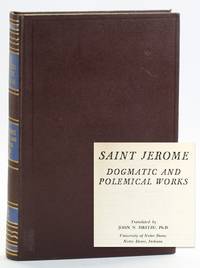
513101Catholic University of America Press 1965. Hardcover. GOOD. xix 410pp. Sewn binding in burgundy cloth with gilt stamped spine and titles blocked in blue. Ex-parish pen markings through p. 41 clean and sound otherwise. Long out of print in hardcover and quite scarce in trade. Long out of print in hardcover and quite scarce in trade. 'St. Jerome's reputation rests primarily on his achievements as a translator and as a scriptural exegete. The important service that he rendered to the Church in his doctrinal works is often overlooked or minimized by those who look for originality and independence of thought. St. Jerome was not a theologian in the strict sense of the word. He was no original thinker and he never abandoned himself to personal meditation of dogma as St. Augustine did. Although he kept strictly to what he found in tradition the importance of his doctrinal authority is not thereby lessened. After spending twelve years of his early life at his native Stridon he was sent to Rome in the year 359 to finish his literary studies. For the next eight years from 359 to 367 St. Jerome studied very diligently grammar the humanities rhetoric and dialectics. He also took a passionate interest in the Greek and Latin classics in the philosophers and poets and especially in the satirists and comic poets. These studies it seems tended not to soften but to exaggerate the temperament of St. Jerome who was by nature irascible and impulsive and sensitive to criticism and contradiction. The reading in the satirists and the comic poets developed in him a taste for caricature and a penchant for making damaging allusions. Moreover the trials before the Roman tribunes which he attended eagerly and wherein the advocates indulged in mutual personal invective further developed in him the art and science of polemics which he was to employ so effectively and skillfully in the controversies which were to engage his attention seriously. St. Jerome stressed the fact that the Church must always be regarded as the supreme rule and decisive standard of the Christian faith; and that that Church gives the true sense of the Scriptures and is representative of tradition. It was owing to this firm conviction on the part of St. Jerome that the years of his later life were consumed in endless conflicts with the enemies of the Church. St. Jerome never spared heretics but always saw it that the enemies of the Church were his own enemies. His encounter with the Sabellians was St. Jerome's first quarrel with an enemy of the Church. He gave notice early in his life that he would be a staunch protector of the doctrinal authority of the Church and that he stood ready to attack any and all heresies that raised their heads against the Catholic faith.'. Catholic University of America Press hardcover
225101215X.Gpaperback. Good. Access codes and supplements are not guaranteed with used items. May be an ex-library book. paperback
20132-8479149779Biblioteca Autores Cristianos 2013. Hardcover. New. Latin language. 7.95x5.28x1.50 inches. Biblioteca Autores Cristianos hardcover
192885377Cambridge MA: Cygnet Press 1928. Presumed First Edition First printing thus. Hardcover. Very good/Glassine dust wrapper worn and chipped. Approximately 36 pages. In Latin. A biography of Saint Jerome that originally appeared in the 1497 edition of the saint's letters translated into Italian by Matteo da Ferrara. The first publication of the imprint undertaken "by a group of bookish enthusiasts chief among them being Mr. George Parker Winship" - Ransom. The text and woodcuts were derived from the 1497 edition of St. Jerome's Letters printed at Ferrara and the whole printed in Goudy's Italian Old Style. Jerome c. 342 - c. 347 - 30 September 420 also known as Jerome of Stridon was a Christian priest confessor theologian and historian; he is commonly known as Saint Jerome. He is best known for his translation of the Bible into Latin the translation that became known as the Vulgate and his commentaries on the whole Bible. Jerome attempted to create a translation of the Old Testament based on a Hebrew version rather than the Septuagint as Latin Bible translations used to be performed before him. His list of writings is extensive and beside his biblical works he wrote polemical and historical essays always from a theologian's perspective. Jerome was known for his teachings on Christian moral life especially to those living in cosmopolitan centers such as Rome. He focused his attention on the lives of women and identified how a woman devoted to Jesus should live her life. This focus stemmed from his close patron relationships with several prominent female ascetics who were members of affluent senatorial families. Due to Jerome's work he is recognized as a saint and Doctor of the Church by the Catholic Church. Jerome was a scholar at a time when that statement implied a fluency in Greek. He knew some Hebrew when he started his translation project but moved to Jerusalem to strengthen his grip on Jewish scripture commentary. A wealthy Roman aristocrat Paula funded his stay in a monastery in Bethlehem and he completed his translation there. He began in 382 by correcting the existing Latin-language version of the New Testament commonly referred to as the Vetus Latina. By 390 he turned to translating the Hebrew Bible from the original Hebrew having previously translated portions from the Septuagint which came from Alexandria. He believed that the mainstream Rabbinical Judaism had rejected the Septuagint as invalid Jewish scriptural texts because of what were ascertained as mistranslations along with its Hellenistic heretical elements. He completed this work by 405. Prior to Jerome's Vulgate all Latin translations of the Old Testament were based on the Septuagint not the Hebrew. Jerome's decision to use a Hebrew text instead of the previous-translated Septuagint went against the advice of most other Christians including Augustine who thought the Septuagint inspired. Modern scholarship however has sometimes cast doubts on the actual quality of Jerome's Hebrew knowledge. Many modern scholars believe that the Greek Hexapla is the main source for Jerome's "iuxta Hebraeos" i.e. "close to the Hebrews" "immediately following the Hebrews" translation of the Old Testament. However detailed studies have shown that to a considerable degree Jerome was a competent Hebraist. George Parker Winship 29 July 1871 - 22 June 1952 was an American librarian author teacher and bibliographer born in Bridgewater Massachusetts. He graduated from Harvard in 1893. Went from the Somerville Latin School to Harvard College where he received an A.B cum laude in 1893 and an A.M. in 1894. He was librarian of a private collection of Americana formed by John Carter Brown at Providence Rhode Island from 1895 to 1915. Winship's interest in contemporary fine printing was to some extent connected with the Club of Odd Volumes in Boston of which he became a non-resident member in 1898. Winship was also elected a member of the American Antiquarian Society in 1899. In 1915 Winship became librarian of the Harry Elkins Widener collection which had just opened. He was also appointed a lecturer on the history of printing and championed the use of rare books in education. In 1926 he became Assistant Librarian of Widener's Treasure Room which held Harvard's most precious rare books and manuscripts. Winship remained at Harvard until his retirement in 1936; he died in 1952. Winship was a scholar as well as a librarian. He edited a number of historical works and published: The Coronado Expedition 1896; John Cabot 1898; Geoffrey Chaucer 1900; Cabot Bibliography 1900; William Caxton 1909; Printing in South America 1912; and The John Carter Brown Library 1914. Cygnet Press hardcover
WX-PH9L-0AA5Hardcover. New. hardcover
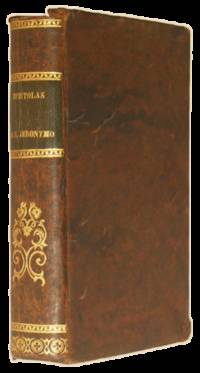
2208PG019<p>De S. JERONIMO Traduzidas ma Lingua Vulgar Por Hum Theologo Portuguez. LISBOA Na Of. Patr. de Francisco Luiz Ameno. M. DCC. LXXXV. 1785 Com licença da Real Meza Censoria.</p>_x000d_<p>In 8º de 155x106 cm. Com ii 453 i em br. págs. Encadernação da época inteira de pele com rótulo verde e ferros a ouro.</p>_x000d_<p>Muito raro. Não se sabe quem foi o tradutor. Contém 53 cartas antecedidas por pormenorizados resumos. As cartas tratam num tom intimo e informal característico das relações de amizade uma grande variedade de assuntos entre os quais se destacam questões relativas à tradução da Bíblia a carta 47 é o prefácio da tradução do Pentateuco à teologia à organização da Igreja Católica.</p>_x000d_<p>São Jerónimo Estridão c. 347 - Belém 420 teólogo historiador e confessor foi proclamado santo e Doutor da Igreja. Da sua vasta obra destaca-se a tradução da Bíblia dos textos originias Hebraico e grego para latim que exerceu uma profunda influência em toda a cultura literatura e pensamento ocidental e que é uma obra prima da tradução. Por isso S. Jerónimo é o patrono dos tradutores.</p>_x000d_<p>EN In octavo. 15.5x10.6 cm. ii 453 i pp. Contemporary full leather binding with green label and gilt tools at spine.</p>_x000d_<p>Very rare. It is not known who the translator was. Contains 53 letters preceded by detailed summaries. The letters deal in an intimate and informal tone characteristic of friendly relations with a wide variety of subjects among which are questions concerning the translation of the Bible letter 47 is the preface to the translation of the Pentateuch theology the organisation of the Catholic Church.</p>_x000d_<p>St. Jerome Stridon c. 347 - Bethlehem 420 theologian historian and confessor was proclaimed a saint and Doctor of the Church. From his vast work stands out the translation of the Bible from the original Hebrew and Greek texts into Latin which exerted a profound influence on all Western culture literature and thought and which is a masterpiece of translation. This is why Saint Jerome is the patron saint of translators.</p>_x000d_<p>Referências/References:</p>_x000d_<p>Inocêncio IX 174.</p> M-15-D-27 hardcover
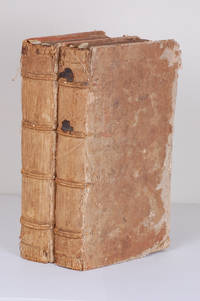
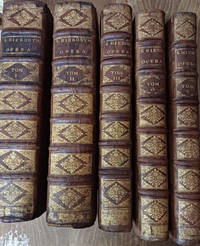
1579139623Antuerpiae Antwerp Belgium: Ex officina Christophori Plantini 1579. paper-covered boards. Plantin Christopher. small folio. paper-covered boards. variously paginated but hundreds of pages. Volumes 5-10 lacking volumes 1-4 of this early work on Theology. Boards of both volumes with severe damage to the fore-edges as well as the preliminary pages of both volumes. Lacking the spines. Generally poor condition on the outside however the interior is in generally very good condition. Volumes 6-8 dated 1578; vols 5 & 9 dated 1579.<BR> <br /> <BR> <br /> Volume 5-6 with title: 'Tomus V. -VI. operum D. Hieronymi a Mariano Victorio Reatoni canonico et sacræ theologiæ professore; . '; with woodcut printer's device on title pages<BR> <br /> Volume 7 with title: 'Tomus VII. commentariorum D. Hieronymi super Psalmos; . '; woodcut printer's device on title page<BR> <br /> Volume 8 with title: 'Tomus VIII. commentariorum D. Hieronymi adscriptorum . '; woodcut printer's device on title page<BR> <br /> Volume 9 with title: 'Tomus IX epistolarum D. Hieronymo falso adscriptarum . ; woodcut printer's device on title page<BR> <br /> Volume 10 Index with title: 'Index locupletissimus in omnes tomos operum D. Hieronymi quammaxima diligentia collectus. . '; title page with woodcut device; printed in 3 columns; unpaginated. With printed marginalia. Includes indexes. Ex officina Christophori Plantini unknown
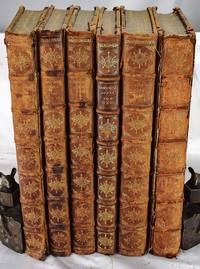
16841905140004Francofurti ad Moenum et Lipsiae: apud Christianum Genschium 1684-01-01. Hardcover. Acceptable. 0x0x0. 11 volume set bound in 6. Folios. Bound in contemporary full calf most volumes rebacked. Covers worn spines cracked at hinges. Rubbing scraping to covers. Rear board to Volume 10-11 almost detached. Marbled end sheets. Engraved title printed title in red and black with vignette. Text printed in two columns. Some minor marginal loss to vol. 10. Few pages loose. Armorial bookplate of W. H. Mill "Clarum Reddidit Industria". <br><br> Saint Jerome was an Illyrian Latin Christian priest confessor theologian and historian who also became a Doctor of the Church. He was the son of Eusebius of the city of Stridon on the border of Dalmatia and Pannonia. He is best known for his translation of the Bible into Latin the Vulgate and his commentaries on the Gospel of the Hebrews. His list of works commentaries and epistles are quite extensive. <br><br> Contents are: Book I: Epistolas ipsius in tres partes distinctas ac Des. Erasmi Roterodami scholiis summa cvra et diligentia explanatas atqve castigatas complectens. 210p.; Book 2: Epistolarum secundus tomus. 250p.; Book 3: Qui est ultimus librorum epistolarium 214p.; Book 4: In cujus prima parte reperies erudita quaedam sed hactenus falso inscripta Hieronymo. In secvnda aliena sed suis quaeque titulis autorem testantia. In tertia lectu prorsus indigna et imprudenter attribvta doctis viris quae tamen adjunximus ne quid amputasse videremur editioni jam receptae. 261p.; Book 5: Commentarios in prophetas quos majores vocant continet. 516p; Book 6: Commentarios in duodecim prophetas quos minores vocant juxta utramque translationem continet. 243p.; Book 7 Cui insunt in parabolas Salomonis commentarii in ecclesiasten commentarii ; homiliae quatuor in cantica canticorum origenis nomine. Denique in Job commentarii. 185p.; Book 8: Commentarios in psalterium habet. 178p.; Book 9: Complectens commentarios in Matthaeum et Marcum et in divi Pauli epistolas: videlicet ad Galatas Ephesios Titum Philemonem necnon commentarios in omnes Pauli epistolas sed incerto autore: postremo Didymi de spiritu sancto librum ab Hieronymo versum. 339p.; Book 10: Volumen additionum primvm. 325p.; Book 11: Volumen additionum secundum. 217p. This is an oversized or heavy book which requires additional postage for international delivery outside the US. Francofurti ad Moenum et Lipsiae: apud Christianum Genschium hardcover
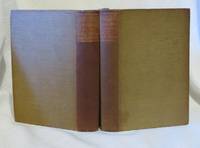
190734371London: Chatto & Windus 1907. First edition. Cloth bound in very good condition; Paper spine labels age toned. Two volumes; Translated out of the Syriac with Notes & Introduction by Ernest A Wallis Budge; Orignally compiled by Athanasius Archbishop of Alexandria Palladius Bishop of Helenopolis Saint Jerome and Others; Frontis plates of facsimile manuscript pages; Fore and foot edges untrimmed; lxxi 382 & 350 pages. Chatto & Windus unknown
169371521Parisiis: apud Urbanum Coustelier 1693. Piel de época con hierros y nervios dorados. Gran folio. apud Urbanum Coustelier unknown