348 résultats
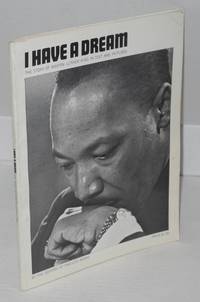
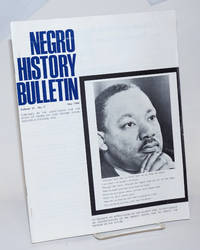
1968232053Washington DC: The Association for the Study of Negro Life and History 1968. Magazine. 24p. includes covers 8.5x11 inches cover portrait of Dr. Martin Luther King Jr. photos features news opinion reviews wraps slightly worn with two small rust stains else very good magazine in stapled pictorial wraps. memorial issue for King with excerpts from his writing and eulogies memorials essays. The Association for the Study of Negro Life and History unknown books
6074218 1/2" x 11" 1 page recto only. 20 lines Fine. ca. 1970. "A Salute To Pastor Thomas Kilgore Jr." Kilgore 1914-1998 minister; helped organize the historic 1963 civil rights march on Washington and founded the Los Angeles chapter of the Southern Christian Leadership Conference; he rose to prominence as pastor at the Friendship Baptist Church in New York City. Was a close confidant of Martin Luther King Jr. No Binding. Fine. unknown books
1983144501Columbia: University of South Carolina Press 1983. Hardcover. xxii 74p 9x12 inches profusely illustrated monograph with the b&w photos of the African American photographer very good first edition stated in bright unclipped djlike dj. University of South Carolina Press hardcover books
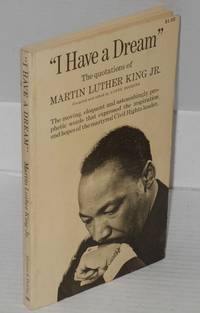
196817409New York: Grosset & Dunlap 1968. Trade Paperback. 154p. trade-size wraps mildly edgeworn with an ink squiggle on half-title an else good copy. Grosset & Dunlap paperback books
1968145969N. pl: Martin Luther King Jr. Foundation and the National Education Association 1968. 48p. profusely illus. with photographs reproduced in gravure with velvety black background 8.5x10 inches deep black wraps lettered in cameo blind; cover is pressure-marked and has a small white stain. Text by John Gardiner. Distributed in response to contributions to The Martin Luther King Memorial Scholarship Fund sponsored by the California Teachers Association. Martin Luther King Jr. Foundation and the National Education Association unknown books
196818026N. pl: Martin Luther King Jr. Foundation and the National Education Association 1968. 48p. profusely illus. with photographs reproduced in gravure with velvety black background 8.5x10 inches deep black wraps lettered in cameo blind; bears a few light pressure marks. Text by John Gardiner. Distributed in response to contributions to The Martin Luther King Memorial Scholarship Fund sponsored by the California Teachers Association. Martin Luther King Jr. Foundation and the National Education Association unknown books
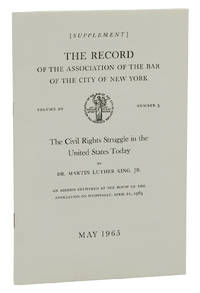
1965140940831New York: The Association of the Bar of the City of New York 1965. First Edition. Near Fine. Supplemental offprint from The Record of the Association of the Bar of the City of New York Vol. 20 Number 5. Stapled wraps. 24 pp. First edition. Near Fine with faint creasing along binding tiny staple rust transfer on back wrap. Transcribes the introductory remarks of the Honorable Samuel I. Rosenman Dr. King's full address and the audience question and answer session moderated by Judge Rosenman afterwards. Rare with only six copies located in an OCLC WorldCat search and no copies in the trade. The Association of the Bar of the City of New York unknown books
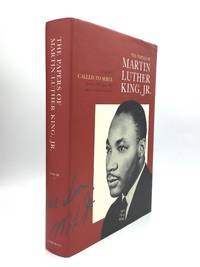
199273732Berkeley: University of California Press 1992. Hardcover. Very good/Very good. First edition second printing. The first volume in the anticipated fourteen-volume definitive edition of King's most significant sermons speeches correspondence published writings and unpublished manuscripts. Presentation copy inscribed and dated on the front flyleaf in the first volume by Coretta Scott King 1927-2006 to Dr. C.T. Wright 1942-2020: "with deep appreciation for your commitment to the fulfillment of the dream." The only son of Georgia tenant farmers Wright served as a teacher and administrator at several colleges and universities establishing himself later in life as a prominent and much-respected civic and religious leader in Arizona. Small quarto: 484 p. with a frontispiece portrait and textual photographs. Original green cloth binding with gilt titles. Minor bump to the top corner of the front board with some light edgewear to the dust jacket; otherwise very good. University of California Press hardcover books
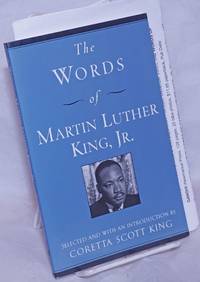
1987265177New York: Newmarket Press 1987. Mass Market Paperback. 122p. trade-size wraps 8x5 inches a well-designed book in perfect condition: sound clean and unmarked. Laid in are two sheets of publisher's menu on related matters. Newmarket Press paperback books
1987147963New York: Newmarket Press 1987. Magazine. 104p. wraps. Newmarket Press unknown books
19728744GC DOUBLEDAY 1972 1972. SIGNED BY FRANK G FIRST EDITION 2ND PRINTING VERY GOOD-FINE. Signed by Authors. F. GC, DOUBLEDAY, 1972 unknown books
2281574Harper & Row 1963. First Edition. Hard Cover. Near Fine/Very Good. First edition stated with $3.50 price on jacket. Owner bookplate remnant on front endpaper reverse of jacket foxed jacket a bit rubbed. 1963 Hard Cover. x 2 146 2 pp. 8vo. King's second book a collection of sermons preaching the value of love and nonviolence and urging the sort of mutual understanding and respect King spoke about during his speeches as a civil right activist. "If there is one book Martin Luther King Jr. has written that people consistently tell me has changed their lives it is Strength to Love." So wrote Coretta Scott King. She continued: "I believe it is because this book best explains the central element of Martin Luther King Jr.' s philosophy of nonviolence: His belief in a divine loving presence that binds all life. By reaching into and beyond ourselves and tapping the transcendent moral ethic of love we shall overcome these evils." In these short meditative and sermonic pieces some of them composed in jails and all of them crafted during the tumultuous years of the Civil Rights struggle Dr. King articulated and espoused in a deeply personal compelling way his commitment to justice and to the intellectual moral and spiritual conversion that makes his work as much a blueprint today for Christian discipleship as it was then. Individual readers as well as church groups and students will find in this work a challenging yet energizing vision of God and redemptive love. Harper & Row hardcover books
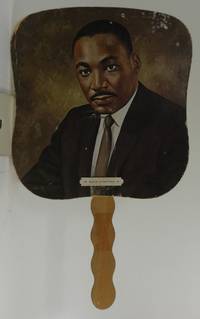
14319Good. This is a fan. Approximately 18 x 20cm. with colored portrait of King on front and advertisement for Babbage Funeral Home in Hopkinsville Ky. on back. Photo copyrighted by A. Scheer. #8747. Attached to stick with 2 staples. Some wear. <br/><br/> unknown books
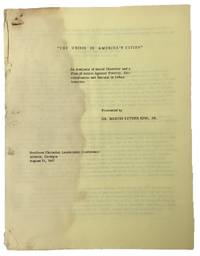
16101Dr. Martin Luther King Jr. "Crisis in America's Cities; An Analysis of Social Disorder and a Plan of Action Against Poverty Discrimination and Racism in Urban " First Edition unpublished mimeograph draft. 5 pages plus cover. King's nationwide call to action against urban poverty the most ambitious Civil Rights Campaign in the Northern United States culminating in the 1968 Fair Housing Act with significant differences from King's final speech. King authored this brief but influential treatise after riots spread through the urban north due to intense discrimination and poverty. "The white society did not move and Newark came after Watts and was followed by Detroit. We will have to make them move. We will have to remind them that in the 18th century Thomas Jefferson said 'I tremble for my country when I reflect that God is just.'" First Editions of the original speech made by King are extremely rare with only one known in the holdings of the King Center archives. This earlier draft held in the files of King's organization the SCLC is the only known draft of this speech in existence. <br/><br/> On August 15 King delivered what is probably the most fiery of his speeches entitled "The Crisis in American Cities." He pointed a finger at hypocrisy declaring "if the total slum violations of law by the white man over the years were calculated and compared with the lawbreaking of a few days of riots the hardened criminal would be the white man." The blame for the situation he placed upon "the policy makers of the white society.they created discrimination; they created slums; they perpetuate unemployment ignorance and poverty." With aching eloquence King declared that "Discrimination is the hellhound that gnaws at Negroes in every waking moment of their lives to remind them that the lie of their inferiority is accepted as truth in the society dominating them." His mission was to end the housing segregation that forced blacks into unsafe and unsanitary ghettos of the urban north. With tensions boiling over during the "long hot summer" of 1967 high unemployment discrimination and unsanitary an crowded living conditions led to riot after riot in cities across the urban north. King's message in "Crisis in America's Cities" was that love not hate was the answer to racial violence. <br/><br/>This speech was never formally published or collected but was released in small numbers of staple-bound 6 page copies with green covers and as a tri-fold printed pamphlet. The King Center Archives holds a single copy of the 6 page green variant. The copy here is an unknown earlier draft 5 pages plus a cover mimeographed all on yellow paper. This draft of "Crisis" is absent from institutional collections and auction records and it is possibly the only copy left in existence. While the theme and most content of this draft is the same as the final it is driven by emotion which is captured and organized by the time the speech reached its final form. Some cuts appear to be for clarity including a sentence on the first page which is lacking from the final draft and reads "After establishing the general cause of outbursts have an emotional content that is a reaction to the insults and depravity of the white backlash." Missing from this early draft is numbered list of points for introduction as well as numerous typos and typed over corrections which are visible through the mimeograph and differences in the distribution of paragraphs. <br/><br/>Period sources state King handwrote his speeches before handing them off to aides who would type a clean copy then mimeograph them for the press typically in a run of about 200 copies. Most if not all were distributed to the press and then lost. Today most documents from the SCLC files exist only in the collection of the King Center. Like those in the King Center this document escaped destruction because it were never distributed but rather remained as the personal copy of King or his top staffers. This can be proven by the fact that all press copies were carefully inscribed with a copyright symbol © while King's copy brought with him to the podium and other internal copies remained blank. This document spent decades in an SCLC filing cabinet where it was exposed to dampening on the left side but is otherwise untouched. It now presents in only fair condition with water staining and rust around the original staple which is still holding. Light grey water stains to left side of document and bottom left corner frayed. All text legible. The right side of the document was apparently more protected in its file and is in very good condition. It was gifted from the Estate of Thomas Offenburger to Stoney Cooks. Both Offenburger and Cooks worked with King at the SCLC with Offenburger as publicist and Cooks as a young Director of Student Affairs. King's mission was rewarded the year after "Crisis" by the passage of the Fair Housing Act of 1968 barring racial discrimination in real estate. Unfortunately King did not live to see it. King's indictment of government for causing urban suffering is extremely rare today with only one final draft Edition of "Crisis" in the King Center Archives and no copies of this early unpublished draft recorded anywhere. unknown books
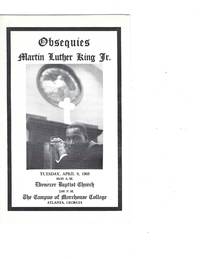
16361Dr. King Funeral Dr. King's private funeral information sheet with phone numbers for Press transportation housing the March Committee and more; schedule of events: Dr. King lying in state service at Ebenezer Baptist Church march to Morehouse College Service at Morehouse and a Memorial Show at Atlanta Stadium. Single quarto sheet. Green paper printed recto only. Old folds very good or better. Scarce. <br/><br/>Dr. King had two memorial services in Atlanta on the same day. This rare sheet includes the details for the first private service reserved for close friends and family. The service began with Rev. Ralph Abernathy delivering a sermon which called the event "one of the darkest hours of mankind." At his widow's request King eulogized himself: His last sermon at Ebenezer Baptist Church a recording of his famous 'Drum Major' sermon given on February 4 1968 was played at the funeral. In that sermon he makes a request that at his funeral no mention of his awards and honors be made but that it be said that he tried to "feed the hungry" "clothe the naked" "be right on the war question" and "love and serve humanity." The private funeral was followed by the loading of King's casket onto a simple wooden farm wagon pulled by two mules. The procession down the three-and-a-half miles from Ebenezer Baptist Church to Morehouse College was observed by over 100000 people. The public and final service was held at Morehouse College where King was eulogized by college president Benjamin Mays who had given the benediction after King's "I Have a Dream" speech. This information sheet including details for transportation relevant phone numbers and details of the initial private service would have been produced in very smaller numbers since it was not part of the public portions of the service. unknown books
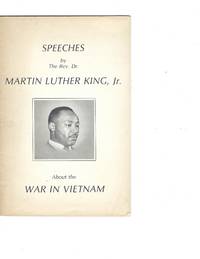
16366Martin Luther King Jr. Speeches by The Rev. Dr. Martin Luther King Jr. About the War in Vietnam. New York: Clergy and Laymen Concerned About Vietnam 1968. A collection of three speeches from Dr. Martin Luther King Jr. delivered from April 1967 to February 1968 regarding America's role in the Vietnam War: "Vietnam and the Struggle for Human Rights" April 1967 "The Domestic Impact of the War in Vietnam" November 11 1967 and "Vietnam Is Upon Us" February 6 1968. He wrote "my conscience leaves me no other choice." <br/><br/>Printed in April 1968 these speeches were published as part of the Committee for Clergy and Laymen Concerned about Vietnam CALCAV an organization of over 30 multi-faith leaders which Dr. King helped organize in 1965. King outlined moral and religious reasons to oppose the war that he described as a "nightmarish conflict." His later speeches focus more specifically on how the war is hurting families in the US. To King however the Vietnam War was only the most pressing symptom of American colonialism worldwide. Also included is a folded letter from the CALCAV dated October 1968 introducing the collection and listing all members. A near fine example with minimal tanning to extremities. unknown books
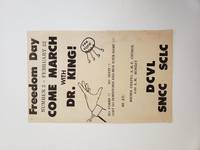
15872KING Martin Luther. "Freedom Day . . . Come March with Dr. King!" Printed flier. February 22 1965. 8 1/2" x 5 1/4" inches. This flier was issued to advertise the Freedom Day event planned for March 1st 1965 which protested the voter suppression tactics targeting African-American citizens of the US. In this demonstration prospective voters led by Martin Luther King Jr. and John Lewis signed an "appearance book" to indicate their attempt to register. It is illustrated with a shackled hand grasping for the key to freedom--"The Vote." This demonstration followed the first Freedom Day of January 18th 1965 in which King and Lewis led 500 prospective voters to the Selma courthouse for registration who were subsequently turned away. The Freedom Day voter registration efforts were among the events leading up to the famed March from Selma to Montgomery. "Bloody Sunday" transpired the very next week after the events of this flier in which peaceful participants in a Selma to Montgomery march for voting rights were met by Alabama state troopers who attacked them with nightsticks tear gas and whips after they refused to turn back. Some protesters were severely beaten and bloodied while others ran for their lives; The entire incident was captured on national television. As a direct result of the Freedom Day demonstrations and especially the horror of Bloody Sunday the Voting Rights Act was signed by President Lyndon B. Johnson on August 6 1965 with Martin Luther King Jr. and other civil rights leaders present at the ceremony. Toning minor foxing. unknown books
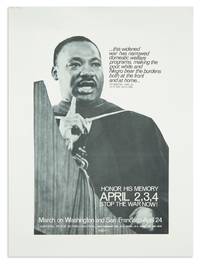
15874KING MARTIN LUTHER. Honor His Memory April 2 3 4 Stop the War Now! Poster 17 x 11 inches; minimal wear laid down on linen. Washington DC: National Peace Action Coalition 2 April 1971<br/>Notes: This poster promoted a series of protests against the Vietnam War: local demonstrations planned for 2-4 April followed by marches on Washington and San Francisco on 24 April. It is illustrated with a photograph of Dr. King speaking at a college commencement and an anti-war quotation from one of his speeches: "This widened war has narrowed domestic welfare programs making the poor white and Negro bear the burdens both at the front and at home. unknown books
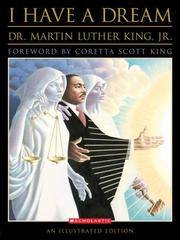
1999UKINIHA00DPEScholastic Inc. 1999. Very Good. King Martin Luther. I Have A Dream. New York: Scholastic Inc. 1999. Illustrated. 4to. Paperback. Book condition: Very good. Scholastic Inc. paperback books
196812894New York: Time-Life Books 1968. Oversized Paperback. 96p. profusely illustrated 8.5x11 inches wraps. Time-Life Books paperback books
15873Description: KING MARTIN LUTHER. "He Had a Dream" flier with Roy Wilkins letter for the NAACP Special Contribution Fund. Illustrated flier 4 pages 9 x 8 inches on one folding sheet; with accompanying Letter Signed by Roy Wilkins; light toning to the letter minimal wear. New York: NAACP June 1968<br/>Notes: A fundraising appeal issued by the NAACP in the wake of the King assassination. The flier lists King and a dozen other slain civil rights workers asking "They also had dreams . . . how many more" On the final page it asserts that "Together--black and white--we shall overcome." No other examples in any library or institution according to OCLC Worldcat. unknown books
16367Martin Luther King Jr. Collection of documents commemorating Dr. Martin Luther King Jr. including the program for his funeral services on April 9 1968 and more general material for all who mourned the civil rights leader's tragic death. The official 16 page funeral program contains details of both the private memorial service as well the much larger public service at Morehouse College. The program also features a three page eulogy a timeline of his greatest achievements in civil rights and three more pages of quotes from his many inspiring speeches. In many of these King directly addresses the possibility he would one day be killed for the movement he led. One quote dated 1962 reads: ''It may get me crucified. I may even die. But I want it said even if I die in the struggle that 'He died to make men free''. <br/><br/>A memorial card is also included with a memorial poem commemorating King's life and achievements "From Montgomery to Memphis" printed inside. The card references many of MLK's most famous speeches including his "I Have A Dream" speech from the March on Washington in 1963. The last two documents come from an NAACP fundraising drive in the aftermath of Dr. King's assassination: a poster with the photo-illustrated portrait of Dr. King and the words "He Had a Dream" along with a typed signed letter from NAACP President Roy Wilkins. The flier lists King and a dozen other slain civil rights workers including Medgar Evers asking "They also had dreams . . . how many more" On the final page it asserts that "Together--black and white--we shall overcome." No other examples of poster found at any institution or library as per OCLC. Crease down center of poster. Light discoloring of letter. All materials in very good condition. unknown books
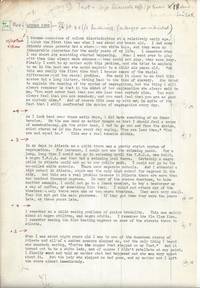
16360Martin Luther King Jr. King discusses color discrimination segregation equality police brutality Montgomery and his struggles in this pre-publication original typescript. Martin Luther King's interview with John Freeman was broadcast on 29 October 1961 in the BBC series 'Face to Face'. The present typescript of the interview is from the papers of the program's producer Hugh Burnett and is edited for publication as the section on 'The Rev LUTHER KING' in the book 'Face to Face Edited and introduced by Hugh Burnett' London: Jonathan Cape 1964. On two leaves stapled together. Published by Undated but prepared for publication in 1964. <br/><br/>In this remarkable typescript King talks about his mother's influence on King's beliefs: "I first became conscious of color discrimination at a very early age. I think the first time I was about six years old." King states relating how the white children next door never wanted to play. "Finally I went to my mother with this problem and she tried to explain to me in the best way she could explain to a child of six years old . She tried to explain to me the meaning of the system of segregation but the thing I will always remember is that in the midst of her explanation she always said to me "You must never feel that you are less than anybody else. You must always feel that you are somebody and you must always fee that you are as good as anybody else." King continues "On the one hand my mother taught me that should feel a sense of somebodiness on the other hand I had to go out and face the system which stared me in the face everyday saying "You are less than" "you are not equal to." King goes on "I remember as a child seeing problems of police brutality . in Montgomery Alabama we get no protection from law enforcement agencies." And yet King explains commitment to a moral ideal allows him to be courageous in the face of danger: I have been threatened many many times. There was a time that we received as many as thirty and forty threatening calls a day and of course I received numerous threatening letters .In Montgomery our home was bombed twice . We have had crosses burned on our lawn."<br/><br/>"I don't think anyone in a situation like this can go through it without confronting moments of real fear. But I have always had something that gave me an inner sense of assurance and an inner sense of security and in the final analysis even in moments of loneliness something ultimately came to remind me that in this struggle because it is basically right because it is a thrust forward to achieve something not just for negro people but something that will save the whole of mankind and when I have come to see these things I always felt a sense of cosmic companionship. So that the loneliness and the fear have faded because of a greater feeling of security because of commitment to a moral ideal. There have been times I have had to send my wife and family away for safety . my wife happens to be one of those very strong persons . I can remember a time when I sent her away for safety and a few days later she was back home because she wanted to be there." In fair condition lightly aged and worn. unknown books
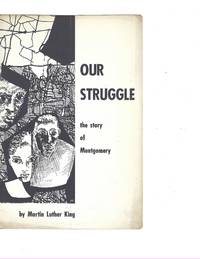
16492KING JR. Martin Luther. Report on the Montgomery movement featured in the second issue The Liberation. April 1956. The story of King's discovery of a "new and powerful weapon-non-violent resistance." King according to this report sees a "new Negro" emerging in the South: "The extreme tension in race relations in the South today is explained in part by the revolutionary change in the Negro's evaluation of himself and of his destiny and by his determination to struggle for justice." The movement finds its strength King argues in the black community's economic power the church's militant leadership and the ability to implement nonviolent protest tactics. The MIA and the Congress of Racial Equality CORE reprinted and distributed King's article. The introduction is by Jim Peck editor of the CORElator contributor to Crisis and writer of the column "As Jimcrow Flies" in Independent formerly Expose. Cover drawing by Rosetta Bakish. unknown books
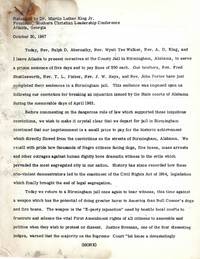
16099Dr. Martin Luther King Jr. Important and rare Civil Rights document from the original files of the SCLC the Civil Rights organization King founded after the Montgomery Bus Boycotts. First Edition. Dated October 30 1967 the day of King's return to Birmingham the locus of one of his most triumphant campaigns and also where his volunteers endured some of the greatest persecution. 4 mimeograph pages stapled upper left. 8.5" x 11" inches. After 4 years of court battles King must turn himself over to Birmingham authorities to serve a jail sentence resulting from violating an illegal injunction during his 1963 non-violent demonstrations"We depart for jail in Birmingham convinced that our imprisonment is a small price to pay for the historic achievement which directly flowed from the convictions on the streets of Birmingham." One copy of this statement is held by the archives of the King Center; and no other copies among institutional holdings or auction records. <br/><br/>In this moving speech King reminds his followers how Birmingham in 1963 united the Civil Rights Movement "We recall with pride how thousands of Negro citizens facing dogs fire hoses mass arrests and other outrages against human dignity bore dramatic witness to the evils which pervaded the most segregated city in our nation. History has since recorded how these non-violent demonstrators led to the enactment of the Civil Rights Act of 1964 legislation which finally brought the end of legal segregation." Birmingham in 1967 now brings the opportunity to make them aware of a new foe the "X-party injunction sic--meaning ex parte injunction used by hostile local courts to frustrate and silence the vital First Amendment rights of all citizens." But while the battle for civil rights had found its way to the courtroom it was still very much in the streets as well "We are witnessing an escalating disregard for constitutional freedom. In the last two weeks U.S. Marshals state troopers and local police have clubbed demonstrators in Washington Berkeley and Madison Wis.; police have dragged girls by the hair in Brooklyn Tear gas has scattered and routed protestors in Washington Berkeley and Oberlin Ohio and even the odious fire hoses of Bull Connor were callously deployed against college students at Oberlin. Student arrests in this short period are beginning to reach levels unknown in this country since Selma." As King presents himself to Birmingham authorities he reminds his followers of the true meaning of civil disobedience "we will not appeal nor will we seek to flee the punishment. It is the heart of civil disobedience that one accepts the consequences willingly and openly." And through his sacrifice King reminds them that they too may be called as brave soldiers to the cause "As we leave for Birmingham Jail today we call out to America: "Take heed. Do not allow the Bill or sic Rights to become a prisoner of war." <br/><br/>Period sources state King handwrote his speeches before handing them off to aides who would type a clean copy then mimeograph them for the press typically in a run of about 200 copies. Most if not all were distributed to the press and then lost. Today the only other original copy of this document is in the collection of the King Center. Like those in the King Center this document escaped destruction because it were never distributed but rather remained as the personal copy of King or his top staffers. This can be proven by the fact that all press copies were carefully inscribed with a copyright symbol © while King's copy brought with him to the podium and other internal copies remained blank. This press release spent decades in an SCLC filing cabinet where it was exposed to dampening on the left side but is otherwise untouched. It now presents in only fair condition with water staining and rust around the original staple which is still holding. Mark from previous paper-clipping upper left. Light grey water stains to left side of document and bottom left corner frayed. All text legible. The right side of the document was apparently more protected in its file and is in very good condition. It was gifted from the Estate of Thomas Offenburger to Stoney Cooks. Both Offenburger and Cooks worked with King at the SCLC with Offenburger as publicist and Cooks as a young Director of Student Affairs. King's return to Birmingham is a stunning moment in Civil Rights history preserved through this historic document. unknown books