Martin Luther KingBiblio.com
10 351 résultats
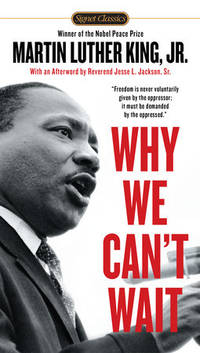
9780451621818-2025Mentor Book 1964. Paperback. New. <p><strong>Author:</strong> Martin Luther King Jr.</p><p><strong>Publisher:</strong> Mentor Book</p><p><strong>Binding:</strong> Paperback</p><p><strong>ISBN:</strong> 9780451621818</p><p><strong>Release Date:</strong> 1964</p><p><strong>Number Of Pages:</strong> 159</p><p><strong>Details:</strong> In this account of the struggle for civil rights in segregated Birmingham Alabama and assessment of the work ahead to bring about full equality for African Americans Dr. King offers an analysis of the events that propelled the Civil Rights movement to the forefront of American consciousness. Why We Can't Wait is an enduring testament to the wise and courageous vision of Martin Luther King Jr.</p> Mentor Book paperback
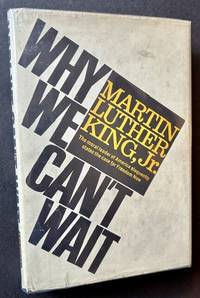
196425457New York: Harper & Row 1964. Boards. Very Good /Very Good. A solid copy of the 1964 stated 1st edition. Tight and VG in a crisp price-intact VG dustjacket with light creasing and xhipping along the lower-edges. Octavo Dr. King's 3rd published book appearing just on the heels of his 1964 Nobel Peace Prize. Harper & Row unknown
1964054507Harper & Row 1964. Book. Very Good. Hardcover. 8vo - over 7¾" - 9¾" tall. A little shelf wear to grey and black cloth hardcover. Owner stamp on front end paper. Dust jacket has a bit of shelf wear and a two short closed tears on top edge. Otherwise a tight unmarked book. Index. xii 178 pp. Harper & Row Hardcover
1017846936.Ghardcover. Good. Access codes and supplements are not guaranteed with used items. May be an ex-library book. hardcover
1017852634.Gpaperback. Good. Access codes and supplements are not guaranteed with used items. May be an ex-library book. paperback
2022__316161237XMohr Siebrek Ek 2022. Hardcover. New. 440 pages. 6.06x9.09x1.14 inches. Mohr Siebrek Ek hardcover
196551161New York: Random House 1965. Fine in very good plus jacket. First edition of this travelogue in which Warren recounts meetings and interviews prominent Black thinkers including Martin Luther King Jr. Malcolm X Ralph Ellison and James Baldwin. 8.5'' x 5.5''. Original red cloth spine stamped in gilt and black front board stamped in gilt. In original unclipped $5.95 color typographic dust jacket with design by Muriel Nasser. Red topstain fore-edge machine deckle. xii 454 pages. Jacket with light shelfwear some toning and soil to spine. Book with faint offsetting to endpapers. Random House unknown
1512720917.Gpaperback. Good. Access codes and supplements are not guaranteed with used items. May be an ex-library book. paperback
1884023666Boston: Avery Rand 1884. Illustrated Wraps. Very Good. 8vo - 9" x 6. Assorted Photos Illustrations Maps Etc. Quite a scarce publication issued by the Boston Concord Montreal & White Mountains R. R. 'for Gratuitous Circulation' given to hotel and train patrons. 98 pages including the covers many etchings of steamers rivers hotels and areas Maps of; Littleton Franconia Bethlehem Jefferson and The Pemigewasset Valley & RR. all full page showing locations of hotels and boarding houses. "Summer Excursions Among the White Mountains" with rates for all listed houses and hotels pp 75-97. Also includes lists of; travelling facilities.Stage Coach Lines Steam Ships & Trains also Towns and Stations and many period ads. <br/> <br/> Avery Rand paperback
1882021038Boston: Avery Rand 1882. Illustrated Colored Wraps. Very Good. Folio - over 12" - 15" tall. Assorted Photos Illustrations Maps Etc. Quite a scarce publication issued by the Boston Concord Montreal & White Mountains R. R. 'for Gratuitous Circulation' given to hotel and train patrons. 26 pages including the covers many etchings of steamers rivers hotels and areas Maps of; Littleton Franconia Bethlehem Jefferson. all 1/2 page also 1 of the RR line and connections in New England most of a page and the rear cover map of the RR from Concord NH through the White Mountains. Also includes lists of; travelling facilities.Stage Coach Lines Steam Ships & Trains also Towns and Stations and many period ads. NOTE: There is some damage to the FC with an abrasion and hole with paper loss app. 1/2" in diameter. <br/> <br/> Avery Rand paperback
pp. xiv, 233. 8vo. Original printed wraps, slightly worn. Harper Colophon Paperback. BLKAM 1.
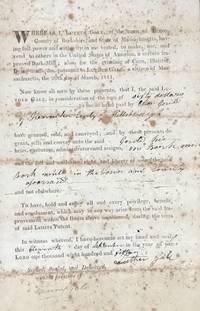
181565189Lenox Mass 1815. Single sheet 24.5 x 20 cm. partly printed completed in manuscript. Old folds heavily foxed. For $60.00 Gale sells one bark mill and grants to Elias Gould of Henniker County of Hillsborough NH "the full and exclusive right and liberty of using the said Bark-Mill in the town and county aforesaid." Signed by Gale and witnessed probably by his wife dated in ink September 11 1815. See RINK 1394 for one copy of an 1818 broadside printed in Lenox which takes note of a patent infringement for this patent; and for the grant of patent right see RINK 1392 which is an 1813 notification that Gale has purchased exclusive right to C. Tobey's patent bark mill. Presumably this is a somewhat different machine than our 1811 Gale patent. This broadside is not listed in Rink or Imprints. <br/><br/> unknown books
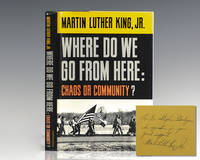
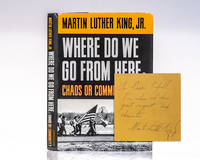
1967124490New York: Harper & Row Publishers 1967. First edition of King's "last grand expression of his vision" Cornel West. Octavo original half cloth illustrated with eight pages of black-and-white photogravures. Presentation copy inscribed by the author on the front free endpaper "To Dr. Stephen Goodyear In appreciation for your great support Martin Luther King Jr." Fine in a near fine dust jacket. Jacket design by Ronald Clyne. Jacket photograph of Martin Luther King Jr. by Bob Fitch. Where Do We Go from Here is Dr. King's analysis of the state of American race relations and the movement after a decade of U.S. civil rights struggles. ''With Selma and the Voting Rights Act one phase of development in the civil rights revolution came to an end'' he observed King 3. King believed that the next phase in the movement would bring its own challenges as African Americans continued to make demands for better jobs higher wages decent housing an education equal to that of whites and a guarantee that the rights won in the Civil Rights Act of 1964 and the Voting Rights Act of 1965 would be enforced by the federal government. Harper & Row, Publishers hardcover books
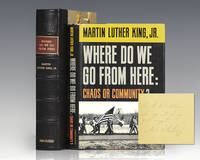
1967120468New York: Harper & Row Publishers 1967. First edition of King's "last grand expression of his vision" Cornel West. Octavo original half cloth illustrated with eight pages of black-and-white photogravures. Presentation copy inscribed by the author on the front free endpaper "To Mr. H.O. Wilson In appreciation for your great support Martin Luther King Jr." Fine in a near fine dust jacket. Jacket design by Ronald Clyne. Jacket photograph of Martin Luther King Jr. by Bob Fitch. Housed in a custom half morocco clamshell box. Where Do We Go from Here is Dr. King's analysis of the state of American race relations and the movement after a decade of U.S. civil rights struggles. ''With Selma and the Voting Rights Act one phase of development in the civil rights revolution came to an end'' he observed King 3. King believed that the next phase in the movement would bring its own challenges as African Americans continued to make demands for better jobs higher wages decent housing an education equal to that of whites and a guarantee that the rights won in the Civil Rights Act of 1964 and the Voting Rights Act of 1965 would be enforced by the federal government. Harper & Row, Publishers hardcover books
19681155Tokyo: The Simul Press; Charles E. Tuttle & Co 1968. Very good plus. 22142pp. plus frontispiece. Publisher's salmon cloth gilt. Presentation inscription by the translator on front flyleaf. Dust jacket with some minor soiling one small tear to top edge of rear cover. Japanese translation of Martin Luther King Jr.'s final book containing the important chapter on "Black Power." King's book is about non-violence in the face of growing black nationalism and militancy in the mid-1960s. "In his last book Where Do We Go from Here: Chaos or Community 1967 King dismissed the claim of Black Power advocates 'to be the most revolutionary wing of the social revolution taking place in the United States' but he acknowledged that they responded to a psychological need among African Americans he had not previously addressed. 'Psychological freedom a firm sense of self-esteem is the most powerful weapon against the long night of physical slavery' King wrote. 'The Negro will only be truly free when he reaches down to the inner depths of his own being and signs with the pen and ink of assertive selfhood his own emancipation proclamation'" -- ANB. A nice copy of a scarce work with a presentation inscription by the translator. The Simul Press; Charles E. Tuttle & Co unknown books
1967ANAIS-006012394XHarper & Row Publishers 1967-01-01. First Edition. hardcover. Good. 0x0x0. Buy with confidence. Excellent Customer Service & Return policy. Harper & Row Publishers hardcover
006012394X.Ghardcover. Good. Access codes and supplements are not guaranteed with used items. May be an ex-library book. hardcover
2010SKU0583651Beacon Press 2010-01-01. paperback. Good. 5x0x8. Textbook May Have Highlights Notes and/or Underlining BOOK ONLY-NO ACCESS CODE NO CD Ships with Tracking Beacon Press paperback
2010SKU0631158Beacon Press 2010-01-01. paperback. New. 5x0x8. New Textbook Ships with Tracking Beacon Press paperback
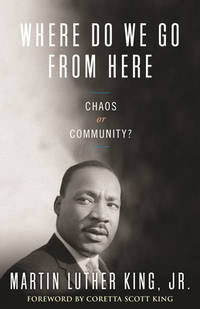
2010059515Beacon Press 2010. 1st Edition 1st Printing. Hardcover. As New/As New. 16mo - over 5¾ - 6¾" tall. Introduction by Vincent Harding. Sturdy book purple covers gilt lettering bright on spine purple color inside covers and adjacent end papers 223 pages. DJ beneath mylar glossy gold at top edges a black background with photograph of Dr. King Jr. with microphones praise at top back from Cornel West. DJ and book both As New. <br/> <br/> Beacon Press hardcover
1967148272New York: Harper & Row Publishers 1967. First edition of King's "last grand expression of his vision" Cornel West. Octavo original half cloth illustrated with eight pages of black-and-white photogravures. Association copy warmly inscribed by an associate of King Jr. Rev. Fredrick Douglass Kirkpatrick on the front free endpaper "To my good friend Brother Edd Goodman From Rev. F. D. Kirkpatrick Happy Fellowship." Rev. Frederick Douglass Kirkpatrick was a civil rights activist minister and musician who played a notable role in the Southern Christian Leadership Conference SCLC the organization led by Dr. Martin Luther King Jr. As a close ally of King Kirkpatrick contributed to the movement not only through his activism but also by using music as a tool for unity and protest co-founding the Freedom Singers and helping to amplify the message of nonviolent resistance across the country. Fine in a near fine dust jacket with a small closed tear to the front panel. Jacket design by Ronald Clyne. Jacket photograph of Martin Luther King Jr. by Bob Fitch. Photograph of the Selma March to the front panel by Steve Schapiro. Where Do We Go from Here is Dr. King’s analysis of the state of American race relations and the movement after a decade of U.S. civil rights struggles. ‘‘With Selma and the Voting Rights Act one phase of development in the civil rights revolution came to an end’’ he observed King 3. King believed that the next phase in the movement would bring its own challenges as African Americans continued to make demands for better jobs higher wages decent housing an education equal to that of whites and a guarantee that the rights won in the Civil Rights Act of 1964 and the Voting Rights Act of 1965 would be enforced by the federal government. Harper & Row, Publishers hardcover
1967149391New York: Harper & Row Publishers 1967. First edition of King's "last grand expression of his vision" Cornel West. Octavo original half cloth illustrated with eight pages of black-and-white photogravures. Association copy warmly inscribed by the author on the front free endpaper "To Cass Canfield For whom I have great respect and admiration Martin Luther King Jr." The recipient Cass Canfield was the longtime President and Chairman of Harper & Brothers Publishers and profoundly shaped twentieth-century literary culture. After investing in the firm in 1924 and managing its London office he signed major authors such as James Thurber E. B. White and Julian Huxley. Rising through the company’s leadership—from president to board chairman—Canfield played a pivotal role in publishing influential works including John Updike’s first book in 1958 and authored seven nonfiction books of his own. Near fine in a near fine dust jacket. Jacket design by Ronald Clyne. Jacket photograph of Martin Luther King Jr. by Bob Fitch. Photograph of the Selma March to the front panel by Steve Schapiro. An exceptional association one of the finest we have seen. Where Do We Go from Here is Dr. King’s analysis of the state of American race relations and the movement after a decade of U.S. civil rights struggles. ‘‘With Selma and the Voting Rights Act one phase of development in the civil rights revolution came to an end’’ he observed King 3. King believed that the next phase in the movement would bring its own challenges as African Americans continued to make demands for better jobs higher wages decent housing an education equal to that of whites and a guarantee that the rights won in the Civil Rights Act of 1964 and the Voting Rights Act of 1965 would be enforced by the federal government. Harper & Row, Publishers hardcover
1967120468New York: Harper & Row Publishers 1967. First edition of King's "last grand expression of his vision" Cornel West. Octavo original half cloth illustrated with eight pages of black-and-white photogravures. Presentation copy inscribed by the author on the front free endpaper "To Mr. H.O. Wilson In appreciation for your great support Martin Luther King Jr." Fine in a near fine dust jacket. Jacket design by Ronald Clyne. Jacket photograph of Martin Luther King Jr. by Bob Fitch. Housed in a custom half morocco clamshell box. Where Do We Go from Here is Dr. King’s analysis of the state of American race relations and the movement after a decade of U.S. civil rights struggles. ‘‘With Selma and the Voting Rights Act one phase of development in the civil rights revolution came to an end’’ he observed King 3. King believed that the next phase in the movement would bring its own challenges as African Americans continued to make demands for better jobs higher wages decent housing an education equal to that of whites and a guarantee that the rights won in the Civil Rights Act of 1964 and the Voting Rights Act of 1965 would be enforced by the federal government. Harper & Row, Publishers hardcover
2010Q-0807000671Beacon Press 2010-01-01. Paperback. New. New. In shrink wrap. Looks like an interesting title! Beacon Press paperback
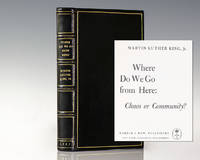
1967135189New York: Harper & Row Publishers 1967. First edition of King's "last grand expression of his vision" Cornel West. Octavo bound in full morocco gilt titles to the spine raised bands gilt ruled to the front and rear panels marbled endpapers all edges gilt. In fine condition. An exceptional presentation. Where Do We Go from Here is Dr. King’s analysis of the state of American race relations and the movement after a decade of U.S. civil rights struggles. ‘‘With Selma and the Voting Rights Act one phase of development in the civil rights revolution came to an end’’ he observed King 3. King believed that the next phase in the movement would bring its own challenges as African Americans continued to make demands for better jobs higher wages decent housing an education equal to that of whites and a guarantee that the rights won in the Civil Rights Act of 1964 and the Voting Rights Act of 1965 would be enforced by the federal government. Harper & Row, Publishers hardcover