Richard MansfieldBiblio.com
1 132 résultats
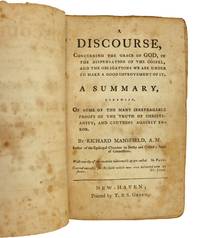
178930040New-Haven CT: Printed by T&S Green 1789. Very Good. New-Haven CT: Printed by T&S Green 1789. First Edition. Octavo. 37 pp. with half-title and errata to final page. Printed wraps with old stabholes and more recent string binding. Light wear with chipping to edges; light staining to wraps and interior; binding sound. Publication date per Evans and OCLC 1790 though this copy with ownership inscription to final leaf reads "Timothy Seward His Book March 1789." A Very Good copy of a scarce title. Printed by T&S Green unknown
31117London: F. C. and J. Rivington. VG for age. Binding sound except for 1 inch crack to rear hinge. Pages clean. Minor wear to extremities. 1810. Handsome Brown full LEATHER with decorative gilt stamping. Horizontal gilt bands to spine. Gilt lettering over darker brown label inserts between bands. Decorative blindstamp to front an drear covers. Volume One only of Two volumes. 452pp. The Papal and Mohammedan Apostasies; Th eTyrannical Reign of Antichrist or the Infidel Power; The Restoration of the Jews. Daniel's prophecy. London: F. C. and J. Rivington hardcover
2665075Puritan Reprints. NEW. 2010. Originally published 1597. Burgundy cloth hardcover. No Dust jacket issued. 271pp. William Perkins 1558-1602 was a Cambridge theologian and one of the foremost leaders of the Puritan movement in the Church of England during the Elizabethan era. His work on the ""ordo salutis"" has been surpassed but it became the accepted norm for soteriology in preaching for centuries. Puritan Reprints hardcover
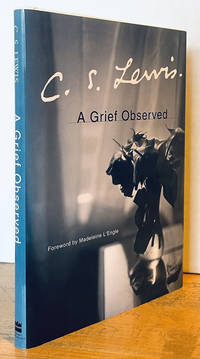
198933670HarperSanFrancisco 1989 Hardcover in gilt-stamped two-tone papered boards and unclipped illustrated dust jacket Fine in Fine no remainder or other markings a bright tight flawless copy; 8vo; 89pp. Hard Cover. As New/As New. HarperSanFrancisco hardcover
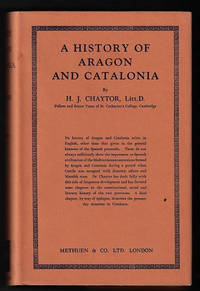
193333854<p>London: Methuen & Co Ltd 1933 First Printing in gilt-stamped full brown cloth and unclipped orange dust jacket no markings NOT ex-lib binding tight pages bright & unfoxed though there is mild foxing to page block edges and endpapers else Fine dj in mylar protector; 8vo; xvi 322pp indexed with 8 maps one folding in rear. First Edition. Hard Cover. Very Good/Near Fine.</p> Methuen & Co Ltd hardcover
1842W1319New York: John Doyle 1842. 360 pages. Scarce Doyle imprint with 3 letters not previously published in the United States. Book is clean and tight; corners have moderate wear through to boards; moderate fraying at head & foot of spine; minor rubbing on cover; faint foxing throughout; very light chipping along top-edge of first 2 pages; all-edges lightly tanned; previous owner's name in pencil partially erased on front paste-down endpaper. Early Printing. Hardcover. Collectible-Very Good_/No Dust Jacket as Issued. 16mo - over 5¾" - 6¾" tall. Book. John Doyle Hardcover
32193Cambridge at the University Press 1903 Publisher's gilt-stamped maroon cloth boards First Printing no text markings NOT ex-lib moderate shelf rub & edge wear binding tight pages toned but clean & unfoxed spine ends beginning to fray corners bumped & rounded neat name/date to endpaper edge else clean tight copy of the scarce first volume of this signal study of classical scholarship; stout 8vo; xxiii 672pp indexed & illus; foldout frontispiece. First Edition. Hard Cover. Good. Cambridge at the University Press hardcover
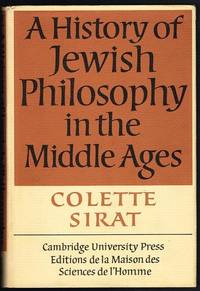
198533293<p>Cambridge University Press 1985 First Printing in dust jacket no text markings NOT ex-lib light shelf/edge wear & quiet soil to boards & jacket slight fade to dj spine name to endpaper edge else Fine copy of title scarce in cloth with dust wrapper now in mylar protector; 8vo; x 477pp indexed. First Edition. Hard Cover. Very Good/Very Good.</p> Cambridge University Press hardcover
2651752London: SCM Press. GOOD in VERY GOOD jacket. Scattered marginalia. Binding sound but first endpaper removed. 1968. Cloth hardcover. Dust jacket now in clear plastic BRODART protector. Original price Sterling to front endflap. 300pp. Index. London: SCM Press hardcover
1573832820.Ghardcover. Good. Access codes and supplements are not guaranteed with used items. May be an ex-library book. hardcover
2003SONG1573832820Regent College Publishing 2003-11-01. hardcover. Used: Good. 6.00x1.00x9.00. Buy with confidence. Excellent Customer Service & Return policy. Regent College Publishing hardcover
194633042Princeton University Press 1946 First Edition Second Printing 1947 in $5.00-priced dust jacket no markings NOT ex-lib binding tight pages clean & unfoxed jacket edge-chipped with tears & loss to ends & corners but looks presentable in mylar protector toning to jacket & page block edges former owner small blindstamp to endpaper corner else Fine copy of the original Princeton edition in dust jacket scarce as such; 8vo; xxvi 494pp indexed. First Edition. Hard Cover. Near Fine. Princeton University Press hardcover
19710009577Boston: David R. Godine 1971. First Limited edition. Hardcover. Fine. 4to 41 pages quarter morocco brown boards publisher's slipcase <br/><br/>Hand set by Vivian Ridler at the Oxford University Press; hand bound by Robert Burlen & Son Boston. David R. Godine hardcover
196114241Wheaton: The Church League of America 1961. Very Good. Wheaton IL: The Church League of America 1961. Second Printing Revised Edition November 1961. Signed by Bundy without inscription on flyleaf. Quarto 11" x 8.5"; 218pp. Printed paper wraps over stapled textblock. Covers rubbed along edges and a bit smudged with a 3" razor slit at bottom front not quite splitting cover and just scratching page beneath. Bookplate of Roland K. Kiebel attached below Bundy's signature on flyleaf. Binding is sound and pages unmarked. <br /> <br /> "Counter-Subversive Study Course" by Bundy a retired Air Force officer and ordained Baptist Minister who helped the Church League of America rise to prominence when he became its Executive Secretary in 1956. An FBI memo from R. W. Smith to Mr. W.C. Sullivan dated September 19 1961 available via Internet Archive in a FOIA-compiled document titled FBI Book Reviews 1959-1966 writes of the book "Bundy is professional anticommunist. Church League of America is for all practical purposes Bundy. This book another self-promotional scheme. Rehash of old public source material on communism exploited to develop theme. Sales pitch climaxed by appeal for funds and subscriptions to Bundy's News and Views. The Church League of America unknown
2016067592Evangelical Press 2016. Book. Near Fine. Hardcover. 5th or later Edition. 8vo - over 7¾" - 9¾" tall. Minor shelf wear. Otherwise a square tight unmarked book. Index. 554 pp. Evangelical Press Hardcover
1376786052.Gpaperback. Good. Access codes and supplements are not guaranteed with used items. May be an ex-library book. paperback
177131025N.p.: s.i. 1771. Very Good. N.p.: s.i. 1771. Octavo 16cm.; later full calf to style gilt-ruled spine in six compartments; 42884pp.; woodcut device to p. ii. Some wear and brief worming to upper cover leather else a Very Good clean and sound copy.<br /> <br /> Unusual possibly unrecorded edition of the Tate & Brady psalms a collaboration first published in 1696 by Nicholas Brady chaplain to William III and Queen Mary and Nahum Tate the Irish-born poet laureate. The work a metrical translation of the psalms was commissioned to provide a more modern "smoother" version than the previously-established Elizabeth psalms of Sternhold and Hopkins. The Reverend William Beveridge disliked the Tate & Brady version for its inaccuracies and for being too "light and airy" see the Oxford Dictionary of National Biography. Despite Beveridge's criticisms the work went through more than three hundred editions. <br /> <br /> This edition a rather mysterious anomaly. Published without an imprint it includes the text from the original 1696 inscription by W. Bridgman as well as a brief publisher's advertisement for "an Edition of Tate's and Brady's PSALMS in Folio and in Quarto." There are a few other examples of Tate & Brady published in 1771 without an imprint however all the copies described in OCLC call for 218 pages 70 pages short of this copy. <br /> <br /> Provenance: Contemporary ownership signature of "Lady Mintosh" to title page. Possibly the signature of Lady Anne Mackintosh 1723-1787 a.k.a. Colonel Anne a Scottish military leader during the Jacobite rising of 1745. s.i. unknown
196027494Ipswich UK: East Anglian Magazine Ltd 1960. Very Good/Very Good. Ipswich UK: East Anglican Magazine Ltd. ca. 1960. First Edition. Signed by Margaret G. St. John with brief inscription to previous owner at half title. Octavo. 44 pp. Black and white illustrations. Printed dust jacket. Dark blue boards stamped in gilt. Dust jacket chipped with a several closed tears along edges; toning to verso. Boards show light shelfwear. Binding is sound and pages unmarked. Very Good. <br /> <br /> Collection of poetic essays on the circle cube and sphere exploring their metaphysical and practical meanings. Her New York Times obituary mentioned St. John as a student of religion the occult and metaphysics and at the time of her death at age 39 in 1965 was working for Evyan Perfumes Inc. Uncommon in retail and only two holdings found in OCLC. East Anglian Magazine, Ltd unknown
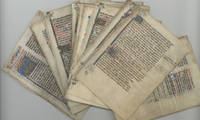
3504801/01/1025. <blockquote><p>It is fascinating to think that the men and women who said this prayer lived early enough to have perhaps lived concurrently with Charlemagne himself who died in 814 but almost ertainly with his son Louis who lived into the 840s.</p><p> </p><p>Documents of any import or interest from this early era are very uncommon</p><p> </p><p>The Rise of Charlemagne</p></blockquote><p>The late eighth century saw a new power rising in Europe in the form of the empire of Charlemagne 747-814. Originally from the region of north-eastern France and the adjacent territories of the Low Countries within a few decades most of Europe from the Channel to the Pyrenees eastwards into much of Germany and downwards into Italy had fallen under his sway. It is clear that he saw the correct fostering of religion writing reading and learning in general as a vehicle to give this unit a collective identity remaking the Roman Empire as he saw it out of the fragmented and disparate communities left behind when that power structure fell in the fifth century.</p><p>In 800 Charlemagne was crowned Emperor of the Romans by Pope Leo III reviving the ancient imperial title in the West.</p><p>Charlemagne’s only surviving legitimate son Louis the Pious inherited the entire empire. Louis was deeply religious and capable but lacked his father’s political and military authority. He ruled as Emperor 814–840 and sought to maintain unity but his own reforms and family disputes soon undermined that goal.</p><p>These conflicts ended with the Treaty of Verdun 843 which permanently divided Charlemagne’s empire into three main kingdoms: West Francia ruled by Charles the Bald became the foundation of modern France; East Francia ruled by Louis the German evolved into Germany; Middle Francia ruled by Lothair I included northern Italy Burgundy and the Low Countries; this area later fractured further.</p><p>Louis the German ruled East Francia from 843-876 followed by Carloman of Bavaria Louis the Younger and Charles the Fat.</p><p>Although politically divided Charlemagne’s empire left a lasting legacy. The idea of a Christian emperor ruling Europe persisted inspiring the later Holy Roman Empire begun in 962 under Otto I. His reforms in education administration and law profoundly shaped medieval Europe.</p><p>The Sacramentary was one of the oldest tools of the Western clergy. It combined the various readings needed for Masses and the liturgy in a single convenient volume for use by a bishop or a priest. The earliest examples to survive are the Leonine and Gelasian Sacramentaries both with origins in the seventh century but as with the Bible and other key Christian books the careful reform and correction of such texts was at the forefront of the earliest waves of the Carolingian renaissance. Between 781 and 791 Charlemagne wrote to Pope Hadrian I asking him for an approved copy of the service-book of the Roman Church. That was examined added to on numerous occasions and disseminated and became the Gregorian Sacramentary. It is likely to have been further added to in the provinces of Europe and the text dominated liturgical practice for the next three centuries.</p><p>Votive Masses for those on voyages and at sea for one’s enemies and for the Bishop and congregation. Reading in part: ""Almighty and everlasting God who alone work great marvels stretch forth upon your servant N. Bishop and upon all the peoples committed to him the spirit of saving grace; and that they may truly be pleasing to you pour upon them the continual dew of your blessing. O God Who didst bring our fathers through the Red Sea and didst guide them in safety through the overflowing waters whilst they sang praises to Thy name we humbly pray that Thou wouldst keep in safety Thy servants on board ship and grant them a calm voyage to the haven they desire. O God of infinite mercy and immeasurable majesty whom neither the expanse of places nor the intervals of times separate from those whom you protect be present to your servants who everywhere place their trust in you and deign to be for them—through the whole journey they are about to undertake—a guide and a companion. Let nothing of adversity harm them; let nothing difficult stand in their way. Let all things be healthful for them all things prosperous; and under the help of your right hand may they swiftly obtain with effect whatever they seek with just desire.â€</p><p><strong>Leaf</strong> measuring 230 x 99 mm blind-ruled for two columns of 27 lines written in large and rounded Carolingian minuscule rubrics in orange-red recovered from reuse in a later binding.</p><p>It is fascinating to think that the men and women who said this prayer lived early enough to have perhaps lived concurrently with Charlemagne who died in 814 but certainly with his son Louis. These changes would have been uttered at a time when the consolidation of their empire was a recent and not distant event and Charlemagne’s grandchild was on the throne. These were events of real import to them and had daily consequences.</p><p>Our gratitude to manuscript expert Dr. Timothy Bolton who aided in the research of this document.</p><p>PROVENANCE</p><p>Produced in an abbey within the Holy Roman Empire</p><p>Cut up for use in a binding probably in the 16th century</p><p>Maggs Bros Catalogue 1002 1980</p><p>Mark Lansburgh 1925–2013 teacher hand-press printer and book collector on whom see Dutschke 2024; presumably sold by him to:</p><p>Neil F. Phillips 1924–1997 QC of Montreal New York and Virginia: his MS 698; sold at Sotheby's 2 December 1997 lot 42; bought by:</p><p>The Boehlen Collection Bern MS 804.</p><p><img class=""alignnone wp-image-25018 size-post-window"" src=""https://cdn.raabcollection.com/wp-content/uploads/20231204144051/Folder-site-11-1600x1327.jpg"" alt="""" width=""1600"" height=""1327"" /></p> unknown
197240320Garden City NY: Doubleday & Company 1972. Very Good/Very Good-. Garden City NY: Doubleday & Company 1972. First Edition Stated. Octavo 24cm; publisher's two-toned cloth in yellow dust jacket clipped though retaining the $10.00 price; xvii3460pp. Shallow dark dampstaining to bottom margin of rear jacket panel slightly affecting cloth jacket spine panel a bit toned else a Very Good bright and sound example. Inscribed and signed on front free endpaper "to Gerda Wallacks with the warm wishes of Daisy Newman / Hartford February 4 1973. Doubleday & Company unknown
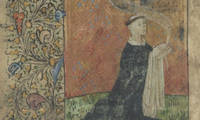
1420254921420. <blockquote><p>It is unusual to find an English example particularly one which so well demonstrates the unique factors at play in such pieces at the time</p></blockquote><p>Throughout the Middle Ages true visionaries put into place systems of intellectual and social organisation. Saint Dominic’s foundation of the Dominican Order responded to a need for a new kind of monasticism as Medieval Europe shifted towards an increased urbanisation which would give rise to the great cities that we now know. In the city of Toulouse France Dominic based his Order on the Rule of Saint Augustine— a system of tenets to organize the lives of the monks which focused heavily on salvation through preaching. Dominic’s order valued education as the vehicle for effective preaching and therefore effective saving of souls. Dominic’s vision saw his followers establishing schools alongside newly burgeoning universities in Paris and Bologna and later in Palencia Montpellier and even Oxford within his lifetime. Members of the Dominican Order took their message of educated understanding of God from the continent to the British Isles settling in Oxford by 1221.</p><p>Thomas Aquinas and Albertus Magnus were also of the Dominican Order.</p><p>Given the wealth of expressions of interiority that arise in later Medieval arts . scholars philosophers and ideologues have often turned to this era when seeking the putative origins of modern selfhood"" Sands 1; the inclusion of patron portraits acts as a reflection of the self reflecting on the divine personalizes the book. After book productions shifted towards catering to the wealthy rather than the monastic lay-patrons were able to emulate ""monastic patterns of reading prayer and meditation"" Sands 15. Rather than allowing a wealthy lay patron to emulate the monastic way of life the patron portrait of this Dominican monk is a glimpse into the monastic way of life and an individual's development of his sense of self.</p><p>This leaf from a Dominican’s personal prayer book features a portrait of the owner himself. This little peak into a 15th century private sphere shows the book’s owner depicted in his traditional black cloak— which gave rise to the appellation of the Dominicans as “the Black Friarsâ€â€” over top his white habit and his tonsure to better allow God to see his thoughts and to demonstrate his renunciation of worldly aesthetics. From his outstretched hands a banderole twirls upwards around a now faded woman’s face framed in the blue associated with the Virgin. The leaf is blank on the back. These two features— the heavy fading in a specific area and the blank verso— make suggestions about the production and the reception of the book.</p><p>This portrait leaf was likely a bespoke product that was tipped into an on-spec ready-to-buy book. That is to say at this point books were no longer being made entirely to the patron’s demand; books had become commodities that more people could afford so a stationer would have books ready made with minor customization available such as the addition of a patron portrait. This addition without text on the back would not interrupt the flow of the set selection of prayers in the Book of Hours. With this customization the owner literally sees himself in his daily worship of the Virgin Mary. Here is where the importance of the fading comes into play.</p><p>This is likely not just the wear and tear of history but the toll of the owner’s ritual touching of the Virgin’s face in conjunction with his portrait. This action is called ‘affective piety’ and though chiefly associated with women’s rituals it was not uncommon for men particularly those aligned with mysticism to engage in this method of worship. In the same way that Saint Dominic’s Order responded to the rise of cities in the thirteenth century affective piety provides a new way of interacting with Christianity. As people moved towards understanding Christ as a man and through his bodily identity they also moved towards an “emotional understanding of Christ as accessible through his humanity and imitable through affective piety and the new ways of thinking feeling and imitating Christ that it fostered resulted in innovative modes of individual and communal devotion through prayer reading and liturgy†Zimbalist. We notice on this leaf that the border the background the grass even the Friar’s own body and face are not as faded as the banderole of holy words and the image of the holy face now nearly imperceivable. This suggests that the wear was focused on these significant areas and were likely touched rubbed even cried upon frequently during his reverent worship. The size of the folio also underscores its use as a personal devotional item indicating a book small enough to fit in the hand and be carried discreetly.</p><p>London was the capital of fashion for manuscripts in England in the 1300 and 1400s. Trends from the Continent would arrive in London and be incorporated into newly made manuscripts and these trends would radiate outwards to other centers of manuscript production. The border around the Dominican friar demonstrates the transition of preference for curving rather than straight borders occurring from 1405 to the end of the century; the incorporation of several specific styles of foliage indicate that this manuscript was on the cutting edge of fashion fairly early on and therefore likely made in London.</p><p>This book owner whose name is now lost to us but whose face remains in this miniature tells the story of an Order who rode the tide of urbanisation through a devotion to God and education and who saw the destruction of Europe and its own numbers during the Black Death. The owner living circa 1420 likely in London based on the style of background and border of this leaf would be heartened to know that his Order endured further European upheavals from the Early Modern to the Modern Period just like this piece of his book.</p><p>While patron portraits have made their way to the market particularly in bound books it is unusual to have an English example particularly one which so well demonstrates the production process of creating a bespoke product from an on-spec liturgical book.</p><p>Further details:</p><p><strong>Leaf from an English Book of Hours</strong> Use of Sarum with a miniature of a Dominican friar in prayer in Latin illuminated manuscript on parchment England probably London c. 1420 104 by 69mm. Single leaf with a large rectangular miniature of a tonsured friar in Dominican robes kneeling in a grassy area as a banderole emerges from his hands and curves upwards to enclose a woman's face most probably the Virgin the whole before a tessellated background decorated with red and blue dots within a full border of rinceaux foliage terminating in gold ivy leaves and coloured seed pods and acanthus leaves reverse blank signs of water damage to top of reverse slight scuffing and fading.</p><p>See also:</p><p>Hamburger Jeffrey. The Visual and the Visionary: Art and Female Spirituality in Late Medieval Germany New York N.Y.: Zone Books 1998</p><p>Zimbalist Barbara. ""Chapter 10: Medieval Affective Piety and Christological Devotion: Juliana of Mont Cornillon and the Feast of Corpus Christi"". Illuminating Jesus in the Middle Ages. Leiden The Netherlands: Brill 2019.</p><p>Sands Alex Vision Devotion and Self-Reprsentation in Late Medieval Art Cambridge University Press 2014</p><p><img class=""alignnone wp-image-25018 size-post-window"" src=""https://cdn.raabcollection.com/wp-content/uploads/20231204144051/Folder-site-11-1600x1327.jpg"" alt="""" width=""1600"" height=""1327"" /></p> unknown
14502626101/01/1450. <blockquote><p>Records show only a small number of such mathematical devices having reached the public market</p><p> </p><p>The manuscript bears markings of subsequent owners including a poem from the 16th century to Saint Basil normally associated with the East</p></blockquote><p>video width=""1920"" height=""1080"" mp4=""https://cdn.raabcollection.com/wp-content/uploads/20231204130536/Computus-Youtube-Template-1.mp4""/video</p><p> </p><p>Prior to 1420 devotional books such as Books of Hours or Breviaries were made to order and reflected the particular interests of the patron. A breviary usually formatted in a writing block of two columns as opposed to its single column relative the Book of Hours contains excerpts of psalm gospel hymns and prayers to guide the reader in his or her daily prayer at the fixed Canonical Hours. Because these books were created at this time for a specific use they could be catered to that use including the use of alternate texts. This would also be the case for clergymen.</p><p>One of the most important branches of medieval learning was computus the science of calculating times and dates using a combination of mathematics and astronomy. The use of poetry to transmit scientific material would have made it easier for students to memorize. These calculations were often applied to the tricky and at times controversial calculation of the date of Easter a highly variable and occasionally contentious date relying on lunar calendars the date of the Jewish celebration of Passover and whether or not the observer is on the Julian or Gregorian calendar. Easter remains celebrated on different days in the West than the East.</p><p><img class=""alignnone wp-image-26267 size-post-window"" src=""https://cdn.raabcollection.com/wp-content/uploads/20231204133327/Medieval-cipher-4-1600x1105.jpg"" alt="""" width=""1600"" height=""1105"" /></p><p>In 1408 a Yorkshire man named John de Foxton ca. 1369-1450 wrote an encyclopaedic work called Liber Cosmographiae now housed at Cambridge Trinity College MS. R.15.21. John’s extensive work includes a poem on fol. 19v. The poem includes the line “Quaerit amor Christi multos dum regnat iniqus†The love of Christ seeks many while the unjust reign. It appears in a very limited number of other manuscripts. It is a cipher. The poem also includes seemingly unrelated letters written in red above each of the words. These letters would accompany the poetic text making the poem into a memory-based mnemonic device to figure out the date of Easter John de Foxton’s Liber Cosmographiae: An Edition and Codicological Study 1988 p. xxiii-xxiv.</p><p>Such computational texts which can combine a description of the calculation process along with the paired poetic text / letters are occasionally found in texts of this period but finding them on the market would be very uncommon.</p><p>Within the first decade of the fifteenth century an ecclesiastical man a member of the clergy had a breviary commissioned for him.</p><p>Breviary in Latin ca. 1410 Flanders or Luxembourg 2- 3- and 4- line initials in blue and pink with white penwork shellgold illumination; 23 partial borders consisting of a pink and blue bar extending the length of the text illuminated with gold and often terminating in penwork floral sprays.</p><p>Within this book which he would use for his daily prayers he had an unusual selection incorporated — a paraphrase of a computus text along with the Foxton poetic mnemonic computistical text to further solidify his study and understanding of the dating of Easter. The letters of the Foxton text were added though in a slightly different structure.</p><p><img class=""alignnone wp-image-26269 size-post-window"" src=""https://cdn.raabcollection.com/wp-content/uploads/20231204133315/Medieval-cipher-3-1-1-1600x746.jpg"" alt="""" width=""1600"" height=""746"" /></p><p>Combined these instructions describe the dating of easter and include an alphabet written out to help the ciphering. The text also mentions a Charles Karolus who says or teaches on the matter in “m cccc lvxxiiiâ€. The year 1478 is a scribal error inserting an extra century for what should have been m ccc lvxxiii. On November 29 1378 Charles of Luxembourg better known as the Holy Roman Emperor died. This portion of text of the ecclesiastic’s breviary is a paraphrase and therefore not published as is in any source we could determine.</p><p>A curious manuscript likely refering to the computistical ideas of Charles IV the Holy Roman Emperor influenced by the English cultural diffusion of John de Foxton’s mnemonic and cipher a bespoke production for a clergy man interested in this complex medieval science of dating Easter. A later 16th century prayer to Saint Basil has been added in space left after the text on fol. 399v by a reader.</p><p><img class=""alignnone wp-image-26333 size-post-window"" src=""https://cdn.raabcollection.com/wp-content/uploads/20231204132843/Medieval-cipher-1-2-1600x224.jpg"" alt="""" width=""1600"" height=""224"" /></p><p>A note on location and paleography</p><p>Several of the saints’ names in the liturgy have been copied with the French spelling conventions. While the illumination in the later liturgical portion of the text appear at first glance to be French— for example the pale yellow touches to capitals to draw the readers eyes— the hand lacks some of the sophistication of French manuscript production one would expect. In a Book of Hours the blue tipped three-petalled flowers would certainly indicate Bruges but this gets diffused further away from the city in other liturgical books. The spiky seed pods that flourish the borders are indicative of Flanders and were often emulated by English artists. During this time books were commonly being produced in the Low Countries for English audiences creating a fusion of paleographic and illustration styles. The paleography and orthography reveal the mystery. The hook-like descenders on the letter h go far beyond the baseline which is a distinctly Flemish feature. The spelling of “ewangelia†on the verso of the folio numbered in modern pencil as 367 proves the Germanophone claim moving the manuscript firmly into the liminal sphere of BeNeLux Belgium Netherlands Luxembourg region with its changing boarders and political statuses.</p><p><img class=""alignnone wp-image-26270 size-post-window"" src=""https://cdn.raabcollection.com/wp-content/uploads/20231204133310/Medieval-cipher-2-1-1600x600.jpg"" alt="""" width=""1600"" height=""600"" /></p><p>See also:</p><p>Neues Archiv der Gesellchaft für ältere deutsche Geshichtskunde: zur Beförderung einer Gesammtausgabe der Quellenschriften deutscher Geschichten des Mittelalters Sechster Band Vol. 6 Hannover: Hahnsche Buchhandlung 1881.</p><p>J. Van den Gheyn Catalogue des manuscrits de la Bibliothèque Royale de Belgique: Tome Deuxieme Vol. 2 Bruxelles: Henri Lamertin 1902.</p><p>Friedman John “John Siferwas and the Mythological Illustrations in the Liber Cosmographiae of John de Foxton†Speculum 58:2 1983. Pp. 391-418.</p><p>Friedman John “The Cipher Alphabet of John de Foxton’s Liber Cosmographiae†Scriptorium 36:2 1982. Pp. 219-235.</p><p><img class=""alignnone wp-image-25018 size-post-window"" src=""https://cdn.raabcollection.com/wp-content/uploads/20231204144051/Folder-site-11-1600x1327.jpg"" alt="""" width=""1600"" height=""1327"" /></p> unknown
1617496301London: Edward Griffin for Henry Fetherstone 1617. . This 1617 combined edition in a single volume has two sequences of pages running to page 728 and page 312. This copy lacks several title pages both of the book as a whole and of individual treatises and also lacks 10 pages of text scattered across three locations. The front board and first page of epistle dedicatory are detached from the rest of the book; this board has a mended corner. The paper is in remarkably good condition throughout apart from a few tears especially considering that the book is over 400 years old - if only some of our modern books were printed on paper as durable as this! Joseph Hall Bishop of Norwich was a Calvinistic Anglican and an English representative at the Synod of Dordt. He held some evangelical and puritan principles but was not part of the Puritan movement. Includes Meditations and Vows; Heaven upon Earth; Art of Divine Meditation; Holy Observations; Some Few of David's Psalms Metaphrased; Characters of Virtues and Vices; Solomon's Divine Arts of Ethics behaviour Politics commonwealth and Oeconomics family; Paraphrase of Song of Solomon applied to Christ; Epistles letters in 6 decades; Sermons; Apology against Brownists; Serious Dissuasive from Popery; No Peace with Rome; Brief Sum of the Principles of Religion Catechism; Contemplations on Principal Passages of the Holy Story the Bible history; Quo Vadis or a Censure of Travel. Evidently The Righteous Mammon and The Honour of the Married Clergy which appeared in some later editions of the Recollection are not included as they were not published until 1618 and 1620 respectively. Leather. Average Plus. Edward Griffin for Henry Fetherstone Hardcover
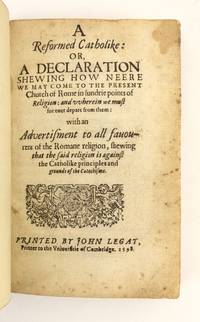
1598ST16441Cambridge: John Legat 1598. Second Printing. 153 x 98 mm. 6 x 3 7/8". 4 p.l. 375 1 pp. <br/> Modern sprinkled calf blind-ruled covers raised bands flanked by double gilt rules brown morocco label remnants of paper library shelf label at tail of spine. Printer's device on title page. Front pastedown with bookplate of the Fox Pointe Collection; rear pastedown with deaccession stamp of Bradford City Libraries. STC 19736; ESTC 19736. ◆Spine just faintly sunned leaves lightly browned due to paper quality and trimmed a bit close at head grazing headline on a couple of leaves isolated marginal stains or tiny rust spots but an excellent copy fresh and clean in a sympathetic binding with few signs of wear.<br/> <br/> This was an important work in establishing distinctions in liturgy and doctrine between the Catholic Church and the Church of England written by a moderate puritan whom DNB considers "perhaps the most significant English theologian of his age." Perkins 1558-1602 was one of the most popular voices of his time speaking from a Calvinist puritan point of view; while he could be virulently anti-Catholic he did not believe in repudiating the English church only in reforming it. According to DNB "The genius of Perkins's work did not lie in its originality—his theology represents a conventional recital of Calvinist scholasticism in virtually every respect. His gift lay rather in bringing to a broad audience a variety of theological and moral issues popularizing essentially technical discussions and therefore as Fuller observed humbling 'the towering speculations of philosophers into practice and morality.'" The present work spread his polemical influence beyond England to the Continent; even the Catholic bishop William Bishop admitted he had "not seene any book of like quality published by a Protestant to contain either more matter or delivered in better method." Both the 1597 first edition and our 1598 second printing are rare: no other copies of either edition are recorded at auction by RBH or ABPC in the past 50 years. John Legat unknown
B9781669844594Hardback. New. hardcover