1 132 résultats
1991Q-0898702666Ignatius Press 1991-12-01. Paperback. New. In shrink wrap. Looks like an interesting title! Ignatius Press paperback
1983064155Eerdmans Pub Co 1983. Book. Very Good. Audio Book DVD. 8vo - over 7¾" - 9¾" tall. 5 volume set. Minor shelf wear to red cloth hardcovers. Owner embossed stamp on front end paper of each volume. Otherwise these are tight unmarked volumes. 872 953 547 476 494 pp. Eerdmans Pub Co hardcover
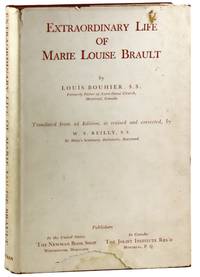
194146363Westminster MD / Montreal Canada: Newman Book Shop / Joliet Institute Reg'd 1941. Very Good/Very Good-. Westminster MD / Montreal Canada: Newman Book Shop / Joliet Institute Reg'd 1941. First English Language Edition. Octavo 23cm; publisher's cloth in white printed dust jacket retaining original price $3.50; xiii1306pp.; portrait frontispiece and plates throughout. Jacket margins quite chipped and worn with shallow loss along bottom edge of upper panel remnant affixed to cloth occasional soil spots to jacket and textblock edges; overall Good to Very Good. Translated from the Second Edition Revised and Corrected. <br /> <br /> Uncommon biography of the Canadian mystic Marie Louis Brault 1856-1910 whose life was filled with unusual phenomena including poltergeist-like disruptions in her home. One contemporary remembered “She had on her forehead a line of deep wounds from which blood issued. . . . She had similar wounds on her hands feet and side. These wounds became deeper during Lent" Dictionary of Canadian Biography. Newman Book Shop / Joliet Institute Reg'd unknown
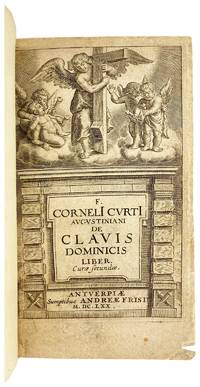
167031507Antverpiae Antwerp: Sumptibus Andreae Frisii / Andreas Frisius 1670. Very Good-. Antverpiae Antwerp: Sumptibus Andreae Frisii Andrea Frisius 1670. "Editio novissima aucta emendata & figuris aeneis exornata." 24mo 13cm.; full 19th-century brown morocco gilt spine in five compartments; 3615820pp. collated complete; added engraved title page and eighteen engraved illustrations in text mostly full-paged. Ex-St. Michael's Monastery with their usual markings leather slightly rubbed worm-holing along bottom margin of most of the textblock not quite touching text else a Good to Very Good internally clean and sound copy. <br /> <br /> Generously-illustrated study of the crucifixion by Belgian Augustin monk Cornelius Curtius 1590-1638 adorned with a myriad of representations of Christ on the cross as well as depictions of the nails used and views of the crucified feet from the side and from above. Sumptibus Andreae Frisii / Andreas Frisius unknown
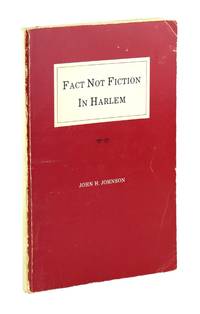
198034057Northern Type Printing: Glen Cove NY 1980. Very Good. Glen Cove NY: Northern Type Printing 1980. First Edition. Slim octavo 21.5cm ; publisher's red card wrappers; vii1119pp. Wrappers rather rubbed and worn at margins textblock starting to yellow; overall Good to Very Good.<br /> <br /> Collection of local interest articles by the founder and retired rector of St. Martin's Church in Harlem. Glen Cove, NY unknown
2650935Cambridge University Press. NEAR FINE in FINE jacket. Owner's name. 2014. Hardcover. Dust jacket now in clear plastic BRODART protector. 262pp. Index. Cambridge University Press hardcover
173616911AB1736. Salzburg Mayr 1736. 195 : 145 cm. 8 leaves 199 pages 1 leaf. Brocade paper binding edges gilt. ZAUNER Edmund Benediktiner zu St. Veit bei Neumarkt in Niederbaiern. Er ward am 1. Jäner 1694 zu Vilsbiburg im Jsarkreise gebohren und legte den 5. Oktober 1713 im Kloster zu St. Veit die Ordensgelübde ab. Nachdem er an dem Gymasium zu Salzburg 6 Jahre die Grammatik Poesie und Rhetorik gelehrt hatte erhielt er an der dortigen Universität im November 1734 das Lehramt der theoretischen Philosophie. Am Ende des J. 1736 kehrte er in sein Kloster zurück und starb als dessen Prior und Senior den 5. August 1761. - Bound in a nice brocade paper binding. - Spine with small defects. - ADB 44 S 725/726; DNB 130155411. unknown
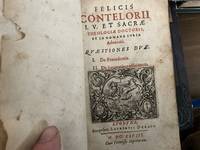
1628011904Lyon: Laurentii Durand 1628. Limp Vellum. Good. 12mo - over 6¾" - 7¾" tall. 12mo - over 6¾" - 7¾" tall limp vellum title printed in red & black with engraved illustration. Book Condition Good some browning & spotting small crack in vellum on spine. <br/> <br/> Laurentii Durand hardcover
172631435Venetiis Venice: Apud Sebastianum Coleti 1726. Very Good. Venetiis Venice: Apud Sebastianum Coleti 1726. Folio 34.5cm.; full contemporary parchment tan gilt-lettered spine label spine in seven compartments; 6632pp. collated complete; woodcut publisher's device to title page signed in image "G.P." initials head- and tail-pieces throughout. Parchment a bit scuffed and soiled horizontal crack to spine crown contemporary ownership signature and ex libris of the Biblioth. Carmelitar. Taurini to front pastedown else a Very Good fresh and sound copy. <br /> <br /> Substantial study of Christian heresies first published in 1709 this edition with a renewed notice by the Studio di Padoa co-signed by Alvise Pisani and Pietro Grimani the 114th and 115th Doges of Venice. Apud Sebastianum Coleti unknown
1737AQ33018London: Printed for T. Cooper 1737. 4 67pp 1. With a half-title. Disbound. Stab-stitch holes to gutter. Half-title working loose scattered spotting. Five letters unpicking various elements of Christian theology covering 'an Eternal Creation' the following 'Fitness and Unfitness in the Nature of Things' and a series of reflections on 'duties we owe to God' several Jewish Revelations and evidence for divine revelations themselves. Within is also contained a biblical dialogue between Saul and Samuel in which they discuss their own Revelations. ESTC T64785. First edition. 8vo. Printed for T. Cooper unknown
18515776Cincinnati OH: Wm. H. Moore & Co. 1851. New edition. Hardcover. Good. 8vo 308 pages embossed brown cloth some foxing light tidal line on fore-edges at rear <br/><br/>From the Third London Edition with a Sketch of the Author's Life and an Estimate of his Writings by Sir David Brewster F.R.S. Woodcuts. Printed by Morgan & Overend Cincinnati. Wm. H. Moore & Co. hardcover
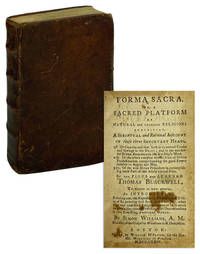
177425835Boston: William M'Alpine for the Rev. Mr. Williams of Windham 1774. Very Good. Boston: Printed by William M'Alpine for the Rev. Mr. Williams of Windham 1774. Presumed First American Edition. 16mo; full contemporary calf unadorned spine in six compartments; xvii1xviiivii.e. vii8-3391pp. B8 2B8 C-P8 Q4 R-2A8 collated complete. Leather a bit scuffed at extremities a few surface scratches to boards lacking endpapers contemporary ownership signature to front pastedown else a Very Good copy overall.<br /> <br /> Treatise first published in 1710 under the title "Schema Sacra" to accompany the author's text "Ratio Sacra." This the first appearance in the American colonies though another state provides the imprint "Printed and sold by William M'Alpine at his printing-office in Marlborough-Street" no priority. This copy includes the list of subscribers as well as the publisher's advertisement on p. 340. The list of subscribers includes by our count thirty-five women and a guy named "Mr. Life Night." The N.B. at the end of the publisher's advertisement assures the reader "As the above Books are mostly printed and bound by said M'Alpine he is determined to sell at the lowest Prices and will warrant all such to be neatly bound &c."<br /> <br /> EVANS 13155; ESTC W23140. William M'Alpine, for the Rev. Mr. Williams, of Windham unknown
187511326New York: Charles P. Somerby 1875. Very Good. New York: Charles P. Somerby 1875. Second U.S. Edition. Octavo. Mixed pagination; advertisements at rear. Blue moire cloth stamped in black and gilt. <br /> <br /> A series of essays from the English political activist atheist and founder of the National Secular Society. Includes "A Plea for Atheism" "Poverty" and several critical biographical sketches of biblical figures such as David and Jonah all peppered with Bradlaugh's trademark colorful language and strong though well-reasoned arguments appropriate for his pseudeonym "Iconoclast."<br /> <br /> Boards worn with brief exposure; binding shaken but holding. A few stray marks to the interior but overall legible thorughout. A very good copy of a book scarce in retail at the time of this writing. Charles P. Somerby unknown
024346701X.Gpaperback. Good. Access codes and supplements are not guaranteed with used items. May be an ex-library book. paperback
0243437080.Gpaperback. Good. Access codes and supplements are not guaranteed with used items. May be an ex-library book. paperback
036554535X.Gpaperback. Good. Access codes and supplements are not guaranteed with used items. May be an ex-library book. paperback
0666991642.Gpaperback. Good. Access codes and supplements are not guaranteed with used items. May be an ex-library book. paperback
2654038Toronto: William Briggs. GOOD. Textblock appears clean. Binding sound. Owner's name. Minor spine fade. 1891. Original binding. Black cloth hardcover with gilt lettering. Four-part pagination. Horner 1853-1921 was a Methodist-Holiness preacher. Toronto: William Briggs hardcover
DADAX1978703392Fortress Academic 2019-10-17. hardcover. New. 6.00x1.11x9.00. Buy with confidence. Excellent Customer Service & Return policy. Fortress Academic hardcover
SONG1978703392Fortress Academic 2019-10-17. hardcover. Used: Good. 6.00x1.11x9.00. Buy with confidence. Excellent Customer Service & Return policy. Fortress Academic hardcover
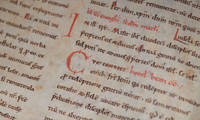
251671050. <blockquote><p>The important messages Gregory spoke nearly 500 years before the manuscript was made—that he spoke during the aftermath of a plague and collapse of an empire—were still relevant to the scribe who carefully copied out the homilies</p><p>“Earthly substance compared to heavenly happiness is a weight not a support.â€</p></blockquote><p>Modernity’s view of Pope Gregory the Great derives from his own words and from an imaging of the zeitgeist of the 6th century that the saint navigated. One early 20th century historian wrote of Pope Gregory that:</p><p>Growing up amid the relics of a greatness that had passed daily reminded by the beautiful broken marbles of the vanity of things he Gregory was accustomed to look on the world with sorrowful eyes. The thrill the vigour the joy of life were not for him.…He never attained a perfect sanity of view. From his birth he was sick—a victim of the malady of the Middle Ages. Dudden</p><p>Though this description may be consistent with the romanticized view of the 18th century antiquarian Edward Gibbon more than it accurately depicts Gregory Leyser the tumult and transition of the era must have impacted Gregory.</p><p>Born around 540 C.E. Gregory was immediately thrust into a world stricken with plague. This pestilence which would be known as the Black Death in the later Middle Ages was at this time called the Plague of Justinian due to the Emperor’s recovery from it and was the first occurrence of this strain of Yersinia pestis in Europe. In 590 Pope Pelagius II was not as fortunate as Emperor Justinian and succumbed to the disease— leaving the Holy See open for Gregory to assume as the natural successor to Pelagius Leyser.</p><p>From 590 until his death in 604 Pope Gregory achieved his appellation of “the Great.†During his papacy he began to shift the power centre back from Constantinople to Rome. He reformed and reshaped liturgy and arguably the most well known style of music from the Middle Ages the Gregorian chant described as such in the 9th century took his name because of his impact on plainchant centuries earlier. His influence was felt both on the Italic peninsula and in the far flung reaches of Germany and Britain.</p><p>While a unified Italy would not be achieved for another nearly 13 centuries the battle for a unified Christian theology across boundaries had already begun. With some groups still rejecting Christianity wholesale other groups believed different dogmas of the religion. One particularly popular version was Arianism which did not believe in the equality of the Holy Trinity rather that Jesus born of a human woman could not be of the same status as God and the Holy Spirit. As the Germanic Lombards amassed their kingdom in the North of Italy they staked out their Arian belief system. Gregory however befriended the Lombard Queen-by-marriage the Bavarian Theoldelinda who became a follower; she in turn influenced her husband Autori to adopt a Romanitas and convert to Nicean Christianity.</p><p>In 596 the Gregorian mission— the pope’s effort to convert the Anglo-Saxon peoples in Britain— was under way. Though after the Romans withdraw from Britain in 410 a good portion of the population remained Christian the Anglo-Saxon peoples were still practicing pagans and the separation from Rome led to distinct differences between Continental and Insular Christianity. Gregory saw an opportunity to complete the conversion of the British peoples in the Kentish King Æthelberht’s marriage to the Frankish and Christian Bertha. Thus he sent Augustine of Canterbury and Paulinus of York to the Islands and the conversion was under way.</p><p>Shortly before his mission efforts to Britain in 592-593 or 590-592 C.E. Pope Gregory delivered the Holimiae in Euangelia Homily on the Evangelists. These sermons would have been preached by Gregory and written down by scribes who were also able to read the sermons for him if need be Markus 16. These homilies come to us through an extant collection of around 400 still extant manuscripts Judic p. 233 n. 2.</p><p>Medieval manuscript Two vellum leaves from Books 1 and 2 of Gregory the Great’s Homiliae in Evangelia Italy 11th century written in beautiful Romanesque script.</p><p>The text of these folios are primarily from Book 2 Homily 27 and 37 with one section from Book 1 Homily 4 explaining the works of Evangelists John Matthew and Luke. In these sermons he expounds how to be a good Christian and the heavenly promises awaiting. In one exemplary passage from these leaves Gregory combines his passionate description of the kingdom of heaven with his acute sense of the Apocalyptic return of Christ as well as providing guidance for becoming more spiritually worthy. He writes:</p><p>“If we consider dearest brothers what and how great things are that are promised to us in the heavens we despise in our hearts all that is held on earth. For earthly substance compared to heavenly happiness is a weight not a support. The temporal life compared to the eternal life is rather to be said to be death than life. For what is the daily lack of corruption but a kind of prolongation of death But what language is sufficient to say or what understanding is sufficient to comprehend the joys of the heavenly city to participate in the choir of angels to assist with the most blessed spirits of the glory of the founder to behold the present face of God to see the uncircumscribed light to be affected by no fear of death to rejoice in the gift of perpetual incorruption But when he heard these things his heart was inflamed and he now desired to attend there where he hoped to rejoice without end. But great rewards cannot be attained except through great labors.†fol. 2 r.</p><p>This set of manuscript leaves lets us glimpse into the world immediately following the turn of the first millennium. The human touch behind the production of the manuscript comes to the fore through the unusual remains of the note from the scribe to his rubricator to add the section heading in red. The important messages Gregory spoke nearly 500 years before the manuscript was made—that he spoke during the aftermath of a plague and collapse of an empire—were still relevant to the scribe who carefully copied out the homilies paying attention to add delicate serifs on the feet of the descending strokes to make the physical manifestation of the words as impactful as their message.</p><p><strong>More details:</strong></p><p>Two vellum bifolium with sections from Books 1 and 2 of Gregory the Great’s Homiliae in Evangelia Italy 11th century second half in Latin four leaves two sets of two leaves conjoint 364 x 265 written space: 288 x 188 mm with double columns of 38 lines in fine Romanesque script Æ in ligature prepositions joined to the words they govern. Both tall & uncial-type d; ampersand for et. Consistent use of common abbreviations. Brown ink for main text headings in rubrication red with letters beginning sections tipped in red. Two and three-line initials in red.</p><p>These leaves demonstrate the production process of the manuscript. The leaves would have been folded in the centre leaving two columns of text on each side and stacked into each other and sewn to create packets called quires or gatherings of leaves. Thus the front and back recto/verso of the leaves are consecutive text but the leaves themselves are non-consecutive reflecting the stacking. Further remnants of the production process can be seen: the scribe’s directions to his rubricator— the person in charge of adding in the red letters— can be seen on the extreme edge of fol. 1 v beginning with “audio merit orare.â€. The letters written perpendicular to the main text correspond with the red letters on Column B reading in abbreviated letters “Lectio sancti evangelii secundum Matthaeum.†These types of directions are usually trimmed off during either the first stage of contemporary book production or in subsequent bindings making the finding of one highly unusual.</p><p><strong>Text Description:</strong></p><p>All from Gregory the Great’s Homiliae in Evangelia Homilies on the Evangelists</p><p>Fol. 1:</p><p>Book 2 Homily 27 sections 5- 8 “Addressed to the people in the Basilica of St. Pancratius the Martyr on the Day of his birthâ€</p><p>Fol. 1v:</p><p>Continued from recto Book 2 Homily 27 sections 8- 9.</p><p>Book 1 Homily 4 section 1 “Addressed to the people in the Basilica of Saint Stephan the Martyr on the Apostlesâ€</p><p>Fol. 2:</p><p>Book 1 Homily 17 section 18 “Addressed to the Bishops in the Lateran Baptistryâ€</p><p>Book 2 Homily 37 sections 1-2 “Addressed to the people in the Basilica of the Blessed Saint Sebastian the Martyr on the day of his birthâ€</p><p>Fol. 2v:</p><p>Continued from recto Book 2 Homily 37 sections 2- 6.</p><p><strong>Provenance:</strong></p><p>Ex Bruce Ferrini accompanied by a document prepared by Prof. Martin Colker of the University of Virginia.</p><p><strong>Further reading:</strong></p><p>Dudden F. Homes Gregory the Great: His Place in History and Thought 2 vols. London 1905 i. 15.</p><p>Leyser Conrad Authority and Asceticism from Augustine to Gregory the Great Oxford UP 2000.</p><p>Markus R.A. Gregory the Great Cambridge UP 2012.</p><p><img class=""alignnone wp-image-25018 size-post-window"" src=""https://cdn.raabcollection.com/wp-content/uploads/20231204144051/Folder-site-11-1600x1327.jpg"" alt="""" width=""1600"" height=""1327"" /></p> hardcover
2664405Brantford St. John Melbourne Port Adelaide: Bradley Garretson & Compay. VERY GOOD for age. Textblock appears clean. Binding sound. Moderate sunning to spine area. 1886. RARE in Original binding. Decoratively stamped cloth hardcover. Burgundy with gilt and black. Bevelled. Bright gilt to all edges. Frontispiece with tissue protector. 528pp. Index. Deals with Materialism Evolutionism the Immortality of the Soul Annihilationism Probationism Purgatory Agnosticism Universalism and other theories. Concludes with practical applications. Brantford, St. John, Melbourne, Port Adelaide: Bradley, Garretson & Compay hardcover
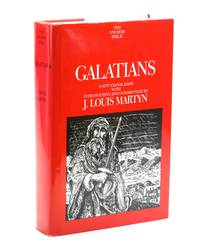
1997508786Anchor Bible 1997. Hardcover with Dust Jacket. FINE/FINE. xxiv 614pp. Fourth printing. Perfectbound in cloth hard covers. FINE copy in NEAR FINE jacket with some very faint sunning to the spine. Anchor Bible hardcover
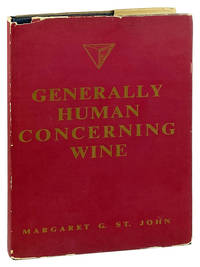
196027451Ipswich UK: East Anglian Magazine Ltd 1960. Very Good/Very Good. Ipswich UK: East Anglican Magazine Ltd. ca. 1960. First Edition. Octavo. 63 pp. Two color plates. Printed dust jacket. Dark blue boards stamped in gilt. Dust jacket chipped and rubbed along edges. Boards show light shelfwear. Binding is sound and pages unmarked. Very Good. <br /> <br /> Collection of poetry short stories and spiritual reflections. St. John's themes and form are wide ranging: Texas and Ireland talk of pirates and saints; intoxication divinity and modes of transportation feature prominently; astrology and Satan make an appearance. Her New York Times obituary mentioned St. John as a student of religion the occult and metaphysics and at the time of her death at age 39 in 1965 was working for Evyan Perfumes Inc. Uncommon in retail and only three holdings found in OCLC. East Anglian Magazine, Ltd unknown
1947792490.Gpaperback. Good. Access codes and supplements are not guaranteed with used items. May be an ex-library book. paperback