Polyglot Bible|Walton, Brian (ed)Biblio.com
260 résultats
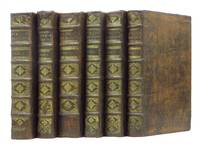
165512173London Thomas Roycroft/Apparatus: Zürich Heinrich Bodmer 1657 colophon Vol.2: 1655 Vol.3: 1656/Apparatus: 1673. Biblia Sacra Polyglotta Complectentia Textus Originales Hebraicum cum Pentateucho Samaritano Chaldaicum Graecum. Versionumque antiquarum Samaritanae Graecae LXXII Interp. Chaldaicae Syriacae Arabicae Aethiopicae Persicae Vulg. Lat. Quicquid comparari poterat. Cum Textuum & Versionum Orientalium Translationibus Latinis. Ex Vetustissimis Mss. Undique Conquisitis optimiisque Exemplaribus impressis summâ fide collatis. Quae in prioribus Editionubus deerant suppleta. Multa antehac inedita de novo adjecta. Omnia eo ordine disposita ut Textus cum Versionibus uno intuitu conferri possint. Cum Apparatu Appendicibus Tabulis Variis Lectionibus Annotationibus Indicibus & c. Opus totum in sex Tomos tributum. Edidit Brianus Waltonus. WITH: Briani Waltoni Angli Viri Celeberrimi Biblicus Apparatus Chronologico- Topographico- Philologicus: Pront ille tomo praeliminari Operis eximii Polyglotti Londini Anno Christi MDCLVIII. editi continetur. Exhibens Tractatus varios eósque integros Diversorum Virorum doctissimorum & in omni Literatura exercitatissimorum de ratione Sacrorum Temporum Locorum ut Terrae promissae Templi Urbis Ierosolymitanae &c. Nummorum Mensuarum Ponderum nec non Idiotismorum Scripturae sacrae Linguarum & Versionum Orientalium. Adjiciuntur Johannis Drusii De Proverbiis sacris Classes duae. Nunc in gratiam omnium qui Musas has sanctissimas sanctè colunt seorsim excusi & Indicibus exornati. 6 volumes and 1 portrait frontispiece 14 865 889 1 29 1 447 1 389 1 227 1 149 1 87 1 3 1 128 23 1 20 159 1 390 983 1 2 72 56 98 80 196 140 24 58 36 36 96 =74 2 p. H. 46 x W. 295 cm. Contemporary Leather with 6 raised bands decorated with gilt large Folio Apparatus 6 570 6 p. later Vellum with 5 raised bands Folio. This is the last edition of the four great Polyglots following that of Alcalá 1514-1517 in four languages Antwerp 1569-1573 in five and Paris 1628-1645 in seven. It's the most extensive edition of the great Polyglot Bible the London Polyglot or the Walton Polyglot after the compiler Brian Walton 1600-1661. According to Brunet this edition ""is the most sought after being more complete and correct than the others and containing nine different languages"" with Ethiopian and Persian added to the seven languages of the Paris Polyglot. So it includes the text of the Bible in 9 different languages: Hebrew Samaritan Aramaic Greek Latin Ethiopic Syriac Arabic and Persian. All of the texts that are not in Latin are accompanied by Latin translations and all are arranged side by side or one over another on the two pages open before the reader. The first three volumes contain the Old Testament. They give the Hebrew text with the Samaritan Pentateuch the Latin Vulgate the Greek Septuagint the Aramaic Targum and the Syriac and Arabic paraphrases. The fourth part contains the Apocrypha and the Triplex Targum i.e. Targumim I and II of Jerusalem and the Persian version of Jacob ben Joseph Tawus. The fifth volume is devoted to the New Testament printed in Greek Latin Syriac Arabic and Ethiopian. Finally the last section contains the critical apparatus. Volume 1 is illustrated with multiple engravings in the text a portrait of Brian Walton a frontispiece 2 plans a map and 3 engravings all double-page except 1 plan. An extra volume by Brian Walton the Apparatus contains parts of the Polyglot such as codices chronologies proverbs and Holy Land details. Vol. 1 missing blank leaf after pp. 865. Spines restored portrait and title print frayed with creases some browning and staining. A copy of the second edition without the reference to Cromwell's protectorate in the preface. It does not contain the dedicated epistle to King Charles II but does contain the one mentioned by Brunet at the beginning of the first volume p. 48. From the library of the Scholasticate of Differt Belgium with a dry-stamp and stamp on the title. A firm and complete set of this influential work. Darlow T.H./Moule H.F. 1963. Historical Catalogue of the Printed Editions of Holy Scripture Vol.II 1 no. 1446 on p. 23-26 / Wing B2797 / Brunet I 852. London, Thomas Roycroft/Apparatus: Zürich, Heinrich Bodmer hardcover
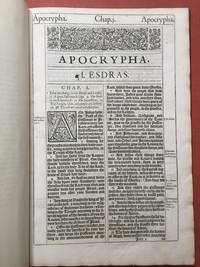
1611H2543London: Robert Barker 1611. First printing. Hardcover. Fine. First edition taken from the 'He' version of the entire APOCRYPHA Authorized Version known as the King James Bible 1611. Folio finely bound in full morocco gilt with printed title page and preface by the New York bookseller Charles Hamilton probably early 1960s where he attests that the text is from the 'He' version taken from an error in Ruth III.15 corrected to 'she' shortly after and thus much more desirable. Fine. 104 leaves 208 pp. from the most famous book in the English language. The 1611 King James Apocrypha contained the following books: 1 Esdras 2 Esdras Tobit Judith Additions to Esther Wisdom of Solomon Ecclesiasticus Baruch Letter of Jeremiah Prayer of Azariah Susanna Bel and the Dragon Prayer of Manasseh 1 Maccabees and 2 Maccabees. In 2016 a copy of the complete Bible sold at Sotheby's for $320000 plus the hammer: nearly $400000. Robert Barker hardcover
162718927Frankfurt: Matthaeus Merian 1627. First edition. Hardcover. Very good. Matthaeus Merian. Oblong folio leaves: 20.6 by 31.2 cm; plates: 10 to 11.5 by 14.5 to 15.5 cm. Engraved titlepage borders without letterpress; 231 of 233 engraved plates printed on the rectos with no printed text depicting biblical scenes from the Old and New Testaments lacks Gen. XIX: Lot and his daughters after the destruction of Sodom and Gomorrah; Exod. VIII & IX: The plague of frogs. Recent marbled calf lightly rubbed at extremities bordered in blind; gilt-tooled spine with raised bands gilt lettering pieces. Occasional light stains and smudges especially at the outermost leaves and almost entirely restricted to the blank margins; old mostly marginal repairs and reinforcement of tears to about 30 leaves Matt. IV plate with loss of about 10 words of manuscript text. Protected by wide margins the plates are clean fresh and bright with relatively few minor blemishes. Housed and protected in a custom luxurious modern leather clamshell box.<br /> <br /> Rare suite of biblical illustrations printed before letter perhaps as proofs comprising 231 of 233 engraved plates from the Icones Biblicae of Matthaeus Merian the elder 1593-1650. The engravings are printed on large paper and lack any printed text. They are preceded by a leaf of the engraved title borders to the first part in which the central cartouche which would have contained a letterpress title and imprint is here blank. Neat manuscript annotations appear throughout: atop each engraving is a brief title along with a notation of the biblical book and chapters; beneath each engraving are six-lines of rhyming verse in German; at the top corners are leaf numbers in Arabic numerals. All are penned in black ink in the same old cursive German hand. The engraved title leaf is not included in the manuscript foliation. The first three leaf numbers and several others among the first 23 leaves are obscured by wear or later marginal repairs. The foliation ends at leaf 233 and is discontinuous where one would expect to find numbers 15 and 38 corresponding to the missing plates noted above. As noted by Wütrich only four of the 233 plates are signed by Merian all in the New Testament series. Each of these signed plates appears in our suite: Matthaei I. - page 7; Johannis VIII. - page 65; Matthaei XXVII. - page 101; Apocalyps. IX. - page 145 header titles and page numbers from the first edition.<br /> <br /> The first editions were published at Frankfurt in four parts between 1625 and 1627. The Pentateuch series was published in 1625. The second part illustrating the Old Testament books from Joshua to Kings appeared in 1626. These first two series were published under the name of Merian's father-in-law the printer and bookseller Johann Theodor de Bry 1561-1623 whose heirs retained title to the business. The third part illustrates the remainder of the Old Testament and Apocrypha; the fourth the New Testament. These last two parts were published in 1627 under the engravers's own name. Verses in Latin German and French accompany each plate in the three Old Testament series the French verses being omitted in the 1627 New Testament series.<br /> <br /> While the eminent Swiss draughtsman and engraver Matthaeus Merian is best known for his topographical depictions of the German speaking lands which appeared in the Theatrum Europaeum his novel selection of biblical stories and innovative stylistic approach revealed in the present series of plates proved highly influential ushering in a new age of copperplate engraving in Bible illustration. Merian broke with the century-long tradition of woodcuts which had accompanied countless editions of Luther's German Bible. Even as he drew on the Bible illustrations of Jost Amman Hans Holbein Virgil Solis and Tobias Stimmer Merian greatly expanded the traditional iconographic and compositional repertoire. The Old Testament alone contains 23 prints depicting stories that had never before been the subject of an engraver. While earlier New Testament woodcuts focused on the Book of Revelation Merian now provided a rich series of plates to illustrate the Gospels and Acts of the Apostles as well.<br /> <br /> Merian had an obvious preference for crowd scenes and battles along with some of the novelistic features of the Old Testament such as Jacob's lentil dish Solomon and Shulamit in the Song of Songs or the apocryphal story of the Dragon in Babylon. Merian sometimes provides local color from his home town of Basel as in his depiction of Solomon's Temple Consecration in which despite the baroque redesign the Basel Cathedral with the old choir is easily recognizable. The costumes and gestures of Merian's biblical characters display a baroque fantasy of the ancient Near East as reflected in the theater of his day; in depicting cities and buildings however Merian generally prefers to follow contemporary models. In individual cases such as Bathsheba's Bath he succumbed to the temptation as an engraver and artist to show off his skills in a magnificent fashionable palace and garden complex. All-in-all Merian's engravings initiated a development in Bible illustration "that led further and further away from the didactic Reformation purpose of Bible pictures to purely artistic-representational purposes and finally ended in the well-known pathos of the German Romantic Nazarenes" Schmidt.<br /> <br /> In the first few decades after their appearance these Bible plates were widely copied throughout Europe especially in the Netherlands and France Poortman. The first folio Bible to use Merian's copper plates to illustrate the text was published by the heirs of Lazarus Zetzner at Strasbourg in 1630. Subsequent editions of the "Merian Bible" were published at Frankfurt where Merian had taken over his father-in-law Johann de Bry's business. For over a century as Merian's heirs continued to publish new editions this would become "the most widespread German illustrated Bible in southern Germany Basel and Alsace primarily in wealthy households" Schmidt. After the demise of the Merian publishing house in 1727 the bookseller Philip Heinrich Hütter acquired the copper plates which he used to illustrate a Catholic Bible edition published at Frankfurt in 1740 Poortman.<br /> <br /> A very notable instance of transposing Merian's biblical engravings into another context occurs in the famous and oft-reprinted Amsterdam Haggadah the ritual for the Jewish Passover meal first published in 1695. The engravings were made by Abraham ben Jacob a former Protestant preacher who converted to Judaism. Introducing skills he had earlier acquired when working outside the Jewish community Abraham ben Jacob "widened the scope of Jewish book illustration" Rosenau and introduced new elements into the traditional iconography of the Haggadah. "He chose many of the same incidental scenes as had appeared in the Venice Haggadot 1599-1604 but he drew them afresh basing his work on the biblical pictures in the Icones Biblicae by Matthew Merian" EJ. Among them was the image of the Temple of Solomon in Jerusalem. As Merian used a wide variety of prototypes Rosenau suggests that the two free-standing columns Jachin and Boaz depicted at the front porch of the Temple in Merian's engraving and Abraham ben Jacob's adaptation may have ultimately been derived from the woodcuts which accompany Estienne's Bible Paris 1540 based upon the scholarship of Franciscus Vatablus.<br /> <br /> In Das druckgraphische Werk von Matthaeus Merian d. Ae. 1993 L. H. Wüthrich describes a "Spezialausgabe ohne Drucktext" complete with 233 biblical engravings located in Darmstadt at the Hessische Landesbibliothek 31/643. This "separate edition without text or a series of proofs" which he describes has three notable features: 1 an undated first edition title page of the second part Pars II of the Old Testament which has been "corrected. by crossing out or shaving" to read "Pars I"; 2 the first edition title page of the New Testament series dated 1627; 3 an engraving of the The Fall of Man probably after Johann Theodor de Bry which later appears in Gottfried's Chronicle part 1 1629/1630 but which differs from that found in most copies of the first edition Wütrich 1a. The copies containing this plate after de Bry Wütrich 1aa. were likely printed in 1626. Further research perhaps locates only one other suite of Merian plates without text at the Herzog August Bibliothek Wolfenbüttel catalogued under two call numbers: the Old Testament series dated 1626-1627 comprising 157 leaves including an engraved title A: 30.1 Geom. 2 "Ausg. ohne Text von Ps. 1 und 2." = VD17 23:289608V and the New Testament series dated 1627 comprising 78 leaves including an engraved title A: 30.1 Geom. 3 "Ausg. ohne Text" = VD17 23:655618H. The catalogue entry for the Old Testament series references Wütrich's "Spezialausgabe ohne Drucktext." Surprisingly the key images provided for this entry illustrate the same three notable features of the "Spezialiausgabe" which Wütrich located at Darmstadt !. Our suite of plates is provided with a single blank engraved title leaf the one used for the first series of the Old Testament plates which lacks any letterpress. The third plate which depicts the Fall of Man is here in Merian's style and is the image more commonly found in the first printings Wütrich 1a.<br /> <br /> In the first edition of the Icones Biblicae the title page notes "Mit Versen und Reymen in dreien Sprachen geziert und erkläret Durch Johann Ludwig Gottfried" decorated and described with verses and rhymes in three languages by Johann Ludwig Gottfried. In the first three parts of Icones Biblicae Gottfried's German verses are in four lines with a rhyme scheme of ABBA. In the fourth part the New Testament the German verses are modified to six lines with a rhyme scheme of AABCCB. The manuscript verses in German which accompany each of the 231 plates in our suite differ from both of these formats being composed in six lines of iambic hexameter with a rhyme scheme of ABABCC. To give a sense of how these versions differ the four lines of the German printed verses which accompany the first plate The Creation may be compared with the following transcript of the written verses which describe this scene in our set.<br /> <br /> in the first edition of Merian's Bilderbibel<br /> <br /> Im Anfang Gott Erschuff den Himmel und die Erden<br /> Die Wasser und das Meer das Liecht der Sternenschein<br /> Die Vögel Fisch Gewürm alle Thier groß und klein<br /> Warauß sein Gütigkeit und Kraft erkant mag werden.<br /> <br /> the hand of anonymous versifier<br /> <br /> Im Anfang schuff der Herr den Himmel und die Erden<br /> Das Licht die Sonn den Mond die Sternen und das Meer<br /> Gras Bäume Laub und Kraut und was genannt mag werden<br /> Von Thieren Vögel Fisch in ihrem grosen Heer<br /> Nur durch ein einig Wort: Ich kan hieraus erkennen<br /> O Gott! dein ew'ge Krafft und dich den Schöpffer nennen.<br /> <br /> Watermark: flambeau surrounded by garland<br /> <br /> Provenance: laid-in typed description on a half-sheet bearing the early twentieth-century letterhead of Harry A. Levinson Rare Books: "There appears to be no record of another such copy of proofs before letter." References: L. H. Wüthrich Das druckgraphische Werk von Mattaeus Merian d. Ae. Basel: Bärenreiter 1993 vol. 3 p.16: "Spezialausgabe ohne Drucktext;" Enc. Jud. 2nd ed. 8:215; W. C. Poortman Bijbel en Prent 's-Gravenhage 1986 2:56-59; H. Rosenau Vision of the Temple London: Oresko 1979 pp. 135; 146f. Ph. Schmidt Die Illustration der Lutherbibel Birsfelden/Basel 1977 pp. 304-329; VD17 23:289608V and 23:655618H. [Matthaeus Merian] hardcover
16604440Cambridge: Printed by John Field Printer to the Universitie 1660 1660. First Ogilby edition 2 works; 2 vols; large folio 51 x 34.5 cm; 110 double-page engraved plates including a large double-folding plan of Jerusalem captions in Latin some masked at time of printing engraved general title New Testament title dated 1659 ruled in red throughout wide margined on thick paper armorial bookplate to front pastedown of each vol. ownership inscription in pencil to front free endpaper a few tears mostly affecting margins 4N2 verso stained minor colour-run from fore-edge throughout some minor offsetting and ink smudges prelims a little spotted otherwise internally very clean; near-contemporary straight-grained red morocco armorial device supralibros to upper boards obscured by later blue morocco panel set within gilt meander border gilt spine in 8 compartments alternating lettering and cross-hatch design all edges gilt over earlier fore-edge painting of meandering vines joints and corners expertly restored; 140 16 806; 2 807-1103 1 258 4 338pp. Herbert 668; ESTC R17044; Wing B2258; Lowndes 1367; Griffiths 8. An exceptional well-margined copy of John Ogilby's imaginative reissue of the Field large folio bible published for the Restoration of King Charles II on 29th May 1660. Magnificently illustrated with 110 double-page engraved plates of biblical scenes after paintings by Rubens Tintoretto de Vos de Bruyn and other old masters including Wenceslaus Hollar's impressive double-folding-page view of Jerusalem his Chorographica Terra Sanctae of the Holy Lands and the engraved general title by Lombart after Diepenbeeck depicting Solomon enthroned. The work was originally illustrated with just 8 plates by Lombart and Hollar which had been intended for the London Polyglot bible published in 1657 but Ogilby soon offered the option of embellishing the work with a choice of engravings from the Amsterdam publisher Nicolaes Visscher. The number of plates is known to vary but ESTC calls for a total of 102 only. The text was first published the previous year by John Field printer to the University of Cambridge who had been commissioned to supply a lectern bible for use in churches and libraries. The work was well-received with the former university Vice-Chancellor John Worthington noting that 'For a fair large letter large paper with fair margin &c. there was never such a Bible in being'. In the event however most of the edition was bought-up by Ogilby for his own project. Variously called 'Ogilby's Bible' or 'The Restoration Bible' the result was a truly luxurious production with well-margined copies such as this costing upwards of £25 in sheets alone. The finished work was presented to Charles II to whom the work is dedicated when the restored monarch first visited the Royal Chapel in Whitehall. An 'unrivalled specimen of the press of the time' the finest edition of the Holy Bible then extant Lowndes. Provenance: Sir William Halsey Gaddesden Library bookplate and ownership inscription. Cambridge: Printed by John Field, Printer to the Universitie 1660 hardcover
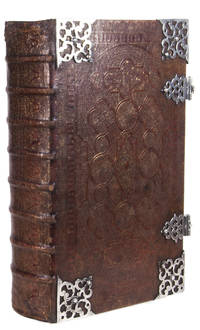
1663ABC_48446Leiden 1663. Large folio 44.5 x 28 cm. widow and heirs of Johannes Elzevier Contemporary elaborately gold-tooled red morocco over bevelled wooden boards sewn on 8 supports with corresponding raised bands on the spine with grand silver fittings with the hallmarks of an unknown silversmith dated on the inside of one of the clasps "1665" gold-tooled board edges and turn-ins. Further with gilt painted and elaborately gauffered and decorated edges; the fore edge shows the coat-of-arms of Jeremias de Bont with some floral decorations these floral decorations can also be found on the top and bottom edges. The boards show a very intricate gold-tooled symmetric design of ribbons with small geometric stamps and with ornamental curling stamps - better known as "petit fers" - within the different parts of the bigger pattern. The binding contains 4 ornamental corner pieces on each board and two catch plates front board and two hinge plates back board connected by two decorated massive silver clasps engraved on the inside "Ieremias de Bont top and "1665" bottom. With 3 letterpress title-pages the first in red and black and each with the same Elzevier woodcut tree device with non solus a complete series of 6 double-page engraved maps the Nicolaes Visscher maps 5 published ca. 1657 and including the world map added ca. 1663 without the engraved title-page as usual. Further with numerous woodcut initials and tailpieces. 3 parts in 1 volume. 22 "368" = 370; 13 "167" = 168; 2 77 ll. The first Dutch "States Bible" to be printed in roman type printed by the famous Leiden printers publishers and booksellers Elzevier. The present copy in the splendid binding was made for a high official within the Dutch Republic Jeremias de Bont. His family's coat-of-arms can be found on the gauffered painted and gilt fore edge and Jeremias' name is engraved in the inside of the top silver clasp the bottom one shows a date "Anno 1665". The "States Bible" is the first officially authorized translation of the Bible into Dutch the Statenvertaling commissioned during the Synod of Dordrecht 1618-1619. The States General of the United Provinces of the Netherlands were asked to pay for it hence its name. The translation was completed in 1635 and approved authorized and published in 1637 in Leiden. For the present 1663 edition the Elzeviers followed the text of the 1657 revised and corrected edition. In a sense it could be seen as a revolutionary publication even though it still is an authorised version of the Bible; the present copy contains the live signature of a Leiden city clerk - as usual - to indicate its authorization. The decision to set the main text in roman type rather than the conventional gothic textura was unprecedented in such publications and not only contributed to the spread of roman type in Dutch-language printed matter generally works in Latin were often set in roman more than a century earlier but also contributed to the prolonged popularity of the authorised translation itself and of the present edition.The present copy is illustrated with 6 double-page maps published by Nicolaes Visscher; this series includes 5 maps of Jerusalem and the Holy Land published ca. 1657 and 1 world map published ca. 1663 as usual all in their first state.Jeremias de Bont -1687 was 17th-century politician in the Dutch Republic. He was a member of the "Vroedschap van Gorinchem" in/since 1674 city council of Gorinchem in the present-day province of South Holland burgomaster in Gorinchem in 1679 and 1681-1683 and member of the Dutch "Raad van State" Council of State of Holland on behalf of the city of Gorinchem.We thank dr. J. Storm van Leeuwen for his in-depth analysis of the present binding. Through his findings we know that the present binding is contemporary to the work 1663 and judging by the style of the decorations possibly produced by a German binder in the Netherlands Amsterdam or The Hague. In his research Storm van Leeuwen came across 3 other bindings in the same style and all produced around the 1660s. These bindings cannot be ascribed to a hitherto known 17th-century Dutch bindery thus - for ease of reference - Storm van Leeuwen named the bindery after the present binding: "De-Bont Binderij".With the signature of J. van der Werve a city clerk below the coat of arms of the city of Leiden on the verso of the first title-page below the privileges. The binding shows slight signs of wear browned and foxed throughout the edges are slightly dust-soiled but still showing the highly detailed decorations. Without the engraved title-page as usual. Otherwise in good condition a splendidly bound copy for Jeremias de Bont of the famous Elzevier Dutch States Bible.l Bijbel tentoonstelling statenvertaling Amsterdam 1937 105; Darlow & Moule II 3321; Delaveau & Hillard Bibles imprimées 1200; Le Long Boekzaal der Nederduytsche Bybel p. 821; STCN 840822693; Willems 884; for the maps: Poortman & Augusteijn Kaarten in Bijbels 27-pp. 179-185; for Jeremias de Bont and his positions within Gorinchem: C. van Zomeren Beschryvinge der stadt van Gorinchem en landen van Arkel Gorinchem Teunis Horneer 1755; for the De Bont family: De Nederlandsche Leeuw 40 1992 cols 121-122 "Bondt de". ABE CAT Bibles Sermons & Psalmbooks hardcover
1660J6OH1B1XFXOGAmsterdam: widow of Paulus Aertsz. van Ravesteyn 1660. Later ca. 1800 blind-tooled calf sewn on 7 supports 3 cut flush with the bookblock each board with a small central flower in a double frame with corner diagonals made with 2 rolls and another flower inside each corner of the inner frame 2 pair of brass fastenings. Modern ca. 1900 endpapers. Large folio 45 x 30 cm. With an integral engraved general title-page architectural portico with a book above illuminated by the sun the crowned arms of the States General below and a large biblical scene at the foot: Elijah and the ravens alluding to Van Ravesteyn's name 2 letterpress title-pages for the New Testament and Apocrypha each with Van Ravesteyns woodcut device Elijah and the ravens a divisional title for the Prophets 6 double-page engraved maps by Nicolaas Visscher I including a world map and a plan of Jerusalem and 96 Bible illustrations 7 x 8.5 cm: 64 for the Old Testament and 32 for the New Testament published by Frederick de Wit engraved by Cornelis Danckerts after Matthäus Merian on 6 double-page plates plate size 28.5 x 38 cm with 16 illustrations per plate. Further with 9 woodcut tailpieces one at the end with a different Van Ravesteyn device inserted in the middle plus dozens of repeats about 50 woodcut decorated initials at least 8 series the 36 mm series opening most books of the Bible having 2 different blocks for at least some letters plus more than a hundred repeats. Set in textura types with incidental roman. The engraved title-page devices on the letterpress title-pages maps illustrations and many of the woodcut decorations and initials including all those on the back of the maps coloured by a contemporary hand with extensive use of gold. 3 parts in 1 volume. Extra-illustrated and hand-coloured large folio edition of the Dutch Statenbijbel States Bible the translation officially authorized by the Dutch Reformed Church and published with a privilege from the States General of the Dutch Republic. The 1619 Synod of Dordrecht established a committee to prepare the new translation and leading Dutch scholars worked on it for nearly twenty years before Paulus Aertsz. van Ravesteyn ca. 1586-1655 published the first edition in 1637. The 6 maps and the 96 engraved illustrations were produced for insertion in folio editions of the States Bible but in Van Ravesteyn's 1657 edition maps 2-6 by Nicolaas Visser I were originally accompanied by an older world map by his father Claes Jansz. Visser. The younger Visser's present new world map replaced it ca. 1663. De Wit's series of illustrations seems to be quite rare.With owners inscriptions. The tattered margins of the half-title and title-page were reinforced and extended with slips of paper at an early date there are tears repaired into two maps and one text leaf and other leaves have marginal defects some repaired. The paper shows some browning and foxing. Still generally in good condition and with large margins. The binding is scuffed but structurally sound and most of the tooling remains clear. A stunning large States Bible with 6 maps 96 illustrations and many decorations and initials coloured by a contemporary hand with extensive gold.l Poortman Bijbel en prent I p. 233 cf. pp. 147 151; cf. Darlow & Moule 3315; for the maps: Poortman & Augusteijn 27.1-6; for the prints: Poortman Bijbel en prent 30.A.3. widow of Paulus Aertsz. van Ravesteyn, unknown
16603641Amsterdam: widow of Paulus Aertsz. van Ravesteyn 1660. 18th-century black so-called sharkskin over bevelled wooden boards ca. 1770 sewn on 8 double supports with 8 large silver corner-pieces and 2 large silver clasps with catchplates and anchorplates all with matching stamped relief decoration scallop shells/fans scrollwork and fields of suares with crosses at the intersections or diamonds with 's at the intersections gilt and gauffered edges. The silver furnishings bear Amsterdam city hallmarks with year letter C crown above XXX above C and master's mark DF. Rebacked with most of the original backstrip mounted on the spine. Large folio 47.5 x 32 cm. With an integral engraved general title page architectural portico with a book above illuminated by the sun the crowned arms of the States General below and a large biblical scene at the foot: Elijah and the ravens alluding to Van Ravesteyn's name 2 letterpress title pages for the New Testament and Apocrypha each with Van Ravesteyn's woodcut device Elijah and the ravens a divisional title for the Prophets 6 double-page engraved maps by Nicolaas Visscher I including a world map and a plan of Jerusalem and 336 Bible-illustrations 6.5 x 10 cm by Claes Jansz. Visscher after Matthäus Merian on 42 numbered single-page plates plate size 35 x 24 cm with 8 illustrations per plate. Further with 9 woodcut tailpieces one at the end with a different Van Ravesteyn device inserted in the middle plus dozens of repeats about 50 woodcut decorated initials at least 8 series the 36 mm series opening most books of the Bible having 2 different blocks for at least some letters plus more than a hundred repeats. Set in textura types with incidental roman. The maps and illustrations coloured by an early hand with extensive use of gold. 3 parts in 1 volume. Extra-illustrated large folio edition of the Dutch Statenbijbel States Bible with 6 maps and 336 illustrations hand-coloured the translation officially authorized by the Dutch Reformed Church and published with a privilege from the States General of the Dutch Republic. The 1619 Synod of Dordrecht established a committee to prepare the new translation and leading Dutch scholars worked on it for nearly twenty years before Paulus Aertsz. van Ravesteyn ca. 1586-1655 published the first edition in 1637. The 6 maps and the engraved illustrations were produced to be inserted into Van Ravesteyn's folio editions. The series of 336 illustrations by Claes Jansz. Visscher with eight to one leaf are engraved by Cornelis Danckerts. With some browning but still generally in good condition and with large margins. The binding has been rebacked as noted and the "sharkskin" on the boards has some cracks and wear but the silver furnishings and gauffered edges are well-preserved. A stunning large States Bible with 6 maps and 336 illustrations coloured by an early hand with extensive gold.l Poortman Bijbel en prent I p. 233 cf. pp. 147 151; STCN 094500975 9 copies; cf. Darlow & Moule 3315 1657 ed.; for the maps: Poortman & Augusteijn 27.1-6 all in first states; the prints not in Hollstein; Poortman Bijbel en prent; for the zilver furnishings: Voet Amst. zilversmeden 448-449. widow of Paulus Aertsz. van Ravesteyn, hardcover
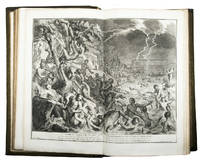
16632167Leiden: widow and heirs of Johannes Elzevier 1663. Richly gold-tooled black goatskin morocco ca. 1725 over bevelled wooden boards sewn on 6 double cords each board with a double frame cornerpieces and large lozenge centrepiece all built up from hundreds of impressions of about 40 tools including a birds-in-vines roll for the inner frame with large built-up cornerpieces inside and smaller ones outside the centrepiece with a quartered square central field each quarter with a courant running stag and with a small 6-pointed sun with a face in the centre each of the 7 spine compartments with a double frame of double fillets with small fleurs-de-lis as cornerpieces the 2nd and 3rd with the title and volume number and each of the others with a centrepiece 4 cornerpieces and 2 small fleurs-de-lis; richly gold-tooled turn-ins gilt edges headbands in yellow and reddish-gold the so-called STAG BINDERY Rotterdam. From the collection of Hendrik Adriaan or Hendricus Hadrianus vander Marck ca. 1667-1726. Large folio 44.5 x 28 cm. The Elzevier Bible with an engraved allegorical frontispiece 3 letterpress title pages the general title page in red and black the others for the New Testament and Apocrypha each with the same Elzevier woodcut tree device Rahir M. 9. Picart's wholly engraved print-Bible with an allegorical frontispiece a half-title and 209 finely engraved Bible scenes 29 double-page by Gerard Hoet Bernard Picart etc. Further with a series of 6 double-page engraved plates namely 5 maps plus a plan of Jerusalem all by Nicolaas I Visscher. Below the privilege from the city of Leiden the city secretarys clerk Jacob vander Werve has authenticated the book by stamping the Leiden coat of arms and signing his name below it. 3 volumes bound as 2 with the prints and maps bound in. The famous and magnificent 1663 Elsevier edition of the 1637 authorized Dutch States translation of the Bible Old and New Testament plus the Apocrypha the only early edition of the Dutch States translation with the text in roman type instead of the traditional textura gothic. With Picart's folio print-Bible Figures de la Bible 1720 the most sumptuous pictorial bible published in the Netherlands here in the rare first edition published by the artist himself and the series of 6 maps and plans by Nicolaas I Visscher 1618-1679. The prints and maps are inserted in the relevant places in the Old Testament New Testament and Apocrypha with the New Testament and Apocrypha bound together to make the second volume. The whole is most luxuriously and splendidly produced and bound by the so-called "stag bindery" active in Rotterdam at least 1693-1743 the most important eighteenth-century bindery in Rotterdam and . one of the most distinguished Dutch workshops in the first half of that century Storm van Leeuwen IIA p. 432. A truly unique piece combining the best of all aspects of Dutch book production Elzevier's printing excellent presswork Picart's engravings and a binding by a Rotterdam workshop undoubtedly the equal of Magnus.Storm van Leeuwen notes that the book comes from the library of the great Dutch book collector Hendrik Adriaan vander Marck ca. 1667-1726 though we do not find it in the 1727 auction catalogue of his library. It descended to the Tjeenk Willink collection. In very good condition with some of the inserted prints and maps slightly browned and an occasional minor marginal defect. The bindings with a few minor scratches a few scuffs on the board edges and the spines slightly worn but still very good most of the tooling fine. Magnificent set complete with the two integral blank leaves.l Biblia sacra 1663.B.dut.JElwidandheirs.a; Bijbel-tentoonstelling 1914 no. 653; Darlow & Moule 3321; Poortman Bijbel en prent I p. 154; Rahir 885; STCN 840822693; Willems 884; for the print-Bible: Poortman II pp. 140-145; STCN 274059983 4 copies; for the maps: Poortman & Augusteijn chapter 27 maps 118-123; for the binding: Jan Storm van Leeuwen Dutch decorated bookbinding L805 & vol. IIA p. 433 438 ill. fig. 178. widow and heirs of Johannes Elzevier, hardcover
161116409London: Robert Barker 1611. A3 bound backwards. Title page the 2 leaves of the engraved map and the final 2 leaves in excellent facsimile. Additional title page from a later edition bound in behind the facsimile. Gothic and Roman types text double column with 59 lines per column and printed within woodcut rule-border calendar and almanac printed in red and black. General title-page within engraved border by Christian Boel and section title for the New Testament dated 1611 within woodcut border. Full-sheet engraved map of the Holy Land by John Speed after Dr John More 17 leaves of genealogical tables incorporating woodcut illustrations of Adam and Eve Noah’s Ark the Tower of Babel and other Biblical subjects numerous woodcut head- and tail-pieces historiated and ornamental initials. Contemporary calf boards rebacked spine labels; some staining a few leaves with small holes or edges torn away but generally a very good copy. With a notation on the paste-down that the book was “received of William Biggs for the sum of 5 shillings . by me John Lang. Ford Warminster†dated 1747 and with a small but elaborate bookplate of William Thomas Smedley 1858-1920 the noted collector of Elizabethaniana and Bacon; his library was sold in 1924 to Henry Clay Folger and the Folger library collection today includes nearly 1500 volumes formerly owned by Smedley. First edition second issue/state called the “she†Bible because of the reading of Ruth III 15: “she went into the citieâ€. In addition because of the small hole in C6 Matthew 26:36 it is impossible to tell whether the word Judas or Jesus is printed. The King James version of the Holy Bible is arguably the most important book ever published in English. Preparation of the Royal Version took more than 5 years and was laboriously attended to by over 50 translators and researchers. The final translations were then exchanged and reviewed reaching a final committee of six. Supervision of the printing was carried out by Miles Smith and Thomas Bilson. Although the Royal Version appropriates much from the Tyndale Coverdale Geneva and Bishops’ Bibles it is unquestionably regarded as the greatest literary translation of the Bible ever produced. Herbert 309; Pforzheimer 62; PMM 114; STC 2217. Robert Barker unknown
1613145500London: Robert Barker Printer to the Kings Most Excellent Majestie 1613. Rare 1613 folio edition of the great King James "She" Bible" "the true 1613 folio edition of King James' Bible; easily distinguishable from the other large folio editions by its smaller type. The preliminary leaves are set up as in the other large folio editions but the text is printed in smaller type with 72 instead of 59 lines to the full column" Herbert; Darlow & Moule. From the library of famed collector Alfred Sutro and decorated with a large fore-edge painting by John T. Beer. Folio bound in full 19th century paneled calf rebacked with older spine labels preserved gilt tiles and ruling to the spine in seven compartments within raised banes gilt ruling to the front and rear panels inner dentelles elaborately stamped in blind marbled endpapers text in two columns 72 lines black letter titles within elaborate historiated woodcut borders featuring the twelve tribes woodcut initials & headpieces with the opening calendar printed in red and black the genealogies and apocrypha engraved double-page map of the Holy Land by More & Speed extra-illustrated with 43 engravings by Beilby & Bewick from Ostervald's Bible Newcastle 1782 bound at the appropriate chapter and verse. A4 B4 C6 D4 2A-4M6 4N4 plus A-C6 Speed's Genealogies inserted before OT. Decorated with a large disappearing fore-edge painting by John T. Beer depicting two scenes: "Caleb's daughter pleading for a watered land" and "Christ at the Well of Sychar." With the erroneous phrase found in the first issue “and he went into the citie†in Ruth 3:15 corrected to “…she went…†Provenance: John T. Beer 1826-1903 fore-edge painting and his sale Nov 12 1903 lot 249 sold to William Ridler bookseller; Alfred Sutro 1869-1945 bookplate; sold to another private collection 1976. Exhibition: Museum and Gallery Bob Jones University Greenville SC 2016-2023. Noted collector and early President of the Book Club of California Alfred Sutro commissioned a pamphlet from the Grabhorn Press in 1938 to celebrate this volume. Darlow & Moule 249; Herbert 322; Weber Beer 29. In very good condition with corner repairs to first 15 and final 4 leaves incl. loss of 2 letters on A2v corner creasing and a small ink stain to OT title map laid down and with losses along edges and of lower corners final leaf trimmed laid down and with loss of a few letters front free endpaper started gift inscription. An exceptionally rare complete and unique example of perhaps the most influential text in the English language. "From about the middle of the seventeenth century until the appearance of the Revised Bible of 1881-5 the King James version reigned without rival" Herbert 319. One of the most influential texts in the English language Thomas Macaulay anointed it "a book which if everything else in our language should perish would alone suffice to show the whole extent of its beauty and power" PMM 114. The official work of translation was undertaken by nearly 50 scholars over the span of 1604 to 1611 but it can be seen as the culmination of nearly a century of work beginning with William Tyndale's New Testament translations and including the bibles of Coverdale and Whitchurch the Bishops' Bible the Geneva Bible and the Rheims New Testament. "Appointed to be read in Churches" the Great "He" Bible was exposed to public usage on lecterns and almost all surviving copies have suffered some manner of damage or loss. Robert Barker, Printer to the Kings Most Excellent Majestie unknown