6 582 résultats
184233603Cambridge: printed for the British anf Foreign Bible Society 1842. 1 vols. Small 8vo 2 1/4" x 3 3/4" x 5/8". Brown cloth blind-stamped panel binding gilt lettered spine a.e.g. Owners' inscriptions. Some minor rubbing to extremities else fine. 1 vols. Small 8vo 2 1/4" x 3 3/4" x 5/8". <br/><br/> printed for the British anf Foreign Bible Society hardcover
1794302622Boston: Printed at Boston by Alexander Young and Thomas Minns For J. Boyle B. Larkin J. White Thomas and Andrews D. West E. Larkin W.P. Blake and J. West. Sold by them at their respective book-Stores 1794. A-U6 W6 X-Z6 Z6 verso blank. Text printed in two columns. 1 vols. 12mo. Recent half calf. Small hole in top of title page margin not affecting text title leaf with tissue repair at gutter and fore edge margin 4 other leaves with small repairs to margins. Very good. A-U6 W6 X-Z6 Z6 verso blank. Text printed in two columns. 1 vols. 12mo. This rare edition of the New Testament printed in 1794 at Boston for a consortium of booksellers aimed to provide a distinctly American printed Bible as an alternative to the British printings being imported and thus included the Great Seal of the United States prominently displayed on the title page. Thus suggesting that even at the dawn of the American republic certain clauses of the Bill of Rights were subject to fluid interpretation. This is an early appearance of the Great Seal of the United States and is the only instance where it was used in conjunction with a patently religious work. Copies are recorded at AAS and Duke. Evans 26664; Hills English Bible in America 48; ESTC W4683 AAS Duke Printed at Boston, by Alexander Young and Thomas Minns, For J. Boyle, B. Larkin, J. White, Thomas and Andrews, D. West, E. Larki unknown
371476Amsterdam: Joseph Jacob and Abraham the sons of Solomon Proops 5522. Titled printed in red and black. 2 178 2 179-332 10 Introduction etc. 2 160 2 161-350pp. Publisher's introduction and other preliminaries misbound preceding the later Prophets. Folio 15-7/8x10 inches. Nineteenth or early 20th century half morocco and marbled paper boards rear joint splitting worn at joints and head and tail of spine. Foxing principally to the title tear to the final text leaf. Provenance: General Theological Seminary bookplate. Titled printed in red and black. 2 178 2 179-332 10 Introduction etc. 2 160 2 161-350pp. Publisher's introduction and other preliminaries misbound preceding the later Prophets. Folio 15-7/8x10 inches. Besides being the first bi-lingual edition in Hebrew and Spanish this edition is the first Hebrew book whose publication was financed by an American - Abraham Mendes de Castro 1689-1762 of Curaçao - intended for use in the West Indies with the sale proceeds to benefit the Jewish communities of Jerusalem and Hebron. Cowley 102; Darlow & Moule 5156; Zedner 102; not in Steinschneider or Roest Joseph, Jacob and Abraham, the sons of Solomon Proops unknown
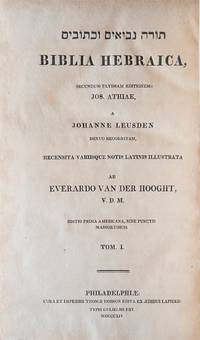
1814372931Philadelphia: Cura et Impensis Thomae Dobson edita ex aedibus Lapideis. Typis Gulielmi Fry 1814. First American edition. Text in Hebrew with notes in Latin. 6 296; 2 312 leaves. Half titles present in each volume. Uncut. 2 vols. 8vo. Original blue paper boards rebacked with plain paper. Provenance: Hugh Blair Grigsby booklabels. In a blue cloth folding box. First American edition. Text in Hebrew with notes in Latin. 6 296; 2 312 leaves. Half titles present in each volume. Uncut. 2 vols. 8vo. The first complete Hebrew Bible printed in America. Hebrew type was first used in the North American colonies in the Bay Psalm Book printed in 1640 in Cambridge. Over the next ninety-five years Hebrew type appeared in a handful of American imprints usually in brief examples of single words or short sentences. Paucity of appropriate type would continue to be a problem over the years that followed. The first Jewish Psalter was finally published in 1809 followed by this complete Bible five years later. "In 1812 Mr. Horwitz had proposed the publication of this edition of the Hebrew Bible the first proposal of the kind in the United States; early in 1813 be transferred his right and list of subscribers to Mr. Thos. Dobson who published soon afterwards the 1st volume" O'Callaghan. The title page indicates that this work is a reprinting of the second edition of the Joseph Athias Bible edited by Leusden with Latin notes by Everardo Van der Hought and that the Hebrew is printed without vowels. An important piece of American printing and of Jewish Americana. Darlow and Moule 5168a; Goldman 4; Rosenbach 171; Shaw and Shoemaker 30857; Singerman 236; M. Vaxer "The First Hebrew Bible Printed in America" Journal of Jewish Bib. 1940 vol. 2 pp. 20-26 Cura et Impensis Thomae Dobson edita ex aedibus Lapideis. Typis Gulielmi Fry unknown
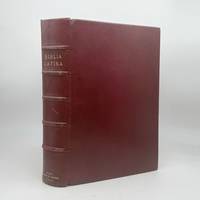
1592371810Rome: Ex Typographia Apostolica Vaticana 1592. First edition of the Clementine Bible. Edition of 500 copies. Engraved title page reading: Biblia sacra vulgatae editionis. Sixti Quinti Pont. Max. iussu recognita atque edita. Letterpress title page printed in red and black. Text in double columns. 12 1131 1 blank 23 1 blank pp. 1 vols. Folio 349 x 250 mm. Full reddish-orange levant morocco spine titled in gilt raised bands highlighted in black boards with single rule in black dated 1957 on turn-in. Fine. Leather-tipped slipcase. First edition of the Clementine Bible. Edition of 500 copies. Engraved title page reading: Biblia sacra vulgatae editionis. Sixti Quinti Pont. Max. iussu recognita atque edita. Letterpress title page printed in red and black. Text in double columns. 12 1131 1 blank 23 1 blank pp. 1 vols. Folio 349 x 250 mm. First edition of the official text of the Catholic Bible issued under sanction of Clement VIII and therefore known as the "Clementine Bible" and superseding the controversial and suppressed edition of Sixtus V of 1590. The text is preceded by Cardinal Bellarmino's preface the Decree of the Council of Trent on the canonical Scriptures and a brief by Clement VIII.<br /> <br /> "It is generally admitted that on the whole the Clementine text . is critically an improvement upon the Sixtine. . The Clementine Bible of 1592 remains to the present day the standard edition of the Roman Church" Darlow & Moule. <br /> <br /> Nice wide-margined copy of this notable edition. Brunet I 878; Darlow and Moule 6184; Adams B1101; P.M. Baumgarten Neue Kunde von alten Bibeln pp. 316-322. Provenance: W. A. Copinger bookplate; General Theological Seminary gift of Cornelius Vanderbilt and Dean Augustus Hoffman bookplates Ex Typographia Apostolica Vaticana unknown
1512372103Paris: Philippe Pigouchet for Simon Vostre 1512. Title page printed in red and black with woodcut device of Simon Vostre; full page woodcuts of St. Jerome crucifixion old coloring. Text in gothic type in two columns ornamental initials some colored text ruled in red throughout. 15 340 28 leaves. Terminal black dd6 present. 1 vols. Folio. Modern linen conservation binding. First leaf toned ownership marks struck out early bibliopole's description in ink at bottom of title. Some minor worming at end. Very good. Title page printed in red and black with woodcut device of Simon Vostre; full page woodcuts of St. Jerome crucifixion old coloring. Text in gothic type in two columns ornamental initials some colored text ruled in red throughout. 15 340 28 leaves. Terminal black dd6 present. 1 vols. Folio. Large folio Bible printed for Simon Vostre by Philippe Pigouchet the famous printer of some of the most beautiful Books of Hours. Uncommon in institutions and in the trade. Renouard ICP II 248; Delaveau & Hillard 778 Philippe Pigouchet for Simon Vostre unknown
1509372247Basel: per Johannem Petri de Langdorff et Johannem Froben de Hammelburg 1509. Printer's device on title hand colored at an early date. Large manuscript initials in red and blue; rubricated throughout. 14 CCCXLVII 28 leaves. Manuscript references and extensive early marginalia in Hebrew in O.T.; citations in Table keyed to N.T. and underlined. Contemporary colored deerskin sectional fore-edge tabs. Folio 13 x 8-1/2 inches. Full burgundy morocco by Zaehnsdorf. Title leaf repaired at gutter and bottom corner; minor staining. Printer's device on title hand colored at an early date. Large manuscript initials in red and blue; rubricated throughout. 14 CCCXLVII 28 leaves. Manuscript references and extensive early marginalia in Hebrew in O.T.; citations in Table keyed to N.T. and underlined. Contemporary colored deerskin sectional fore-edge tabs. Folio 13 x 8-1/2 inches. A scarce Latin bible the first edition of the Vulgate with the printed marginal references to canon law. These 'Concordantiae iuris canonici' according to Masch were compiled by Johannes Niuicellensis an abbot and were printed separately in 1482. This is also the first edition to printed the commendatory hexastich by Matthias Sambucellus on the title page beginning: "Emendata magis scaturit nunc biblia tota."<br /> <br /> A tall copy with generous margins lovely stylish manuscript initials and full rubrication. VD16 B2584. Delaveau & Hillard 771; cf. Darlow & Moule note after 6092. Provenance: Dr. Charles Clay Manchester 19th century inscription on front endpaper sold Sotheby Wilkinson & Hodge May 18 1883; General Theological Seminary bookplate blindstamps; [per Johannem Petri de Langdorff et Johannem Froben de Hammelburg unknown
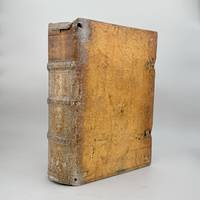
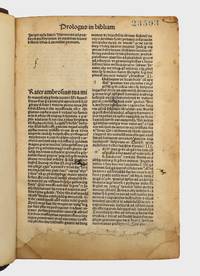
1483372104Venice: Johannes Herbort de Seligenstadt 1483. Text in two columns 56 lines per page. Initials mostly executed in red Psalms and a few other chapter headings with large color initial others empty. N.T. with printed marginal glosses. 398 leaves. 1 vols. Folio. Contemporary pigskin stamped in blind lower pastedown with manuscript waste re-inforcement. Binding worn and soiled spine darkened. Front pastedown with abundant annotations; flyleaf with tabulations of books of the Bible; occasional marginal annotations a bit more frequent in N.T. Pious abecedary poem in 23 lines in manuscript on blank verso of last leaf. Text in two columns 56 lines per page. Initials mostly executed in red Psalms and a few other chapter headings with large color initial others empty. N.T. with printed marginal glosses. 398 leaves. 1 vols. Folio. With additions by Franciscus Moneliensis and Quintius Aemilianus. This is grouped with the Fontibus ex Graecis editions of the corrected Latin text though this edition does not include the Latin verses.<br /> <br /> Leaf a1v prints a letter by Franciscus Moneliensis in which he praises the printer Johannes Herbort who got his start in Padua in the mid-1470s where he printed Avicenna's Canon medicinae. He came to Venice and worked with Jenson and others; he printed an edition of the Bible with Postilla of Nicolaus de Lyra in 1481; a quarto Bible was issued in 1484. Herbort produced some 50 works during his career. ISTC ib00579000; GW 4254; Goff B579; cf. Darlow & Moule 2:911 note. Provenance: W. A. Copinger bookplate; General Theological Seminary gift of Cornelius Vanderbilt and Dean Augustus Hoffman bookplates and blindstamps Johannes Herbort, de Seligenstadt unknown
1480376224Venice: Octavianus Scotus 1480. Text printed in double column 52 lines. Initials left blank. 460 leaves. 1 vols. Small 4to. Twentieth century brown morocco. Rebacked spine with traces of soiling and fire damage. Bound without a1 blank repair at foot of a1 and at corner of last leaf; cc14 mounted. Lacking H5-6 text supplied in near contemporary manuscript on 3 leaves. Text printed in double column 52 lines. Initials left blank. 460 leaves. 1 vols. Small 4to. Early work from the press of Scotus who became one of the most prolific Venetian publishers issuing numerous books until his death in 1498. Nice example of a smaller format bible. The text for the missing New Testament leaves omittted in binding at a very early stage Titus Philemon Hebrews 1-7 are supplied in a clear near contemporary hand. ISTC ib00570000; GW 4245. Provenance: General Theological Seminary gift of Cornelius Vanderbilt and Dean Augustus Hoffman bookplates and blindstamps Octavianus Scotus unknown
1527372109Coloniae: Petrus Quentel excudebat 1527. First Protestant Bible printed in Latin. Title-page with large woodcut vignette of arms of Cologne lion and gryphon rampant with and three crowns; numerous illustrations by Anton Woensam and ornamental initials throughout. Ff. 8 CCCXXV 1 LXXXVII i.e. 85 5. Manuscript marginal glosses in red chiefly calling out names names in Kings. 1 vols. Folio. Contemporary blindstamped pigskin over bevelled wooden boards clasps perished. Some soiling repairs to hinges painted fore-edge tabs. Very good. First Protestant Bible printed in Latin. Title-page with large woodcut vignette of arms of Cologne lion and gryphon rampant with and three crowns; numerous illustrations by Anton Woensam and ornamental initials throughout. Ff. 8 CCCXXV 1 LXXXVII i.e. 85 5. Manuscript marginal glosses in red chiefly calling out names names in Kings. 1 vols. Folio. The first Protestant Bible in Latin edited by Johan Rüdel Rudelius printed in Cologne by Peter Quentel or Quentell and notable for the wood engraved illustrations by Anton Woensam Anton von Worms particularly those at the head of each of the four gospels. Matthew faces an angle who is touching his stylus; a lion is seated beside Mark; a bull with Luke; and an eagle stands beside John.<br /> <br /> Quentel was the printer of Tyndale's quarto Cologne English New Testament known from a single surviving fragment in the Grenville Collection where this same illustration to Matthew appears. It is a reasonable inference that each of the four gospels would have carried an illustration. The project which had "'got as far as the letter K' the signature that would have taken the work well into Mark" ODNB was unfinished at the time of Tyndale's flight from Cologne in 1525. Quentel's print shop was raided but sheets of the first gospel translated from the original Greek and printed in English soon began to circulate in England. Tyndale settled in Worms where Schöffer completed an octavo printing of the first complete English New Testament in 1526 a facsimile of the Grenville fragment and its illustration were published in 1871.<br /> <br /> The blocks for the illustrations evidently survived the raid on the Quentel's shop and are used here at the head of each of the four gospels.<br /> <br /> A notable edition in the history of the printing of the Bible. Adams B1007; Darlow & Moule 6107 note; VD16 B2589; Copinger 210. Provenance: Cartusiae Buxiana Buxheim inscription on title; Thomas Raffle early signature on title; General Theological Seminary blindstamps bookplate Petrus Quentel excudebat unknown
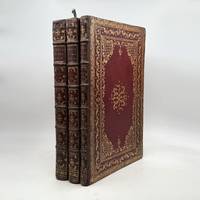
1590371036Rome: Ex Typographia Apostolica Vaticana 1590. First edition of the Sixtine Vulgate Bible large paper copy. Engraved illustrated title-page. Title in red and black text in double columns. 3 vols. Folio. Italian full red morocco binding of the seventeenth or early eighteenth century elaborately gilt with triple floral scrollwork borders stars in cornerpieces about a central motif stencilled paste paper endsheets a.e.g. Boxed. First edition of the Sixtine Vulgate Bible large paper copy. Engraved illustrated title-page. Title in red and black text in double columns. 3 vols. Folio. The engraved title reads: Biblia sacra vulgatae editionis ad concilii Tridentini praescriptum emendata et a Sixto V.P.M. recognata et approbata.<br /> With the preliminary document the Bull of Sixtus V beginning 'Aeternus ille caelestium terrestriumq. rerum omnium conditr ac moderator Deus .". This is often lacking.<br /> <br /> An extraordinary copy of the Sixtine Bible containing the Vulgate text as edited by Pope Sixtus V intended as the first ecclesiastically authorized text to be used throughout Christendom. "In its text it comes closer to R. Stephanus' Bible of 1538-40 than to the Louvain editions" Darlow & Moule who discuss the textual variations. This copy includes examples of the printed overslips required to correct hurried printing. The association with Aldus II suggested by Renouard and lasting long thereafter is spurious.<br /> Pope Sixtus V died soon after the book was printed and was followed by three short-lived popes. The Sixtine Bible had "aroused antagonism among both clergy and laity" and was swiftly condemned; the edition was withdrawn by Pope Clement VIII soon after his elevation to the papal throne in 1592 and many copies were destroyed. Preparations began in 1591 for a new edition of the Vulgate printed in 1592 and known as the Clementine Bible which long remained the standard Vulgate text.<br /> <br /> The ordinary issue of this printing measures 13-3/8 inches tall as in the Brooker copy sold 2024; the present copy measures 15-3/4.<br /> <br /> AN OUTSTANDING LARGE PAPER COPY OF A NOTABLE EDITION. Copinger 521; Darlow & Moule 6181; Adams B1098; BM STC Italian 1465-1600 p. 93; EDIT 16 CNCE 5805. Provenance: Vincenzo Maria Carafa 1739-1814 Prince of Roccella and Duke of Bruzzano engraved bookplates MS shelfmark :H 5; Douglas Maxwell Moffat bought of Quaritch in Dec. 1939; General Theological Seminary Ex Typographia Apostolica Vaticana unknown
1590372093Rome: Ex Typographia Apostolica Vaticana 1590. First edition of the Sixtine Vulgate Bible. Engraved illustrated title-page. Title in red and black text in double columns. 8 479 1; 5 482-899; 5 902-1141pp. Lacks the 4ff preface i.e. the papal bull of Sixtus V beginning "Aeternus ille caelestium terrestriumq. rerum omnium conditr ac moderator Deus ." as often. Folio 13-1/2 x 9-1/2 inches. Later red morocco spine darkened corners bumped some repairs at head and tail of spine marbled endpapers gilt edges. Engraved title and title page paper-backed. Red quarter morocco clamshell box. First edition of the Sixtine Vulgate Bible. Engraved illustrated title-page. Title in red and black text in double columns. 8 479 1; 5 482-899; 5 902-1141pp. Lacks the 4ff preface i.e. the papal bull of Sixtus V beginning "Aeternus ille caelestium terrestriumq. rerum omnium conditr ac moderator Deus ." as often. Folio 13-1/2 x 9-1/2 inches. The Sixtine Bible containing the Vulgate text as edited by Pope Sixtus V intended as the first ecclesiastically authorized text to be used throughout Christendom. "In its text it comes closer to R. Stephanus' Bible of 1538-40 than to the Louvain editions" Darlow & Moule who discuss the textual variations. <br /> <br /> The association with Aldus II suggested by Renouard and lasting long thereafter is spurious.<br /> Pope Sixtus V died soon after the book was printed and was followed by three short-lived popes. The Sixtine Bible had "aroused antagonism among both clergy and laity" and was swiftly condemned; the edition was withdrawn by Pope Clement VIII soon after his elevation to the papal throne in 1592 and many copies were destroyed. Preparations began in 1591 for a new edition of the Vulgate printed in 1592 and known as the Clementine Bible which long remained the standard Vulgate text.<br /> <br /> As often e.g. the Brooker copy this copy without the preface the Bull of Sixtus declaring the text to be immutable and forbidding any reprint without papal permission. Copinger 521; Darlow & Moule 6181; Adams B1098; BM STC Italian 1465-1600 p. 93; EDIT16 CNCE 5805. Provenance: Henry John Farmer Atkinson his sale Sotheby Wilkinson & Hodge March 1896 lot 2752 sold for £18.15s to; Bernard Quaritch; General Theological Seminary bookplate Ex Typographia Apostolica Vaticana unknown
1527318283Coloniae: Petrus Quentel excudebat 1527. First Protestant Bible printed in Latin. Title-page with large woodcut vignette of arms of Cologne lion and gryphon rampant with and three crowns; numerous illustrations by Anton Woensam and ornamental initials throughout. Ff. 8 CCCXXV 1 LXXXVII i.e. 85 5. 1 vols. Folio. Recent half calf and marbled boards. Title page soiled old remargining tissue repairs on verso; some marginal worming and soiling generally clean with generous margins. Stamps of Cambridge Public Library in ink or in blind on four leaves. First Protestant Bible printed in Latin. Title-page with large woodcut vignette of arms of Cologne lion and gryphon rampant with and three crowns; numerous illustrations by Anton Woensam and ornamental initials throughout. Ff. 8 CCCXXV 1 LXXXVII i.e. 85 5. 1 vols. Folio. The first Protestant Bible in Latin edited by Johan Rüdel Rudelius printed in Cologne by Peter Quentel or Quentell and notable for the wood engraved illustrations by Anton Woensam Anton von Worms particularly those at the head of each of the four gospels. Matthew faces an angle who is touching his stylus; a lion is seated beside Mark; a bull with Luke; and an eagle stands beside John.<br /> <br /> Quentel was the printer of Tyndale's quarto Cologne English New Testament known from a single surviving fragment in the Grenville Collection where this same illustration to Matthew appears. It is a reasonable inference that each of the four gospels would have carried an illustration. The project which had "'got as far as the letter K' the signature that would have taken the work well into Mark" ODNB was unfinished at the time of Tyndale's flight from Cologne in 1525. Quentel's print shop was raided but sheets of the first gospel translated from the original Greek and printed in English soon began to circulate in England. Tyndale settled in Worms where Schöffer completed an octavo printing of the first complete English New Testament in 1526 a facsimile of the Grenville fragment and its illustration were published in 1871.<br /> <br /> The blocks for the illustrations evidently survived the raid on the Quentel's shop and are used here at the head of each of the four gospels.<br /> <br /> A notable edition in the history of the printing of the Bible. Adams 1007; not in Darlow & Moule but see note to 6107; VD16 B2589.OCLC: 22847218 Petrus Quentel excudebat unknown
1607372868Sanctii Gervasii Saint-Gervais Geneva: Sumptibus Caldorianae Societatis 1607. O.T. and N.T. title pages with printer's device of Fama; each part of O.T. with sectional title parts 2-4 paginated consecutively. 1 vols. Folio. Old calf boards ruled in gilt. Rebacked with morocco spine label. Some paper flaws at end. Portrait of William Lupton 1676-1726 dated 1727 frontispiece to his Sermons on front pastedown. Cloth slipcase and folding box. O.T. and N.T. title pages with printer's device of Fama; each part of O.T. with sectional title parts 2-4 paginated consecutively. 1 vols. Folio. The Junius-Tremellius Bible with Theodore de Beze's translation of the New Testament. This was for many years the standard Latin Bible favored by Protestants.<br /> <br /> Uncommon OCLC records fewer than 20 locations with interesting English provenance.<br /> <br /> William Slater or Slatyer 1587-1647 whose Psalmes or songs of Sion: turned into the language of a strange land 1631 "was on 9 July 1631 ordered to be burned. Summoned before the court of high commission on 20 October Slatyer confessed that he had 'added thereunto a scandalous table to the disgrace of religion and to the encouragement of the contemners thereof'; judging from an annotated copy of the work dated 1642 this probably consisted of a list of popular tunes to which the psalms might be sung" ODNB He was also editor of The Psalmes of David in 4 languages 1643 "a high quality edition containing both words and music the latter principally by Thomas Ravenscroft". Not in Darlow & Moule; Bibles imprimées 976 locates a copy with later Genevae imprint. Provenance: William Slater his Latin ownership signature; W.A. Copinger; General Theological Seminary gift of Cornelius Vanderbilt and Dean Augustus Hoffman bookplates and blindstamps Sumptibus Caldorianae Societatis unknown
1663256261V.p. Venice Leipzig London Amsterdam 1663. Folio and smaller. Generally fine mounted in card folders. Folio and smaller. The collection includes the following printed leaves:<br /> 1 Bible. Greek. Venice 1518. From the Aldine Greek Bible the editio princeps of the complete Bible in Greek Darlow & Moule 4594. Book of Malachi folio 326.<br /> 2 Bible. German. Leipzig 1541. From a pirated edition suppressed at Luther's request on account of its errors Darlow & Moule 4204 note. Isaiah chapter 48.<br /> 3 Walton's Polyglot Bible. London 1655. The great London Polyglot published in 6 volumes from 1655 to 1657. Darlow & Moule 1446. From vol. I the Pentateuch: Leviticus chapter 18 in Hebrew Samaritan Latin Greek Arabic Syriac.<br /> 4 Walton's Polyglot Bible. London 1657. Darlow & Moule 1446. From vol. V New Testament: Paul's Epistle to the Romans chapter 9 in Latin Greek Ethiopic Arabic Syriac.<br /> 5 Bible. Dutch. Amsterdam Elzevier 1663. States General version Darlow & Moule 3321. Leviticus folio 55. unknown
1815255839Boston: Printed by Nathaniel Willis 1815. Fromntispiece 15 woodcut illustrations in text. 254 pp. 1 vols. Miniature 2 x 1-1/4 inches. Contemporary calf. Worn spine ends defective. Owner signature of Charlotte R. Chapin Springfield on verso of title. Fromntispiece 15 woodcut illustrations in text. 254 pp. 1 vols. Miniature 2 x 1-1/4 inches. Welch 860.3 "American variant of English version 2 no. 855; Adomeit A33; Shaw & Shoemaker 34916; not in Bondy but cf. pp. 37-38 other eds. Printed by Nathaniel Willis unknown
1822252747Lansingburgh New York: Wm. Disturnell 1822. Frontispiece. viii 9-255 pp. 1 vols. 1-7/8 x 1-1/4 inches. Contemporary morocco gilt spine. Very good. Frontispiece. viii 9-255 pp. 1 vols. 1-7/8 x 1-1/4 inches. Wm. Disturnell unknown
17867475Londini London: Excudebant A. Rivington & J. Marshall 1786. 12mo pp. 368 2 ads. Contemporary sheep spine divided by gilt rolls and rules red morocco label edges sprinkled red. A touch of spotting. Rubbed and a little marked some small sections of leather peeling. A scarce Greek New Testament recorded by ESTC in three North American institutions - Harvard Union Theological Seminary and Tennessee - and one private collection. ESTC N63834. Excudebant A. Rivington & J. Marshall hardcover
17997575Londini London: Apud G.G. & J. Robinson et al 1799. 12mo pp. 347 1. Half-title discarded. Contemporary sheep spine divided by gilt rules red morocco label edges sprinkled blue. Somewhat rubbed some areas of peeling and insect damage to rear board a little wear to extremities. Ownership inscriptions of Charles Kinloch to first few leaves dated 1802. A scarce London printing of the Greek New Testament: ESTC records just 5 copies. ESTC T176685. Apud G.G. & J. Robinson [et al] unknown
17517788Edinburgi Edinburgh: Apud Tho. & Wal. Ruddimannos 1751. 12mo pp. iv 402 frontispiece. Contemporary calf spine divided by raised bands between double gilt rules red morocco label. Somewhat rubbed joints starting some wear to extremities front flyleaf excised. Armorial bookplate of Sibbald to pastedown struck-through inscription of Charles Sibbald dated 1831 and of Donald Bruce to verso of frontispiece pencil notes to rear blanks. A pocket Greek New Testament printed by the Ruddimans. ESTC T94884; Darlow & Moule 4751. Apud Tho. & Wal. Ruddimannos hardcover
17632548Oxonii Oxford: E Typographeo Clarendoniano 1763. 8vo pp. iv 676. Near-contemporary tree calf spine elaborately gilt in compartments red morocco label marbled endpapers edges yellow. Some light toning and spotting. Expertly rebacked by Bernard Middleton with old backstrip laid down hinges relined. An attractive copy. In 1758 Baskerville proposed the casting of a new set of Greek types to the Oxford University Press and they ordered 2000 copies of this octavo New Testament plus 500 in quarto to be printed with the resulting type - which ended up being its only use. Negative critical reception may have contributed to its abandonment but Baskerville’s Greek face has recently been reassessed by Gerry Leonidas as an important predecessor of more modern types if perhaps not quite as elegant as that used by the Foulis press that had fallen afoul of an arbitrary typographic orthodoxy. Gaskell Add. 2; ESTC T94889; D&M 4756. E Typographeo Clarendoniano unknown
16017682Londini London: Impensis G.Bishop. 1601. Folio pp. xlii 378 381-914 10. 20th-century half sheep pebbled cloth boards spine divided by raised bands black morocco label. Title-page trimmed and mounted final leaf also mounted a few smaller repairs to early leaves small wormhole in blank margin some foxing and occasional light marginal dampstaining. Spine rather rubbed and darkened and sometime furbished worn at ends and joints just starting to crack at head. The second edition of Fulke’s tendentious and influential comparison of the Douay-Rheims and Bishops’ translations of the New Testament with his notes and commentary intended to refute the arguments on which the former version was based. Fulke’s work with the two texts in parallel columns the Catholic in roman type and the Church of England version in italic sold better in England than the Douai Bible ever had bringing its language to a wider readership and becoming indirectly responsible for its influence on the coming King James version. ESTC S107069. Impensis G.B[ishop]. hardcover
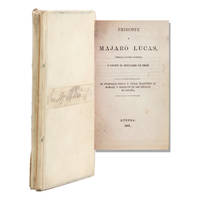
1871321050Londra: Printed by William Clowes and Sons 1871. Proof copy gatherings C D and E marked for corrections. Revised and corrected by Borrow from his 1837 translation. 116 1 pp. Collation A-E12. 1 vols. 12mo. Full cream vellum boards ruled in blue marbled pastedowns untrimmed sheets. Remains of ownership signature on upper board Geo Hy Borrow. Bookplate removed else fine. Half morocco slipcase and cloth wrapper. Proof copy gatherings C D and E marked for corrections. Revised and corrected by Borrow from his 1837 translation. 116 1 pp. Collation A-E12. 1 vols. 12mo. George Borrow 1803-1881 spent most of his thirties as a representative of the British and Foreign Bible Society first in Russia and then in the Iberian Peninsula from 1835 to 1840. "In Spain civil war made his expeditions risky while the hostile attitude of the authorities coupled with his own provocative approach led twice to his imprisonment. . In Madrid the Bible Society financed the printing of St Luke's gospel translated into Spanish Romani by Borrow and Gypsy friends" ODNB. His account of his adventures The Bible in Spain 1843 was his first literary success. Other works included Lavengro The Romany Rye and Wild Wales.<br /> <br /> These are a set of Borrow's marked proofs for this second edition of the Gospel of St. Luke first printed in Madrid 1837. Gathering C is marked Revise May 27/72 with five corrections on pp. 59 and 69; gathering B is marked 2nd Revise Aug. 9/71 and corrects the running head Majaro to Majaró on the left hand pages with some 22 corrections to the text; gathering E is marked 10th Revise Feb. 9/72 with one marginal note on p. 116. <br /> Of this 1871 proof OCLC records only the copy at the Huntington with corrections in George Borrow's hand bound in polished brown calf marbled end-papers gilt top; purchased from Maggs Cat. 1924 item 443. Collie and Fraser note a handful of other proofs citing copies at Fales NYU Berg NYPL Brotherton Leeds Liverpool and in the Norfolk Record Office Norwich.<br /> A rare proof from Borrow's late career returning to a work from his early adventures. Darlow and Moule 4543 edition dated 1872 published by the British and Foreign Bible Society. Collie and Fraser pp. 116-7; OCLC 81611475 Huntington [Printed by William Clowes and Sons] unknown
1642371830Paris: Ek basilikēs typographias Imprimerie Royale 1642. Engraved title by by Claude Mellan engraved head and tail pieces and initials. 2 453 3 pp. Extra-illustrated with a later English printed "Abbreviations and Connexions" leaf inserted after the title. Folio 15-1/2 x 10-5/8 inches. Late eighteenth or early nineteenth century red morocco gilt marbled endpapers gilt edges. Neatly rebacked. Cloth slipcase and chemise. Engraved title by by Claude Mellan engraved head and tail pieces and initials. 2 453 3 pp. Extra-illustrated with a later English printed "Abbreviations and Connexions" leaf inserted after the title. Folio 15-1/2 x 10-5/8 inches. Known as the Mazarin edition "since it appeared under the auspices of the great Cardinal" D&M it is the first edition of the Greek New Testament from the Imprimerie Royale founded just two years prior.<br /> <br /> Inserted before the engraved title page is a partly-printed certificate of the Collegium Mazarinaeum awarding this volume as a prize in Rhetoric to Philippus Matthaeus Guillot dated MDCC in manuscript i.e. 1700 and signed by the college's master P.-J. Le Chapelier Pierre-Jean le Chapelier de Mauron abbé de Ste Marie de Boquen in Brittany with the trace of a seal below. The College Mazarin or College des Quatre-Nations was established by bequest of Cardinal Mazarin 1602-1661 and opened its doors to students in 1688. Darlow & Moule 4687. Provenance: Philippus Matthaeus Guillot certificate his signature at foot of title engraving; Montagu Barton armorial bookplate; John Horatio Nelson gift inscription dated 1841; General Theological Seminary bookplate perforated stamp Ek basilikēs typographias [Imprimerie Royale] unknown
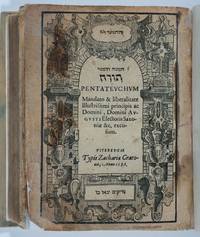
158653478Wittenberg: Zacharias Crato Krafft 1586. First edition. Hardcover. Very Good. Four parts quarto published between 1586 and 1587. Register continuous through parts 1 and 2; separate registers for parts 3 and 4. Collation in 4s: 1-65 blank 33.4; 1-30 lacks blank 30.4; 1-32 lacks 32.4 colophon. 506 leaves. Title within elaborate woodcut borders. Single-column text in vocalized Hebrew with cantillation; printed side-glosses. Separate Hebrew half-titles within woodcut borders for the latter three parts Former Prophets; Later Prophets; Hagiographa; names of the biblical books set in large font within woodcut cartouches. Later vellum. Title and following three leaves with marginal reinforcement slight text loss. Occasional mild embrowning else very good with bright half-titles. <br /> <br /> First Wittenberg edition of the complete Hebrew Scriptures with a concluding list of Haftaroth readings noting the Ashkenazi and Sefardi variations. Our copy is the variant with Hebrew and Latin title. A majority of the few surviving copies are bound with a Hebrew title and the publisher's information is taken from the colophon which provides a Jewish calendar date of 5347 = 1587. Vinograd notes that individual books and sections of the Hebrew Bible had been printed at Wittenberg since a quarto edition of the prophet Obadiah appeared in 1521. The title-page designs were re-used in the Hebrew bible published at Frankfurt am Oder in 1595. Each book closes with the Masora Finales printed in square type.<br /> <br /> Andreas Masch notes in his revised edition of Le Long's Bibliotheca Sacra 1778: "This edition of the Hebrew Bible is so rare and infrequent that it was omitted in the earlier edition of Le Long's work at Paris but it is known to Wolffius Bibliotheca Hebraea not in its entirety but only in respect of certain parts." One can speculate as to why the edition is rare but it may be worth noting that "when Hans and Friedrich Hartmann decided to start producing Hebraica in an effort to become the official printer for the univeristy of Frankfurt/Oder they were able to do so relatively quickly by hiring away five experienced workmen from Zacharias Croto's Wittenberg firm which was having financial difficulties" Burnett.<br /> <br /> Masch continues: "At the colophon is noted the year and the name of those at whose expense this Hebrew Bible was published: colophon info in Heb. and Latin The above example is therefore attributed to the liberality of the prince and to the expense of the two citizens of Wittenberg But the Rühilii brothers were not correctors of the work but citizens and senators of Witteberg whose name is quite famous in the history of the Germanic Bibles. The work came from the workshop of Zacharias Craton otherwise known as Kraft to whom we owe several editions of German Bibles. The title in both copies represents a gate in which above and below Ps. 118 com. 20. is printed. In accordance with the first Plantin edition the text was printed so as to match nearly page-for-page. It is composed of four parts with the five festival books added to the Pentateuch; but each part is decorated with a special title." Full title: חמשה חומשי תורה Pentateuchum mandato & liberalitate illustrissimi principis ac Domini Domini Augusti Electoris Saxoniae. Vitebergae: Typis Zacharia Cratonis Anno 1586. alternate Hebrew title: חמשה חומשי תורה × ×“×¤×¡ ×¢× ×¨×‘ העיון על ידי זכריה כר×טו.<br /> <br /> References: Benzing Buchdrucker 16/17 p. 471; Le Long/Masch I 1778 pp. 33-34; Steinschneider 277; VD16 ZV 29818 quarto; Vinograd 21. Not in: Adams; Darlow & Moule; Delaveau & Hillard. Cf. Burnett Christian Hebraism in the Reformation Era p. 204. Zacharias Crato [Krafft] hardcover