6 582 résultats
0942260341.Ghardcover. Good. Access codes and supplements are not guaranteed with used items. May be an ex-library book. hardcover
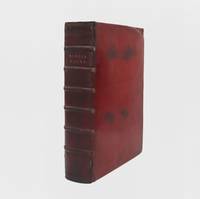
1592371810Rome: Ex Typographia Apostolica Vaticana 1592. First edition of the Clementine Bible. Edition of 500 copies. Engraved title page reading: Biblia sacra vulgatae editionis. Sixti Quinti Pont. Max. iussu recognita atque edita. Letterpress title page printed in red and black. Text in double columns. 12 1131 1 blank 23 1 blank pp. 1 vols. Folio 349 x 250 mm. Full reddish-orange levant morocco spine titled in gilt raised bands highlighted in black boards with single rule in black dated 1957 on turn-in. Fine. Leather-tipped slipcase. First edition of the Clementine Bible. Edition of 500 copies. Engraved title page reading: Biblia sacra vulgatae editionis. Sixti Quinti Pont. Max. iussu recognita atque edita. Letterpress title page printed in red and black. Text in double columns. 12 1131 1 blank 23 1 blank pp. 1 vols. Folio 349 x 250 mm. First edition of the official text of the Catholic Bible issued under sanction of Clement VIII and therefore known as the "Clementine Bible" and superseding the controversial and suppressed edition of Sixtus V of 1590. The text is preceded by Cardinal Bellarmino's preface the Decree of the Council of Trent on the canonical Scriptures and a brief by Clement VIII.<br /> <br /> "It is generally admitted that on the whole the Clementine text . is critically an improvement upon the Sixtine. . The Clementine Bible of 1592 remains to the present day the standard edition of the Roman Church" Darlow & Moule. <br /> <br /> Nice wide-margined copy of this notable edition. Brunet I 878; Darlow and Moule 6184; Adams B1101; P.M. Baumgarten Neue Kunde von alten Bibeln pp. 316-322. Provenance: W. A. Copinger bookplate; General Theological Seminary gift of Cornelius Vanderbilt and Dean Augustus Hoffman bookplates Ex Typographia Apostolica Vaticana unknown
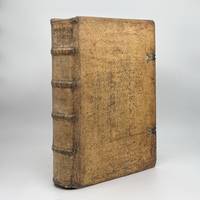
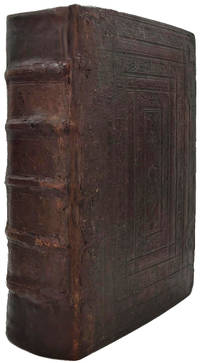
1527372109Coloniae: Petrus Quentel excudebat 1527. First Protestant Bible printed in Latin. Title-page with large woodcut vignette of arms of Cologne lion and gryphon rampant with and three crowns; numerous illustrations by Anton Woensam and ornamental initials throughout. Ff. 8 CCCXXV 1 LXXXVII i.e. 85 5. Manuscript marginal glosses in red chiefly calling out names names in Kings. 1 vols. Folio. Contemporary blindstamped pigskin over bevelled wooden boards clasps perished. Some soiling repairs to hinges painted fore-edge tabs. Very good. First Protestant Bible printed in Latin. Title-page with large woodcut vignette of arms of Cologne lion and gryphon rampant with and three crowns; numerous illustrations by Anton Woensam and ornamental initials throughout. Ff. 8 CCCXXV 1 LXXXVII i.e. 85 5. Manuscript marginal glosses in red chiefly calling out names names in Kings. 1 vols. Folio. The first Protestant Bible in Latin edited by Johan Rüdel Rudelius printed in Cologne by Peter Quentel or Quentell and notable for the wood engraved illustrations by Anton Woensam Anton von Worms particularly those at the head of each of the four gospels. Matthew faces an angle who is touching his stylus; a lion is seated beside Mark; a bull with Luke; and an eagle stands beside John.<br /> <br /> Quentel was the printer of Tyndale's quarto Cologne English New Testament known from a single surviving fragment in the Grenville Collection where this same illustration to Matthew appears. It is a reasonable inference that each of the four gospels would have carried an illustration. The project which had "'got as far as the letter K' the signature that would have taken the work well into Mark" ODNB was unfinished at the time of Tyndale's flight from Cologne in 1525. Quentel's print shop was raided but sheets of the first gospel translated from the original Greek and printed in English soon began to circulate in England. Tyndale settled in Worms where Schöffer completed an octavo printing of the first complete English New Testament in 1526 a facsimile of the Grenville fragment and its illustration were published in 1871.<br /> <br /> The blocks for the illustrations evidently survived the raid on the Quentel's shop and are used here at the head of each of the four gospels.<br /> <br /> A notable edition in the history of the printing of the Bible. Adams B1007; Darlow & Moule 6107 note; VD16 B2589; Copinger 210. Provenance: Cartusiae Buxiana Buxheim inscription on title; Thomas Raffle early signature on title; General Theological Seminary blindstamps bookplate Petrus Quentel excudebat unknown
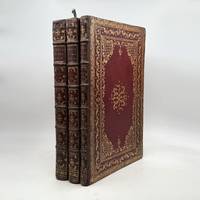
1590371036Rome: Ex Typographia Apostolica Vaticana 1590. First edition of the Sixtine Vulgate Bible large paper copy. Engraved illustrated title-page. Title in red and black text in double columns. 3 vols. Folio. Italian full red morocco binding of the seventeenth or early eighteenth century elaborately gilt with triple floral scrollwork borders stars in cornerpieces about a central motif stencilled paste paper endsheets a.e.g. Boxed. First edition of the Sixtine Vulgate Bible large paper copy. Engraved illustrated title-page. Title in red and black text in double columns. 3 vols. Folio. The engraved title reads: Biblia sacra vulgatae editionis ad concilii Tridentini praescriptum emendata et a Sixto V.P.M. recognata et approbata.<br /> With the preliminary document the Bull of Sixtus V beginning 'Aeternus ille caelestium terrestriumq. rerum omnium conditr ac moderator Deus .". This is often lacking.<br /> <br /> An extraordinary copy of the Sixtine Bible containing the Vulgate text as edited by Pope Sixtus V intended as the first ecclesiastically authorized text to be used throughout Christendom. "In its text it comes closer to R. Stephanus' Bible of 1538-40 than to the Louvain editions" Darlow & Moule who discuss the textual variations. This copy includes examples of the printed overslips required to correct hurried printing. The association with Aldus II suggested by Renouard and lasting long thereafter is spurious.<br /> Pope Sixtus V died soon after the book was printed and was followed by three short-lived popes. The Sixtine Bible had "aroused antagonism among both clergy and laity" and was swiftly condemned; the edition was withdrawn by Pope Clement VIII soon after his elevation to the papal throne in 1592 and many copies were destroyed. Preparations began in 1591 for a new edition of the Vulgate printed in 1592 and known as the Clementine Bible which long remained the standard Vulgate text.<br /> <br /> The ordinary issue of this printing measures 13-3/8 inches tall as in the Brooker copy sold 2024; the present copy measures 15-3/4.<br /> <br /> AN OUTSTANDING LARGE PAPER COPY OF A NOTABLE EDITION. Copinger 521; Darlow & Moule 6181; Adams B1098; BM STC Italian 1465-1600 p. 93; EDIT 16 CNCE 5805. Provenance: Vincenzo Maria Carafa 1739-1814 Prince of Roccella and Duke of Bruzzano engraved bookplates MS shelfmark :H 5; Douglas Maxwell Moffat bought of Quaritch in Dec. 1939; General Theological Seminary Ex Typographia Apostolica Vaticana unknown
1590372093Rome: Ex Typographia Apostolica Vaticana 1590. First edition of the Sixtine Vulgate Bible. Engraved illustrated title-page. Title in red and black text in double columns. 8 479 1; 5 482-899; 5 902-1141pp. Lacks the 4ff preface i.e. the papal bull of Sixtus V beginning "Aeternus ille caelestium terrestriumq. rerum omnium conditr ac moderator Deus ." as often. Folio 13-1/2 x 9-1/2 inches. Later red morocco spine darkened corners bumped some repairs at head and tail of spine marbled endpapers gilt edges. Engraved title and title page paper-backed. Red quarter morocco clamshell box. First edition of the Sixtine Vulgate Bible. Engraved illustrated title-page. Title in red and black text in double columns. 8 479 1; 5 482-899; 5 902-1141pp. Lacks the 4ff preface i.e. the papal bull of Sixtus V beginning "Aeternus ille caelestium terrestriumq. rerum omnium conditr ac moderator Deus ." as often. Folio 13-1/2 x 9-1/2 inches. The Sixtine Bible containing the Vulgate text as edited by Pope Sixtus V intended as the first ecclesiastically authorized text to be used throughout Christendom. "In its text it comes closer to R. Stephanus' Bible of 1538-40 than to the Louvain editions" Darlow & Moule who discuss the textual variations. <br /> <br /> The association with Aldus II suggested by Renouard and lasting long thereafter is spurious.<br /> Pope Sixtus V died soon after the book was printed and was followed by three short-lived popes. The Sixtine Bible had "aroused antagonism among both clergy and laity" and was swiftly condemned; the edition was withdrawn by Pope Clement VIII soon after his elevation to the papal throne in 1592 and many copies were destroyed. Preparations began in 1591 for a new edition of the Vulgate printed in 1592 and known as the Clementine Bible which long remained the standard Vulgate text.<br /> <br /> As often e.g. the Brooker copy this copy without the preface the Bull of Sixtus declaring the text to be immutable and forbidding any reprint without papal permission. Copinger 521; Darlow & Moule 6181; Adams B1098; BM STC Italian 1465-1600 p. 93; EDIT16 CNCE 5805. Provenance: Henry John Farmer Atkinson his sale Sotheby Wilkinson & Hodge March 1896 lot 2752 sold for £18.15s to; Bernard Quaritch; General Theological Seminary bookplate Ex Typographia Apostolica Vaticana unknown
1527318283Coloniae: Petrus Quentel excudebat 1527. First Protestant Bible printed in Latin. Title-page with large woodcut vignette of arms of Cologne lion and gryphon rampant with and three crowns; numerous illustrations by Anton Woensam and ornamental initials throughout. Ff. 8 CCCXXV 1 LXXXVII i.e. 85 5. 1 vols. Folio. Recent half calf and marbled boards. Title page soiled old remargining tissue repairs on verso; some marginal worming and soiling generally clean with generous margins. Stamps of Cambridge Public Library in ink or in blind on four leaves. First Protestant Bible printed in Latin. Title-page with large woodcut vignette of arms of Cologne lion and gryphon rampant with and three crowns; numerous illustrations by Anton Woensam and ornamental initials throughout. Ff. 8 CCCXXV 1 LXXXVII i.e. 85 5. 1 vols. Folio. The first Protestant Bible in Latin edited by Johan Rüdel Rudelius printed in Cologne by Peter Quentel or Quentell and notable for the wood engraved illustrations by Anton Woensam Anton von Worms particularly those at the head of each of the four gospels. Matthew faces an angle who is touching his stylus; a lion is seated beside Mark; a bull with Luke; and an eagle stands beside John.<br /> <br /> Quentel was the printer of Tyndale's quarto Cologne English New Testament known from a single surviving fragment in the Grenville Collection where this same illustration to Matthew appears. It is a reasonable inference that each of the four gospels would have carried an illustration. The project which had "'got as far as the letter K' the signature that would have taken the work well into Mark" ODNB was unfinished at the time of Tyndale's flight from Cologne in 1525. Quentel's print shop was raided but sheets of the first gospel translated from the original Greek and printed in English soon began to circulate in England. Tyndale settled in Worms where Schöffer completed an octavo printing of the first complete English New Testament in 1526 a facsimile of the Grenville fragment and its illustration were published in 1871.<br /> <br /> The blocks for the illustrations evidently survived the raid on the Quentel's shop and are used here at the head of each of the four gospels.<br /> <br /> A notable edition in the history of the printing of the Bible. Adams 1007; not in Darlow & Moule but see note to 6107; VD16 B2589.OCLC: 22847218 Petrus Quentel excudebat unknown
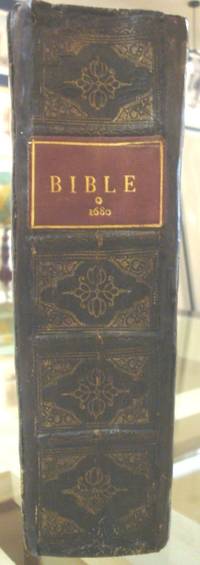
30596Lugduni Sumpt. Pet Guillimin & Ant. Beaujollin 1680 fort volume in/4 reliure postérieure dos d'époque. Ouvrage en deux partie : 1er partie 509 pages - 2ém partie 514 pages. Frontispice gravé par Ogier. unknown
197533966Stuttgart: Wurttembergische Bibelanstalt. Very Good. 1975. Second Revised Edition; First Printing. Hardcover. Very good with light spotting and wear to boards. Text in German. ; 8vo 8" - 9" tall; 1980 together pp . Wurttembergische Bibelanstalt hardcover
1557254216Basilaea Basel: Nicolaum Bryling Nicolaus Brylinger 1557. Woodcut border and printer's device on title. INCOMPLETE. 8 479 of 500 8 leaves. Lacking ff. 46-56 & 61-70. 1 vols. 8vo. Bound in contemporary blind panel-stamped pigskin over bevelled wooden boards clasps removed binding worn exposing boards on rear cover title page detached contemporary marginalia by Johannes Weneken throughout. Woodcut border and printer's device on title. INCOMPLETE. 8 479 of 500 8 leaves. Lacking ff. 46-56 & 61-70. 1 vols. 8vo. Brylinger published the only 16th century edition of Luther's Bible in Switzerland published one of the earliest Greek and Latin diglot Bibles and published a series of 8vo editions of the Bible with diglot and Greek-only text which was popular with students. Darlow & Moule makes no mention of this or any other Latin-only edition by Brylinger.<br /> Front paste-down endpaper and front free endpaper display extensive annotations in Greek and Latin presumably by Johannes Weneken. The marginal annotations provide a fascinating insight into how this book was used. Not in Darlow & Moule but cf. 4621; Adams 1056; OCLC: 46973017 6 copies only 3 of which in U.S. Nicolaum Bryling [Nicolaus Brylinger] unknown
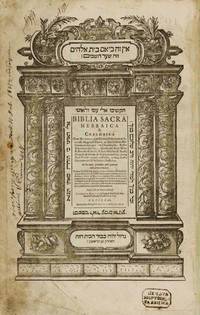
161948847Basel: Ludwig König 1619. First editions. Hardcover. Good. Seven parts in two volumes folio biblical texts and commentary in four parts continuously foliated; two supplemental sections each with separate foliation; Tiberias 1620 with separate pagination here bound after the second part - Vol. 1: 6 title and prelims 1-228 1 sect. title 234-441 1 blankff.; 6 sect. title and prelims 2 blank 114 2 blankpp. Vol. 2: 442-946; 8 Targum Yerushalmi; last leaf unfoliated; 67 Masora 1 blankff. Largely arranged in two columns of biblical texts in square font surrounded by commentaries in rabbinic Rashi font; text reads from right to left. This copy with collective Latin title surrounded by biblical quotations in Hebrew set within elaborate woodcut architectural borders. Hebrew sectional titles set within the same woodcut borders for the second and fourth parts with a plain letterpress half-title for the Five Megillot. The third sectional title for the Latter Prophets is lacking as are the Ashkenazi Haftarot readings not found in all copies. Apart from these lacks the Rabbinic Bible collates complete despite numerous errors in foliation throughout as per the detailed notes in Prijs Die Basler hebräischen Drucke. Opening word of each biblical book set in large one-third to one-half page cartouche vignettes with elaborate woodcut borders and surrounding letterpress Hebrew text. Main Latin title dated 1619 with the editor's Latin preface to the reader appearing at the verso. Jewish date chronogram for the second section Former Prophets dated 5378 1618/1619. Early twentieth-century black cloth boards worn at extremities gilt-lettered spine. Title moderately soiled re-inforced at gutter; neat old repairs to corners and fore-edge of title and next three leaves; old Russian stamp at bottom margin title manuscript entry in Russian along fore-edge dated 1837; intermittent mild to moderate marginal dampstains largely confined to corners and embrowning throughout both volumes somewhat more heavily in the first especially throughout Tiberias; top right corner of the opening leaf in vol. 2 repaired with loss of about 12 words surrounding title cartouche recto and some text in 9 lines of the commentary at the verso. Overall a good set with a notable chain of provenance. <br /> <br /> Sixth Rabbinic Bible in Hebrew: Mikra'ot Gedolot edited by Johann Buxtorf I 1565-1629 professor of Hebrew at the University of Basel and the foremost Christian Hebraist of his era with the assistance of the Jewish scholars Abraham Braunschweig who served as the principal corrector and Mordechai Gumplin of Posen. This was "a truly audacious undertaking for his time" Burnett From Christian Hebraism to Jewish Studies as no Christian scholar had yet attempted to edit the entire biblical corpus including the Aramaic versions Targumim and masoretic notes. Based mainly on the third Rabbinic Bible published by Daniel Bomberg at Venice in 1546-1548 the editor has carefully incorporated elements from two other Venetian editions. At the verso of the Latin title Buxtorf provides a detailed bibliographical excursus on the earlier Venetian editions and offers a tribute to Bomberg's industry by reprinting the colophon of the second Venetian Rabbinic Bible 1524-1525 at the conclusion of the masoretic appendix with text by the Hebrew grammarian and lexicographer Elijah Levita 1468 or 1469-1549 and a new introduction by Abraham Braunschweig. The design of the sectional titles and separate book title vignettes closely model those of the Venetian editions. "Buxtorf did not plan simply to reprint one of the existing Venice editions but rather to assemble the best features of them all into one work" and "to provide theologians with what he considered the most important tools for interpreting the Old Testament" Burnett. Buxtorf served in an official capacity as Basel's Hebrew censor charged with the oversight of all Jewish printing in the city and insuring that "no 'blasphemies' or slurs against Christians or Christianity appear in any book printed in Basel" Burnett. He carefully edited the Jewish commentaries in the Rabbinic Bible in accordance with this mandate "and removed many words and phrases which had escaped the attention of earlier censors" Burnett. <br /> <br /> The Rabbinic Bible contains the vocalized Masoretic text of the Hebrew Scriptures with accents and a vocalized Targum an Aramaic paraphrase of the biblical text: Onkelos for the Pentateuch; Jonathan b. Uzziel for the Prophets; and Targum Hagiographa for the Writings. The Hebrew and Aramaic versions are printed in square characters and presented in facing columns at the center of each page. The Jerusalem Targum of the Pentateuch appears as an appendix. In addition to the Aramaic paraphrases the Rabbinic Bible includes a massive scholarly apparatus of biblical commentaries by Rashi Ibn Ezra Baal ha-Turim Jacob b. Asher R. David Kimchi Radak R. Levi b. Gershon Ralbag Saadia Gaon and R. Isaiah along with the Masora a corpus of critical notes on the external form of the Biblical text compiled by Jewish scholars from late antiquity through the medieval era. As frequently occurs a copy of Buxtorf's work on the textual history of the Hebrew Bible Tiberias the 1620 first edition is bound-in. This work was made possible by the publication in 1538 of Elijah Levita's Masoret ha-Masoret a commentary on the Masora which Buxtorf translated into Latin for his own private use in 1593. "Buxtorf was concerned with the integrity of the consonantal text and the origin and integrity of the vowel points and accents of the Hebrew Bible from the very beginning of his scholarly career" and while he had earlier published a long excursus on the age of the vowel points and accents in his 1609 Thesaurus Grammaticus "Tiberias is Buxtorf's fullest and most impressive work on the history of the biblical text" Burnett. Intended as a reference work for Christian students and scholars interested in studying the Masora Buxtorf was also keen to refute the view advanced by Levita that the Hebrew vowel points were early medieval innovations. Our folio version of Tiberias was intended to accompany the Rabbinic Bible and has the same architectural borders at the title. König also published a quarto edition in the same year but only the folio version includes a critical commentary on the Masora in which Buxtorf proposes various corrections to the Masoretic notes. <br /> <br /> As noted at the title Buxtorf's faithful study and tireless labor studio fido et labore indefesso yielded notably long-lasting results: "The Basel rabbinical Bible became a standard tool for research among Christian scholars and would remain so. until the end of the nineteenth century" Burnett. A vast array of early modern scholars including Protestants like Johannes Drusius and John Selden as well as Roman Catholics like Robert Bellarmine and Andreas Masius owned a copy or two of the Rabbinic Bible. "Johannes Buxtorf's thoroughly censored "Christian" version of the Rabbinic Bible Basel 1618-19 only made it easier for Hebraists to own copies of their own" Burnett Christian Hebraism in the Reformation Era p.163.<br /> <br /> A note on the date of publication: "The actual printing began between the mid-August and mid-September of 1618. According to the colophon production ended on the 24 of Ab 5379 = August 4 1619 but since this date also appeared on the colophon of the Bomberg Biblia rabbinica edition of 1524-25 reprinted unchanged in the 1546-48 and 1568 editions it is suspect. Prijs suggested that the probable completion date was sometime during Ab of 5379 between July 12 and August 10 of 1619" Burnett. <br /> <br /> Provenance: from the library of acclaimed theologian and biblical scholar Brevard Childs with his entry at the free endpaper in the second volume. The earlier bookplate of judge Samuel Heller with his motto in Hebrew: Mi-kol melamdai hiskalti from all my teachers I have learned appears at the front paste-down. An old blue ink-stamp in Hebrew characters makes occasional appearances the text: Bet ha-Midrash ha-Gadol Minsk The Great Synagogue of Minsk. A Russian entry dated 1837 appears at the fore-margin of the main title along with an old ink stamp in Russian at the bottom margin the last word of which reads "Rabbina" References: Biblia Sacra: Burnett 7. Cowley 87. Darlow & Moule 5120 bound with the 1665 second edition of Tiberias cf. 5093. Davidson Otsar ha-shirah vol.1 p.406 no.8954. Prijs 219. Steinschneider 423 423b. VD17 23:675325G. S. Burnett Christian Hebraism in the Reformation Era Leiden: Brill 2012 p.163. Tiberias: Burnett 111. Prijs 222a. For detailed analyses of both works see: S. Burnett From Christian Hebraism to Jewish Studies Leiden: Brill 1996 pp.169-239 chaps. 6 & 7.<br /> <br /> Full Latin title: Biblia Sacra Hebraica & Chaldaica cum Masora quae critica Hebraeorum sacra est Magna & Parva ac selectissimis Hebraeorum interpretum commentariis Rabbi Salomonis Jarchi R. Abrahami Aben Esrae R. Davidis Kimchi R. Levi Gerson R. Saadie Gaon R. Jeschajae & Notis ex authore quem Baal Turim vocant collectis quibus textus grammaticè & historicè illustratur. In his nunc primum post quatuor editiones Venetas textus Chaldaicus qui Targum dicitur à deformitate punctationis & pravitate vocum innumeratum vindicatus; loca in Masora transposita deficientia pugnantia numeris depravata subsidio diversorum exemplarium & Concordantiarum Hebraicarum quantum fieri potuit reposita restituta & conciliata sunt ut in praefatione amplius declarabitur. Studio fido & labore indefesso Johannis BuxtofI linguae sanctae in Academia Basileensi Professoris Ord. Basileae: Sumptibus & typis Ludovici König 1619.<br /> <br /> Collation vol. 1 Rabbinic Bible: ital.a6 a-z8 A-E8 F4 G-Z8 Aa-Hh8 Ii9 Ii10 blank; 1 blank :3 1 blank A-N4 O5.<br /> <br /> Collation vol. 2 Rabbinic Bible: Kk-Rr8 Kk1 lacks Ss6 Tt10 Vv-Zz8 AA-PP8 QQ-TT6 VV9 VV10 blank XX-ZZ8 Aaa-Nnn8 Ooo3 Ooo4 blank PppTtt8 Vuu3 Vuu4 blank Xxx-Zzz8 AAaa-EEee8 8 A-G8 H6 I5 I6 blank. Ludwig König hardcover
15546212Lyon: Jean de Tournes 1554. First edition. Octavo 6 3/4 x 4 3/4 inches; 171 x 121 mm. . 16 1152 76 pp bound without the last two blank leaves as in most copiese.g. Mortimer OCLC. The penultimate leaf had only a fleuron at the foot of the page and the final leaf was blank. Arabesque title border and 198 with 1 repeat woodcuts in the text by Bernard Salomon. Title-page with faint early ink "ex-Libris petri ------ at top blank margin. Title-page expertly cleaned some occasional mainly marginal faint foxing otherwise a superb example of this wonderfully illustrated mid sixteenth-century Latin Bible. Bound ca. 1880 by Chambolle-Duru in full brown crushed levant morocco spine with five raised bands lettered in gilt gilt ruled board edges decorative gilt turn-ins marbled endpapers all edge gilt. Armorial bookplate "In Memori: Weiler Bibliotheca Trautner Falkiana" on verso of front free endpaper.<br /> <br /> First De Tournes Latin Bible based on Robert Estienne's text and beautifully illustrated with 198 woodcuts by Bernard Salomon. "Considerable work could be done on Salomon's sources for these cuts. The Expulsion from Paradise suggests Holbein's version; the New Testament shows some dependence on the set owned by Sébastien Gryphius. the Apocalypse blocks are enlarged copies of the fine Janot Apocalypse. But the cumulative effect of Salomon's carefully detailed scenes is that of an individual contribution to Bible illustration. Particularly interesting from the point of view of technique are the night scenes in Exodus and the storm over Noah's ark. In this 1554 Bible the New Testament blocks are printed with arabesque strip borders at the sides. Arabesque and type ornament headpieces." Mortimer Contents include: Old Testament; Psalms; New Testament Epistles Acts; Index Testimoniorum & Index Epistolarum.<br /> <br /> Robert I Estienne 1503-1559 was a French protestant printer and scholar born into a printmaking family. He would take over his family's Paris firm in 1526 where he printed significant works in Latin Greek Hebrew and other languages. His 1531 Thesaurus linguae latinae is considered a major milestone in lexicography. Despite his many commissions for the King religious tensions forced Estienne to flee to Geneva. <br /> <br /> This bible was illustrated by Bernard Salomon c.1508-1561 a French artist who is known for engravings and illustrations. Although little is known about his life his art reveals stylistic influences from Mannerism and the School of Fontainebleau executed in a detailed and small scale. Salomon is known to have collaborated with the printer Jean de Tournes and produced decoration for emblem books bibles and classic texts. Many of his engravings also appear as source material for art objects such as a Faience plate at the MET featuring the Sacrifice of Noah.<br /> <br /> Brunet I 876 & Supplement I 125; Darlow & Moule 6134 note; Mortimer French no. 81. Jean de Tournes unknown
2003156875Milano: San Paolo 2003. 1st edition. As New. octavo. hardback with dust jacket 1277pp. appends. index LATIN TEXT San Paolo hardcover
1653216251653. Parisiis Paris e typographia regia curante Sebatiano Cramoisy 1653. Un fort vol. au format in-4 248 x 182 mm de 1 f. bl. 1 titre gravÂŽ n.fol. 31 ff. n.fol. 884 pp. 28 ff. n.fol. et 1 f. bl. Reliure XVIIIÂme ˆ la ''Du Seuil'' de plein maroquin tÂte-de-nÂgre dos ˆ nerfs ornÂŽ de filets gras ˆ froid caissons d'encadrement ˆ froid fleurons ˆ froid titre dorÂŽ roulettes ˆ froid sur les coupes toutes tranches mouchetÂŽes. Exemplaire revÂtu d'une sobre mais dÂŽlicate reliure du temps de plein maroquin. Il s'ouvre sur un superbe titre-frontispice agrÂŽmentÂŽ d'un large dÂŽcor allÂŽgorique gravÂŽ. Outre de jolies lettrines l'iconographie est complÂŽtÂŽe par de larges tout autant que dÂŽlicats bandeaux et culispices figuratifs. Brunet I Manuel du libraire et de l'amateur de livres 879. Angles ÂŽlimÂŽs. Coiffe de tÂte arasÂŽe. LÂŽgers frottements affectant les plats. Faiblesse affectant les charniÂres. Petit manque angulaire affectant un feuillet. Quelques rousseurs claires et ÂŽparses dans le corps d'ouvrage. Cahiers parfois lÂŽgÂrement oxydÂŽs ; l'un plus nettement. Nonobstant bonne condition. b42961 unknown
15847235Salamanca: Gasparem à Portonariis suis & Gulielmi Rouillii Benedictique Boierii expensis 1584. First Edition Primera edición. Hardcover Tapa dura. 297x210mm. 11¾x8¼". Salamanca Gasparem à Portonariis suis & Gulielmi Rouillij Benedictique Boierij expensis 1584-1585. 3 tomos en un volumen. En folio 297 x 210mm. 14 366 1 h.; 72 214 30 138 hojas 42 pp. Importante encuadernación mudéjar de época en piel sobre tabla planos ricamente gofrados lomera restaurada en cabeza y pie sin los broches. La Biblia de Salamanca con la traducción y notas de Francisco Vatablo publicada por primera vez en París en 1545 e impresa en España en 1554 con atribución a fray Domingo de Soto de la revisión del texto prohibida y mandada retirar por la Inquisición entre los años 1554 y 1559 pero que finalmente pudo ser publicada en Salamanca en 1584. Se conoce como <em>Biblia de Vatablo</em> a la edición preparada por Robert Estienne de la versión <em>Vulgata</em> de las Sagradas Escrituras junto con la traducción latina de Sanctes Pagnino y las anotaciones y correcciones de François Vatable profesor de hebreo del Collège de France; fue impresa en París en 1545. Se trata de una Biblia única ya que contiene 2 textos en latín de la Sagrada Escritura y no uno como es común. A la primera traducción se la denomina como la traducción vieja y se trata de la primera traducción de la Biblia realizada al latín desde el hebreo y griego llamada <em>Vulgata</em>; la segunda traducción se la denomina como traducción nueva y contiene las ideas renacentistas. Ambas traducciones confrontan el pensamiento de la <em>Vulgata</em> y las correcciones de ésta entre lo antiguo y lo nuevo. La primera impresión de la Biblia de Vatablo en España fue realizada en 1554 por Andrea de Portonaris en Salamanca; fue considerada ilegal un año más tarde y se dice de ella que no hay ejemplar conocido. Esta segunda impresión de 1584 la única que pudo ver la luz fue publicada después de ser cuidadosamente revisada y expurgada por la Inquisición y un grupo de teólogos de la universidad de Alcalá llamados los <em>hebraizantes</em> a los que le costó la cárcel y la muerte y entre los que se encontraba Fray Luis de León. Esta Biblia editada por Gaspar de Portonaris hermano del impresor de la primera y desconocida primera versión comenzó su andadura en 1569 en un proceso de más de 100 juntas reuniendo a gran número de teólogos y que se extendió por varios años. Contiene para el Antiguo Testamento la versión de San Jerónimo y Pagnini y para el Nuevo Testamento la versión de San Jerónimo y la traducción de Erasmo junco con ciertas revisiones de Teodoro de Beza. Durante los debates hubo momentos de mucha tensión. Especialmente furibundos fueron los enfrentamientos entre Fray Luis de León profesor de Teología Prima y León de Castro profesor de Griego experto acusador de judíos y judaizantes y abiertamente enemigo de todo aquello que tuviera que ver con los textos en hebreo donde las amenazas con denunciarse mutuamente ante el Tribunal del Santo Oficio fueron constantes durante estos años de deliberaciones. En las juntas se enfrentaron dos tendencias irreconciliables lo que iba a desencadenar las persecución de los hebraístas. Finalmente Fray Luis de León y sus otros compañeros hebraístas fueron llevados ante la Inquisición encarcelados y llevados a juicio. Es precisamente durante este largo cautiverio cuando Fray Luis realiza algunas traducciones de libros y escribe varias poesías y una de sus obras más significativas<em> De los nombres de Cristo</em>. Finalmente en 1575 el Tribunal reconociendo el valor y la energía impuesta por Fray Luis en su defensa oral le creyó exento de toda culpa y sospecha. Gasparem à Portonariis suis & Gulielmi Rouillii Benedictique Boierii expensis hardcover
1913001619Leipzig: Insel Verlag 1913. Two volumes complete 1913-1914 - Volume I - 648p; Volume II - 632p. Publisher's blind stamped morocco by Riviere & Son raised bands spines in seven panels title in gilt to second volume number and date in gilt to fourth remaining panels with central floral spray and volute tools to side in blind. Covers with outer double panel joined by mitred corners with occasional flower heads and elongated volutes to margins again in blind title and original publisher to head and foot in gilt central panel with blind roll presumably showing Gutenberg's head with a central arabesque inner edges with blind roll combed and curled marbled endpapers a.e.g. Bright and clean. The first complete facsimile of the Gutenberg Bible reproduced from the richly illuminated copies in the Koniglichen Bibliothek Berlin and the Standischen Landesbibliothek Fulda and attractively produced and bound. First Thus. Hardback. Very Good. Elephant Folio. Facsimile. Insel Verlag Hardcover
177349501Rothomagi:: Ric. Lallemant 1773. Edition nova. contemporary mottled sheep; gilt spine. Joints just starting 1-2" at the bottom; very light scuffing and use; but a tight and sound copy. The leaf preceding the title page has been neatly excised. . 8vo. Ric. Lallemant, unknown
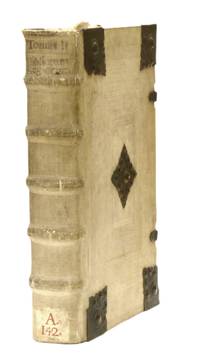
114710Antwerp Christopher Plantin 1572. Large folio. Engr. front 6 720 709-731 1 213 2 pp. Stain in inner upper corner and a small worm hole through pp. 590-650. Contemporary blind-stamped pigskin over wooden boards spine with raised bands handwritten title on the top compartment and an old paper label â€A. 142†on the lower boards with rolled decor brass clad corners and middle knobs blue edges and two preserved decorated brass clasps. The 10 brass corners and middle knobs are from the 15th century and the brass corners with corrupt latin texts. From the library of the Carthusian monastry at Buxheim Kartause Buxheim with its library stamp and handwritten signature on the half title also the library signum on the spine is from the Buxheim library. From the library of Victor von Stedingk with book plate. Brekka The Antwerp Polyglott Bible diss 2012. Adams 970. Fine copy of the second part of the famous Antwerp Polyglot Bible by Plantin edited by Benedictus Arias Montanus. This part contains the books of Joshua Judges Ruth Samuel 1-2 Kings 1-2 and Paralipomenon. The fine engraved frontispiece is made by Jan Wierix 1549-1918 and shows the Israelites Crossing the River Jordan transporting the Ark of the Covenant as described in Joshua 3:13-17.The Biblia Regia – so called because it was financed by the king of Spain Philip II – was published by Christopher Plantin 1520–89. It comprises eight volumes with parallel texts in Hebrew Greek Chaldean and Latin translations and was a great achievement by the Plantin firm. It took five years between 1568 and 1573 to produce and it was printed in 1200 copies on four different kinds of paper and 12 copies on vellum. Several of the 1200 copies were however lost at sea on route from the Netherlands to Spain Bekka p. 16. The chief editor of the Polyglot and also acting as the Philip’s orthodox supervisor was the polymath Benito Arias Montano 1527-98 and among his chief assistants were Plantin’s son-in-law and successor Franciscus Raphelengius and several other orientalists. Theologians at the University of Louvain assisted by comparing numerous manuscripts and printed editions to determine what the correct text for the Bible should be. Because of it its high production costs its demands on typographical expertise its concentration of scholarly and editorial skills it is considered one of the greatest single printing enterprises of the sixteenth century. Volume 1-4 contain the Old Testament volume 5 the New Testament and volume 6-8 supplements.The large library of the Carthusian monastry at Buxheim â€.zu Beginn des 16. Jahrhunderts bereits zu den bedeutendsten Klosterbibliotheken Europas.†was sold at auctions in 1883-84 the present volume coming from a complete set of the library. hardcover
1680B555London: Nathanielem Ponder c. 1680. Covers slightly discoloured otherwise an excellent copy. Binding: Contemporary full straight-grained dark brown morocco with gilt design densely-gilt emblematically-designed spine with raised bands recent gilt red morocco label on two all edges gilt marbled endpapers. Notes: Bible in Latin. Size: 12mo Illustration: Engraved title page within border and enclosed by four copper engraved biblical scenes. Owner’s inscription on the back page. Pages: P. title 959 pp. Category: Book Religious Christianity; Nathanielem Ponder hardcover
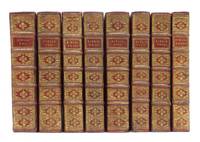
165212102Paris A Vitré 1652. 8 vol. 22 incl. engr. title-768 714-1 622 266-3-1 bl. -267/648 780 583-1 480-144 447-56 p. 12mo. H. 165 x W. 10 x D. 37 cm. light damp stain at top margin vol. I. Contemporary red morocco ""à la Du Seuil"" covers with double gilt-ruled border and gilt corner pieces richly gilt decorated spines with 5 raised bands joints slightly rubbed some small repairs at heads or tails gilt sides gilt inside dentelles all edges gilt marbled endpapers. This Paris Bible was printed by the decision of the ""Assemblée du clergé"" of 1650. A fully ruled copy with wide margins. Engraved frontispiece in vol. I. Titles vol. II-V with the date ""1651"". Woodcut mark in fine vol. II. Ref. Darlow & Moule 6221 note. - Bibles Paris 1040. - Brunet I:879. - BnF. Provenance: Ex dono of Mr. des Places Gaultier to Janneaux 1680 manuscript mention in each volume. Very nice copy. Paris, A Vitré hardcover
B9781021182678Paperback / softback. New. paperback
ria9781019389232_inpHardcover. New. New Book; Fast Shipping from UK; Not signed; Not First Edition; This classic Latin edition of the Bible translated by Immanuel Tremellius and Franciscus Junius and revised by Theodor Beza is a treasure of Christian literature. With its elegant prose and scholarly attention to detail this version hardcover
ria9781021182678_inpPaperback. New. New Book; Fast Shipping from UK; Not signed; Not First Edition; This classic Latin edition of the Bible translated by Immanuel Tremellius and Franciscus Junius and revised by Theodor Beza is a treasure of Christian literature. With its elegant prose and scholarly attention to detail this version paperback
16643761DB1664. Antwerpen Plantiniana 1664. 4°. 3 Bl. 1055 1 30 S. 26 Bl. Lederband der Zeit. Vorderer Einbanddeckel vollständig abgelöst. Papier etwas stockfleckig. unknown
17717007CB1771. 2 Bände. Augsburg u. Innsbruck Joseph Wolff 1771. Folio. 4 Bl. XIV S. 1 Bl. 1168 S.; 506 S. 1 Bl. 506 S. 22 Bl. Schweinslederbände der Zeit mit Roll- und Plattenstempelprägung. Mit getilgtem Namenszug auf dem Halbtitelblatt mit Papierverlust. Der vordere fliegende Vorsatz von Band eins fehlt. Drei von 4 Schliessen teilweise ausgerissen. Die Einbände stärker berieben. unknown