1 504 résultats
1964130165New York Washington Hollywood: Vantage Press 1964. Octavo cloth. First U.S. edition. Pennsylvania lawyer's first book. A near fine copy in near fine dust jacket with light wear at edges. #130165 Vantage Press unknown books
1900749Boston & Laramie: Isaac Van Horn & Co 1900. Very good. 146pp. Large quarto. Original tan cloth cover stamped in gilt. Light wear corners a bit bumped first signature loosening. Minor soiling to text but generally quite clean internally. A wonderful and elaborate promotional work for Laramie Wyoming courtesy of the Van Horn-Miller Co-operative Trust. Extensively illustrated with half-tones the book extols the virtue of Laramie and the surrounding area depicting city streets mining operations ranches prominent citizens timber lands and much more. Also includes a map of the railroad lines in the area. Despite this lavish production -- or perhaps because of it -- Van Horn declared bankruptcy in 1913 with liabilities in excess of $750000. Isaac Van Horn & Co unknown books
1921263183Seattle: The Simplex Pub. Co 1921. 88p. slender booklet spine panel torn in two places; paper toned minor soil. Second edition posthumous; revised. Outlines the author's theory that the earth was once surrounded by rings the collapse of which caused catastrophic floods on earth including the Biblical flood. The creationist ideas of the Jehovah's Witnesses were heavily incluenced by Vail. Includes ads at the rear for Warren Edwin Brokaw's "The Equitist. The Simplex Pub. Co unknown books
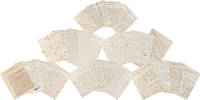
1827WRCAM55911Various locations mostly Valparaiso Chile; Callao and Lima 1827. Forty-six autograph letters signed or manuscript letters signed totaling 103pp. some with integral address leaf. All docketed at the top right edge of the verso of the last leaf likely by William Tudor himself. Original mailing folds light toning occasional short tears from opened wax seals. Overall very good. In a cloth chemise and half morocco and cloth folding case spine gilt. An important historical archive of letters received by William Tudor almost all while he was serving as United States Consul to Peru in Lima. The letters from a breadth of correspondents reveal the range of political cultural military and legal issues faced by an American diplomat serving in a South America during a politically volatile period and are especially interesting for detailing American diplomatic actions in South America in the years just after the issuance of the Monroe Doctrine. The letters are particularly notable for demonstrating the views and actions of the United States during the Peruvian independence struggle and showing the extent of the cooperation between the U.S. and Great Britain less than a decade after the conclusion of the War of 1812. They also paint a picture of the revolutionary actions of Simón BolÃÂvar in Peru the tight grip on the port of Callao by Spanish stalwart José Ramón Rodil and the interplay of American British Spanish Chilean and Peruvian officials in the region. <br> <br> William Tudor 1779-1830 was a leading citizen of Boston and the son of the first judge advocate of the Continental Army. Tudor was a founder and first editor of the NORTH AMERICAN REVIEW and helped found the Boston Athenaeum. He was the first Boston citizen to refer to the city as "The Athens of America" in an 1819 letter. Tudor was the U.S. Consul to Peru from 1824 to 1827 and Chargé d'Affaires at Rio de Janeiro from 1827 until his death there in 1830. <br> <br> The most prominent correspondent in this archive is Commodore Isaac Hull 1773-1843 represented by twelve letters to William Tudor. The Hull letters are a mixture of seven autograph letters signed from Hull and five manuscript letters in a secretarial hand but signed by the Commodore. Hull's letters report on the naval blockade of Peru American movements around South America and the struggles of Simón BolÃÂvar's South American independence movement and also touch on the ultimate defeat of the Spanish in Peru. At the time these letters were written Hull was commander of the United States Pacific Squadron and the letters emanate from Hull's flagship the USS United States positioned in Callao Bay as part of a joint American-British blockade. Hull had a long and distinguished career in the United States Navy beginning during the Quasi War with France battling Barbary pirates and commanding the USS Constitution during the War of 1812. He went on to serve as commandant of the Washington Navy Yard and as commander of the Mediterranean Squadron. Letters by Hull are scarce on the market especially in the quantity quality and intimacy of content seen here. <br> <br> In his first letter on May 28 1824 Hull writes about meeting British naval figure Martin Guise who was at this time serving with the Chilean Navy during the Peruvian War of Independence from Spain. Hull mentions the current blockade in his first two letters writing in the first: "I fear that they will not go all length with me in the blockade; they appear disposed to allow something like a coast blockade." His second letter of June 8 includes more details on the efforts during the blockade namely that Guise is "doing what he has the authority to do from Bolivar" and Captain Prescott "has in great measure made up his mind to submit to the blockade of Guise even in its present form." <br> <br> Hull's communications increase beginning in August and he writes to Tudor on August 21 that he must refuse his request to land U.S. Marines in Lima for the protection of American officials but agrees to send a "sea officer with arms" and as many seamen as necessary "for the protection of American Citizens only" but that they "must be kept within their houses or yards." <br> <br> In his next few letters Hull reports on the ships Dolphin and Peacock being routed to Valparaiso to provide strategic defense to American shipping vessels in the region and asks for more information and communications from Tudor regarding the ships Carington and Nancy condemned by Spanish General José Ramón Rodil. In a September 11 letter Hull states that Rodil intends to sell the two ships and that "it may be necessary for me to take measures that will not please his excellency as I consider his conduct is and has been for some time hostile towards us and cannot much longer be submitted to." Hull also invites Tudor to his ship to "spend the day with your friends Capt. and Mrs. Maling" who were onboard Hull's ship the previous night. Hull and Thomas James Maling were fellow commanders of the American and British forces respectively during this period around Peru. Maling commanded the British ship the Cambridge which is referenced in some of the letters here. José Ramón Rodil was commander of the port of Callao for the Spanish government and one of the last remaining Spanish officials to surrender to BolÃÂvar; he stubbornly refused to officially cede control of Callao until 1826 when he finally gave up and returned to Spain. <br> <br> On October 15 Hull writes to Tudor about the attitudes of the Spanish government "towards our commerce." Hull fears that should the Spanish invoke "the laws of the Indies" against American officials in Peru then Hull and Tudor "shall be in a bad way." The Laws of the Indies were a series of Spanish laws dealing with the relationship between Spain and her colonies in America; Hull is perhaps worried here that if the Spanish government invokes these laws as a sovereign nation then the activities of the American government in South America would stand in violation of that sovereignty. <br> <br> Hull's troubles with Rodil continue in November when he informs Tudor that "the crew of the China had complained to Captain Maling of the bad treatment they had received from General Rodil stating that they were compelled to work and that some of them had been severely punished." Hull writes that he plans to demand the release of these sailors and the ship and if Rodil does not acquiesce he would "resort to reprisal and let the consequence be what it may." <br> <br> In Hull's next letter the true nature of the extreme treatment suffered by some Americans under Rodil is described. Hull writes a lengthy and passionate letter decrying the "injustice and cruelty of all the proceedings" which took place during the Spanish seizure of the China. Hull can no longer "remain inactive or insensible to the repeated wrongs of my countrymen." He then relates how some seamen were threatened with swords muskets or gallows. Hull thinks that "my government will justify me in any measures which I shall be compelled to take to obtain redress for the insults and wrongs which my countrymen have received and to prevent a repetition of them" After all claims Hull "there is not an American in this country knowing all things which have taken place who would not be willing to sacrifice every feeling of interest to have their rights respected." <br> <br> Hull's last two letters come after the decisive battle at Ayacucho in early December 1824 which effectively ended the Peruvian War of Independence in favor of BolÃÂvar's forces. On December 18 Hull transmits his original correspondence with Rodil to Tudor presumably so that Tudor can consolidate communications between American and Spanish officials now that Peru has won the war. Hull's final letter touches on duties owed by American vessels at Ancon; Hull recuses himself from the issue in favor of Tudor as such issues "should more properly come before you as consul or the merchants to whom he consigned and I consider any interference on my part would be improper and that it is a case entirely distinct from my duties." After all as a naval commander Hull is not responsible for imposing import and export duties related to commerce in newly-independent ports. Hull closes by writing that the news of Peruvian independence will be "such glorious news to the United States. It will be received with sincere pleasure by our government and every lover of freedom and humanity." <br> <br> Also present here are seven letters from the aforementioned Thomas James Maling plus one from his wife Harriet to William Tudor all of which were written between August and December 1824. Captain Thomas Maling was the scion of the Maling pottery family in England. He was commissioned into the Royal Navy in 1791 rising to vice admiral in 1830. During his time in Peru Maling was captain in charge of the HMS Cambridge which was stationed in Callao for most of Maling's time there. He married Harriet Darwin daughter of Erasmus Darwin and niece to Charles who accompanied him to South America. Sadly Harriet would die in 1825 in Valparaiso Chile. The Malings were very friendly with William Tudor as evidenced in the present correspondence which includes a friendly partial note from Harriet to Tudor in which she chides Tudor for not visiting their ship and offers to share with him "a good private and confidential letter". <br> <br> In his first letter dated August 18 Captain Maling agrees to take aboard his ship one of Tudor's friends and hopes "you are all made safe & happy by the party I have sent to guard you all at Lima." In his second letter on August 24 Maling mentions that "Guise is sending another Blockading Squadron" but that this will be "of insufficient force to stop the trade of Europe and North America." Maling hopes "your Commodore" meaning Hull agrees with him; blockades were prevalent during this time around Peru and Chile as the various revolutions led by and inspired by Simón BolÃÂvar took root. <br> <br> Maling's letter of September 4 concentrates on battle news in Peru reading in part: "Kelly who I believe you know of returned from the Liberator's Army and I believe brings us good news but he is still with Guise.There has been no second battle but Cantera's army dispersed after the 6th leaving him with only 2000 men with which he is hastening back to Cusco. It is supposed for the purpose of raising the Indians in favor of the Young Inca they have been keeping in reserve. The Commodore Hull has thought this information & what else Kelly may bring of sufficient importance to detain the Dolphin another day." <br> <br> Three days later Maling writes Tudor about a recent naval issue that prompted him to write to the commanding officer of the ship "to tell him he will be made responsible in future for the conduct or his officers & men and I hope we shall hear of no other instance of such impropriety but it is by no means thought here to be ours." This is followed by a mention of the ship China. Maling invites Tudor to his ship for a visit and tells him he may have the "opportunity of seeing a naval fight." This letter is likely concerned with the aforementioned troubles with the China in which American and British sailors were mistreated by Spanish authorities. <br> <br> Maling's October 15 letter is especially interesting as he mentions yet another blockade-related event: "There is an embargo on all vessels at Quilea & no communication permitted with the shore a pretty conclusive hint where our friends will go to when they sail from hence if Guise who is again sailing close in ever suffers them to depart in peace." <br> <br> Maling's last two letters date from December 1824 after BolÃÂvar's victory in Peru. In his December 8 communication he reports that "England has acknowledged the independence of those parts of America which actually form free states." The implication here is clear in that England is ready to recognize democratic regimes and nothing less. In his final letter Maling writes about the slowness in receiving news from the Peruvian government on naval matters though he allows for the "intoxication of success" felt by those in Peru who had just won their independence from Spain. Maling wishes them "so well to their cause that I shall not quarrel with them." <br> <br> Maling's penultimate letter alludes to the recent death of British Consul General Thomas Edward Rowcroft. The present archive includes two letters to Tudor from Rowcroft who was essentially Tudor's British counterpart in Peru. In his first letter dated June 19 1824 Rowcroft writes to Tudor about the "dispositions of the Viceroy on the appointment of Consuls in this Country" and on the importance of maintaining "mutual confidential communications" between himself and Tudor. Towards the end of 1824 on December 2 Rowcroft writes again to Tudor this time to ask about two English Navy vessels allegedly captured by a ship flying "Spanish Colours" and then recaptured by Tudor's brother-in-law Commodore Stewart. This last letter would have been among Rowcroft's final communications as he was gunned down a few days later while traveling back from Lima after delivering letters to Thomas Maling. Rowcroft supposedly held a pass that should have taken him safely through both the loyalist-held sections and the Bolivar-held areas of the city. As he presented his pass to authorities loyal to Bolivar at a checkpoint his coach was met with a hail of bullets as it rolled away. Rowcroft was shot in the hand and the torso and died on December 7; his death is now considered an unfortunate accident perhaps precipitated by a "death sentence" purposely written on his pass by loyalist officials hoping to get Rowcroft in trouble. If this was indeed their plan it worked. <br> <br> Other letters to Tudor here include a February 20 1824 note from John Dorr to Tudor in which Dorr discusses his ship Esther which was seized by the revolutionary government in Callao Peru. Dorr indicates that General BolÃÂvar is willing to "do what is possible to recover that valuable Ship & freight or ample indemnity." On April 18 1824 French Dr. A.V. Brandin writes to Tudor from Lima informing him of a shipment of quinine for Commodore Hull and his wife aboard the USS Franklin. Brandin allegedly founded the first medical journal in Peru and was apparently the first doctor to introduce quinine to South America. <br> <br> In other letters in this archive American ship captain Samuel C. Erwin writes to Tudor on April 22 1824 with regard to the seizure of a "case of Linnens" by the new Peruvian government along with a request to write directly to the governor in Lima for relief and for a "Certificate of American Property for my whole cargo which I have repeatedly applied for without being able to get it." American merchant seaman Thomas R. Gerry son of Elbridge Gerry writes to Tudor from Quilca Peru on August 18 1824 reporting on various business matters and providing a blistering description of Quilca which he sums up as a "miserable hole." Gerry also reports on two American prisoners of war taken by the Chilean government one of whom he currently has on his ship the Tartar while the other is still held at Arica. <br> <br> The present collection also includes a handful of letters from Michael Hogan U.S. Consul and Navy Agent at Valparaiso Chile from 1823 until his death in 1833. Hogan's first communication to Tudor is dated the day after Tudor took over as consul in Peru; Hogan is "anxious" but "hopes for the best" for Tudor in his new position. In June 1824 Hogan sends a short report to Tudor on political maneuverings in Valparaiso where General Pinto was to be appointed "supremo." One of his letters from July 28 1824 reports on political struggles within Chile where a Constitution had just been "amicably" voted down the Senate dissolved General Wager appointed director and General Pinto as prime minister until a new Congress was convened in three months. Another letter from Hogan dated August 9 1824 includes information on the Chilean government's efforts to sell church property "for the publick good." This was a standard practice in the post-colonial governments in South America who often converted church artifacts of silver and gold into new coinage. In this same letter Hogan reports that Chilean officials will soon forbid the importation of flour in favor of the "great landholders" in Chile who plan to produce their own "breadstuffs." <br> <br> Other communications to Tudor involve letters of introduction for new merchant ship captains an appeal by William Wetmore regarding shipping declarations made to General Rodil in Callao two short letters from U.S. consul to Peru James Prevost in Callao regarding permissions from the new Peruvian government Prevost would die in Lima on March 5 1825 and a handful of letters in Spanish from local officials one of which dated Feb. 12 1826 mentions mining in Lima "metales de plata" and "metales ricos un espia". <br> <br> There are also two letters written to Tudor before his time in Peru. One dated July 7 1822 from Thomas Dawes in Boston relates to a pamphlet Tudor wrote on Thomas Paine. The other is an October 30 1822 "Declaration and Protest" from a U.S. schooner called the Dolphin claiming unlawful seizure and false imprisonment by Peruvian officials in Callao; this document was perhaps inherited by Tudor when he arrived in Lima. There is even an intriguing partial manuscript which seems to be part of a confidential report on English government and their public attitudes towards the United States mentioning a debate in the House of Commons regarding "peace or war with America." <br> <br> In total these to William letters shine a rare spotlight on the American intervention in Peru and on the international political and economic machinations in South America during the 1820s. The archive provides a stark picture of American enforcement of the Monroe Doctrine which President Monroe had just elucidated in his State of the Union Address on December 2 1823. Spanish actions in Peru in the 1820s were seen as a violation of this new foreign policy stance by the United States particularly the tenet covering European colonial involvement in the Western Hemisphere. Of course the Monroe Doctrine also served American economic interests in South America which certainly motivated events such as the American blockade of Callao and the dispersal of the Dolphin and the Peacock to other South American ports. <br> <br> An outstanding collection of American diplomatic correspondence from an important moment in South American history. hardcover books
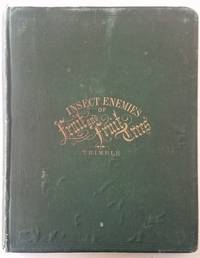
1865004612New York: William Wood 1865. American Color Plate Botany. 4to dark blue cloth with ornamental lettering in gilt on front cover and in blind on back cover. Binding a little discolored small nick at spine internal crack. Plates bright with original tissue guards. A practical manual for fruit-farmers by the chief entomologist for the New Jersey Agricultural Society to aid in identifying harmful insects. An in-depth study of the Curculio beetle and apple moth that attack the young fruits of the apricot plum nectarine cherry and apple in an attempt to eradicate them. Eleven lithographic plates nine colored and two tinted attractive in a somewhat morbid way of insect-ravaged fruit showing fruits at various stages of maturity and decay. Hochstein Anthony was a New York City artist who specialized in flowers fruits and insects and worked with several publishers of horticultural texts. Hedrick page 529: "The plates are rather horrifying examples of all the problems from insects which faced the fruit grower." Bennett American Nineteenth Century Color Plate books page 106. Not in Reese Nineteenth Century American Color Plate Books. Cloth. Very Good. Illus. by Hochstein. 4to. William Wood Hardcover books
1865357New York: William Wood & Company 1865. 4to. 290 x 225 mm. 11 1/2 x 9 inches. ix-xvii 19-139 pp. collates per the copy at Princeton. 11 full-page lithographic plates 9 of which are printed in colored. Publisher's green cloth title gilt on upper board and in blind on lower cover; joints cracked but expertly repaired corners and edges bumped and the green cloth is faded in some places; preliminary leaves foxed as are the tissue guards otherwise quite a clean copy. First Edition. Isaac Trimble was chief entomologist for the State Agricultural Society of New Jersey and well as a member of the Horticultural Association of the America Institute. His book was a practical manual for the preservation of fruit trees and was directed at the numerous fruit farmers of this country. His text discusses the recent literature on the destruction of fruit and fruit trees by insects and attempts to provide an observational element to the discussion so farmers not interested in the science can observe infestation and do something about it before infection occurs. The plates in the book drawn by the New York City artist A. Hochstein complements Trible text with beautifully printed color plates that demonstrate the devastation that insects do to fruit. Hochstein was a specialist in drawing and painting flowers fruits and insects and worked with a number of publishers producing illustrations for horticultural texts. The plates in this book are unsigned by were probably executed by R. Craighead a printer on Centre Street in New York City. Bennett p. 106. See also Volume 15 page 10 of The Horticulturist and Journal of Rural Art and Rural Taste 1860 for an advertisement featuring the work of Hochstein. 357. William Wood & Company unknown books
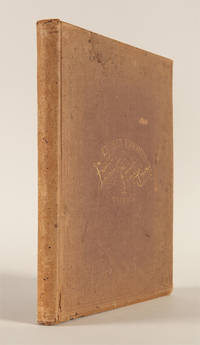
1865WRCAM22692New York: William Wood 1865. 139pp. plus eleven lithographic plates one colored and two tinted. Large quarto. Original brown gilt cloth. Cloth tanned some scattered foxing. Overall just about very good. A practical manual for orchardists to identify fruit tree enemies. Trimble was the entomologist of the State Agricultural Society of New Jersey and entomologist of the Horticultural Association of the American Institute. "The plates are rather horrifying examples of all the problems from insects which faced the fruit grower" - Hedrick. McGRATH p.220. BENNETT p.106. HEDRICK p.529. William Wood hardcover books
1817657281817. With a Duplicate Colored Frontispiece Annotated by George Cruikshank Trial. Thistlewood Arthur 1770-1820 Defendant. Watson James Defendant. Preston Thomas Defendant. Hooper John Defendant. Cruikshank Isaac 1764-1811 Illustrator. Cruikshank George 1792-1878 Annotation. High Treason!! The Whole Proceedings on the Trial of Arthur Thistlewood Gent. James Watson The Elder Surgeon Thomas Preston Cordwainer And John Hooper Labourer: Upon an Indictment Found Against Them for High Treason. Fairburn's Edition. London: Printed by W. Marchant ; published by John Fairburn 1817. 23 parts comprising 360 numbered columns. Folding frontispiece two plates. Complete. Octavo 9" x 5-3/4". Original plain paper-covered publisher boards with contrasting spine untrimmed edges. Some soiling and staining moderate edgewear spine abraded and worn front board detached early owner signature L. Palmer and later owner bookplate of William Hartmann Woodin to front pastedown. Moderate toning to text minor oil stains and dampstains to a few leaves. Brief annotations in pencil to front pastedown and verso folding plates both entry references to Douglas's Works of George Cruikshank interior otherwise clean. Duplicate of folding frontispiece hand-colored and with an annotation by George Cruikshank laid in. It is lightly soiled lightly edgeworn and beginning to tear along fold lines later reference annotation to Douglas bibliography to top margin. Items housed in a quarter-morocco over cloth slipcase with raised bands and gilt title to spine. Moderate rubbing to extremities. A unique copy of a rare title. $950. Only edition. Thistlewood Watson Preston and Hooper were leaders of the Spencians a group of English radicals who opposed private land ownership. They were indicted for treason when a mass audience at a Spencian rally at Spa Fields Islington England on 15 November and 2 December 1816 degenerated into a riotous mob. Watson was acquitted and the other three were released without trial. Fairburn's serialized account features a courtroom scene and portraits of the defendants by Isaac Cruikshank who is not credited. The colored duplicate frontispiece has an annotation by his son George Cruikshank reading: "Not any of it by me-GCK." This remark illustrates how the work of the two men were often. unknown books
1857716411857. Boston: Federhen & Company 1857. Boston: Federhen & Company 1857. An Accused Adulterer Defended by Richard Henry Dana Trial. Kalloch Isaac Smith 1831-1887 Defendant. Only Full Report of the Trial of Rev. I.S. Kalloch on Charge of Adultery: Complete History of the Affair Doings of the Church Kalloch's Pulpit Defence Arrest Arraignment Trial And Result. With Accurate Portraits of Kalloch and the Beautiful Lady in Black And the Lecture Room of the Lechmere. Boston: Federhen & Company 1857. 64 pp. Woodcut pictorial title page. Two woodcut text illustrations. Octavo 9" x 5-1/2". Stab-stitched pamphlet in pictorial self-wrappers bound into recent quarter calf over marbled boards. Moderate toning and dampstaining to text repairs to edges of first and final leaves. $750. Only edition. "Isaac Smith Kalloch accused of adultery in this prosecution was a Baptist clergyman and was supported by the trustees of his church throughout this affair. . The jury could not reach a verdict in the case which was tried in the Massachusetts Court of Common Pleas Criminal Session in Cambridge Massachusetts" Cohen. Kalloch was defended by the eminent lawyer and politician Richard Henry Dana Jr. 1815-1882. The trial resulted in a hung jury. Kalloch later moved to San Francisco and became that city's mayor in 1879. The Full Report includes the judge's charge but not the jury's final verdict. Kalloch was acquitted. He moved to San Francisco where he continued to generate controversy by skirting the bounds of decency. When he decided to run for mayor of San Francisco in 1879 he came under attack from the San Francisco Chronicle's editor-in-chief Charles de Young who was backing another candidate. DeYoung hoping to end Kalloch's campaign accused the minister of having an affair. Kalloch responded by claiming that De Young's mother ran a brothel. In response DeYoung ambushed Kalloch on a street and shot him twice. Kalloch survived the wounds. Due in part to the sympathy of voters he was elected the 18th Mayor of San Francisco. OCLC locates 7 copies in North American law libraries Brigham Young University Harvard LA County Social Law Library of Congress University of Cincinnati University of Minnesota. Cohen Bibliography of Early American Law 13700. unknown books
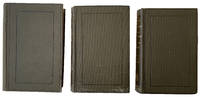
19601295271New York: Dover Publications Inc 1960. Hardcover. Octavo; VG; hardcover; bound in grey cloth black lettering; slip cover has extensive wear around edges tearing along rear edges visible separation of spine board from head board; all volumes' boards strong some shelfwear minor rubbing on fore corners and spine edges interiors age toned; all volumes' text blocks age toned minor soiling on exterior edges; volume 1 boards have slight bumping on spine edges penned signature on front interior; volume 3 boards have slight bumping on spine tail edge; volume 3 text block has occasional folding on head fore corner; 3 volumes SHELVED IN ANNEX C ON THE RIGHT HAND SIDE<br /> <br /> Oversized book. Additional postage necessary for expedited/international orders. Economy International shipping unavailable due to weight restrictions. For international expedited please inquire for rates. 1295271. Rockville Non-Retail Listings. Dover Publications, Inc hardcover books
1962Z1673New York:: Dover 1962. 1962. Two vols. in one. Reprint of the two volume 1873 Macmillan edition. 8vo. xxxvi 476 2 508 pp. Index. Blue cloth gilt-stamped spine title dust-jacket; jacket rubbed else fine. Dirk Brouwer's copy. Brouwer was the recipient of the Bruce Medal in 1966. From the website: Born in the Netherlands Dirk Brouwer received his Ph.D. in 1927 under Willem de Sitter at the University of Leiden and then joined the faculty at Yale University where he worked in celestial mechanics with Ernest W. Brown. While still a student he determined the mass of Titan from its influence on other Saturnian moons. From 1941 to 1966 he served as director of the Yale University Observatory and editor of the Astronomical Journal. Brouwer developed general methods for finding orbits and computing errors and applied these methods to comets asteroids and planets. He was one of the first to use electronic computers for astronomical computations. He computed the orbits of the first artificial satellites and from them obtained increased knowledge of the figure of the earth. His book Methods of Celestial Mechanics taught a generation of celestial mechanicians. He also redetermined astronomical constants. Dover, (1962). hardcover books
1893SS8776Cambridge:: Cambridge University Press 1893. 1893. Three volumes. 8vo. xvi 924; xiii 762; 546 12 pp. Frontis. plates 2 folding diagrams index; uncut. Original black-stamped green cloth gilt-stamped spines; spine ends slightly rubbed minor white stain spots inner hinges cracking Vol. III a bit rubbed Vol. III. Very good. FIRST EDITION. A thorough and authoritative study of elasticity published posthumously. Cambridge University Press, 1893. hardcover books
1875S8774London:: Macmillan 1875. 1875. 8vo. viii 348 pp. First few leaves with minor worming. Original maroon half calf gilt spine raised bands maroon cloth boards. Early ownership rubber stamp of J. O'Kinealy. A FINE COPY. FIRST EDITION. Todhunter was one of the most influential figures in mathematical education in the 19th century. Macmillan, 1875. hardcover books
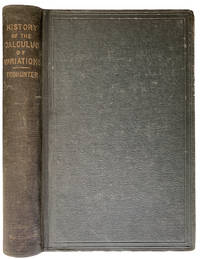
1861SS3608London:: Macmillan 1861. 1861. 8vo. xii 532 ads. 28 pp. Folding plate containing 12 geometric diagrams index. Original green blind-stamped cloth gilt spine; beautifully rebacked preserving original spine. Choice copy. Scarce First edition of Todhunter's important historical work including his own research. Todhunter 1820-1884 English mathematician was one of the most influential figures in mathematical education of the 19th century. - DNB. Zeitlinger Sotheran I p. 249: "Very scarce". Cajori History of mathematics p. 370. Macmillan, 1861. hardcover books
1960S11241New York:: Dover 1960. 1960. Three volumes. 8vo. xiv 936; 546; xii 762 pp. Indices. Brown cloth black-stamped spine Vol. 1 gilt-stamped spines Vols. II-III. Bookplates. Fine. Dover, (1960). hardcover books
84308103London 1822 Ackerman. Dark purple tooled leather raised bands 25 hand colored aquatint copper etchings in 13 plates many fold-outs very clean 325p. small folio 24 x 31.5 cm all edge gilt gold stamped. VERY NICE COPY. QUITE RARE ! . . . ONE OF THE MOST IMPORTANT HAND-COLORED BOOKS . . . ON JAPAN OF THE 19 CENTURY. . SUBTITLE: continued: "And of the Ceremonies Customary Marriages and Funerals: to Which are Subjoined Observations of the Legal Suicide of the Japanese Remarks on their Poetry an Explanation of their Mode of Reckoning time Particulars Respecting the Dosia Powder the Preface of a Work by Confoutzee Confucius on Filial Piety &c. &c. Translated from the French by Frederic Shoberl." . THE SUPERB COLOR COPPER-ETCHED ENGRAVINGS: Magnificently copper-engraved color plates showing illustrations of early 19th century Japan which at that time was still closed to Foreigners. Titsingh was chief agent for the Dutch East India Company stationed in Nagasaki. He described feasts & ceremonies of the Japanese court a color foldout plate 98 cm. long ! marriages funerals law poetry chronology furniture earthquakes &c. . TITSINGH'S PRIMARY OBSERVATIONS: He also gave valuable and new first-hand information on Japan based on his personal observations which otherwise were not available elsewhere. The most important book of the time period because Japan was essentially closed to the rest of the world. With lavish hand-colored plates. A treasure & superb addition to any collection and library. . By and large the most important and most valuable small folio color plate book published on Japan in English of the time. . DESHIMA ISLAND: A marvelous primary resource and historic work ! Titsingh was the chief for the Dutch East India Company and was stationed in at Deshima a tiny island reserved for the Dutch in the Nagasaki harbour. Deshima was closed off of to the rest of Japan. . REFERENCES: H. Cordier: Japonica 450 Abbey Travel 557 Tooley 489 . hardcover books
84308102London 1822 Ackermann. Red original cloth very goodsmall folio gold stamped 325p. 25 aquatint illustrations on 13 hand colored copper etched plates many color foldouts 25 x 32.3 cm. THE FIRST & ONLY EDITION. Q U I T E R A R E . . . ONE OF THE MOST IMPORTANT HAND-COLORED BOOKS . . . ON JAPAN OF THE 19 CENTURY. . SUBTITLE: continued: "And of the Ceremonies Customary Marriages and Funerals: to Which are Subjoined Observations of the Legal Suicide of the Japanese Remarks on their Poetry an Explanation of their Mode of Reckoning time Particulars Respecting the Dosia Powder the Preface of a Work by Confoutzee Confucius on Filial Piety &c. &c. Translated from the French by Frederic Shoberl." . THE SUPERB COLOR COPPER-ETCHED ENGRAVINGS: Magnificently copper-engraved color plates showing illustrations of early 19th century Japan which at that time was still closed to Foreigners. Titsingh was chief agent for the Dutch East India Company stationed in Nagasaki. He described feasts & ceremonies of the Japanese court a color foldout plate 98 cm. long ! marriages funerals law poetry chronology furniture earthquakes &c. . TITSINGH'S PRIMARY OBSERVATIONS: He also gave valuable and new first-hand information on Japan based on his personal observations which otherwise were not available elsewhere. The most important book of the time period because Japan was essentially closed to the rest of the world. With lavish hand-colored plates. A treasure & superb addition to any collection and library. . By and large the most important and most valuable small folio color plate book published on Japan in English of the time. . DESHIMA ISLAND: A marvelous primary resource and historic work ! Titsingh was the chief for the Dutch East India Company and was stationed in at Deshima a tiny island reserved for the Dutch in the Nagasaki harbour. Deshima was closed off of to the rest of Japan. . REFERENCES: H. Cordier: Japonica 450 Abbey Travel 557 Tooley 489 . hardcover books
84308101London 1822 Ackerman. Red tooled morocco leather 325p. 25 hand-colored aquatint copper etchings in 13 plates several fold-outs very clean x-library copy perforations on title & illustrations else clean small folio 22.7 x 29.5 cm.RARE . . . ONE OF THE MOST IMPORTANT HAND-COLORED BOOKS . . . ON JAPAN OF THE 19 CENTURY. . SUBTITLE: continued: "And of the Ceremonies Customary Marriages and Funerals: to Which are Subjoined Observations of the Legal Suicide of the Japanese Remarks on their Poetry an Explanation of their Mode of Reckoning time Particulars Respecting the Dosia Powder the Preface of a Work by Confoutzee Confucius on Filial Piety &c. &c. Translated from the French by Frederic Shoberl." . THE SUPERB COLOR COPPER-ETCHED ENGRAVINGS: Magnificently copper-engraved color plates showing illustrations of early 19th century Japan which at that time was still closed to Foreigners. Titsingh was chief agent for the Dutch East India Company stationed in Nagasaki. He described feasts & ceremonies of the Japanese court a color foldout plate 98 cm. long ! marriages funerals law poetry chronology furniture earthquakes &c. . TITSINGH'S PRIMARY OBSERVATIONS: He also gave valuable and new first-hand information on Japan based on his personal observations which otherwise were not available elsewhere. The most important book of the time period because Japan was essentially closed to the rest of the world. With lavish hand-colored plates. A treasure & superb addition to any collection and library. . By and large the most important and most valuable small folio color plate book published on Japan in English of the time. . DESHIMA ISLAND: A marvelous primary resource and historic work ! Titsingh was the chief for the Dutch East India Company and was stationed in at Deshima a tiny island reserved for the Dutch in the Nagasaki harbour. Deshima was closed off of to the rest of Japan. . REFERENCES: H. Cordier: Japonica 450 Abbey Travel 557 Tooley 489 . hardcover books
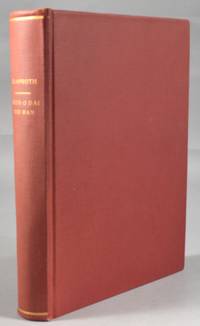
1834806311834. TITSINGH Isaac. NIPON O DAI ITSI RAN OU ANNALES DES EMPEREURS DU JAPON TRADUITES PAR M. ISSAC TITSINGH avec l'aide de plusieurs interpretes attaches au Comptoir hollandais de Nagasaki; Ouvrage revu complete et corrige sur l'Original japonais-chinois accompagne de notes et precede d'un Apercu de l'Histoire mythologique du Japon par M. J. Klaproth. Paris: Printed for the Oriental Translation Fund of Great Britain and Ireland; Sold by Parbury Allen and Co. London 1834. Quarto. 6viiixxxvi460 pp. 27.4 cm. In a modern brick cloth binding with a dulled gilt-stamped title to spine; it is lightly scuffed on lower board and a little faded on spine. Text is quite clean and crisp. Very good plus. Cordier 450. unknown books
1740204952Amsterdam: Giovanni Battista Albrizzi 1740. unbound. very good. Map. Uncolored copper plate engraving. Image measures 11" x 13.25".<br/><br/> Exquisite impression. Map includes both Schleswig and Holstein while today part of the former and all of the latter are northern Germany. Full original margins very small tear to left edge.<br/><br/> Giovanni Battista Albrizzi unknown books
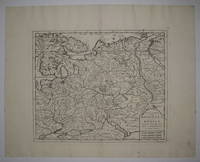
209940Amsterdam: Giovanni Battista Albrizzi. unbound. very good. Map. Uncolored copper plate engraving. Image measures 11" x 13.25".<br/><br/> Beautifully detailed map of the area between the Gulf of Finland and the Ob River with attention to geographic features. Minor stains in full original margins.<br/><br/> Giovanni Battista Albrizzi unknown books
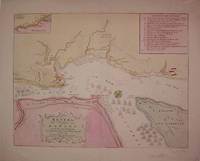
1769203924Amsterdam: Giovanni Battista Albrizzi 1769. unbound. very good. Map. Engraving with modern hand coloring. Image measures 12.75" x 16.75".<br/><br/> Shows British ships attacking French ships in the Saint Lawrence River. Includes list of landmarks and inset of the river. Beautiful sketches of ships in the river.<br/><br/> Giovanni Battista Albrizzi unknown books
1889193261889. La Plume Lack'a Co. Pa.: Isaac F. Tillinghast. 1889. 32pp. Original printed wrappers light dustsoiling and wear. Black and white illustrations. Light scattered foxing. Good to Very Good. OCLC notes Tillinghast's Directory of the Seedsmen of the United States printed in 1889. This Manual evidently unrecorded reveals the author's "secrets of success" in building "a great seed and plant business" and how others may do it too. Topics included in this guide are 'growing plants under glass' using 'manure hot beds'; cheap green houses; growing cabbage successfully in the open ground; fertilizers tools and similar matters. Text illustrations abound. Not found on OCLC. Not in Romaine or Winterthur Eberstadt or Decker. unknown books
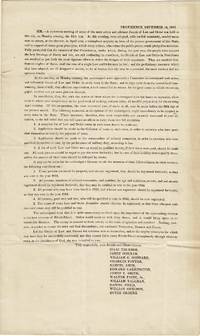
184355333Providence: December 14 1843. Folio bifolium approx. 13¾" x 8¼" printed on the first page only; near fine. An anti-Dorrite text urging the election of the Law and Order ticket and the steps needed to be made to ensure a successful outcome. "The undersigned were appointed to correspond with active and influential friends of Law and Order in every town in the state; and to urge upon them the necessity of commencing immediately that efficient organization which cannot fail to secure for the good cause in which we are engaged another and yet more glorious triumph . Defeat would cover us with deep shame and it would bring upon us irretrievable disasters." OCLC locates the Brown University copy only. Not in American Imprints Bartlett or Sabin. DeSimone & Schofield 230 adding R.I. Historical. <br/><br/> December 14 unknown books
186924614Albany N.Y.: John D. Parsons Jr. Law Publisher 1869. viii 292 pages; with useful index at back. Chapter contents include the election of supervisors the board of town auditors board of county canvassers powers & duties of supervisors examination of witnesses taxes & assessments support of the poor and insane relation to roads and bridges duties in relation to common schools taxes on dogs the state militia fees of town & county officers actions and proceedings by and against duties of the clerk of the board rules of order and an appendix of forms. Front endpaper with the presentation notice "Henry D. Remsen Esq. with the compliments James B. Pearsall Member Assembly 1870" - Pearsall was assembly member for the Queens District at the time. The volume approx. 6" x 9 1/4" size bound in the original full leather binding with contrasting spine labels with gilt titles. Some rubbing & scarring to leather spine ends chipped a little; endpapers spotty; contents clean and in very good condition. First Edition. Leather. Good. John D. Parsons, Jr. Law Publisher books