1 479 résultats
18401522This is a bound volume of the two Memoirs bound together in hardback boards. 72 pages and 20 pages respectively. The pages are foxed throughout but all are clean. The boards are chipped and worn. There is a former owners name present as well. Case B shelf 1 Lydia Bailey, Philadelphia and Wm. F. Geddes, Philadelphia hardcover
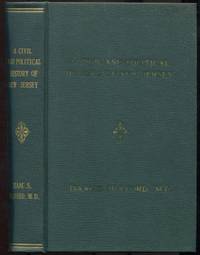
189144175New York: New York Printing Co. The Republic Press Publishers 1891. 1st edition thus Revised and Freshened with Notes by the Author. Original publisher's blue cloth spine over silver patterned paper covered boards with gilt stamped lettering. Green patterned paper paste-downs. Shelf & edgewear. Bookplate & booklabel to front paste-down. Age-toning to free eps. Removed library pocket from rear paste-down. About Very Good. 45 1 pp. Index at rear. Partially unopened. Frontis of Depew. Oblong format: 8" x 9-3/8" <br/><br/> New York Printing Co. (The Republic Press) Publishers hardcover books
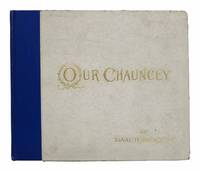
189162174New York: New York Printing Co. Very Good. 1891. Hardcover. Illustrated by C. D. Gibson and Dan Beard. "Delivered At The Annual Dinner of The New York Alumni Association January 23 1891. Revised and Freshened with Notes by The Author." 45 pages. 8" x 9 1/2" white spine with tan cloth over boards. Covers are soiled and scuffed previous owner sticker and signed. Hinges are cracked and the contents are toned at edges. Otherwise bright and complete. . New York Printing Co. hardcover books
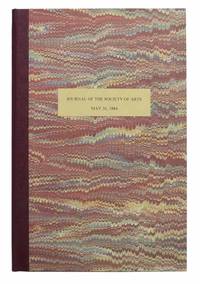
188443312London 1884. 1st Printing. Modern plum colored cloth spine over marbled paper-wrapped boards. Printed paper title label to front board. Binding - Fine. Textblock - VG age-toning. 2 adverts 685 - 716 2 adverts pp. Text double column. Probert's article pp. 703 - 711. Adverts illustrated with cuts. 8vo. 10" x 6-3/4" <br/><br/> hardcover books
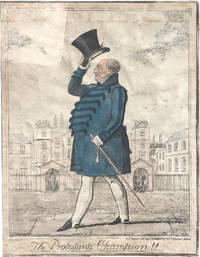
1825908London: George Humphrey 1825. Etching and engraving with hand coloring in watercolor on cream wove paper 10 x 7 3/4 inches 252 x 195 mm trimmed to the platemark. Siginificant condition issues include multiple repaired tears in the lower center sheet area thick adhesive residue throughout on the verso and a corner tear that extends approximately 1.5 inches into the image area in the lower right. There is also an irregular trapezoidal area of bright discoloration with associated small surface losses at the top left sheet corner. Despite the condition issues the pigments are fresh and bright. This portrait of King George the III's son was published in the same year that Beethoven's Ninth Symphony premiered in London. George Humphrey unknown
18050009106CINCINNATI OHIO OH to TRENTON NEW JERSEY NJ 1805. On offer is a unique and gorgeously written letter from an lawyer by the name of Isaac G. Barnetwho has recently relocated to Cincinnati Ohio from England. He is writing to a friend Garret D. Wall in Trenton New Jersey. Garret Wall was at the time just a practicing attorney in New Jersey however he would go on to serve a long illustrious life first as a clerk for the New Jersey Supreme Court then as the U.S. Attorney for New Jersey then being elected a New Jersey Senator from 1835 to 1841 and finishing his life as a high court judge. In language that is often elegant and very obviously from an educated man the Mr. Barnets writes of many topics such as his recent departure from Trenton New Jersey to Cincinnati his new professional life in Cincinnati his old practice in Westminster in London England and the ease at which he finds that people can pass the Bar exam in his new home and the consequences this seems to have had. He begins the letter as such: The most difficult part of a letter is said to be the beginning but I have found it the easiest in this instance having already begun without knowing how to continue the fact is I feel in but an indifferent mood this evening and you shall pay for it by being obliged to read what will neither be amusing enough to ____ a smile nor entertaining enough to please. This letter will give you no other pleasure than that which a sensible mind will always feel on hearing from an absent friend. He continues apologizing for events that seem to have just transpired recently his relocating to Cincinnati from Trenton New Jersey: I hope you are convinced before this that my abrupt departure from Trenton was not intentional that neither you nor Mr. Pemberton were selected as objects of neglect but that the _____ of my mind on the occasion will be a sufficient apology for any apparent neglect on my fact. He also speaks of the timeless trope that continues to this day the observation that: The sentiments of the people in general as in all other Democratic societies appear very much opposed to the lawyers. He writes that this is even more so in his new home where seemingly anyone can pass the Bar exam and become a lawyer: The facility of admission to the bar has introduced a norm of worthless and ignorant creatures into the profession who would sell an opinion for a grile of whiskey and require themselves for a pint. Things in Cincinnati are different than in Westminster Mr. Barnet opines. Yet he writes I have obtained more knowledge of the law since my short residence here than during all the rest of my studies - I have no other way to employ my time than in reading. He finishes the letter with the usual pleasantries asking Mr. Wall to remember me to the girls and to all my juvenile friends - I will conclude by giving you my sincere regards - Isaac G. Barnet. The letter is four pages long consisting of two unbound sheets of paper. The pages are in fair to good condition showing a good deal of discoloration and repaired rips and tears. The letters must be handled with care. The handwriting is done in black ink which is still in good shape showing little fading or smudging. The entirety of the letter can be read easily and legibly. Background: Garret Dorset Wall March 10 1783 November 22 1850 was a military officer and politician from New Jersey. Born in Middletown Township he completed preparatory studies studied law was licensed as an attorney in 1804 and as a counselor in 1807 and commenced practice in Burlington New Jersey. He served in the War of 1812 and commanded a volunteer regiment from Trenton. He was clerk of the New Jersey Supreme Court from 1812 to 1817 and was Quartermaster General of New Jersey from 1815 to 1837. He was a member of the New Jersey General Assembly in 1827 and was U.S. Attorney for the District of New Jersey in 1829; Wall was elected Governor of New Jersey in 1829 but declined to serve; he was then elected as a Jacksonian later a Democrat to the U.S. Senate and served from March 4 1835 to March 4 1841; he was an unsuccessful candidate for reelection. While in the Senate he was chairman of the Committee on the Militia Twenty-fourth and Twenty-fifth Congresses and a member of the Committees on the Judiciary Twenty-fifth and Twenty-sixth Congresses and Military Affairs Twenty-fifth Congress. From 1848 until his death Wall was a judge of the New Jersey Court of Errors and Appeals of New Jersey from 1848 until his death in Burlington in 1850. He was buried in Saint Mary's Episcopal Churchyard in Burlington. Garret D. Wall was the father of James Walter Wall also a U.S. Senator from New Jersey. Good. 4to - over 9¾" - 12" tall. Manuscript. unknown
18274288<p>Original 1827 Psalms Hymns & Spiritual Songs of the Rev. Isaac Watts Gilt owners name on front cover 'Elizabeth R. Noble'</p><p>published by Samuel T. Armstrong Boston</p><p>Condition: Very Good to Fine Full Red Leather bound pocket size with leather clasp tuck gilt page edges 2.7" x 4.4" tall with 654 pages plus index.</p> hardcover
18450411241845. Original document. Good. Broadside 17.75" x 22.5" partly printed accomplished by hand. Provides that George W. Smith and his wife Catherine H. Smith sold to Isaac G. Rothwell a parcel in Cranberry Township Butler County adjacent to the lands of George Carroll bounded by a white oak a Quaking Ash and a Black Jack for the sum of $425 &c. &c. Dated 7 October 1845. Signed by both Carrolls and by Rothwell and notarized by Oren Baldwin. Light staining; archival repairs to several folds on verso. unknown
18620009086CAMBRIDGE BOSTON MASSACHUSETTS MA. Good. 1862. On offer is the 1862 diary of Isaac S. Pear owner of a Massachusetts factory and business manufacturing spring and cot beds and specialties in folding furniture. Pear speaks often of his day-to-day activities and his business which he writes have been negatively affected by the ongoing and bloody Civil War. The entries range from short concise entries of the weather to longer ones directly related to his business activities at the time. There are also reports of the Civil War battles won and lost and the general feeling of the people around him usually a mixture of exhaustion and anxiety. He obviously keeps tabs on the war especially as it reflects the effect on regiments and people from Massachusetts and his entries reflect this often. It seems about the middle of the year Pears factory begins making cots and beds for the Union Army. A call goes out in August for men to volunteer for the Union. For a few weeks Pear closes his store and factory at 2pm in aid of recruiting. He mentions that stores that did not close early were shut down by a mob. There also seems to be a dour attitude about the situation as Pear often reports the amount who have died in the war and the despondent look of the soldiers who return. The situation does not look good at all through Pears eyes. He also mentions people he knew by name who have died in the war. The Memoranda and Cash Accounts section of the diary contain a number of pages of detailed lists of items bought and paid for money received from clients at the store and money paid out to employees many of whom seem to be family. The book is approximately 380 pages of which there is writing in 300 or so. The cover is soft black leather with a wrap around portion meant to slide into a little loop however the loop no longer exists. It says Diary 1862 on the front. It shows a good bit of wear throughout. The pages show some discoloration and wear especially near the front and back but nothing that affects legibility. Pear wrote in pencil throughout the book and there is some smudging on certain pages that can affect legibility however these entries can be read with a bit of effort made easier under direct light. His handwriting is easy to read and legible throughout. The book is in overall good condition. Sample entries: Friday February 7 1862. Quite and warm all day. The snow thawed considerably. News of the taking of Fort Henry on the Tennessee River read to-day. People feel elated. This evening took tea at Mrs. Williams.; February 8. Comes in pleasant but colder than yesterday. A little trade at store though still poor. The war affects business very much and all are anxious for a short but honorable termination.; March 19. Pleasant all day. The taking of Newberne N.C. continued. The 21st 23rd 24th 25th Mass. Regts were in the action. Our cas. About ninety killed and 400 wounded.; June 19. Warm and pleasant all day. Busy at factory making spring cots for Army use.; August 5. Talk of a draft to fill the quota for 600000 more men for the army. Cities and towns offering bounties for volunteers for $100 to $200.; August 10. Visited Camp Cameron today.A large number of troops there under the new call of 300000 by President Lincoln.; September 3. All account go to show that the Rebels have an overwhelming Army and are determined to get into Washington and Maryland or die in the attempt.; December 13. John E. Noone was killed at the Battle of Fredericksburg this day aged 27 years. Background: In 1852 Mr. Pear went to California. He traded in San Francisco three years and worked in the mines one year and then returned to Cambridge in 1857. The same year he entered his present business as manufacturer of spring and cot beds and specialties in folding furniture his factory being situated on Brattle street Boston. In the presidential campaign of 1856 Mr. Pear cast his vote in California for the free soil candidate John C. Fremont. In 1860 he voted the Bell and Everett ticket in 18564 for Lincoln and has been a republican ever since. Mr. Pear was a member of the common council with William E. Russell and in the board of aldermen the next two years. In 1887-88 he was a member of the legislature serving upon the committee on elections and giving valuable aid upon the committee on water supply in the taking of land around Fresh pond. He worked for the Australian ballot which was then secured. During his legislative career he was an intimate of the late Chester F. Sanger who occupied the adjoining seat in the house. Mr. Pear has been on the Republican City committee for the past dozen years. He is to-day a director in the Cambridge Mutual Fire Insurance company and also in the Colombian Cooperative bank. He is also an esteemed member of the California Pioneers of New England.; Manuscript; 8vo - over 7¾" - 9¾" tall; KEYWORDS: HISTORY OF ISAAC S. PEAR CIVIL WAR ERA BRATTLE STREET CAMBRIDGE BOSTON MASSACHUSETTS BUSINESS OWNER COT AND BED MANUFACTURING UNION ARMY SUPPLIER REPORTS OF THE CIVIL WAR CIVILIAN LIFE ON THE UNION SIDE RECRUITMENT OF SOLDIERS EFFECT OF THE CIVIL WAR ON CIVILIANS WAR TIME COMMERCE ECONOMY SUPPLIERS TO THE UNION ARMY AMERICANA HANDWRITTEN MANUSCRIPT DOCUMENT LETTER AUTOGRAPH WRITER HAND WRITTEN DOCUMENTS SIGNED LETTERS MANUSCRIPTS HISTORICAL HOLOGRAPH WRITERS AUTOGRAPHS PERSONAL MEMOIR MEMORIAL ANTIQUITÉ CONTRAT VÉLIN DOCUMENT MANUSCRIT PAPIER ANTIKE BRIEF PERGAMENT DOKUMENT MANUSKRIPT PAPIER OGGETTO D'ANTIQUARIATO ATTO VELINA DOCUMENTO MANUSCRITTO CARTA ANTIGÜEDAD HECHO VITELA DOCUMENTO MANUSCRITO PAPEL . hardcover
186932728Virginia City California 1869. Paper. Very good. Approx. 8" x 3" check with printed green borders information and 2 stamps. Check is drawn on the account and signed by Isaac L. Requa. The information printed on the check is "Gould & Curry Silver Mining Company W. C. Ralston Treasurer. Agency of the Bank of California Virginia City. The written date is Aug 3 1869. <br /> <br /> Requa was a mining engineer early Oakland pioneer and later President of Oakland Bank and Savings. unknown
18780001064AUGUSTA MAINE ME. Good. 1878. On offer is a super original archive of five 5 handwritten manuscript diaries authored by Reverend Isaac J. Mead of Augusta Maine. He was the son of Albert Manley Read who died in 1861 fighting in the Civil War. Research finds that Mead is listed in the Universalist Register of 1895 as editor of THE GOSPEL BANNER. His handwritten diaries are for 1878 he is 37 years old 1882 1887 1888 and 1889 when he is 48. Mead is an enthusiastic prolific writer rarely failing to write a diary entry rarely failing to detail his visits his works his travels and to set these writings apart Isaac Mead proves to be a rather political churchman who rarely fails to press the Universalist Church's approach. His daily entries include the weather his work on the Banner Universalist meetings conferences Sunday services his preaching funeral duties etc. He makes many 'insider' remarks on Church doings and of other Church communities' doings. Historians and collectors of Maine and the neighboring states will have a treasure trove of information on religious matters of the day plus Mead also details: politics of the day; the Blaine and Harrison presidential contest local news like the Dexter Bank case Stain-Cromwell were defendants stabbing on the mail train soldier jumps fight leads to death collision of ocean steamers muster week-encamped on Leonard Farm Glencarin finished race faster etc. Took trip to New York City-Coleman House Coney Island "great playground of this city" Fleetwood Park Eden Museum wax Madison Square - 2 plays. Mr. Fairburn got him his Remington rifle -"a very pretty gun". Mead mentions many hundreds of names of his colleagues visitors family et al. Many entries about gun club target practice etc. Reverend Mead does not provide holographic ownership markings but this archive of diaries came from a larger archive of his estate ephemera. Some nibbling to the books but overall G.; 24mo - over 5" - 5¾" tall; MAINE ME RELIGION UNIVERSALISM CHRISTIANITY EVANGELISM EVANGELICAL CIRCUIT RIDER HANDWRITTEN MANUSCRIPT DOCUMENT LETTER AUTOGRAPH DIARY JOURNAL LOG KEEPSAKE WRITER HAND WRITTEN DOCUMENTS SIGNED LETTERS MANUSCRIPTS HISTORICAL HOLOGRAPH WRITERS DIARIES JOURNALS LOGS AUTOGRAPHS PERSONAL MEMOIR MEMORIAL PERSONAL HISTORY AMERICANA; Signed by Autograph . unknown
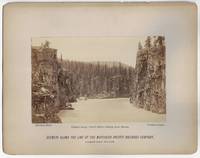
188323168Portland Oregon: Davidson Photo 1883. Very good. 5.5" x 8" albumen photograph on a 9.25" x 12" mount. Titled "Cabinet Gorge Clark's River looking down stream" with further caption for the series: "Scenery Along the Line of the Northern Pacific Railroad Company Clarke's Fork Division." Credited "Davidson Photo. Portland Oregon." Very good condition with small chips at corners of mount contrast a bit light. This series of views was apparently taken to celebrate and promote the completion of the Northern Pacific Railroad. Construction had begun in Minnesota in 1870 and the final section was completed on September 8 1883. An article published in the Helena Montana Semi-Weekly Herald on July 19 1883 reports that "Mr. Ed Stone General Agent of the Land Department of the Northern Pacific Railroad is the possessor of a large album of views entitled "Oregon and the Pacific Northwest." Glimpses of pretty sports along the valley of the Columbia River from northern Montana to the Pacific Ocean. Scenery along the line of the Northern Pacific railroad showing the new Trans-continental route. The photographs were made by I.G. Davidson of Portland Oregon.There can be no grander promise of pictures of fine scenery given to any travelers than will be viewed by the tourists over the Northern Pacific railroad when it is completed through to the Pacific ocean this fall." Isaac Grundy Davidson 1845-1922 moved to Oregon from Illinois in 1850 and opened a photography studio in Portland in 1878. Mautz describes him as "one of the Northwest's premier photographers. Davidson Photo unknown
1880107492Plano Illinois. Very Good-. c. 1880. Hardcover. 28 LDS Tracts bound together in flexible cloth binding. Very Good minus condition spine bottom and fore-edge of cover faded edge wear inside hinges starting but sound copy-- previous owner's name in pencil on front paste-down endpaper. Individual Tract TITLES Include: The Mountain of the Lord's House; Truth Made Manifest; The Voice of the Good Shepard; Trial of the Witnesses to the Ressurection of Jesus; The Gospel; the "One Baptism"; Who then can be Saved; Fullness of the Atonement; Spiritualism; the Narrow Way; the Plan of Salvation; the Bible Versus Polygamy; Brighamism; Reply to Orson Pratt; Idolatry; Polygamy; Epitome of the Faith and Doctrines multiple instances ; The Sucessor; Rejection of the Church; Tithing; The "One Body"; Faith and Repentance; Baptism; The Kingdom of God; The Laying on of Hands; The Sabbath Question; The Basis of Polygamy. ; 8vo 8" - 9" tall . hardcover
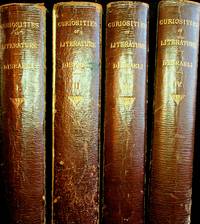
1864AA1192Cambridge MA: Privately Published - Riverside Press 1864. Very Good-. Isaac D'Israeli 1766 – 1848 was a British writer scholar and the father of British Prime Minister Benjamin Disraeli He is best known for his essays and his associations with other men of letters<br /> <br /> This comprehensive set of essays and commentaries on literature was originally published over the period 1791-1824 This particular set is a reprint in four volumes It has brown leather spine with gilt titles on red and brown mottled boards There is modest scuffing and wear to all of the spine ends and lesser wear elsewhere The rear board of volume 2 is detached but otherwise all the volume are sound There are no marks of any kind in any of the volumes and they all give the appearance of being unread <br /> Note: The is a fairly heavy 8 lb set If sent outside the US it will require additional shipping charges Within the US it of course ships free 447 468 466 472 pp. Privately Published - Riverside Press unknown
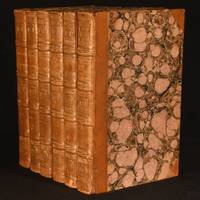
1807980H14London: John Murray 1807-1823. Leather. Good. 8.5" by 5.5". None. A smartly rebound six-volume set of I. D"Israeli"s Curiosities of Literature fifth edition of the first series and first edition of the second featuring essays on literary history eccentric anecdotes and cultural curiosities. Bound in a half calf binding with marbled paper boards.This is an eclectic complete six-volume set of Curiosities of Literature and A Second Series of Curiosities of Literature with three volumes in each series. The first series is the fifth edition; revised altered and enlarged with new articles consisting of: Curiosities of Literature Volume I 1807. This volume includes chapters on indexes anecdotes of errata addenda bibliomania destruction of books libraries patrons and the custom of saluting after sneezing.Volume II 1807. This copy covers critics abridgers Bentley"s Milton little books poetical and grammatical deaths literary blunders the influence of names and anecdotes of solitude among much more.Volume III 1817 features chapters on the names of our streets pantomimical characters Robinson Crusoe drinking customs in England condemned poets and Felton the political assassin.The second series is the first edition of this series consisting of: A Second Series of Curiosities in Literature Consisting of Researches in Literary Biographical and Political History; of Critical and Philosophical Inquiries and of Secret History Volume I 1823. The first volume explores: Cicero viewed as a collector quotation parodies medicine and morals the domestic history of Sir Edward Coke masques and more.Volume II 1823 covers the confusion of words political nicknames autographs The Book of Death toleration and an apology for the Parisian Massacre.Volume III 1823 includes chapters on dreams at the dawn of philosophy literary forgeries a bibliognoste literary residences true sources of secret history and The Pearl Bibles with six thousand errata. Bound in a half calf binding with marbled paper boards. Externally very smart. Spine slightly faded. Slight rubbing and bumping to extremities. Library annotations to tails of spines. The odd minor handling mark to boards. Boucher"s small link inscription to the front free endpaper of Volume I alongside another bookplate from Leonard A. Lindson to front free endpaper. Slight tide marking to endpapers. Bookplate of Leonard A. Lindson to front paste down of the second series. Front hinges slightly cracked but holding firm. Internally firmly bound. Pages bright and clean with the odd spot heavier to first and last few leaves and fore edges. Good John Murray hardcover
186073028Nadar | Paris s. d. [circa 1860] | 6.20 x 10.50 cm | une photographie
1835047405New York: No publisher. Henry Ludwig Printer. 12mo 155 pages plus American editor's note. Worn and stained covers with remnant of original title label on spine. Moderate foxing otherwise pages tight good. 1835 . Good. Hardcover. reprinted. 1835. No publisher. Henry Ludwig, Printer. hardcover
1835013723London: Hamilton Adams and Co.; and Edmund Fry; and Henry Smith St. Anne's Square Manchester 1835. Hardcover. Poor. Second Edition 1835. Disbound; lacking front board; backstrip still in place rear board detached . Contents are clean and unmarked. xvi 154 1 pages. 7 x 4.25 inches. Isaac Crewdson's refutations of the many errors of Hicksism as found in the sermons of the American Quaker Elias Hicks. The Preface to this second edition is dated ''3rd Month 16th 1835.'' The first edition was published in First month 1835. Isaac Crewdson 1780-1844 was a minister of the Quaker meeting at Hardshaw East Manchester England. Hamilton, Adams, and Co.; and Edmund Fry; and Henry Smith, St. Anne's Square, Manchester) hardcover
187653982Philadelphia: Collins printer 1876. First edition 8vo pp. 22 2; removed from stabbed binding; very good. Based on the imperfect and incomplete list issued in the Royal Society of London's Catalogue of Scientific Papers. Lea 1792-1886 was an American conchologist geologist and publisher Carey & Lea Lea & Blanchard. Collins, printer unknown
189164210London: Quaritch 1891. First edition. 8vo. 4 222 pp. Illustrated from bindings plates chapter head and tail-pieces historiated initial letters. Inscribed on the front endpaper "Elizabeth Gordon / from the compilers. / M. A. E. / C. I. E. / 13th Ap. 99." Charles Elton 1839-1900 a lawyer Queen's Counsel and antiquary and his wife Mary Augusta Elton whom he married in 1863 published the popular title "The Great Book-Collectors" in 1893; Elton a member of the Selden Society possessed a large library which "contained many rare books as well as fine specimens of sixteenth to eighteenth century binding . he was an enthusiastic collector and a good judge of all articles of vertu" DNB 1901 supplement. The recipient may be Elizabeth Anna Gordon 1851-1925 who visited Japan in the early 1890s published an account of her visit part of a world tour with her husband joined the newly formed British Japan Society in England upon her return and amassed a large collection of books which she donated to various Japanese institutions. Old tideline on several plates and pages at the rear one intruding into the image; otherwise very good. Original black pebbled cloth some wear to spine joints with one rather crude repair gilt spine title. 10621. <br/><br/> Quaritch hardcover books
187653982Philadelphia: Collins printer 1876. First edition 8vo pp. 22 2; removed from stabbed binding; very good. Based on the imperfect and incomplete list issued in the Royal Society of London's Catalogue of Scientific Papers. Lea 1792-1886 was an American conchologist geologist and publisher Carey & Lea Lea & Blanchard. <br/><br/> Collins, printer unknown books
1851600257Philadelphi: C. A. Brown & Co 1851. Hardcover. Very Good. Later printing. Octavo. vi 500pp. Bound into recent green cloth gilt with modern endleaves. Owner label on front pastedown cover gilt dulled preliminary and terminal leaves with a bit of foxing very good and sound. The text has been nicely preserved. C. A. Brown & Co hardcover
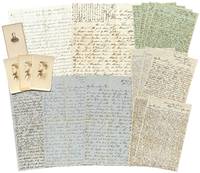
18674614261867. Unbound. Near Fine. A collection of 11 long letters written by a young paymaster’s clerk and officer in the U.S. Navy in which he gives detailed accounts of voyages to Central America China and South Africa in 1867-68. Also included is a gripping account of a terrific storm while crossing the Atlantic and of a dramatic rescue of sailors cast off their capsized ship off the coast of France. All 11 letters are densely written in Merrill’s neat small hand and are addressed to his parents at Bangor Maine. One letter has three or four small tears with partial loss to three or four words else near fine overall. Also included are six of the original mailing envelopes and four cabinet card portraits of Merrill: one of Merrill in uniform taken by “Pun-Lun†at Hong Kong and three duplicate portraits taken at Bangor Maine.<br /> <br /> Here is an excerpt from Merrill’s first seven-page letter written on board the storeship Brig Executive in January 1867 in which he describes his first voyage from Bangor to Cette France:<br /> <br /> “… Wednesday night – a gale commenced – and it was a screamer … day and night did every soul labor for dear life … we felt that our doom – by sinking – was sure … Buzzell and Chase and I worked with the rest – and by our aid the exhausted men were enabled to get a little sleep – until the forecastle was flooded and the galley stove in … we lived on raw meat for three days … Such mountainous waves! … they were as high as the upper-topsail yard – and often higher still – and when they would board us – and sweep over the decks – we all clinging to the main rigging … it seemed to us … that we should drown before it all passed over us … so long were we in the wave … During the whole gale … we sped onward in our course …â€<br /> <br /> They ran into another terrific storm off the coast of France near Montpelier where they encountered several ships in peril and participated along with soldiers on the shore in a dramatic rescue of two sailors and a pilot from their capsized boat one of whom later died. They went on to Paris and London where Merrill wrote his next two letters and returned home from Liverpool at the end of January.<br /> <br /> Merrill next writes at length about his voyage on board two Steamships Henry Chauncey and Sacramento and the storeship USS Supply. Setting off in November he sailed first to Aspinwall Colón on the Atlantic coast of Panama went across the isthmus by rail road to the City of Panama and then on to Acapulco and San Francisco. In two letters from November he gives descriptive accounts of Aspinwall including several disparaging remarks about the crowds of “natives and negroes along the plaza … the street was thronged with dusky vendors of fruit claret cakes &c. jabbering the virtues of their merchandise in the most conglomerate mixture of English Spanish and Samboish …†He also describes the structure of the “many isolated negro huts†along the 48-mile railroad trip to Panama City where they transfer their baggage etc. onto the Sacramento:<br /> <br /> “The sea has been as smooth as a pan of milk ever since we left Panama … Among the more noted of our passengers is Gen. Beuham of So. Carolina late of C.S. Army … Bishop Williams of the Episcopal Mission in China … and other missionaries of China … Spanish gentlemen and their families merchants of China & Japan … This morning early a poor fellow died in the Steerage of Panama fever. Another one is sick and will not live till evening … The sharks have followed our ship all the time from Panama … the surgeon said privately that there are other cases also …â€<br /> <br /> In a letter from December Merrill gives a long description of Acapulco: its harbor streets and street vendors the military fort and evidence of the French bombardment etc. In San Francisco his time in the city itself which he loves is curtailed by preparations on board Supply for the voyage to Japan and China. In a long six-page letter from February 1868 he describes various excursions in Canton and Hong Kong:<br /> <br /> “All of us officers went to Canton … and saw all the Elephants including the Temple of 500 Gods … Hong Kong has all the business that was formerly done in Canton … In some places where we went – but few Europeans had ever been and we were curious objects of interest to the population … One walled town we entered – contrary to the permission of the natives and there we met a ‘Sing-Song’ procession – marching about in fantastic costumes celebrating the advent of the Chinese New Year – and when they saw us you may believe there was a scattering and scampering! They perhaps thought that the ‘Fan-Kwei’ foreign devils as they call foreigners had come to kill and destroy … At one town which I entered alone the natives were much pleased to see a Fan-Kwei and they pressed me to take oranges paper cigarettes &c. ad libitum … We saw the forts ruins of at the Bocca Tigris and the Barrier Forts near Canton which were reduced by … the American & English fleet in the China Squabble of 1858-9 … Last Tuesday W. & Thursday were the Annual Races here in Hong Kong. All the fashionable of the Colony were there … We were invited to the whole course 3 days and had quarters in the booths of Russell & Co. and Oliphant & Co. … People and costumes of all nations mingled to make a dashing looking concourse …â€<br /> <br /> He concludes the letter with news about the Satsuma Samurai Rebellion of 1868: “You will probably hear about the outbreak and warfare in Japan … the Hartford and Aroostook are preparing to go there … the Prince of Satsuma … has landed ten thousand men below Osaka under the nose of one of the Tycoon’s frigates without molestation and marched them inland toward … the City of the Mikado or Spiritual ruler and had conflict with the Jap. national troops … the life of Sir Harry Parkes … has been attempted and one or two of our U.S. sailors … killed and it is reported that the Tycoon has taken refuge on the U.S.S. Iroquois …â€<br /> <br /> On the voyage back from China Merrill writes one letter in March from Java and two letters in April from South Africa in which he gives descriptions of Good Hope Cape Agulhas whaling grounds at Algoa Bay and of his excursion to Cape Town. He concludes his account of the voyage with a final letter written at Charlestown Massachusetts.<br /> <br /> A remarkable and historically important cache of letters all rich in content and deserving of further research. A list of the letters with a few quoted extracts is available. unknown
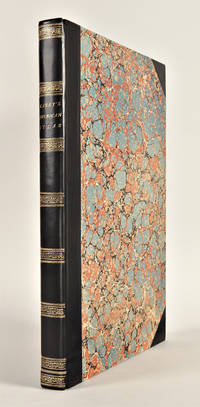
182229763Philadelphia: H.C. Carey & I. Lea 1822. Folio. Mounted on guards throughout. Letterpress title copyright notice on verso 1p. 'Advertisement' dated 'June 21 1822' verso blank 1p. 'Contents' and 'Index' verso blank. 46 double-page hand-coloured engraved maps of America all but one with borders of letterpress descriptive text 1 uncoloured double-page engraved view showing the comparative heights of mountains throughout the world 1 hand-coloured double-page engraved table showing the comparative lengths of the principal rivers worldwide 5 letterpress tables 4 double-page 3 of these hand-coloured 18pp. of uncoloured letterpress text. Contemporary half black morocco over plain paper boards rebacked with original spine laid down and corners renewed. Housed in a cloth clamshell case leather label.<br/> <br/>First edition of one of the most important early atlases printed in the United States: a handsome atlas of the Americas with individual hand-coloured maps of each state in the Union including a seminal map of the West by Stephen H. Long.<br/> <br/>At the time of publication this was the best and most detailed atlas to be produced in the United States. Fielding Lucas the major Baltimore printer was the principal engraver and substantial historical background text accompanies each map. Among the most noted maps in the atlas is Major Stephen H. Long's "Map of Arkansa and other Territories of the United States." That map which depicts the Missouri basin between Nashville in the east the Mandan villages in the north and the Rocky Mountains in the west was based on the surveys conducted by Long on his expeditions of 1819 and 1820. The map published in Carey & Lea's atlas preceded the official account of that expedition by expedition botanist Edwin James which included a smaller map with similar detail titled "Country drained by the Mississippi Western Section". Carey and Lea's 1822 publication of James Account perhaps explains the prior inclusion of this map with Long expedition information in their atlas. On this famous map is the printed legend which would perpetuate a myth for many years to come identifying the high plains as the "Great American Desert." Carey and Lea's atlas was first issued as here in 1822; an 1823 second issue followed substantially the same as the first but with a new title and revised states of several maps and text leaves generally minor revisions including additional shading to maps and improved resetting of several text leaves.<br/> <br/>Phillips 1373a; Howes C133 "aa"; Sabin 15055; Wheat Transmississippi West 348 and 352. H.C. Carey & I. Lea unknown books
1823WRCAM43415APhiladelphia: H.C. Carey & I. Lea 1823. Letterpress title copyright notice on verso 1p. advertisement verso blank 1p. table of contents verso blank. Forty-six double-page handcolored engraved maps of the United States all but one with borders of letterpress descriptive text; uncolored double-page engraved view showing the comparative heights of mountains throughout the world; handcolored double-page engraved table showing the comparative lengths of the principal rivers worldwide; five letterpress tables four double-page three of these handcolored; 18pp. of letterpress text. Mounted on guards throughout. Modern half calf and marbled boards spine gilt leather label. Dampstaining along lower edge causing chipping to initial leaves. Closed tear in bottom margin of first map repaired with tissue. Very light offsetting from maps. Some dust soiling light tanning and foxing. Good plus. A handsome atlas of the Americas with individual color maps of each state in the Union including a seminal map of the West by Stephen H. Long. At the time of publication this was the best and most detailed atlas to be produced in the United States with substantial historical background text accompanying each map. Fielding Lucas the major Baltimore printer was the principal engraver. <br> <br> Among the most noted maps in the atlas is Major Stephen H. Long's "Map of Arkansa and other Territories of the United States." That map which depicts the Missouri basin between Nashville in the east the Mandan villages in the north and the Rocky Mountains in the west was based on the surveys conducted by Long on his expeditions of 1819 and 1820. The map published in Carey & Lea's atlas preceded the official account of that expedition by expedition botanist Edwin James which includes a smaller map with similar detail titled "Country drained by the Mississippi Western Section." Carey & Lea's 1823 publication of James' ACCOUNT perhaps explains the prior inclusion of this map with Long expedition information in their atlas. <br> <br> On this famous map is the printed legend which would perpetuate a myth for many years to come identifying the high plains as the "Great American Desert." Carey & Lea's atlas was first issued in 1822; this is the second issue with revised states of three maps Maine North Carolina and Louisiana with the same printing of the remaining maps and a cancel title. HOWES C133 "aa." PHILLIPS ATLASES 1373a. SABIN 15055. WHEAT TRANSMISSISSIPPI 348 352. H.C. Carey & I. Lea hardcover books