1 504 résultats
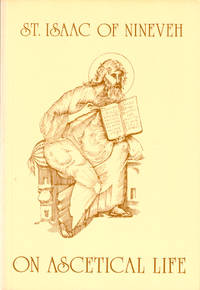
198940339Crestwood: St. Vladimir's Seminary Press 1989. Paperback. Very good. 116pp. Very good in publisher's wraps. Ink name on front free endpaper else internally fine. <br/><br/> St. Vladimir's Seminary Press paperback books
1969247885New York: Merit Publishers 1969. 29p. staplebound pamphlet wraps lightly soiled 1/2 inch closed tear on front wrap else very good. Second printing. Merit Publishers unknown books
1969228674New York: Merit Publishers 1969. 29p. staplebound pamphlet very good. Second printing. Merit Publishers unknown books
1857716411857. Boston: Federhen & Company 1857. Boston: Federhen & Company 1857. An Accused Adulterer Defended by Richard Henry Dana Trial. Kalloch Isaac Smith 1831-1887 Defendant. Only Full Report of the Trial of Rev. I.S. Kalloch on Charge of Adultery: Complete History of the Affair Doings of the Church Kalloch's Pulpit Defence Arrest Arraignment Trial And Result. With Accurate Portraits of Kalloch and the Beautiful Lady in Black And the Lecture Room of the Lechmere. Boston: Federhen & Company 1857. 64 pp. Woodcut pictorial title page. Two woodcut text illustrations. Octavo 9" x 5-1/2". Stab-stitched pamphlet in pictorial self-wrappers bound into recent quarter calf over marbled boards. Moderate toning and dampstaining to text repairs to edges of first and final leaves. $750. Only edition. "Isaac Smith Kalloch accused of adultery in this prosecution was a Baptist clergyman and was supported by the trustees of his church throughout this affair. . The jury could not reach a verdict in the case which was tried in the Massachusetts Court of Common Pleas Criminal Session in Cambridge Massachusetts" Cohen. Kalloch was defended by the eminent lawyer and politician Richard Henry Dana Jr. 1815-1882. The trial resulted in a hung jury. Kalloch later moved to San Francisco and became that city's mayor in 1879. The Full Report includes the judge's charge but not the jury's final verdict. Kalloch was acquitted. He moved to San Francisco where he continued to generate controversy by skirting the bounds of decency. When he decided to run for mayor of San Francisco in 1879 he came under attack from the San Francisco Chronicle's editor-in-chief Charles de Young who was backing another candidate. DeYoung hoping to end Kalloch's campaign accused the minister of having an affair. Kalloch responded by claiming that De Young's mother ran a brothel. In response DeYoung ambushed Kalloch on a street and shot him twice. Kalloch survived the wounds. Due in part to the sympathy of voters he was elected the 18th Mayor of San Francisco. OCLC locates 7 copies in North American law libraries Brigham Young University Harvard LA County Social Law Library of Congress University of Cincinnati University of Minnesota. Cohen Bibliography of Early American Law 13700. unknown books
16932188Oxford: Oxford University Press 1693. First collected edition. Contemporary calf. Very Good. SCARCE FIRST EDITION OF THE COLLECTED WORKS of one of Newton's most important precursors John Wallis Savilian Professor 1649-1703 containing the first printed appearance of Newton's ideas on fluxions. A staunch promoter of English mathematicians Wallis repeatedly urged Newton to publish his theories before others laid claim to he work for the sake of "your Reputation & that of the nation" Gjertsen Newton Handbook 605. While Newton resisted for many years in 1693 Wallis published several letters from Newton in Vol. II of his Opera thereby introducing the concept of fluxional notation-pricked and dotted letters. In the preface to Vol. I 1695 Wallis refers briefly to Newton's claim to the discovery of Fluxions while Vol II 1693 has the first full account of Newton's invention of calculus. The third volume of Wallis's Opera contains previously unpublished correspondence between Newton and Leibniz the most important items of which are Newton's Epistola prior and Epistola posterior. "These two lengthy letters were sent to Leibniz in 1676 to acquaint him with the main lines of Newton's mathematical development. Epistola prior beginning with the binomial theorem went on to describe Newton's work on series. The second letter also contains much discussion on infinite series. It is best known however for Newton's reference to powerful and general methods he had developed for the drawing of tangents the determination of maxima and minima and the quadrature of curves. These he added he preferred to conceal within a quite insoluble anagram. A second and even longer anagram concealed Newton's claim to be able to solve fluxional equations. The solutions to both were publicly disclosed by Wallis 1699" ibid 189. Vol. 2 of the Opera also contains pp. 669-78 De Postulato Quinto; et Definitione Quinta; Lib. 6. Euclidis; disputatio geometrica Wallis's important attempt to prove the parallel postulate of Euclid also published here for the first time. "John Wallis gave a lecture on this topic. on the evening of 11 July 1663. He had been inspired by Nasr-Eddin's attempt on it which he referred to in his lecture to examine the question himself and his analysis is remarkable both for its originality and its caution. Indeed his view of the matter was to be much more profound than many a later writer's" Fauvel & Gray The History of Mathematics 510. This magnificent and comprehensive edition of Wallis's collected works was financed by and printed at Oxford University. In addition to several 'firsts' including those described above these volumes contain reprints of virtually all of Wallis's great books including the Arithmetica infinitorum and Mechanica Vol. 1 an augmented Latin edition of the Treatise of Algebra Vol. II and bilingual editions of a number of ancient Greek texts including Ptolemy's Harmonics Aristarchus's On the magnitudes and distances of the sun and moon and Archimedes's Sand-reckoner Vol. III. In addition to numerous other mathematical works the four volumes include his most popular work Grammaticae lingua anglicanae his "Treatise of Speech which formed a useful theoretical foundation for his pioneering attempts to teach deaf-mutes how to speak" DSB as well as an important tract on cryptography in which he records the methods he developed while deciphering for Cromwell the coded messages of Charles I. Wing W596 W566 W597. Babson 184. Roberts and Trent 345. see J.F. Scott The Mathematical Work of John Wallis London 1938; M. Baron The Origins of the Infinitesmal Calculus Oxford 1969 205-213; Richard Westfall The Life of Isaac Newton Cambridge 1993 207-209ff. Opera Mathematica. Volumen primum -Tertium - Opera quaedam miscellanea. Oxford: Sheldonian Theatre University Press 1695 1693 1699. Four volumes bound in three. Folio contemporary full paneled calf rebacked to style. Complete with four engravings on three leaves and three portraits Vols. I & II with the same portrait by Loggan dated 1678 and engraved by Burghers; Vol 3 by Sonmans dated 1698 and engraved by Burghers. With large bookplate inside each front cover reading "The Gift of Mr. Thomas Heatley Citizen and Iron-monger of London to the Mathematical School in Christ's Hospital Anno Dom. 1700". A very clean copy with only occasional light browning and foxing very handsomely bound. ONE OF THE MONUMENTS IN THE HISTORY OF MATHEMATICS. RARE. . Oxford University Press unknown books
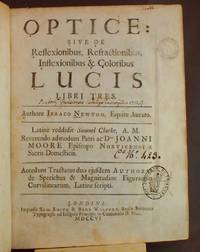
17066324London: Samuel Smith & Benjamin Walford 1706. First Latin edition. Very Good/The Latin edition of Newton's 1704 Opticks was intended for the broader pan-European "Republic of Letters" and it was the first printing to carry Newton's name on the title. This is the edition that inspired Emelie du Chatelet and Voltaire and through them the whole of Europe. It is a compendium of Newton's main discoveries concerning light and color including the spectrum of sunlight the color circle the reflecting telescope and interference effects that is the so-called 'Newton's rings'. In expansion of the 1704 English text the Latin edition presents seven added "Quaestiones" which are partly devoted to Newton's support for the "corpuscular" or particle theory of light. The collation of this copy corresponds to the copy in the Babson Collection catalogue with "Pp" consisting of a single leaf and with pages 21-24 repeated in the Tractatus. . Quarto 26 cm; 14 348 2 24 2 24 21-43 1 pages 19 folded leaves of engraved plates with errata corrigenda and addenda. Ss1 a cancel. In original calf with blind-ruled border rebacked with corners built up. Spine with gilding and leather title label. Speckled edges. Old library stamps on title page along with early ownership inscriptions. References: Bowes and Bowes #179; Babson Collection 137; Norman 1589. Samuel Smith & Benjamin Walford, hardcover books
1209Twelve folding engraved plates. 1 leaf of ads 1 p.l. xi 1 415 pp. 1 p. of ads. 8vo 18th-cent. speckled calf carefully rebacked by Aquarius double gilt fillet round sides spine richly gilt red morocco lettering piece on spine. London: G. & J. Innys 1719. Second edition in Latin and an influential book on the Continent. Newton published this edition in Latin to reach the Continental audience which had been little influenced by his optical experiments. The edition served its purpose and caused numerous demonstrations of his theory of colors to be performed in Paris. Newton's optical theories began to spread significantly outside Great Britain as a result of this book. See Westfall's Never at Rest pp. 794-95. A very good copy with the signature dated 14 Mar. 1822 of Stephen Peter Rigaud 1774-1839 historian of science astronomer and Savilian professor of geometry at Oxford. Stamp of the Radcliffe Observatory on verso of title. With the bookplate of William A. Cole the distinguished collector and bibliographer of chemistry. ❧ Babson 138. unknown books
1740S13116Lausannae & Geneva: Marci-Michaelis Bousquet & Sociorum 1740. 1740. 4to. iv xxxii 363 1 pp. Half-title engraved frontispiece portrait of Newton engr. Jean-Louis Daudet after Vanderbank 12 engraved folding plates title vignette of 4 cherubs and a female figure each using an optical instrument representing learning optics/perspective drawn by Delamoncein and engraved by Daudet head & tail pieces and woodcut initial letters drawn by Papillon index; first 11 leaves browned. Contemporary full vellum green leather gilt-stamped spine label edges with decorative red freckling as designed by the binder; foot of spine with faint ink marking "11-". Paper unevenly browned. Verso of title with small ink annotation "=1135="; rear pastedown with another notation "á 20.Luglio 1801." Very good. Third Latin edition edited by Bousquet with a dedication to Joannes Bernoulli. This edition contains the full array of 31 querries. / "Newton's contributions to the science of optics :: his discovery of the unequal refractions of rays of different color his theory of color and his investigations of 'Newton's rings' to mention only a few of the most noteworthy :: place him among the premier contributors to that science. . . . Today we recognize that his work on optics offers unique rewards in its exciting innovative conjunction of physical theory experimental investigation and mathematics and in the revealing glimpse that it provides of a crucial period in the evolution of experimental science." :: Alan E. Shapiro The Optical Papers of Isaac Newton: Volume 1 1984 p. xi. / Jean-Louis Daudet 1695-1756 who made the frontispiece and title vignette was an engraver and print publisher active in Lyon inherited business from his father Etienne Joseph Daudet. He flourished from 1722 till his death in 1756. Thereafter the business continued by his widow in association with his son-in-law Louis Martin Roch Joubert until 1773. / "Newton famously declared that it is not the business of science to make hypotheses. However it's well to remember that this position was formulated in the midst of a bitter dispute with Robert Hooke who had criticized Newton's writings on optics when they were first communicated to the Royal Society in the early 1670's. The essence of Newton's thesis was that white light is composed of a mixture of light of different elementary colors ranging across the visible spectrum which he had demonstrated by decomposing white light into its separate colors and then reassembling those components to produce white light again. However in his description of the phenomena of color Newton originally included some remarks about his corpuscular conception of light perhaps akin to the cogs and flywheels in terms of which James Maxwell was later to conceive of the phenomena of electromagnetism. Hooke interpreted the whole of Newton's optical work as an attempt to legitimize this corpuscular hypothesis and countered with various objections." / "Newton quickly realized his mistake in attaching his theory of colors to any particular hypothesis on the fundamental nature of light and immediately back-tracked arguing that his intent had been only to describe the observable phenomena without regard to any hypotheses as to the cause of the phenomena. Hooke and others continued to criticize Newton's theory of colors by arguing against the corpuscular hypothesis causing Newton to respond more and more angrily that he was making no hypothesis he was describing the way things are and not claiming to explain why they are. This was a bitter lesson for Newton and in addition to initiating a life-long feud with Hooke went a long way toward shaping Newton's rhetoric about what science should be. . ." / "The first edition of The Opticks 1704 contained only 16 queries but when the Latin edition was published in 1706 Newton was emboldened to add seven more which ultimately became Queries 25 through 31 when in the second English edition he added Queries 17 through 24. Of all these one of the most intriguing is Query 28 which begins with the rhetorical question "Are not all Hypotheses erroneous in which Light is supposed to consist of Pression or Motion propagated through a fluid medium" In this query Newton rejects the Cartesian idea of a material substance filling in and comprising the space between particles. Newton preferred an atomistic view believing that all substances were comprised of hard impenetrable particles moving and interacting via innate forces in an empty space as described further in Query 31." :: Newton's Cosmological Queries :: MathPages. / Grace K. Babson Sir Isaac Newton 1950 141; George J. Gray A Bibliography of the Works of Sir Isaac Newton 182; Wallis 182. See: Printing and the Mind of Man 172. Marci-Michaelis Bousquet & Sociorum, 1740. hardcover books
1740012680Lausanne & Geneve.: Marci-Michaelis Bousquet & Sociorum 1740. All edges stained red. Spine labelled near top. Half-title page present. Portrait frontispiece. Title-page with vignette printed in red and black. Errata page at end of text. Engraved head and tail pieces. Illuminated first letters of sections. Front free endpaper has missing piece at top corner. Endpaper are browned. Very faint suggestion of erasure at top of title-page. Wide margins and clean text throughout. Old water-staining to bottom of first 30 pages See photo. Twelve fold-out plates all intact and clean. This treatise on optics was first published in English in 1704 the first Latin edition published in 1706. Sir Isaac Newton 1643-1727 was an English physicist mathematician astronomer alchemist philosopher and theologian. He is most well-known for his "Philosophiae Naturalis Principia Mathematica" published in 1687 laying the ground work for most classical mechanics. He built the first practical reflecting telescope and he developed a theory of color based on the observation that a prism decomposes white light into many colors that form the visible light spectrum. He expanded on these theories in "Opticks". We find 20 libraries worldwide holding the book. ABPC shows a total of 7 copies sold at auction in the past 32 years. ii half-title blank frontispiece and title-page xxxii 1-363 errata 12 folding plates ii. Collated complete 10 May 2011. See "Printing And The Mind Of Man" 172. New Edition. Full Vellum. Moderate General Soiling. Quarto. Marci-Michaelis Bousquet & Sociorum Hardcover books
1220Twelve folding engraved plates. 4 p.l. 382 pp. one leaf of ads. 8vo cont. calf small portions of ends of spine & one corner carefully repaired spine gilt red morocco lettering piece on spine. London: W. Innys 1730. Fourth edition and the final edition to be revised by Newton of this great classic. It contains the complete set of 31 Queries which reveal some of Newton's most influential and speculative writing. Fine crisp copy. Contemporary armorial bookplate of Edward Powell. ❧ Babson 136. unknown books
17045582London: Sam. Smith and Benj. Walford Printers to the Royal Society 1704. Hardcover. Near Fine. 4to. 24.2 x 18.8 cm. 2 ff. 144 pp. 211 pp 1 pp. with 19 folding engraved plates. Bound in contemporary English paneled calf. Minor ribbing to binding. Only very minor marginal traces of use. Very genuine. Excellent. First edition first issue of this landmark in science by Sir Isaac Newton 1642-1727 here in a remarkably well preserved unrestored example. "The work summarized Newton's discoveries and theories concerning light and color: the spectrum of the sunlight the degrees of refraction associated with different colors the color circle the first in the history of color theory the invention of the reflecting telescope the first workable theory of the rainbow and experiments on what would later be called 'interference effects' in conjunction with Newton's rings . . . The first edition of the Opticks ends with two mathematical treatises in Latin written to establish his priority over Leibnitz in the invention of the calculus" Norman 1588. Babson 132; Dibner 148; Horblit 79b; PMM 172; Norman 1588; Wallis 174. <br/> <br/> Sam. Smith and Benj. Walford, Printers to the Royal Society hardcover books
1704157612London: Smith & Walford 1704. First. hardcover. very good. Also Two Treatises of the Species and Magnitude of Curvilinear Figures. 4 parts in 1 volume. Title page printed in red & black within a double-ruled border. Illustrated with 19 folding copperplate engravings.4 144 211 1pp. In the second sequence p. 120 is marked 112 and there are blank pages between 137-8 and 138-9. Thick 4to contemporary blind-tooled panelled calf expertly rebacked in matching leather contemporary signature on title dated 1704; last several pages have marginal dampstains otherwise a remarkably clean crisp copy. London: Smith & Walford 1704.<br/><br/> First edition first issue - with the author not named on title page. The work contains: The First Book of Opticks The Second Book of Opticks The Thrid Book of Opticks Tertii Ordinis: Enumeratio Linearum Tractatus de Quadratura Curvarum. The main work is in English the 2 treatises pages 138-211 are in Latin. Babson 132; Gray 174; Horblit 79b; PMM 172; Norman 1588; Dibner 148; Wallis 174.<br/><br/> Smith & Walford unknown books
196973082Boston: Houghton Mifflin Company 1969. Octavo cloth. First edition. A collection of fiction and nonfiction selected from previously published books. A fine copy in near fine dust jacket with touch of wear at head and tail of spine panel and several corner tips and light dust soiling to rear panel. #73082 Houghton Mifflin Company unknown books
1984126235Boston: Houghton Mifflin Company 1984. Octavo cloth-backed boards. First edition. Asimov's 300th book containing a cross section of his writings: science mystery science fiction the humanities and autobiography. A fine copy in nearly fine dust jacket with mild rubbing to spine ends and along bottom edges and tiny closed tears at upper edge of front panel and bottom edge of rear panel. #126235 Houghton Mifflin Company unknown books
19841326055Boston: Houghton Mifflin Company 1984. First Edition. Hardcover. Octavo; pp 377; G/G-; gray/black pictorial spine with black and green text; dust jacket shows slight toning toward exterior edges and flaps; some rubbing wear to edges; cloth has lightly sunned edges; sturdy boards; text block has mild wear to exterior edges; front end paper too long as is; interior clean;. 1326055. FP New Rockville Stock. Houghton Mifflin Company hardcover books
1744109523Lausanne and Geneva: Aoud Marcum-Michaelem Bousquet & Socios 1744. First edition of the first collected edition of <span class="match">Newton</span>'s writings which has been hailed as "a fine piece of bookmaking" Babson. Quarto bound in contemporary velum contains 64 folding engraved plates; 2 folding letterpress tables. In very good condition. Small stamps to the spine and title pages. Rare in contemporary binding. English mathematician astronomer theologian author and physicist Sir Isaac Newton is widely considered one of the most influential scientists of all time and a key figure in the scientific revolution. In one of his most important works Philosophiae Naturalis Principia Mathematica Newton formulated the the laws of motion and universal gravitation that formed the dominant scientific viewpoint until being superseded by the theory of relativity. Aoud Marcum-Michaelem Bousquet & Socios unknown books
174492332Lausanne and Geneva: Aoud Marcum-Michaelem Bousquet & Socios 1744. First edition of the first collected edition of <span class="match">Newton</span>'s writings which has been hailed as "a fine piece of bookmaking" Babson. Quarto bound in contemporary velum contains 64 folding engraved plates; 2 folding letterpress tables. In very good condition wide margins. Rare in contemporary binding. English mathematician astronomer theologian author and physicist Sir Isaac Newton is widely considered one of the most influential scientists of all time and a key figure in the scientific revolution. In one of his most important works Philosophiae Naturalis Principia Mathematica Newton formulated the the laws of motion and universal gravitation that formed the dominant scientific viewpoint until being superseded by the theory of relativity. Aoud Marcum-Michaelem Bousquet & Socios unknown books
188928097Middletown CT: Self-published 1889. First Edition. Very Good. First Edition. One sheet of 10 x 15 inch bristol board. Black ink on white paper. Some damage to the extremities mostly upper left margins. Inked notes in black and red. Drawing witnesses were D. H. Haywood and C. E. Sundgren. Brown & Griswold were his attorneys. On the verso are penciled notes about the inventor and a note "Amendment Drawing". The assigned patent application serial number was 290167 and it was received by the US Patent Office USPTO on November 6 1888. The patent was issued on May 21 1889 and given design patent number 19110 with a term of 14 years. We have included a printout of the patent text for reference.<br/><br/>NOTE: This is one of a collection of original patent art recently received. If you are interested in knowing about additional items please let us know. Hand-drawn patent drawings while critical to the patent process don't often appear for sale. With only the inventor attorney and USPTO the likely recipients few were made and after expiring many were discarded.<br/><br/>This example is a patent for a hammock with a fine weave and nice tassels down the ends. I. E. Palmer was a Middleton CT manufacturer/dealer in hammocks - at least one firm catalog exists from 1907. <br/><br/>DESIGN PATENTS: what they are how long they last and records management<br/><br/>Design patents "protect the way an article looks." Historically important they verify new design innovations document changing cultural tastes and establish valuable competitive business advantages. New patents preserve for the stated term the inventor's sole ownership and use of the design.<br/><br/>The US Patent Office USPTO calls "the drawing disclosure . the most important element of the application.As the drawing or photograph constitutes the entire visual disclosure of the claim it is of utmost importance that the drawing or photograph be clear and complete that nothing regarding the design sought to be patented is left to conjecture" <br/><br/>To obtain a Design patent inventors submit an original black pen and ink drawing and a description of the innovation to the USPTO typically with the assistance of a patent lawyer familiar with the process. The USPTO assigns the new application a "serial number" and "application date." USPTO patent examiners then vet the application to ensure it is unique and not already protected often with additional communication between the USPTO the inventor and their legal representation. This process can take months if not years. Only if determined to be a new invention will the USPTO issue the inventor a Design Patent number and patent date.<br/><br/>During the active term of the design patent the USPTO retains the inventor's application and drawings for use in patent dispute cases and other inquiries. After the term of the patent the USPTO may discard or return the materials if no longer relevant to their core mission. Today most issued patents are digitized for preservation. Older paper records and patent models have been periodically discarded most often with little fanfare and to address space or fiscal management issues. Self-published unknown books
31186613 x 5 inches. Matted. Fine. 13 x 5 inches. unknown books
197564204Boston:: Houghton Mifflin. Very Good in Good dust jacket. 1975. Hardcover. 0395202833 . First printing. Very good in a good large chip at the crown of the spine minor edge wear faded along the spine damp marks on verso dust jacket. ; 278 pages . Houghton Mifflin, hardcover books
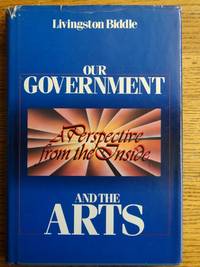
1988153481New York New York: ACA Books American Council for the Arts 1988. Hardcover. VG- DJ has moderate wear to edges; this copy is WARMLY INSCRIBED BY THE AUTHOR to American artist Will Barnet and his wife Elena on the front flyleaf. Blue cloth gilt letters on spine blue dust jacket 539 pp. BW illus. Presents the history and initiatives leading up to the creation of the National Endowment for the Arts written by the man who drafted the legislation. This copy is WARMLY INSCRIBED BY THE AUTHOR to American artist Will Barnet and his wife Elena on the front flyleaf. ACA Books (American Council for the Arts) hardcover books
1974013343New York Graphic Society 1974. Cloth. Fine/Fine. Square Quarto. A beautiful pen and colored ink watercolor over two pages with rich blues greys brown and black with exploding sun out of planets. Inscribed "to Hugh Downs .in appreciation for his generous contribution to the Science Center." signed Robert McCall 26 Sept 1980. New York Graphic Society unknown books
197438072Greenwich CT: New York Graphic Society 1974. First Edition. Robert McCall. Horizontal 4to pp. 168. Illustrated with paintings and drawings by Robert McCall. Foreword by Edwin E. Aldrin Jr. VG in chipped dj. New York Graphic Society unknown books
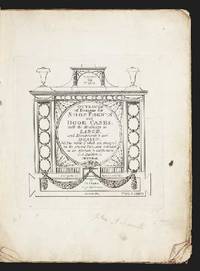
5153Engraved title-page & 24 engraved plates several plates slightly dampstained. Large 4to orig. blue wrappers frayed & scribbled upon by an early owner stitched as issued uncut. London: I. & J. Taylor 1792. First edition and very rare; ESTC locates only two copies: at the Bodleian and Avery Architecture Library. This is very attractive work of designs for storefronts and specialized doors issued by the leading publishers of architectural works of Britain the Taylor's Architectural Library. The Taylors father and son were shrewd businessmen and gave priority to the practical manuals required to support the building boom of the late eighteenth century. Bound-in at end is a two leaf folio catalogue of the Taylor's publications this seems to be ESTC T80563 dated after 1795. Good copy of a very rare book preserved in a box. ❧ ODNB. unknown books
1858WRCAM32076Washington D.C.: Congressional Globe Office 1858. 7pp. Self-wrappers. Minor edge wear light fold lines minute foxing. Very good. An address by Washington territorial governor Isaac I. Stevens delivered in Congress on May 25 1858 on the subject of proposed Pacific railroad routes. Stevens not only supported the extension of the rail line but proposed there be at least three west coast termini. At the time Stevens was working fervently to promote Washington's territorial interests publishing his well-known CIRCULAR LETTER TO EMIGRANTS DESIROUS OF LOCATING IN WASHINGTON TERRITORY. the same year. Scarce. OCLC locates only seven copies. SABIN 91525. OCLC 44638780. Congressional Globe Office unknown books