1 504 résultats
1979142064Garden City: Doubleday & Company 1979. Octavo cloth-backed boards. First edition. Collects thirteen stories by Avram Davidson Jack Vance Philip K. Dick Larry Niven and others. Review slip laid in. A fine copy in fine dust jacket. #142064 Doubleday & Company unknown books
1979125999Garden City: Doubleday & Company 1979. Octavo cloth-backed boards. First edition. Collects thirteen stories by Avram Davidson Jack Vance Philip K. Dick Larry Niven and others. A fine copy in fine dust jacket. #125999 Doubleday & Company unknown books
19798239Garden City NY: Doubleday & Co 1979. Cloth. Collectible; Fine/Very Good. INSCRIBED BY ISAAC ASIMOV on the title page. A crisp clean copy to boot of this 1979 Science Fiction anthology edited by Asimov himself Martin Harry Greenberg and Charles G. Waugh. Near Fine in a bright price-intact VG dustjacket. Octavo 455 pgs. <br/><br/> Doubleday & Co hardcover books
195337678New York: Grenich Printing Corp. 1953. First Edition. Slim octavo 23cm.; publisher's card wrappers in blue pictorial dust jacket; 71pp.; illus. Jacket extremities rather chipped and brittle due to poor stock spine most especially so with tiny loss at spine crown wrapper extremities a bit rubbed contemporary Yiddish gift inscription to title page else Very Good in Near Very Good jacket. History of the underground movement in Lithuania and Belarus during World War II. Grenich Printing Corp.] unknown books
1974109956Garden City: Doubleday & Company 1974. Tall octavo sheets printed on rectos only unprinted light blue wrappers printed label affixed to front panel. Unpaged galleys uncorrected proof of the first edition. The first collection of "Black Widowers" stories. Covers wrinkled and faded label loose glue dried out rubber cement stains to front cover and label inevitable with this type of production. Rare. #109956 Doubleday & Company unknown books
1727026143London: J. Tonson 1727. First Edition. Quarto. 12 327 pages 18 leaves of tables one folding errata mounted to bottom of the second page of contents verso. This volume includes plate 18 which was done by Sir Isaac Newton near the end of his life Wallis 'Newton & Newtoniana' #357 while he was Master of the British Mint 1700-1727; During Newton's tenure at the mint he issued at least thirteen reports which like this one are all rare. Table 34 which is a fold-out of plate 18 is among his very last original works accomplished in his lifetime. While Newton is certainly best known for his scientific work in mathematics and physics a large part of his working life was his time as Master of the Mint; in fact his precise measurements enabled savings in the minting process. The previous system had not been uniform his keen measurements enabled an exact weight in determining the number of grains in an ounce of gold with precision had not been available previous to his work. The table is also known in Scottish bibliographies for the section on Scottish Weights and Measurements. Bound in full calf ruled in gilt earlier and fine rebacking decoratively stamped in gilt renewed endpapers all edges red wear to corners some toning. A very good copy. J. Tonson unknown books
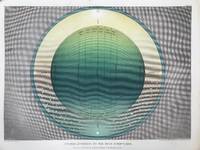
184620592<p><b>Original Muggletonian Celestial Astronomical Baxter print</b></p><p><b>System According to the Holy Scriptures</b></p><p> Drawn by Isaac Frost Engraved by Clubb London. Printed in oil by George Baxter.</p><p>Plate 9. Shows the Earth suspended in the firmament showing longitude and latitude lines. Similar to Plate 10 which shows outlines of continents.</p><p>The Baxter oil print shown here was made in 1846 for the private use of the Muggletonians an English religious group that denied a sun-centered solar system. The Muggletonians derived their own view of the universe and these plates are among the rarest of all Baxter prints having been made for private use and never widely circulated. Part of a larger set total eleven prints made for Isaac Frost's <i>Two Systems of Astronomy</i> this print was never bound into a book but remained as a loose printed sheet. It is surmised that the others in this series were lost in the London Blitz when the Muggletonian archives were largely destroyed. The Baxter process a complex and costly printing process produced a spectacular image and the plates are strikingly beautiful. Each Muggletonian astronomical print measures about 7 3/4 x 10 5/8 inches with decent margins. Condition is very good with the slightest of marginal creasing not affecting image. The background color in this print is slightly mottled as seen in image. This is the result of the difficulty of the entire Baxter process and shows perhaps why it was an economically unfeasible process. Small pinhole in upper left corner. Baxter Muggletonian prints are scarce and were unknown to C. T. Courtney Lewis in the first edition of his work on George Baxter.</p><p>The plates we have for sale were printed for a work titled "Two Systems of Astronomy" and were most likely circulated only to members of the sect and not sold as a commercial publication due to the expensive Baxter colour process. These plates were produced to illustrate an alternative to the Newtonian beliefs of gravity and terrestrial and celestial motion and are important in the history of the relationship between religion and science. Our plates were never bound into a book but were separately published as single leaves.</p> George Baxter books
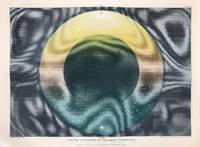
184620591<p><b>Original Muggletonian Celestial Astronomical Baxter print</b></p><p><b><i>System According to the Holy Scriptures</i></b></p><p>Drawn by Isaac Frost Engraved by Clubb & Son London. Printed in oil by George Baxter.</p><p>Plate 10. This is a particularly dramatic and hauntingly beautiful print showing the Earth suspended in the firmament day on the top and night on the bottom. The colors on this image are among the best that Baxter produced.</p><p>The Baxter oil print shown here was made in 1846 for the private use of the Muggletonians an English religious group that denied a sun-centered solar system. The Muggletonians derived their own view of the universe and these plates are among the rarest of all Baxter prints having been made for private use and never widely circulated. Part of a larger set total eleven prints made for Frost's <i>Two Systems of Astronomy</i> this print was never bound into a book but remained as a loose printed sheet. It is surmised that the others in this series were lost in the London Blitz when the Muggletonian archives were largely destroyed. The Baxter process a complex and costly printing process produced a spectacular image and the plates are strikingly beautiful. The image measures about 7 3/4 x 10 3/4 inches with decent margins. This print is in excellent brilliant condition with wide margins. Overall size of sheet is approximately 10 x 12 1/2 inches with the slightest of browning at the very edge of the margins not affecting image. Baxter Muggletonian prints are scarce and were unknown to C. T. Courtney Lewis in the first edition of his work on George Baxter.</p><p>The plates we have for sale were printed for a work titled "Two Systems of Astronomy" and were most likely circulated only to members of the sect and not sold as a commercial publication due to the expensive Baxter colour process. These plates were produced to illustrate an alternative to the Newtonian beliefs of gravity and terrestrial and celestial motion and are important in the history of the relationship between religion and science. Our plates were never bound into a book but were separately published as single leaves.</p> George Baxter books
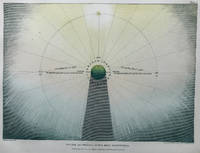
184620599Sysgtem According to the Hly Scriptures<br />by FROST ISAAC ILLS GEORGE BAXTER PRINTER <br />Original Muggletonian Celestial Astronomical Baxter print<br />Drawn by Isaac Frost Engraved by Clubb & Son London. Printed in oil by George Baxter.<br />Plate 10. This is a particularly dramatic and hauntingly beautiful print showing the Earth with the Sun at the top casting a shadow. The colors on this image are among the best that Baxter produced.<br />The Baxter oil print shown here was made in 1846 for the private use of the Muggletonians an English religious group that denied a sun-centered solar system. The Muggletonians derived their own view of the universe and these plates are among the rarest of all Baxter prints having been made for private use and never widely circulated. Part of a larger set total eleven prints made for Frost's "Two Systems of Astronomy" this print was never bound into a book but remained as a loose printed sheet. It is surmised that the others in this series were lost in the London Blitz when the Muggletonian archives were largely destroyed. The Baxter process a complex and costly printing process produced a spectacular image and the plates are strikingly beautiful. The image measures about 7 3/4 x 10 3/4 inches with decent margins. This print is in excellent brilliant condition with wide margins. Baxter Muggletonian prints are scarce and were unknown to C. T. Courtney Lewis in the first edition of his work on George Baxter.<br />The plates we have for sale were printed for a work titled "Two Systems of Astronomy" and were most likely circulated only to members of the sect and not sold as a commercial publication due to the expensive Baxter colour process. These plates were produced to illustrate an alternative to the Newtonian beliefs of gravity and terrestrial and celestial motion and are important in the history of the relationship between religion and science. Our plates were never bound into a book but were separately published as single leaves. George Baxter (printer) books
16962447Leipzig: Gross & Fritsch 1696. First edition. vellum marbled boards. Very Good. FIRST PRINTINGS OF THE PAPERS DOCUMENTING THE PROPOSAL AND SOLUTION OF THE "BRACHISTOCHRONE PROBLEM" ONE OF THE MOST FAMOUS MATHEMATICAL CHALLENGES AND ONE OF THE EARLIEST PROBLEMS POSED IN THE CALCULATION OF VARIATIONS. The challenge of the brachistochrone "began in June of 1696 when Johann Bernoulli published a challenge problem in Leibniz's journal Acta Eruditorum. Obviously a legacy of public challenge remained from the days of Fior and Tartaglia. Although contests were now conducted in the sedate pages of scholarly journals they retained their power to make or break reputations as Johann himself observed:<br /> <br /> '. it is known with certainty that there is scarcely anything which more greatly excites noble and ingenious spirits to labors which lead to the increase of knowledge than to propose difficult and at the same time useful problems through the solution of which as by no other means they may attain to fame and build for themselves eternal monuments among posterity.'<br /> <br /> "Johann's particular challenge was a good one. He imagined points A and B at different heights above the ground and not lying one directly above the other. There is certainly an infinitude of different curves connecting these two points from a straight line to an arc of a circle to any number of other wavy undulating paths. Now imagine a ball rolling from A down to B along such a curve. The time it take to complete the trip depends of course on the curve's shape. Bernoulli challenged the mathematical world to find that one particular curve AMB along which the ball will roll the shortest time. He called this curve the 'brachistochrone' from the Greek words for 'shortest' and 'time'.<br /> <br /> "An obvious first guess is to take AMB as the straight line joining A and B. But Johann cautioned against this simplistic approach:<br /> <br /> '. to forestall hasty judgment although the straight line AB is indeed the shortest between the points A and B it nevertheless is not the path traversed in the shortest time. However the curve AMB whose name I shall give if no one else discovered it before the end of this year is one well-known to geometers.'<br /> <br /> "Johann gave the mathematical world until January 1 1697 to come up with a solution. However when his deadline arrived he had received but one solution from the 'celebrated Leibniz' who:<br /> <br /> 'has courteously asked me to extend the time limit to next Easter in order than in the interim the problem might be made public . that no one might have cause to complain of the shortness of the time allotted. I have not only agreed to this commendable request but I have decided to announce myself the prolongation and shall now see who attacks this excellent and difficult question and after so long a time finally masters it.'"<br /> <br /> At this point Johann and others were surprised and perhaps a little delighted that they had not received a solution from their English rival Sir Isaac Newton. Wondering if Newton has not noticed the challenge Johann sent Newton directly a personal letter outlining the problem. When Newton received the letter he did not disappoint. As Newton's niece Catherine Conduitt explained:<br /> <br /> "When the problem in 1697 was sent by Bernoulli - Sir I.N. was in the midst of the hurry of the great recoinage and did not come home till four from the Tower very much tired but did not sleep till he had solved it which was by four in the morning."<br /> <br /> "Even late in life and tired from a hectic day's work Isaac Newton triumphed where most of Europe had failed! It was a remarkable display of the powers of the great British genius. He had clearly felt his reputation and honor were on the line; after all both Bernoulli and Leibniz were waiting in the wings to publish their own solutions. So Newton rose to the occasion and solved the problem in a matter of hours. Somewhat exasperated he is reported at one point to have said 'I do not love . to be . teezed by foreigners about Mathematical things.'<br /> <br /> "Back in Europe as Easter neared a few solutions came into the hands of Johann Bernoulli. The curve that everyone was seeking - one that 'is well-known to geometers' - was none other than an upside-down cycloid. This important curve was studied by Pascal and Huygens but neither of these mathematicians had realized that it would also serve as the curve of quickest descent. Johann wrote with characteristic hyperbole '. you will be petrified with astonishment when I say that precisely this cycloid . of Huygens is our required brachistochrone.'<br /> <br /> "On Easter the challenge period had expired. All together Johann had received five solutions. There was his own and the one from Leibniz. His brother Jakob came through perhaps to Johann's dismay with a third and the Marquis de l'Hospital added a fourth. Finally there was a submission bearing an English postmark. Opening it Johann found the solution correct although anonymous. He clearly had met his match in the person of Isaac Newton. Although unsigned the solution bore the unmistakable signs of supreme genius.<br /> <br /> "There is a legend - probably of dubious authenticity but nonetheless of great charm - that Johann partially chastened partially in awe put down the unsigned document and knowingly remarked 'I recognize the lion by his claw.'" Quoted from William Dunham Journey Through Genius: The Great Theorems of Mathematics Wiley 1990 page 199-202.<br /> <br /> The Brachistochrone Papers - the proposal and the solutions included:<br /> <br /> Johann: Supplementum defectus geometria cartesianae circa inventionem locorum; 2. Leibniz: Communicatio suae pariter duarumque alienarum ad edendum sibi primum a Dn. Joh. Bernoullio; 3. Johann: Curvatura radii in diaphanis non uniformibus . ; 4. Jakob: Solutio problematum fraternorum . ; 5. L'Hospital: Solutio problematis de linea celerrimi descensus; 6. Tschirnhaus: De methodo universalia theoremata eruendi . ; 7. Newton: Epistola missa ad praenobilem virum D. Carolum Mountague .<br /> <br /> Note: Newton's solution original appeared in the Philosophical Transactions.

<br /> <br /> Provenance With stamps and withdrawal markings 7-3-1984 from the famous John Crerar Library Chicago. <br /> <br /> In: Acta Eruditorum vol. 15 and 16: no.1 in 15:264-69 1 plate; no. 2 in 16:201-5 1 plate; no. 3 in 16: 206-11; no. 4 in 16:211-17; no. 5 in 16: 217-20; no. 6 in 16: 220-23; no. 7 in 16: 223-24. Leipzig: Gross & Fritsch 1696-1697. The two entire volumes offered. Quarto 208x170 mm. Two volumes in uniform contemporary three-quarter vellum over marbled boards. pp 2 604 and 9 plates; 8 594 and 8 plates. Some heavy worming to pp 324-42 and plate vi of volume 15 which is not part of any of the above mentioned articles. 1697 volume with repaired gutter tear to plate 8; reinforcement to p.449/50 and minor restoration to binding. Some toning throughout as usual with the Acta. In all a very good set. Gross & Fritsch unknown books
198184417Garden City:: Doubleday. Near Fine in Near Fine dust jacket. 1981. Hardcover. 0385171455 . First edition. Trace foxing on edge and endpapers else near fine in a near fine dust jacket. . Doubleday, hardcover books
198137328Garden City:: Doubleday. Near Fine in Near Fine dust jacket. 1981. Hardcover. 0385171455 . First edition. Near fine in a near fine dust jacket. . Doubleday, hardcover books
1954285286New York: Street & Smith 1954. First. paperback. very good. Kelly Freas. 2 consecutive volumes with serial story "Sucker Bait" by Asimov among others. 12mo pictorial wrappers with color cover art by Kelly Freas. New York: Street & Smith 1954. First edition. Minor bumping at head of first volume still a very good copy.<br/><br/> Street & Smith unknown books
1982205618Philadelphia: John Benjamins 1982. vi 300 p. very good hardcover. Typological studies in language v. 8. John Benjamins unknown books
197276272Garden City:: Doubleday & Company. Good in Very Good dust jacket. 1972. Hardcover. 038508594X . A later printing. Brief marginalia on six pages thus only good in a very good a bit faded along the spine dust jacket. . Doubleday & Company, hardcover books
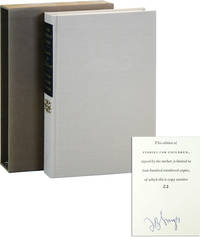
198419091New York: Farrar Straus and Giroux 1984. First Edition. Limited Issue one of 400 numbered copies signed by the author this being copy no.22. Octavo; beige cloth titled and blocked in gilt and black on spine; publisher's brown paper-covered slipcase; 338pp. Fine in a Fine slipcase. A charming collection of 36 stories written for children with an essay titled Are Children the Ultimate Literary Critics An elegant production. Farrar, Straus and Giroux unknown books
1906116779Philadelphia: The Jewish Publication Society of America 1906. Octavo pp. 1-5 6-7 8-9 10 11-13 14-455 456: printer's imprint title page printed in red and black original decorated red cloth front and spine panels stamped in black and gold. First edition. Short fiction and sketches by a Russian Jewish writer first published in Russia between 1875 and 1900. "The Dead Town" is a macabre story about a town inhabited by the walking dead -- the horror keeps its edge even after the symbolism is accounted for. In "Bontzye Shweig" a poor uncomplaining man dies and goes to heaven where he is welcomed admiringly surprising the man and in the end the reader who may sense a whiff of the cabalistic in what might have been dismissed as a whitewashing account of a nebbish who should have done some more complaining. But the judge of the heavenly court tells him "You yourself knew nothing of your hidden power. In the other world your silence was not understood but that is the world of delusion; in the world of truth you will receive your reward." The reward he asks for is a hot roll with butter every day for breakfast. Other stories retell legends from the Talmud and other sources. The material is sometimes a little diffuse from a literary point of view. Includes helpful footnotes and glossary for the non-Jewish reader. Small neat 1907 gift inscription at top edge of title page. Cloth lightly worn at spine ends spine sunned else a very good copy. #116779 The Jewish Publication Society of America unknown books
1953212130New York: Ballantine Books 1953. Softcover. Good. First edition. Mass market paperback. Edited by Frederik Pohl. Pages age-toned wear to extremities spine creased and worn else very good. This is a collection of original stories not reprints. Number 16. Ballantine Books paperback books
1861011564Washington D. C.: A. O. P. Nicholson. Very Good. 1861. Map. Map No. 1 St. Paul to Riviere Des Lacs disbound from the map volume XI of the Explorations and Surveys for a Railroad Route from the Mississippi River to the Pacific Ocean from 1853-1854 surveys. Light browning small fold corner tears and two small archival repairs. Showing the survey routes from the Mississippi to north of the Yellowstone and Missouri Rivers. Wagner-Camp 266c. ; 25" x 37 1/2" . A. O. P. Nicholson unknown books
1835158697London: Holdsworth & Ball 1835. hardcover. very good. 504pp. 8vo brown cloth- backed boards with leather spine label rubbed & edgeworn the interior is fine. London: Holdsworth and Ball 1835. Second edition. Very good.<br/><br/> Holdsworth & Ball unknown books
19627336London: Secker & Warburg. Near Fine in Very Good dust jacket. 1962. Hardcover. Various translators. First British edition. Taped over information on copyright page which shows through on the title page else near fine in a very good age tanned along spine rear panel and flap edges dust jacket. . Secker & Warburg hardcover books
196216786NY: Farrar Straus & Cudahy. Near Fine in Very Good dust jacket. 1962. Hardcover. Second printing. Near fine in a very good age darkened along the spine and edges dust jacket. . Farrar, Straus & Cudahy hardcover books
40877Other: Other. Very Good. Hardcover. Dayton Ohio 1859. 518 pages hardcover. Original blindstamped cloth binding very good condition. . Other hardcover books
184420584Washington: Printed by Gales and Seaton 1844. 18 2 blank pp. Disbound. Light scattered foxing. Good. Printed by Gales and Seaton unknown books
1982129408Boston: Houghton Mifflin Company 1982. Octavo boards. First edition. Original anthology collecting seventeen stories by Isaac Asimov Zenna Henderson R. A. Lafferty Joanna Russ Robert Silverberg Jack Williamson Gene Wolfe and others. A fine copy in very good dust jacket with wear at spine ends. #129408 Houghton Mifflin Company unknown books