Toussaint AmiceBiblio.com

1 322 résultats
042800170X.Gpaperback. Good. Access codes and supplements are not guaranteed with used items. May be an ex-library book. paperback
0428321356.Ghardcover. Good. Access codes and supplements are not guaranteed with used items. May be an ex-library book. hardcover
19693545ml1969. Soft Cover. Good. Gd. condition - George Prosser on "Terrorism and Sabotage" Mek Nimr on "Israel" and Onij-Nejjih on "Student Strikes" . And a whole lot more . . K2 paperback
41131Robert Laffont In-8 202pp. illustr. aquarelles hors-texte reliure demi-cuir chagrin vert couverture illustrée conservée texte en rouge et noir Nb-0127 unknown
196762425Austin & London: University of Texas Press The Texas Pan American Series 1967. Rilegato tela cloth. Molto buono Very Good. With 395 illustrations in black and white and 9 color plates. Contents: Art in New Spain at the time of the Conquest the middle ages in Mexico 1519-1550. Art during the colonization of New Spain the renaissance in Mexico 1550-1630. Art in New Spain during the formation of the nation the Baroque style in Mexico 1630-1730. Pride and wealth climax of the Baroque in Mexico 1730-1781. Art and the independence of Mexico neoclassic art 1781-1821. 4to. pp. XXVI - 494. Molto buono Very Good. Dedica alla prima pagina bianca Inscription on first blank page. . University of Texas Press, The Texas Pan American Series hardcover
1967BOOKS001339xxvi493 pages with frontispiece index bibliography and 395 plates. Quarto 11 1/4" x 9". bound in original publisher's gold cloth with black and gilt decorative lettering to spine in original pictorial jacket. Translated and edited by Elizabeth Wilder Weismann from the second Spanish edition. First American edition.<br /><br />The three hundred years between conquest by Spain and the winning of independence saw a special and characteristic culture develop in Mexico. This was a frontier society but a rich one with all the resources of imperial Spain and the Roman church to develop and support the natural wealth of the land. Public and private buildings were ornamented with rich sculpture and embellished with colorful paintings depicting religious scenes and views of daily life. In this period the preponderantly Indian population was converted to the Christian faith and introduced to the civilization of post-Renaissance Europe. Artists came to Mexico from the Old World and brought with them the current styles but most of the practicing artisians had never seen Europe Natives of New Spain of both Indian and Spanish blood developed the imported styles in new modes appropriate to the new country that was to be come Mexico. It is this great corpus of art ranging from the Primitive and Medieval through Renaissance and Baroque to the nineteenth century Neoclassic and popular art which this book presents. It is the cornerstone of the study of Mexican colonial art.<br /><br /><b>Condition:</b><br /><br />Edges bumped. Jacket spine sunned edges chipped with tears and closed tears front edges sunned spine ends chipped else a very good copy in like jacket. University of Texas Press hardcover
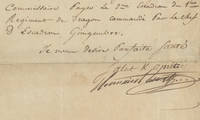
17983421524/05/1798. <div></div><div><div class=""yj6qo""><p>At the time of the outset of the French Revolution Haiti was the French colony of Saint Domingue. The colony featured large slave plantations that generated the cash crops of sugar coffee and cotton. This was a very profitable colony to the French owing largely to the sugar plantations. By the 1780s nearly two-thirds of French trade flowed through Saint Domingue and the island supplied nearly half of Europe with sugar.</p><p>The Haitian Revolution was a complex web of affairs. At one point there were over a half dozen parties involved all fighting for different purposes. Alliances were fickle as entities changed allegiance based on who was offering the best deal. The revolution began not only as a slave revolt but also as a class struggle among white landowners non-landowners and the free black landowners. The French military became involved as did the British and Spanish forces.</p><p>In August 1791 a full-fledged slave revolt began. In March 1793 the French assembly granted full rights and French citizenship to free black people and those of mixed race. The white planter class however objected and further violence erupted. The French sent military forces and a new governor to enact these measures. At this point England and Spain joined the fight. While the English sought to restore order and sided with the white social class the Spanish who controlled the other side of the island saw an opportunity in the dysfunction. When the French in 1794 ordered all slaves freed the ire turned against the English who now sent more forces to quell the revolt. In 1795 the Spanish signed a deal with the French and exited the conflict.</p><p>Toussaint Louverture a former slave emerged as the leader of the slaves seeking their freedom in the Haitian Revolution. He drew inspiration from the ongoing French Revolution and previous American Revolution to evolve his group’s demands and ultimate goals.</p><p>At the same time the French Directoire government which now ruled France was considerably less revolutionary than it had been. Suspicions began to brew that it might reconsider the abolition of slavery. In November 1797 Louverture wrote again to the Directoire assuring them of his loyalty but reminding them firmly that abolition must be maintained.</p><p>And for the British the benefit began to be outweighed by the cost an enormous loss of life. On April 30 1798 Louverture signed a treaty with British Army officer Thomas Maitland exchanging the withdrawal of British troops from western Saint-Domingue Haiti in return for a general amnesty for the French counter-revolutionaries in those areas. In May Port-au-Prince was returned to French rule in an atmosphere of order and celebration.</p><p>Gingembre-Trop-Fort also a former slave was one of Louverture's loyal officers. He was described with exaggerated uniform accoutrements a sword almost as tall as he was wearing “large and heavy rings†and with a pillow to his saddle already “covered in velours with gold fringes.†Interestingly his name in French means ""too strong ginger.""</p><p><strong>Letter signed</strong> May 24 1798 Port Republicain former name of Port-au-Prince to <em>""Citizen Deneyve Commissary Quartermaster of Wars for the Army of the Northwest Coast""</em> with integral address leaf. <em>""Citoyen Commissary please pay the 2nd Squadron of the 1st Regiment of Dragoons Commanded by the Squadron Chief Gingembre.""</em></p><p>Letters of Louverture are very uncommon. This is a particularly early one having been signed before he took control over the entire country.</p><p>This was not the end of the conflict as tensions with France were about to increase and would test Louverture.</p><p><img class=""alignnone wp-image-25018 size-post-window"" src=""https://cdn.raabcollection.com/wp-content/uploads/20231204144051/Folder-site-11-1600x1327.jpg"" alt="""" width=""1600"" height=""1327"" /></p></div></div> unknown
B9781169075566New. unknown
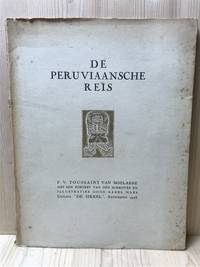
19253380De sikkel Antwerpen 1925. 22 x 285 cm 62 pp genummerde oplage n° 332 van 350 bevat roestplekjes De sikkel Antwerpen unknown
0483558079.Ghardcover. Good. Access codes and supplements are not guaranteed with used items. May be an ex-library book. hardcover
0428900828.Gpaperback. Good. Access codes and supplements are not guaranteed with used items. May be an ex-library book. paperback
0428901190.Ghardcover. Good. Access codes and supplements are not guaranteed with used items. May be an ex-library book. hardcover
B9781167611032New. unknown
B9781167627484New. unknown
B9781167638497New. unknown
0282474242.Gpaperback. Good. Access codes and supplements are not guaranteed with used items. May be an ex-library book. paperback
0656014458.Ghardcover. Good. Access codes and supplements are not guaranteed with used items. May be an ex-library book. hardcover
B9781167605307New. unknown
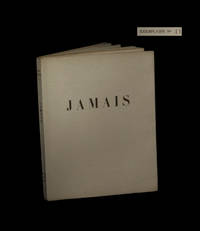
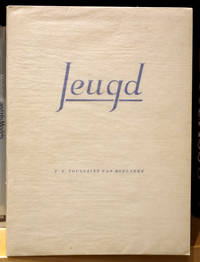
1927247631927. Paris Editions de la Nouvelle revue critique 1927. Un vol. au format pt in-4 248 x 196 mm de 9 pp. brochÂŽ sous couverture ˆ rabats rempliÂŽs. Edition originale. Tirage de tÂte : un des 20 premiers exemplaires du tirage numÂŽrotÂŽ sur vergÂŽ blanc de Hollande van Gelder Zonen. ''Il y avait dans le Nedjd un village dont l'ÂŽcole ÂŽtait dirigÂŽe par un vieillard dÂŽbonnaire. Au lieu de contraindre ses ÂŽlÂves ˆ rÂŽpÂŽter du matin au soir des versets du Koran il leur lisait des poÂŽsies qui exaltaient la douceur de vivre. Des rosiers toujours fleuris entouraient cette ÂŽcole o frÂŽquentaient aussi les papillons lorsqu'ils ne pouvaient plus rÂŽsister ˆ la brise''. TrÂs rares tout autant que discrÂtes rousseurs dans le texte. Du reste trÂs belle condition. b42961 unknown
19352554Brussel: De Vrienden van het boek 1935. 4° met kopergravures van Joris Minne. Gedrukt in oplage van slechts 100 genummerde exemplaren. Dit is nr. 67 op oorspronkelijk Japans Codo Mitsu-mata nacré. Getekend door auteur en kunstenaar. Oorspronkelijke kaft van uitgever. Bijgevoegd: folder in tweekleurendruk van dit werk Bibliophile editions De Vrienden van het boek unknown
0366703641.Ghardcover. Good. Access codes and supplements are not guaranteed with used items. May be an ex-library book. hardcover
0366703625.Gpaperback. Good. Access codes and supplements are not guaranteed with used items. May be an ex-library book. paperback
1390753832.Gpaperback. Good. Access codes and supplements are not guaranteed with used items. May be an ex-library book. paperback