Leupold, JacobBiblio.com
734 résultats
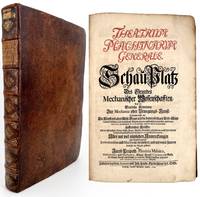
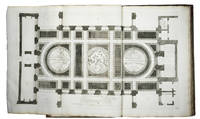
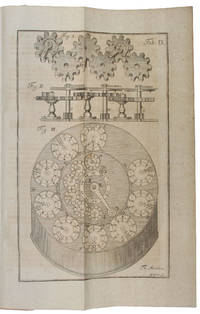
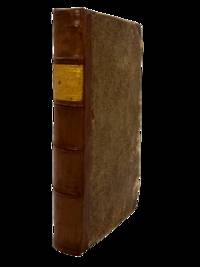
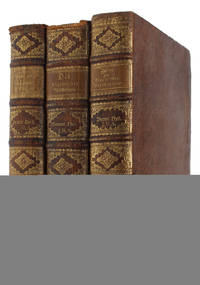
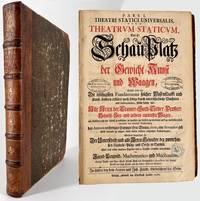
17261595Leipzig: Christoph Zunkel 1726. First Edition. Near fine. 4 parts in one volume; Folio13 1/3 x 8 7/8 inches 337 x 228 mm; half title title printed in back and red 57 copperplate engravings thus divided:<br /> Theatrum Staticum Universalis 1726 half title blank title blank dedication to Charles VI 3 Foreword 3 Contents 2 92 pp 19 plates; <br /> Theatrum Hydrostaticum pp. title blank 2 197 - 236 7 plates <br /> Theatrum Aërostaticum: title blank contents 2 241 - 308 23 plates<br /> Theatrum Horizontostaticum: title blank Contents 1 blank pp. 313 - 332 Index 3 Errata 8 plates. <br /> Contemporary half-binding in brown leather with speckled boards spine with gilt decorations in compartments and gilt title; contemporary leather binding with gilt decorations in compartments on spine and gilt title; edges red; corners bumped and some scratches on boards; binding tight and square with a surface split at title page. Pages clean and supple with very light and even toning. Stamps of the Royal Engineering Artillery Library of Hanover on half title and title pages.<br /> <br /> Poggendorf I 1438; Ferguson p. 45-46. The Theatrum Staticum Universalis is the 6th volume of the 10-volume magnum opus of Jacob Leupold 1674 - 1727. It is extensively illustrated with copper plate engravings that fold out so that they can be viewed while consulting the text. What is particularly striking is the strong systematization that is lacking in most works of this period. The technical devices are always described in such a way that the isolated basic elements are first explained and then placed in their functional context. The illustrations show among other things draw wells water wheels pumping stations excavators pumps valves and fountains.<br /> <br /> Leupold was a German physicist mathematician instrument maker engineer and was director of mines to the Elector of Saxony. His seminal work Theatrum Machinarum Generale "The General Theory of Machines" was published in Leipzig between 1724 and 1739 with the last volumes issued after his death. The Theatrum was the first systematic analysis of mechanical engineering the most complete and the most extensively illustrated work on mechanical engineering hitherto published. It included ahead of its time a design for a high-pressure non-condensing steam engine the likes of which were not built until the early 19th century. Christoph Zunkel unknown
17241596Leipzig: Ch. Zunkel 1724 1724. First Edition. Very Good . Folio; 14 1/16 x 9 1/4 inches 360 x 234 mm; 11 240 pp. 2 II; title printed in back and red with 71 copperplate engraving by Krügner Böcklin Uhlich and others after Leupold. Most of the plates are folding and attached to a blank so that they may be consulted while reading the accompanying text. The plate at page 71 has a revolving volvelle. Contemporary speckled calf rebacked but retaining its original spine with gilt floral decorations in compartments and gilt title on tan calf label. Pages supple and evenly toned with scattered foxing some dampstain and occasional ink marks; first leaf with wormholes in the lower margin without loss of text or image plate LXVII with expertly supplemented corner tear; corners bumped and some scratches on boards; stamped on front endpaper illegible. All conditions consistent with the nature and age of the volume.<br /> Poggendorf I 1438; Ferguson p. 45-46. The Theatrum Machinarum Generale is the first volume of the 10-volume magnum opus of Jacob Leupold 1674 - 1727. It is extensively illustrated with copper plate engravings that fold out so that they can be viewed while consulting the text. What is particularly striking is the strong systematization that is lacking in most works of this period. The technical devices are always described in such a way that the isolated basic elements are first explained and then placed in their functional context. The illustrations show among other things draw wells water wheels pumping stations excavators pumps valves and fountains. Leupold was a German physicist mathematician instrument maker engineer and was director of mines to the Elector of Saxony. His seminal work Theatrum Machinarum Generale "The General Theory of Machines" was published in Leipzig between 1724 and 1739 with the last volumes issued after his death. The Theatrum was the first systematic analysis of mechanical engineering the most complete and the most extensively illustrated work on mechanical engineering hitherto published. It included ahead of its time a design for a high-pressure non-condensing steam engine the likes of which were not built until the early 19th century. Ch. Zunkel, 1724 unknown
1780K6QE3E6Q77WKAmsterdam 1780. Large folio 49.5 x 30 cm. Johannes Covens Cornelis Mortier and Johannes Covens junior Contemporary half red roan sheepskin brown sprinkled paper sides. With the title page printed in red and black with J. Covens & C. Mortiers engraved device by Bernard Picart JCCM cypher monogram in a laurel wreath carried by 6 putti dated 1730; 2 preliminary plates containing portraits of Jacob van Campen by Lutma and Arthus Quellinus by Henricus Quellinus; CIX 109 numbered engraved and etched architectural plates 7 folding 30 double-page and 72 single-page a few printed from 2 or 3 copper plates distinguished by arabic numerals showing plans elevations tympana ceilings floors statues festoons and other ornamentation mostly engraved by Hubertus Quellinus after Arthus Quellinus but some after R.V.H. Rombout Verhulst. All plates have French captions some with laudatory verses below and are described in Dutch in the letterpress text pp. 3-15. 15 pp. A comprehensive collection of plates showing all architectural features and sculpture of the Amsterdam City Hall since 1808 the Royal Palace here in the Covens & Mortier firm's rare ca. 1780 issue with the engravings newly printed from the original copper plates from the years 1655 to 1664 and the text reissued from Leonardus Schenk's 1747 Dutch language edition the whole with a new title-page. ''This version has not been seen'' BAL. At least most of the plates were engraved for and first published in Jacob van Campen's masterpiece Afbeelding van 't stadt huys van Amsterdam Amsterdam Frederick de Wit 1664 Hubert Quiellinus's Prima et secunda pars praecipuarum . curiae Amstelrodamenis Amsterdam Frederick de Wit 1655-1663 and Afbeelding van 't stadt huys van Amsterdam in dartigh coopere plaaten . geteeckent door Jacob Vennekool Amsterdam Dancker Danckerts 1661.It includes the famous plate showing the extraordinary cartographic mosaic floor of the Burgerzaal of the Amsterdam City Hall designed by Jacob van Campen with a celestial map in the centre and the magnificent map of the world in 2 hemispheres on either side. The engraving was first published in 1661 and the map shows Tasman's recent discoveries in Australia and Tasmania and depicts California as an island. Many discoveries from his second voyage remained otherwise unpublished until the end of the 17th century. The drawing of the floor was made by Jacob Vennekool who worked closely with Van Campen and since his drawings were first published even before the building was completed they may reflect Van Campen's plan more closely than the finished building itself. They also of course show it before the alterations made at various times in later years.Binding a little worn untrimmed otherwise in good condition. The Amsterdam city hall in full glory with all its architectural features and sculpture.l BAL 132 note description of 1719 French language ed. but citing Berlin Kat. & Kuyper for unseen "1730" Dutch ed.; Berlin Kat. 2236; Kuyper Dutch Classicist architecture Delft 1980 pp. 212- 215 and note 25 p. 318; STCN 3 copies; cf. for dating the impressum: Van Egmond Covens & Mortier 2005 pp. 66 83-88. ABE CAT Architecture ABE CAT Art History unknown
178625988Ephrata: The Cloister 1786. First edition 4to pp. 6 250 2; printed in black letter throughout; engraved vignette pasted on title page; prelims and terminals waterstained small tear in the lower margin of title not touching letterpress old ownership signature at the top of the title page of Christian Stauffer 1736-1808 and a 30-line poem also presumably by him on the final blank leaf as well as a few marginal annotations; contemporary full calf front cover detached but present; the whole in a new cloth clamshell box. An abstract of the diary of the Brotherhood which had been kept by Brother Lamech and continued and edited by Brother Jaebez Agrippa i.e. Johan Peter Miller. Brother Lamech has been identified as Jacob Gass by Seidensticker First Century of German Printing in America p. 117. Evans 19558: "This biography of Johann Conrad Beissel the founder of the Ephrata Community is the principal source of information regarding that remarkable institution. Brother Agrippa is Johann Peter Miller; and Brother Lamech's secular name is said to be Jacob Gass. An English translation was printed in Lancaster Pennsylvania in 1890." Howes G76 identifying this as the second issue of three with the title page seal pasted on. <br/><br/> [The Cloister] hardcover books
178625988Ephrata: The Cloister 1786. First edition 4to pp. 6 250 2; printed in black letter throughout; engraved vignette pasted on title page; prelims and terminals waterstained small tear in the lower margin of title not touching letterpress old ownership signature at the top of the title page of Christian Stauffer 1736-1808 and a 30-line poem also presumably by him on the final blank leaf as well as a few marginal annotations; contemporary full calf front cover detached but present; the whole in a new cloth clamshell box. An abstract of the diary of the Brotherhood which had been kept by Brother Lamech and continued and edited by Brother Jaebez Agrippa i.e. Johan Peter Miller. Brother Lamech has been identified as Jacob Gass by Seidensticker First Century of German Printing in America p. 117. Evans 19558: "This biography of Johann Conrad Beissel the founder of the Ephrata Community is the principal source of information regarding that remarkable institution. Brother Agrippa is Johann Peter Miller; and Brother Lamech's secular name is said to be Jacob Gass. An English translation was printed in Lancaster Pennsylvania in 1890." Howes G76 identifying this as the second issue of three with the title page seal pasted on. [The Cloister] unknown
173928620The Hague: Depens de la Compagne 1739. 2 volumes 12mo. Titles printed in red and black. 12 224; 4 254pp. Half titles. Later full polished calf spine gilt with raised bands marbled endpapers. In a modern slipcase.<br/> <br/>First French edition of Behren's account of Jacob Roggeveen's 1721-22 Pacific voyage.<br/> <br/>The first French edition of Behren's German account of Jacob Roggeveen's 1721-22 Pacific voyage which provided important impetus for further exploration for the great Southern Continent. The author was a sergeant and commander of marines on the voyage. Contemporary accounts of Roggeveen's explorations were first published in Dutch in 1728 and in German beginning in 1735. This French translation was based on the Frankfurt and Leipzig editions of 1737. Behrens' scarce narrative tells the story of one of the most significant of the Dutch voyages ranking with those of Le Maire Schouten and Tasman. Roggeveen set out to rediscover the part of Terra Australis which Quiros had led the exploring world to believe existed but in fact added substantially to the Dutch record of Polynesian discoveries with Easter Island and Samoa described here for the first time. "Roggewein's is the first certified account of contact with Easter Island and its great stone images as well as the last of the great Dutch circumnavigations" Cox. "Though some attribute the translation to Charles de Brosses Chareles Pierre Claret Fleurieu believed that the style of language revealed the efforts of a non-native speaker. With the text often more a paraphrasing of the German version than a direct translation Fleurieu and others credit Behrens himself with the translation" Hill.<br/> <br/>European Americana 739/21; Sabin 4379; Hill 99; Cox I p.51; Borba de Moraes p.95; Howgego R63. Depens de la Compagne unknown books
1739WRCAM48796The Hague: Aux depens de la Compagnie 1739. Two volumes. 12224; 4254pp. Half titles. 12mo. Later polished calf gilt spine gilt with raised bands leather labels marbled endpapers. Minor shelf wear joints slightly rubbed. A clean near fine copy. In a buckram slipcase. The first French edition of Behrens' REISE DURCH DIE SÜD-LÄNDER UND UM DIE WELT an account of Jacob Roggeveen's 1721-22 Pacific voyage which provided important impetus for further exploration for the great Southern Continent. "Roggewein's is the first certified account of contact with Easter Island and its great stone images as well as the last of the great Dutch circumnavigations" - Cox. <br> <br> The author was a sergeant and commander of marines on the voyage. Contemporary accounts of Roggeveen's explorations were first published in Dutch in 1728 and in German beginning in 1735. This French translation was based on the Frankfurt and Leipzig edition of 1737. "Though some attribute the translation to Charles de Brosses Charles Pierre Claret Fleurieu believed that the style of language revealed the efforts of a non-native speaker. With the text often more a paraphrasing of the German version than a direct translation Fleurieu and others credit Behrens himself with the translation" - Hill. EUROPEAN AMERICANA 739/21. SABIN 4379. HILL 99. COX I p.51. BORBA DE MORAES p.95. HOWGEGO R63 for Roggeveen. Aux depens de la Compagnie hardcover books
1732WRCAM55846London: Printed for D. Midwinter and A. Ward. 1732. 2214197-40016 of 24pp. plus seven plates including frontispiece. Lacks the final four leaves of the index. 12mo. Contemporary calf rebacked with original backstrip laid down. Light shelf wear corners worn. Contemporary bookplate and presentation inscriptions see below. One plate torn lacking the lower left quarter of the sheet repaired with blank paper. One page with early manuscript marginalia. Scattered light foxing. About very good. A remarkable association copy connecting two significant members of the Revolutionary generation who were also united by family intermarriage and whose friendship was riven by their divergent loyalties during the American Revolution. This copy bears the bookplate of Francis Hopkinson 1737-91 signer of the Declaration of Independence author and poet composer judge and Pennsylvania government official. The ANB calls him "arguably the most versatile American of the revolutionary generation." This book was given to Hopkinson by the noted minister Jacob Duché who would shortly thereafter marry Hopkinson's sister and who famously broke with the cause of liberty during the Revolution. <br> <br> A front fly leaf bears the presentation inscription "The Present of Mr. Jacob Duché Junr. to Francis Hopkinson December 1757." The same hand has signed the titlepage with the names of Jacob Duché and Francis Hopkinson and the date 1757. On that page Duché's name has been crossed out indicating that the inscriptions are likely in the hand of Duché and that he crossed out his own name on the titlepage when he gave the book to Francis Hopkinson. Jacob Duché and Francis Hopkinson had a long and complicated friendship dating back at least to their college days at the College of Philadelphia later the University of Pennsylvania. In 1760 three years after giving him this book Duché married Hopkinson's sister Elizabeth. Francis Hopkinson was a prolific author and musician and published forty poems before the Revolution. A copy of HUDIBRAS Samuel Butler's famous satirical poem on English politics would have been a welcome and influential gift. "During the Revolution Hopkinson wrote a number of ballads and essays poking fun at the British cause and the Loyalists. 'The Birds the Beasts and the Bat' written in Hudibrastic verse served to ridicule those persons who tried to take both sides during the Revolution" - ANB. <br> <br> It is impossible not to believe that one of those targets of Hopkinson's ridicule was the gifter of the present edition of HUDIBRAS his brother-in-law Jacob Duché. Duché 1738- 98 born into a wealthy Philadelphia family was only twenty-two years old when he married Elizabeth Hopkinson. He would go on to become a prominent minister and religious leader in Philadelphia noted for his well- written sermons and essays. In 1774 he was asked to serve as the chaplain to the Continental Congress and he therefore gained political prominence as well displaying an apparent zeal for liberty. Duché resigned his official position with the Congress in October 1776 having concluded that the Declaration of Independence - signed just three months earlier by his friend and brother-in-law - would not serve as a tool for reconciliation with England. When the British captured Philadelphia Duché was imprisoned by General Howe and came to a permanent change of heart regarding the revolutionary cause. In 1777 he wrote a rash letter to George Washington urging that Washington undo the Declaration of Independence and negotiate a peace. The publication of the letter destroyed Duché's career and "those whose hearts had thrilled to Duché's eloquence now cursed him as a traitor and even Hopkinson wrote him a burning letter of protest" DAB. Duché and his family soon exiled themselves to London. The conclusion of the Revolutionary War did not provide Duché with an opportunity to return to the United States - anti-Loyalist sentiments were still too raw. It was not until 1792 having by then taken up the tenets of Swedenborgianism that Duché and his family finally returned to Philadelphia where he lived the rest of his life. <br> <br> Francis Hopkinson's bookplate was engraved by the noted artist and engraver Henry Dawkins one of the early engravers in the colonies. Dawkins was born in England but came to New York City in 1754. He found work engraving bookplates maps and music in New York and then in Philadelphia before returning again to New York in 1774. He was arrested there in 1776 and charged with counterfeiting paper money apparently not for the first time for which he was jailed. Later that year he petitioned the New York Provincial Congress for release but the record of Dawkins's life ends there and we do not know what became of him. <br> <br> This is a later edition of Samuel Butler's famous epic poem first published in three parts in London beginning in 1663. An edition containing all three parts together was first published in 1684. This edition contains seven engravings by William Hogarth. In the present edition parts two and three have separate titlepages and that of part three bears the imprint "printed for B. Motte. The text is continuous despite the pagination. <br> <br> A remarkable volume - a gift of youthful friendship inspirational to a signer of the Declaration of Independence whose long and close friendship with his brother-in-law would become a casualty of conflicting loyalties during the American Revolution. ESTC N17078. DAB IX pp.220-23; V 476-77. ANB 11 pp.190-92; 7 pp.4-5. Printed for D. Midwinter and A. Ward... unknown books
171752850Frankfurt and Leipzig: Samuel Tobias Hocker 1717. Hardcover. Good to very good condition. Bound in full vellum with handwritten lettering on spines. Octavo. Vol. I.: 24 incl. frontispiece 580pp. 8 432 383 1pp. Franckfurter Juden Ehverlöbniß und Hochzeit. Vol. II.: 8 358 1pp. 30 320pp. 447 1 192pp. plus two registers and a supplement 1717 38 48 1 60pp. Frontispiece and ten copper plate engravings some folding. Part two and three published in 1714 part four in three parts published in 1717 with two chapters published in 1716 see below. Speckled edges. Decorative initials head- and endpiece woodcuts.<br /> <br /> Jewish oddities introducing curiosities and memorable events of Jews in "all four parts" of the world in the last few centuries particularly of Jews scattered in Germany. Contains a complete Frankfurt Jewish Chronicle with memorable events relating to Jews living in Frankfurt for centuries including several elucidating engravings. Part two includes the chapter XXV "about Jews in Frankfurt regarding marriage vows and wedding" on six pages. Part four in three chapters of which the last includes the apparel regiment for Frankfurt Jews and a chapter on the celebration on the occasion of the birth of the Crown Prince of Jews in Frankfurt and Prague both 1716 both with separate title pages and frontispieces but continuous pagination.<br /> <br /> Though not addressed to a particular Jewish community most of the information was gathered in Frankfurt with several texts copied by Schudt in Hebrew and Yiddish that are not recorded in elsewhere e.g. a Selicha authored by Rabbi Shmuel Schotten Katz after the great fire in the Jewish Quarter of Frankfurt in 1711 the Purim play "Ahasuerus-Spiel" most copies of the play were burnt following a rabbinical decree; thanks to Schudt the text was preserved two versions of women's incantations for childbirth regulations of the Jewish community forbidden luxuries among others. <br /> <br /> Schudt's writings are considered a landmark in the history of modern anti-Semitism mainly due to a chapter dedicated entirely to describing the Jewish body its shape colors and smells promulgating racist anti-Semitism in Europe. <br /> <br /> Schudt's book features several copperplate engravings. The most prominent of these is an image of the Judensau Jews' Sow which first appeared in medieval sculptures found in churches throughout Germany starting in the 14th century and then was subsequently depicted in woodblock and copperplate engravings. Schudt's version of this notorious anti-Semitic image is an elaborate construction taking motifs from three or more predecessors presenting a panoply of negative anti-Semitic tropes including: the blood libel ritual murder the devil's association with the Jewish people Jews "sucking and eating the wealth" from the allegorical pig and their belief in the absolution of sin through the sacrifice of the Azazel during the holiday of Yom Kippur. He includes descriptive text to elucidate the images.<br /> <br /> The main part of this folk art image shows three Jewish figures one sitting backwards atop the sow holding its tail facing the devil while another Jew kneels behind the pig eating its excrement encouraged by the devil. A third Jew is lying on his back suckling the sow's milk. On the other side of the sow a high priest stands with the Azazel goat.<br /> <br /> Additional engravings depict Jacob blessing Joseph's sons another two festive processions held in Jewish communities in Germany in 1716 for the birth of Leopold Johann son of the Holy Roman Emperor Carl VI and a portrait of Johann Jacob Schudt among others. Some of the engravings are placed into the text.<br /> <br /> With elaborate inscription inked to verso of front free endpaper. Text in German Gothic script. Some wear with light staining of lower edge of back cover of Vol. I more extensive on back cover of Vol. II here with some light staining of spine and rubbing of bindings. Some water staining in lower edges of last 200 pages of volume one not affecting text. Volume one with light erosion at bottom foredge corner of some 200 pages not affecting text. Volume two with some light fraying of lower foredge corner of Vol. II. Johann Jacob Schudt studied theology Wittenberg and then orientalism Hamburg under Ezra Edzardi. Devoted to Jewish history he published several works but is best known for his "Jüdische Merckwürdigkeiten" in three parts first published in 1714 with part IV a supplement volume published in 1717 containg the fourth part in three chapters.<br /> <br /> Schudt's standing in the Jewish community of Frankfurt he taught here at the gymnasium he had been educated at deteriorated with the publication of the "Oddities." Though he had published "Judaeus Christicida" on his own in 1703 suggesting corporal as well as spiritual punishment for the crucifixion the writings in "Jewish Oddities" repeats many of the anti-Semitic tropes found in Johann Andreas Eisenmenger two volumes under the title "Entdecktes Judentum" Judaism Unmasked first published in 1711. Eisenmenger's then was banned after several complaints by the Jewish bankers Oppenheimer and Wertheim only to be republished three years later.<br /> <br /> Schudt's "Jewish Oddities" however is still considered a fundamental source for Jewish history especially in Frankfurt documenting details of Jewish life their language prayers holidays dress and customs not found in other sources. Samuel Tobias Hocker hardcover
172735955Leipzig: Christoph Zunkel and Bernhard Christoph Breitkopf, 1727-1739. Folio. (372x239mm). Two parts in one volume. Contemporary vellum, two cuts in spine, modern slip case. Provenance: Book plates of Arnaud de Vitry and Andras Gedeon. Stamps to half-title and title-page, from Stadtbibliothek Augsburg - sold as duplicate. First part: (14], 200, (4) pp. and 45 plates, numbered I-XLIII (plate III with volvelle). Second part: (12), 100, (94) pp. and 40 plates on 36 sheets, numbered I-XL. All plates intact. An exceptionally fine copy.
172735955Leipzig: Christoph Zunkel and Bernhard Christoph Breitkopf 1727-1739. Folio. 372x239mm. Two parts in one volume. Contemporary vellum two cuts in spine modern slip case. Provenance: Book plates of Arnaud de Vitry and Andras Gedeon. Stamps to half-title and title-page from Stadtbibliothek Augsburg - sold as duplicate. First part: 14 200 4 pp. and 45 plates numbered I-XLIII plate III with volvelle. Second part: 12 100 94 pp. and 40 plates on 36 sheets numbered I-XL. All plates intact. An exceptionally fine copy. <br/><br/><em>The scarce first edition of the of the eighth and tenth volumes each volume being a complete work in itself of Leupold's magnificent ten-volume "Theatrum Machinarum" - one of the first encyclopedias of technology being the most complete and the most extensively illustrated work on mechanical engineering published hitherto. Complete sets of Leupold's Theatrum are virtually never found and Ferguson stated in his bibliography of technology that he had never seen a complete set. Each volume is complete in itself. The eighth volume is of particular interest in the history of computers as it deals mainly with calculating machines. This volume contains detailed descriptions of the calculating machines of Schott 1668 Grillet 1673 Leibniz 1674 Poleni 1709 and Leupold himself. The tenth volume is a supplement to the series published after Leupold's death by Ernst Scheffler. It deals with odometers gyrometers step counters and other devices for the measurement of distances. This volume is furthermore of importance because it contains the 90 page general index to the entire series. Hook & Norman: Origins of Cyberspace no. 6 volume 8 only.Honeyman Sale lot 1997 volume 7 and 8.Macclesfield Sale lot 1242 volume 8 only.Ferguson: Bibliography of the History of Technology pp.45-46.Wolf: A History of Science Technology & Philosophy in the 18th Century pp.657-8. </em> hardcover
1789247021Paris: Chez Barrois 1789. First edition in French. Avec trente-quatre planches. 34 finely etched plates by Copia EXQUISITELY COLORED by a contemporary hand. 4 324; 4 295 pp. 2 vols. 8vo. Contemporary tan polished calf triple gilt-filet borders smooth spines richly gilt with 2 black leather spine label by Bozerien jeune. First edition in French. Avec trente-quatre planches. 34 finely etched plates by Copia EXQUISITELY COLORED by a contemporary hand. 4 324; 4 295 pp. 2 vols. 8vo. Extremely Rare with Hand-colored Plates. An extremely rare if not unique copy of Engel's classic treatise on acting with the plates colored by hand. This is the very scarce first French edition of Engel's famous Ideen Zu Einer Mimik first printed in German in 1785-86 and one of the most important works on the theory and psycho-physiology of acting. Engel 1741-1802 was a German philosopher who was professor of moral philosophy in the Joachimstal Gymnasium in Berlin and following that tutor to the crown prince of Prussia the future Frederik William III. In 1787 he became director of the Royal Theater in Berlin where he wrote many plays which enjoyed considerable success as well as many essays on aesthetic subjects<br/><br/>ONE OF A VERY FEW COPIES WITH HAND-COLORED PLATES. Cohen-De Ricci 346-347; Brunet III 982; Magriel p. 179 Chez Barrois unknown books
1789247021Paris: Chez Barrois 1789. First edition in French. Avec trente-quatre planches. 34 finely etched plates by Copia EXQUISITELY COLORED by a contemporary hand. 4 324; 4 295 pp. 2 vols. 8vo. Contemporary tan polished calf triple gilt-filet borders smooth spines richly gilt with 2 black leather spine label by Bozerien jeune. First edition in French. Avec trente-quatre planches. 34 finely etched plates by Copia EXQUISITELY COLORED by a contemporary hand. 4 324; 4 295 pp. 2 vols. 8vo. An extremely rare if not unique copy of Engel's classic treatise on acting with the plates colored by hand. This is the very scarce first French edition of Engel's famous Ideen Zu Einer Mimik first printed in German in 1785-86 and one of the most important works on the theory and psycho-physiology of acting. Engel 1741-1802 was a German philosopher who was professor of moral philosophy in the Joachimstal Gymnasium in Berlin and following that tutor to the crown prince of Prussia the future Frederik William III. In 1787 he became director of the Royal Theater in Berlin where he wrote many plays which enjoyed considerable success as well as many essays on aesthetic subjects<br /> <br /> ONE OF A VERY FEW COPIES WITH HAND-COLORED PLATES. Cohen-De Ricci 346-347; Brunet III 982; Magriel p. 179 Chez Barrois unknown
17502420Augsburg: Johann Jacob Haid & son 1750. Six tall narrow folio-sized engravings with etching platemarks 400 x 207 mm. sheets 435 x 277 mm. deckle edges numbered 1-6 in the plate at lower right imprint at lower right I. Haid et filius excudit A. V. Augustae Vindelicorum. Upper edges archivally tipped to mats. Fine. Rare suite of six rococo engravings reproducing Watteau's designs for a folding screen. This apparently unrecorded issue bearing the imprint of the Augsburg print-publisher Johan Jakob Haid and his son Johann Elias Haid is a re-issue of the plates which first appeared in 1729 with the signature of Jacob Wangner and the imprint of the heirs of Jeremias Wolff. OCLC locates a single copy of the Wolff issue at the Bibliothèque nationale de France photographs of the engravings are reproduced in the BnF online catalogue which misspells the artist's name as "Wagner". Wangner's engravings were based on the almost equally rare suite of six plates after Watteau commissioned by Jean Julienne and engraved by Crépy fils Louis Crépy in 1728. For the present issue the engraver's signatures barely visible in the BnF images were removed. The title appears at the foot of the first plate. Each engraving presents a central figure or scene set within a frame of delicate rococo allegorical and ornamental design. Three show the Comédie italienne figures of Pierrot/Gilles Harlequin and Columbina a woman playing the lute on a rug-bedecked stage a pair of allegorical figures flanking an awning above and at bottom the smiling visage of a Commedia dell'Arte character of the opposite sex. The remaining pastoral scenes of courtship or douceur de vie are set within naturalistic elements two with streams flowing over a dripping shell-shaped basin or ledge under which a ghostly face can be dimly discerned. Two painted screens based on these designs were sold at Sotheby's London on Feb. 12 2008 and again on 28 Oct. 2010 with the addition of a third painting from the series. I locate no other copies of the issue with the Haid imprint. On the Wolff issue cf. W. Augustyn "Augsburger Buchillustration im 18. Jahrhundert" in Augsburger Buchdruck und Verlagswesen 1997 p. 820 citing E. Isphording Gottfried Bernhard Göz 1708-1774 1997 pp. 35 ff. On the Crépy engravings cf. Guilmard Maitres ornemanistes p.145; Dacier & Vauflart 159-163; E. de Goncourt Catalogue Raisonné de l'Oeuvre . d'Antoine Watteau 1875 p. 224 nos. 309-314; G. Glorieux À l'enseigne de Gersaint: Edme-François Gersaint marchand d'art sur le Pont Notre Dame 1694-1750 2002 pp. 190 & 192; Mark Millard Collection: French Books no. 170.35 5 of the 6 plates. Johann Jacob Haid & son unknown books
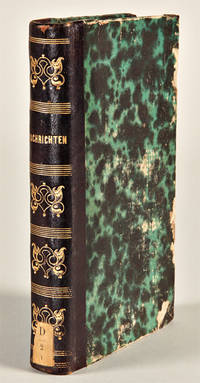
1773822371773. BAEGERT JACOB. Nachrichten von der Amerikanischen Halbinsel Californien. Mannheim: Churfurstl Hof-und Academie-Buchdruckerey 1773. 2nd issue. 12mo. 16 358pp. 2 engraved folding plates and 1 engraved folding map. Three-quarter tan morocco over contemporary paper-covered boards rebacked and recornered in period-style leather morocco spine label stamped in gilt. One leather tab in margin marking the folding map; stain marking where a tab once was at the folding plates. Very good or better. Howes B-29; Hill p. 12; Cowan p. 27; Sabin 4363; Bell B5; Streeter Sale 2442; Barrett 129; Wagner Spanish Southwest 157; Meadows Baja California 1; Graff 137; Pilling Proof Sheets 203. Second printing with some corrections after the first printing of the previous year of an early account of Lower California by the Jesuit Jacob Baegert. Baegert lived in Baja California from 1751 to 1768 and spent most of his time at the Mission of San Luis Gonzaga leaving after the expulsion of the Jesuits in 1767. He provides important details on the culture of the Native Americans of the region including the Pericues Guiacuras and Cochiemes. Wagner states that the German Jesuits were especially dissatisfied toward the end of the Jesuit regime in California and Baegert's bitterness is evident in his book: ".it was a land full of ferocious beasts and even more ferocious Indians the soil was poor the water undrinkable and there was no fuel to be had." The fine and important map was made by a fellow Jesuit Ferdinand Consak and is described by Streeter as "most helpful in giving the location of the many Jesuit missions in Lower California. It also shows the route along the west coast of Mexico followed by Baegert in going to California in 1751 and his route out in 1768 after the expulsion of the Jesuits." The two plates apparently not issued with all copies depict male and female Californian Native Americans. Rare. The National Union Catalogue locates only three copies of the second issue. unknown
1773WRCAM48817AMannheim: Churfurstl. Hof-und Academie-Buchdruckerey 1773. 16358pp. plus two engraved plates and folding map. Contemporary black half calf and marbled boards spine gilt. Extremities lightly worn small paper label at foot of spine. Small ink stamp on titlepage and verso of map. Minor scattered foxing. Very good. Second issue with some corrections after the first printing of the previous year of this rare account of Lower California by the German Jesuit Jacob Baegert. Baegert lived in Baja California for seventeen years 1751- 68 and spent most of his time at the Mission of San Luis Gonzaga leaving after the expulsion of the Jesuits in 1767. He provides some important details on the culture of the Indians of Baja California including the Pericues Guiacuras and Cochiemes. Wagner states that the German Jesuits were especially dissatisfied toward the end of the Jesuit regime in California and Baegert's bitterness is evident in his book: ".it was a land full of ferocious beasts and even more ferocious Indians the soil was poor the water undrinkable and there was no fuel to be had." The fine and important map was made by the fellow Jesuit Ferdinand Consak and is described by Streeter as "most helpful in giving the location of the many Jesuit missions in Lower California. It also shows the route along the west coast of Mexico followed by Baegert in going to California in 1751 and his route out in 1768 after the expulsion of the Jesuits." The top right corner of the territory present-day Arizona is labeled rather ominously "Los Apaches Barbari." The excellent plates which were apparently not issued with all copies depict male and female California Indians. The NUC locates only three copies of this second issue. <br> <br> A prime early account of Baja California with an important map and plates of the region. HOWES B29. HILL 46. COWAN p.27. SABIN 4363. BELL B5 1772 ed. STREETER SALE 2442. BARRETT 129. WAGNER SPANISH SOUTHWEST 157. MEADOWS BAJA CALIFORNIA 1. GRAFF 137 1772 ed. Churfurstl. Hof-und Academie-Buchdruckerey hardcover books
1773WRCAM48817Mannheim: Churfurstl. Hof-und Academie-Buchdruckerey 1773. 16358pp. plus two engraved plates and folding map. Contemporary patterned paper boards expertly rebacked and recornered to style preserving original leather label. Internally clean. Very good plus. Second issue with some corrections after the first printing of the previous year of this rare account of Lower California by the German Jesuit Jacob Baegert. Baegert lived in Baja California from 1751 to 1768 and spent most of his time at the Mission of San Luis Gonzaga leaving after the expulsion of the Jesuits in 1767. He provides some important details on the culture of the Indians of Baja California including the Pericues Guiacuras and Cochiemes. Wagner states that the German Jesuits were especially dissatisfied toward the end of the Jesuit regime in California and Baegert's bitterness is evident in his book: ".it was a land full of ferocious beasts and even more ferocious Indians the soil was poor the water undrinkable and there was no fuel to be had." The fine and important map was made by the fellow Jesuit Ferdinand Consak and is described by Streeter as "most helpful in giving the location of the many Jesuit missions in Lower California. It also shows the route along the west coast of Mexico followed by Baegert in going to California in 1751 and his route out in 1768 after the expulsion of the Jesuits." The top right corner of the territory present-day Arizona is labeled rather ominously "Los Apaches Barbari." The excellent plates which were apparently not issued with all copies depict male and female California Indians. The NUC locates only three copies of this second issue. <br> <br> A prime early account of Baja California with an important map and plates of the region. <br> <br> The Streeter copy sold to Dawson's Book Shop of Los Angeles for $150 in 1968. HOWES B29. HILL 46. COWAN p.27. SABIN 4363. BELL B5 1772 ed. STREETER SALE 2442. BARRETT 129. WAGNER SPANISH SOUTHWEST 157. MEADOWS BAJA CALIFORNIA 1. GRAFF 137 1772 ed. Churfurstl. Hof-und Academie-Buchdruckerey hardcover books
177328630Mannheim: Churfurstl. Hof-und Academie-Buchdruckerey 1773. 12mo. 16 358pp. Two engraved plates folding map. Contemporary patterned paper boards expertly rebacked and recornered to style preserving original leather label.<br/> <br/>Rare early account of Lower California by a German Jesuit.<br/> <br/>Second issue with some corrections after the first printing of the previous year. Baegert lived in Baja California for a period of seventeen years 1751-68 and spent most of his time at the Mission of San Luis Gonzaga leaving after the expulsion of the Jesuits in 1767. He provides some important details on the culture of the Indians of Baja California including the Pericues Guiacuras and Cochiemes. Wagner states that the German Jesuits were especially dissatisfied toward the end of the Jesuit regime in California and Baegert's bitterness is evident in his book: ".it was a land full of ferocious beasts and even more ferocious Indians the soil was poor the water undrinkable and there was no fuel to be had." The fine and important map was made by the fellow Jesuit Ferdinand Consak and is described by Streeter as "most helpful in giving the location of the many Jesuit missions in Lower California. It also shows the route along the west coast of Mexico followed by Baegert in going to California in 1751 and his route out in 1768 after the expulsion of the Jesuits." The top right corner of the territory present day Arizona is labeled rather ominously "Los Apaches Barbari." The excellent plates which were apparently not issued with all copies depict male and female California Indians. The NUC locates only three copies of this second issue. A prime early account of Baja California with an important map and plates of the region.<br/> <br/>Howes B29; Hill p.12; Cowan p.27; Sabin 4363; Bell B5; Streeter Sale 2442; Barrett 129; Wagner Spanish Southwest 157; Meadows Baja California 1; Graff 137; Pilling Proof Sheets 203. Churfurstl. Hof-und Academie-Buchdruckerey unknown books
17080000284TiguriZurich: Sumptibus authoris typis Gessnerianis 1708. <br/><br/>First unequivocal demonstration that images contained in rock were from prehistoric animals mainly fish. Sumptibus authoris, typis Gessnerianis unknown books
175232978-1197Zurich Heidegger and Comp. 1752. With engr. frontispiece in part 1 woodcut title-vignette repeated and 32 engravings of which 25 are foldings 1 with a over-slip including views town plans and maps by Joh. Meyer Joh. Melchior Füssli and J. G. Seiller. 4 268 pp. 4 leaves; 16 480 6 pp.; 16 336 pp. 4to. Contemp. half calf gilt lettering on spine. Engraved bookplate Joh. Kaspar Weyss owner's entry Hermann Werdmüller Elgg on inner from cover. Title-pages printed in red and black. Zurich Heidegger and Comp. 1752. The first edition was published in 1716-18. This present second edition of J. J. Scheuchzer's 1672-1733 scientific description of Switzerland is greatly enlarged and much rarer. The plates are mainly views and maps although there are also plates of geological profiles and samples scientific equipment and regional flora and fauna. From 1702 until 1711 Scheuchzer undertook yearly expeditions accompanied by friends and pupils. He was the first to systematically explore the Alps and became a pioneer in the fields of geology palaeontology and glaziology. The work offers historical details and together with Tschudi's chronicle it became one of the main sources for Schiller's "Wilhelm Tell". - A few tears in the folds of some maps and plates repaired. Otherwise a fine and clean copy. - Nissen ZBI 3655; Haller I 1047; Barth 17218. SCIENCE: GEOLOGY / MINERALOGY ; HELVETICA ; Zurich, Heidegger and Comp. unknown
1772WRCAM46993Mannheim: Churfurstl. Hof-und Academie-Buchdruckerey 1772. 163581pp. plus two engraved plates on one sheet and folding map. Small octavo. Modern half vellum and marbled boards spine gilt. A bit of light age toning an occasional light fox mark. Three small purple ink spots in lower portion of map. Near fine. First printing of this rare and important account of Lower California by the German Jesuit Jacob Baegert. Baegert lived in Baja California for seventeen years 1751-68 and spent most of his time at the Mission of San Luis Gonzaga leaving after the expulsion of the Jesuits in 1767. He provides some important details on the culture of the Indians of Baja California including the Pericues Guiacuras and Cochiemes. Part one is an overview of California its climate and products; part two describes the inhabitants; and the third part contains an account of the introduction of Christianity to California. Wagner states that the German Jesuits were especially dissatisfied toward the end of the Jesuit regime in California and Baegert's bitterness is evident in his book: ".it was a land full of ferocious beasts and even more ferocious Indians the soil was poor the water undrinkable and there was no fuel to be had." <br> <br> The fine and important map was made by fellow Jesuit Ferdinand Consak and is described by Streeter as "most helpful in giving the location of the many Jesuit missions in Lower California. It also shows the route along the west coast of Mexico followed by Baegert in going to California in 1751 and his route out in 1768 after the expulsion of the Jesuits." The top right corner of the territory present-day Arizona is labeled rather ominously "Los Apaches Barbari." The excellent plates which were apparently not issued with all copies depict male and female California Indians. <br> <br> A prime early account of Baja California with an important map and plates of the region. HOWES B29 "b." HILL 46. COWAN p.27. SABIN 4363. BELL B5. STREETER SALE 2442. BARRETT 129. WAGNER SPANISH SOUTHWEST 157. WAGNER NORTHWEST COAST pp.154-155 & item 631. MEADOWS BAJA CALIFORNIA 1. GRAFF 137. PILLING PROOF SHEETS 203. PALAU 358393. Churfurstl. Hof-und Academie-Buchdruckerey hardcover books
1729041022Leipzig Johann Heinrich Zedler/Register: Leipzig Bernhard Christoph Breitkopf 1729-1733/1740 1729. Hardcover. Very Good. Des Theuren Mannes Gottes D. Martin Luthers Sämtliche Theils von Ihm selbst Deutsch verfertigte theils aus dessen Lateinischen ins Deutsche übersetzte Schriften und Werke Welche aus allen vorhin Ausgegangenen Sammlungen zusammen getragen Und Anietzo in eine bequemere und nach denen Materien eingerichtete Ordnung gebracht nach denen ältesten und besten Exemplarien mit Fleisz übersehen und verbessert mit verschiedenen in denen Altenburgischen und andern Tomis ermangelnden Schrifften vermehret und mit nöthigen Vorberichten versehen. WITH in Volume XXII: M. Johann Jacob Greiffs Pastoris in Mölbis Vollständige Register über die XXII Leipziger Theile der gesammten Schriften Des seligen D. Martin Luthers Nebst einem auf die Wittenbergischen Jenischen 1740. 22 volumes in 22 bound vellum bindings. Marble endpapers. Interior very good pages evenly browned. Leipzig Johann Heinrich Zedler/Register: Leipzig, Bernhard Christoph Breitkopf 1729-1733/1740 hardcover
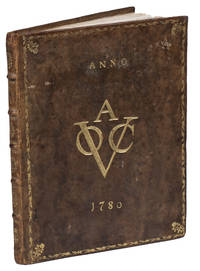
1780ABC_48891The Netherlands 1780. Late 18th-century gold-tooled brown mottled calf sewn on 5 supports bound by the so-called Acorn-and-Foliage Tool Bindery in Amsterdam Storm van Leeuwen. Both boards show the large gold-tooled monogram of the Amsterdam chamber of the VOC as a centre piece sandwiched between the gold-tooled date Anno 1780 all within a gold-tooled floral frame with floral corner pieces in the inside corners spine gold-tooled in six compartments red sprinkled edges. 4to ca. 19 x 15 cm. Manuscript in French written in black ink on paper in a neat cursive script by one hand. With chapter divisions numbered 39-75 and headings. The text is written upside down in relation to the binding. Most leaves show an identical watermark depicting a lion rampant on a pedestal with Vryheyt in a crowned ring with Pro Patria Eiusque Libertate and the letters CR below which is very close to Heawood 3149 date: 1753. Late 18th-century manuscript copy of a French childrens catechism by the Swiss theologian Jacob Vernet 1698-1789 bound in a remarkable late 18th-century binding originally produced for the Amsterdam Chamber of the Dutch East India Company VOC by the so-called Acorn-and-Foliage Tool Bindery which was active between ca. 1760 and ca. 1784 Storm van Leeuwen.It shows the large monogram of the Amsterdam Chamber of the VOC sandwiched between the date "Anno 1780" on both boards. These bindings were usually commissioned as gifts to persons important to the VOC often containing an almanac for the relevant year but possibly also produced as blank notebooks. The present work comprises chapters 39-49 and 58-75 of Vernet's work which form almost the second half of printed editions. The chapters included in the present work are complete and exactly follow the order of the printed text in the Geneva 1742 edition pp. 75-140 checked using a digital copy with a slightly different spelling and replacing some words. For unclear reasons chapters 50-57 dealing with the fourth through tenth commandment have not been copied and several leaves between the end of chapter 49 and the beginning of chapter 58 have been left blank.Vernets religious text was first published in 1741 under the title Instruction chrétienne ou catechisme familier; avec quelques prières a lusage des petits enfans . In 1742 a revised edition appeared with a slightly different title Instruction crhetienne ! ou catechisme familier. Avec quelques passages de lEcriture Sainte & quelques prières à lusage des petits enfans. Nouvelle edition. Revuë corrigée & augmentée. Both works were printed in Geneva for the Swiss bookseller Emanuel Du Villard Emmanuel Duvillard 1693-1776 and subsequently reprinted several more times until 1769. With the book block showing the remnants of 12 removed leaves probably already removed before the manuscript was finished. Both pastedowns partly detached an old annotation Ao. 44305 in black ink on the lower pastedown some foxing. Otherwise in good condition.l For the binding: Landwehr/Van der Krogt VOC pp. XXVII-XXVIII; Storm van Leeuwen I p. 175 p. 196 VOC A-stamp and pp. 612-616 the bindery; for Vernet's work: Google Books digital copy of the 1742 ed. title: Instruction crhetienne ! ou Catechisme familier; physical copy at the Biblioteca Universitaria di Torino; WorldCat 951908419 1 copy 1767 ed.; WorldCat 1040828976 1 copy 1769 ed. no author noted; for the watermark: Heawood 3149. hardcover
172910151Leipzig Johann Heinrich Zedler/Register: Leipzig Bernhard Christoph Breitkopf 1729-1733/1740. 12 bindings containing 22 volumes and a register 10 16 588 8 834 8 4 674 14 608 10 16 640 8 674 10 4 548 8 636 14 744 12 576 10 32 664 6 8 651 8 16 742 8 680 6 8 620 6 621 10 720 6 534 6 708 2 380 8 736 2 592 4 224 26 144 882 280 p. Contemporary Vellum Folio H. 345 x L. 225 x W. 7-85 cm. -the complete set is ca. 90 cm. wide- A single wormhole in the bottom margin of volume 13 top of the back covers of volume 19/20 21/22 and the register lack a small piece of vellum the text blocks are slightly browned at some places but not nearly as browned as usual page 451/452 of volume 9 is present a second time in volume 8 all 22 volumes are illustrated with a large engraved head-piece depicting Luther at the beginning of the main text. Firm and complete set of the works of Martin Luther 1484-1546. Included is a useful register which was specially made for this edition by Johann Jacob Greiff 1699-1767. The set is uniformly bound in firm vellum bindings which are in very good condition and surprisingly clean. Altogether a beautiful set of the life's work of the renowned Martin Luther. Leipzig Johann Heinrich Zedler/Register: Leipzig, Bernhard Christoph Breitkopf hardcover
174456102Halle Johann Justinus Gebauer. 1744-1793 4to. Bound in 65 Theil 48 in 3 volumes nice contemporary full calf with raised bands and richly gilt spines. A few volumes have some wear to upper spines. With 58 frontispices 124 engraved plates and 103 engraved folded maps. Internally nice and clean. <br/><br/><em>Brunet III: p. 233 - Graesse III: 309 Both bibliographies erroneously state that the first part was printed in 1746. </em> hardcover