22 résultats
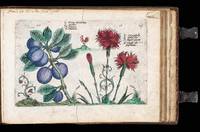
159416352Amsterdam 1594-1635. Oblong quarto 260 by 170mm 176 engraved plates numbered in an early hand 1-46 48-54 57-69 80-189 including 8 title-pages all with fine contemporary hand-colour in full occasionally heightened in silver two plates torn with slight loss to image and with early repairs six plates with slight worming to margins and three plates trimmed to neatline and laid down on old paper front free endpaper with later ownership inscription; mid-seventeenth century English red morocco elaborately gilt silver clasps and catches. A magnificent album of natural history engravings collected and bound for an English patron containing two complete suites of plates: Hoefnagel's 'Diversæ insectarum volatilium'; and Woutneel's 'Cognoscite lilia agri quomodo crescent' often bound as the fifth part 'Altera Pars' to the Crispin de Passes' 'Hortus Floridus' - the "most ambitions if not the first early effort to employ Continental resources to produce a set of botanical engravings designed for the English market" Gerard; and nine near complete or partial suites including an early issue of tulip plates from the 'Hortus Floridus'. All plates have been numbered consecutively in manuscript at the time of binding to a rudimentary scientific rubric: insects first then aquatic animals quadrupeds birds and botanicals last but not least. As a result some plates are bound with like subject rather than with their original publications. The album represents the work of some of the most famous natural history artists of the late sixteenth and early seventeenth centuries. The majority are published by Claes Jansz Visscher 1587-1652 the most important publisher of prints and maps in Amsterdam of his day. Recorded as an engraver in Amsterdam as early as 1608 he built a distinctive inventory of prints after the designs of Flemish artists which proved extremely popular and formed the basis of Visscher's early success as a publisher. INSECTS HOEFNAGEL Jacob. Diversæ insectarum volatilium: icones ad vivum accuratissmè depictæ per celeberrimum pictorem D.I. Hoefnagel typisq. Mandatae a Nicolao Ioannis Visscher anno 1630 Engraved title-page complete with 15 numbered plates of insects misbound including some upside-down bound with plates 11 and 12 from 'Volatilium varii generis effigies' after Nicolaes de Bruyn all with contemporary hand-colour heightened in silver consecutively numbered in an early hand 1-18. North German insects with the exception of the tarantula and scorpion. Engraved by Visscher after those by Jacob Hoefnagel 1573-1632 court painter for Emperor Rudolph from 1607 son of Joris Hoefnagel whose drawings of animals flowers and insects he engraved and published as the 'Archetypa Studiaque Patris Georgii Hoefnagelii' 1592. He also engraved plates for Braun and Hogenburg's 'Civitates Orbis Terrarum' 1512 - 1617. Ebert 798; Hagen I 371f; Hollstein IX 46 1-16; Nissen 1955; Horn-Schenkl. 10473. AQUATIC ANIMALS BRUYN Nicolaes de. Libelius sic varia genera piscium compectens pictoribus sculptoribus etc mire utilis et necessaries Nicolaes de Bruyn inventor Claes Ianss. Visscher excudit. interspersed with: COLLAERT Adrian. Piscium vivae icones inventae ab Adrian Collardo et excusae a Nicolao Ioannis Visscher anno 1634 Engraved allegorical title-page for 'Libillus' 11 of 12 without the sea-horse plates of aquatic animals and sea-monsters; 19 of 20 engraved plates of aquatic animals numbered in an early hand 19-44 followed by the allegorical title-page for 'Piscium' numbered 45 all with contemporary hand-colour all annotated in an early hand with common names in English. An early state of the title-page for de Bruyn's 'Libellus' before correction. Nicolaes de Bruyn 1571-1656 is best known for his large engraved landscapes "after designs by artists such as Gillis van Coninxloo and David Vinckboons from around 1600 his pupil and brother-in-law was Jan van Londerseel" Hollstein online A near complete suite of plates from a later edition of Collaert's famous work on fish first published in about 1598 in which the original engravings included elaborate landscape backgrounds. For his version Claes Visscher has incorporated his harpoon monogram into the dramatic title-page. Collaert 1560-1618 married engraver and publisher Philippe Galle. WEYER Gabriel. Monstra marina dat is verscheydon zee-monsters ge inventeert door Gabriel Weyer gedrucht by Claes Ianss. Visscher a.o 1634 Engraved allegorical title-page 7 of 12 plates of mermaids and mermen all with contemporary hand-colour numbered in an early hand 46 48-54. Berliner 'Ornamentstichkatalog' 4292 I; Nagler XXIV S. 220 I QUADRUPEDS BOLSWERT Boetius Adams after Adrien BLOEMAERT. Natus Dei solius ad servitium cinctis homo per hund creates imperat. Volentibus promisq.e; ut huic puessulo blande Leo Jouisq.e ales submittitur. ABloemaert invent: BA. Bolsuerd: sculp C Visscher excudebat 1632 G. Ryckius interspersed with: BRUYN Nicolaes de. Animalium quadrupedum varii generis effigies Allerley viervuessiger thier eigentliche abbildung den goltschmieden dienlich 1594. 8 of 14 without plates 1 5 and 11 plates 12 13 14 bound below with 'Volatilium' engraved plates of pastoral scenes from 'Natus'; 11 of 12 bound without the title-page engraved plates of animals from 'Animalium' all with contemporary hand-colour numbered in an early hand 57-69 and 80-85 allegorical title-page for 'Natus' numbered 86 annotated with the common names in English. The artistic Bolswert and Bloemaert families of Utrecht seem to have been very close frequently working together. Bloemaert met a grisly death at the hands of one of his students in 1666. 'Animalium' cf Hollstein 303-310; 'Natus' cf Hollstein 406-419 BIRDS BRUYN Nicolaes de. Volatilium varii generis effigies in tyronum praecipue vero aurisabrorum gratiam aeri incisa Claes Ianss. Visscher exu. NB. interspersed with: COLLAERT Adrian. Avium vivae icones Adriano Collardo inventore et excusum apud C Visscher anno 1625. 9 of 13 without plate 13 and plates 11 and 12 bound with 'Diversæ insectarum volatilium' above engraved plates of birds from 'Volatilium'; 12 of 18 without plates 4 9 14 15 18 plate 1 title-page bound separately below engraved plates of birds from 'Avium'; plates 12 13 and 14 from 'Natus' see above all with contemporary hand-colour numbered in an early hand 87-110 allegorical title-page for 'Volatilium' numbered "1" in the plate in manuscript "iii" ie 111 and with "Thretti" in the lower margin. BOTANICAL PASSE Crispin van de the elder and younger. Hortus Floridus Utrecht 1614 12 engraved plates of tulips numbered 32 43-53 all with early hand-colour numbered in an early hand 112-123 one ascribed to Willem de Pass in the plate. An early issue with no text on verso and captions only in Latin of a selection of tulip plates from "the most popular florilegium ever published" 'An Oak Spring Flora'. The work was first issued in a number of states between 1614 and 1617 and is often hailed as "the most important of early examples of botanical illustration" Gerard. It was issued in four sections on for each season with text in Latin and subsequently a selection of vernacular languages. 'An Oak Spring Flora' 12 WOUTNEEL Hans; and possibly Crispin van de PASSE the elder. Cognoscite lilia agri quomodo crescent non laborant neque nent: attamen dico vobis ne salomonem quidem in universa Gloria sua sic amic tum fuisse.ut unum ex his. Matthe: 6 Cap. Formulis Crispiam Passaei et Joannis Waldnelij 1603-1608 Allegorical title-page 61 engraved plates captions in Latin French English and Dutch all with early hand-colour numbered in manuscript 124-185 annotated throughout in two early hands with the months in which they flower and their medicinal properties in the "first" "second" and "third degree" misbound. The "most ambitions if not the first early effort to employ Continental resources to produce a set of botanical engravings designed for the English market" Gerard. Complete a suite of 61 plates depicting 120 plants published as a separate work in its own right but often issued as the fifth part of the de Passe's 'Hortus Floridus' when it appears with an additional letterpress title-page as the 'Altera Pars'. An early issue with no text on verso. "Traditionally the 'Alera Pars' has been considered as an aesthetically inferior appendage to the 'Hortus Floridus' and has received little attention from historians of prints or botanical illustration. However the presence on the title-page of the imprint of Hands Woutneel "Joannis Waldelij" an Antwerp native who was a bookseller and publisher in London from 1576 until his death sometime between 1603 and 1608 implies that the 'Altera pars' had a significant English component. As such it stands as an early example of Anglo-Continental print publishing collaboration. Prior to publication of the 'Altera Pars' the demand in England for botanical illustrations had been met primarily by relatively crude highly schematic collections of woodcuts such as those in Jacques LeMoyne de Morgue's 'La Clef des Champs' 1586 and John Norton's publication of Gerard's 'Herball' 1597. The 'Altera Pars' with its more naturalistic depictions of 120 plants set a new standard and served as the primary source of botanical images for English engravers and publishers from the late years of the reign of James I through the Restoration' Gerard. Hans Woutneel first appears in London on being admitted to the Stationers Company in 1579-80. Cartographer Abraham Ortelius mentions him frequently in his correspondence with his nephew Jacob Cole Gerard and Woutneel appears to have worked as Christopher Plantin's London agent. de Belder 272; Gerard 'Woutneel de Passe and the Anglo-Netherlandish Print Trade' 1996; Hunt 199; Nissen BBI 1494 Avium vivae icons Adriano Collardo inventore et excusum apud C Visscher anno 1625 Engraved allegorical title-page numbered 186 see above for plates. Untitled composite natural history. Claes Janss Visscher excudibat A.o 1625 A suite of 12 numbered engraved plates of composite natural history subjects all with early hand-colour numbered in manuscript 187-198 11 with the joint imprint of Assuerus van Londerseel and Claes Visscher. In the style of Hoefnagel's 'Archetypa Studiaque ' 1592 this is a very scarce suite of plates with only one uncoloured set known in the British Library.
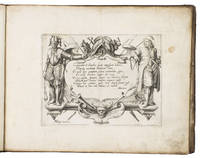
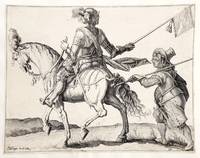
1599ABC_48581Leiden 1599. Oblong folio 25 x 32 cm. workshop of Jacob II de Gheyn Contemporary gold-tooled calf with the large gold-tooled coat-of-arms of the Stuart Princes of Wales Stuart Prince of Wales Henry Frederick 1594-1612 within a gold- and blind-tooled double fillet frame on both boards with small gold-tooled flowers on the spine gold-tooled board edges. With 22 numbered engraved plates varying sizes ca. 15.4-16 x 19.7 x 21.5 cm including the engraved title page. The illustrations are designed by De Gheyn and possibly engraved by him or by Zacharias Dolendo. 22 engraved plates. Very rare first edition of this magnificent series of cavalrymen and lansquentes in various positions bound for Henry Frederick Prince of Wales 1598-1612 with his coat-of-arms on the boards. All plates are signed by Jacob II de Gheyn "IDGheyn in. et ex." and engraved either by De Gheyn himself or by Zacharias Dolendo after De Gheyn. The famous designer engraver publisher and painter Jacob II de Gheyn born in Antwerp in 1565 was an apprentice of Hendrick Goltzius in Haarlem between 1585 and 1587. In 1596 he moved to Leiden where he lived till 1602 working together with many of the professors of the newly founded University amongst whom the "prodigy" Hugo de Groot 1583-1645 who became world famous as a lawyer and humanist. De Groot supplied the eight lines of poetry for the frontispiece of The Riding School engraved within an elaborate border full of military symbols such as a knight in armour holding a horse bridle on the left and a training master to the right a stirrup a currycomb weapons a skull with a laurel wreath symbolising "Death and Glory" and smoking trumpets. During these years in Leiden De Gheyn worked mainly as a designer and publisher leaving most of the engraving to apprentices especially to Zacharias Dolendo 1561-1601. From ca. 1600 till his death in 1629 De Gheyn was active as a painter draughtsman and publisher in The Hague.The series of 22 plates of The Riding School which illustrate the handling of the various arms used by cavalrymen was in all likelihood commissioned by Prince Maurice of Orange 1567-1625 and Count Johann II of Nassau-Siegen 1561-1623 in 1597 or 1598 as the counterpart to their commission of the 117 plates devoted to the infantry in the Wapenhandelinghe van roers musquetten ende spiessen New Hollstein The De Gheyn Family vol. 2 pp. 159-207 nos. 340-457 which was published eventually in 1607 after a deliberate delay to prevent the Spanish enemy from taking advantage of the information it contained.The present cavalry series is directly related to Jos Amman's model book Artliche und Kunstreiche Figuren zu der Reuttery 1584 containing plates of free standing single riders in various positions the first representations of such riders in Germany.The cavalry series was published four times: our edition of 1599 subsequently by Claes Jansz. Visscher in Amsterdam in 1640 then by Clement de Jonghe in Amsterdam after 1652 and lastly by Frederik de Wit in Amsterdam before 1706.The present work ws apparently bound for Henry Frederick Prince of Wales 1598-1612 as his coat-of-arms is stamped in gold on both boards. Henry Frederick was the eldest son of King James VI of Scotland who was also King James I of England who died before succeeding his father leaving the throne for his younger brother: King Charles I of England. Henry Frederick's coat-of-arms is that of the kingdom and thus the same as his father since ascending the English throne and even that of his brother King Charles I. However it is differenced by a label of three points argent at the top of the shield also visible in the armorial stamp on the present binding to differentiate between father King James I and the heir apparent Henry Frederick before his premature death. Because of a 19th-century inscription on the front pastedown we know that a century and a half later this work was part of the collection of Richard Cosway 1742-1822 one of the most fashionable miniaturists of England and a collector of drawings and prints. This collection was sold at auction by Georg Stanley in London between 14 and 21 February 1822 The Cosway Collection. Catalogue of the very numberous collection. London 1822; lot 113. In that same inscription we are told who the next owner of this splendidly bound collection of engravings is namely a certain Lord Harrington. This most likely refers to Charles Stanhope 4th Earl of Harrington 1780-1851 who was a Gentleman of the Bedchamber to both King George III and King George IV between 1812 and 1820.With a small engraved book plate showing a CR monogram of Richard Cosway and a 19th-century inscription "Bought at Mr Cosway's sale 1822 for Lord Harrington" probably referring to Charles Stanhope 4th Earl of Harrington both on the front paste-down. The binding has been re-backed with the original back strip laid down and the leather on the boards is somewhat scratched and rubbed but still leaving the coat-of-arms centrepiece quite clear. All plates show a vertical fold line in the middle the leaves are slightly dust soiled and the upper outer corner of the leaves are somewhat water stained without affecting the plates otherwise the engravings remain fine and clean. Overall in very good condition. The complete collection of De Gheyn's "Riding School" plates in a royal binding.l Biblioth. Hippologica Johan Dejager 2014 pp. 780-781 no. 011; Hollstein VII 263-284; New Hollstein The De Gheyn Family vol. 2 190-211 descriptions and illustrations of all plates; Polman De ruiterserie van Jacob de Gheyn 1998; Rechteren Altena Jacques de Gheyn Three generations 1983 vol. 1 p. 54 vol. 2 pp. 62-64 nos. 200-321; for the coat-of-arms on the binding see: UofT - British Armorial Bindings - Henry Frederick Prince of Wales 1594-1612 Stamp 01 https://armorial.library.utoronto.ca/stamps/IHEN004_s01. ABE CAT Art History hardcover
1590ABC_49312Frankfurt 1590. 8vo. Andreas Wechel heirs of Claude de Marne and Johann Aubry Near contemporary overlapping vellum with the manuscript title on the spine remnants of ties red edges. With a woodcut vignette on the title page and the final leaf a woodcut decorated initial and a woodcut head- and tailpiece. 1 1 blank 12 2 blank 565 1 1 blank 1 pp. Rare first edition of the Latin translation of a very influential astronomical work which was in large part responsible for spreading Ptolemaic astronomy in medieval and early modern Europe. Written in the 9th century it was a summary of Ptolemy's Amalgest but circulated in Europe long before the Amalgest itself was first translated into Latin 1496. The work was referenced by numerous medieval authors and it is known that Dante Alighieri also used it for two of his works Vita Nuovo and Convivio. Despite its importance however the present edition is quite scarce as we have only been able to trace one other copy in sales records of the past 100 years.Ahmad ibn Mohammad ibn Kathi¯r al-Farghani also known as Alfraganus in the West ca. 800-ca. 861 was one of the astronomer-astrologers employed by the Abbasid caliph Al-Ma'mun r. 813-833 in Baghdad. He composed several works on astronomy and astronomical equipment that were widely distributed in Arabic and Latin for multiple centuries. The present work however is his best-known and most influential one. It was known in Arabic under various titles including Kita¯b jawa¯mi' 'ilm al-nuju¯m wa usu¯l al-haraka¯t al-sama¯wi¯ya which translates to "Book of generalities of astronomy and bases of celestial motions". It was written between 833 and 857 and is a summary of Ptolemy's Amalgest but with corrected calculations that were based on the most up-to-date information of the time. Like the Amalgest Al-Farghani's work describes the movements of the sun moon and planets their distance to earth solar and lunar eclipses a calculation of the dimensions of the earth descriptions of the different climates on earth and zodiac signs. Al-Farghani also added a chapter with comparisons between different calendar systems. According to the Dictionary of Scientific Biography the work "gives a comprehensive account of Ptolemaic astronomy that is entirely descriptive and nonmathematical. These features together with the admirably clear and well-organized manner of presentation must have been responsible for the popularity this book enjoyed." The work was translated into Latin multiple times including by Johannes Hispalensis John of Seville fl. mid-12th century Gherardo da Cremona ca. 1114-87 and Jacob Golius 1596-1667. It was also translated into Hebrew by Jacob Anatoli 1194-1256. The present Latin translation is by German orientalist and humanist Jacob Christmann 1554-1613 and was based on Anatoli's Hebrew translation. A second edition appeared in 1618. In the appendix Chistmann mentions his difficulties in editing it while lacking suitable Arabic versions. His lament about the difficulty of printing a scientific work that predates his era by more than 700 years is a telling detail that highlights the influence that scientific texts produced in the Islamic world had on early modern Europe.With a crossed out ownership annotation on the recto of the first flyleaf an annotation "f=10=" on the verso of the first flyleaf a calculation in an 18th-century hand on page 25 and another annotation in a different 18th-century hand on pp. 531 and 565 "de el Conde de Storrepalma". The edges and corners of the boards are slightly scuffed and the vellum is slightly stained with an imprint of a label on the spine a green ink scribble and partially rubbed off writing in blue ink on the front board. The work is somewhat browned throughout with a water stain in the outer margin of the first 30 pages slightly affecting the text the head margin has been cut slightly short without affecting the text. Otherwise in good condition.l De la Lande Bibliographie astronomique p. 121; DSB 4 p. 541-545; Houzeau & Lancaster 1115; USTC 676537; VD16 A 1203; Zinner 3368. ABE CAT Astronomy & Cosmography hardcover
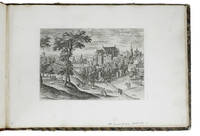
1575ABC_46067Antwerp: Hans van Luyck 1575. Modern red half cloth marbled sides. Oblong folio album 24.5 x 35.5 cm. Series of 24 engravings plate size ca. 20 x 14 cm with views of landscapes around Brussels by Hans I Collaert possibly after Hans Bol or Jacob Grimmer each with a caption in the plate plates 8 and 20 also with Van Luyck and Collaert's monograms "H.V.L.EXcudit" and "H.C.Fecit". Trimmed down to the plate edge and mounted on album leaves numbered in pencil on the album leaves next to the engravings. Album with the complete series of Collaert's views around Brussels here in its first unnumbered state published by Hans van Luyck in Antwerp. Hans I Collaert ca. 1525/30 - 1585 was a painter-draughtsman who founded the influential Collaert dynasty of engravers and print publishers. The views show villages castles and abbeys in the vicinity of Brussels engraved in a very naturalistic way. The series includes a view of the cloister of Zevenborren south of Sint-Genesius-Rode views of Schaarbeek Elsene Etterbeek Stal Eggevoort and Bosvoorde and views of the some castles including those of Brussels Coensborg south of Laken and Carloo. Some references attribute the drawing of the views to Hans Bol because of an inscription added to the first plate of the later Visscher edition but the "related drawings are not consistent with Bol's style" New Hollstein. Others name Jacob Grimmer as an alternative candidate for the artist who drew the views.With a 20th-century manuscript inscription on the first free endleaf mistakenly identifying the series as the second state published by Visscher which is however numbered in the plates in contrast to the present series in an unnumbered first state. Binding slightly worn around the edges some slight marginal foxing stains browning and soiling but overall a beautiful album complete and therefore rare with all the plates of Collaert's views around Brussels here in its first state.l Hollstein IV 149-172; New Hollstein The Collaert dynasty V 1229-1252; cf. New Hollstein The Collaert dynasty I pp. xlix-liii. Hans van Luyck, hardcover
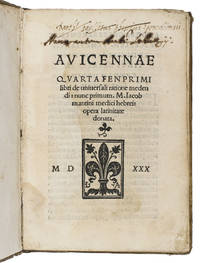
1530ABC_47222colophon: Venice: Lucantonio Giunti 1530. Later vellum with more recent end leaves. 8vo. With Giunti's printer's device on the title page a Florentine lily with the L. A. initials. First edition of Jacob Mantino's translation into Latin of the fourth part of the first book of Ibn Sina's Canon of Medicine original title: al-Qanun fi at-Tibb divided into 31 chapters. Mantino dedicated it to the Doge of the Venetian Republic Andrea Gritti 1455-1538.Jacob Mantino 1490-1549 was a Jewish doctor rabbi and philosopher. He was born in Spain but he his family and the Jewish community in Tortosa were forced to flee after refusing catholic baptism as decreed by the catholic King Ferdinand II and Queen Isabella I of Spain. Mantino grew up in Italy and studied philosophy and medicine at the universities of Bologna and Padua. Most of his adult life was spent being a doctor to the pope and other prominent members of society like cardinals bishops and ambassadors in Bologna Verona Venice and Rome. He was also involved in the religious controversy over Henry VIII's divorce from Catharine of Aragon. In 1549 just before his death he moved to Damascus as ambassador of Venice. Mantino's intellectual production focused on the translation of scientific works from Hebrew and Arabic into Latin especially medical and philosophical treatises by leading authors of the medieval period including Moses ben Maimon Maimonides Ibn Rushd Averroes and Ibn Sina Avicenna.The present work was printed by one of the most successful and important late fifteenth and early sixteenth century Italian publishers Lucantonio Giunti 1457-1538. He was originally from Florence but was active in Venice from 1489. He was a member of the Giunti family of printers publishers and booksellers who were active throughout Europe.With owner's inscriptions on the front and back paste-downs and on the title-page and some marginal annotations in brown ink. The paste-downs are partially covered by the newer slightly foxed end leaves. The binding is somewhat stained light water staining to the first half of the work small restored tears in the outer margin of leaves d1 and d2 without affecting the text. Otherwise in good condition.l Catalogue of Sixteenth Century printed books in the National Library of Medicine 397; EDIT16 CNCE 3543; USTC 811590; WorldCat 13827163 320734580 634588783 1150715666. Lucantonio Giunti, hardcover
156550854Frankfurt a. M. 1565. auff den Linien und Ziffern sampt der Welschen Practic und allerley vortheilen neben der extraction Radicum und von den Proportionen mit vilen lustigen Fragen und Auffgaben.Drei Teile Erste vollständige Ausgabe aller drei Teile Teil 1 war bereits 1557 erschienen Vorsatz u. Titelbl. M.Wasserr ansonsten sehr guter Zustand im Originaleinband mit Renaissance-Bildprägung.Besitzereintrag a.Vors.von Lorentz Wietzell von Zutz Lurainz Wietzel Zuoz anno 1577 Feyerabend & Hüter 8°. Ldr.m.Prg. Naturwissenschaften unknown
156564830Frankfurt a. M., Georg Rab für Sigmund Feyerabend u. Simon Hüter, 1565. 4°. Titel in Rot u. Schwarz m. großer Holzschn.-Vignette. Mit zahlr. schemat. Holzschn.-Illustrationen im Text u. großer Holzschn.-Druckermarke am letzten Blatt. 12 nn., 349 num., 1 nn. Bll., Flex. Pgmt. d. Zt. m. durchzogenen Bünden, spanischen Kanten u. handschriftl. Deckeltitel.
1528870011528. MANLIUS DEL BOSCO Johannes Jacobus et al. LUMINARE MAIUS. Opus eximium quod Luminare Maius dicitur Medicis et Aromatariis perquam necessarium A Greater Lamp for Physicians and Apothecaries. Lyons: Printed by Antonio Blanchard for Louis Martin 1528. Quarto. 1-8 I-LXILXII -LXIV; I-XXVI; I-XXX I ff. This volume contains three separate works: The first Luminare Maius A Greater Lamp for Physicians by J.J Manlius del Bosco contains 11 sections on concocting different forms of medication: pills unguents plasters oils etc. 8 LXIV ff. It was first published in Milan 1494. The second Lumen Apothecariorum A Light for Apothecaries by Quiricus de Augustis of Tortona XXVI ff. intended for the use of pharmacists was first published in Turin in 1492. The third Thesaurus Aromaticum by Paul Suardo. I-XXXI ff. Originally printed in Milan in 1496 it lists medical substances alphabetically. All three Italian treatises from the 1490s are conveniently gathered together and beautifully printed here in one volume. Title-page in red and black with ornamental woodcut border and framed printer's device of two unicorns. Woodcut capital showing Saint Lawrence and foliate woodcut capitals throughout. Internally fine in 19th Century half-morocco showing only a few spots of rubbing. Wellcome I 4017. Rare. unknown books
15801011220071Georg Rabe for Sigismund Feyerabend 1580 1580. Hardcover. Good. Quarto. Reprint of 2nd edition of 1559. Bound contemporary vellum. Front stamped "AVB" and "1587." Numerous woodcut illustrations. 6 100 leaves; lacks A3 with large woodcut of childbirth scene on recto repeated on G4v. Restored binding. Cracking and chip loss to vellum boards. Some foxing. Stains to margins. Extensive early notation and marginalia. Three small worming holes in blank outer margins throughout do not affect text or engravings. Opening leaves frayed restored along edges. Front free endpaper lacking. Lawrence I. Feinberg copy. Adams R 868; Hellman Early Obstetrical Books 31; Waller 8302; VD16 R3583; Durling 3982; vgl. Garrison-Morton 6141; Hagelin Womans Booke 19; Bird 2101<br><br> Georg Rabe for Sigismund Feyerabend, 1580 hardcover
15163256Oppenheim Germany 1516. Paper binding. paper cover- 36 pp good condition - https://librarywwuedu/node/17464 unknown
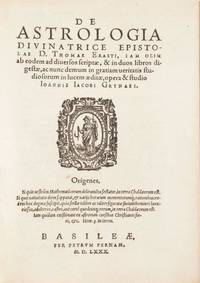
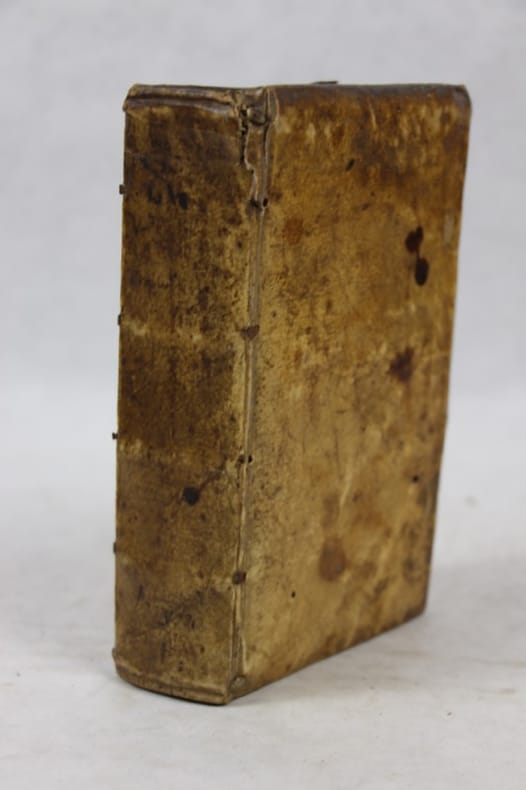
1580LLV2606Basle:: Peter Perna 1580 1572. 1580. Two volumes bound as one. Quarto. Pagination: 8 236 12; 16 267 20 pp. including blanks. Two printer's devices on title pages full-page portrait of Paracelsus on N3r of second work decorated initials; minor stains. Contemporary limp vellum yapp fore-edge covers lightly curled one tie of four. Title in old hand on bottom edge old owner's seven-line ink note on front free end paper on "Diogenes" minor marginal dampstain on two leaves otherwise a fresh clean crisp copy. WRITTEN ON THE BOTTOM EDGE OF THE VOLUME: "De astrolog: divinatrice. Erasti.Disputation. / De medicina Paracelsi.Pars I." VERY RARE. First edition. THOMAS ERASTUS' DISTPUTATIONS CONCERNING ASTROLOGY AND THE NEW MEDICINE OF PARACELSUS. First Editions. bound with: DISPUTATIONUM DE MEDICINA NOVA PHILIPPI PARACELSI PARS PRIMA: IN QUA QUAE DE REMEDIIS SUPERSTITIOSIS & MAGICIS CURATIONIBUS ILLE PRODIDIT PRAECIPUE EXAMINANTUR. . . This is one of two books written by Erastus concerning divining astrology especially directed to certain persons named in the letter of Erastus in this case the primary being Christopher Stathmion whose last letter is dated from 1559. A second part was issued for the DE MEDICINA not present here. Thomas Erastus 1524-1583 Swiss Protestant theologian a physician whose original name was Luber Lieber or Liebler. As a follower of Huldreich Zwingli he supported the Swiss leader's view of the Lord's Supper at the conferences of Heidelberg 1560 and Maulbronn 1564 and in a book 1565. In spite of his vigorous opposition to the Calvinist doctrine Presbyterian Church discipline and government were introduced in Heidelberg in 1570. In 1574 Erastus was excommunicated by the Heidelberg consistory but a year later the edict was removed. . .The term Erastianism has come to represent approval of the dominance of civil authority in all punitive measures and by extension complete dominance of the state over the church though Erastus himself never held such an extreme view. Erastianism achieved its definitive expression in the Leviathan of Thomas Hobbes. / ". . .On his return from Italy to Germany Erastus was shocked at the extent to which men were addicted to vain predictions of astrologers and at the astrological restrictions under which medical practice labored. . .as an antidote to the superstition poisoning Germany he had made a translation from the Italian into German of the book of Savonarola against astrologers. This aroused some opposition among German astrologers and the aforesaid physician of Coburg Chrsitopher Stathmion had contended that Savonarola's work did not apply to divination or astrology which was based on natural causes. . .He adopts the usual theological position that divination is the work of demons. He joins Pico and Savonarola in their wholesale onslaught upon astrology to which he would appear to leave almost no field of activity. . .In the first volume of his Disputations Concerning the New Medicine of Paracelsus . . . Erastus has more to say against astrology. It holds first place in magic of which he utterly disapproves and is the offscouring of all impious arts. . .Erastus denied the possibility of natural magic. Nor would he admit that the Magi of ancient Persia had been priests or sages. Their magic too he regarded as diabolical. He showed himself even more incensed at Pomponnazzi for his favorable attitude toward magic in De incantationibus than at Paracelsus. . . Astrology he condemned as the foundation of all other magic arts. He censured Paracelsus for speaking approvingly of augury prodigies geomancy pyromancy and necromancy and for condoning the receiving from demons' remedies to be employed for good ends." Thorndike V5 pp. 652-660 FURTHER: Regarding the second tract the Disputations "concerning and against the new Paracelsan medicine composed by Erastus illustrate on the one hand his opposition to the medical views of Paracelsus and his followers and on the other hand his opposition to various occult arts and sciences most of which he accuses Paracelsus of countenancing." "Erastus commends Paracelsus for one thing namely his careful preparation of medicines and revival of distillation." p. 657. REFERENCES: Astrologiae: VD 16 E3669; Adams E905 & E910; Cantamessa I1401; DSB IV388; Durling/NLM 1383; Antoine Faivre & Jacob Needleman Modern esoteric spirituality London 1992 p. 181; Houzeau/Lancaster 4932; Herbert Jaumann Bio-bibliographisches Repertorium p.253; Rosenthal Magica 3397; Medicina: VD 16 E3679; Sudhoff 247; Wellcome I 2057; Waller 2778. Peter Perna, 1580, 1572. hardcover
1512049662Leipzig: Melchior Lotter for Heinrich Kuna 1512. First Edition. Hardcover Quarter Leather. Good Condition. Later quarter leather over decorative paper. Worn at corners leather torn at base of spine rubbed but sound. Rochester Theological Seminary library label inside cover dtae written on front blank. Pervasive tide mark t lower 1/3 - 1/2 of the volume not affecting legibility. Complete with the second leaf blank save for a 10 line defense of the Catholic Church 170 leaves.<br /> <br /> Ziegler was a peripatetic cartographer and theologican from Bavaria. It seems likely that this collection of attacks on the Bohemian Brethren the Unitas Fratrum was meant to curry favor with Pope Leon X - and it apparently worked because he spent years at court beginning not long after. The attacks on the brethren echoed the attacks deployed by Malleus Maleficarum author Heinrich Kramer's esp. "Excusatio fratrum valdensium contra binas litteras doctoris Augustini" and their centrally misogynistic framing. Ziegler interestingly converted to Protestantism in 1532 and had most of his works entered into the index of prohibited books. His humanist sympathies are evidenced by the Roman typeface chosen here unusual at the time for a theological book printed in Leipzig.<br /> <br /> Ca. 12 copies in OCLC very rare in commerce. <br /> <br /> Colophon: Generosus Dominus Heinricus Kuna de Chunstat sua pecunia impressoriam officinam redemit. Melchiorque Loterus ciuis Lypsensis excussit. Anno M.D.XII<br /> <br /> see: "Witches Saints and Heretics<br /> Heinrich Kramer’s Ties with Italian Women Mystics" by Tamar Herzig 2006 Size: Octavo 8vo. Quantity Available: 1. Shipped Weight: Under 1 kilo. Category: Religion & Theology; Antiquarian & Rare. Inventory No: 049662. Melchior Lotter for Heinrich Kuna hardcover
160012709Ingolstadt, Sartorius, 1600 1 vol. in-8. [8]ff, 376pp. Peau de truie estampée à froid sur ais de bois, large décor alternant rinceaux et portraits en médaillon, filets et fleurons au centre, fermoirs d'attache.
159933487Ingolstadii: Ex typographia Adami Sartorii 1599. 1st edition Adams G-1239; VD16 G-3221. Period full vellum binding with 2 of 4 cloth ties. Red edgestain. General wear & soiling to binding. Unobtrusive stain to lower half of textblock with old paper reinforcement to lower portion of title leaf. Early signature to t.p. inked out. Tear to 8 no loss. Paper/printing defect G4r. Withal a solid VG copy. 20 541 3 p. Errata p. 542. Final 2 pages blank. Printer's device to t.p. Head- tailpieces. 8vo: 8 22 A - 2L8. 6-1/4" x 4" 15.8 cm x 10.4 cm. <br/><br/>This Gretser's important Apologia on Life of Ignatius Loyola one of the most fascinating hagiographies ever written on the Jesuit order founder describing how he Loyola would drive away Satan who appeared in "a shining and glistening form" with his staff like a "troublesome cur." It also describes Loyola's great humility living amongst the poor. Gretser's Apologia is a massive defence of the great saint filled with reference to other great saints including early Orthodox fathers such as Gregory of Nazianzenus Latin fathers like St. Augustine and Jerome as well as English Catholic martyrs killed during Henry VIII's Reformation. Gretser himself then as now was/is regarded as one of the most prominent Jesuit theologians. "He was recognized as one of the best controversialists of his time and was highly esteemed by Pope Clement VIII Emperor Ferdinand II and Maximilian I of Bavaria. Some of the greatest of his age such as Cardinal Bellarmine and Marcus Welser corresponded with him and consulted him in their difficulties." Wiki. A somewhat uncommon Jesuit work with ABPC showing no copies having come to auction these last 30 years. Bound with TavBooks ID #33488 Richeome's SOCIETATIS IESU In GALLIA 1599 and price is for both titles. Ex typographia Adami Sartorii hardcover books
159933488Ingolstadii: Ex typographia Adami Sartorii 1599. 1st Latin edition VD16 A-3140. Not in Adams. Early full vellum binding with 2 of 4 cloth ties. Red edgestain. General wear & soiling to binding. Unobtrusive stain to lower half of textblock. A VG copy. 7 120 1 blank pp. Printer's device to t.p. Head- tailpieces. 8vo: A - H8. A2 & A3 signed 2 & 3 respectively. 6-1/4" x 4" 15.8 cm x 10.4 cm. <br/><br/>Richeome's defense of the Jesuit's who were believed ultimately behind the 1589 assasination of Henry III as well as the subsequent attempt on Henry IV. Here transated into Latin by Gretser in the same year as its original French publication. Somewhat uncommon work- of OCLC's 7 recorded copies only 1 resides in the United States. Bound with TavBooks ID #33487 Gretser's LOYOLA 1599 and price is for both titles. Ex typographia Adami Sartorii hardcover books
1580V75867Frankfurt: Sigismund Feyrabendt 1580. Hardcover. Very Good. Fine title pages 2 each different both by Jost Amman i/3rd page-size knight on horseback by large coat of arms large colophon with trumpeting angel in a landscape Nice head- & tail-pieces and a few nice initials. Folio rolled pig on 5 raised spine bands lacking ties some scrapes to one cover spine and lower cover in very good condition All Edges Blue dyed. 8pp =titlepage dedication Prefaces etc 427pp 1p=blank 18pp=index colophon. Vol.II 187pp which includes titlepage. Text and side notes in Latin in italics.A few gatherings with pale foxing last 2 leaves sl.creased but all pages well bound inno tears no marking. Fine binding in excellent condition. Sigismund Feyrabendt hardcover
159854399[Basilae, Typis Conradi Waldkirchii, sumptibus Episcopianorum] 1598 Fort in-8, plein vélin de l’ép., dos lisse, 14- 667- 27 pp. Figures dans le texte. Sans le titre. Reliure ternie, fendillée en tête, lég. hum. marginale in fine.
158440416Jena: Typis Donati Richtzenhan 1584. 4to 18 cm 7.08". 24 ff. <br><br>The medical school at the University of Jena one of the institution's four founding departments was established in 1558. Roughly 25 years later Jacob Buchamer of Halle received his degree in medicine with all due pomp and circumstance from Schröter 15131593 personal physician to the emperor and first rector of the university as documented in this testimony to Buchamer's knowledge and accomplishments. Schröter had previously been the moderator for Buchamer's thesis Agnisma Iatrikon de calculo renum et vesicae urinariae printed in 1583. Both that work and this doctoral dissertation presentation are now uncommon; a search of WorldCat finds => only two institutional holdings both in Germany of the present item. <br>Â Â Â Â <br>Â Â Â Â VD16 ZV 30477. Later plain paper wrappers; outer edges speckled red carrying over to outer margin of title-page. Early inked monogram in upper outer corner of title-page; two instances of early inked marginalia. Pages age-toned with occasional small spots. A nice copy. Typis Donati Richtzenhan unknown books
1545372190Paris: apud Gulielmum Richardum in Pingui gallina ex aduerso Collegij Cameracensis 1545. Woodcut illustrations. 31 leaves; wanting final blank. Lacks the folding plate. 8vo. Nineteenth century half calf and marbled boards worn. Provenance: General Theological Seminary bookplate. Woodcut illustrations. 31 leaves; wanting final blank. Lacks the folding plate. 8vo. First published Nuremberg 1517. apud Gulielmum Richardum, in Pingui gallina ex aduerso Collegij Cameracensis unknown
15491409543Venetiis Venice: Vincentii Valgrisii Vincenzo Valgrisi 1549. Revised Edition. Hardcover. Octavo 156 4 pages. In Very Good condition. Bound in 20th century paper-covered boards. Spine has a brown leather label with gilt titling. Boards have yellowing to spine corners slightly bumped and minor rubbing wear. Textblock has an ink inscription on title page Hic vir est mirabilis a woodcut vignette to the title page and verso of final text leaf light stains to some pages ink writing and marks to some pages throughout and light age toning. Contains the bookplate of A. Bernardes De Oliveira to the front pastedown and a bookplate of James Tait Goodrich 1946-2020 to the front free end page. Shelved in Room A. Jacques Dubois 1478-1555 was a prominent French anatomist and physician of the Renaissance. Born in France he became one of the most influential medical teachers of his time particularly through his lectures at the University of Paris. Dubois made important contributions to anatomical terminology and was among the early anatomists to carefully describe and name structures of the human body. The Sylvian fissure of the brain lateral sulcus is named in his honor. 1409543. Special Collections - Upstairs. Vincentii Valgrisii [Vincenzo Valgrisi] hardcover
15992474Leiden 1599. Engraving on laid paper with a partial chalice and grapes watermark 6 1/4 x 8 inches 159 x 204 mm narrow margins. In excellent condition with the sheet edges adhered with archival materials to a window mat which allows the sheet to be viewed in its entirety. From a manual commissioned by Prince Maurice of Orange and Count Johann II of Nassau-Siegen to codify and modernize the military tactics of the Dutch army during the Eighty Years' War. unknown
150616433Venice:: Georgius de Rusconibus. 1506. 8 x 11.75 inches. Single leaf. Original single leaf from Bergomensis Supplementum Chronicarum printed in Venice in 1506. Recto p233 with large blue rubricated ÒAÓ at top. Verso with rubricated red ÒAÓ and blue ÒOÓ towards bottom of text. Few contemporary ink notes to outer margin. lower part of verso with old pencil reference notes. An excellent example of early printing and the work that inspired Schedelss Nuremberg Chronicle. 8 x 11.75 inches. The popular world chronicle Supplementum Chronicarum was first published in 1483 and was used by Schedel as the model for the Nuremberg Chronicle. The chronicle records the invention of printing in 1458 and includes a long account of Columbus discovery of America. Adams F:749. Sandler 921. Sabin 25084. [Georgius de Rusconibus]. unknown